









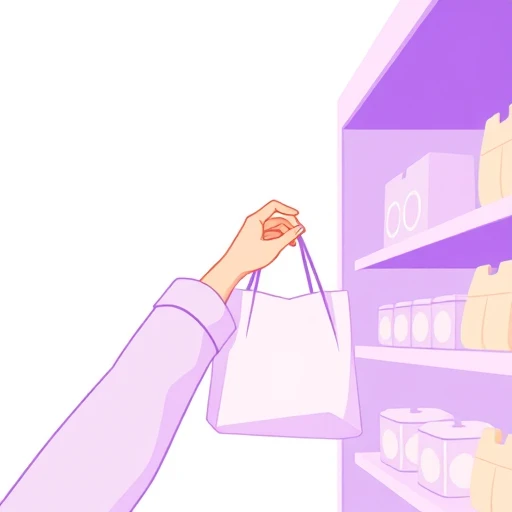
to get in 30 Seconds
- To get is a versatile verb meaning to obtain, receive, or acquire. It is essential for daily English communication across all levels of formality.
- It can describe a change of state when followed by an adjective, such as getting hungry, getting angry, or getting ready for an event.
- It frequently indicates movement or arrival at a destination, such as getting home, getting to work, or getting to the airport on time.
- It is the root of many common phrasal verbs like get up, get along, and get over, making it vital for natural-sounding speech.
The verb to get is arguably the most versatile and frequently used word in the English language. At its most fundamental level, it signifies the act of obtaining, receiving, or acquiring something. However, its utility extends far beyond simple possession. In everyday conversation, native speakers use it to describe movement, changes in physical or emotional states, and the act of understanding a concept. Because it is so common, mastering its various nuances is essential for anyone looking to sound natural in English. Whether you are buying a coffee, arriving at a destination, or finally understanding a difficult math problem, get is the tool you will likely use. It acts as a linguistic 'Swiss Army knife,' replacing more formal verbs like 'obtain,' 'become,' 'arrive,' or 'understand' in casual settings.
- Obtaining and Receiving
- This is the primary meaning taught to beginners. It involves taking possession of an object. For example, you can get a gift for your birthday, get a new job, or get some milk from the grocery store. In these contexts, it is synonymous with 'buy,' 'receive,' or 'fetch.'
I need to get a new passport before my trip to Japan next month.
- Change of State (Becoming)
- When followed by an adjective, 'get' describes a transition from one state to another. If the sun goes down, it gets dark. If you don't eat, you get hungry. This usage is vital for describing feelings, weather, and physical conditions.
Please put on a coat because it is getting very cold outside.
- Movement and Arrival
- 'Get' is frequently used to mean 'arrive at' or 'reach' a location. We use it for daily commutes and long-distance travel alike. You might ask someone, 'What time do you get to work?' or 'How do I get to the museum?'
We finally got home after a long and exhausting flight from London.
Did you get my email about the meeting tomorrow morning?
I don't get why he is so angry about such a small mistake.
Furthermore, 'get' is the foundation for hundreds of phrasal verbs. Phrases like 'get up' (wake/stand), 'get along' (have a good relationship), and 'get over' (recover) are used constantly. Without 'get,' English speakers would struggle to express basic daily routines. It is also used in the causative form—'to get something done'—meaning to arrange for someone else to do something for you, like getting your hair cut or getting your car fixed. This complexity is why 'get' is often the focus of many English lessons from level A1 all the way to C2. Understanding the context is key to deciphering which meaning of 'get' is being used in any given sentence.
Using to get correctly requires an understanding of the grammatical structures that follow it. Because it can function as a transitive verb (taking an object), an intransitive verb (indicating movement), or a linking verb (followed by an adjective), its placement in a sentence varies significantly. The most common pattern is get + noun, which indicates obtaining or receiving something. For instance, 'I got a letter' or 'She got a new car.' In these cases, 'get' acts as the main action directed toward a direct object. It is important to note that the past tense of 'get' is 'got,' and the past participle is 'got' in British English and 'gotten' in American English.
- Get + Adjective
- When 'get' is followed by an adjective, it means 'to become.' This is used to describe a change in state. Examples include 'get ready,' 'get angry,' 'get tired,' and 'get bored.' This structure is much more common in spoken English than saying 'become angry' or 'become tired.'
We should leave soon because it is getting late and the buses stop running at midnight.
- Get + Place Adverb/Preposition
- To express movement or arrival, 'get' is followed by a word indicating a location. Common examples are 'get home,' 'get there,' 'get to work,' and 'get back.' Note that we do not use 'to' with 'home' (e.g., 'get home,' not 'get to home').
How long does it take you to get to the city center during rush hour?
- The Causative 'Get'
- The structure
get + object + past participleis used when you arrange for someone else to do a task for you. 'I got my hair cut' means a barber cut my hair. 'I got the car washed' means I paid a service to wash it.
You really need to get your computer fixed; it is running very slowly.
I got stuck in traffic for two hours this morning.
Can you get me a glass of water, please?
When using 'get' in the present continuous ('getting'), it almost always implies a process that is currently happening. 'I am getting better at English' suggests a gradual improvement. 'It is getting dark' suggests the transition from day to night is in progress. This sense of progression makes 'get' a dynamic verb that adds life to descriptions. Finally, remember that 'have got' is a common alternative to 'have' in British English to show possession (e.g., 'I've got a dog' instead of 'I have a dog'). Understanding these structural patterns allows you to deploy 'get' with confidence across a wide range of communicative situations.
In the real world, to get is ubiquitous. You will hear it in every possible environment, from the most casual street slang to semi-formal office environments. It is the backbone of spoken English. If you walk into a coffee shop, you might hear a customer say, 'Can I get a large latte?' If you are at a train station, the overhead announcement might say, 'The train getting into platform four is the 10:15 service to London.' In movies and television shows, characters constantly use 'get' to express understanding or frustration: 'I don't get you!' or 'Get out of here!' This word is so ingrained in the language that native speakers often don't even realize they are using it.
- In the Workplace
- In professional settings, 'get' is used for logistics and comprehension. Colleagues might ask, 'Did you get my message?' or 'When can we get this project finished?' It is also used in the context of promotions or hiring: 'She got the manager position.'
Let's get together for a meeting on Tuesday to discuss the new budget.
- Socializing and Daily Life
- When hanging out with friends, 'get' is used for making plans and sharing news. 'We should get some pizza' or 'I got a new phone yesterday.' It is also used to describe social dynamics, like 'getting along' with someone or 'getting to know' a new person.
I really get along well with my new roommates; they are very friendly.
- Travel and Navigation
- When asking for directions, 'get' is the standard verb. 'How do I get to the airport?' or 'Which bus gets me to the stadium?' It is also used for boarding vehicles: 'get on the bus,' 'get in the car,' 'get off the train.'
You need to get off at the next stop if you want to see the cathedral.
I got a great deal on these flight tickets by booking them early.
It's getting harder to find a parking spot in this neighborhood.
In news reports, you might hear 'get' used for receiving information or experiencing consequences: 'The suspect got five years in prison' or 'The company got a lot of criticism for the new policy.' Even in sports, commentators say things like 'He gets the ball and runs toward the goal.' Because it is so flexible, 'get' allows speakers to convey a lot of information with very little effort. However, because it is so informal, you will rarely see it used as the primary verb in academic papers or legal documents, where precision is favored over colloquial ease. By paying attention to where you hear 'get,' you can start to map out its massive territory in the English language.
Despite its simplicity, to get is a frequent source of errors for English learners. One of the most common mistakes is overusing it. While 'get' is acceptable in most spoken contexts, using it for every single action can make your English sound repetitive and 'lazy.' For example, instead of saying 'I got a book, then I got home, then I got dinner,' it is better to say 'I bought a book, then I arrived home, then I prepared dinner.' Another major pitfall is the confusion between 'get' and 'become.' While they are often interchangeable, 'become' is more formal and is used for long-term changes, whereas 'get' is for more immediate or casual changes.
- Preposition Errors
- Learners often add 'to' where it isn't needed or omit it where it is. The most famous example is 'get home.' You should never say 'get to home.' Conversely, you must say 'get to work' or 'get to the station.' Another error is using 'get in' vs 'get on.' Generally, you 'get in' small vehicles (cars, taxis) and 'get on' large vehicles (buses, trains, planes).
Incorrect: I got to home late.
Correct: I got home late.
- Confusing 'Got' and 'Have'
- In British English, 'I have got' means 'I have.' Learners sometimes say 'I got a car' when they mean they currently own one. While this is common in slang, in standard English, 'I got' is the past tense (I acquired it in the past), and 'I have got' is the present tense (I own it now).
Incorrect: I got two sisters.
Correct: I have two sisters (or 'I have got').
- The 'Gotten' vs 'Got' Debate
- Learners often get confused about the past participle. In the US, 'gotten' is used for the process of obtaining (e.g., 'I have gotten better'). In the UK, 'gotten' is almost never used; 'got' is used for both past tense and past participle. Using the wrong one isn't a 'mistake' per se, but it can sound inconsistent if you mix British and American styles.
He has gotten (US) / got (UK) much taller since last year.
Don't get confused by all the different meanings; focus on one at a time!
I got my friend to help me move the furniture.
Finally, a common mistake is the misuse of 'get' in passive constructions. While 'he got hit by a car' is common in speech, it is considered informal. In formal writing, 'he was hit by a car' is preferred. Also, be careful with the phrase 'get to do something.' This means 'to have the opportunity to do something.' If you say 'I get to go to Paris,' it means you are lucky to go. If you just mean you are going, just say 'I am going to Paris.' Misusing this can change the tone of your sentence from a statement of fact to an expression of excitement or privilege.
Because to get is so general, there are dozens of more specific verbs that can replace it depending on the context. Using these alternatives is the best way to elevate your English from a basic level to a more advanced, precise level. For example, instead of 'getting' a prize, you 'win' a prize. Instead of 'getting' a disease, you 'contract' a disease. Each alternative carries a slightly different weight and formality. Learning these distinctions helps you choose the right word for the right situation, ensuring your meaning is clear and your tone is appropriate.
- Get vs. Receive vs. Obtain
- 'Get' is the most casual. 'Receive' is used for things given to you (emails, gifts, signals). 'Obtain' is used for things you work hard to get (degrees, permits, information). Using 'obtain' in a casual conversation sounds stiff, while using 'get' in a legal document sounds unprofessional.
She obtained her doctorate after five years of intense research.
- Get vs. Become vs. Grow
- 'Get' is for quick or common changes (get mad, get wet). 'Become' is for more significant or permanent changes (become a doctor, become famous). 'Grow' is used for gradual changes, especially related to age or nature (grow old, grow tired of something).
As the night went on, the crowd grew restless and started to shout.
- Get vs. Arrive vs. Reach
- 'Get to' is the standard way to talk about travel. 'Arrive' is more formal and often used with 'at' or 'in.' 'Reach' implies that the journey was long or difficult (e.g., 'We finally reached the summit').
The flight is scheduled to arrive in New York at 6:00 PM.
I finally comprehended the complex theory after reading the chapter twice.
Could you fetch my glasses from the bedside table?
Other alternatives include 'acquire' (for property or skills), 'purchase' (for buying), 'grasp' (for understanding a difficult idea), and 'induce' (for causing a state). By diversifying your vocabulary, you avoid the 'get' trap. However, do not be afraid to use 'get' in its natural habitat—daily conversation. It is the most 'human' verb in English, and using it correctly shows that you understand the rhythm and flow of how people actually speak. The goal is not to eliminate 'get' from your vocabulary, but to use it intentionally while having a backup list of synonyms ready for more formal or descriptive writing.
How Formal Is It?
Fun Fact
The word 'get' is one of the oldest and most stable words in English, maintaining its core meaning for over a thousand years while expanding its uses.
Pronunciation Guide
- Pronouncing the 'g' like a 'j' (jet).
- Stretching the 'e' sound so it sounds like 'gate'.
- Dropping the final 't' completely in formal speech.
- In some dialects, pronouncing it like 'git'.
- Confusing the past participle 'got' and 'gotten'.
Difficulty Rating
Very easy to recognize in text.
Difficult to know when to use it vs. a more formal synonym.
Easy to use, but requires practice with phrasal verbs.
Can be hard to hear in fast speech (e.g., 'I'm gonna get 'em').
What to Learn Next
Prerequisites
Learn Next
Advanced
Grammar to Know
Causative Get
I got the mechanic to check the brakes.
Passive Get
The window got broken during the storm.
Get + Adjective for change
The tea is getting cold.
Have got for possession
I've got a secret to tell you.
Get vs. Go for movement
I need to get to the bank (focus on arrival).
Examples by Level
I get a new book every week.
I receive/buy a book.
Present simple for a habit.
Did you get my message?
Did you receive it?
Past simple question.
I get up at six o'clock.
I wake up and leave bed.
Phrasal verb: get up.
Can I get a water, please?
Can I have/buy a water?
Polite request.
She gets the bus to school.
She takes the bus.
Third person 's'.
I got a present for my mom.
I bought/obtained a gift.
Past tense of get.
How do I get to the park?
How do I go/arrive there?
Asking for directions.
It is time to get ready.
Time to prepare.
Get + adjective.
It is getting dark outside.
Becoming dark.
Present continuous for change.
I got very tired after the walk.
I became tired.
Get + adjective (past).
We got home at midnight.
We arrived home.
No 'to' before home.
He is getting better at tennis.
Improving.
Continuous improvement.
Don't get angry with me.
Don't become mad.
Imperative mood.
I need to get some new shoes.
I need to buy shoes.
Infinitive after need.
She got a cold last week.
She became sick.
Getting an illness.
Get on the train now!
Board the train.
Phrasal verb: get on.
I get along well with my boss.
Good relationship.
Phrasal verb: get along.
I'll get the bill this time.
I will pay.
Future with 'will'.
It took her a while to get over the flu.
Recover from.
Phrasal verb: get over.
I need to get my hair cut.
Someone else cuts it.
Causative structure.
Do you get what I mean?
Do you understand?
Informal 'understand'.
We need to get going or we'll be late.
Need to leave.
Get + -ing (start moving).
I'm getting used to the noise here.
Becoming accustomed.
Get used to + noun.
How did you get into photography?
How did you start?
Phrasal verb: get into.
He got away with cheating on the test.
No punishment.
Three-part phrasal verb.
I haven't got around to fixing the door.
Haven't found time.
Phrasal verb: get around to.
The news got out before the official announcement.
Became known.
Phrasal verb: get out.
I'll get back to you as soon as I can.
Reply later.
Business idiom.
Stop getting at me for every little thing!
Criticizing me.
Phrasal verb: get at.
We got stuck in the elevator for an hour.
Unable to move.
Get + adjective (passive state).
She's getting on in years but still very active.
Becoming old.
Idiom for aging.
I finally got him to agree to the plan.
Persuaded him.
Get + person + to-infinitive.
I can't get a word in edgewise with him.
Can't speak.
Idiomatic expression.
Let's get down to brass tacks.
Discuss basic facts.
Idiom: get down to.
He really gets my goat with his arrogance.
Annoys me.
Idiom: get someone's goat.
I'm trying to get my head around this new software.
Understand something complex.
Idiom: get head around.
The company is getting ahead of the competition.
Becoming more successful.
Phrasal verb: get ahead.
Don't get me wrong, I like the car, but it's too expensive.
Don't misunderstand.
Conversational filler/clarifier.
We need to get our act together before the audit.
Organize ourselves.
Idiom: get act together.
She always gets her own back in the end.
Takes revenge.
Idiom: get own back.
The sheer scale of the project is hard to get a handle on.
Understand/control.
Idiom: get a handle on.
He has a way of getting under people's skin.
Annoying people deeply.
Idiom: get under skin.
Let's not get bogged down in the details.
Stuck/overwhelmed.
Idiom: get bogged down.
The politician tried to get the measure through parliament.
Pass a law.
Phrasal verb: get through.
I've got it in for that guy ever since he lied to me.
Hold a grudge.
Idiom: have got it in for.
She's really getting into her stride now.
Performing at her best.
Idiom: get into stride.
You can't get blood out of a stone.
Impossible to get something.
Proverbial idiom.
The message finally got through to the recalcitrant students.
Was understood/accepted.
Phrasal verb: get through to.
Common Collocations
Common Phrases
— To control your emotions and behave more calmly.
You need to get a grip and stop crying.
— Used to tell someone to be realistic and stop dreaming.
Get real! You can't win the lottery without a ticket.
— To take revenge on someone who has hurt you.
He tried to get even with his brother for the prank.
— To understand a situation without needing more details.
Okay, I get the picture; you don't want me here.
— To hurry up or start moving faster.
We need to get a move on if we want to catch the bus.
— To become difficult to control or chaotic.
The party got out of hand when too many people arrived.
— To hear a rumor or find out about something secret.
The press got wind of the scandal before the company could hide it.
— To learn how to do something correctly.
It takes time to get the hang of driving a manual car.
— To become nervous and decide not to do something planned.
He got cold feet right before the wedding.
Often Confused With
Use 'become' for long-term changes and 'get' for short-term or casual ones.
Use 'take' for moving something away and 'get' for bringing something toward you.
Use 'have' for current possession and 'get' for the act of acquiring.
Idioms & Expressions
— To start a process or activity.
Let's get the ball rolling by introducing ourselves.
neutral— To start a relationship or task badly.
I'm sorry we got off on the wrong foot; let's start over.
neutral— To organize your life or work more effectively.
You need to get your act together if you want to pass this class.
informal— To find a chance to speak when someone else is talking a lot.
She talks so much that I can't get a word in edgewise.
informal— To annoy or irritate someone intensely.
His constant whistling really gets under my skin.
informal— To be treated unfairly or receive the worst part of a deal.
I got the short end of the stick and had to work on Christmas.
informal— To understand something complex or strange.
I can't get my head around how this engine works.
neutral— To experience the same bad treatment you gave to others.
The bully finally got a taste of his own medicine.
informal— To stop talking about unimportant things and start working.
Enough small talk, let's get down to business.
neutralEasily Confused
Contains the word 'get'.
'Forget' means to fail to remember, while 'get' means to obtain.
Don't forget to get the milk.
Ends with 'get'.
'Target' is a noun for a goal, not a verb for obtaining.
The target is to get ten new clients.
Old-fashioned version of 'get'.
'Beget' specifically means to give birth to or cause.
Violence begets violence.
Ends with 'get'.
'Budget' refers to financial planning.
We need to get the budget approved.
Sounds similar.
A 'gadget' is a small tool or device.
I got a new kitchen gadget.
Sentence Patterns
I get + [noun]
I get a coffee.
It is getting + [adjective]
It is getting hot.
I get to + [place]
I get to the office at 9.
get + [object] + [past participle]
I got my car fixed.
get used to + [noun/ing]
I'm getting used to waking up early.
get + [person] + to [verb]
I got her to help me.
get [adjective] + [infinitive]
It's getting hard to breathe.
get [noun] + [prepositional phrase]
He got the message across the room.
Word Family
Nouns
Verbs
Adjectives
Related
How to Use It
One of the top 5 most used verbs in the English language.
-
I got to home.
→
I got home.
The word 'home' acts as an adverb of place here and does not require the preposition 'to'.
-
I am getting a doctor.
→
I am becoming a doctor.
Use 'become' for professions or major life changes; 'get' is for temporary states.
-
I got on the car.
→
I got in the car.
We use 'in' for small vehicles where you have to sit down immediately.
-
He has got a new car yesterday.
→
He got a new car yesterday.
Don't use 'has got' (present possession) with a past time marker like 'yesterday'.
-
I am getting it.
→
I get it.
When 'get' means 'understand', we usually use the simple present, not the continuous.
Tips
Avoid Repetition
If you use 'get' in one sentence, try to use a synonym like 'receive' or 'arrive' in the next to keep your writing interesting.
No 'to' with home
Always remember to say 'get home', never 'get to home'. This is a very common mistake for learners.
The 'I get it' rule
Use 'I get it' when someone explains a joke or a math problem. It sounds much more natural than 'I understand'.
Phrasal Verb Power
Focus on learning five 'get' phrasal verbs a week. They are the key to understanding conversational English.
Formal vs Informal
Check your writing: if it's a formal report, change 'got' to 'obtained' or 'acquired'.
Listen for 'Gotta'
When you hear 'gotta', remember it means 'must' or 'have to'. It is a very common spoken contraction.
Regional Differences
If you are in the UK, use 'got'. If you are in the US, you can use 'gotten' for the past participle.
The Flap T
In American English, the 't' in 'getting' sounds like a 'd'. Practice saying 'gedding' to sound more native.
The Change Rule
If you can replace 'get' with 'become', it's describing a change in state (e.g., get old = become old).
Polite Requests
Use 'Can I get...' when ordering food. It is polite and standard in almost all English-speaking countries.
Memorize It
Mnemonic
Think of a 'Getter' as someone who 'Grabs Every Thing'. G-E-T stands for Grab Every Thing.
Visual Association
Imagine a hand reaching out to grab a golden key. The hand represents the action of 'getting'.
Word Web
Challenge
Try to use 'get' in five different ways in one paragraph: as obtain, become, arrive, understand, and in a phrasal verb.
Word Origin
Derived from the Old Norse word 'geta', which meant to obtain, reach, or be able to. It entered the English language during the Viking age and gradually replaced the Old English word 'begietan'.
Original meaning: To reach, obtain, or beget.
Germanic (North Germanic origin via Old Norse).Cultural Context
No specific sensitivities, but avoid overusing it in formal academic or legal contexts.
Very common in all dialects; essential for sounding like a native speaker.
Practice in Real Life
Real-World Contexts
Shopping
- Can I get a refund?
- Where can I get milk?
- I got a discount.
- Did you get the receipt?
Travel
- How do I get there?
- Get on the train.
- What time do we get in?
- I got lost.
Health
- I'm getting a cold.
- Get well soon!
- I got a headache.
- She got better.
Work
- Did you get my email?
- I got a promotion.
- Let's get to work.
- I got fired.
Social
- I get it!
- We get along.
- Get a life!
- Let's get together.
Conversation Starters
"What is the best gift you have ever got for your birthday?"
"How long does it usually take you to get to work or school?"
"Do you get along well with your neighbors or do you keep to yourself?"
"What is a skill that you are currently trying to get better at?"
"Did you get a chance to see that new movie everyone is talking about?"
Journal Prompts
Write about a time you got lost in a new city. How did you eventually get to your destination?
Describe something you recently got for yourself. Why did you want it and how do you feel now?
Think about a difficult concept you finally 'got'. What helped you understand it?
Reflect on a relationship where you didn't get along at first. What changed over time?
What are three things you want to get done by the end of this month?
Frequently Asked Questions
10 questionsYes, 'gotten' is the standard past participle in American English. In British English, 'got' is used instead. Both are correct in their respective regions.
Yes, but use it sparingly. For more formal emails, prefer 'receive', 'obtain', or 'provide'. For example, 'I received your email' sounds better than 'I got your email'.
Use 'get in' for small vehicles like cars and taxis. Use 'get on' for larger public transport like buses, trains, and planes.
No, it can also mean receive as a gift, fetch from another room, or earn through work. The context tells you the specific meaning.
You can say 'I get it' or 'I've got it'. In the past tense, you say 'I got it' to mean you understood something just explained.
Yes, when it is followed by an adjective (e.g., 'get hungry'), it functions as a linking verb similar to 'become'.
It means to have the opportunity or privilege to do something. 'I get to travel for work' means I am lucky to travel.
Yes, it is often used in informal passive constructions like 'he got arrested' instead of 'he was arrested'.
The past tense is 'got' for all dialects of English.
No, 'get' is a base verb, but it is used to form hundreds of phrasal verbs like 'get up', 'get out', and 'get by'.
Test Yourself 180 questions
Write a sentence using 'get' to mean 'arrive'.
Well written! Good try! Check the sample answer below.
Write a sentence using 'get' to mean 'become'.
Well written! Good try! Check the sample answer below.
Write a sentence using 'get' to mean 'buy'.
Well written! Good try! Check the sample answer below.
Write a sentence using 'get' to mean 'receive'.
Well written! Good try! Check the sample answer below.
Write a sentence using 'get up'.
Well written! Good try! Check the sample answer below.
Write a sentence using 'get along with'.
Well written! Good try! Check the sample answer below.
Write a sentence using 'get over'.
Well written! Good try! Check the sample answer below.
Write a sentence using the causative 'get'.
Well written! Good try! Check the sample answer below.
Write a sentence using 'get used to'.
Well written! Good try! Check the sample answer below.
Write a sentence using 'get away with'.
Well written! Good try! Check the sample answer below.
Write a sentence using 'get around to'.
Well written! Good try! Check the sample answer below.
Write a sentence using 'get the hang of'.
Well written! Good try! Check the sample answer below.
Write a sentence using 'get a grip'.
Well written! Good try! Check the sample answer below.
Write a sentence using 'get down to business'.
Well written! Good try! Check the sample answer below.
Write a sentence using 'get the picture'.
Well written! Good try! Check the sample answer below.
Write a sentence using 'get out of hand'.
Well written! Good try! Check the sample answer below.
Write a sentence using 'get a handle on'.
Well written! Good try! Check the sample answer below.
Write a sentence using 'get under someone's skin'.
Well written! Good try! Check the sample answer below.
Write a sentence using 'get a word in edgewise'.
Well written! Good try! Check the sample answer below.
Write a sentence using 'get your act together'.
Well written! Good try! Check the sample answer below.
How do you say 'I understand' informally?
Read this aloud:
You said:
Speech recognition is not supported in your browser. Try Chrome or Edge.
How do you ask for directions to the park using 'get'?
Read this aloud:
You said:
Speech recognition is not supported in your browser. Try Chrome or Edge.
How do you tell someone to hurry up using 'get'?
Read this aloud:
You said:
Speech recognition is not supported in your browser. Try Chrome or Edge.
How do you say you have a good relationship with someone?
Read this aloud:
You said:
Speech recognition is not supported in your browser. Try Chrome or Edge.
How do you say you are becoming tired?
Read this aloud:
You said:
Speech recognition is not supported in your browser. Try Chrome or Edge.
How do you say you arrived home at 8?
Read this aloud:
You said:
Speech recognition is not supported in your browser. Try Chrome or Edge.
How do you say you will reply to someone later?
Read this aloud:
You said:
Speech recognition is not supported in your browser. Try Chrome or Edge.
How do you say you are learning how to do something?
Read this aloud:
You said:
Speech recognition is not supported in your browser. Try Chrome or Edge.
How do you say you were stuck in an elevator?
Read this aloud:
You said:
Speech recognition is not supported in your browser. Try Chrome or Edge.
How do you say you want to start a meeting?
Read this aloud:
You said:
Speech recognition is not supported in your browser. Try Chrome or Edge.
How do you say you are nervous about something?
Read this aloud:
You said:
Speech recognition is not supported in your browser. Try Chrome or Edge.
How do you say you are becoming older?
Read this aloud:
You said:
Speech recognition is not supported in your browser. Try Chrome or Edge.
How do you say someone is annoying you?
Read this aloud:
You said:
Speech recognition is not supported in your browser. Try Chrome or Edge.
How do you say you can't understand something complex?
Read this aloud:
You said:
Speech recognition is not supported in your browser. Try Chrome or Edge.
How do you say you want to discuss the main facts?
Read this aloud:
You said:
Speech recognition is not supported in your browser. Try Chrome or Edge.
How do you say you want to start a process?
Read this aloud:
You said:
Speech recognition is not supported in your browser. Try Chrome or Edge.
How do you say you want to take revenge?
Read this aloud:
You said:
Speech recognition is not supported in your browser. Try Chrome or Edge.
How do you say you are becoming accustomed to something?
Read this aloud:
You said:
Speech recognition is not supported in your browser. Try Chrome or Edge.
How do you say you need to organize yourself?
Read this aloud:
You said:
Speech recognition is not supported in your browser. Try Chrome or Edge.
How do you say you were fired?
Read this aloud:
You said:
Speech recognition is not supported in your browser. Try Chrome or Edge.
If someone says 'I gotta go', what do they mean?
If someone says 'I got 'em', what do they mean?
If someone says 'It's gedding late', what is the word?
If someone says 'I've got a dog', do they have a dog now?
If someone says 'I got a dog yesterday', do they have a dog now?
If someone says 'I got stuck', were they able to move?
If someone says 'I get you', do they understand you?
If someone says 'Get out!', are they happy?
If someone says 'Get real', do they think you are being practical?
If someone says 'I got away', did they stay?
If someone says 'I'll get it', are they paying or answering the door?
If someone says 'He got fired', is he still working?
If someone says 'Get a grip', are they telling you to calm down?
If someone says 'I got wind of it', did they hear a rumor?
If someone says 'Get lost', are they being friendly?
/ 180 correct
Perfect score!
Summary
The verb 'to get' is the ultimate multi-purpose word in English. It primarily means to obtain, but it also covers becoming, arriving, and understanding. For example: 'I got (received) a gift, then I got (became) happy, and finally I got (arrived) home.'
- To get is a versatile verb meaning to obtain, receive, or acquire. It is essential for daily English communication across all levels of formality.
- It can describe a change of state when followed by an adjective, such as getting hungry, getting angry, or getting ready for an event.
- It frequently indicates movement or arrival at a destination, such as getting home, getting to work, or getting to the airport on time.
- It is the root of many common phrasal verbs like get up, get along, and get over, making it vital for natural-sounding speech.
Avoid Repetition
If you use 'get' in one sentence, try to use a synonym like 'receive' or 'arrive' in the next to keep your writing interesting.
No 'to' with home
Always remember to say 'get home', never 'get to home'. This is a very common mistake for learners.
The 'I get it' rule
Use 'I get it' when someone explains a joke or a math problem. It sounds much more natural than 'I understand'.
Phrasal Verb Power
Focus on learning five 'get' phrasal verbs a week. They are the key to understanding conversational English.
Example
I need to get some milk from the store.
Related Content
This Word in Other Languages
Related Phrases
More general words
a lot of
A2A large amount or number of; plenty of.
about
A1On the subject of; concerning something.
above
A2In a higher place than something or someone.
accident
A2An unfortunate event causing damage or injury.
action
A2The process of doing something, typically to achieve an aim.
after
A2Following in time or place; later than.
afterward
A2At a later or subsequent time.
again
A2Another time; once more.
aged
B1Of a specified age.
alive
A2Living, not dead.

