









venus in 30 Seconds
- Venus is the second planet from the Sun, known for its extreme heat and bright appearance in the night sky.
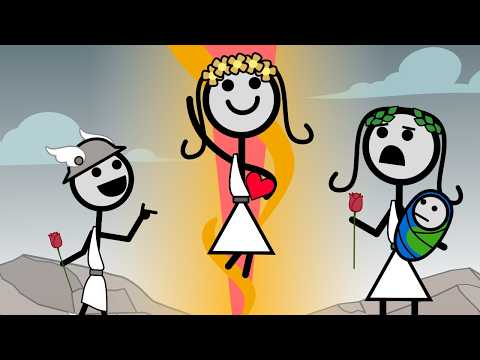
- It is named after the Roman goddess of love and beauty, a central figure in Western art and mythology.
- Often called Earth's sister planet, it has a thick atmosphere and no moons, rotating very slowly on its axis.
- The word is used in science, art, and popular culture, including the name of the carnivorous Venus flytrap.
The word Venus serves as a bridge between the cold, empirical world of astronomy and the warm, emotive realm of classical mythology. Primarily, it refers to the second planet from the Sun, a terrestrial planet often called Earth's 'sister planet' due to their similar size and mass. However, Venus is a world of extremes, with a thick, toxic atmosphere that traps heat in a runaway greenhouse effect, making it the hottest planet in our solar system. When people use the word in a scientific context, they are often discussing planetary science, space exploration, or the search for life in extreme environments. Beyond the stars, Venus is the Roman goddess of love, beauty, desire, sex, fertility, prosperity, and victory. This dual identity allows the word to appear in diverse settings, from NASA press releases to art history lectures discussing Botticelli’s 'The Birth of Venus'.
- Astronomical Context
- Used when referring to the planet, its orbit, or its appearance as the Morning or Evening Star. It is always capitalized as a proper noun.
Scientists are studying the thick clouds of Venus to understand how greenhouse gases affect a planet's climate.
In literature and poetry, Venus is frequently used as a metaphor for feminine beauty or the overwhelming power of love. Writers might invoke her name to describe a person of extraordinary grace or to personify the concept of romance itself. Because Venus is the brightest natural object in the night sky after the Moon, it has historically guided sailors and inspired poets, earning nicknames like 'Phosphorus' and 'Hesperus' in ancient times. Today, we hear it in everyday conversations about the night sky—'Look at how bright Venus is tonight!'—or in academic discussions about the evolution of the solar system. It is a word that carries the weight of both ancient human wonder and modern scientific inquiry.
- Mythological Context
- Refers to the Roman deity. Often used in art history, literature, and discussions of classical culture.
The statue of Venus de Milo is one of the most famous works of ancient Greek sculpture.
Furthermore, the word has branched out into biology and popular culture. The 'Venus flytrap' is a well-known carnivorous plant, named for the goddess because of its attractive but deadly nature. In music and film, Venus often symbolizes a powerful, alluring female figure. Whether you are looking through a telescope or walking through the Louvre, the word Venus represents an intersection of the physical universe and the human imagination. It is a term that demands respect for its historical depth and its scientific complexity. Understanding Venus requires looking both at the ground (mythology) and the sky (astronomy).
The Venus flytrap is native to the wetlands of the East Coast of the United States.
- Biological Context
- Used specifically in the name of the Venus flytrap (Dionaea muscipula), a carnivorous plant.
In many cultures, Venus is associated with the feminine principle and the beauty of the natural world.
During the transit of Venus, the planet appears as a small black dot moving across the face of the Sun.
Using the word Venus correctly requires an understanding of its role as a proper noun. In English, proper nouns—names of specific people, places, or celestial bodies—must always be capitalized. Whether you are writing a scientific paper or a poem about love, the 'V' in Venus remains uppercase. This distinguishes it from general nouns. One of the most common grammatical points to remember is the omission of the definite article 'the' when referring to the planet. We say 'Venus is the second planet,' not 'The Venus is the second planet.' This follows the same rule as other planets like Mars, Jupiter, and Saturn. However, if you are using Venus as an adjective or as part of a specific title, the rules change slightly.
- Direct Reference
- Used as the subject or object of a sentence without an article.
Venus rotates in the opposite direction to most other planets in our solar system.
When discussing the goddess, the word often appears in the possessive form or as part of a proper name for a statue or painting. For example, 'Venus's beauty' or 'the beauty of Venus' are both acceptable. In art history, we frequently refer to 'the Venus of [Location],' such as the Venus of Willendorf or the Venus of Urbino. In these cases, 'Venus' acts as a descriptor for a specific archetype of the female form. It is also important to note the adjective form: Venusian. While less common in everyday speech, 'Venusian' is used in science fiction and planetary science to describe things related to the planet Venus, such as 'Venusian atmosphere' or 'Venusian landscape'.
- Possessive Form
- Adding 's to indicate ownership or association with the goddess or the planet's features.
Venus's surface temperature is high enough to melt lead.
In comparative sentences, Venus is often paired with Earth. You might say, 'Venus is nearly the same size as Earth, but its environment is far more hostile.' This usage highlights the contrast between the two planets. In metaphorical usage, one might say, 'She was a true Venus,' implying she possessed the beauty of the goddess. This is a high-register, literary way of speaking. In modern informal English, you might hear the word in the context of the famous book title 'Men Are from Mars, Women Are from Venus,' which uses the planets as symbols for perceived gender differences. Here, Venus represents the feminine, emotional, and relational aspects of humanity.
The telescope allowed us to see the phases of Venus clearly from our backyard.
- Comparative Usage
- Comparing the planet's characteristics to Earth or other celestial bodies.
Ancient astronomers tracked the movement of Venus to create highly accurate calendars.
The poet compared his lover's radiance to that of Venus appearing at dawn.
The word Venus resonates across various domains of human life, making it a versatile term you are likely to encounter in many settings. In the educational sphere, you will hear it in science classrooms and documentaries about space. Astronomers and educators use it to explain planetary orbits, atmospheric pressure, and the history of our solar system. If you visit a planetarium, the narrator will almost certainly mention Venus as they guide you through the night sky. In these contexts, the word is associated with discovery, data, and the awe-inspiring scale of the universe. It’s a staple of STEM education, representing one of the most intriguing neighbors of our home planet.
- Educational Media
- Documentaries, textbooks, and science podcasts frequently feature Venus as a primary subject.
The latest documentary on the Discovery Channel explores the possibility of microbial life in the clouds of Venus.
In the world of art and humanities, Venus is equally prominent. Walk into any major art museum, like the Louvre in Paris or the Uffizi Gallery in Florence, and you will find 'Venus' on many placards. Art historians use the word to discuss the evolution of the female nude and the representation of the divine in human form. You might hear a tour guide say, 'This sculpture represents the classical ideal of Venus.' In literature, especially in the study of Renaissance or Romantic poetry, Venus is a recurring figure, symbolizing both the purity of love and the danger of desire. This cultural presence ensures that the word is familiar even to those who aren't interested in science.
- Art and Museums
- Placards, audio guides, and lectures in art galleries often focus on Venus as a central theme.
The museum's collection includes several Roman copies of the original Greek Venus statues.
Furthermore, Venus appears in astrology and daily horoscopes. For those who follow the movements of the stars as a guide to their personal lives, Venus is the planet that governs relationships, money, and aesthetics. You might hear someone say, 'Venus is in retrograde,' which in astrological terms suggests a time of reflection on one's love life. Even if you don't believe in astrology, this usage is so widespread in social media and lifestyle magazines that you are bound to encounter it. Finally, the term is used in gardening and botany, specifically when referring to the Venus flytrap. Children and nature enthusiasts often use the word when discussing this fascinating plant, making 'Venus' a word that spans from the depths of space to the soil of a swamp.
My horoscope says that Venus is moving into my sign, which means my social life will improve.
- Astrological Discourse
- Social media influencers and lifestyle columnists often use Venus to talk about love and personality traits.
The Venus flytrap is a popular plant for science projects because of its unique way of catching insects.
We stood on the balcony, watching Venus rise just before the sun began to light up the horizon.
One of the most frequent errors when using the word Venus is failing to capitalize it. Because it is a proper noun—the name of a specific planet and a specific goddess—it must always start with a capital 'V'. Writing 'venus' in lowercase is a grammatical mistake that can make your writing appear unprofessional or careless. This rule applies regardless of whether you are referring to the celestial body or the mythological figure. Another common pitfall is the incorrect use of the definite article 'the'. As mentioned previously, you should not say 'the Venus' when referring to the planet. You wouldn't say 'the London' or 'the Mary,' and the same logic applies to planets. However, learners often get confused because we do say 'the Sun' and 'the Moon'.
- Capitalization Error
- Always capitalize the 'V'. Incorrect: 'The planet venus is hot.' Correct: 'The planet Venus is hot.'
Incorrect: I saw venus in the sky. Correct: I saw Venus in the sky.
Confusion between Venus and its Greek counterpart, Aphrodite, is another common mistake, particularly in academic or mythological discussions. While they represent the same archetypal goddess, 'Venus' is specifically Roman, and 'Aphrodite' is Greek. Using them interchangeably in a formal essay about Roman history might be seen as a lack of precision. Similarly, people often confuse Venus with Mars in the context of the 'Men Are from Mars, Women Are from Venus' trope. It is important to remember that Venus is associated with the feminine and Mars with the masculine in this specific cultural framework. Mixing them up can lead to confusion in your metaphorical language.
- Article Misuse
- Do not use 'the' before the planet's name. Incorrect: 'The Venus is close to Earth.' Correct: 'Venus is close to Earth.'
Incorrect: Scientists sent a probe to the Venus. Correct: Scientists sent a probe to Venus.
In scientific contexts, a common factual mistake is assuming Venus is the closest planet to the Sun. That title belongs to Mercury. Venus is the second planet. However, it is the hottest planet, which often leads to the misconception that it must be the closest. When writing about astronomy, ensure you have the order of the planets correct: Mercury, Venus, Earth, Mars... Another subtle mistake is the pronunciation. Some non-native speakers might pronounce it like 'When-us' or 'Veen-us' with a short 'e'. The correct pronunciation is /'viːnəs/ with a long 'e' sound, like 'see' or 'tree'. Mastering the pronunciation is key to being understood in scientific or academic discussions.
Incorrect: Venus is the closest planet to the sun. Correct: Mercury is the closest, but Venus is the hottest.
- Mythological Confusion
- Confusing Roman Venus with Greek Aphrodite. While similar, they belong to different pantheons.
In Roman mythology, Venus was the mother of Aeneas, the founder of the Roman people.
Many people mistakenly believe Venus is habitable because it is called Earth's sister planet.
While Venus is a unique proper noun, there are several words and phrases that can serve as alternatives or related terms depending on the context. In mythology, the most direct alternative is Aphrodite. Aphrodite is the Greek goddess who shares almost all the same attributes as the Roman Venus. If you are writing about Greek literature (like the Iliad), you should use Aphrodite. If you are writing about Roman literature (like the Aeneid), use Venus. In art history, you might use the term Cytherea or Cypris, which are poetic epithets for the goddess based on her legendary birthplaces. These terms add a layer of sophistication and specific cultural reference to your writing.
- Aphrodite vs. Venus
- Aphrodite is Greek; Venus is Roman. They are the same deity in different cultural contexts.
While the Greeks called her Aphrodite, the Romans knew her as Venus.
In astronomy, Venus is often referred to by its descriptive nicknames: the Morning Star and the Evening Star. These terms are not scientifically precise (since Venus is a planet, not a star), but they are deeply embedded in history and literature. Use 'Morning Star' when Venus is visible in the east before sunrise, and 'Evening Star' when it is in the west after sunset. Another related term is Earth's Twin or Sister Planet. These phrases emphasize the physical similarities between the two worlds. In a more technical sense, you might refer to Venus as a Terrestrial Planet, a category it shares with Mercury, Earth, and Mars, distinguishing them from the gas giants like Jupiter.
- Morning Star vs. Evening Star
- Both refer to Venus at different times of the day. They are poetic rather than scientific terms.
The shepherds used the Morning Star to signal the beginning of their workday.
When discussing the 'Venus flytrap', there aren't many direct synonyms, but you can use broader terms like carnivorous plant or insectivorous plant. These terms describe the plant's biological function rather than its specific name. In the realm of beauty and aesthetics, words like goddess, paragon, or belle can sometimes serve as metaphorical substitutes for Venus. For instance, 'She was a paragon of beauty' carries a similar weight to 'She was a Venus.' However, 'Venus' remains the most powerful and internationally recognized symbol for this concept. Choosing the right alternative depends entirely on whether you want to be precise, poetic, or descriptive.
The Venus flytrap is perhaps the most famous carnivorous plant in the world.
- Terrestrial Planet
- A scientific classification for rocky planets like Venus, Earth, and Mars.
Venus is often called Earth's twin because of their similar size and composition.
In the poem, the author refers to the goddess as Cytherea, honoring her mythical island home.
How Formal Is It?
Fun Fact
The word 'venerate' (to respect deeply) and 'venereal' (as in venereal disease) both share the same root as Venus, reflecting the goddess's dual association with high respect and physical love.
Pronunciation Guide
- Pronouncing it with a short 'e' like 'Ven-us'.
- Pronouncing the 'v' like a 'w' (mostly for speakers of certain languages).
- Over-emphasizing the second syllable.
- Pronouncing the 'u' like 'oo' (Vee-noos).
- Adding an extra syllable (Vee-nee-us).
Difficulty Rating
The word itself is easy, but scientific or mythological texts using it can be complex.
Simple to spell, but requires remembering the capital 'V' and article rules.
Pronunciation is straightforward once the long 'e' sound is mastered.
Easily recognizable in most contexts due to its unique sound.
What to Learn Next
Prerequisites
Learn Next
Advanced
Grammar to Know
Proper Noun Capitalization
Always write 'Venus', never 'venus'.
Zero Article with Planets
Say 'Venus is bright', not 'The Venus is bright'.
Possessive of S-ending Nouns
Both 'Venus's' and 'Venus'' are acceptable, but 'Venus's' is more common in modern English.
Adjective Derivation
The adjective for Venus is 'Venusian'.
Proper Noun as Modifier
In 'Venus flytrap', Venus acts as a modifier for the common noun flytrap.
Examples by Level
Venus is a planet.
Venus est une planète.
Venus is a proper noun, so it starts with a capital V.
I can see Venus in the sky.
Je peux voir Vénus dans le ciel.
No 'the' is needed before Venus.
Venus is very bright.
Vénus est très brillante.
Bright is an adjective describing Venus.
Venus is the second planet.
Vénus est la deuxième planète.
Use 'the' for the ordinal number 'second', but not for Venus.
Is Venus hot?
Est-ce que Vénus est chaude ?
This is a simple question format.
Venus is far away.
Vénus est loin.
'Far away' is an adverbial phrase.
Look at Venus!
Regarde Vénus !
This is an imperative sentence.
Venus is not a star.
Vénus n'est pas une étoile.
Negative sentence using 'not'.
Venus is often called Earth's sister planet.
Vénus est souvent appelée la planète sœur de la Terre.
Use the possessive 'Earth's' to show the relationship.
The Venus flytrap is a plant that eats insects.
Le dionée attrape-mouche est une plante qui mange des insectes.
Here, 'the' is used because it refers to the 'flytrap'.
Venus is hotter than Mercury.
Vénus est plus chaude que Mercure.
Comparative adjective 'hotter than'.
Ancient people watched Venus move across the sky.
Les anciens observaient Vénus se déplacer dans le ciel.
Past tense verb 'watched'.
Venus does not have any moons.
Vénus n'a pas de lunes.
Negative sentence with 'does not have'.
You can see Venus in the early morning.
On peut voir Vénus tôt le matin.
'Early morning' acts as a time expression.
Venus has a very thick atmosphere.
Vénus a une atmosphère très épaisse.
'Thick' is an adjective modifying 'atmosphere'.
Many stories were written about the goddess Venus.
De nombreuses histoires ont été écrites sur la déesse Vénus.
Passive voice 'were written'.
Venus is the brightest object in the night sky after the Moon.
Vénus est l'objet le plus brillant du ciel nocturne après la Lune.
Superlative 'the brightest'.
In Roman mythology, Venus was the goddess of love and beauty.
Dans la mythologie romaine, Vénus était la déesse de l'amour et de la beauté.
Prepositional phrase 'In Roman mythology'.
Scientists believe that Venus once had oceans like Earth.
Les scientifiques pensent que Vénus avait autrefois des océans comme la Terre.
The word 'that' introduces a subordinate clause.
The thick clouds on Venus trap heat, creating a greenhouse effect.
Les nuages épais sur Vénus emprisonnent la chaleur, créant un effet de serre.
Present participle 'creating' shows a result.
Botticelli's painting 'The Birth of Venus' is very famous.
Le tableau de Botticelli 'La Naissance de Vénus' est très célèbre.
Proper noun phrase 'The Birth of Venus'.
Venus rotates so slowly that a day is longer than a year.
Vénus tourne si lentement qu'un jour est plus long qu'une année.
'So... that' construction for result.
Space probes have been sent to Venus to study its surface.
Des sondes spatiales ont été envoyées sur Vénus pour étudier sa surface.
Present perfect passive 'have been sent'.
Venus is often visible just after sunset or just before sunrise.
Vénus est souvent visible juste après le coucher du soleil ou juste avant le lever du soleil.
Adverbial phrases of time.
The atmosphere of Venus consists mostly of carbon dioxide.
L'atmosphère de Vénus est composée principalement de dioxyde de carbone.
Verb 'consists of' is followed by a noun.
The transit of Venus across the Sun occurs in a pattern that repeats every 243 years.
Le passage de Vénus devant le Soleil se produit selon un cycle qui se répète tous les 243 ans.
Relative clause 'that repeats every 243 years'.
Venusian volcanic activity may still be occurring today.
L'activité volcanique vénusienne pourrait encore se produire aujourd'hui.
Adjective 'Venusian' derived from the noun Venus.
In literature, Venus is frequently used as a symbol of overwhelming passion.
En littérature, Vénus est fréquemment utilisée comme symbole d'une passion débordante.
Adverb 'frequently' modifies the verb 'used'.
The surface pressure on Venus is about 90 times that of Earth.
La pression de surface sur Vénus est environ 90 fois celle de la Terre.
Comparison using 'that of' to avoid repeating 'pressure'.
Despite the harsh conditions, some researchers hope to find life in the Venusian clouds.
Malgré les conditions difficiles, certains chercheurs espèrent trouver de la vie dans les nuages vénusiens.
Concession word 'Despite' followed by a noun phrase.
The name Venus is derived from the Latin word for love.
Le nom Vénus est dérivé du mot latin pour l'amour.
Passive voice 'is derived from'.
Venus is the only planet named after a female deity.
Vénus est la seule planète nommée d'après une divinité féminine.
Past participle 'named' used as an adjective.
The runaway greenhouse effect on Venus serves as a stark warning for climate scientists.
L'effet de serre incontrôlé sur Vénus sert d'avertissement sévère pour les climatologues.
Metaphorical use of 'serves as a warning'.
In the Aeneid, Venus intervenes several times to protect her son, Aeneas.
Dans l'Énéide, Vénus intervient plusieurs fois pour protéger son fils, Énée.
Specific literary reference requiring context.
The retrograde rotation of Venus remains one of the great mysteries of planetary science.
La rotation rétrograde de Vénus reste l'un des grands mystères de la science planétaire.
Technical term 'retrograde rotation'.
Many Renaissance poets alluded to Venus to explore the duality of sacred and profane love.
De nombreux poètes de la Renaissance ont fait allusion à Vénus pour explorer la dualité de l'amour sacré et profane.
Verb 'alluded to' followed by a preposition.
The Venus of Willendorf is a masterpiece of Paleolithic art, predating Roman civilization by millennia.
La Vénus de Willendorf est un chef-d'œuvre de l'art paléolithique, précédant la civilisation romaine de plusieurs millénaires.
Appositive phrase 'a masterpiece of Paleolithic art'.
Radar mapping has allowed us to peer through the opaque clouds of Venus to see its volcanic plains.
La cartographie radar nous a permis de scruter à travers les nuages opaques de Vénus pour voir ses plaines volcaniques.
Infinitive phrase 'to peer through'.
The cult of Venus was central to Roman state religion, emphasizing her role as a mother of the people.
Le culte de Vénus était central dans la religion d'État romaine, soulignant son rôle de mère du peuple.
Present participle 'emphasizing' adding detail to the main clause.
Observations of the 1761 transit of Venus were crucial for determining the Astronomical Unit.
Les observations du passage de Vénus de 1761 ont été cruciales pour déterminer l'unité astronomique.
Adjective 'crucial' followed by a prepositional phrase.
The sheer hostility of the Venusian environment underscores the uniqueness of Earth's habitability.
L'hostilité pure de l'environnement vénusien souligne le caractère unique de l'habitabilité de la Terre.
Abstract noun 'hostility' and 'uniqueness'.
Venus, as the Morning Star, has been a perennial motif in Western lyrical traditions, symbolizing hope and renewal.
Vénus, en tant qu'étoile du matin, est un motif récurrent dans les traditions lyriques occidentales, symbolisant l'espoir et le renouveau.
Parenthetical expression 'as the Morning Star'.
The paradoxical nature of Venus—a goddess of love and a planet of hellish heat—fascinates cultural historians.
La nature paradoxale de Vénus — une déesse de l'amour et une planète d'une chaleur infernale — fascine les historiens de la culture.
Use of dashes for emphasis and clarification.
Venera 13 provided the first color panoramic views of the Venusian surface before succumbing to the intense pressure.
Venera 13 a fourni les premières vues panoramiques en couleur de la surface vénusienne avant de succomber à la pression intense.
Participial phrase 'before succumbing' indicating time and cause.
The intricate orbital resonance between Earth and Venus is a testament to the complex dynamics of our solar system.
L'astucieuse résonance orbitale entre la Terre et Vénus témoigne de la dynamique complexe de notre système solaire.
Noun phrase 'intricate orbital resonance'.
To invoke Venus in one's poetry is to tap into a rich vein of classical allusion that spans centuries.
Invoquer Vénus dans sa poésie, c'est puiser dans une riche veine d'allusions classiques qui s'étend sur des siècles.
Infinitive as subject 'To invoke Venus'.
The detection of phosphine in the Venusian atmosphere sparked a global debate about the possibility of aerial life.
La détection de phosphine dans l'atmosphère vénusienne a déclenché un débat mondial sur la possibilité d'une vie aérienne.
Complex noun phrase 'The detection of phosphine... atmosphere'.
Venus's lack of a global magnetic field is thought to be a primary reason for the loss of its primordial water.
L'absence de champ magnétique global de Vénus est considérée comme une raison principale de la perte de son eau primordiale.
Passive construction 'is thought to be'.
Synonyms
Antonyms
Common Collocations
Common Phrases
— A popular idiom suggesting that men and women have fundamentally different psychological needs and communication styles.
The phrase 'men are from Mars, women are from Venus' is often used to explain relationship conflicts.
— A way to name ancient female figurines or statues found in a specific place.
The Venus of Willendorf is one of the oldest known works of art.
— A poetic name for Venus when it appears in the east before sunrise.
She looked out the window and saw the Morning Star rising.
— A poetic name for Venus when it appears in the west after sunset.
The Evening Star was the first light to appear in the twilight.
— A description of the rocky, volcanic surface of the planet Venus.
The probe sent back images of a desolate Venusian landscape.
— A simile used to describe a woman of extraordinary beauty.
She walked into the room looking like a Venus in her silk gown.
— A name for the astronomical symbol for Venus (♀), also used as the female gender symbol.
The symbol for the planet is often called Venus's mirror.
— The astronomical event where Venus passes directly between the Sun and Earth.
The 18th-century scientific community was obsessed with the transit of Venus.
— A specific title for Venus as the mother of the Roman people.
Julius Caesar dedicated a temple to Venus Genetrix.
— Having qualities associated with Venus, such as beauty or extreme heat.
The exoplanet had a Venus-like atmosphere, making it uninhabitable.
Often Confused With
Venice is a city in Italy; Venus is a planet. They sound similar but have different vowel sounds.
Mercury is the closest planet to the Sun, but Venus is the hottest. People often swap these facts.
Aphrodite is the Greek name for the same goddess. Use 'Venus' for Roman contexts.
Idioms & Expressions
— A reference to a famous novella, often used to describe themes of dominance and submission in relationships.
The movie explored the complex power dynamics of a 'Venus in furs' scenario.
Literary/Mature— Used to describe a woman who is exceptionally beautiful.
In her youth, she was considered a real Venus by everyone in town.
Informal/Old-fashioned— A way to designate the most beautiful woman in a specific group or place.
She was known as the Venus of the ballroom.
Literary— Referring to someone who is perceived as being very feminine or focused on relationships.
His approach to the problem showed he was definitely 'from Venus'.
Informal— Often used to describe a moment of emerging beauty or a new beginning.
The new fashion line was like Venus rising from the sea.
Poetic— To have a natural talent for making things beautiful or harmonious.
Her interior design skills showed she had a truly Venusian touch.
Informal— A poetic or archaic way to refer to the complications or pains of love.
He felt he was suffering under Venus's curse after the breakup.
Literary— Extremely bright or radiant.
Her smile was as bright as Venus on a clear night.
Descriptive— A person who is a precursor or early leader of a movement (using the nickname for Venus).
He was called the Morning Star of the Reformation.
Historical— A metaphor for something that is beautiful but dangerous.
The high-paying job turned out to be a Venus's trap, leaving him no free time.
MetaphoricalEasily Confused
Similar spelling and sound.
Venice (/ˈvɛnɪs/) has a short 'e' and refers to a city. Venus (/ˈviːnəs/) has a long 'e' and refers to a planet or goddess.
I went to Venice on vacation, but I looked at Venus through my telescope.
Derived from the same root.
Venus is a proper noun for the planet/goddess. Venereal is an adjective now almost exclusively used for diseases.
The beauty of Venus is legendary, but venereal diseases are a serious health issue.
Similar starting sound.
Venerable means deserving great respect due to age or wisdom. Venus is a name.
The venerable professor gave a lecture on the planet Venus.
The name of the Soviet space program to Venus.
Venus is the planet; Venera is the specific name of the probes sent there.
The Venera 7 probe was the first to land on Venus.
Often paired together in gender discussions.
Mars is the fourth planet and the god of war (masculine). Venus is the second planet and the goddess of love (feminine).
Mars is known as the Red Planet, while Venus is known for its brightness.
Sentence Patterns
Venus is [adjective].
Venus is bright.
Venus is [comparative] than [planet].
Venus is hotter than Earth.
Venus is known as [noun].
Venus is known as the goddess of love.
The [noun] of Venus is [adjective].
The atmosphere of Venus is toxic.
Despite its [noun], Venus [verb].
Despite its heat, Venus remains a target for exploration.
The [adjective] [noun] of Venus [verb] [noun].
The extreme surface pressure of Venus crushes most landers.
I saw Venus [prepositional phrase].
I saw Venus in the sky last night.
Venus, which is [phrase], [verb].
Venus, which is our closest neighbor, is very hot.
Word Family
Nouns
Adjectives
Related
How to Use It
High in science, art, and general culture.
-
Using 'the Venus' for the planet.
→
Venus
Proper names of planets do not take the definite article in English. You should say 'Venus is visible' not 'The Venus is visible'.
-
Writing 'venus' with a lowercase 'v'.
→
Venus
As a proper noun, Venus must always be capitalized. This applies to both the planet and the goddess.
-
Confusing Venus with Mercury as the closest planet to the Sun.
→
Mercury is closest; Venus is second.
While Venus is the hottest planet, Mercury is actually the closest to the Sun. This is a frequent scientific error.
-
Pronouncing it like 'Venice'.
→
/ˈviːnəs/
Venus has a long 'e' sound and a 'u' sound in the second syllable, whereas Venice has a short 'e' and an 'i' sound.
-
Using 'Aphrodite' in a Roman history context.
→
Venus
While they are the same goddess, Aphrodite is the Greek name. Using the Roman name 'Venus' is necessary for historical accuracy in Roman contexts.
Tips
Capitalization is Key
Always capitalize the 'V' in Venus. It is a proper noun, naming a specific planet or goddess. Writing 'venus' is a common mistake that should be avoided in all types of writing.
No 'The' for the Planet
When talking about the planet, do not use the definite article 'the'. Say 'Venus is bright' instead of 'The Venus is bright'. This is a rule shared by all planets except for the Earth (sometimes).
Use 'Venusian' for Adjectives
If you need an adjective to describe something related to Venus, use 'Venusian'. For example, 'The Venusian surface is very rocky'. This adds precision to your scientific or descriptive writing.
Venus vs. Aphrodite
Remember that Venus is Roman and Aphrodite is Greek. While they are very similar, using the correct name for the cultural context you are discussing shows a higher level of knowledge and attention to detail.
Hottest, Not Closest
A common factual error is saying Venus is the closest planet to the Sun. It is the second closest, but it is the hottest. Make sure to distinguish between distance and temperature in your descriptions.
Venus vs. Venice
Double-check your spelling! It's easy to accidentally write 'Venice' (the city) when you mean 'Venus' (the planet). They are only one letter apart but refer to completely different things.
Long 'E' Sound
Focus on the long 'e' sound in the first syllable (/ˈviːnəs/). Practicing this will help you sound more natural and ensure you aren't confused with the city of Venice.
Identify the Meaning
Before using the word, clarify if you are talking about the planet, the goddess, or the plant. This will help you decide which collocations and sentence patterns are most appropriate.
Poetic Alternatives
In creative writing, don't forget the terms 'Morning Star' and 'Evening Star'. These can add a beautiful, traditional feel to your work that the scientific name 'Venus' might lack.
The 'V' Connection
Link Venus to 'Valentine's Day' to remember its association with love. Both start with 'V' and deal with romance, making it an easy mental connection to maintain.
Memorize It
Mnemonic
Think of a 'Very beautiful' planet. The 'V' stands for Venus, and the 'beauty' reminds you of the goddess of love.
Visual Association
Imagine a bright, glowing marble in a dark room. That marble is Venus, the brightest 'star' in the sky. Now imagine that marble is actually a golden mirror held by a beautiful goddess.
Word Web
Challenge
Try to use 'Venus' in three different ways today: once about the sky, once about a plant, and once about a famous painting.
Word Origin
The name 'Venus' comes directly from the Latin 'venus', which means 'love', 'charm', or 'sexual desire'. It is derived from the Proto-Indo-European root *wen-, meaning 'to strive for', 'to wish for', or 'to love'.
Original meaning: In early Latin, it was a common noun meaning 'love' or 'beauty' before it became the proper name of the goddess.
Indo-European > Italic > LatinCultural Context
The word 'venereal' is derived from Venus but is now used almost exclusively for sexually transmitted infections; avoid using it in a poetic or romantic sense in modern English.
In English-speaking countries, the 'Men are from Mars, Women are from Venus' concept is a very common cultural touchstone for discussing gender differences.
Practice in Real Life
Real-World Contexts
Astronomy Class
- The second planet
- Thick atmosphere
- Greenhouse effect
- Orbital period
Art History
- Classical sculpture
- Idealized beauty
- Mythological subject
- Renaissance depiction
Gardening
- Venus flytrap care
- Carnivorous plants
- Native habitat
- Catching insects
Astrology
- Venus in retrograde
- Ruling planet
- Love and relationships
- Aesthetic values
Literature
- Allusion to Venus
- Goddess of love
- Morning star metaphor
- Classical influence
Conversation Starters
"Have you ever seen Venus in the night sky? It's incredibly bright lately."
"Do you think humans will ever be able to send a robot to stay on the surface of Venus for a long time?"
"What's your favorite painting of Venus? I really like Botticelli's version."
"Have you ever tried growing a Venus flytrap? They are so hard to keep alive!"
"Do you believe in the idea that 'Men are from Mars and women are from Venus'?"
Journal Prompts
If you could rename the planet Venus, what name would you give it and why? Consider its heat and brightness.
Write a short story about a goddess named Venus living in the modern world. What would her job be?
Describe the night sky as if you were seeing Venus for the first time without knowing what it was.
Compare the planet Venus to Earth. What are the most interesting differences to you?
How does the concept of 'beauty' represented by Venus change over time in different cultures?
Frequently Asked Questions
10 questionsVenus is a planet, specifically the second planet from the Sun. It is often called the 'Morning Star' or 'Evening Star' because it is so bright, but this is a poetic name, not a scientific one. Stars produce their own light, while Venus reflects the light of the Sun.
Venus is the hottest planet in our solar system because of its thick atmosphere, which is mostly carbon dioxide. This atmosphere acts like a blanket, trapping heat in a process called the greenhouse effect. Even though Mercury is closer to the Sun, Venus's atmosphere makes it much hotter.
The name Venus comes from the Latin word for 'love' or 'desire'. In Roman mythology, she was the goddess of love, beauty, and fertility. The planet was likely named after her because it is the brightest and most beautiful object in the sky.
Currently, humans cannot live on Venus. The surface temperature is around 465 degrees Celsius (900 degrees Fahrenheit), which is hot enough to melt lead. Additionally, the atmospheric pressure is 90 times higher than Earth's, and the clouds are made of sulfuric acid.
No, Venus does not have any natural moons. It is one of only two planets in our solar system (the other being Mercury) that does not have a moon. Scientists are not entirely sure why, but it may be due to its proximity to the Sun's gravity.
A Venus flytrap is a carnivorous plant native to the wetlands of North and South Carolina in the United States. It catches and digests insects using a specialized trap formed by the terminal portion of its leaves. It is named after the goddess Venus.
Venus is pronounced as /ˈviːnəs/. The first syllable 'Vee' rhymes with 'see', and the second syllable 'nus' sounds like 'nuhs'. The stress is on the first syllable. Be careful not to pronounce it like 'Venice'.
No, Venus is slightly smaller than Earth. Its diameter is about 95% of Earth's diameter, and its mass is about 81% of Earth's mass. Because they are so similar in size, they are often called 'sister planets'.
A transit of Venus is a rare astronomical event where the planet Venus passes directly between the Sun and Earth. When this happens, Venus can be seen as a small black dot moving across the face of the Sun. These events occur in pairs separated by eight years, with more than a century between pairs.
The Greek equivalent of the Roman goddess Venus is Aphrodite. Both goddesses represent love, beauty, and desire, and they share many of the same myths and stories. However, the name Venus is Roman, and Aphrodite is Greek.
Test Yourself 200 questions
Describe the appearance of Venus in the night sky.
Well written! Good try! Check the sample answer below.
Explain why Venus is called Earth's sister planet.
Well written! Good try! Check the sample answer below.
Write a short paragraph about the goddess Venus.
Well written! Good try! Check the sample answer below.
How does the greenhouse effect work on Venus?
Well written! Good try! Check the sample answer below.
Compare Venus and Mars in terms of their cultural symbols.
Well written! Good try! Check the sample answer below.
Describe the Venus flytrap and how it catches food.
Well written! Good try! Check the sample answer below.
Write a dialogue between two people looking at Venus through a telescope.
Well written! Good try! Check the sample answer below.
Discuss the importance of the 'Venus de Milo' in art history.
Well written! Good try! Check the sample answer below.
What are the challenges of sending a mission to Venus?
Well written! Good try! Check the sample answer below.
Explain the difference between the Morning Star and the Evening Star.
Well written! Good try! Check the sample answer below.
Write a poem about the beauty of Venus.
Well written! Good try! Check the sample answer below.
Summarize the findings of the Venera space missions.
Well written! Good try! Check the sample answer below.
Why is the transit of Venus scientifically significant?
Well written! Good try! Check the sample answer below.
Describe the hypothetical environment of Venus if it had water.
Well written! Good try! Check the sample answer below.
Write a review of a book or movie that features the planet Venus.
Well written! Good try! Check the sample answer below.
How has the image of Venus changed from ancient times to today?
Well written! Good try! Check the sample answer below.
Explain the etymology of the word 'Venus'.
Well written! Good try! Check the sample answer below.
Discuss the possibility of life in the clouds of Venus.
Well written! Good try! Check the sample answer below.
Write a travel brochure for a (very protected) trip to Venus.
Well written! Good try! Check the sample answer below.
What does Venus represent in modern astrology?
Well written! Good try! Check the sample answer below.
Tell a partner three facts about the planet Venus.
Read this aloud:
You said:
Speech recognition is not supported in your browser. Try Chrome or Edge.
Describe the goddess Venus as if you were looking at a statue of her.
Read this aloud:
You said:
Speech recognition is not supported in your browser. Try Chrome or Edge.
Explain the greenhouse effect on Venus in your own words.
Read this aloud:
You said:
Speech recognition is not supported in your browser. Try Chrome or Edge.
Discuss whether you would ever want to visit a space station orbiting Venus.
Read this aloud:
You said:
Speech recognition is not supported in your browser. Try Chrome or Edge.
Debate the idea that 'Men are from Mars, Women are from Venus'.
Read this aloud:
You said:
Speech recognition is not supported in your browser. Try Chrome or Edge.
Give a short presentation on the Venus flytrap.
Read this aloud:
You said:
Speech recognition is not supported in your browser. Try Chrome or Edge.
Pronounce 'Venus' and 'Venice' and explain the difference.
Read this aloud:
You said:
Speech recognition is not supported in your browser. Try Chrome or Edge.
Describe the last time you saw a very bright 'star' in the sky.
Read this aloud:
You said:
Speech recognition is not supported in your browser. Try Chrome or Edge.
Talk about a famous piece of art that features Venus.
Read this aloud:
You said:
Speech recognition is not supported in your browser. Try Chrome or Edge.
Explain why Venus is sometimes called the Morning Star.
Read this aloud:
You said:
Speech recognition is not supported in your browser. Try Chrome or Edge.
Discuss the Soviet missions to Venus and their importance.
Read this aloud:
You said:
Speech recognition is not supported in your browser. Try Chrome or Edge.
How would life be different if Earth was more like Venus?
Read this aloud:
You said:
Speech recognition is not supported in your browser. Try Chrome or Edge.
Describe the mythological origins of Venus.
Read this aloud:
You said:
Speech recognition is not supported in your browser. Try Chrome or Edge.
Talk about the 'Transit of Venus' as if you were an 18th-century scientist.
Read this aloud:
You said:
Speech recognition is not supported in your browser. Try Chrome or Edge.
Explain the symbol for Venus and its various uses.
Read this aloud:
You said:
Speech recognition is not supported in your browser. Try Chrome or Edge.
What are the main differences between Venus and Mars?
Read this aloud:
You said:
Speech recognition is not supported in your browser. Try Chrome or Edge.
Discuss the role of Venus in modern astrology.
Read this aloud:
You said:
Speech recognition is not supported in your browser. Try Chrome or Edge.
Tell a story about someone who discovers a secret on Venus.
Read this aloud:
You said:
Speech recognition is not supported in your browser. Try Chrome or Edge.
Explain the term 'Venusian' and use it in three sentences.
Read this aloud:
You said:
Speech recognition is not supported in your browser. Try Chrome or Edge.
Summarize the most interesting thing you learned about Venus today.
Read this aloud:
You said:
Speech recognition is not supported in your browser. Try Chrome or Edge.
Listen to a description of the solar system and identify when Venus is mentioned.
Listen to a short myth and identify the goddess's name.
Listen to a weather report for Venus and write down the temperature.
Listen to an art historian and identify which painting they are discussing.
Listen to a scientist explain the clouds of Venus and identify the chemicals mentioned.
Listen to a poem and identify the nicknames used for Venus.
Listen to a conversation about a Venus flytrap and identify the care instructions.
Listen to a lecture on Roman religion and identify Venus's role.
Listen to a news report about a new space probe to Venus.
Listen to a podcast about the 'Transit of Venus' and identify the dates mentioned.
Listen to the pronunciation of 'Venus' and 'Venice' and choose the correct one.
Listen to a story about a Venusian city and identify the main characters.
Listen to an explanation of 'retrograde rotation' and draw a diagram.
Listen to a discussion about the 'Venus of Willendorf' and identify its size.
Listen to a song about Venus and write down the chorus.
/ 200 correct
Perfect score!
Summary
Venus is a multifaceted proper noun referring to both a terrestrial planet and a Roman goddess. It symbolizes beauty and love in culture while representing extreme planetary conditions in science. Example: 'Venus is the brightest planet in our sky.'
- Venus is the second planet from the Sun, known for its extreme heat and bright appearance in the night sky.
- It is named after the Roman goddess of love and beauty, a central figure in Western art and mythology.
- Often called Earth's sister planet, it has a thick atmosphere and no moons, rotating very slowly on its axis.
- The word is used in science, art, and popular culture, including the name of the carnivorous Venus flytrap.
Capitalization is Key
Always capitalize the 'V' in Venus. It is a proper noun, naming a specific planet or goddess. Writing 'venus' is a common mistake that should be avoided in all types of writing.
No 'The' for the Planet
When talking about the planet, do not use the definite article 'the'. Say 'Venus is bright' instead of 'The Venus is bright'. This is a rule shared by all planets except for the Earth (sometimes).
Use 'Venusian' for Adjectives
If you need an adjective to describe something related to Venus, use 'Venusian'. For example, 'The Venusian surface is very rocky'. This adds precision to your scientific or descriptive writing.
Venus vs. Aphrodite
Remember that Venus is Roman and Aphrodite is Greek. While they are very similar, using the correct name for the cultural context you are discussing shows a higher level of knowledge and attention to detail.
Related Content
See it in Videos
More Science words
e=mc²
C1The scientific equation E=mc², formulated by Albert Einstein, which states that energy is equal to mass multiplied by the speed of light squared. It represents the concept of mass-energy equivalence.
silicates
C1Silicates are a large group of minerals that consist of silicon and oxygen atoms, often combined with other elements like aluminum, magnesium, or iron. They are the most abundant minerals in the Earth's crust and form the basic building blocks of most rocks and clay.
fossils
B1Fossils are the preserved remains, impressions, or traces of plants, animals, and other organisms from a past geological age. They are created when the organic material is replaced by minerals, turning it into stone. These remnants of ancient life are crucial for understanding the history of life on Earth.
inhibitors
B2Inhibitors are substances, factors, or conditions that slow down, interfere with, or prevent a particular process or reaction from occurring. They can be chemical agents in a laboratory, biological molecules in the body, or psychological barriers in human behavior.
enzymes
B1Enzymes are biological catalysts, typically proteins, that significantly speed up the rate of chemical reactions within living organisms. They facilitate essential processes like digestion and metabolism without being consumed in the reaction themselves.
evolution
B2The gradual process of change and development of something over time, moving from a simpler to a more complex or better state. It is most commonly used in biology to describe how species change over generations, but it can also refer to the development of ideas, technology, or systems.
volume
B2Volume refers to the amount of space that a substance or object occupies, or that is enclosed within a container. It also describes the degree of loudness of a sound or the total amount or quantity of something, such as business trade or data.
miniprotein
C2A small protein molecule, typically consisting of fewer than 100 amino acids, that folds into a stable tertiary structure. Miniproteins are often engineered for use in medicine and biotechnology due to their stability and ability to target specific cells.
elements
B1The fundamental parts or components that make up a whole system, idea, or physical substance. It can also refer to the primary constituents of the physical world or weather conditions like wind and rain.
acidic
B2Containing acid or having the properties of an acid. It often describes a sharp, sour taste or, metaphorically, a sharp and bitter personality or tone.

