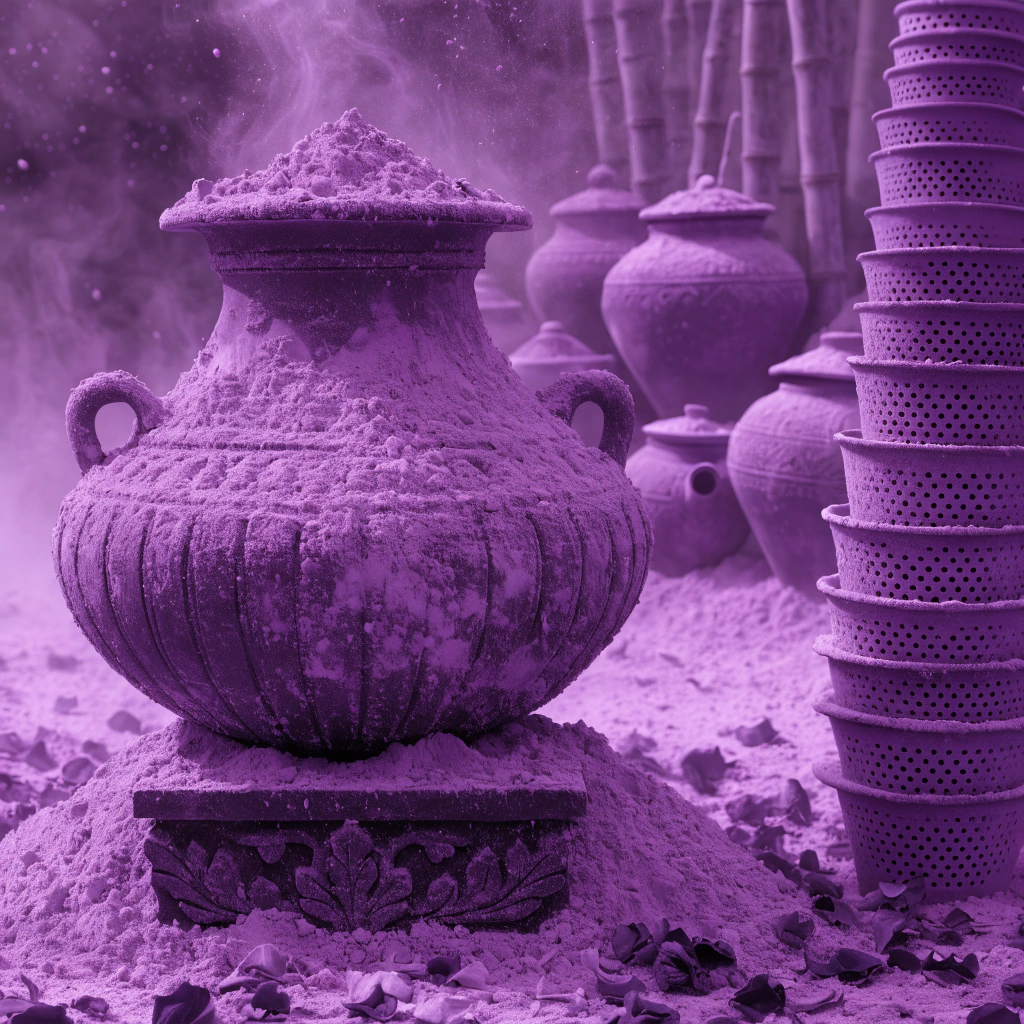
Holi: Um Festival de Cores na Índia
Holi é um festival muito feliz na Índia. É o Festival das Cores. Este festival celebra a chegada da primavera. Também celebra a vitória do bem sobre o mal. Em Holi, as pessoas jogam pós coloridos e água umas nas outras. Elas usam cores brilhantes: vermelho, azul, amarelo. Todos ficam muito coloridos e riem. É um dia de alegria para amigos e família. Eles comem comidas especiais e cantam. Holi é um dia divertido e cheio de cor para todos na Índia. As ruas ficam cheias de vida e de festa.
Gramática em destaque
Padrão: O Verbo 'Ser' (to be)
"Holi é um festival muito feliz na Índia."
O verbo 'ser' é muito importante. Usamos 'ser' para falar sobre o que algo ou alguém é de forma permanente, como nome, nacionalidade ou uma característica. Ele muda com a pessoa: eu sou, você é, ele/ela é, nós somos, vocês são, eles/elas são.
Padrão: Presente Simples (Simple Present)
"As pessoas jogam pós coloridos e água umas nas outras."
O Presente Simples é usado para falar sobre ações que acontecem sempre, rotinas ou fatos. Ele descreve o que as pessoas 'fazem' ou o que 'acontece' de modo geral. Por exemplo, 'jogam' mostra uma ação que acontece regularmente no festival.
Teste sua compreensão
10 perguntas · A1 Iniciante · 1 pré-visualização grátis
Teste o que aprendeu neste artigo. Responda todas as perguntas para ganhar XP!
Qual é o outro nome do festival Holi?
Quer finalizar o quiz?
9 perguntas a mais estão esperando por você. Cadastre-se grátis para desbloquear o quiz completo e ganhar XP!
Cadastrar grátisJá tem conta? Entrar
Detalhamento das perguntas
Qual é o outro nome do festival Holi?
Sua resposta:
Resposta correta: Festival das Cores
Holi celebra a chegada do inverno.
Sua resposta:
Resposta correta: Falso
O que significa 'primavera'?
Sua resposta:
Resposta correta: A estação das flores
Holi é um festival muito _____ na Índia.
Sua resposta:
Resposta correta: feliz
Holi: O Festival das Cores na Índia
Holi é um festival muito alegre e colorido da Índia. Ele acontece todos os anos, geralmente em março, quando a primavera chega. Para muitas pessoas na Índia, Holi marca o fim do inverno e o início de uma nova estação, cheia de vida e flores. É uma celebração da vitória do bem sobre o mal.
Este festival tem uma história antiga. Uma lenda famosa fala sobre o príncipe Prahlad e sua tia, Holika. Prahlad era um bom menino e adorava um deus. Mas sua tia Holika era má e queria fazer mal a ele. Ela tentou queimar Prahlad em uma fogueira, mas ele foi salvo por causa da sua fé. Holika, que pensava ser imune ao fogo, não sobreviveu. Por isso, a noite antes do Holi, as pessoas fazem fogueiras para lembrar essa história.
No dia seguinte, as ruas ficam cheias de cores! Amigos e famílias jogam pó colorido e água uns nos outros. Todos riem e se divertem muito. É um dia para esquecer problemas e celebrar a amizade e a felicidade. As cores representam a alegria e a energia da primavera. É um festival lindo e divertido!
Gramática em destaque
Padrão: Pretérito Perfeito (Passado Simples)
"mas ele foi salvo por causa da sua fé."
Usamos o pretérito perfeito para falar de ações que começaram e terminaram no passado. É para contar algo que aconteceu e acabou. Por exemplo: 'ele foi' é o passado do verbo 'ir'.
Padrão: Conectivo "por causa de" (Razão)
"mas ele foi salvo por causa da sua fé."
Usamos 'por causa de' para explicar a razão ou o motivo de algo. Significa que uma coisa acontece por causa de outra. É seguido por um substantivo.
Teste sua compreensão
11 perguntas · A2 Elementar · 1 pré-visualização grátis
Teste o que aprendeu neste artigo. Responda todas as perguntas para ganhar XP!
Qual é o principal motivo do festival Holi?
Quer finalizar o quiz?
10 perguntas a mais estão esperando por você. Cadastre-se grátis para desbloquear o quiz completo e ganhar XP!
Cadastrar grátisJá tem conta? Entrar
Detalhamento das perguntas
Qual é o principal motivo do festival Holi?
Sua resposta:
Resposta correta: É para celebrar a chegada da primavera e a vitória do bem.
O festival Holi acontece no verão.
Sua resposta:
Resposta correta: Falso
O que significa a palavra "mal" no texto?
Sua resposta:
Resposta correta: o contrário do bem, algo ruim
As cores representam a alegria e a energia da _____.
Sua resposta:
Resposta correta: primavera
O que as pessoas fazem no dia principal do Holi?
Sua resposta:
Resposta correta: Elas jogam pó colorido e água uns nos outros.
Holi: The Vibrant Festival of Colors and New Beginnings
Holi is a famous festival that is celebrated across India every year. It has become known worldwide as the 'Festival of Colors' because of the vibrant powders that people throw at each other. This joyful event marks the arrival of spring and the end of winter. It is a time when the cold weather disappears and nature begins to bloom again.
The festival is rooted in ancient mythology. One of the most famous stories is about a young boy named Prahlad, who was a devoted follower of Lord Vishnu. His father, a king who wanted everyone to worship him, tried to punish Prahlad for his beliefs. However, Prahlad was protected by his faith. His aunt, Holika, tried to burn him in a large fire, but she was defeated while Prahlad remained safe. This story represents the triumph of good over evil, which is a central theme of the celebration.
Today, the celebrations begin with a large bonfire on the night before Holi. On the main day, streets are filled with people who have covered themselves in bright colors. Traditional music is played, and delicious snacks like 'gujiya' are shared among friends and family. It is a time when social barriers are broken, and everyone joins together in the spirit of friendship.
In recent years, Holi has been celebrated by people of many different cultures outside of India. It is a beautiful tradition that has successfully spread a message of love and unity to the whole world. Whether you are in Delhi or London, the spirit of Holi brings people together through color and joy.
Gramática em destaque
Padrão: Passive Voice
"Holi is celebrated across India every year."
The passive voice is used here because the action (celebrating) is more important than who is doing it. It is formed using the verb 'to be' plus the past participle.
Padrão: Present Perfect
"It has become known worldwide as the 'Festival of Colors'."
The present perfect connects the past to the present. We use it here to show that Holi started being famous in the past and continues to be famous today.
Teste sua compreensão
11 perguntas · B1 Intermediário · 1 pré-visualização grátis
Teste o que aprendeu neste artigo. Responda todas as perguntas para ganhar XP!
What does the festival of Holi mark the arrival of?
Quer finalizar o quiz?
10 perguntas a mais estão esperando por você. Cadastre-se grátis para desbloquear o quiz completo e ganhar XP!
Cadastrar grátisJá tem conta? Entrar
Detalhamento das perguntas
What does the festival of Holi mark the arrival of?
Sua resposta:
Resposta correta: Spring
Prahlad was the king who wanted everyone to worship him.
Sua resposta:
Resposta correta: Falso
What does 'triumph' mean?
Sua resposta:
Resposta correta: A great victory
The festival is rooted in ancient _____.
Sua resposta:
Resposta correta: mythology
What is 'gujiya' mentioned in the text?
Sua resposta:
Resposta correta: A delicious snack
The Kaleidoscope of Holi: A Cultural Synthesis of Tradition and Modernity
Holi, widely recognized as the 'Festival of Colors,' is arguably one of India's most significant cultural exports. While the visual spectacle of vibrant powders often dominates global media coverage, the festival's underlying significance is rooted in complex mythological narratives and socio-cultural shifts. Occurring on the full moon of the Hindu month of Phalguna, Holi signals the definitive arrival of spring, marking a transition from the cold seclusion of winter to the blossoming of new life.
Central to the celebration is the legend of Prahlad, a devout follower of Lord Vishnu, whose unwavering faith stood in direct opposition to his father, the tyrannical King Hiranyakashipu. The narrative reaches its climax with the bonfire of Holika, where Prahlad was miraculously spared from the flames while his aunt, despite her supposed immunity, perished. This story serves as a profound allegory for the triumph of righteousness over malevolence, a theme that resonates deeply within the Indian psyche. Furthermore, the ritualistic burning of the 'Holika' bonfire on the eve of the festival serves as a symbolic purging of internal negativity.
From a sociological standpoint, Holi functions as a mechanism for social cohesion. In a society historically characterized by rigid hierarchies, the festival provides a unique space where traditional boundaries are temporarily suspended. Participants, regardless of their background, engage in the collective act of 'playing' with colors, which fosters a sense of egalitarianism. This communal experience encourages individuals to mend fractured relationships, embodying the spirit of 'forgetting and forgiving.'
In recent years, the festival has undergone a notable transformation regarding environmental awareness. There has been an increasing emphasis on the use of organic, plant-based dyes instead of synthetic chemicals, reflecting a broader global trend toward sustainable celebration. Despite these modern adaptations, the essence of Holi remains unchanged. It continues to be a period of intense joy and reflection, bridging the gap between ancient tradition and the demands of the modern world. Ultimately, Holi is not merely a celebration of seasonal change, but a testament to the resilience of human spirit and the enduring power of community.
Gramática em destaque
Padrão: Relative Clauses with 'Whose'
"Prahlad, a devout follower of Lord Vishnu, whose unwavering faith stood in direct opposition to his father..."
The relative pronoun 'whose' is used to show possession or relationship. In this B2 context, it identifies a characteristic belonging to Prahlad to provide extra detail without starting a new sentence.
Padrão: Present Participle Clauses for Time
"Occurring on the full moon of the Hindu month of Phalguna, Holi signals the definitive arrival of spring."
This participle clause (Occurring...) replaces a relative clause (Which occurs...). It is a sophisticated way to provide background information or context at the beginning of a sentence.
Padrão: Passive Voice with Modal Verbs
"In a society historically characterized by rigid hierarchies, the festival provides a unique space where traditional boundaries are temporarily suspended."
The passive voice 'are suspended' focuses the reader's attention on the action (the suspension of boundaries) rather than the people doing the action, which is common in academic and formal writing.
Teste sua compreensão
11 perguntas · B2 Intermediário superior · 1 pré-visualização grátis
Teste o que aprendeu neste artigo. Responda todas as perguntas para ganhar XP!
According to the article, what is the primary mythological significance of the Holika bonfire?
Quer finalizar o quiz?
10 perguntas a mais estão esperando por você. Cadastre-se grátis para desbloquear o quiz completo e ganhar XP!
Cadastrar grátisJá tem conta? Entrar
Detalhamento das perguntas
According to the article, what is the primary mythological significance of the Holika bonfire?
Sua resposta:
Resposta correta: It represents the victory of good over evil.
Holi is celebrated during the Hindu month of Phalguna.
Sua resposta:
Resposta correta: Verdadeiro
What does 'egalitarianism' mean in the context of the article?
Sua resposta:
Resposta correta: The belief that all people are equal and deserve equal rights.
The festival provides a unique space where traditional _____ are temporarily suspended.
Sua resposta:
Resposta correta: boundaries
How has Holi changed in recent years regarding environmental concerns?
Sua resposta:
Resposta correta: There is a shift toward using organic, plant-based dyes.
The Chromatic Subversion: Analyzing the Cultural and Societal Dimensions of Holi
Rarely does a festival encapsulate such a profound dichotomy between ancient lore and modern revelry as Holi, India’s quintessential 'Festival of Colors.' While the global perception of Holi is often reduced to an aesthetic spectacle of vibrant powders, for the practitioner, it represents a multifaceted psychological and societal reset. Rooted in the full moon day of Phalguna, the festival’s origins are steeped in the mythological triumph of Prahlad over the demoness Holika. It is the fiery destruction of the effigy of Holika that serves as the metaphorical catalyst for this seasonal renewal, symbolizing the incineration of past grievances and the resurgence of virtue.
From a sociological perspective, Holi functions as a mechanism for communal transcendence. In a society historically structured by rigid hierarchies, the festival facilitates a temporary subversion of social norms. During these hours of play, the distinctions of caste, age, and gender are ostensibly blurred under a layer of uniform color. This visceral experience of equality, however ephemeral, allows for a collective catharsis that mitigates societal malaise. Nevertheless, critics argue that this egalitarianism is merely symbolic, failing to translate into structural changes once the pigments are washed away.
What characterizes the modern celebration is the tension between tradition and environmental ethics. In recent decades, the proliferation of synthetic pigments containing heavy metals has sparked significant debate. The transformation of natural, plant-based dyes into mass-produced chemicals reflects a broader commercialization that many believe dilutes the festival's spiritual essence. Consequently, there has been a notable resurgence in the use of 'eco-friendly' colors, driven by a growing ecological consciousness among the urban middle class. This shift highlights a nuanced attempt to reconcile ancestral heritage with contemporary sustainability.
Furthermore, the psychological impact of Holi cannot be understated. The act of throwing color is a form of tactile communication that breaks the barriers of the personal bubble. It is this specific interaction that fosters a sense of belonging and communal harmony. Yet, the celebration is not without its controversies. Issues of consent and public safety often surface, prompting a critical re-evaluation of how traditional festivities interact with modern legal and ethical frameworks. Ultimately, Holi remains a complex tapestry of religious devotion, social critique, and unbridled joy, demanding a sophisticated understanding of its role in the Indian psyche.
Gramática em destaque
Padrão: Inversion
"Rarely does a festival encapsulate such a profound dichotomy between ancient lore and modern revelry as Holi."
Inversion is used here by placing a negative adverbial ('Rarely') at the beginning of the sentence for emphasis. This requires the auxiliary verb 'does' to come before the subject 'a festival'.
Padrão: Cleft Sentence
"It is the fiery destruction of the effigy of Holika that serves as the metaphorical catalyst for this seasonal renewal."
A cleft sentence (It + is + subject + that/who) is used to focus on a specific part of the information. Here, it emphasizes that the 'destruction of the effigy' is the specific cause of renewal.
Padrão: Nominalisation
"The transformation of natural, plant-based dyes into mass-produced chemicals reflects a broader commercialization."
Nominalisation involves turning verbs (transform, commercialize) into nouns (transformation, commercialization). This creates a more formal, academic tone suitable for C1 level analysis.
Teste sua compreensão
12 perguntas · C1 Avançado · 1 pré-visualização grátis
Teste o que aprendeu neste artigo. Responda todas as perguntas para ganhar XP!
According to the article, what is a common external misconception about Holi?
Quer finalizar o quiz?
11 perguntas a mais estão esperando por você. Cadastre-se grátis para desbloquear o quiz completo e ganhar XP!
Cadastrar grátisJá tem conta? Entrar
Detalhamento das perguntas
According to the article, what is a common external misconception about Holi?
Sua resposta:
Resposta correta: It is merely a visual display of colors.
The author suggests that the social equality experienced during Holi is permanent.
Sua resposta:
Resposta correta: Falso
Which word describes something that is stated to be true but might not be?
Sua resposta:
Resposta correta: Ostensible
The move toward eco-friendly colors is described as a _____ attempt to balance tradition and sustainability.
Sua resposta:
Resposta correta: nuanced
What does the 'burning of Holika' symbolize in the context of the article?
Sua resposta:
Resposta correta: The destruction of past negativity and the rise of virtue.
The article mentions that the use of synthetic pigments has caused public debate.
Sua resposta:
Resposta correta: Verdadeiro
Chromophilia and the Carnivalesque: A Sociological Deconstruction of Holi
To the uninitiated observer, the Indian festival of Holi might appear to be a mere paroxysm of color and unbridled revelry. However, beneath the chromatic veneer lies a complex tapestry of theological underpinnings and sociological subversions. Rooted in the vernal equinox, Holi marks the transition from the lethargy of winter to the burgeoning vitality of spring, yet its significance transcends mere seasonal change. It is, in essence, a liminal space where the rigid stratifications of caste, gender, and age are temporarily suspended in favor of a radical, albeit ephemeral, egalitarianism.
Central to the hagiography of Holi is the myth of Prahlad and Holika, a narrative that serves as a moralistic locus for the festival’s inception. The story depicts the triumph of devotion over the hubris of King Hiranyakashipu, who sought to deify himself. Were it not for the divine intervention that protected Prahlad from the pyre, the theological message of the festival—the inevitable incineration of evil—would be lost. The ritualistic burning of the Holika effigy on the eve of the festival, known as Holika Dahan, serves as a symbolic purgation, whereby the community seeks to propitiate the divine and cleanse the social fabric of residual malevolence.
From a Mikhail Bakhtin-inspired perspective, Holi embodies the 'carnivalesque.' It is a period of sanctioned transgression where the subversion of social hierarchies is not only permitted but encouraged. In the streets of Mathura and Vrindavan, the traditional dichotomy between the sacred and the profane becomes blurred. It is imperative that we recognize this not as a descent into anarchy, but as a sophisticated safety valve for societal tensions. By allowing for the temporary inversion of power dynamics, the festival paradoxically reinforces the social order it purports to disrupt. Not only does the festival facilitate communal cohesion, but it also provides a psychological outlet for the individual, allowing for a cathartic release of repressed impulses.
Furthermore, the phenomenology of color in Holi warrants academic scrutiny. The application of 'gulal'—the vibrant powdered pigments—serves as a great leveler. Once a participant is doused in color, their socio-economic identifiers are obscured, rendering them indistinguishable from their peers. This visual homogenization creates a temporary utopia where the 'other' is embraced. However, one must exercise academic hedging when discussing the modern iteration of the festival. Critics argue that the commercialization of Holi and the introduction of synthetic dyes have diluted its spiritual essence, transforming a nuanced ritual into a commodified spectacle.
Lest the reader assume Holi is a monolithic entity, it is vital to acknowledge its regional variations. From the 'Lathmar Holi' of Uttar Pradesh, where women playfully beat men with sticks, to the 'Hola Mohalla' of the Sikhs, which emphasizes martial prowess, the festival is a multifaceted phenomenon. In each context, the underlying theme remains the same: the celebration of life’s inherent contradictions. Ultimately, Holi remains a poignant reminder of the human capacity for renewal. It suggests that, despite the pervasive presence of darkness, the return of light—and color—is an ontological certainty.
Gramática em destaque
Padrão: Inverted Conditionals (Third Conditional Variation)
"Were it not for the divine intervention that protected Prahlad from the pyre, the theological message of the festival would be lost."
This structure replaces 'If it were not for...' with an inverted verb-subject order for a more formal, academic tone. It describes a hypothetical condition in the past or present and its result.
Padrão: Subjunctive Mood with 'Imperative'
"It is imperative that we recognize this not as a descent into anarchy, but as a sophisticated safety valve for societal tensions."
After adjectives like 'imperative', 'essential', or 'vital', the base form of the verb (subjunctive) is used in the 'that' clause to express necessity or importance.
Padrão: Negative Inversion for Emphasis
"Not only does the festival facilitate communal cohesion, but it also provides a psychological outlet for the individual."
When starting a sentence with a negative or restrictive expression like 'Not only', the auxiliary verb is placed before the subject to create emphasis and formal rhetorical style.
Teste sua compreensão
12 perguntas · C2 Domínio · 1 pré-visualização grátis
Teste o que aprendeu neste artigo. Responda todas as perguntas para ganhar XP!
What does the author suggest is the primary sociological function of the 'carnivalesque' aspect of Holi?
Quer finalizar o quiz?
11 perguntas a mais estão esperando por você. Cadastre-se grátis para desbloquear o quiz completo e ganhar XP!
Cadastrar grátisJá tem conta? Entrar
Detalhamento das perguntas
What does the author suggest is the primary sociological function of the 'carnivalesque' aspect of Holi?
Sua resposta:
Resposta correta: To act as a safety valve that ultimately preserves social order.
The myth of Holika and Prahlad is used to justify the deification of King Hiranyakashipu.
Sua resposta:
Resposta correta: Falso
Which word describes the state of being in a transitional or 'in-between' phase?
Sua resposta:
Resposta correta: Liminality
The ritualistic burning of the Holika _____ on the eve of the festival is known as Holika Dahan.
Sua resposta:
Resposta correta: effigy
According to the text, how does the application of 'gulal' affect social perception?
Sua resposta:
Resposta correta: It obscures socio-economic identifiers, promoting equality.
The author argues that modern commercialization has enhanced the spiritual essence of Holi.
Sua resposta:
Resposta correta: Falso

