Plural Power and Compound Words
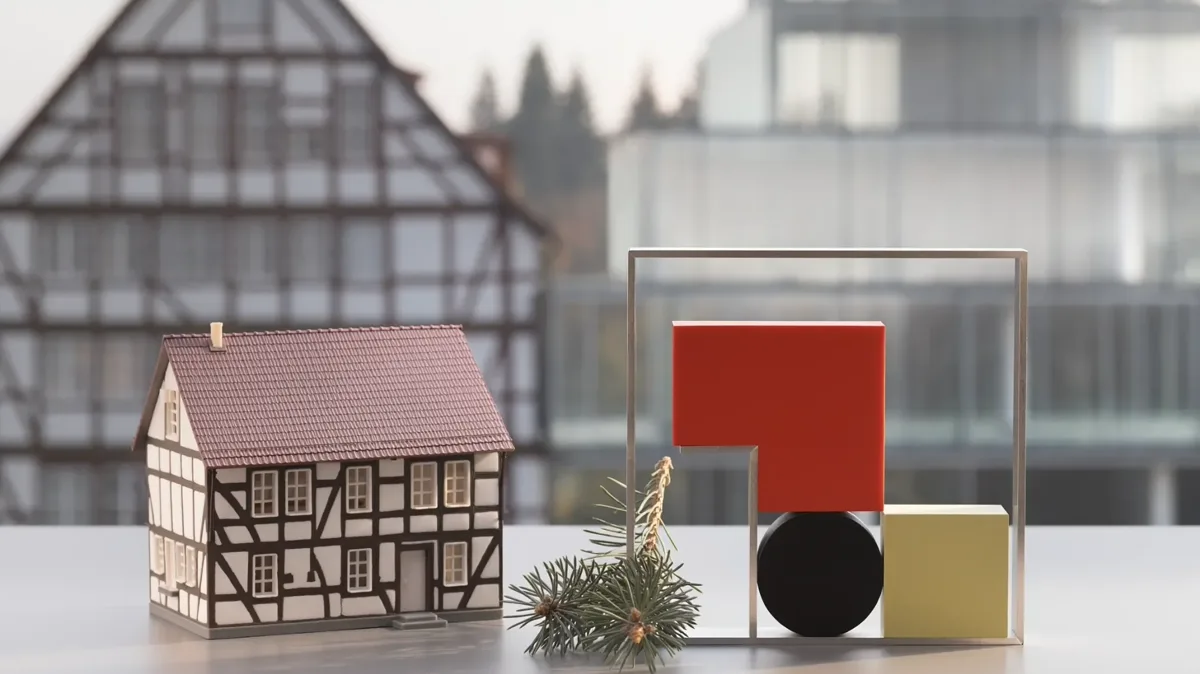
Chapter in 30 Seconds
Master the art of German plurals and create powerful compound words with confidence.
- Identify the five main plural endings for German nouns.
- Apply Umlauts correctly when forming plural nouns.
- Construct complex compound words using the 'Last Word is Boss' rule.
O que você vai aprender
You've nailed the basics, awesome! Now, let's dive into an exciting new level that'll make your German sound much more professional and authentic. In this chapter, you're going to master the power of plurals and the magic of German compound words.
First, we'll learn how to form plurals for nouns in German. It might seem tricky at first, but you'll see how logical it all is! You'll discover when to simply add an «-e» (like Hunde and Tage), when «-n» or -en comes into play (especially for feminine nouns, no tricky Umlauts needed!), when -er appears with an Umlaut (like Kinder), and even words that don't change at all in the plural (like Lehrer). Plus, you'll see how easy it is to make foreign words plural with a simple «-s» (like Autos).
But the most thrilling part? German compound words! You know, those long, fascinating words that stick several smaller words together to create a completely new meaning? We'll teach you the golden rule: in these compounds, the last word is always the boss! It dictates the gender and how the entire word forms its plural. This is a super useful trick you'll use constantly.
Where will these skills really come in handy? Imagine you're shopping in Germany and want to say three flowers or four books. You'll need to know your plurals! Or when you want to talk about more complex things, like a car key (Autoschlüssel), compound words are essential.
By the end of this chapter, you'll confidently be able to make tons of words plural and use German compound words like a native speaker. Your conversations will flow more smoothly and naturally, and you won't have any trouble forming longer, more intricate sentences. Ready for this new power in German? Let's go!
-
Plural em alemão: Adicionar -e (Hunde, Tage, Brote)Você tem uma forma clássica de fazer o plural: é só adicionar «-e» a substantivos masculinos e neutros de uma sílaba.
-
Plurais em Alemão: Adicionando -n ou -enSubstantivos femininos em alemão quase sempre levam «-n» ou
-enno plural, e não precisa deUmlautnem mudar a vogal. -
Plurais em Alemão: Adicionando -er (as crianças, as casas)Pra fazer o plural de substantivos curtos (neutros ou masculinos), adicione
-ere umUmlaut, sempre usandodieno artigo. -
Plural sem mudança (-er, -el, -en)Para muitas palavras masculinas e neutras que terminam em
-er,-ele-en, o plural é igualzinho ao singular. A dica é ficar de olho noartigoe noverbo! -
Plurais em Alemão: O final fácil em '-s' (Autos, Teams)Para fazer o plural de palavras estrangeiras, abreviações e substantivos que terminam em vogais 'a', 'i', 'o', 'u', 'y', é só adicionar um «-s». É moleza!
-
Substantivos compostos em alemão: A última palavra é a chefe (Komposita)Em alemão, nos substantivos compostos, a última palavra é a chefe! Ela decide o gênero e como fazer o plural. Pense nela como a
palavra principal.
Learning Objectives
By the end of this chapter, you will be able to:
-
1
By the end you will be able to: correctly pluralize common masculine and neuter nouns by adding -e.
-
2
By the end you will be able to: form plurals for 90% of feminine nouns using -n or -en.
-
3
By the end you will be able to: determine the gender and plural form of any compound noun by identifying its final component.
Guia do capítulo

Overview
Plural Power and Compound Words,is designed to elevate your German from good to great, making your conversations more fluid and your descriptions incredibly precise.
many houses or the car key, sounding much more authentic and professional. Get ready to add some serious depth to your German vocabulary and sentence structure!How This Grammar Works

Common Mistakes
- 1✗ Wrong:
Ich sehe viele Hausen.
(I see many house-s.)
Ich sehe viele Häuser.(I see many houses.)
- 1✗ Wrong:
Das ist ein Schreibtischlampe.
(That is a desk lamp.)
Das ist eine Schreibtischlampe.(That is a desk lamp.)
- 1✗ Wrong:
Ich habe drei Buchen gelesen.
(I have read three book-s.)
Ich habe drei Bücher gelesen.(I have read three books.)

Real Conversations
A
B
A
B
A
B
Quick FAQ
Why are German plurals so inconsistent? Is there a secret rule for all of them?
Unfortunately, there's no single secret rule that applies to all German plurals. The variations stem from historical linguistic developments. The best approach for A2 German is to learn each noun with its plural form (e.g., das Buch, die Bücher), but recognizing the common patterns we discussed will help you make educated guesses.
How do I know the gender of a German compound noun?
The gender of a German compound noun is always determined by the last noun in the compound. For example, die Haustür (the house door) is feminine because die Tür (the door) is feminine.
Do all nouns ending in -er, -el, or -en have no plural change?
While many do, especially masculine nouns, it's not a universal rule. For instance, der Teller (the plate) stays die Teller, but der Fehler (the mistake) is die Fehler. Always verify if unsure, but it's a very common pattern to look for.

Cultural Context
Exemplos-chave (8)
Ich habe zwei {die|f} Hunde.
Eu tenho dois cachorros.
Plural em alemão: Adicionar -e (Hunde, Tage, Brote)Die {die|f} Bäume im Park sind schön.
As árvores no parque são bonitas.
Plural em alemão: Adicionar -e (Hunde, Tage, Brote)Ich brauche neue `die Lampen` für mein Zimmer.
Eu preciso de lâmpadas novas para o meu quarto.
Plurais em Alemão: Adicionando -n ou -enHast du meine `die Nachrichten` auf WhatsApp gelesen?
Você leu minhas mensagens no WhatsApp?
Plurais em Alemão: Adicionando -n ou -enDie Kinder spielen im Garten.
As crianças estão brincando no jardim.
Plurais em Alemão: Adicionando -er (as crianças, as casas)Ich habe viele Bücher auf meinem Kindle.
Eu tenho muitos livros no meu Kindle.
Plurais em Alemão: Adicionando -er (as crianças, as casas)Die Lehrer sind heute nicht da.
Os professores não estão aqui hoje.
Plural sem mudança (-er, -el, -en)Dicas e truques (4)
A Armadilha do Umlaut
der Baum vira die Bäume.A Regra das Femininas
Ich kaufe die Lampen.
O Ímã do Umlaut
Umlaut (ä, ö, ü). É super consistente! Por exemplo, de 'das Land' para die Länder.Olhe para o Verbo
Der Lehrer *ist* (singular) versus Die Lehrer *sind* (plural).Vocabulário-chave (7)
Real-World Preview
At the Local Market
Review Summary
- der/das Noun + -e
- die Noun + -(e)n
- Word A + Word B = Gender of B
Erros comuns
Foreign words ending in vowels almost always take an -s plural. Don't leave them in the singular form.
The gender comes from 'die Tür', not 'das Haus'. Always look at the very last part of the compound word.
Many -er plurals require an Umlaut (a -> ä, o -> ö, u -> ü). Forgetting the dots is a common spelling error.
Regras neste capítulo (6)
Next Steps
You've just conquered one of the most varied parts of German grammar. Keep practicing those plural endings and you'll sound like a pro in no time!
Label 10 items in your room with their plural forms.
Listen to a German podcast and count how many compound words you hear.
Prática rápida (10)
Ich kaufe drei ___ ({der|m} Kuchen).
frontend.learn_grammar.from_rule: Plural sem mudança (-er, -el, -en)
Choose the correct sentence:
die e o plural de 'Tisch' é Tische.frontend.learn_grammar.from_rule: Plural em alemão: Adicionar -e (Hunde, Tage, Brote)
Ich habe viele ______ (Hobby).
frontend.learn_grammar.from_rule: Plurais em Alemão: O final fácil em '-s' (Autos, Teams)
Find and fix the mistake:
Ich trinke das Apfelsaft.
frontend.learn_grammar.from_rule: Substantivos compostos em alemão: A última palavra é a chefe (Komposita)
Escolha a frase gramaticalmente correta:
Ich sehe zwei Frauen.
frontend.learn_grammar.from_rule: Plurais em Alemão: Adicionando -n ou -en
Das Haus ist groß. Die ___ sind alt.
frontend.learn_grammar.from_rule: Plurais em Alemão: Adicionando -er (as crianças, as casas)
Escolha a frase certa:
frontend.learn_grammar.from_rule: Plurais em Alemão: O final fácil em '-s' (Autos, Teams)
___ Kaffeetasse
frontend.learn_grammar.from_rule: Substantivos compostos em alemão: A última palavra é a chefe (Komposita)
Escolha a frase correta:
frontend.learn_grammar.from_rule: Plurais em Alemão: Adicionando -er (as crianças, as casas)
Find and fix the mistake:
Ich sehe zwei Auto's auf der Straße.
frontend.learn_grammar.from_rule: Plurais em Alemão: O final fácil em '-s' (Autos, Teams)
Score: /10
Perguntas comuns (6)
Bäume contra 'Brot' que vira Brote.Hände ou 'Nacht' vira Nächte.die Tasche vira die Taschen, mas die Frau vira die Frauen.Umlaut no plural. Vogais como 'i' ou 'e', tipo em 'das Kind' ou 'das Lied', não mudam, então o plural fica die Kinder ou die Lieder sem o Umlaut.die Kinder (as crianças) são super comuns!
