









nugget em 30 segundos
- A nugget is a small, solid lump of something valuable, like gold or a piece of fried chicken.
- Metaphorically, it refers to a brief but highly useful and important piece of information or advice.
- The word originates from the 19th-century gold rushes and implies high value in a small package.
- It is a countable noun and is often used in the phrase 'a nugget of [wisdom/truth/information].'
The word 'nugget' is a fascinating noun that has traveled through history from the muddy riverbeds of the 19th-century gold rushes to the modern-day fast-food counter and the digital boardrooms of the information age. At its most fundamental level, a nugget is a small, solid, and often irregularly shaped lump of a precious substance. Historically, this almost exclusively referred to gold. When a miner found a 'nugget' in the earth, it was a moment of pure, concentrated success—a small object that held immense value. This historical context is crucial because it informs every other way we use the word today. Whether we are talking about food or information, the underlying concept is always 'small size, high value, or high density.'
- Geological Origin
- In geology, a nugget is a naturally occurring piece of native gold. Other precious metals like platinum can also form nuggets, but gold is the most common. These are distinct from gold flakes or gold dust because they are large enough to be handled individually and are often smoothed by the action of water in streams.
The prospector's eyes widened as he pulled a heavy, thumb-sized nugget of gold from the silt of the riverbed.
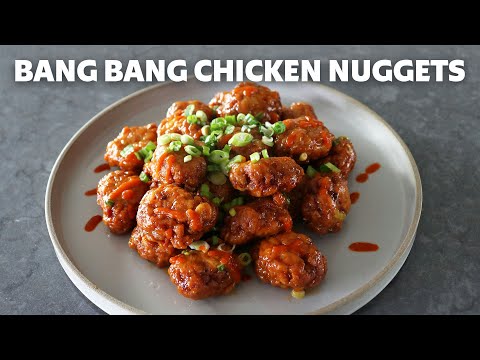
In the mid-20th century, the word took on a culinary life. In the 1950s, Robert C. Baker, a food science professor at Cornell University, invented a way to keep breading stuck to small pieces of chicken meat during frying. He called these 'chicken crispies,' but the world eventually settled on 'chicken nuggets.' Here, the word 'nugget' implies a bite-sized, solid piece of food that is easy to consume. It suggests convenience and a specific shape that is roughly rounded but irregular. Today, you will find nuggets made of fish, vegetables, and even plant-based meat substitutes, all following this same naming convention.
- Culinary Application
- A small, breaded, and deep-fried piece of food, most commonly chicken. It is a staple of fast-food menus and frozen food aisles, valued for its portability and kid-friendly appeal.
After the soccer game, the entire team went to the local diner for a large platter of chicken nuggets and fries.
The most sophisticated use of 'nugget' is metaphorical. In the world of communication, a 'nugget' is a small but extremely valuable piece of information, wisdom, or truth. Just as a gold nugget is a concentrated piece of wealth, an information nugget is a concentrated piece of knowledge. We often hear phrases like 'nuggets of wisdom' or 'nuggets of truth.' This usage is very common in business, education, and self-improvement contexts. It suggests that while the overall content might be large, these specific pieces are the most important parts to remember and take away.
- Metaphorical Meaning
- A brief but highly significant or useful idea, fact, or piece of advice. It is often used to describe the highlights of a longer conversation or text.
The keynote speaker's presentation was quite long, but it contained several nuggets of advice that changed how I view my career.
Hidden within the dry, technical manual was a nugget of information that solved our software bug instantly.
She shared a precious nugget of family history that explained why her grandfather had moved to the city.
Using the word 'nugget' correctly requires an understanding of its countability and its typical collocations. As a countable noun, you can have one nugget or many nuggets. It is almost always preceded by an adjective or followed by a prepositional phrase starting with 'of.' This structure helps clarify which of the three main meanings (gold, food, or information) you are intending to use. Because 'nugget' implies smallness, it is rarely used to describe large or overwhelming things. It is the word of the 'bite-sized' and the 'concentrated.'
- Grammatical Structure: The 'Nugget of' Pattern
- When using the word metaphorically, the most common pattern is [nugget] + [of] + [abstract noun]. Common abstract nouns include wisdom, truth, information, knowledge, and advice. This structure treats the 'nugget' as a container or a unit of the abstract concept.
Every chapter of the book ends with a small nugget of wisdom for the reader to contemplate.
In the physical sense, particularly regarding gold, 'nugget' is often used with descriptive adjectives that emphasize its size or appearance. Words like 'raw,' 'solid,' 'pure,' 'heavy,' or 'glittering' are frequently paired with it. In this context, the word functions as a concrete noun. You are describing a physical object that can be touched, weighed, and traded. The sentence structure usually involves verbs of discovery or possession, such as 'find,' 'discover,' 'mine,' or 'hold.'
- Physical Description
- Using 'nugget' to describe physical objects requires focus on texture and substance. It is a solid lump, not a powder or a liquid. It suggests a certain ruggedness or natural state.
The museum displayed a massive nugget of copper that had been found in the local hills a century ago.
When discussing food, 'nugget' is often part of a compound noun or a specific menu item name. 'Chicken nugget' is the most ubiquitous, but you might also see 'veggie nuggets' or 'fish nuggets.' In these cases, the word describes the form factor. It tells the eater what to expect: a small, breaded, easy-to-eat piece. Grammatically, it often appears in the plural because people rarely eat just one nugget. You would say 'I ate some nuggets' rather than 'I ate a nugget,' unless you are being very specific about a single piece.
- Plurality in Food
- In culinary contexts, 'nuggets' is almost always plural. It refers to a serving or a collection of these small food items. Using the singular 'nugget' in a restaurant might sound slightly unusual unless you are referring to a specific piece that fell on the floor.
Can I get a ten-piece nugget meal with extra barbecue sauce, please?
She carefully dipped each nugget into the honey mustard before taking a bite.
The toddler refused to eat anything except for golden-brown chicken nuggets.
The word 'nugget' is incredibly versatile and pops up in diverse environments. If you are in a casual dining setting, especially a fast-food restaurant like McDonald's, Burger King, or Wendy's, you will hear it constantly. It is perhaps one of the most common food-related words in the English language due to the global popularity of the 'Chicken McNugget.' In this environment, the word is associated with childhood, quick meals, and comfort food. Parents often use it when talking to children: 'Finish your nuggets and you can have dessert.'
- The Fast-Food Environment
- In restaurants, 'nugget' is a standard term for a specific category of finger food. It is used by customers when ordering and by staff when calling out orders. It is a neutral, everyday term in this context.
The drive-thru worker asked, 'Would you like the six-piece or the nine-piece nugget?'
Switching to a professional or educational setting, the word 'nugget' takes on its metaphorical meaning. You will hear it in business meetings, during seminars, or in podcasts. A manager might say, 'I want to share a nugget of information from the latest market report.' Here, the word is used to signal that what follows is important and worth paying attention to. It is a way of cutting through the 'noise' of a long meeting to highlight a specific, actionable point. In the world of journalism and content creation, editors often look for 'nuggets'—interesting facts or quotes that will grab the reader's attention.
- Professional and Educational Contexts
- In these settings, 'nugget' is a positive term. It implies that the speaker is being concise and providing high-value content. It is often used to summarize the most important takeaways from a larger body of work.
During the interview, the CEO dropped a nugget of wisdom about the importance of failure in the creative process.
You will also encounter 'nugget' in historical or scientific documentaries, particularly those focused on geology, mining, or the history of the American West. Narrators will use the word to describe the physical finds of prospectors. This usage feels more rugged and adventurous. It evokes images of the 1849 Gold Rush, dusty pans, and the excitement of finding wealth in the dirt. In this context, 'nugget' is a technical term but one that carries a lot of emotional and historical weight.
- Historical and Scientific Contexts
- Used to describe mineral discoveries. It is a precise term for a solid mass of metal, distinguishing it from ores where the metal is dispersed throughout the rock.
The documentary explained how a single large nugget could spark a massive migration of people to a remote region.
He spent years panning for gold, hoping to find that one elusive nugget that would change his life.
The geology professor showed us a nugget of silver to demonstrate how metals can occur in their pure form.
One of the most common mistakes learners make with the word 'nugget' is using it to describe something large or expansive. Because the word inherently implies a small, concentrated size, it sounds very strange to say something like 'a huge nugget of a building' or 'a massive nugget of a book.' If something is large, 'nugget' is the wrong word. Instead, you might use 'chunk,' 'slab,' or 'volume.' Remember: a nugget must be something you could potentially hold in your hand or consume in a bite or two (literally or metaphorically).
- Mistake: Misjudging Scale
- Avoid using 'nugget' for large objects. It is strictly for small, compact items. If you use it for something large, it may be interpreted as sarcasm or a joke.
Incorrect: He gave me a nugget of a three-hour lecture. Correct: He gave me a few nuggets of wisdom during his three-hour lecture.
Another frequent error is confusing 'nugget' with 'nudge.' While they sound somewhat similar, they are completely different parts of speech and have unrelated meanings. 'Nudge' is usually a verb meaning to push someone gently with your elbow to get their attention. 'Nugget' is always a noun. You cannot 'nugget' someone. If you tell someone, 'I gave him a nugget to move out of the way,' people will be very confused—they might think you threw a piece of chicken at him!
- Mistake: Confusing with 'Nudge'
- 'Nugget' is a thing (noun); 'Nudge' is an action (verb). They are not interchangeable. Ensure you are using the noun form when referring to small lumps or pieces of information.
Incorrect: I had to nugget him to wake up. Correct: I had to nudge him to wake up.
A third mistake involves the metaphorical use. Sometimes learners use 'nugget' for negative information. While not strictly 'wrong' in a grammatical sense, it is stylistically unusual. Usually, a 'nugget' of information is something valuable, helpful, or interesting. You wouldn't typically say 'a nugget of bad news' or 'a nugget of insults.' For negative things, we tend to use words like 'bit,' 'piece,' or 'shred.' 'Nugget' almost always carries a connotation of value, just like the gold it originally described.
- Mistake: Using for Negative Information
- 'Nugget' has a positive or neutral 'aura.' Using it for something purely negative or harmful can create a confusing tone in your writing or speech.
Incorrect: He shared a nugget of hatred. Correct: He shared a nugget of truth that was hard to hear.
Incorrect: The soup had a nugget of hair in it. Correct: The soup had a clump of hair in it.
Incorrect: I found a nugget of trash on the floor. Correct: I found a scrap of trash on the floor.
Understanding the synonyms for 'nugget' helps you choose the most precise word for your context. While 'nugget' is excellent for small, valuable things, other words might fit better if the value or the shape is different. For example, 'chunk' implies something larger and more roughly shaped, often without the connotation of value. You might have a 'chunk of ice' or a 'chunk of wood.' It feels heavier and less 'precious' than a nugget.
- Nugget vs. Chunk
- A 'nugget' is small and valuable; a 'chunk' is larger, thicker, and often more common or less refined. You find nuggets of gold, but chunks of coal.
'Morsel' is another close relative, but it is almost exclusively used for food. A 'morsel' is a very small piece of food, often implying it is tasty or delicate. While a 'nugget' is a specific type of fried food, a 'morsel' could be a tiny piece of cake or a small bit of cheese. Metaphorically, you can have a 'morsel of hope,' which is similar to a 'nugget of hope,' but 'morsel' feels even smaller and more fragile.
- Nugget vs. Morsel
- 'Morsel' is more delicate and food-focused. 'Nugget' is more solid and can be metallic or informational. You 'nibble' a morsel; you 'find' a nugget.
In the metaphorical sense of 'information,' 'gem' is a very strong alternative. A 'gem of information' or a 'gem of an idea' carries the same idea of high value as 'nugget.' However, 'gem' implies beauty and perfection, whereas 'nugget' implies something raw and unrefined but still valuable. If an idea is brilliant and polished, call it a 'gem.' If it is a raw, useful fact found in a pile of data, call it a 'nugget.'
- Nugget vs. Gem
- Both imply value. 'Gem' suggests beauty and brilliance; 'nugget' suggests a raw, natural, or concentrated form of value. Use 'gem' for something perfect and 'nugget' for something useful.
The old man's story was long, but it contained a nugget of truth that stayed with me for years.
He offered me a morsel of his sandwich, but I wasn't hungry.
The geologist identified the clump as common pyrite, not a real gold nugget.
How Formal Is It?
Curiosidade
The largest gold nugget ever found was the 'Welcome Stranger,' discovered in Australia in 1869. It weighed about 72 kilograms (158 lbs)!
Guia de pronúncia
- Pronouncing the 'g' as a 'j' sound (like 'nudget'). It should always be a hard 'g'.
- Making the 'u' sound like 'oo' (like 'nooget'). It should be a short 'uh'.
- Forgetting the 't' at the end.
- Stressing the second syllable instead of the first.
- Confusing the pronunciation with 'nudge'.
Nível de dificuldade
Easy to recognize in food contexts, but requires context to understand metaphorical uses.
Requires understanding of the 'nugget of...' construction to use effectively.
Pronunciation is straightforward, and it's a common word in casual conversation.
Clearly pronounced and usually distinct from similar-sounding words.
O que aprender depois
Pré-requisitos
Aprenda a seguir
Avançado
Gramática essencial
Countable Nouns
You can say 'one nugget' or 'many nuggets.' You must use an article like 'a' or 'the' in the singular.
Nouns as Adjectives
In 'nugget ice,' the noun 'nugget' describes the type of ice.
Prepositional Phrases with 'Of'
Metaphorical uses almost always follow the pattern 'nugget of [noun].'
Compound Nouns
'Chicken nugget' is a compound noun where 'chicken' specifies the type of nugget.
Adjective Placement
Adjectives like 'valuable' or 'golden' come before 'nugget': 'a valuable nugget.'
Exemplos por nível
I want to eat chicken nuggets for lunch.
I want to eat small pieces of fried chicken.
Plural noun 'nuggets'.
The nuggets are very hot.
The fried chicken pieces have a high temperature.
Subject-verb agreement with plural 'nuggets'.
Do you like nuggets?
Is this food something you enjoy?
Question form with 'do'.
She has five nuggets in her box.
There are five pieces of chicken.
Number + plural noun.
My favorite food is a chicken nugget.
I like this specific food the most.
Singular noun with 'a'.
The nugget is small and brown.
The piece of food is little and has a brown color.
Adjectives 'small' and 'brown' describing the noun.
We buy nuggets at the supermarket.
We get this food from the store.
Present simple tense.
He dips his nugget in sauce.
He puts the chicken into a liquid.
Third person singular 'dips'.
The man found a gold nugget in the river.
He found a small piece of gold.
Past simple 'found'.
A gold nugget can be very expensive.
A small piece of gold costs a lot of money.
Modal verb 'can'.
He looked for nuggets in the dirt.
He searched for small lumps of gold.
Prepositional phrase 'in the dirt'.
The nugget was heavy for its size.
The small piece felt like it weighed a lot.
Adjective 'heavy'.
They showed us a large nugget at the museum.
We saw a big piece of gold in a glass box.
Indirect object 'us'.
Is that a real gold nugget?
Is that piece of metal actually gold?
Interrogative with 'is'.
The miner was happy to find a nugget.
The worker felt good because he found gold.
Infinitive 'to find'.
Nuggets are not always perfectly round.
Small lumps of gold have different shapes.
Negative 'not always'.
The teacher shared a nugget of wisdom with the class.
The teacher gave a small piece of good advice.
Metaphorical 'nugget of wisdom'.
I found a useful nugget of information on the website.
I found a helpful fact online.
Adjective 'useful' modifying 'nugget'.
There is a nugget of truth in what he says.
A small part of his story is true.
Existential 'there is'.
She gave me a nugget of advice about my career.
She gave me a small, helpful tip for my job.
Preposition 'about'.
The book is full of interesting nuggets of history.
The book has many small, cool historical facts.
Phrase 'full of'.
Can you give me a nugget of news from home?
Can you tell me a small piece of news?
Request with 'can'.
Each chapter contains a nugget of knowledge.
Every part of the book has a small, important fact.
Each + singular noun.
I'm looking for a nugget of inspiration for my story.
I need a small idea to help me write.
Present continuous 'am looking'.
The analyst identified a nugget of data that explained the market crash.
The expert found a specific piece of info about the economy.
Relative clause 'that explained...'.
His speech was long, but it had several nuggets of brilliance.
He talked a lot, but some parts were very smart.
Conjunction 'but' showing contrast.
We need to extract the nuggets of value from this long report.
We must find the most important parts of this document.
Infinitive of purpose 'to extract'.
She has a knack for finding nuggets of humor in sad situations.
She is good at finding small funny things in bad times.
Gerund 'finding' after preposition 'for'.
The documentary provided several nuggets of insight into the artist's life.
The film gave us some deep understanding of the painter.
Preposition 'into'.
Don't ignore that nugget of doubt in your mind.
Pay attention to that small feeling that something is wrong.
Imperative 'don't ignore'.
The podcast is great for picking up nuggets of business advice.
The audio show is good for learning small business tips.
Phrasal verb 'picking up'.
He presented a nugget of evidence that changed the jury's mind.
He showed a small fact that convinced the people in court.
Relative clause 'that changed...'.
The memoir is a collection of poignant nuggets from a life well-lived.
The life story is a group of touching small memories.
Adjective 'poignant' modifying 'nuggets'.
The researcher spent months sifting through archives for a single nugget of proof.
The scientist looked through old papers for one small fact.
Participle phrase 'sifting through archives'.
Hidden within the jargon was a nugget of pure common sense.
Inside the difficult words was a very simple, true idea.
Inverted sentence structure for emphasis.
The interview yielded a few nuggets of gossip that the tabloids loved.
The talk gave some small secrets that newspapers liked.
Verb 'yielded' meaning produced.
He has a way of distilling complex theories into manageable nuggets.
He can make hard ideas easy to understand in small pieces.
Gerund 'distilling'.
The play's dialogue is peppered with nuggets of sharp social commentary.
The actors' words include many small, clever criticisms of society.
Passive voice 'is peppered'.
Even in the most boring lecture, one can usually find a nugget of interest.
You can find something cool even in a dull talk.
Pronoun 'one' for general person.
The discovery of a nugget of ancient pottery changed our understanding of the site.
Finding a small piece of old clay changed what we knew.
Compound noun 'ancient pottery'.
The diplomat's carefully worded statement contained a nugget of hope for peace.
The official's speech gave a tiny bit of optimism for the end of the war.
Compound adjective 'carefully worded'.
To the discerning reader, the poem offers several nuggets of metaphysical insight.
A smart reader will find deep spiritual ideas in the poem.
Adjective 'discerning'.
The legal defense rested on a single, overlooked nugget of forensic evidence.
The court case depended on one small, forgotten piece of science.
Adjective 'overlooked'.
Her prose is dense, requiring the reader to mine for nuggets of meaning.
Her writing is hard, so you have to work to find the ideas.
Metaphorical use of 'mine' as a verb.
The archives are a treasure trove, if one has the patience to find the nuggets.
The old records are great if you can wait to find the good parts.
Conditional 'if' clause.
The CEO's 'nuggets' of advice often felt more like platitudes to the cynical staff.
The boss's tips seemed like boring, empty sayings to the workers.
Use of scare quotes for irony.
There is a nugget of irony in the fact that the environmentalist drove a gas-guzzler.
It is funny in a strange way that the nature-lover had a big car.
Noun 'irony' as the object of 'nugget of'.
The film's brilliance lies in these small nuggets of human connection.
The movie is great because of tiny moments between people.
Subject-verb agreement 'brilliance lies'.
Colocações comuns
Frases Comuns
— A small but very important and helpful piece of advice or life lesson.
He dropped a nugget of wisdom that I still remember twenty years later.
— A small part of a statement or story that is actually true, even if the rest is false.
Even in his lies, there was usually a nugget of truth.
— A popular fast food consisting of small pieces of breaded and fried chicken.
The kids always ask for chicken nuggets when we go out.
— A small, specific, and often very useful fact.
The spy provided a crucial nugget of information to the agency.
— Can refer to literal gold or metaphorically to something extremely valuable and rare.
This rare book is a golden nugget for any historian.
— A brief but helpful suggestion.
Let me give you a little nugget of advice: always double-check your work.
— A small reason to feel optimistic in a bad situation.
The doctor's words provided a small nugget of hope for the family.
— A small piece of new information or a recent event.
Do you have any nuggets of news from the office today?
— A specific point of information extracted from a larger set of data.
We found a nugget of data that proves our theory is correct.
— Emphasizes that the piece of food or information is small and easy to consume.
The lesson was broken down into bite-sized nuggets for the students.
Frequentemente confundido com
A nudge is a gentle push (verb); a nugget is a small lump (noun).
Both are small and hard, but a nut is a seed/fruit, while a nugget is a lump of metal, food, or info.
This is an adjective meaning 'like a nugget' (small and stocky), often used to describe people.
Expressões idiomáticas
— A brief but extremely valuable piece of advice.
The mentor shared a nugget of wisdom about perseverance.
neutral— A small element of honesty in a larger context of falsehood or exaggeration.
There's a nugget of truth in every legend.
neutral— Something of great value or importance that is found among less valuable things.
That idea was the golden nugget of the brainstorming session.
informal— Extremely valuable (a variation of 'worth its weight in gold').
A good assistant is worth their weight in nuggets.
informal— Literally a piece of gold, but often used to describe a person with a great heart.
He's a real nugget of gold, always helping others.
informal— A small, actionable piece of data.
The newsletter provides daily information nuggets for investors.
business— To search through a lot of material to find the most valuable parts.
We had to mine for nuggets of useful feedback in the long survey.
neutral— The small, initial start of a potentially great plan.
It started as just a nugget of an idea, but now it's a huge company.
neutral— Information presented in a way that is very easy to understand and remember.
The course is delivered in bite-sized nuggets.
educational— A small, specific instance of something being the opposite of what is expected.
There was a nugget of irony in the fire station catching fire.
literaryFácil de confundir
Both refer to solid pieces.
A chunk is usually larger and less valuable. A nugget is small and precious.
A chunk of rock vs. a nugget of gold.
Both refer to small pieces.
Morsel is almost always food and implies it is a tiny, tasty bit. Nugget is a specific food shape or metallic lump.
A morsel of bread vs. a chicken nugget.
Both refer to a mass of something.
A clump is things stuck together (like mud or hair) and is often messy. A nugget is a single solid unit.
A clump of dirt vs. a nugget of copper.
Both refer to small amounts of abstract things.
A grain is much smaller than a nugget. A 'grain of truth' is the tiny bit; a 'nugget of truth' is a bit more substantial.
A grain of sand vs. a nugget of gold.
Both refer to pieces of solid material.
A slab is large, flat, and heavy. A nugget is small and rounded/irregular.
A slab of concrete vs. a nugget of gold.
Padrões de frases
I like [food] nuggets.
I like chicken nuggets.
He found a [metal] nugget.
He found a gold nugget.
A nugget of [abstract noun].
A nugget of wisdom.
That is a useful nugget of [noun].
That is a useful nugget of information.
The [source] is full of nuggets.
The report is full of nuggets of data.
Extracting nuggets of [noun] from [source].
Extracting nuggets of truth from the witness's testimony.
Peppered with nuggets of [noun].
The speech was peppered with nuggets of humor.
A single, overlooked nugget of [noun].
A single, overlooked nugget of evidence.
Família de palavras
Substantivos
Adjetivos
Relacionado
Como usar
Very high in food and casual conversation; medium in professional metaphorical use.
-
I found a nugget of water.
→
I found a drop of water.
Nuggets must be solid, not liquid.
-
He gave me a nugget of a long book.
→
He gave me a nugget of information from the long book.
A nugget is a small part, not the whole large thing itself.
-
I had to nugget him to wake up.
→
I had to nudge him to wake up.
'Nugget' is a noun; 'nudge' is the verb for a gentle push.
-
There was a nugget of trash on the street.
→
There was a piece of trash on the street.
'Nugget' usually implies something valuable or useful, not waste.
-
I want ten nugget.
→
I want ten nuggets.
Nugget is a countable noun and needs the plural 's'.
Dicas
Use with 'Of'
When using 'nugget' for ideas, always follow it with 'of' and the topic (e.g., 'nugget of truth'). This makes your meaning clear immediately.
Value is Key
Remember that a nugget is usually something you *want* to find. Use it for positive or useful things to sound more natural.
Count Your Nuggets
Since it's a countable noun, don't forget the 's' for plural. 'I ate ten nuggets,' not 'I ate ten nugget.'
Hard G
Always use a hard 'G' like in 'game.' If you use a soft 'G' (like 'J'), people will think you are saying 'nudge' or 'nudget' (which isn't a word).
Bite-Sized Info
In presentations, use the word 'nugget' to highlight your most important points. It tells the audience, 'This part is valuable!'
Avoid Overuse
While 'nugget of wisdom' is a great phrase, don't use it too many times in one essay. Mix it up with 'insight' or 'gem.'
Food Context
If you're in the US, 'nuggets' almost always means chicken unless you're in a jewelry store or a mine!
Listen for Context
If you hear 'nugget' in a business podcast, it's about information. In a cooking show, it's about food. Context is everything.
Gold Rush Link
Link the word to 'Gold Rush' in your mind. It will help you remember the 'small but valuable' meaning.
Casual vs. Formal
It's okay to use 'nugget' in most situations, but in a very formal scientific paper, use 'lump' or 'mass' for physical objects.
Memorize
Mnemônico
Think of a 'Nut' that is 'Great'—a NUGget. Like a nut, it is small and hard, and like something great, it is valuable like gold or tasty like chicken.
Associação visual
Imagine a small, glowing golden rock sitting in the palm of your hand. This rock is a 'nugget.' Now imagine that same shape, but it's a piece of crispy chicken. Finally, imagine that same shape, but it's a glowing lightbulb representing a smart idea.
Word Web
Desafio
Try to use 'nugget' in three different ways today: once for food, once for something physical, and once for a piece of advice you heard.
Origem da palavra
The word 'nugget' first appeared in the mid-19th century, around 1852. It is believed to be a diminutive of the word 'nug,' which was a dialect word for a lump or a block of wood. Its popularity exploded during the gold rushes in Australia and California.
Significado original: A small, solid lump of native gold.
English (Germanic roots via 'nug').Contexto cultural
No major sensitivities, but be aware that 'nugget' can be a slang term for low-quality drugs or a mild insult in some regions, though these are less common.
Very common in daily life, especially regarding food and advice. 'Chicken nuggets' are a cultural icon in the US and UK.
Pratique na vida real
Contextos reais
Fast Food Restaurant
- A 6-piece nugget
- Chicken nuggets with sauce
- Nugget meal
- Crispy nuggets
Business Meeting
- A nugget of data
- Valuable nuggets of feedback
- Extracting nuggets
- Key nuggets from the report
Geology/History
- Panning for nuggets
- A raw gold nugget
- Mining nuggets
- A massive nugget
Self-Help/Education
- Nuggets of wisdom
- A nugget of advice
- Learning nuggets
- Bite-sized nuggets of knowledge
Everyday Conversation
- A nugget of news
- A nugget of truth
- Found a nugget
- Share a nugget
Iniciadores de conversa
"What is the most valuable nugget of advice you have ever received from a teacher?"
"Do you prefer chicken nuggets or a full chicken breast when you eat out?"
"If you found a gold nugget in your backyard, what would be the first thing you'd do?"
"Can you share a nugget of information about your country that most people don't know?"
"Do you think 'nuggets of wisdom' are better than long lectures for learning?"
Temas para diário
Write about a nugget of wisdom that has helped you during a difficult time in your life.
Describe a time you found something small but valuable, like a literal nugget or a metaphorical one.
If you were to write a book, what are three nuggets of truth you would want every reader to know?
Reflect on the popularity of chicken nuggets. Why do you think they are so successful globally?
Think about a recent podcast or video you watched. What was the most important nugget you took away?
Perguntas frequentes
10 perguntasIt is rare. 'Nugget' usually implies value, so we use it for good things like wisdom or gold. For bad things, words like 'scrap' or 'bit' are better. For example, you wouldn't say 'a nugget of garbage.'
It is two words: 'chicken nugget.' However, it functions as a single concept (a compound noun). In the plural, it is 'chicken nuggets.'
It means a small, short piece of advice that is very helpful. It's like finding a piece of gold in a pile of rocks; the advice is the gold.
No, 'nugget' is only a noun. You cannot 'nugget' something. You might be thinking of 'nudge,' which is a verb.
Yes, especially in gold mining. A flake is thin and light, while a nugget is a solid, heavy lump.
It's a tribute to the 19th-century gold rush in Colorado, where many miners searched for gold nuggets.
No. Nuggets must be solid. You could say 'a drop of water' or 'an ice nugget' (if the water is frozen into a small lump).
It is neutral. It's fine in a business meeting or a book, but 'chicken nugget' is very informal and casual.
It is a type of ice made of small, soft, chewable pellets. It is very popular in some American fast-food chains.
Yes, it's an adjective. It can describe something that has nuggets in it, or a person who is small but very strong and muscular.
Teste-se 185 perguntas
Write a sentence using 'nugget' to describe food.
Well written! Good try! Check the sample answer below.
Write a sentence using 'nugget' to describe gold.
Well written! Good try! Check the sample answer below.
Write a sentence using 'nugget of wisdom'.
Well written! Good try! Check the sample answer below.
Write a sentence using 'nugget of information'.
Well written! Good try! Check the sample answer below.
Write a sentence using 'nugget of truth'.
Well written! Good try! Check the sample answer below.
Describe a 'gold nugget' using three adjectives.
Well written! Good try! Check the sample answer below.
Explain why a 'nugget of wisdom' is valuable.
Well written! Good try! Check the sample answer below.
Write a short story (3 sentences) about finding a nugget.
Well written! Good try! Check the sample answer below.
Use 'nuggets' in the plural in a sentence about a report.
Well written! Good try! Check the sample answer below.
Write a sentence using 'nugget of hope'.
Well written! Good try! Check the sample answer below.
Compare a 'nugget' and a 'chunk'.
Well written! Good try! Check the sample answer below.
Write a dialogue between two people ordering nuggets.
Well written! Good try! Check the sample answer below.
Use 'nugget' metaphorically in a business context.
Well written! Good try! Check the sample answer below.
Write a sentence using 'nugget of irony'.
Well written! Good try! Check the sample answer below.
Describe 'nugget ice'.
Well written! Good try! Check the sample answer below.
Write a sentence using 'nugget of advice'.
Well written! Good try! Check the sample answer below.
Use 'nugget' to describe a small, strong person.
Well written! Good try! Check the sample answer below.
Write a sentence using 'raw nugget'.
Well written! Good try! Check the sample answer below.
Explain the phrase 'panning for nuggets'.
Well written! Good try! Check the sample answer below.
Write a sentence using 'nugget of brilliance'.
Well written! Good try! Check the sample answer below.
Describe your favorite way to eat chicken nuggets.
Read this aloud:
Você disse:
Speech recognition is not supported in your browser. Try Chrome or Edge.
Tell a story about finding something valuable.
Read this aloud:
Você disse:
Speech recognition is not supported in your browser. Try Chrome or Edge.
Share a nugget of wisdom you learned from your parents.
Read this aloud:
Você disse:
Speech recognition is not supported in your browser. Try Chrome or Edge.
Discuss why 'nuggets of information' are popular on social media.
Read this aloud:
Você disse:
Speech recognition is not supported in your browser. Try Chrome or Edge.
Explain the difference between a nugget and a chunk.
Read this aloud:
Você disse:
Speech recognition is not supported in your browser. Try Chrome or Edge.
What would you do if you found a massive gold nugget?
Read this aloud:
Você disse:
Speech recognition is not supported in your browser. Try Chrome or Edge.
Do you think chicken nuggets are healthy? Why or why not?
Read this aloud:
Você disse:
Speech recognition is not supported in your browser. Try Chrome or Edge.
Give a nugget of advice to someone learning English.
Read this aloud:
Você disse:
Speech recognition is not supported in your browser. Try Chrome or Edge.
Describe the shape and texture of a nugget.
Read this aloud:
Você disse:
Speech recognition is not supported in your browser. Try Chrome or Edge.
Talk about a 'nugget of truth' you found in a movie.
Read this aloud:
Você disse:
Speech recognition is not supported in your browser. Try Chrome or Edge.
How do you feel when you find a 'nugget of information' that solves a problem?
Read this aloud:
Você disse:
Speech recognition is not supported in your browser. Try Chrome or Edge.
Why do you think the Denver Nuggets chose that name?
Read this aloud:
Você disse:
Speech recognition is not supported in your browser. Try Chrome or Edge.
Share a 'nugget of news' from your life this week.
Read this aloud:
Você disse:
Speech recognition is not supported in your browser. Try Chrome or Edge.
Is a 'nugget of wisdom' better than a long book? Why?
Read this aloud:
Você disse:
Speech recognition is not supported in your browser. Try Chrome or Edge.
Describe 'nugget ice' to someone who has never seen it.
Read this aloud:
Você disse:
Speech recognition is not supported in your browser. Try Chrome or Edge.
What is a 'nugget of doubt'?
Read this aloud:
Você disse:
Speech recognition is not supported in your browser. Try Chrome or Edge.
Tell me about a 'nugget of history' from your town.
Read this aloud:
Você disse:
Speech recognition is not supported in your browser. Try Chrome or Edge.
Why is 'nugget' a good word for small, valuable things?
Read this aloud:
Você disse:
Speech recognition is not supported in your browser. Try Chrome or Edge.
Can you think of a 'nugget of irony' in your life?
Read this aloud:
Você disse:
Speech recognition is not supported in your browser. Try Chrome or Edge.
Would you rather have a gold nugget or a chicken nugget right now?
Read this aloud:
Você disse:
Speech recognition is not supported in your browser. Try Chrome or Edge.
Listen: 'I found a nugget of gold in the river.' What did the person find?
Listen: 'Can I have the nine-piece nuggets?' How many nuggets does the person want?
Listen: 'That was a great nugget of wisdom.' What was great?
Listen: 'The report has some nuggets of data.' Where are the nuggets?
Listen: 'There's a nugget of truth in what she said.' Is everything she said true?
Listen: 'He gave me a nugget of advice.' What did he give?
Listen: 'The miner was looking for nuggets.' What was the miner doing?
Listen: 'I love nugget ice.' What kind of ice does the person love?
Listen: 'It's a nugget of an idea.' Is the idea big or small?
Listen: 'The museum has a massive nugget.' Is the nugget small or large?
Listen: 'The speech was full of nuggets.' What was the speech full of?
Listen: 'She shared a nugget of news.' What did she share?
Listen: 'Dip the nugget in the sauce.' What should you do with the nugget?
Listen: 'He found a silver nugget.' What metal was the nugget made of?
Listen: 'It's a nugget of hope.' What kind of nugget is it?
/ 185 correct
Perfect score!
Summary
The word 'nugget' always implies 'small size and high value.' Whether you are talking about a physical piece of gold, a tasty chicken snack, or a brilliant idea, a nugget is something concentrated and worth having. Example: 'The book was long, but it contained a nugget of truth that changed my life.'
- A nugget is a small, solid lump of something valuable, like gold or a piece of fried chicken.
- Metaphorically, it refers to a brief but highly useful and important piece of information or advice.
- The word originates from the 19th-century gold rushes and implies high value in a small package.
- It is a countable noun and is often used in the phrase 'a nugget of [wisdom/truth/information].'
Use with 'Of'
When using 'nugget' for ideas, always follow it with 'of' and the topic (e.g., 'nugget of truth'). This makes your meaning clear immediately.
Value is Key
Remember that a nugget is usually something you *want* to find. Use it for positive or useful things to sound more natural.
Count Your Nuggets
Since it's a countable noun, don't forget the 's' for plural. 'I ate ten nuggets,' not 'I ate ten nugget.'
Hard G
Always use a hard 'G' like in 'game.' If you use a soft 'G' (like 'J'), people will think you are saying 'nudge' or 'nudget' (which isn't a word).
Exemplo
The old prospector spent his life searching for a legendary gold nugget.
Conteúdo relacionado
Ver em vídeos
Mais palavras de Food
additive
B2Um aditivo é uma substância adicionada em pequenas quantidades para melhorar algo.
additives
B2Aditivos são substâncias adicionadas a produtos para melhorar sua durabilidade ou aparência.
almond
B2Ela tem olhos amendoados deslumbrantes.
annatto
B1O urucum (annatto) é um corante alimentar natural extraído das sementes do urucuzeiro. É amplamente utilizado na culinária e na indústria de laticínios.
appetite
C1Apetite é o desejo natural de comer. Também pode significar um forte desejo por outra coisa, como aventura.
appetizer
C1Um aperitivo é uma pequena porção de comida servida antes da refeição principal.
appetizing
B2Parece ou cheira muito bem, dando fome. / O cheiro de pão recém-assado era muito apetitoso.
apple
C1O projeto foi concluído 'apple', com uma precisão impecável.
apples
A1As maçãs são frutas redondas e comestíveis.
apricot
C1O céu estava com um tom damasco suave durante o pôr do sol.

