tammy em 30 segundos
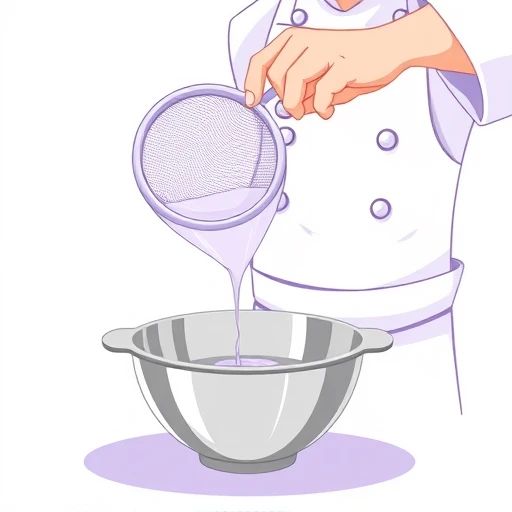
- A tammy is a fine-mesh fabric used for straining liquids in professional kitchens.
- It is also a historical term for a thin, glazed woolen fabric used for clothing linings.
- The word comes from the French 'estamine,' meaning a sieve-cloth.
- It is essential for achieving the smoothest possible texture in high-end culinary sauces.
The term tammy refers to a specific category of high-quality, fine-mesh fabric that serves two primary, yet distinct, roles in human history: one in the culinary arts and the other in the textile industry. In a modern professional kitchen, a tammy (often referred to as tammy cloth) is an indispensable tool for chefs who demand the smoothest possible texture for their sauces, purees, and coulis. It is a robust, tightly woven material, traditionally made of wool but now frequently found in heavy-duty cotton or synthetic blends, designed to withstand the physical pressure of being twisted to force liquids through its pores. This process, known as 'tammying,' ensures that every microscopic lump or fiber is removed, resulting in a velvet-like consistency that a standard metal sieve simply cannot achieve. Historically, the word also described a thin, often glazed, woolen fabric used for linings or durable clothing. When you hear this word today, it is almost certainly within the context of high-end French gastronomy or historical textile research. It is a word that carries the weight of tradition, signifying a commitment to artisanal precision and the pursuit of perfection in craft.
- Culinary Context
- In the world of professional cooking, the tammy is the ultimate filter. Unlike a chinois, which is a conical metal strainer, the tammy is a flexible cloth. To use it, two chefs typically hold opposite ends of the cloth and twist it in opposite directions, squeezing the contents through the mesh. This mechanical pressure is what differentiates it from passive straining.
The apprentice was tasked with passing the thick velouté through a tammy to ensure it met the executive chef's standards for smoothness.
The versatility of the tammy fabric in the 18th and 19th centuries cannot be overstated. Before the advent of modern synthetic linings, tammy was the go-to material for adding structure and durability to garments without adding excessive weight. It was often 'calendered' or glazed to give it a smooth, shiny finish, which allowed other fabrics to slide over it easily. This made it ideal for the interiors of coats and gowns. In this historical sense, a tammy represents the industrial ingenuity of the Victorian era, where wool was manipulated into various weights and finishes to suit every possible need of the burgeoning middle class. Today, while synthetic materials have largely replaced it in fashion, the term remains a vital part of the vocabulary for costume historians and curators who study the evolution of tailoring. The word itself evokes a sense of tactile history, reminding us of a time when the quality of a garment was judged as much by its hidden linings as by its outward appearance.
The museum's collection included a rare 1840s frock coat lined with a pristine piece of glazed tammy.
Furthermore, the tammy is often confused with other straining cloths like cheesecloth or muslin. However, the key difference lies in the density and strength of the weave. A tammy is significantly more durable and has a finer mesh than standard cheesecloth. While cheesecloth is often disposable and used for tasks like draining whey from curds, a tammy is a professional-grade tool that is washed and reused. It is designed to withstand the immense torque applied during the 'wringing' process. This durability is why it was historically used for clothing; it could withstand the friction of daily wear. In contemporary usage, if you are discussing a recipe that requires a tammy, you are likely dealing with a sophisticated sauce like a demi-glace or a very fine fruit jelly where clarity and texture are paramount. The word signals a transition from home cooking to professional-grade culinary execution.
- Textile Evolution
- The transition of tammy from a common garment fabric to a specialized kitchen tool highlights the adaptability of textiles. As cheaper cottons and synthetics took over the garment industry, the specific 'straining' properties of the original woolen tammy were preserved in the culinary world.
To achieve that mirror-like sheen on the chocolate glaze, you must pass it through a tammy while it is still warm.
In summary, 'tammy' is a word that bridges the gap between the tactile world of textiles and the sensory world of fine dining. Whether it is lining a historical garment or refining a Michelin-star sauce, the tammy represents a standard of excellence. It is used by those who understand that the smallest details—the weave of a cloth or the smoothness of a liquid—are what define the quality of the final product. For a language learner, mastering this word provides a window into specialized professional vocabularies and the rich history of material culture. It is not a word you will use every day, but when you do, it marks you as someone with a deep appreciation for the nuances of craft and the specific tools that make excellence possible.
The chef insisted that no other cloth, not even the finest muslin, could replace the tammy for this particular recipe.
- Modern Usage
- While 'tammy' is the noun for the cloth, you might also hear 'tamis' used in kitchens. A tamis is a drum sieve, whereas a tammy is the cloth. They are related in purpose but different in form.
After boiling the berries, the mixture was poured into a tammy to extract the pure juice without any seeds.
Using the word tammy correctly requires an understanding of its grammatical role as a noun and its functional role as a tool. In most modern contexts, it is treated as a countable noun, though the material itself can sometimes be referred to as 'tammy cloth.' When constructing sentences, it is most frequently paired with verbs of action related to straining, passing, or filtering. For example, 'Pass the sauce through a tammy' is a standard imperative in a professional kitchen. The word functions as the direct object of the action, representing the medium through which another substance is transformed. Because it is a specialized term, it is often preceded by a definite or indefinite article ('the tammy' or 'a tammy'), and it can be modified by adjectives that describe its condition or material, such as 'fine-mesh tammy,' 'clean tammy,' or 'traditional woolen tammy.'
- Verb Pairings
- Common verbs used with tammy include: pass, strain, squeeze, wring, filter, and clean. Each of these highlights a different stage of the tool's use in the culinary process.
Before the final service, the sous-chef ensured that the bisque had been passed through a tammy twice.
In historical or literary writing, 'tammy' might appear in descriptions of clothing or interior decor. In these instances, it is often used as a mass noun or as a modifier for other nouns. You might read about 'a dress of tammy' or 'tammy linings.' Here, the focus is on the fabric's physical properties—its sheen, its weight, and its durability. When writing in this register, it is important to provide enough context so the reader understands you are referring to a textile rather than a kitchen tool. For instance, 'The curtains were made of a sturdy tammy that blocked the morning sun' clearly places the word in a domestic, historical setting. This dual usage makes 'tammy' a versatile word for writers of historical fiction or those documenting the history of fashion. It allows for a high degree of specificity that enriches the narrative and grounds it in a particular time and place.
She chose a dark green tammy for the petticoat, knowing it would hold its shape throughout the evening.
When using 'tammy' in a technical culinary manual or a recipe, the language is usually direct and instructional. The word often appears in the prepositional phrase 'through a tammy.' This phrase acts as an adverbial modifier, explaining *how* the straining should be performed. For example, 'Wring the mixture through a tammy into a clean bowl.' This specific instruction tells the cook not just to strain the liquid, but to apply force. The use of 'tammy' here is crucial because it implies a level of physical effort and a specific result (extreme smoothness) that other tools cannot provide. In professional environments, the word is so common that it may be used without much explanation, but for a general audience, a brief parenthetical definition ('a fine straining cloth') is often helpful to ensure clarity.
- Prepositional Usage
- The most common prepositional structure is [Verb] + [Object] + 'through a tammy.' This structure is almost universal in culinary writing.
The recipe for the classic consommé requires you to filter the stock through a tammy lined with egg whites.
In more creative or descriptive writing, 'tammy' can be used metaphorically to describe something that has been refined or filtered to an extreme degree. While this is less common, a writer might speak of 'thoughts passed through the tammy of experience,' suggesting that only the smoothest, most refined ideas remain. This figurative use relies on the reader's understanding of the tammy as a tool for purification and refinement. It elevates the word from a simple kitchen object to a symbol of quality control and intellectual rigor. When employing the word in this way, it is essential to maintain the 'straining' imagery to ensure the metaphor lands effectively. The word's rarity in everyday speech makes it a powerful tool for writers looking to add a touch of sophistication or specialized knowledge to their prose.
His prose was so polished it felt as though every sentence had been squeezed through a tammy.
- Common Collocations
- 'Fine tammy,' 'clean tammy,' 'tammy cloth,' 'pass through a tammy,' and 'wring through a tammy' are the most frequent word pairings you will encounter.
Always ensure the tammy is damp before straining to prevent the fabric from absorbing too much of the precious sauce.
The word tammy is not one you are likely to encounter in a casual conversation at a coffee shop or during a typical day at the office. Instead, it exists within specific professional and academic enclaves. The most common place to hear it today is in the kitchen of a high-end restaurant, particularly one that specializes in classical French cuisine. In these environments, the tammy is a standard piece of equipment, and the command to 'tammy the sauce' is a routine part of the kitchen's workflow. Culinary students at prestigious institutions like Le Cordon Bleu or the Culinary Institute of America will learn the 'tammy method' early in their training. For these individuals, 'tammy' is a functional, everyday word that represents a specific technical skill—the ability to achieve a perfect, lump-free texture in sauces and purees. If you are watching a professional cooking show or a documentary about Michelin-starred chefs, listen closely during the sauce-making segments; you are almost certain to hear the word mentioned as a hallmark of quality.
- Professional Kitchens
- In the 'back of house,' the tammy is a respected tool. Chefs use it for the final refinement of mother sauces, ensuring that the texture is silky and the appearance is glossy.
'Grab the tammy and help me wring this coulis,' the chef shouted over the noise of the busy kitchen.
Another sphere where 'tammy' remains in active use is the world of historical textiles and costume design. Curators at museums like the Victoria and Albert in London or the Metropolitan Museum of Art in New York use the word to describe the specific fabrics found in historical garments. When analyzing a 19th-century dress, a textile expert might note the use of 'glazed tammy' for the lining. This usage is highly technical and specific to the study of material culture. Similarly, historical reenactors and specialized tailors who recreate period clothing will use 'tammy' when sourcing authentic materials. For these practitioners, the word is a link to the past, a way of identifying a fabric that had a very specific role in the construction of historical silhouettes. If you attend a lecture on Victorian fashion or read a scholarly article on the history of the British wool industry, 'tammy' will appear as a key term in the discussion of fabric types and their economic importance.
The textile conservator carefully documented the frayed edges of the tammy lining in the antique bodice.
Beyond these professional circles, you might encounter 'tammy' in the pages of classic literature or historical novels. Authors like Charles Dickens or Thomas Hardy, who wrote extensively about the lives of the working and middle classes in the 19th century, occasionally mention tammy in the context of clothing or household goods. In these literary settings, the word helps to paint a vivid picture of the material world of the characters. It might describe a character's modest but durable coat or the curtains in a well-kept parlor. For a modern reader, these references provide an opportunity to learn about the everyday objects of the past. While the word may feel archaic in a contemporary novel, its presence in classic literature ensures that it remains a part of the broader English lexicon, even if its active usage is restricted to specialized fields. Reading these works with an understanding of what a tammy is adds a layer of depth to the reading experience, allowing you to visualize the scenes with greater accuracy.
- Literary Context
- In 19th-century literature, tammy often signifies a practical, middle-class sensibility—a fabric that is respectable and long-lasting without being overly luxurious.
In the novel, the protagonist's only decent garment was a sturdy jacket of black tammy, worn thin at the elbows.
Finally, you might hear 'tammy' in very niche craft communities, such as those dedicated to traditional jam-making or artisanal cheesemaking. While many modern hobbyists use cheesecloth, those who are serious about their craft and want to follow traditional methods may seek out authentic tammy cloth. In these circles, the word is associated with a 'slow food' philosophy and a return to time-honored techniques. Online forums and specialty supply shops that cater to these enthusiasts will use the word 'tammy' to distinguish their high-quality straining cloths from cheaper, less effective alternatives. In this context, the word carries a sense of pride and expertise, signaling that the user is part of a community that values quality and tradition over convenience. Whether in a Michelin-starred kitchen, a museum archive, or a traditional craft workshop, 'tammy' is a word that denotes a specific kind of excellence and a deep connection to the history of making things by hand.
The traditionalist jam-maker insisted that only a tammy could produce a jelly of such crystal-clear transparency.
- Summary of Environments
- 1. Professional French kitchens. 2. Textile conservation labs. 3. Historical reenactment groups. 4. Classical literature. 5. Artisanal food workshops.
During the textile workshop, we learned how to identify tammy by its characteristic weave and glazed finish.
One of the most frequent mistakes people make with the word tammy is confusing it with the much more common word 'tummy.' While they sound somewhat similar, their meanings are entirely unrelated. 'Tummy' is an informal, often child-friendly word for the stomach or abdomen, whereas 'tammy' is a technical term for a fabric or straining cloth. This confusion can lead to humorous or confusing situations, especially in a kitchen setting. For example, saying 'I have a pain in my tammy' would be nonsensical, as it would imply you have a pain in a piece of cloth. Conversely, telling a chef to 'pass the sauce through your tummy' would be both physically impossible and highly unhygienic. To avoid this, focus on the 'a' sound in tammy (/ˈtæmi/) versus the 'u' sound in tummy (/ˈtʌmi/). Practice saying them back-to-back to feel the difference in your mouth: 'tammy' requires a wider, flatter tongue position, while 'tummy' is more central and relaxed.
- Phonetic Distinction
- Tammy: /ˈtæmi/ (rhymes with 'hammy'). Tummy: /ˈtʌmi/ (rhymes with 'yummy'). The distinction is subtle but vital for clear communication.
Incorrect: The chef used a tummy to strain the soup. Correct: The chef used a tammy to strain the soup.
Another common error is confusing 'tammy' with 'tam,' which is a type of traditional Scottish cap (short for tam o' shanter). While a 'tam' is sometimes affectionately called a 'tammy' in certain Scottish dialects, in general English and professional contexts, the two are distinct. A 'tam' is a piece of headwear, usually made of wool and featuring a pom-pom on top. A 'tammy' (in the sense we are discussing) is a flat piece of cloth used for straining or lining. If you are in a kitchen and someone asks for a tammy, do not hand them your hat! Similarly, if you are discussing Scottish traditional dress, using 'tammy' to describe the fabric of a coat might be correct, but using it to describe the hat could be seen as overly informal or dialect-specific. To stay safe, use 'tam' for the hat and 'tammy' for the fabric or straining cloth, unless you are specifically engaging in a conversation where the dialectal usage is expected.
He wore a traditional Scottish tam on his head, but the lining of his vest was made of tammy.
A third mistake involves the confusion between a 'tammy' and a 'tamis.' While they are closely related in the culinary world, they are not the same thing. A tamis (pronounced /tæmi/) is a drum sieve—a round frame with a mesh bottom. A tammy is the cloth itself. In many professional kitchens, the terms are used somewhat interchangeably because they serve a similar purpose (straining), but technically, they are different tools. A tamis is used by pushing food through the mesh with a scraper or spatula, while a tammy is used by wringing or twisting the cloth. Using the word 'tammy' when you mean 'tamis' might lead a kitchen assistant to bring you a cloth when you actually need the metal drum sieve. To be precise, use 'tammy' for the fabric and 'tamis' for the framed sieve. This distinction marks you as a true professional who knows their equipment inside and out.
- Tool Comparison
- Tammy: A flexible cloth for wringing. Tamis: A rigid drum sieve for scraping. Both achieve fine textures, but the method of use is entirely different.
The chef preferred the tammy for delicate sauces but used the tamis for thicker vegetable purees.
Finally, learners sometimes misspell 'tammy' as 'tamie' or 'tammie.' While 'Tammie' is a valid spelling for the female name, the fabric and kitchen tool are almost exclusively spelled 'tammy.' Using the 'ie' ending in a professional or academic context can make your writing look amateurish. Additionally, because 'tammy' is a relatively rare word, spell-checkers might sometimes flag it or suggest 'tummy' as a correction. It is important to trust your knowledge of the word and ensure the spelling is correct for the context. In summary, by distinguishing 'tammy' from 'tummy,' 'tam,' and 'tamis,' and by maintaining the correct 'y' spelling, you will avoid the most common pitfalls associated with this specialized term. Precision in vocabulary is the hallmark of an advanced learner, and mastering these nuances will significantly improve your communicative competence in specialized fields.
The student's essay on 19th-century textiles was perfect, except for the consistent misspelling of tammy as 'tammie.'
- Common Confusion Summary
- 1. Tummy (Stomach). 2. Tam (Hat). 3. Tamis (Drum Sieve). 4. Tammy (The Name). 5. Tammie (Incorrect Spelling).
Always double-check your culinary orders to ensure you've requested a tammy and not a tamis if you plan on wringing the sauce.
When discussing the word tammy, it is helpful to explore its synonyms and alternatives to understand its unique position in the language. The most common alternative in a kitchen setting is 'cheesecloth.' However, as previously mentioned, cheesecloth is generally thinner, looser in weave, and often disposable. While you can use cheesecloth as a substitute for a tammy, you will likely need to fold it multiple times to achieve the same level of filtration, and it may not survive the intense wringing required for professional results. Another alternative is 'muslin,' a plain-weave cotton fabric. Muslin is finer than cheesecloth but still lacks the extreme durability and specific 'straining' weave of a true culinary tammy. In professional environments, using 'muslin' instead of 'tammy' might be acceptable for lighter tasks, but for the heaviest, most refined sauces, the tammy remains the gold standard.
- Tammy vs. Cheesecloth
- Tammy is heavy-duty, reusable, and designed for high-pressure wringing. Cheesecloth is light, often single-use, and better for passive draining (like making ricotta).
If you don't have a tammy, you can use several layers of fine muslin, but be careful not to tear it while squeezing.
In the context of textiles, 'bolting cloth' is a very close relative of the tammy. Bolting cloth is a stiff, fine-mesh fabric traditionally used for sifting flour (bolting). While it serves a similar purpose of separation and refinement, bolting cloth is usually made of silk or synthetic materials and is much stiffer than the flexible tammy. Another term you might encounter is 'scrim,' a lightweight, translucent fabric used in theater and upholstery. While scrim is also a mesh-like material, it is used for its visual properties (how it interacts with light) rather than its mechanical properties (how it filters liquids). Understanding these distinctions helps to clarify why 'tammy' is such a specific and valuable term; it describes a material that is both fine enough for filtration and strong enough for physical labor.
The miller used a fine bolting cloth for the flour, but the chef insisted on a tammy for the raspberry coulis.
In French, the word 'étamine' is the direct equivalent of tammy and is often used in English-speaking professional kitchens that follow French traditions. If you are reading a classic French cookbook (like those by Escoffier), you will see 'étamine' used where a modern English text would use 'tammy.' This is a useful synonym to know if you are interested in the history of gastronomy. Similarly, the word 'sieve' is a broad category that includes the tammy. However, 'sieve' usually implies a rigid tool with a handle, whereas 'tammy' always refers to the flexible cloth. When you want to be precise about the *method* of straining—specifically the wringing method—'tammy' is the only word that truly fits. Using a general word like 'strainer' or 'filter' is correct but lacks the professional nuance that 'tammy' provides.
- Etamine vs. Tammy
- Etamine is the French origin word. In many high-end kitchens, the two terms are used interchangeably, though 'tammy' is the standard English adaptation.
The classic French recipe calls for an étamine, which we know in England as a tammy.
Finally, in the world of historical fashion, 'linsey-woolsey' is sometimes mentioned alongside tammy. Linsey-woolsey is a coarse fabric made of a linen warp and a woolen weft. While it shares the woolen component of traditional tammy, it is much coarser and was used for the outer layers of garments for the poor, whereas tammy was a more refined, glazed fabric used for linings in middle-class clothing. Another similar fabric is 'calico,' a plain-woven cotton. Calico is much more common today but lacks the specific glazed finish and structural weight that characterized historical tammy. By understanding these alternatives, you can see how 'tammy' occupies a specific niche: it is the refined, durable, and specialized choice for both the kitchen and the tailor's shop. Whether you are choosing a word for a story or a tool for a recipe, 'tammy' conveys a sense of purposeful quality that its alternatives cannot match.
While calico was cheap and plentiful, the tailor recommended tammy for a lining that would last a lifetime.
- Synonym Quick-List
- 1. Étamine (French). 2. Fine-mesh cloth. 3. Straining cloth. 4. Bolting cloth (for sifting). 5. Glazed wool (historical).
The difference between a good sauce and a great one often comes down to the use of a tammy instead of a standard sieve.
How Formal Is It?
Curiosidade
The French word 'estamine' comes from the Latin 'stamineus,' meaning 'consisting of threads.' This highlights that the quality of the fabric was always defined by its weave.
Guia de pronúncia
- Pronouncing it like 'tummy' (/ˈtʌmi/).
- Pronouncing the 'a' like 'ah' (/ˈtɑːmi/).
- Adding an extra syllable like 'tam-mi-ly'.
- Confusing it with 'tamis' (/tæmiː/).
- Over-emphasizing the 'y' at the end.
Nível de dificuldade
Requires knowledge of specialized culinary or historical contexts.
Rarely used in everyday writing; spelling is often confused with 'tummy'.
Pronunciation is easy, but finding the right context to use it is hard.
Easily confused with 'tummy' or 'tam' in fast speech.
O que aprender depois
Pré-requisitos
Aprenda a seguir
Avançado
Gramática essencial
Nouns used as adjectives (Attributive Nouns)
In 'tammy cloth,' the noun 'tammy' describes the type of cloth.
The Subjunctive Mood with verbs of insistence
The chef insisted that the sauce *be passed* through a tammy.
Prepositional phrases of manner
He strained the liquid *through a tammy*.
Countable vs. Uncountable usage
He bought *a tammy* (countable) vs. The coat was lined with *tammy* (uncountable fabric).
Gerunds as subjects
*Tammying* a sauce is a difficult task.
Exemplos por nível
The chef has a white tammy.
The chef has a special white cloth.
Simple subject-verb-object structure.
Use the tammy for the soup.
Use the cloth for the soup.
Imperative sentence.
Is this a tammy?
Is this a special cloth?
Simple question.
The tammy is clean.
The cloth is not dirty.
Adjective describing a noun.
I see the tammy in the kitchen.
I see the cloth in the kitchen.
Present simple tense.
The tammy is very strong.
The cloth does not break easily.
Using 'very' to modify an adjective.
Put the tammy on the table.
Put the cloth on the table.
Prepositional phrase 'on the table'.
The tammy helps the chef.
The cloth is a good tool for the chef.
Third-person singular verb 'helps'.
You need a tammy to make the sauce smooth.
You need a cloth to make the sauce better.
Infinitive of purpose 'to make'.
The tammy is made of fine wool.
The cloth is made from a soft material.
Passive voice 'is made of'.
He strained the juice through a tammy.
He used a cloth to clean the juice.
Past simple tense.
A tammy is stronger than cheesecloth.
This cloth is better than the other one.
Comparative adjective 'stronger than'.
The museum has an old tammy coat.
The museum has a coat made of this fabric.
Noun used as an adjective.
Can you wash the tammy after use?
Can you clean the cloth when you finish?
Modal verb 'can' for a request.
The chef bought a new tammy today.
The chef has a brand new cloth.
Time adverb 'today'.
They used a tammy to line the dress.
They put the cloth inside the dress.
Past simple tense.
To achieve a silky texture, pass the puree through a tammy.
To make it very smooth, use the special cloth.
Introductory infinitive phrase.
The historical document mentions a 'glazed tammy' for the curtains.
The old paper talks about a shiny cloth.
Quotation used for a specific term.
Wringing a tammy requires two people to do it correctly.
Two people must twist the cloth together.
Gerund 'Wringing' as the subject.
A tammy is an essential tool in classical French cooking.
It is a very important tool for French chefs.
Indefinite article 'an' before 'essential'.
The fabric was so fine it could have been a tammy.
The material was very high quality.
Modal verb 'could have been' for possibility.
She searched the shop for a traditional woolen tammy.
She looked for the old-style cloth.
Past simple with a prepositional phrase.
Always dampen the tammy before you start straining.
Make the cloth wet before you use it.
Adverb 'always' for frequency.
The tammy caught all the tiny seeds from the raspberry sauce.
The cloth stopped the seeds from going through.
Past simple with a direct object.
The executive chef insisted that the demi-glace be passed through a tammy twice.
The boss said the sauce must be strained twice.
Subjunctive mood 'be passed'.
Unlike muslin, a tammy can withstand the pressure of intense wringing.
It is stronger than other cloths.
Contrastive transition 'Unlike'.
The durability of tammy made it a popular choice for 19th-century linings.
Because it lasted a long time, people used it for clothes.
Noun 'durability' as the subject.
If you are serious about your sauces, you should invest in a high-quality tammy.
Good cooks should buy a good cloth.
First conditional structure.
The apprentice struggled to master the technique of using the tammy effectively.
The student found it hard to use the cloth.
Infinitive phrase 'to master the technique'.
The recipe specifies a tammy, but a very fine chinois might suffice.
The book says use a cloth, but a metal strainer might work.
Conjunction 'but' for contrast.
After the sauce was passed through the tammy, it had a mirror-like sheen.
The sauce was very shiny after using the cloth.
Passive voice in a subordinate clause.
The cost of a professional tammy is justified by its longevity and performance.
It is expensive but worth it because it lasts.
Passive voice 'is justified'.
The meticulous process of passing the velouté through a tammy is what defines haute cuisine.
This careful step is the mark of high-level cooking.
Complex subject with a gerund phrase.
Textile historians often look for traces of glazed tammy when dating Victorian garments.
Experts use this fabric to find out how old a dress is.
Adverb 'often' modifying the verb 'look'.
The tammy's unique weave allows for the removal of even the most microscopic impurities.
The way it is made helps it clean everything out.
Possessive 'tammy's'.
By wringing the mixture through a tammy, the chef extracts the maximum flavor and clarity.
Squeezing it through the cloth gets the best results.
Prepositional phrase with a gerund.
The transition from wool to synthetic tammy reflects broader changes in the textile industry.
The change in material shows how the industry changed.
Subject-verb-object with a complex subject.
One must be careful not to over-wring the tammy, as this can force solids through the mesh.
Don't squeeze too hard or the bits will go through.
Use of the formal pronoun 'one'.
The tammy remains a staple in the arsenal of any chef dedicated to traditional methods.
It is still a main tool for traditional chefs.
Metaphorical use of 'arsenal'.
The archival notes described the lining as a 'sturdy black tammy,' suitable for daily wear.
The old notes said the lining was strong and good for every day.
Appositive phrase 'suitable for daily wear'.
The etymological journey of 'tammy' from the French 'estamine' underscores the deep-seated influence of Gallic culinary traditions on the English lexicon.
The word's history shows how French cooking changed English.
Complex sentence with an abstract subject.
In the realm of textile conservation, the presence of a tammy lining can provide invaluable clues regarding the provenance of a 19th-century frock coat.
This fabric helps experts know where a coat came from.
Prepositional phrase 'In the realm of...'.
The chef's insistence on using a traditional woolen tammy, despite the availability of modern alternatives, speaks to a broader philosophy of culinary authenticity.
Using the old cloth shows the chef cares about being real.
Concessive clause 'despite the availability...'.
To pass a substance through a tammy is to engage in a ritual of refinement that transcends mere food preparation.
Using the cloth is like a special ceremony of cleaning.
Infinitive phrase as a subject and a complement.
The mechanical torque applied during the tammying process is essential for achieving the non-Newtonian fluid properties desired in a classic espagnole sauce.
The twisting is needed for the right kind of sauce texture.
Technical vocabulary used in a complex structure.
The decline of tammy in the garment industry was precipitated by the rise of more cost-effective, mass-produced cotton linings during the Industrial Revolution.
The fabric stopped being used because of cheaper cotton.
Passive voice with a causal agent.
The tammy's efficacy as a filter is a function of its specific thread count and the inherent elasticity of its fibers.
How well it works depends on how it is made.
Mathematical phrasing 'is a function of'.
One might argue that the tammy is the silent hero of the professional kitchen, enabling the creation of textures that would otherwise be unattainable.
The cloth is a hidden but very important tool.
Modal 'might' for a hypothetical argument.
Sinônimos
Antônimos
Colocações comuns
Frases Comuns
— A standard instruction to strain a liquid using a tammy cloth.
The chef told the intern, 'Pass it through the tammy before serving.'
— The action of twisting the cloth to force liquid through.
It takes strength to wring the tammy properly.
— Referring to the extremely smooth texture achieved by using a tammy.
This sauce has a beautiful fine tammy finish.
— Describing a garment that has tammy fabric on the inside.
The antique jacket was lined with tammy.
— Using 'tammy' as a verb to describe the straining process.
He is currently tammying the sauce for the main course.
— Straining something through a tammy twice for extra smoothness.
For the competition, he decided to double-tammy the coulis.
— The classic way of straining using a cloth and two people.
We still use the traditional tammy method in this kitchen.
— Referring to the two main fine-straining tools in a kitchen.
Every station should have a tammy and tamis.
— A descriptive phrase for something very delicate and well-filtered.
The sand on the beach was as fine as a tammy.
Frequentemente confundido com
A common mistake due to similar sounds; 'tummy' is your stomach, 'tammy' is a cloth.
A 'tam' is a Scottish hat; while sometimes called a 'tammy,' it is a different object.
A 'tamis' is a drum sieve; a 'tammy' is the cloth used for straining.
Expressões idiomáticas
— Metaphorically, something that has been carefully refined or filtered.
His ideas were passed through the tammy of rigorous debate.
Literary— Extremely smooth and without any lumps.
The new road was as smooth as a tammy sauce.
Informal— To put something through a very difficult or intense process to get the best result.
The editor will wring your manuscript through the tammy.
Metaphorical— The way time filters out the unimportant and leaves only the significant.
Only the best stories survive the tammy of time.
Poetic— To be stopped or excluded by a rigorous selection process.
Many applicants were caught in the tammy of the first interview.
Metaphorical— Thinking that is very detailed and precise (related to the tammy's mesh).
We need some fine-mesh thinking to solve this problem.
Informal— To become shiny or smooth (referring to glazed tammy fabric).
The lake began to glaze over like tammy in the freezing air.
Descriptive— Very durable and resilient.
Her resolve was stronger than a woolen tammy.
Literary— A hidden tool or technique that makes a big difference.
His secret tammy was actually just patience.
Humorous— To apply pressure to get a result.
You need to twist the tammy if you want the truth.
Slang/MetaphoricalFácil de confundir
Phonetic similarity.
Tummy is an informal word for stomach. Tammy is a technical word for a cloth or fabric. You can't strain a sauce through a tummy!
I have a full tummy after eating the sauce strained through a tammy.
Similar root and dialectal overlap.
A tam is a hat. A tammy is a cloth. You wear a tam on your head, but you use a tammy in your hands to squeeze liquid.
He took off his tam and picked up the tammy to finish the sauce.
Identical purpose and similar sound.
A tamis is a rigid, round frame with mesh. A tammy is a flexible piece of fabric. They both strain, but the action is different (scraping vs. wringing).
Use the tamis for the potatoes and the tammy for the sauce.
Both are fabrics used for straining.
Muslin is a general-purpose cotton fabric. Tammy is a specialized, much stronger fabric (often wool) designed specifically for high-pressure straining.
The muslin tore, so I had to use a proper tammy.
Both are used in kitchens for filtering.
Cheesecloth has a very loose weave and is often disposable. Tammy has a very tight weave and is a durable, reusable professional tool.
Cheesecloth is fine for curds, but you need a tammy for a smooth coulis.
Padrões de frases
The [noun] is [adjective].
The tammy is white.
Use the [noun] for [purpose].
Use the tammy for the sauce.
Pass the [liquid] through a [noun].
Pass the soup through a tammy.
To [verb], you must [verb] the [noun].
To get a smooth texture, you must wring the tammy.
The [noun]'s [property] allows for [result].
The tammy's fine mesh allows for perfect clarity.
The [abstract noun] of [noun] is [adjective].
The etymological origin of tammy is fascinating.
A [noun] is [comparative] than [noun].
A tammy is stronger than cheesecloth.
[Gerund] the [noun] is [adjective].
Cleaning the tammy is important.
Família de palavras
Substantivos
Verbos
Adjetivos
Relacionado
Como usar
Rare in general English, but high in professional culinary and textile contexts.
-
Saying 'I have a sore tammy.'
→
I have a sore tummy.
Tammy is a cloth; tummy is your stomach. Using 'tammy' here sounds like you are a piece of fabric!
-
Spelling it 'tammie' in a recipe.
→
tammy
While 'Tammie' is a name, the kitchen tool is almost always spelled with a 'y'.
-
Using a tammy like a regular sieve (just letting it sit).
→
Wringing or twisting the tammy.
A tammy is designed for pressure. If you don't twist it, you aren't using it correctly and won't get the best results.
-
Confusing a tammy with a tam (hat).
→
tammy (cloth) / tam (hat)
If you ask for a tammy in a kitchen and someone gives you a hat, you've made a mistake!
-
Thinking a tammy is disposable like cheesecloth.
→
A tammy is a reusable tool.
Tammies are expensive and high-quality. Don't throw them away after one use; wash and reuse them.
Dicas
Dampen Before Use
Always wet your tammy cloth with water and wring it out before you start straining your sauce. This prevents the dry fabric from soaking up and wasting your expensive sauce or coulis.
Boil for Hygiene
To keep your tammy in top condition, boil it in water with a little bit of vinegar occasionally. This removes any trapped fats or smells that regular washing might miss.
The Two-Person Twist
For the best results, have two people hold the ends of the tammy and twist in opposite directions. This creates the maximum pressure needed to get every bit of liquid through the mesh.
Check the Lining
If you are looking at antique clothes, feel the lining. If it is thin, strong, and slightly shiny, it might be tammy. This is a great way to identify high-quality 19th-century tailoring.
Learn the French
Remember that 'étamine' is the same thing. If you see this in a French cookbook, you can use your tammy cloth. Knowing both words makes you a more versatile cook.
Texture is Key
If your sauce looks a bit dull or lumpy, passing it through a tammy will instantly give it a professional, glossy look. It's the secret to 'restaurant-quality' finishes.
Choose the Right Mesh
Tammies come in different 'weights.' For very thin liquids, use a very fine tammy. For thicker purees, a slightly coarser tammy will be easier to work with.
Watch Your Hands
Wringing a tammy requires a lot of force. Be careful not to strain your wrists, and make sure the cloth doesn't slip, or you might splash hot sauce everywhere!
Store it Dry
Never put a damp tammy away in a cupboard. It will smell bad very quickly. Always hang it up to air-dry completely before folding and storing it.
Muslin vs. Tammy
If you use muslin as a substitute, fold it into four layers. This will mimic the thickness and filtering power of a single layer of professional tammy cloth.
Memorize
Mnemônico
Think of a chef named Tammy who always uses a tammy cloth to make her sauces smooth.
Associação visual
Imagine two chefs twisting a white cloth until a shiny, perfect sauce drips out.
Word Web
Desafio
Try to explain the difference between a tammy and a regular sieve to a friend using three complete sentences.
Origem da palavra
The word 'tammy' originated in the late 17th or early 18th century. It is a corruption of the French word 'estamine,' which refers to a sieve-cloth or a lightweight woolen fabric.
Significado original: A sieve-cloth made of wool.
Indo-European (via French and Latin).Contexto cultural
No major sensitivities, but be careful not to confuse it with the personal name Tammy.
Common in professional UK/US kitchens and historical textile studies.
Pratique na vida real
Contextos reais
Professional Kitchen
- Where is the tammy?
- Pass the sauce through the tammy.
- We need two people for the tammy.
- Is the tammy clean?
Textile Museum
- This is a tammy lining.
- Note the glazed finish of the tammy.
- Tammy was common in the 1800s.
- The tammy has started to fray.
Culinary School
- Learn the tammy method.
- Don't confuse tammy with tamis.
- Wringing the tammy takes practice.
- The tammy ensures a silky texture.
Historical Fiction
- Her coat was lined with tammy.
- A simple dress of black tammy.
- The curtains were made of sturdy tammy.
- He bought a yard of tammy.
Artisanal Food Making
- I use a tammy for my jellies.
- The tammy gives the best clarity.
- It's better than cheesecloth.
- Traditional tammy is hard to find.
Iniciadores de conversa
"Have you ever used a tammy cloth to strain a sauce in your kitchen?"
"Did you know that 'tammy' used to be a very popular fabric for lining coats?"
"What do you think is the biggest difference between a tammy and a regular sieve?"
"I saw a recipe that mentioned a tammy; do you know where I can buy one?"
"In historical novels, they often mention tammy fabric—do you know what it looks like?"
Temas para diário
Describe a time you tried to make something perfectly smooth. Did you use a tammy or another tool?
Write a short story set in a 19th-century tailor shop, mentioning the use of tammy fabric.
Imagine you are a chef teaching a student how to use a tammy. Write the instructions you would give.
Research the word 'estamine' and write about how it evolved into the English word 'tammy.'
Why do you think some traditional tools like the tammy are still used today despite modern technology?
Perguntas frequentes
10 perguntasNo, a regular towel is too thick and will absorb all your sauce. A tammy has a specific fine mesh that allows liquid through while catching solids. It is also much stronger than a kitchen towel, so it won't break when you twist it.
Traditionally, a tammy was made of fine wool, which gave it great strength and a slight 'grip' for straining. Today, you can find them made of heavy-duty cotton or even synthetic materials, which are easier to clean and sanitize in a modern kitchen.
You should wash it thoroughly in hot, soapy water after every use. Some chefs boil them to ensure they are completely clean. Make sure it is completely dry before storing it to prevent any smells or mold from developing.
It is an English version of the French word 'estamine.' Over time, English speakers changed the sound of the word until it became 'tammy.' It has been used in English for several hundred years.
Probably not, unless you are making very advanced French sauces. A fine-mesh metal sieve (chinois) is usually enough for most home recipes. However, if you want that professional 'silky' texture, a tammy is the only way to get it.
It is common in professional kitchens and among people who study history or textiles. Most regular people might not know the word unless they are interested in those specific topics.
Glazed tammy is a version of the fabric that has been pressed between hot rollers (a process called calendering) to make it shiny and smooth. This was very popular for lining expensive coats in the 1800s.
Yes! A tammy is excellent for making fruit jellies because it filters out all the tiny seeds and pulp, leaving you with a perfectly clear and beautiful jelly.
In professional kitchens, yes. Chefs will say 'tammy the sauce' or 'it needs tammying.' It's a functional verb used to describe the specific act of straining through that cloth.
You can find them at professional kitchen supply stores or online. Look for 'tammy cloth' or 'étamine.' Make sure you are buying a culinary-grade cloth, not just regular fabric.
Teste-se 200 perguntas
Describe how to use a tammy in a kitchen.
Well written! Good try! Check the sample answer below.
Explain the difference between a tammy and cheesecloth.
Well written! Good try! Check the sample answer below.
Write a sentence using the word 'tammy' in a historical context.
Well written! Good try! Check the sample answer below.
Why is a tammy better than a regular sieve for some recipes?
Well written! Good try! Check the sample answer below.
Create a short dialogue between two chefs using the word 'tammy'.
Well written! Good try! Check the sample answer below.
Describe the physical appearance of a tammy cloth.
Well written! Good try! Check the sample answer below.
Write a mnemonic to help someone remember the word 'tammy'.
Well written! Good try! Check the sample answer below.
How has the use of tammy changed over the centuries?
Well written! Good try! Check the sample answer below.
Explain why you should dampen a tammy before straining.
Well written! Good try! Check the sample answer below.
Write a product description for a high-quality culinary tammy.
Well written! Good try! Check the sample answer below.
Compare the words 'tammy' and 'tummy' in terms of meaning and sound.
Well written! Good try! Check the sample answer below.
Describe a dish that would require the use of a tammy.
Well written! Good try! Check the sample answer below.
What are the benefits of using a woolen tammy?
Well written! Good try! Check the sample answer below.
Write a short story about a chef who loses their favorite tammy.
Well written! Good try! Check the sample answer below.
Explain the etymology of the word 'tammy'.
Well written! Good try! Check the sample answer below.
How do you care for and clean a tammy cloth?
Well written! Good try! Check the sample answer below.
Write a sentence using 'tammy' as a noun adjunct (e.g., tammy lining).
Well written! Good try! Check the sample answer below.
What does the word 'tammy' suggest about the quality of a restaurant?
Well written! Good try! Check the sample answer below.
Describe the 'wringing' technique used with a tammy.
Well written! Good try! Check the sample answer below.
Why is 'tammy' considered a specialized vocabulary word?
Well written! Good try! Check the sample answer below.
Pronounce the word 'tammy' clearly.
Read this aloud:
Você disse:
Speech recognition is not supported in your browser. Try Chrome or Edge.
Explain what a tammy is used for in a kitchen.
Read this aloud:
Você disse:
Speech recognition is not supported in your browser. Try Chrome or Edge.
Describe the difference between 'tammy' and 'tummy' to a classmate.
Read this aloud:
Você disse:
Speech recognition is not supported in your browser. Try Chrome or Edge.
Tell a short story about using a tammy in a professional kitchen.
Read this aloud:
Você disse:
Speech recognition is not supported in your browser. Try Chrome or Edge.
Discuss the historical importance of tammy fabric in the textile industry.
Read this aloud:
Você disse:
Speech recognition is not supported in your browser. Try Chrome or Edge.
Debate whether modern technology has made the tammy obsolete.
Read this aloud:
Você disse:
Speech recognition is not supported in your browser. Try Chrome or Edge.
Give a set of instructions on how to clean a tammy.
Read this aloud:
Você disse:
Speech recognition is not supported in your browser. Try Chrome or Edge.
Describe the texture of a sauce that has been passed through a tammy.
Read this aloud:
Você disse:
Speech recognition is not supported in your browser. Try Chrome or Edge.
Explain the etymology of 'tammy' to an audience.
Read this aloud:
Você disse:
Speech recognition is not supported in your browser. Try Chrome or Edge.
Roleplay a chef training an apprentice on the 'tammy method'.
Read this aloud:
Você disse:
Speech recognition is not supported in your browser. Try Chrome or Edge.
Use the word 'tammy' in three different sentences.
Read this aloud:
Você disse:
Speech recognition is not supported in your browser. Try Chrome or Edge.
Explain why a tammy is better than cheesecloth.
Read this aloud:
Você disse:
Speech recognition is not supported in your browser. Try Chrome or Edge.
Talk about the materials used to make a tammy.
Read this aloud:
Você disse:
Speech recognition is not supported in your browser. Try Chrome or Edge.
Describe a historical garment that might have a tammy lining.
Read this aloud:
Você disse:
Speech recognition is not supported in your browser. Try Chrome or Edge.
Discuss the pros and cons of using a woolen tammy.
Read this aloud:
Você disse:
Speech recognition is not supported in your browser. Try Chrome or Edge.
Explain the meaning of 'glazed tammy'.
Read this aloud:
Você disse:
Speech recognition is not supported in your browser. Try Chrome or Edge.
How would you describe a tammy to someone who has never seen one?
Read this aloud:
Você disse:
Speech recognition is not supported in your browser. Try Chrome or Edge.
What does the word 'tammy' remind you of?
Read this aloud:
Você disse:
Speech recognition is not supported in your browser. Try Chrome or Edge.
Why is precision important when using a tammy?
Read this aloud:
Você disse:
Speech recognition is not supported in your browser. Try Chrome or Edge.
Summarize the main uses of the word 'tammy'.
Read this aloud:
Você disse:
Speech recognition is not supported in your browser. Try Chrome or Edge.
Listen to the sentence: 'The chef used a tammy.' What did the chef use?
Listen to the sentence: 'Pass the sauce through the tammy.' What is the action?
Listen to the sentence: 'The lining was made of glazed tammy.' What was the material?
Listen to the sentence: 'Wring the tammy tightly.' How should you wring it?
Listen to the sentence: 'A tammy is stronger than muslin.' Which is stronger?
Listen to the sentence: 'The word comes from estamine.' What is the origin?
Listen to the sentence: 'The tammy caught the seeds.' What did it catch?
Listen to the sentence: 'We need a clean tammy.' What kind of tammy is needed?
Listen to the sentence: 'Tammying is a classical technique.' What kind of technique is it?
Listen to the sentence: 'The fabric was a fine woolen tammy.' What was it made of?
Listen to the sentence: 'Two people twisted the tammy.' Who twisted it?
Listen to the sentence: 'The tammy ensured a silky texture.' What was the result?
Listen to the sentence: 'Don't confuse tammy with tummy.' What is the warning?
Listen to the sentence: 'The tammy was damp.' What was its state?
Listen to the sentence: 'She bought a yard of tammy.' How much did she buy?
/ 200 correct
Perfect score!
Summary
The tammy is a professional-grade straining cloth that represents the pinnacle of refinement in both culinary and textile arts. For example, a chef might say, 'Pass the velouté through a tammy to ensure it is perfectly smooth.'
- A tammy is a fine-mesh fabric used for straining liquids in professional kitchens.
- It is also a historical term for a thin, glazed woolen fabric used for clothing linings.
- The word comes from the French 'estamine,' meaning a sieve-cloth.
- It is essential for achieving the smoothest possible texture in high-end culinary sauces.
Dampen Before Use
Always wet your tammy cloth with water and wring it out before you start straining your sauce. This prevents the dry fabric from soaking up and wasting your expensive sauce or coulis.
Boil for Hygiene
To keep your tammy in top condition, boil it in water with a little bit of vinegar occasionally. This removes any trapped fats or smells that regular washing might miss.
The Two-Person Twist
For the best results, have two people hold the ends of the tammy and twist in opposite directions. This creates the maximum pressure needed to get every bit of liquid through the mesh.
Check the Lining
If you are looking at antique clothes, feel the lining. If it is thin, strong, and slightly shiny, it might be tammy. This is a great way to identify high-quality 19th-century tailoring.