









wukong em 30 segundos
- Wukong is the legendary Monkey King from the Chinese epic 'Journey to the West,' known for his supernatural strength, 72 transformations, and magic staff.
- As a trickster hero, Wukong represents the journey from a rebellious and chaotic spirit to an enlightened and disciplined protector of the Buddhist faith.
- The name Wukong translates to 'Awakened to Emptiness,' reflecting the character's spiritual evolution and his ultimate attainment of Buddhahood at the story's end.
- In modern pop culture, Wukong is a massive icon, appearing in countless video games, movies, and anime, symbolizing agility, wit, and unconquerable power.
The term Wukong refers to one of the most iconic and enduring figures in global literature and mythology: Sun Wukong, better known in the English-speaking world as the Monkey King. Originating from the 16th-century Chinese classical novel Journey to the West, Wukong is a character that embodies the spirit of rebellion, immense power, and eventual spiritual enlightenment. When people use the word 'Wukong' today, they are often referring to this specific mythological entity, but the name has transcended its literary origins to become a symbol of cleverness, supernatural strength, and the journey from a mischievous trickster to a disciplined protector. In modern conversations, especially within the realms of gaming, cinema, and cultural studies, Wukong is cited as a prototype for the 'hero' archetype who challenges the status quo. His story begins with a miraculous birth from a stone, followed by his rise as the leader of the monkeys on Flower-Fruit Mountain, his quest for immortality, and his subsequent havoc in the Heavenly Realm. This narrative arc makes the name Wukong synonymous with someone who possesses untapped potential and a defiant streak against rigid authority. People use this name when discussing themes of transformation, as Wukong’s journey is not just physical but deeply spiritual, representing the human mind's struggle to find discipline and purpose amidst chaos.
- Mythological Significance
- Wukong represents the 'Monkey Mind' in Buddhist philosophy—unsettled, restless, and prone to mischief until tamed through spiritual practice and the guidance of a master.
Many modern video games feature Wukong as a playable character because of his legendary combat skills and magical abilities.
Beyond the literal character, the name is frequently invoked in discussions about East Asian cultural identity and the global spread of Chinese folklore. In the 21st century, the word has seen a massive resurgence due to the success of media like 'Black Myth: Wukong,' which has introduced the legend to a new generation of international audiences. This modern usage often focuses on his combat prowess—his ability to transform into 72 different forms, his use of the Ruyi Jingu Bang (a staff that can change size), and his ability to ride on clouds. However, for those familiar with the source material, 'Wukong' also evokes a sense of loyalty and redemption. His relationship with the monk Tang Sanzang is a central pillar of his identity; he is the powerful guardian who protects the vulnerable on a dangerous trek to India to retrieve sacred sutras. Therefore, using the name 'Wukong' can imply a character who is a 'reformed rebel' or a 'divine protector.' It is a name that carries weight, suggesting that even the most chaotic forces can be channeled toward a noble cause through perseverance and mentorship.
- Cultural Archetype
- He is the ultimate trickster hero, comparable to figures like Prometheus or Loki, but with a unique path toward Buddhist salvation.
The professor explained that Wukong serves as a metaphor for the untamed human ego seeking enlightenment.
In everyday language, you might hear 'Wukong' mentioned in the context of martial arts, where certain styles emulate the agile and unpredictable movements of a monkey. It is also a common name in pop culture, appearing in various forms in anime, such as Son Goku in 'Dragon Ball,' who is directly inspired by the Monkey King. This cross-media presence means that the word 'Wukong' acts as a bridge between ancient tradition and contemporary entertainment. Whether you are discussing the nuances of Ming Dynasty literature or the mechanics of a high-octane action game, 'Wukong' serves as a touchstone for themes of power, freedom, and the complexity of the hero's journey. It is a word that invites exploration into the depths of mythology and the heights of imagination, reminding us that stories from hundreds of years ago can still resonate powerfully in the digital age. Understanding Wukong is essential for anyone looking to grasp the foundations of Chinese narrative structure and the universal appeal of the rebellious spirit.
To understand Chinese pop culture, one must first understand the legend of Wukong.
- Literary Origin
- The character first appeared in 'Journey to the West' (Xi You Ji), attributed to the author Wu Cheng'en.
The opera performer donned the golden crown of Wukong before stepping onto the stage.
Children in China grow up listening to the fantastic tales of Wukong and his magical adventures.
Using the word Wukong in a sentence requires an understanding of whether you are referring to the character as a historical literary figure, a cultural icon, or a modern media protagonist. Because 'Wukong' is a proper noun, it should always be capitalized. It is most commonly used as the subject or object of a sentence describing mythological feats or cultural comparisons. For example, when discussing literature, you might say, 'Wukong’s defiance of the Jade Emperor represents a critique of bureaucratic corruption.' Here, the name is used to anchor a thematic analysis. In a more casual context, such as gaming, you might say, 'I chose to play as Wukong because his agility allows for a fast-paced playstyle.' In this instance, the name refers to a specific digital iteration of the character. It is also important to note that 'Wukong' is often paired with titles or epithets, such as 'Sun Wukong' or 'the Monkey King,' to add variety and precision to your writing. Using these variations can help avoid repetitive sentence structures while maintaining the reader's engagement with the subject matter.
- Subject Usage
- Wukong remains the most popular character in Chinese folklore due to his relatability and strength.
The story follows Wukong as he travels from the mountains of China to the spiritual heart of India.
When constructing sentences that involve Wukong’s abilities, it is helpful to use descriptive verbs that match his legendary status. Words like 'wielded,' 'transformed,' 'soared,' and 'challenged' are frequently associated with him. For instance: 'Wukong wielded his magical staff with such precision that no demon could stand in his way.' This sentence not only uses the name correctly but also builds a vivid image of the character's power. Additionally, you can use 'Wukong' in comparative sentences to highlight traits in other characters or real-life people. You might say, 'His mischievous behavior and quick wit remind me of Wukong.' This uses the name as a cultural shorthand for a specific set of personality traits. It is also common to see the name used in possessive forms, such as 'Wukong’s journey' or 'Wukong’s staff,' to denote ownership or association with his legendary attributes. By varying the grammatical role of the word, you can express a wide range of ideas about the character and his influence on storytelling.
- Possessive Usage
- Wukong’s golden headband was a gift—and a curse—from the Goddess Guanyin to keep him in check.
Even after centuries, Wukong continues to inspire artists and writers across the globe.
Furthermore, in academic writing, 'Wukong' can be used to discuss the evolution of the 'trickster' archetype in world literature. A sentence might look like this: 'The evolution of Wukong from a chaotic spirit to a disciplined Buddhist disciple mirrors the traditional Chinese view of personal cultivation.' This type of sentence places the character within a broader philosophical and historical framework. In contrast, in creative writing or fan fiction, the name might be used more dynamically: 'With a flick of his wrist, Wukong summoned a cloud and vanished into the sunset.' Here, the focus is on action and narrative flow. Regardless of the context, the key to using 'Wukong' effectively is to ensure that the surrounding words provide enough detail to honor the character's rich history. Whether you are writing a formal essay or a casual blog post, the name 'Wukong' carries a legacy that can enhance the depth and resonance of your sentences.
The legend of Wukong is not just a story; it is a cultural cornerstone of East Asian heritage.
- Comparative Usage
- Unlike many Western heroes who are purely virtuous, Wukong is a complex figure with many flaws.
By the end of the novel, Wukong achieves the status of a Buddha, completing his transformation.
Scholars often compare Wukong to the Hindu deity Hanuman due to their similar monkey-like features and immense strength.
You are likely to encounter the word Wukong in a variety of settings, ranging from high-brow academic discussions to the fast-paced world of digital entertainment. In East Asia, particularly in China, the name is ubiquitous. It appears in children's bedtime stories, school textbooks, traditional opera performances, and during festive celebrations like the Lunar New Year. In these contexts, 'Wukong' is a household name, as familiar to people as Mickey Mouse or Superman is in the West. If you visit a temple or a historical site in China, you might hear tour guides explaining the statues or murals that depict Wukong’s various adventures. The word is spoken with a mix of reverence for the classic literature and affection for the character's mischievous personality. In these traditional settings, hearing 'Wukong' often triggers a sense of cultural pride and a connection to a shared historical narrative that has lasted for over four centuries.
- Gaming Communities
- Wukong is a staple character in MOBA games like League of Legends and Dota 2, where players frequently discuss his 'kit' and 'meta' standing.
During the tournament, the commentator shouted, 'What an incredible play by the Wukong player!'
In the global gaming community, 'Wukong' has become a buzzword. With the release of high-budget titles like 'Black Myth: Wukong,' the name is frequently heard in video game trailers, reviews, and online forums like Reddit or Discord. Gamers discuss Wukong’s combat mechanics, his transformations, and how accurately the game portrays the original myth. In this environment, the word is associated with high-quality graphics, challenging gameplay, and the 'soulslike' genre. You might hear streamers on Twitch or YouTube analyzing Wukong’s move sets or debating the lore behind his various forms. This modern usage has significantly expanded the word's reach, making it a common term among young people worldwide who may not have read 'Journey to the West' but are intimately familiar with the character through their gaming consoles. The name has thus become a symbol of the successful globalization of Chinese intellectual property.
- Pop Culture & Anime
- Fans of 'Dragon Ball' often discuss how the protagonist Son Goku is a direct adaptation of Wukong, using the names interchangeably in lore discussions.
I never realized that Goku was actually based on the legend of Wukong until I watched a documentary on Chinese literature.
In academic and literary circles, you will hear 'Wukong' during lectures on world mythology, comparative literature, or Asian studies. Professors and students analyze the character's role as a 'trickster' and his journey as an allegory for human enlightenment. In these settings, the word is used with precision, often accompanied by discussions of the Ming Dynasty, Buddhist philosophy, and the socio-political climate of 16th-century China. You might also hear the name in film circles, as there have been dozens of movie adaptations of the Monkey King’s story, from classic animation to modern CGI blockbusters. Critics and cinephiles often compare different actors' portrayals of Wukong, discussing who best captured his volatile energy and hidden depth. Whether it's in a classroom, a movie theater, or a digital arena, the word 'Wukong' is a signal that a story of epic proportions and deep cultural significance is being told.
The film critic noted that the new adaptation of Wukong focuses more on his internal struggle than his external battles.
- Martial Arts & Performance
- In Peking Opera, the 'Monkey Role' (Hou Xi) is a specialized discipline where performers must master Wukong’s unique movements and vocalizations.
The acrobat's performance was so fluid and energetic that the audience began chanting 'Wukong! Wukong!'
The name Wukong appeared on the screen, and the entire convention hall erupted in cheers.
One of the most frequent mistakes people make when using the word Wukong is failing to capitalize it. As it is a proper name, writing it as 'wukong' is grammatically incorrect and can be seen as a sign of disrespect to the cultural figure it represents. Another common error is confusing Wukong with other monkey-like deities or characters from different mythologies. For example, while Sun Wukong and the Hindu deity Hanuman share many similarities—such as their simian appearance and incredible strength—they belong to distinct religious and literary traditions. Referring to Hanuman as 'the Indian Wukong' or vice versa can be reductive and ignores the unique cultural nuances of each figure. It is important to treat Wukong as a specific character with his own unique backstory, powers, and philosophical journey within the Chinese context.
- Spelling and Pronunciation
- Many English speakers struggle with the 'Wu' and 'Kong' sounds, often pronouncing it 'Woo-kong' with a flat tone, whereas in Mandarin, the tones are crucial for the meaning.
Incorrect: I am reading about the adventures of wukong in my class. (Missing capitalization)
Another common pitfall is oversimplifying Wukong’s character as just a 'superhero' or a 'warrior.' While he certainly possesses these traits, his character is deeply rooted in Buddhist and Taoist philosophy. Neglecting the spiritual aspect of his journey—his quest for immortality, his punishment under the Five Elements Mountain, and his eventual attainment of Buddhahood—misses the point of the original story. In academic or serious cultural discussions, focusing only on his fighting abilities can make your analysis seem superficial. Additionally, some people mistakenly believe that Wukong is the protagonist of all Chinese myths, when in fact he is specifically the protagonist of Journey to the West. Using his name as a catch-all for any Chinese mythological figure is a mistake that reveals a lack of depth in one's understanding of the subject.
- Contextual Confusion
- Confusing the character Wukong with the author of the book, Wu Cheng'en, is a common error in literary essays.
Correct: Sun Wukong is the protagonist, while Wu Cheng'en is the traditionally attributed author.
In the realm of pop culture, a frequent mistake is assuming that every 'monkey character' in anime or games is Wukong. While many are inspired by him, they often have different names and origins. For instance, while Goku from 'Dragon Ball' is based on Wukong, he is a separate character with his own lore. Calling Goku 'Wukong' in a discussion about 'Dragon Ball' might confuse other fans. Similarly, using the name 'Wukong' to refer to the actual animal (a macaque or langur) is incorrect; 'Wukong' is a name, not a species. Finally, some learners might use 'Wukong' as a verb or adjective (e.g., 'He is very wukong today'), which is non-standard and generally not understood. Keeping the word as a proper noun is the safest and most accurate way to use it. By avoiding these common errors, you can speak and write about this legendary figure with greater authority and cultural sensitivity.
Avoid saying: 'The Wukong is a powerful monkey.' (Using 'the' before a proper name is usually incorrect unless referring to a specific title like 'The Wukong of modern gaming').
- Translation Errors
- Translating 'Wukong' literally as 'Awakened to Emptiness' in every sentence can make the text clunky; it's better to use the name itself.
Incorrect: Wukong was born from a regular monkey. (He was born from a magical stone, which is a key part of his mythos).
Mistake: Thinking Wukong is a Japanese character. (He is fundamentally Chinese, though he is popular in Japan).
When discussing Wukong, it is often useful to have a repertoire of similar words and alternatives to provide variety and context. The most direct alternative is 'The Monkey King,' which is the standard English translation of his title. This term is widely understood and is excellent for general audiences. Another common alternative is his full name, 'Sun Wukong.' The surname 'Sun' was given to him by his first master, Subhuti, and it sounds like the word for 'monkey' in Chinese, adding a layer of linguistic wordplay. In more formal or literary contexts, you might use his self-proclaimed title, 'The Great Sage, Equal to Heaven' (Qi Tian Da Sheng). This title highlights his rebellious nature and his belief in his own supreme power. Using these different names can help you emphasize different aspects of his character—his species, his personal identity, or his status.
- The Monkey King vs. Wukong
- 'The Monkey King' is a title describing his role, while 'Wukong' is his personal name given by his master, meaning 'Awakened to Emptiness.'
While some call him the Monkey King, scholars prefer the name Wukong to reflect his spiritual journey.
In terms of archetypal comparisons, Wukong is often grouped with other 'trickster' figures. Words like 'trickster,' 'rebel,' 'shapeshifter,' and 'demigod' are all applicable to him. For instance, you might compare him to the Greek figure Prometheus, who also defied the gods to help humanity (or himself), or the Norse god Loki, known for his cunning and ability to change form. However, unlike Loki, Wukong eventually finds a path to redemption and becomes a protector. Another interesting comparison is with Hanuman from the Indian epic Ramayana. Both are powerful monkey-like beings with divine origins and incredible strength. While they are not the same character, they share a similar space in the cultural imagination of Asia. Using these comparative terms can help explain Wukong’s role to someone who is more familiar with Western or Indian mythology.
- Archetypal Synonyms
- Trickster, shapeshifter, immortal, rebel, protector, disciple.
As a shapeshifter, Wukong can turn into anything from a tiny insect to a giant warrior.
In modern media, you might encounter 'Son Goku' as an alternative, particularly in the context of Japanese anime. While this is a Japanese reading of the same Chinese characters (孙悟空), it usually refers to the specific character from 'Dragon Ball.' It is important to distinguish between the two based on the medium you are discussing. In the world of gaming, you might see terms like 'The Stone Monkey' or 'The Victorious Fighting Buddha' (his title at the end of the novel). Each of these alternatives carries a different connotation: 'Stone Monkey' emphasizes his origins, while 'Victorious Fighting Buddha' emphasizes his ultimate spiritual achievement. By choosing the right alternative, you can provide a more nuanced and sophisticated description of this multifaceted character. Whether you use 'Wukong,' 'The Monkey King,' or 'The Great Sage,' you are tapping into a rich vein of cultural history that spans centuries and continents.
The transition from the rebellious Wukong to the enlightened Buddha is the core of the story.
- Modern Variations
- Goku (Japanese), Monkey (English shorthand), Sun (Surname reference).
Many fans of the genre consider Wukong to be the original 'superhero' of Asian literature.
The legend of Wukong has been adapted into countless stage plays and operas.
How Formal Is It?
Curiosidade
The surname 'Sun' (孙) was chosen because it sounds like the word for monkey (猢狲 - húsūn), but the master removed the 'animal' radical to make it a human name.
Guia de pronúncia
- Pronouncing 'Wu' like 'Wuh' (as in 'up').
- Pronouncing 'Kong' like 'King'.
- Putting the stress on the first syllable.
- Ignoring the nasal 'ng' sound at the end.
- Using a flat tone that sounds robotic.
Nível de dificuldade
The name is easy to read, but the cultural context can be deep.
Simple to spell, just remember the capitalization.
Mandarin tones make the native pronunciation difficult for English speakers.
Recognizable in context, but can be confused with other similar-sounding names.
O que aprender depois
Pré-requisitos
Aprenda a seguir
Avançado
Gramática essencial
Proper Nouns
Wukong is capitalized because it is a specific name.
Possessive Nouns
Wukong's staff (add 's to show ownership).
Appositives
Wukong, the Monkey King, is a legendary figure.
Articles with Titles
We say 'The Monkey King' but just 'Wukong'.
Zero Article with Proper Names
Wukong (not 'The Wukong') traveled to India.
Exemplos por nível
Wukong is a very strong monkey.
Wukong est un singe très fort.
Proper noun 'Wukong' is the subject.
I like the story of Wukong.
J'aime l'histoire de Wukong.
Object of the preposition 'of'.
Wukong can fly on a cloud.
Wukong peut voler sur un nuage.
Modal verb 'can' + base verb 'fly'.
Wukong has a magic stick.
Wukong a un bâton magique.
Third person singular 'has'.
Is Wukong a king?
Wukong est-il un roi ?
Interrogative sentence structure.
Wukong is from China.
Wukong vient de Chine.
Preposition 'from' showing origin.
Look at Wukong jump!
Regarde Wukong sauter !
Imperative 'Look' + object + base verb.
Wukong is very brave.
Wukong est très courageux.
Adjective 'brave' describing the subject.
Wukong was born from a magic stone.
Wukong est né d'une pierre magique.
Passive voice 'was born'.
He is called Wukong by his teacher.
Il est appelé Wukong par son professeur.
Passive voice 'is called'.
Wukong protects the monk on their journey.
Wukong protège le moine pendant leur voyage.
Present simple for a general fact/story.
Can Wukong change into a bird?
Wukong peut-il se transformer en oiseau ?
Phrasal verb 'change into'.
Wukong’s staff is very heavy.
Le bâton de Wukong est très lourd.
Possessive 's.
Wukong fought many demons in the mountains.
Wukong a combattu de nombreux démons dans les montagnes.
Past simple 'fought'.
Everyone knows the legend of Wukong.
Tout le monde connaît la légende de Wukong.
Indefinite pronoun 'everyone' takes a singular verb.
Wukong wanted to live forever.
Wukong voulait vivre éternellement.
Infinitive 'to live' as an object.
Wukong is the most famous character in Chinese mythology.
Wukong est le personnage le plus célèbre de la mythologie chinoise.
Superlative 'the most famous'.
The monk relied on Wukong to defeat the monsters.
Le moine comptait sur Wukong pour vaincre les monstres.
Phrasal verb 'rely on'.
Wukong’s journey represents a search for enlightenment.
Le voyage de Wukong représente une quête d'illumination.
Abstract noun 'enlightenment'.
If Wukong hadn't been so arrogant, he wouldn't have been punished.
Si Wukong n'avait pas été aussi arrogant, il n'aurait pas été puni.
Third conditional for hypothetical past.
Wukong can transform himself into seventy-two different forms.
Wukong peut se transformer en soixante-douze formes différentes.
Reflexive pronoun 'himself'.
Many video games allow players to control Wukong.
De nombreux jeux vidéo permettent aux joueurs de contrôler Wukong.
Verb + object + infinitive pattern.
Wukong is often depicted wearing a golden headband.
Wukong est souvent représenté portant un bandeau doré.
Participle phrase 'wearing a golden headband'.
The story of Wukong has been told for hundreds of years.
L'histoire de Wukong est racontée depuis des centaines d'années.
Present perfect passive 'has been told'.
Wukong’s defiance of the Jade Emperor is a central theme of the novel.
Le défi de Wukong envers l'Empereur de Jade est un thème central du roman.
Noun phrase as subject.
Despite his mischievous nature, Wukong is ultimately a loyal companion.
Malgré sa nature malicieuse, Wukong est finalement un compagnon fidèle.
Preposition 'despite' + noun phrase.
Wukong is a classic example of a trickster hero who evolves over time.
Wukong est un exemple classique d'un héros fripon qui évolue avec le temps.
Relative clause 'who evolves over time'.
The author uses Wukong to satirize the bureaucracy of the Ming Dynasty.
L'auteur utilise Wukong pour satiriser la bureaucratie de la dynastie Ming.
Infinitive of purpose 'to satirize'.
Wukong’s staff, which weighs over eight tons, can be shrunk to the size of a needle.
Le bâton de Wukong, qui pèse plus de huit tonnes, peut être réduit à la taille d'une aiguille.
Non-defining relative clause.
The cultural impact of Wukong can be seen throughout East Asian media.
L'impact culturel de Wukong est visible dans tous les médias d'Asie de l'Est.
Modal passive 'can be seen'.
Wukong’s struggle to control his impulses is a metaphor for the human condition.
La lutte de Wukong pour contrôler ses impulsions est une métaphore de la condition humaine.
Gerund phrase 'to control his impulses'.
Having achieved immortality, Wukong felt he was superior to the gods.
Ayant atteint l'immortalité, Wukong se sentait supérieur aux dieux.
Perfect participle 'Having achieved'.
Wukong’s narrative serves as a profound allegory for the Buddhist path to enlightenment.
Le récit de Wukong sert d'allégorie profonde pour le chemin bouddhiste vers l'illumination.
Present simple for literary analysis.
The complexity of Wukong lies in his dual nature as both a destroyer and a savior.
La complexité de Wukong réside dans sa double nature de destructeur et de sauveur.
Correlative conjunctions 'both... and'.
Wukong’s subversion of celestial order reflects the social unrest of the period.
La subversion de l'ordre céleste par Wukong reflète l'agitation sociale de l'époque.
Subject-verb agreement with abstract nouns.
Scholars often analyze Wukong through the lens of the 'Monkey Mind' philosophy.
Les chercheurs analysent souvent Wukong à travers le prisme de la philosophie du 'Monkey Mind'.
Prepositional phrase 'through the lens of'.
The enduring popularity of Wukong is a testament to the power of the trickster archetype.
La popularité durable de Wukong témoigne de la puissance de l'archétype du fripon.
Noun phrase 'The enduring popularity of Wukong'.
Wukong’s ability to perceive truth amidst illusion is symbolized by his 'Fiery Eyes'.
La capacité de Wukong à percevoir la vérité au milieu de l'illusion est symbolisée par ses 'Yeux de Feu'.
Passive voice with agent 'symbolized by'.
By the end of the epic, Wukong has transcended his earthly desires.
À la fin de l'épopée, Wukong a transcendé ses désirs terrestres.
Present perfect for completed action in a narrative.
Wukong’s character arc is meticulously crafted to mirror the monk's spiritual growth.
L'arc narratif de Wukong est méticuleusement conçu pour refléter la croissance spirituelle du moine.
Adverbial modification 'meticulously crafted'.
The ontological status of Wukong as a 'Stone Monkey' suggests a primordial connection to the earth.
Le statut ontologique de Wukong en tant que 'Singe de Pierre' suggère un lien primordial avec la terre.
Academic register with 'ontological' and 'primordial'.
Wukong’s hermeneutic flexibility allows for myriad interpretations across different cultures.
La flexibilité herméneutique de Wukong permet une multitude d'interprétations à travers différentes cultures.
Complex noun phrase 'hermeneutic flexibility'.
The dialectic between Wukong’s chaotic 'Qi' and the monk's structured 'Li' drives the narrative forward.
La dialectique entre le 'Qi' chaotique de Wukong et le 'Li' structuré du moine fait avancer le récit.
Subject-verb-object with philosophical terminology.
Wukong’s apotheosis at the conclusion of the novel signifies the ultimate triumph of the spirit over the ego.
L'apothéose de Wukong à la conclusion du roman signifie le triomphe ultime de l'esprit sur l'ego.
Formal vocabulary 'apotheosis' and 'signifies'.
The cinematic re-imaginings of Wukong often grapple with the tension between tradition and modernity.
Les réimaginations cinématographiques de Wukong sont souvent aux prises avec la tension entre tradition et modernité.
Plural subject with 'often grapple with'.
Wukong’s iconoclasm serves as a potent critique of the stagnant celestial bureaucracy.
L'iconoclasme de Wukong sert de critique puissante de la bureaucratie céleste stagnante.
Abstract noun 'iconoclasm' as subject.
The intertextuality between Wukong’s legend and other world myths reveals universal human archetypes.
L'intertextualité entre la légende de Wukong et d'autres mythes mondiaux révèle des archétypes humains universels.
Subject-verb agreement with 'intertextuality'.
Wukong remains an inexhaustible source of inspiration for the contemporary avant-garde.
Wukong reste une source d'inspiration inépuisable pour l'avant-garde contemporaine.
Adjective 'inexhaustible' modifying 'source'.
Colocações comuns
Frases Comuns
— Refers to a rebellious, clever, and resilient attitude.
He faced the challenge with the spirit of Wukong.
— A metaphor for necessary discipline or a burden that keeps one in check.
The new regulations were like Wukong's golden headband.
— A person who embodies the traits of the Monkey King in a contemporary setting.
The young entrepreneur was described as a modern Wukong.
— Refers to extreme versatility or the ability to adapt to any situation.
The actor's range was compared to Wukong's 72 transformations.
— Embarking on a journey of self-improvement and redemption.
He is finally following Wukong's path toward a better life.
— A tool or talent that is incredibly powerful and versatile.
His coding skills are his Wukong's magic staff.
— A state of great confusion or destruction caused by a powerful force.
The storm caused the havoc of Wukong in the city.
— A symbol of freedom, speed, and transcendence.
She felt as if she were riding Wukong's cloud after the promotion.
— The ability to see through lies and perceive the truth.
The detective had Wukong's fiery eyes for detail.
— The entire body of stories surrounding the character.
The legend of Wukong is taught in many schools.
Frequentemente confundido com
A similar monkey deity from Hindu mythology; they are related in archetype but distinct in origin.
The protagonist of Dragon Ball; while based on Wukong, he is a different character in a different story.
A giant gorilla from Western cinema; shares the word 'King' and 'Kong' but has no relation to the Chinese myth.
Expressões idiomáticas
— To be exceptionally clever and quick-thinking.
You'll need the wit of Wukong to solve this puzzle.
Informal— Doing something with great ease and speed.
He finished the task like Wukong leaping over the mountains.
Literary— To be suppressed or imprisoned for a long time.
The project was stuck under Wukong's mountain for months.
Metaphorical— Having a sharp insight that others lack.
She saw the flaw with Wukong's golden eyes.
Neutral— To cause unexpected trouble or chaos through cleverness.
He pulled a Wukong and bypassed the security system.
Slang— A solution that can be scaled to fit any problem.
This software is the staff of Wukong for our business.
Business— Having many resources or backups at one's disposal.
He has a solution for everything, like Wukong's hair.
Informal— Controlling one's wilder impulses or ego.
Meditation helps in taming the Wukong within.
Philosophical— A very long distance covered in a short time.
The flight was as fast as Wukong's somersault.
Neutral— A position of power that comes with heavy restrictions.
Being CEO is like wearing the crown of Wukong.
MetaphoricalFácil de confundir
Both are monkeys.
A macaque is a real biological species; Wukong is a specific mythological individual.
The zoo has a macaque, but the book is about Wukong.
Wukong is called a 'Great Sage'.
A sage is a general term for a wise person; Wukong is a proper name.
Wukong is a sage, but not every sage is Wukong.
Wukong is an immortal.
Immortal is an adjective or general noun; Wukong is the specific character who achieved that state.
Wukong is one of many immortals in the story.
Wukong is a trickster.
Trickster is a literary archetype; Wukong is a specific instance of that archetype.
Loki and Wukong are both tricksters.
Wukong is often an 'avatar' in games.
An avatar is a representation of a player; Wukong is the character being represented.
I chose Wukong as my avatar.
Padrões de frases
Wukong is [adjective].
Wukong is strong.
Wukong can [verb].
Wukong can fly.
Wukong is known for [gerund].
Wukong is known for fighting demons.
Wukong, who [verb phrase], is [noun phrase].
Wukong, who was born from a stone, is a powerful hero.
The character of Wukong epitomizes [abstract noun].
The character of Wukong epitomizes spiritual transformation.
Wukong’s [noun] is a testament to [noun phrase].
Wukong’s endurance is a testament to the resilience of the human spirit.
Neither [noun] nor [noun] could stop Wukong.
Neither gods nor demons could stop Wukong.
It was Wukong who [verb phrase].
It was Wukong who saved the monk.
Família de palavras
Substantivos
Adjetivos
Relacionado
Como usar
High in cultural, literary, and gaming domains.
-
Using 'wukong' with a lowercase 'w'.
→
Wukong
Wukong is a proper name and must always be capitalized.
-
Calling him 'The Wukong'.
→
Wukong
We don't use the definite article 'the' before proper names unless referring to a specific version (e.g., 'The Wukong from the movie').
-
Thinking Wukong is a god from the beginning.
→
Wukong is a monkey who achieved immortality.
His journey is about *becoming* powerful and enlightened, not being born as a god.
-
Confusing Wukong with King Kong.
→
Wukong is the Monkey King; King Kong is a giant gorilla.
They are from completely different cultures and stories.
-
Assuming Wukong is Japanese.
→
Wukong is a Chinese mythological figure.
While popular in Japan (as Goku), his origins are strictly Chinese.
Dicas
Capitalization
Always capitalize 'Wukong' because it is a proper noun. Treating it as a common noun is a frequent mistake.
Global Variations
Be aware that Wukong is known by different names like 'Son Goku' in Japan or 'Sun Wukong' in China. Use the one most appropriate for your audience.
Possessive Form
When talking about his staff or powers, use 'Wukong's' (e.g., 'Wukong's staff'). It’s the most natural way to show association.
Synonyms
Use 'The Monkey King' as a synonym to make your writing more descriptive and to avoid repeating 'Wukong' too many times.
Respect the Myth
Remember that Wukong is a significant cultural figure. When discussing him, acknowledge his spiritual journey, not just his fighting skills.
Related Terms
Learning words like 'immortality,' 'pilgrimage,' and 'transformation' will help you talk about Wukong more effectively.
The 'ng' Sound
Ensure the 'ng' in 'Kong' is a soft nasal sound, not a hard 'g' sound. It should sound like the end of 'sing' or 'long'.
Character Archetypes
In gaming, Wukong usually falls into the 'assassin' or 'bruiser' category. Use these terms when discussing his gameplay role.
Novel Reference
If you are writing an essay, always mention 'Journey to the West' as the source material for Wukong.
Visual Cues
Associate Wukong with the color gold and the image of a staff to help remember his name and legendary status.
Memorize
Mnemônico
Wukong: 'Wu' is like 'Who' (Who is the king?), and 'Kong' is like 'King' (The King of Monkeys!). Just remember 'Who-King' to get close to the name.
Associação visual
Imagine a monkey standing on a bright yellow cloud, holding a giant red stick, looking out over a mountain range.
Word Web
Desafio
Try to describe Wukong’s three most famous powers using only five words for each power.
Origem da palavra
The name 'Wukong' comes from the Chinese characters 悟空 (Wùkōng). It was given to the character by his first teacher, the patriarch Subhuti. In the context of the novel, it marks his transition from a nameless beast to a sentient being with a spiritual destiny.
Significado original: 'Wu' (悟) means 'to realize' or 'to awaken,' and 'Kong' (空) means 'emptiness' or 'void.' Together, they mean 'Awakened to Emptiness.'
Sino-Tibetan (Mandarin Chinese)Contexto cultural
Be respectful of his religious significance in certain traditions; avoid using his image in a way that mocks the spiritual journey he represents.
Most English speakers know him as 'The Monkey King' rather than 'Wukong' unless they are fans of anime or gaming.
Pratique na vida real
Contextos reais
Literature Class
- The protagonist Wukong...
- Wukong's character development...
- The symbolism of Wukong...
- In Wu Cheng'en's portrayal of Wukong...
Video Gaming
- Wukong's ultimate ability...
- How to play Wukong...
- Wukong's skill tree...
- The Wukong boss fight...
Travel in China
- Where can I see Wukong statues?
- Is this a Wukong temple?
- Tell me the story of Wukong.
- Wukong is very popular here.
Martial Arts
- The Wukong staff technique...
- Agile like Wukong...
- Wukong's fighting style...
- Monkey-style kung fu and Wukong...
Pop Culture Discussion
- The latest Wukong movie...
- Goku vs Wukong...
- Why Wukong is an icon...
- Wukong's influence on anime...
Iniciadores de conversa
"Have you ever read the original 'Journey to the West' or do you just know Wukong from games?"
"What do you think is Wukong’s most impressive magical power?"
"Why do you think the legend of Wukong has remained so popular for hundreds of years?"
"If you could have one of Wukong’s abilities, like flying on a cloud, which would you choose?"
"Do you see Wukong as more of a hero or a troublemaker?"
Temas para diário
Reflect on the idea of the 'Monkey Mind.' In what ways is your own mind like Wukong before he was tamed?
Write a short story where Wukong visits a modern city. How would he react to our technology?
Compare Wukong to a hero from your own culture. What are the similarities and differences?
Wukong was punished for his pride. Describe a time when your own pride led to a difficult situation.
If you were the monk Tang Sanzang, how would you handle a powerful but mischievous disciple like Wukong?
Perguntas frequentes
10 perguntasNo, Wukong is a fictional character from Chinese mythology and literature. He is the protagonist of the 16th-century novel 'Journey to the West.' While he may have been inspired by real-life monkeys or earlier legends, he is not a historical figure.
Wukong has many powers, including the '72 Transformations' (allowing him to change shape), the ability to fly on a cloud (Somersault Cloud), and immense strength. He also has 'Fiery Eyes' that can see through illusions and a magic staff that changes size.
He earned the title after leading a group of monkeys to a hidden cave behind a waterfall on Flower-Fruit Mountain. The monkeys were so impressed by his bravery that they named him their king, a title he held before seeking immortality.
In the story, he achieves immortality and eventually becomes a Buddha (the Victorious Fighting Buddha). In some Chinese folk religions, he is indeed worshipped as a deity who provides protection and wards off evil spirits.
The name 'Wukong' (悟空) means 'Awakened to Emptiness.' It is a Buddhist name given to him by his first master, Subhuti, symbolizing his potential for spiritual growth and his eventual understanding of the nature of reality.
According to the legend, his staff, the Ruyi Jingu Bang, weighs 13,500 jin, which is approximately 8.1 metric tons. Despite its weight, Wukong handles it with ease, and it can shrink to the size of a needle.
Wukong has two main masters. The first is the Taoist patriarch Subhuti, who taught him magic and gave him his name. The second is the Buddhist monk Tang Sanzang (Tripitaka), whom Wukong protects on the journey to India.
The golden headband was placed on his head by the Goddess Guanyin. It allows the monk Tang Sanzang to control Wukong’s behavior; when the monk recites a specific chant, the headband tightens, causing Wukong great pain.
Yes, Wukong is a playable champion in the popular game League of Legends. His character design and abilities in the game are directly inspired by the traditional Monkey King legend, including his staff and decoys.
The 'Monkey Mind' is a Buddhist term for a restless, unsettled, or confused mind. Wukong’s journey in 'Journey to the West' is often seen as a metaphor for taming the 'Monkey Mind' and achieving inner peace and discipline.
Teste-se 200 perguntas
Describe Wukong's appearance in three sentences.
Well written! Good try! Check the sample answer below.
Explain why Wukong is a 'trickster' hero.
Well written! Good try! Check the sample answer below.
Compare Wukong to another hero you know.
Well written! Good try! Check the sample answer below.
Write a short dialogue between Wukong and the monk.
Well written! Good try! Check the sample answer below.
How does Wukong change throughout the story?
Well written! Good try! Check the sample answer below.
Discuss the symbolism of Wukong's magic staff.
Well written! Good try! Check the sample answer below.
Why is Wukong still popular in modern video games?
Well written! Good try! Check the sample answer below.
Describe the meaning of the name 'Wukong'.
Well written! Good try! Check the sample answer below.
Write a summary of Wukong's birth.
Well written! Good try! Check the sample answer below.
Analyze Wukong's rebellion against the Jade Emperor.
Well written! Good try! Check the sample answer below.
What role does the golden headband play in the story?
Well written! Good try! Check the sample answer below.
Explain the concept of the 'Monkey Mind' in relation to Wukong.
Well written! Good try! Check the sample answer below.
How would Wukong behave in a modern office?
Well written! Good try! Check the sample answer below.
Describe Wukong's relationship with his companions.
Well written! Good try! Check the sample answer below.
What is the significance of the '72 Transformations'?
Well written! Good try! Check the sample answer below.
Write a review of a movie featuring Wukong.
Well written! Good try! Check the sample answer below.
How does Wukong represent Chinese cultural values?
Well written! Good try! Check the sample answer below.
Describe a scene where Wukong uses his magic staff.
Well written! Good try! Check the sample answer below.
Discuss the influence of Wukong on the character Goku.
Well written! Good try! Check the sample answer below.
Why is Wukong's journey called 'Journey to the West'?
Well written! Good try! Check the sample answer below.
Tell a friend who Wukong is in 30 seconds.
Read this aloud:
Você disse:
Speech recognition is not supported in your browser. Try Chrome or Edge.
Describe Wukong's magic powers aloud.
Read this aloud:
Você disse:
Speech recognition is not supported in your browser. Try Chrome or Edge.
Explain why Wukong is your favorite (or least favorite) character.
Read this aloud:
Você disse:
Speech recognition is not supported in your browser. Try Chrome or Edge.
Role-play a scene where Wukong meets a modern person.
Read this aloud:
Você disse:
Speech recognition is not supported in your browser. Try Chrome or Edge.
Discuss the themes of 'Journey to the West' with a partner.
Read this aloud:
Você disse:
Speech recognition is not supported in your browser. Try Chrome or Edge.
Pronounce the name 'Sun Wukong' correctly three times.
Read this aloud:
Você disse:
Speech recognition is not supported in your browser. Try Chrome or Edge.
Give a short presentation on the history of Wukong.
Read this aloud:
Você disse:
Speech recognition is not supported in your browser. Try Chrome or Edge.
Debate whether Wukong is a hero or a villain.
Read this aloud:
Você disse:
Speech recognition is not supported in your browser. Try Chrome or Edge.
Describe the appearance of Wukong to someone who hasn't seen him.
Read this aloud:
Você disse:
Speech recognition is not supported in your browser. Try Chrome or Edge.
Explain the meaning of 'Awakened to Emptiness' in your own words.
Read this aloud:
Você disse:
Speech recognition is not supported in your browser. Try Chrome or Edge.
Talk about a video game that features Wukong.
Read this aloud:
Você disse:
Speech recognition is not supported in your browser. Try Chrome or Edge.
How would you describe Wukong's personality?
Read this aloud:
Você disse:
Speech recognition is not supported in your browser. Try Chrome or Edge.
What is the most important lesson Wukong learns?
Read this aloud:
Você disse:
Speech recognition is not supported in your browser. Try Chrome or Edge.
Describe Wukong's staff and how he uses it.
Read this aloud:
Você disse:
Speech recognition is not supported in your browser. Try Chrome or Edge.
Why do you think Wukong is so popular in anime?
Read this aloud:
Você disse:
Speech recognition is not supported in your browser. Try Chrome or Edge.
Tell the story of Wukong being trapped under the mountain.
Read this aloud:
Você disse:
Speech recognition is not supported in your browser. Try Chrome or Edge.
Discuss Wukong's relationship with the monk Tang Sanzang.
Read this aloud:
Você disse:
Speech recognition is not supported in your browser. Try Chrome or Edge.
What would Wukong's social media profile look like?
Read this aloud:
Você disse:
Speech recognition is not supported in your browser. Try Chrome or Edge.
Explain the significance of Wukong's 72 transformations.
Read this aloud:
Você disse:
Speech recognition is not supported in your browser. Try Chrome or Edge.
Summarize the ending of Wukong's journey.
Read this aloud:
Você disse:
Speech recognition is not supported in your browser. Try Chrome or Edge.
Listen to a description of Wukong and identify his weapon.
Listen to a story about Wukong and identify the main conflict.
Listen to the pronunciation of 'Wukong' and repeat it.
Listen to a podcast about Chinese mythology and take notes on Wukong.
Listen to a game trailer for 'Black Myth: Wukong' and describe the atmosphere.
Listen to a lecture on 'Journey to the West' and identify the author's name.
Listen to a child's story about Wukong and identify his friends.
Listen to a discussion about Wukong vs. Hanuman and identify the differences.
Listen to a description of Wukong's transformations and list three of them.
Listen to the monk's chant and describe its effect on Wukong.
Listen to a poem about Wukong and identify the tone.
Listen to a news report about a new Wukong movie and identify the release date.
Listen to a martial arts instructor talk about 'Monkey Style' and its link to Wukong.
Listen to a song about the Monkey King and identify the chorus.
Listen to a debate about Wukong's morality and summarize both sides.
/ 200 correct
Perfect score!
Summary
Wukong is more than just a mythological monkey; he is a cultural archetype of transformation. For example, his transition from a havoc-wreaking rebel to a devoted disciple illustrates the universal struggle to master one's own 'monkey mind' and find a higher purpose.
- Wukong is the legendary Monkey King from the Chinese epic 'Journey to the West,' known for his supernatural strength, 72 transformations, and magic staff.
- As a trickster hero, Wukong represents the journey from a rebellious and chaotic spirit to an enlightened and disciplined protector of the Buddhist faith.
- The name Wukong translates to 'Awakened to Emptiness,' reflecting the character's spiritual evolution and his ultimate attainment of Buddhahood at the story's end.
- In modern pop culture, Wukong is a massive icon, appearing in countless video games, movies, and anime, symbolizing agility, wit, and unconquerable power.
Capitalization
Always capitalize 'Wukong' because it is a proper noun. Treating it as a common noun is a frequent mistake.
Global Variations
Be aware that Wukong is known by different names like 'Son Goku' in Japan or 'Sun Wukong' in China. Use the one most appropriate for your audience.
Possessive Form
When talking about his staff or powers, use 'Wukong's' (e.g., 'Wukong's staff'). It’s the most natural way to show association.
Synonyms
Use 'The Monkey King' as a synonym to make your writing more descriptive and to avoid repeating 'Wukong' too many times.
Exemplo
Many modern video games feature Wukong as a powerful playable character.
Conteúdo relacionado
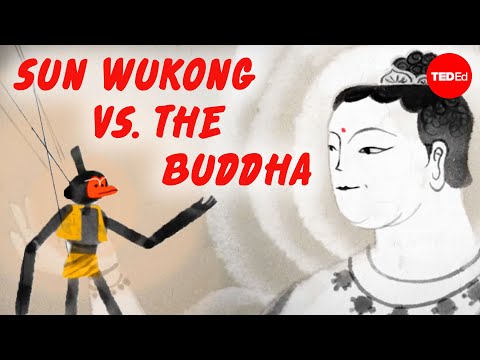
Ver em vídeos
Mais palavras de Culture
creon
C2Creonte é o governante de Tebas na mitologia grega, uma figura central nas lendas trágicas de Édipo.
ethnic
B2Um membro de um grupo étnico é uma pessoa que pertence a um grupo com uma cultura específica.
wukong’s
B1A forma possessiva de Wukong, referindo-se a coisas que pertencem ao Rei Macaco.
germanic
B2Relativo à família de línguas que inclui o inglês e o alemão. As tribus germânicas moldaram a Europa.
hercules
C1Hércules é um herói da mitologia romana celebrado por sua força sobre-humana.
moroccan
A2Relativo a Marrocos, ao seu povo ou à sua cultura. Um marroquino é um cidadão de Marrocos.
daedalus
B2Dédalo foi um lendário arquiteto e inventor grego que projetou o Labirinto para o Rei Minos de Creta.
oedipus’
C1Oedipus' é a forma possessiva do nome Édipo, referindo-se a algo que lhe pertence ou está associado a ele.
turkish
A1Relativo à Turquia, ao seu povo ou à sua língua.
imp
B2Um imp é um pequeno demônio ou duende travesso no folclore.

