









抜け出して目が覚めるような em 30 segundos
- A poetic phrase for 'eye-openingly vivid' or 'startlingly fresh.'
- Implies an escape from a dull or dark previous state.
- Commonly used for nature, art, fashion, and brilliant ideas.
- Grammatically functions as an adjective modifying a noun.
The phrase 抜け出して目が覚めるような (nukedashite me ga sameru you na) is a sophisticated Japanese adjective phrase that captures a moment of profound sensory or intellectual clarity. At its core, it describes something so vivid, fresh, or striking that it feels as though you have just escaped a dull, dark, or monotonous state and had your eyes opened for the first time. It is not merely about being 'bright' or 'pretty'; it implies a transition from a state of stagnation or blindness into a realm of startling beauty and awareness. This expression is frequently used in literature, travel writing, and high-end aesthetic critiques to describe colors, landscapes, or even revolutionary ideas that break the mold of the everyday.
- Literal Breakdown
- The first part, 抜け出して (nukedashite), comes from the verb nukedasu, meaning to slip out, break free, or escape from a confined space. The second part, 目が覚めるような (me ga sameru you na), means 'like waking up' or 'eye-opening.' Combined, they create a powerful metaphor for escaping the 'sleep' of the mundane.
トンネルを抜けると、そこには抜け出して目が覚めるような青い海が広がっていた。
In a psychological context, this phrase can describe a sudden realization or a 'Eureka' moment. Imagine being stuck in a complex problem for hours (the 'darkness') and suddenly seeing a solution that is so elegant and clear that it feels like the sun has finally come out. That clarity is exactly what this phrase aims to evoke. It is highly evocative because it appeals to both the sense of physical liberation and the sensory shock of bright light or color. When you use this phrase, you are telling your listener that the experience was transformative, even if only for a fleeting second.
- Common Contexts
- 1. Nature: Describing the first day of spring or a hidden waterfall. 2. Art: Describing a painting with exceptionally vibrant pigments. 3. Fashion: A design that breaks away from seasonal trends with startling originality.
彼女の歌声は、都会の喧騒を抜け出して目が覚めるような透明感があった。
Furthermore, the phrase carries a nuance of 'purity.' Because it involves 'waking up,' it suggests that the object of description is untainted and possesses an inherent truth or beauty that was previously hidden. It is a favorite of poets who wish to describe the 'morning after' a long struggle or the 'light at the end of the tunnel.' In modern Japanese, while it remains somewhat literary, it is perfectly understood in sophisticated conversation to express genuine awe. It elevates the speaker's vocabulary from simple adjectives like 'kirei' (beautiful) or 'sugoi' (amazing) to a more poetic, experiential level of expression.
Using 抜け出して目が覚めるような requires an understanding of its grammatical role as a complex adjective phrase. It almost always precedes a noun, functioning as a modifier that sets a specific mood. Because it is quite long and descriptive, it usually takes a prominent place in the sentence, often following a clause that establishes the 'dull' or 'dark' background from which the subject is 'escaping.' This structural contrast—starting with the mundane and ending with the 'eye-opening'—is what gives the phrase its rhetorical power.
- Grammatical Structure
- [Context/Background] + [抜け出して目が覚めるような] + [Noun]. The 'nukedashite' part implies a point of origin (the boredom or darkness), while 'me ga sameru you na' describes the current state of the noun.
長い冬を抜け出して目が覚めるような新緑の季節がやってきた。
When applying this phrase to abstract concepts like 'ideas' or 'performances,' the 'escape' is often from traditional ways of thinking or mediocre standards. For example, if a speaker provides a presentation that is completely different from the boring corporate norm, you might describe their approach as 'nukedashite me ga sameru you na.' This highlights not just the quality of the work, but its role as a refreshing departure from the expected. It is a high compliment, suggesting that the subject has the power to change the observer's perspective or state of mind.
そのデザイナーは、古い慣習を抜け出して目が覚めるような斬新なドレスを発表した。
In spoken Japanese, you might break the phrase up slightly for emphasis, or use it as a standalone exclamation in a very informal setting (though this is rare due to its length). More commonly, it appears in written reviews. For instance, a food critic might write about a citrus sorbet that provides a 'nukedashite me ga sameru you na' refreshing taste after a heavy, greasy meal. Here, the 'escape' is from the heavy flavors, and the 'eye-opening' is the sharp, clean acidity of the sorbet. This usage demonstrates how the phrase can be applied to all five senses, not just sight.
- Sentence Patterns
- 1. [Noun] + は + [抜け出して目が覚めるような] + [Noun] + だ。 2. [Verb-te form] + [抜け出して目が覚めるような] + [Noun] + を感じた。
Finally, remember that this is a 'strong' expression. If you use it for something minor, like a slightly better-than-average cup of coffee, it may sound hyperbolic or sarcastic. Save it for moments that truly felt like a breakthrough or a sudden revelation of beauty. It is a tool for expressing deep appreciation and the emotional impact of sensory clarity.
While you might not hear 抜け出して目が覚めるような in a casual chat about the weather at a convenience store, it is a staple in specific professional and artistic domains. One of the most common places to encounter it is in **travel journalism and documentaries**. When a camera pans over a hidden valley or a pristine beach after showing a cramped city, the narrator will often use this phrase to emphasize the contrast and the 'cleansing' effect of the scenery on the traveler's soul.
- Media & Literature
- In Japanese novels (shousetsu), authors use this phrase to describe a character's internal shift. If a protagonist has been depressed or 'in the dark' and finally finds hope, the world around them might suddenly appear 'nukedashite me ga sameru you na.' It serves as a linguistic bridge between the character's internal state and the external world.
「この絵画の色彩は、日常の灰色の世界を抜け出して目が覚めるような鮮烈さを持っています。」
Another major domain is **advertising for luxury goods and cosmetics**. Brands that want to sell a 'refreshing' or 'rejuvenating' experience use this phrase to appeal to consumers who feel tired of their daily routines. A skincare product might promise a 'nukedashite me ga sameru you na' clarity for the skin, implying that it will remove the 'dullness' (kusumi) of fatigue and reveal a bright, fresh complexion. Here, the phrase is used to create an aspirational image of transformation.
You will also find it in **culinary reviews**, particularly regarding 'kaiseki' (traditional multi-course) meals or high-end desserts. A chef might use a specific ingredient, like a rare mountain herb or a sharp vinegar, to provide a 'nukedashite me ga sameru you na' accent to a dish. In this context, it refers to a flavor that cleanses the palate and sharpens the diner's attention. It’s about the 'shock' of quality and freshness that stands out from the rest of the meal.
- Professional Usage
- Interior designers use it to describe a 'pop' of color in a minimalist room. Architects might use it to describe the way natural light enters a building after a dark corridor. It is a term of 'impact' and 'relief.'
暗い森を抜け出して目が覚めるような高台の景色に、一行は息を呑んだ。
In summary, listen for this phrase in situations where someone is describing a 'breakthrough' experience. Whether it's the visual shock of a sunrise, the intellectual shock of a new theory, or the sensory shock of a fresh flavor, the phrase marks the transition from the 'sleep' of the ordinary to the 'wakefulness' of the extraordinary.
Because 抜け出して目が覚めるような is a compound phrase with a specific metaphorical weight, learners often make mistakes in its intensity, its grammatical connection, or its logical context. The most frequent error is using it as a simple synonym for 'bright' (akarui) or 'vivid' (azayaka). While it includes those meanings, it *must* imply a prior state of dullness or confinement. If there was no 'darkness' to escape from, the 'nukedashite' (escaping) part of the phrase becomes logically redundant and sounds awkward to native ears.
- Mistake 1: Lack of Contrast
- Incorrect: 「このLEDライトは抜け出して目が覚めるような明るさだ。」 (This LED light is eye-openingly bright.)
Why: Unless the light is specifically being compared to a dark room you just left, it sounds too dramatic. Better to just use 'me ga sameru you na' or 'mabushii'.
❌ 毎日抜け出して目が覚めるような朝ごはんを食べています。
Another common mistake is grammatical. Since it ends in 'you na,' it is an adjectival modifier. Learners sometimes forget to follow it with a noun, or they try to use it as an adverb without changing 'na' to 'ni.' While 'nukedashite me ga sameru you ni' (adverbial) is possible, it is much less common and changes the meaning to 'in a way that feels like waking up.' Stick to the 'you na + Noun' pattern for the most natural-sounding Japanese.
- Mistake 2: Confusing with 'Me ga sameru'
- Incorrect: 「今朝、抜け出して目が覚めるような時間に起きた。」
Why: This makes no sense. It sounds like you 'escaped' your bed in a way that woke you up. It's a metaphorical expression for quality, not a literal description of the act of waking.
Lastly, be careful with the register. This is a 'beautiful' and somewhat 'literary' phrase. Using it in a very rough, masculine, or slang-heavy conversation might create a 'mismatch' of styles (unless used for comedic effect). It belongs in the realm of 'teineigo' (polite Japanese) or descriptive writing. If you are at a rowdy izakaya with friends, 'yaba!' or 'sugoi!' are much more appropriate for expressing surprise at a vivid color or taste.
✅ 都会の喧騒を抜け出して目が覚めるような静寂に包まれた。
To avoid these mistakes, always ask yourself: 'Am I describing a transition from something dull to something strikingly clear?' and 'Am I following this with a noun?' If the answer to both is yes, you are likely using it correctly.
To truly master 抜け出して目が覚めるような, it is helpful to compare it with other Japanese expressions that describe vividness or sudden clarity. Each has a slightly different nuance, and choosing the right one will make your Japanese sound more precise and native-like. The most direct relative is simply **目が覚めるような** (me ga sameru you na), which omits the 'escape' part. This is more common and focuses purely on the 'eye-opening' quality without necessarily emphasizing the contrast with a previous state.
- Comparison Table
- 鮮やかな (Azayaka na): Purely descriptive. Means 'vivid' or 'clear.' It lacks the metaphorical 'waking up' feeling.
- 息をのむような (Iki o nomu you na): Means 'breath-taking.' Focuses on the physical reaction of surprise/awe rather than the clarity of vision.
- 斬新な (Zanshin na): Means 'novel' or 'original.' Used for ideas or designs, but lacks the sensory 'light' aspect.
- 清々しい (Sugusugushii): Means 'refreshing.' Focuses on the feeling of cleanliness and comfort, often used for morning air.
「抜け出して目が覚めるような」 vs 「鮮やかな」
Another interesting alternative is **雲散霧消 (Unsan Mushou)**, which is a four-character idiom (yojijukugo) meaning 'vanishing like clouds and mist.' While this describes the *disappearance* of the dullness, our target phrase focuses on the *appearance* of the new, bright reality. If you want to emphasize the 'freshness' specifically, you might use **瑞々しい (Mizumizushii)**, which literally means 'juicy' but is used for anything youthful, fresh, and vibrant, like a young person's skin or a freshly picked vegetable.
For abstract 'eye-opening' experiences, you might hear **目から鱗が落ちる (Me kara uroko ga ochiru)**, which means 'scales falling from one's eyes.' This is an idiom for a sudden realization. While 'nukedashite me ga sameru you na' can describe the *quality* of the new idea, 'me kara uroko...' describes the *process* of the realization itself. They are often used together in high-level discussions about learning or innovation.
- When to choose what?
- Use 'Nukedashite...' when the contrast between 'before' and 'after' is the main point. Use 'Iki o nomu...' when you want to emphasize the shock. Use 'Azayaka' when you are just describing a color objectively.
その解決策は、複雑な迷路を抜け出して目が覚めるようなシンプルさだった。
By understanding these alternatives, you can see that our target phrase is a 'heavyweight' in the world of Japanese adjectives. It combines narrative (escaping), metaphor (waking up), and sensory description (vividness) into one elegant package. Mastering it shows a high level of linguistic sensitivity.
How Formal Is It?
Curiosidade
The 'me' (eye) in Japanese culture is often seen as the gateway to the soul and the primary sensor for 'truth.' Many Japanese idioms for understanding involve the eyes, such as 'me kara uroko' (scales from eyes) or 'me o hiraku' (to open eyes).
Guia de pronúncia
- Pronouncing 'me' as 'mee' (it should be 'meh').
- Stressing the 'da' in 'nukedashite' too hard.
- Failing to elide the 'u' in 'nukedashite' (often sounds like 'nukedash'te').
- Making the 'r' in 'sameru' an English 'r' (it should be a tap).
- Pronouncing 'you na' as 'yoo-na' instead of 'yoh-na'.
Nível de dificuldade
The kanji are basic, but the length and metaphorical nature require intermediate reading comprehension.
Constructing the phrase correctly within a sentence requires a good grasp of 'you na' modifiers.
It's a mouthful! Getting the rhythm and pitch accent right takes practice.
Easy to recognize if you know 'nukedasu' and 'me ga sameru,' but can be missed in fast speech.
O que aprender depois
Pré-requisitos
Aprenda a seguir
Avançado
Gramática essencial
Compound Verbs (V1-te V2)
抜け出して (Nukedashite) is the te-form of nukedasu, used here to show the sequence/method.
Simile with ~ような (~you na)
目が覚めるような (Me ga sameru you na) acts as a pre-noun adjectival modifier.
Noun Modification
The entire phrase acts as a single unit to modify the following noun.
Te-form for Cause/Reason
The 'nukedashite' part can imply that *because* you escaped, the next thing feels eye-opening.
Idiomatic Verb Phrases
Me ga sameru is a set phrase that cannot be easily broken apart without losing its metaphorical meaning.
Exemplos por nível
目が覚めるような青い空です。
It is an eye-openingly blue sky.
Simple use of 'me ga sameru you na' to describe a color.
この花は、目が覚めるような赤です。
This flower is an eye-opening red.
Using the phrase to emphasize the intensity of a color.
目が覚めるようなきれいな海を見ました。
I saw a beautiful, eye-opening sea.
Combining the phrase with 'kirei' for emphasis.
朝、目が覚めるような冷たい水を飲みました。
In the morning, I drank eye-openingly cold water.
Applying the 'waking up' feeling to temperature.
目が覚めるような明るい部屋ですね。
It's an eye-openingly bright room, isn't it?
Describing the atmosphere of a place.
彼女は目が覚めるような笑顔をしました。
She gave an eye-opening smile.
Describing a person's expression.
目が覚めるようなおいしいお菓子です。
It's an eye-openingly delicious sweet.
Using the phrase for a surprising taste.
目が覚めるような黄色い鳥がいました。
There was an eye-openingly yellow bird.
Describing an animal's color.
暗い部屋を抜け出して、目が覚めるような外の光を感じた。
Escaping the dark room, I felt the eye-opening light outside.
Introduction of 'nukedashite' to show contrast.
この絵は、抜け出して目が覚めるような色使いですね。
This painting has eye-openingly vivid use of color.
Describing artistic technique.
森を抜け出して、目が覚めるような広い草原に出た。
Escaping the forest, we came out into an eye-openingly wide meadow.
Describing a change in scenery.
テストが終わって、抜け出して目が覚めるような自由を感じた。
The test ended, and I felt an eye-opening sense of freedom.
Applying the phrase to an abstract feeling (freedom).
冬を抜け出して、目が覚めるような春の空気が好きだ。
I love the eye-opening spring air after escaping winter.
Using seasons as the 'context' for the escape.
古い考えを抜け出して、目が覚めるような新しい方法を見つけた。
Escaping old ways of thinking, I found an eye-opening new method.
Describing a breakthrough in thought.
地下鉄を抜け出して、目が覚めるような都会の夜景を見た。
Escaping the subway, I saw the eye-opening city night view.
Contrast between the underground and the city lights.
忙しい毎日を抜け出して、目が覚めるような静かな海に来た。
Escaping busy daily life, I came to an eye-openingly quiet sea.
Describing a peaceful escape.
その歌手の声は、退屈な日常を抜け出して目が覚めるような透明感があった。
The singer's voice had a clarity so eye-opening it felt like escaping boring daily life.
Complex modification of the noun 'toumeikan' (clarity).
長い会議を抜け出して目が覚めるような冷たい風に当たった。
I escaped the long meeting and felt the eye-openingly cold wind.
Using the phrase to describe physical relief.
彼のスピーチは、抜け出して目が覚めるような鋭い指摘に満ちていた。
His speech was full of sharp, eye-opening observations.
Describing the quality of intellectual content.
その山頂からの景色は、疲れを抜け出して目が覚めるような絶景だった。
The view from the summit was an eye-opening masterpiece that made me forget my fatigue.
Focusing on the transformative power of a view.
彼女の新作ドレスは、これまでの流行を抜け出して目が覚めるような斬新さだ。
Her new dress has an eye-opening novelty that breaks away from previous trends.
Using 'zanshin-sa' (novelty) as the noun.
その映画のラストシーンは、暗い物語を抜け出して目が覚めるような希望を感じさせた。
The last scene of the movie gave a sense of eye-opening hope after the dark story.
Describing the emotional arc of a story.
都会の喧騒を抜け出して目が覚めるような緑に囲まれた村に泊まった。
I stayed in a village surrounded by eye-opening greenery, escaping the city noise.
Describing a travel experience.
そのカクテルは、暑さを抜け出して目が覚めるような爽快な味だった。
The cocktail had an eye-openingly refreshing taste that made me forget the heat.
Describing a culinary sensation.
混迷する社会情勢を抜け出して目が覚めるような、新しいリーダーシップが求められている。
A new, eye-opening leadership is needed to break through the chaotic social situation.
Using the phrase in a socio-political context.
その建築家は、閉塞感を抜け出して目が覚めるような開放的な空間を設計した。
The architect designed an eye-openingly open space to escape the sense of confinement.
Describing architectural intent.
彼の理論は、既存の枠組みを抜け出して目が覚めるような論理的整合性を持っている。
His theory possesses an eye-opening logical consistency that breaks out of existing frameworks.
Academic/Professional usage.
そのバイオリニストの演奏は、技巧を超えて抜け出して目が覚めるような魂の響きがあった。
The violinist's performance had an eye-opening resonance of the soul that went beyond mere technique.
Describing spiritual or emotional impact.
伝統的な技法を抜け出して目が覚めるような現代アートの展示会に行った。
I went to a contemporary art exhibition that was eye-openingly fresh, breaking away from traditional techniques.
Describing artistic evolution.
その企業の再建プランは、停滞を抜け出して目が覚めるような具体性に富んでいた。
The company's restructuring plan was full of eye-opening specificity to escape stagnation.
Business context.
沈黙を抜け出して目が覚めるような彼女の言葉が、その場の空気を一変させた。
Her eye-opening words, breaking the silence, completely changed the atmosphere of the room.
Describing the power of speech to change a situation.
その小説の文体は、装飾を抜け出して目が覚めるような簡潔さを極めていた。
The novel's style reached an eye-opening brevity, stripping away all ornamentation.
Literary criticism.
この哲学書は、日常のドグマを抜け出して目が覚めるような真理の片鱗を見せてくれる。
This philosophy book offers glimpses of eye-opening truth, escaping everyday dogmas.
High-level abstract usage.
その演出家は、古典劇の解釈を抜け出して目が覚めるような現代的視点を導入した。
The director introduced an eye-opening modern perspective, breaking away from classical interpretations of the play.
Discussing artistic reinterpretation.
彼女の色彩感覚は、既成の美学を抜け出して目が覚めるようなアヴァンギャルドな魅力がある。
Her sense of color has an eye-opening avant-garde charm that escapes established aesthetics.
Critiquing aesthetic style.
その研究結果は、これまでの常識を抜け出して目が覚めるようなパラダイムシフトを予感させる。
The research results suggest an eye-opening paradigm shift, breaking away from conventional wisdom.
Scientific/Academic context.
深い悲しみを抜け出して目が覚めるような生の喜びを再発見するプロセスを描いた作品だ。
It is a work depicting the process of rediscovering an eye-opening joy of life after escaping deep sorrow.
Describing a thematic arc.
その都市計画は、機能主義を抜け出して目が覚めるような人間中心の美しさを追求している。
The urban planning pursues an eye-opening human-centric beauty, breaking away from mere functionalism.
Discussing design philosophy.
彼の即興演奏は、楽譜の束縛を抜け出して目が覚めるような自由な飛翔を見せた。
His improvisation showed an eye-openingly free flight, escaping the constraints of the musical score.
Metaphorical use in music.
そのエッセイは、自己憐憫を抜け出して目が覚めるような客観性で人生を捉え直している。
The essay re-evaluates life with an eye-opening objectivity, escaping self-pity.
Psychological/Literary analysis.
その詩人は、言語の慣習を抜け出して目が覚めるような根源的なイメージを喚起する。
The poet evokes eye-opening, primordial images, breaking free from linguistic conventions.
Deep linguistic/artistic analysis.
歴史の暗部を抜け出して目が覚めるような啓蒙の光を当てる作業は、困難を極める。
The task of shedding an eye-opening light of enlightenment, escaping the dark corners of history, is extremely difficult.
Metaphorical use in historical study.
その数学的証明は、煩雑な計算を抜け出して目が覚めるようなエレガンスに到達した。
The mathematical proof reached an eye-opening elegance, escaping cumbersome calculations.
Describing aesthetic quality in science.
制度の硬直性を抜け出して目が覚めるようなダイナミズムを組織に注入する必要がある。
It is necessary to inject an eye-opening dynamism into the organization, breaking away from institutional rigidity.
Management/Organizational theory.
彼の映画は、物語の因果律を抜け出して目が覚めるような純粋な映像体験を提示する。
His films present an eye-opening pure visual experience, escaping the causality of narrative.
Film theory/Aesthetics.
既存の倫理観を抜け出して目が覚めるような新たな価値体系を構築するのは、哲学の使命だ。
It is the mission of philosophy to construct an eye-opening new value system, escaping existing ethics.
Philosophical discourse.
その彫刻は、物質の重力感を抜け出して目が覚めるような軽やかさを表現している。
The sculpture expresses an eye-opening lightness, escaping the sense of gravity inherent in the material.
Artistic critique of form.
情報の洪水を抜け出して目が覚めるような沈黙の価値を再認識すべき時が来ている。
The time has come to re-recognize the eye-opening value of silence, escaping the flood of information.
Social commentary.
Sinônimos
Antônimos
Colocações comuns
Frases Comuns
— A feeling of sudden clarity or realization. It describes the emotional state of being 'woken up.'
彼の言葉を聞いて、抜け出して目が覚めるような思いがした。
— A morning that feels exceptionally fresh and clear, usually after a period of bad weather.
嵐が去り、抜け出して目が覚めるような朝を迎えた。
— A sky so blue and clear it feels transformative to look at.
冬の寒さを抜け出して目が覚めるような青空が見えた。
— A solution that is so clear and effective it makes previous struggles seem distant.
その問題に対して、抜け出して目が覚めるような解決策が見つかった。
— A shock that brings sudden awareness or changes one's perspective entirely.
そのニュースは、私にとって抜け出して目が覚めるような衝撃だった。
— A silence so pure and profound it feels like a physical awakening.
雪の夜、外は抜け出して目が覚めるような静寂に包まれていた。
— A contrast so sharp and clear it highlights the essence of both subjects.
光と影の、抜け出して目が覚めるような対比が美しい。
— A discovery that opens up a whole new world of understanding.
顕微鏡の中に、抜け出して目が覚めるような発見があった。
— Air that is so fresh and crisp it immediately clears the mind.
高原の、抜け出して目が覚めるような空気を吸い込んだ。
— A plot twist or development in a story that is startlingly fresh and logical.
その映画は、後半から抜け出して目が覚めるような展開になる。
Frequentemente confundido com
This is just the literal 'to wake up.' Our phrase is a metaphorical adjective.
This is just the literal 'to escape.' Our phrase uses it to set up a contrast.
This just means 'vivid.' Our phrase adds the 'escape' and 'awakening' nuances.
Expressões idiomáticas
— To have the scales fall from one's eyes; a sudden realization. Related because it also involves 'eyes' and 'waking up' to truth.
彼の説明で、目から鱗が落ちる思いだった。
Common— To pass through the darkness. This is the 'nukedashite' part of the phrase's logic.
ようやく長い闇を抜けることができた。
Literary— To wake up, or to be disillusioned/brought back to reality.
厳しい現実を見て、ようやく目が覚めた。
Neutral— To shed a skin; to mature or improve significantly. Similar to the 'escape' nuance.
彼はこのプロジェクトで一皮むけたね。
Colloquial— The mist clears. Used when confusion disappears, similar to the clarity of our phrase.
疑問が解けて、霧が晴れるような気分だ。
Neutral— The future looks bright; to feel hopeful suddenly.
合格通知をもらって、目の前が明るくなった。
Neutral— To breathe new life into something; to bring a 'fresh air' effect.
若手社員がチームに新風を吹き込んだ。
Professional— To dispel dark clouds. Similar to 'nukedashite' (escaping the gloom).
彼の活躍がチームの暗雲を払った。
Formal— To be dizzy/busy. (Contrast: This is negative, while 'me ga sameru' is positive).
目が回るほど忙しい毎日だ。
Common— To open one's eyes wide in surprise or admiration.
彼女の目を見張るような成長に驚いた。
NeutralFácil de confundir
Both involve 'waking up' (mezame).
'Mezamashii' is used for progress or achievements (e.g., remarkable growth). 'Nukedashite me ga sameru you na' is used for sensory or aesthetic vividness.
目覚ましい発展 (Remarkable development) vs 抜け出して目が覚めるような青 (Eye-opening blue).
Both describe a 'refreshing' feeling.
'Sugusugushii' is about comfort and cleanliness (e.g., morning air). Our phrase is about a 'shock' of clarity and contrast.
清々しい気分 (Refreshing mood) vs 抜け出して目が覚めるような衝撃 (Eye-opening shock).
Both can describe new ideas.
'Zanshin' is more about the 'newness' and 'originality.' Our phrase is about the 'clarity' and 'impact' of the idea.
斬新なデザイン (Novel design) vs 抜け出して目が覚めるような解決策 (Eye-opening solution).
Both describe great beauty.
'Iki o nomu' focuses on the physical gasp of surprise. Our phrase focuses on the mental/sensory awakening.
息をのむような夕焼け (Breath-taking sunset) vs 抜け出して目が覚めるような透明感 (Eye-opening clarity).
Both describe strong, vivid things.
'Senretsu' is a formal word for 'vivid and strong.' Our phrase is more descriptive and narrative.
鮮烈な印象 (Vivid impression) vs 抜け出して目が覚めるような色使い (Eye-opening use of color).
Padrões de frases
[Context]を抜け出して目が覚めるような[Noun]だ。
都会を抜け出して目が覚めるような緑だ。
抜け出して目が覚めるような[Color]い[Noun]。
抜け出して目が覚めるような青い空。
[Abstract Noun]を抜け出して目が覚めるような[Abstract Noun]。
停滞を抜け出して目が覚めるような躍動感。
それはまさに抜け出して目が覚めるような[Noun]だった。
それはまさに抜け出して目が覚めるような体験だった。
[Verb-te]、抜け出して目が覚めるような[Noun]を感じた。
その絵を見て、抜け出して目が覚めるような衝撃を感じた。
抜け出して目が覚めるような[Noun]を極めている。
抜け出して目が覚めるような簡潔さを極めている。
[Noun]の[Noun]を抜け出して目が覚めるような[Noun]を喚起する。
言語の慣習を抜け出して目が覚めるようなイメージを喚起する。
抜け出して目が覚めるような[Noun]を呈している。
抜け出して目が覚めるような様相を呈している。
Família de palavras
Substantivos
Verbos
Adjetivos
Relacionado
Como usar
Medium-Low (Specific to descriptive/artistic contexts).
-
Using it for literal waking up.
→
朝、目が覚めた。
Do not use the full phrase 'nukedashite me ga sameru you na' just to say you woke up at 7 AM. It's for describing the *quality* of something else.
-
Forgetting the 'you na' before a noun.
→
抜け出して目が覚めるような青空。
Without 'you na,' the grammar is broken. It's like saying 'Escape wake up blue sky' in English.
-
Using it for negative things.
→
抜け出して目が覚めるような美しさ (Positive).
You wouldn't use it for a 'vividly terrible' smell. It's reserved for positive clarity and beauty.
-
Using it without any contrast.
→
暗い森を抜け出して、目が覚めるような景色を見た。
If you just say 'It's an eye-opening blue sky' without any context of 'escaping' something, 'nukedashite' feels out of place.
-
Confusing with 'mezamashii'.
→
目覚ましい成長 (Remarkable growth).
'Mezamashii' is for progress. Our phrase is for sensory/aesthetic impact.
Dicas
Pair with Contrast
Always try to mention what you are 'escaping' from. 'Escaping the rain, I saw an eye-opening blue sky.' This makes the phrase much more powerful.
Colors and Nature
This phrase works best with colors (blue, green, white) and natural scenery. It perfectly captures the 'high-definition' feel of nature.
Noun Modifier
Remember that the whole phrase acts like an adjective. You must have a noun after 'you na' for it to make sense.
Sense of Relief
The 'nukedashite' part implies a sense of relief. Use it when the beauty you are describing also feels like a 'rescue' from boredom.
Don't Rush
Because it's a long phrase, beginners often trip over it. Practice saying 'nukedashite' and 'me ga sameru' separately before combining them.
Literary Flair
Use this in your Japanese essays to impress your teacher. it shows a high level of descriptive ability.
Seasonal Use
Use it when describing the change of seasons. It's very 'Japanese' to focus on the 'awakening' of nature.
Context Clues
If you hear 'nukedashite,' expect something positive and bright to follow. It's a common setup in storytelling.
Professional Praise
Use it to praise a colleague's idea if it's truly revolutionary. It sounds more thoughtful than just 'ii desu ne.'
The 'Tunnel' Image
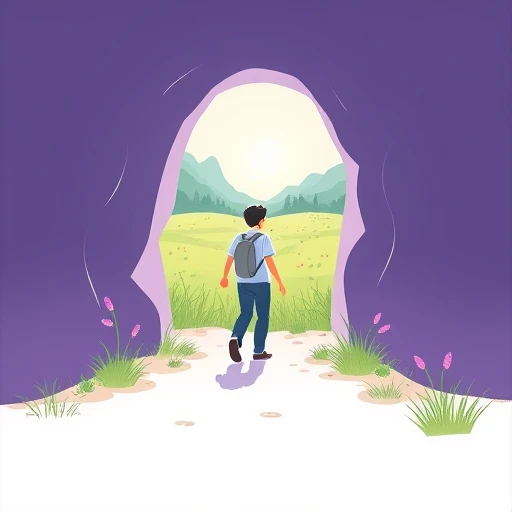
Always associate this phrase with the image of coming out of a dark tunnel into the light. That is the essence of the word.
Memorize
Mnemônico
Imagine you are trapped in a dark 'Nuke' (nuclear) bunker. You 'Dash' out ('Nukedashite'). The sun hits your 'Me' (eyes) and you 'Sameru' (wake up) to the beauty. Nukedashite + Me ga Sameru.
Associação visual
A person stepping out of a gray, rainy city street into a field of neon-bright sunflowers under a sapphire sky.
Word Web
Desafio
Try to describe your favorite travel memory using this phrase. Focus on the moment you saw something that made you forget your travel fatigue.
Origem da palavra
This is a modern compound phrase. 'Nukedasu' is a compound verb from 'nuku' (to pull out) and 'dasu' (to put out), meaning to slip away. 'Me ga sameru' is a classic Japanese idiom for waking up, which has been used since the Heian period both literally and metaphorically.
Significado original: The literal meaning is 'to slip out and have one's eyes wake up.'
Japonic (Japanese).Contexto cultural
This is a very positive and safe phrase. It is never offensive, though using it for something trivial might make you sound overly dramatic.
The closest English equivalent is 'a breath of fresh air' or 'eye-poppingly vivid,' but the Japanese phrase is more poetic and emphasizes the transition from darkness to light.
Pratique na vida real
Contextos reais
Nature and Travel
- 抜け出して目が覚めるような絶景
- 抜け出して目が覚めるような青空
- 抜け出して目が覚めるような新緑
- 抜け出して目が覚めるような空気
Art and Design
- 抜け出して目が覚めるような色彩
- 抜け出して目が覚めるような斬新さ
- 抜け出して目が覚めるような造形美
- 抜け出して目が覚めるような透明感
Intellectual Breakthroughs
- 抜け出して目が覚めるようなアイデア
- 抜け出して目が覚めるような解決策
- 抜け出して目が覚めるような理論
- 抜け出して目が覚めるような指摘
Culinary Experiences
- 抜け出して目が覚めるような味
- 抜け出して目が覚めるような香り
- 抜け出して目が覚めるような爽快感
- 抜け出して目が覚めるような彩り
Personal Growth
- 抜け出して目が覚めるような体験
- 抜け出して目が覚めるような言葉
- 抜け出して目が覚めるような発見
- 抜け出して目が覚めるような変化
Iniciadores de conversa
"最近、抜け出して目が覚めるような景色を見たことがありますか? (Have you seen any eye-opening scenery lately?)"
"この絵の色彩、抜け出して目が覚めるような鮮やかさだと思いませんか? (Don't you think the colors in this painting are eye-openingly vivid?)"
"仕事の疲れを抜け出して目が覚めるような、おすすめの旅行先はありますか? (Do you have any recommended travel spots that are eye-opening enough to make me forget work fatigue?)"
"抜け出して目が覚めるような斬新なアイデアを思いついたことはありますか? (Have you ever come up with an eye-openingly novel idea?)"
"あの歌手の透明感のある声は、まさに抜け出して目が覚めるような響きですね。 (That singer's clear voice really has an eye-opening resonance, doesn't it?)"
Temas para diário
Describe a moment in your life that felt 'nukedashite me ga sameru you na.' What were you escaping from?
Write about a place you want to visit that you imagine would have 'nukedashite me ga sameru you na' scenery.
Reflect on a book or movie that gave you a 'nukedashite me ga sameru you na' new perspective on the world.
If you were an artist, what colors would you use to create a 'nukedashite me ga sameru you na' masterpiece?
Describe the feeling of waking up on a perfect spring morning using this phrase.
Perguntas frequentes
10 perguntasYes, but usually to describe their beauty, their voice, or their personality if it is strikingly fresh compared to others. For example, 'She has an eye-openingly vivid personality.' It implies she stands out from a dull crowd.
It might be a bit too poetic for a standard email. However, in a creative proposal or a marketing context, it is excellent for describing a 'breakthrough' product or idea.
The 'nukedashite' part adds the 'escape' narrative. It implies that the beauty is even more striking because it follows something dull. It's like the difference between 'bright' and 'blindingly bright after being in a cave.'
Yes, often in 'slice of life' or 'fantasy' anime when a character sees a beautiful new world or has a moment of realization. It adds a sense of wonder to the dialogue.
Generally, no. It is a positive expression of clarity and beauty. Using it for something negative would sound very strange or highly sarcastic.
You can just use '目が覚めるような' (Me ga sameru you na). It carries most of the meaning without the 'escape' nuance.
No, but it's what makes the phrase unique. It's like the 'prelude' to the awakening.
Absolutely! It's great for describing a sharp, refreshing flavor that 'wakes up' your palate after a heavy meal.
Yes, if it's modifying a noun. If you want to use it to modify a verb, you change 'na' to 'ni,' but that is much less common.
It's more of a 'sophisticated descriptive phrase' than a fixed idiom, but it's widely recognized and used in high-quality Japanese.
Teste-se 200 perguntas
Describe a beautiful blue sky you saw after a long rainy season using 'nukedashite me ga sameru you na'.
Well written! Good try! Check the sample answer below.
Write a sentence about a refreshing drink on a hot day using the phrase.
Well written! Good try! Check the sample answer below.
Use the phrase to describe a brilliant new idea that solved a difficult problem.
Well written! Good try! Check the sample answer below.
Describe a singer's clear voice using the phrase.
Well written! Good try! Check the sample answer below.
Write a sentence about seeing a bright field of flowers after being in a dark forest.
Well written! Good try! Check the sample answer below.
Describe the feeling of freedom after a busy week.
Well written! Good try! Check the sample answer below.
Write a short art critique sentence about a painting with vivid colors.
Well written! Good try! Check the sample answer below.
Describe a crisp morning air in the mountains.
Well written! Good try! Check the sample answer below.
Use the phrase to describe a revolutionary fashion design.
Well written! Good try! Check the sample answer below.
Write about a sudden realization you had during a lecture.
Well written! Good try! Check the sample answer below.
Describe a pristine beach you found while traveling.
Well written! Good try! Check the sample answer below.
Write a sentence about a movie's hopeful ending after a sad story.
Well written! Good try! Check the sample answer below.
Describe a very clean and modern building design.
Well written! Good try! Check the sample answer below.
Write about a person's radiant and transformative smile.
Well written! Good try! Check the sample answer below.
Describe a mathematical proof that is elegant and clear.
Well written! Good try! Check the sample answer below.
Write about the silence of a snowy night.
Well written! Good try! Check the sample answer below.
Describe a political leader's refreshing new vision.
Well written! Good try! Check the sample answer below.
Write about a fresh start in life after a difficult period.
Well written! Good try! Check the sample answer below.
Describe a high-definition 4K video of nature.
Well written! Good try! Check the sample answer below.
Write about the value of silence in a noisy world.
Well written! Good try! Check the sample answer below.
Pronounce the phrase: 抜け出して目が覚めるような (Nukedashite me ga sameru you na).
Read this aloud:
Você disse:
Speech recognition is not supported in your browser. Try Chrome or Edge.
Use the phrase to describe a beautiful sunrise you saw.
Read this aloud:
Você disse:
Speech recognition is not supported in your browser. Try Chrome or Edge.
Describe a refreshing drink using the phrase.
Read this aloud:
Você disse:
Speech recognition is not supported in your browser. Try Chrome or Edge.
Talk about a revolutionary product using the phrase.
Read this aloud:
Você disse:
Speech recognition is not supported in your browser. Try Chrome or Edge.
Describe a clear blue sky after rain.
Read this aloud:
Você disse:
Speech recognition is not supported in your browser. Try Chrome or Edge.
Praise a friend's painting using the phrase.
Read this aloud:
Você disse:
Speech recognition is not supported in your browser. Try Chrome or Edge.
Describe a singer's voice.
Read this aloud:
Você disse:
Speech recognition is not supported in your browser. Try Chrome or Edge.
Talk about a fresh start in a new city.
Read this aloud:
Você disse:
Speech recognition is not supported in your browser. Try Chrome or Edge.
Describe a crisp mountain air.
Read this aloud:
Você disse:
Speech recognition is not supported in your browser. Try Chrome or Edge.
Talk about a surprising plot twist in a book.
Read this aloud:
Você disse:
Speech recognition is not supported in your browser. Try Chrome or Edge.
Describe a bright field of flowers.
Read this aloud:
Você disse:
Speech recognition is not supported in your browser. Try Chrome or Edge.
Praise a colleague's clear explanation.
Read this aloud:
Você disse:
Speech recognition is not supported in your browser. Try Chrome or Edge.
Describe the feeling of jumping into a cold pool in summer.
Read this aloud:
Você disse:
Speech recognition is not supported in your browser. Try Chrome or Edge.
Talk about a beautiful night view.
Read this aloud:
Você disse:
Speech recognition is not supported in your browser. Try Chrome or Edge.
Describe a very white snow landscape.
Read this aloud:
Você disse:
Speech recognition is not supported in your browser. Try Chrome or Edge.
Praise a new architectural design.
Read this aloud:
Você disse:
Speech recognition is not supported in your browser. Try Chrome or Edge.
Describe a sudden realization.
Read this aloud:
Você disse:
Speech recognition is not supported in your browser. Try Chrome or Edge.
Talk about the beauty of spring greenery.
Read this aloud:
Você disse:
Speech recognition is not supported in your browser. Try Chrome or Edge.
Describe a very clean, minimalist room.
Read this aloud:
Você disse:
Speech recognition is not supported in your browser. Try Chrome or Edge.
Talk about the impact of a powerful speech.
Read this aloud:
Você disse:
Speech recognition is not supported in your browser. Try Chrome or Edge.
Listen and identify the noun modified: 'Nukedashite me ga sameru you na keshiki ni kandou shimashita.'
Listen and identify the color mentioned: 'Nukedashite me ga sameru you na aoi sora da.'
Listen and identify the feeling: 'Nukedashite me ga sameru you na soukaikan o kanjita.'
Listen and identify the subject: 'Kanojo no utagoe wa, nukedashite me ga sameru you na toumeikan ga aru.'
Listen and identify the season: 'Fuyu o nukedashite, me ga sameru you na haru no hikari o abita.'
Listen and identify the quality of the idea: 'Kare no aidea wa nukedashite me ga sameru you na zanshin-sa ga aru.'
Listen and identify the place: 'Tokai o nukedashite, me ga sameru you na midori ni kakomareta mura ni kita.'
Listen and identify the object: 'Sono e wa, nukedashite me ga sameru you na irozukai da.'
Listen and identify the atmosphere: 'Yuki no yoru, soto wa nukedashite me ga sameru you na seijaku ni tsutsumarete ita.'
Listen and identify the solution: 'Nukedashite me ga sameru you na kaiketsusaku ga mitsukatta.'
Listen and identify the discovery: 'Nukedashite me ga sameru you na hakken ga atta.'
Listen and identify the air: 'Kougen no, nukedashite me ga sameru you na kuuki o sutta.'
Listen and identify the clarity: 'Sono setsumei wa nukedashite me ga sameru you na meikaisa ga atta.'
Listen and identify the hope: 'Eiga no rasuto wa nukedashite me ga sameru you na kibou o kanjiseta.'
Listen and identify the dynamism: 'Soshiki ni nukedashite me ga sameru you na dainamizumu o chuunyuu suru.'
/ 200 correct
Perfect score!
Summary
This phrase is the ultimate way to describe a 'breath of fresh air' in a visual or intellectual sense. Use it when you want to emphasize that something is so clear and beautiful it physically wakes up your senses, like seeing a bright blue ocean after a long, dark tunnel.
- A poetic phrase for 'eye-openingly vivid' or 'startlingly fresh.'
- Implies an escape from a dull or dark previous state.
- Commonly used for nature, art, fashion, and brilliant ideas.
- Grammatically functions as an adjective modifying a noun.
Pair with Contrast
Always try to mention what you are 'escaping' from. 'Escaping the rain, I saw an eye-opening blue sky.' This makes the phrase much more powerful.
Colors and Nature
This phrase works best with colors (blue, green, white) and natural scenery. It perfectly captures the 'high-definition' feel of nature.
Noun Modifier
Remember that the whole phrase acts like an adjective. You must have a noun after 'you na' for it to make sense.
Sense of Relief
The 'nukedashite' part implies a sense of relief. Use it when the beauty you are describing also feels like a 'rescue' from boredom.


