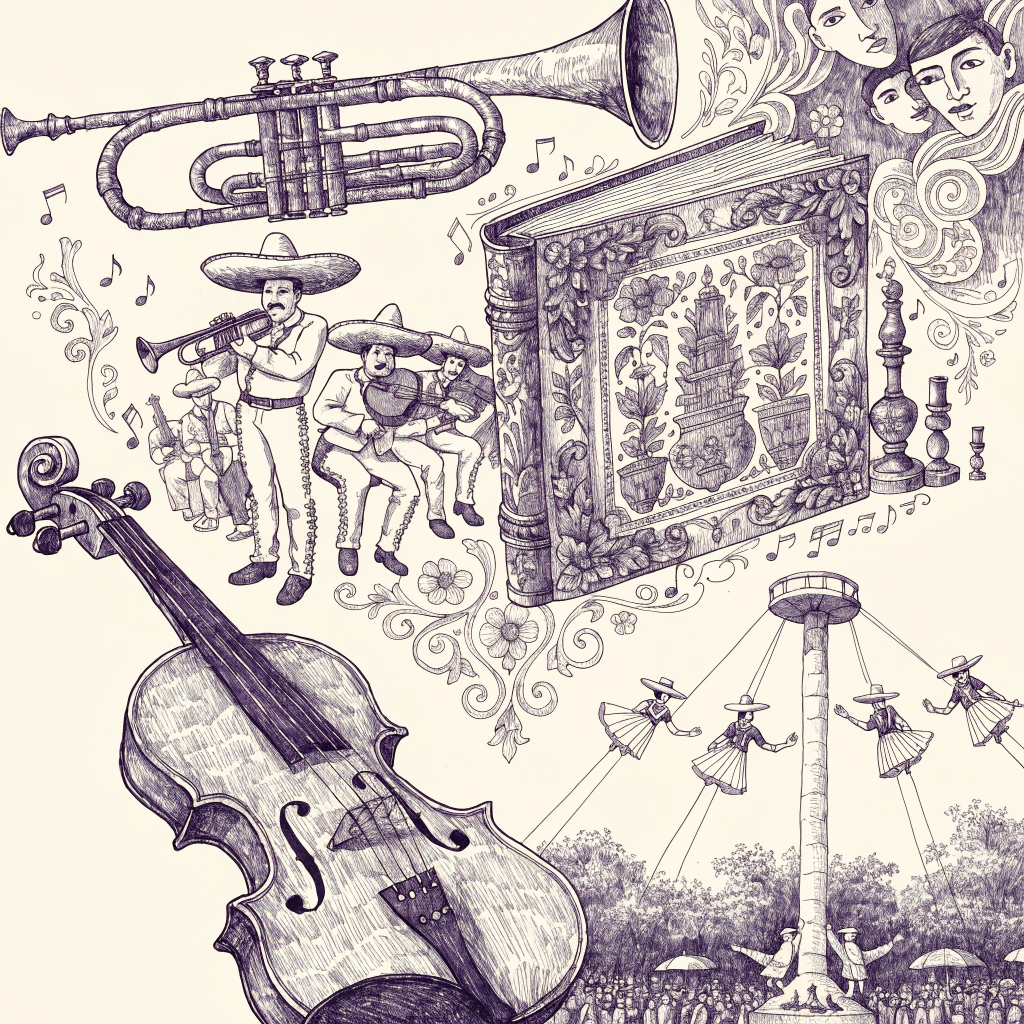
A Famous Writer from Mexico
Sor Juana Inés de la Cruz is a famous woman from Mexico. She lives a long time ago in the 17th century. She is a nun and a writer. People call her the Tenth Muse.
She loves books and learning. She writes poems and plays. In her time, women do not go to university. But Sor Juana is very smart. She has many books in her room. Today, many people read her work. She is important for Mexico and the world. She is a great hero for many women.
语法聚焦
句型: Present Simple of 'To Be'
"Sor Juana Inés de la Cruz is a famous woman from Mexico."
We use 'is' for one person (he, she, it) to describe facts or states. It connects the subject to a description.
句型: Present Simple (Third Person Singular)
"She writes poems and plays."
In English, we add an '-s' to the verb when the subject is 'she', 'he', or 'it' in the present simple.
测试你的理解
10 个问题 · A1 初学 · 1 次免费预览
测试你从这篇文章中学到的知识。回答所有问题即可获得经验值!
题目详情
Where is Sor Juana from?
你的回答:
正确答案: Mexico
Sor Juana is a nun.
你的回答:
正确答案: 正确
What does 'writer' mean?
你的回答:
正确答案: A person who writes books
She has many _____ in her room.
你的回答:
正确答案: books
Sor Juana: Mexico's Famous Writer
Sor Juana Inés de la Cruz was a famous writer from Mexico. She lived a long time ago in the 17th century. She was a nun, but she loved books and learning more than anything else. People called her the "Tenth Muse" because her poems were very beautiful and clever.
In the past, life was difficult for women who wanted to study. Sor Juana was smarter than many men at that time. She wrote many plays and poems in a style called "Baroque." This style used complex ideas and many interesting details. She was also one of the first feminists because she defended a woman's right to learn and go to school.
Sor Juana had a very big library in her convent. She studied science, music, and philosophy every day. Today, she is a national hero in Mexico. Her face is even on the 200-peso bank note! Her work is important because it shows the history and culture of Mexico to the world.
语法聚焦
句型: Past Simple
"She lived a long time ago in the 17th century."
We use the past simple to talk about completed actions in the past. For regular verbs like 'live', we add '-ed' to the end.
句型: Comparatives
"Sor Juana was smarter than many men at that time."
We use comparatives to compare two things or people. For short adjectives like 'smart', we add '-er' and use the word 'than'.
测试你的理解
11 个问题 · A2 基础 · 1 次免费预览
测试你从这篇文章中学到的知识。回答所有问题即可获得经验值!
题目详情
What was Sor Juana's job?
你的回答:
正确答案: She was a nun and a writer
Sor Juana lived in the 17th century.
你的回答:
正确答案: 正确
What does 'clever' mean?
你的回答:
正确答案: Being smart and quick to learn
Her face is even on the Mexican _____!
你的回答:
正确答案: money
Why was she considered a feminist?
你的回答:
正确答案: Because she defended a woman's right to learn
墨西哥的巴洛克文学传统:索尔·胡安娜的故事
在墨西哥的文学历史中,有一位非常重要的女性,她就是索尔·胡安娜·伊内斯·德·拉克鲁斯。她生活在17世纪,经常被人们称为“第十位缪斯”,并且被认为是新世界第一位伟大的女权主义者。在西班牙殖民时期的新西班牙(今天的墨西哥),巴洛克风格的文学达到了顶峰。索尔·胡安娜正是在这个时期写作的修女。
尽管当时的社会和宗教等级制度非常严格,索尔·胡安娜依然通过她的才华和智慧,成为了那个时代最受尊敬的思想家之一。她的作品不仅展示了她深厚的学识,也反映了她对女性权利和知识追求的独特见解。她的文学成就被广泛认可,她的诗歌和戏剧至今仍然被阅读和研究。
索尔·胡安娜的作品代表了“印度巴洛克”(Barroco de Indias)文学的最高成就。这种文学风格结合了欧洲巴洛克的华丽与新世界的文化特色,创造出了一种独特的艺术形式。她的作品已经成为墨西哥文化遗产中不可或缺的一部分,对后世的文学发展产生了深远的影响。
通过索尔·胡安娜的故事,我们可以看到,在任何时代,追求知识和表达思想的勇气都是非常宝贵的。她不仅是一位杰出的诗人,更是一位敢于挑战传统、为女性发声的先驱。她的精神至今仍然激励着许多人。
语法聚焦
句型: 被 (bèi) - 被动语态 (Passive Voice)
"她经常被人们称为“第十位缪斯”。"
“被”字句用于表示被动语态,即主语是动作的承受者而不是发出者。它的基本结构是“主语 + 被 + 施动者(可选) + 动词 + 其他成分”。这个句型在B1级别很常用,可以帮助表达更复杂的语境。
句型: 的 (de) - 定语从句 (Relative Clause)
"她是一位在墨西哥殖民时期写作的修女。"
“的”字在这里用于连接一个修饰成分(定语)和一个名词。这个修饰成分可以是一个词、一个短语或一个句子,它说明了名词的特点或属性。这种结构可以帮助我们描述更具体的人或事物,使句子信息更丰富。
测试你的理解
11 个问题 · B1 中级 · 1 次免费预览
测试你从这篇文章中学到的知识。回答所有问题即可获得经验值!
题目详情
索尔·胡安娜生活在哪一个世纪?
你的回答:
正确答案: 17世纪
索尔·胡安娜被认为是新世界第一位伟大的女权主义者。
你的回答:
正确答案: 正确
“修女”的意思是什么?
你的回答:
正确答案: 在宗教团体中生活的女性
索尔·胡安娜的作品代表了“印度巴洛克”文学的最高_______。
你的回答:
正确答案: 成就
“印度巴洛克”文学风格的特点是什么?
你的回答:
正确答案: 结合了欧洲巴洛克的华丽与新世界的文化特色
The Tenth Muse: Sor Juana and the Mexican Baroque
The Baroque period in Mexico, known then as New Spain, was a time of immense artistic and intellectual transformation. While European influences were dominant, a unique literary style emerged, blending traditional Spanish forms with the distinct cultural landscape of the Americas. At the heart of this movement was Sor Juana Inés de la Cruz, a self-taught scholar and nun whose contributions to literature were so profound that she became known as the "Tenth Muse."
Born in the mid-17th century, Sor Juana challenged the rigid social hierarchies of her time. In an era when women were largely excluded from formal education, she chose to enter a convent, not necessarily out of religious devotion, but to gain the freedom to study. Despite being confined within the walls of the San Jerónimo convent, she managed to assemble one of the largest private libraries in the New World. Her cell became a meeting point for intellectuals, proving that her intellectual curiosity could not be restrained by physical boundaries.
Sor Juana’s writing is characterized by its complexity and wit, typical of the Baroque style. Her masterpiece, "First Dream," is a long philosophical poem that explores the soul's quest for knowledge. Moreover, her famous poem "Hombres necios" (Stupid Men) critiques the double standards of contemporary society, making her one of the earliest voices for gender equality in Latin America. She argued that if men expect women to be virtuous, they should not encourage them to behave otherwise.
However, her intellectual pursuits eventually drew the attention of the Church authorities. She was pressured to abandon her studies and focus solely on religious duties. In a famous response, she defended the right of women to pursue knowledge, asserting that intellectual growth is a path to understanding the divine. Although she eventually surrendered her books, her legacy remains a cornerstone of Mexican identity.
Today, Sor Juana is celebrated not only for her literary genius but also for her courage in the face of institutional opposition. Her work represents the pinnacle of the "Barroco de Indias," a style that continues to fascinate scholars worldwide. By exploring her life and poetry, we gain a deeper understanding of the struggles for intellectual freedom that have shaped modern thought.
语法聚焦
句型: Relative Clauses with 'Whose'
"...a self-taught scholar and nun whose contributions to literature were so profound..."
The relative pronoun 'whose' is used to show possession. It replaces a possessive adjective (like 'her') to link two clauses and provide more information about the subject.
句型: Passive Voice in Past Simple
"She was pressured to abandon her studies and focus solely on religious duties."
The passive voice is formed using 'to be' + past participle. It is used here to emphasize the action of the Church authorities upon Sor Juana rather than focusing on the authorities themselves.
句型: Concessive Clauses with 'Although'
"Although she eventually surrendered her books, her legacy remains a cornerstone of Mexican identity."
The conjunction 'although' introduces a subordinating clause that expresses a contrast. It shows that the second part of the sentence is true despite the fact mentioned in the first part.
测试你的理解
11 个问题 · B2 中高级 · 1 次免费预览
测试你从这篇文章中学到的知识。回答所有问题即可获得经验值!
What was Sor Juana's primary motivation for entering a convent?
题目详情
What was Sor Juana's primary motivation for entering a convent?
你的回答:
正确答案: To gain the freedom to study and write
Sor Juana owned one of the largest private libraries in the New World during her time.
你的回答:
正确答案: 正确
What does 'pinnacle' mean in the context of the article?
你的回答:
正确答案: The highest or most successful point
"First Dream" is a long _____ poem that explores the quest for knowledge.
你的回答:
正确答案: philosophical
What is the main theme of Sor Juana's poem 'Hombres necios'?
你的回答:
正确答案: The double standards of society regarding gender
墨西哥巴洛克文学的璀璨明珠:索尔·胡安娜的智慧与抗争
在墨西哥灿烂的文学史中,一位十七世纪的修女以其非凡的才华与思想,成为了永恒的文化符号。她,便是索尔·胡安娜·伊内斯·德·拉克鲁斯(Sor Juana Inés de la Cruz),常被誉为“第十位缪斯”,更被视为新世界的第一位伟大女权主义者。其生平与创作,无疑是殖民时期新西班牙巴洛克文学传统中一道不可磨灭的印记。
索尔·胡安娜活跃于西班牙巴洛克艺术思潮鼎盛之际,彼时,新西班牙社会等级森严,宗教规训如铁链般桎梏着女性的表达与求知欲。然而,正是身处于这重重藩篱之中,她凭借超凡的智慧和坚韧的意志,不仅突破了时代的局限,更攀登至当时知识界的顶峰,成为一位举世瞩目的思想家与诗人。她的作品,以其精妙的构思、典雅的文笔和深刻的哲思,集中展现了“印度巴洛克”(Barroco de Indias)的独特魅力。此种风格,是在欧洲巴洛克的基础上,融入了美洲本土元素及殖民地特有的文化张力,形成了既繁复华丽又蕴含批判精神的文学流派。
是她,以笔为剑,挑战了父权社会的既定规范,为女性的受教育权和思想独立性发声。她对知识的渴求,对理性思辨的坚持,以及对不公现象的批判,在那个时代显得尤为难能可贵。她的诗歌、戏剧和散文,无不渗透着对人性的洞察与对真理的追寻。尤其是她的《答菲洛特娅修女书》(Respuesta a Sor Filotea de la Cruz),更是系统阐述了女性追求知识的权利,被后世誉为早期女权主义的宣言。
索尔·胡安娜的存在,不仅丰富了墨西哥的文学宝库,更为后来的拉丁美洲思想解放运动奠定了基础。她的智识成就和反叛精神,至今仍激励着无数人为自由与平等而奋斗。回顾其一生,不难发现,这位修女以其独特的生命体验,将巴洛克艺术的繁复与对立美学,转化为对社会现实的深刻反思与对个体价值的坚定弘扬。可以说,墨西哥的巴洛克文学传统,因索尔·胡安娜而显得更加璀璨夺目,其所承载的文化意义和思想深度,亦超越了时空的界限,成为全人类共同的精神财富。
语法聚焦
句型: 是……,以……为……
"是她,以笔为剑,挑战了父权社会的既定规范,为女性的受教育权和思想独立性发声。"
这个句式用于强调主语,并说明主语使用某种手段或方式来达成某个目的。其中,“以”表示“用”,而两个“为”则分别表示“作为”或“变成”。
句型: 其所……的……
"其所承载的文化意义和思想深度,亦超越了时空的界限,成为全人类共同的精神财富。"
“其所”结构用于名词化一个动词短语,表示“他/她/它所做的/拥有的事物”。这个结构使得句子表达更为简洁和书面化,常用于高级语体。
句型: ……无不……
"她的诗歌、戏剧和散文,无不渗透着对人性的洞察与对真理的追寻。"
“无不”是一个双重否定句式,表示“没有不……的”,即“全都……”。它强调了所有列举的事物都具有某种共同的特征或属性,语气强烈。
测试你的理解
12 个问题 · C1 高级 · 1 次免费预览
测试你从这篇文章中学到的知识。回答所有问题即可获得经验值!
题目详情
文章中提到索尔·胡安娜常被誉为什么?
你的回答:
正确答案: 第十位缪斯
索尔·胡安娜生活在西班牙巴洛克艺术思潮衰落的时期。
你的回答:
正确答案: 错误
“桎梏”在文章中的意思是什么?
你的回答:
正确答案: 束缚和限制
索尔·胡安娜的作品集中展现了“_______巴洛克”的独特魅力。
你的回答:
正确答案: 印度
索尔·胡安娜的哪部作品被誉为早期女权主义的宣言?
你的回答:
正确答案: 《答菲洛特娅修女书》
文章认为索尔·胡安娜的存在,为后来的拉丁美洲思想解放运动奠定了基础。
你的回答:
正确答案: 正确
The Tenth Muse and the Transatlantic Baroque: Sor Juana Inés de la Cruz and the Architecture of New Spanish Intellect
The cultural landscape of 17th-century New Spain was defined by a profound stylistic synthesis, a phenomenon colloquially termed the 'Barroco de Indias.' At the heart of this intellectual whirlpool stood Sor Juana Inés de la Cruz, a figure of such formidable erudition that her contemporaries dubbed her the 'Tenth Muse.' Her literary output was not merely a derivative echo of the Spanish Golden Age but a radical reinterpretation of its aesthetic tenets. Were one to scrutinize the socio-political fabric of colonial Mexico, one would find a society rigidly stratified by both caste and creed. Within this restrictive framework, Sor Juana carved out a space for intellectual autonomy that remains unparalleled in the early modern period. Her poetry, often characterized by its hermetic complexity, drew heavily upon the 'Culteranismo' of Luis de Góngora, yet it infused these European forms with a distinctly American sensibility.
The convoluted nature of her metaphors served a dual purpose: they were both a display of baroque virtuosity and a protective veil against the watchful eyes of the Inquisition. Her seminal work, 'Primero Sueño,' represents the pinnacle of her epistemological inquiry, charting the soul's arduous ascent toward divine knowledge. It is a poem that defies easy categorization, blending scientific observation with mystical longing. Furthermore, her 'Respuesta a Sor Filotea de la Cruz' stands as a foundational text of proto-feminism, a daring transgression against the ecclesiastical authorities who sought to silence her. In this letter, she argued that the pursuit of knowledge was a God-given right, regardless of gender. It is widely posited that her intellectual curiosity was viewed as a threat to the established patriarchal order of the Church.
Seldom has a literary figure so deftly navigated the precarious boundary between secular brilliance and religious orthodoxy. Her subversion of traditional gender roles was not merely a personal rebellion but a systemic critique of the didactic structures of her time. The nomenclature of 'Baroque' often implies a sense of excess, yet in Sor Juana’s hands, it became a surgical instrument for dissecting the human condition. Her work incorporated the aesthetic of 'Conceptismo,' favoring wit and rapid-fire associations of ideas, which she blended with the ornate decorative style of the New World. This hybridity extended to her 'villancicos,' which frequently included snippets of Nahuatl and African-inflected Spanish, reflecting the multicultural reality of the colonial viceroyalty.
Despite the eventual pressure that forced her to renounce her books and scientific instruments, her legacy endured. The tension between her insatiable desire for knowledge and the ascetic requirements of her conventual life created a literary friction that ignited some of the most complex verses in the Spanish language. Her work serves as a testament to the fact that the Baroque was not merely a style of ornamentation, but a mode of existence—a way of reconciling the disparate elements of a burgeoning global identity. One might argue that her work represents a quintessential example of the Baroque's ability to contain contradictory impulses: the sacred and the profane, the intellectual and the emotional. Ultimately, her legacy is not just one of aesthetic mastery but of intellectual courage in the face of systemic erasure, ensuring her place as the first great intellectual of the Americas.
语法聚焦
句型: Conditional Subjunctive with Inversion
"Were one to scrutinize the socio-political fabric of colonial Mexico, one would find a society rigidly stratified by both caste and creed."
This structure replaces 'If' with an inversion of the subject and the verb 'were.' It is used in formal, academic English to present a hypothetical situation in the present or future.
句型: Negative Inversion
"Seldom has a literary figure so deftly navigated the precarious boundary between secular brilliance and religious orthodoxy."
When a negative or restrictive adverb (like 'seldom') starts a sentence, the auxiliary verb moves before the subject. This is used for rhetorical emphasis in formal writing.
句型: Academic Hedging (Passive Reporting)
"It is widely posited that her intellectual curiosity was viewed as a threat to the established patriarchal order of the Church."
Using 'It is + past participle + that' allows the writer to present a common scholarly opinion without attributing it to a specific person, maintaining an objective, analytical tone.
测试你的理解
12 个问题 · C2 精通 · 1 次免费预览
测试你从这篇文章中学到的知识。回答所有问题即可获得经验值!
According to the text, how did Sor Juana's work relate to the Spanish Golden Age?
题目详情
According to the text, how did Sor Juana's work relate to the Spanish Golden Age?
你的回答:
正确答案: It was a radical reinterpretation that included American sensibilities.
The text suggests that the convoluted nature of Sor Juana's poetry was partly a defense mechanism against the Inquisition.
你的回答:
正确答案: 正确
What does the word 'hermetic' mean in the context of the article?
你的回答:
正确答案: Obscure and difficult to understand.
Sor Juana's 'Primero Sueño' is described as the pinnacle of her _____ inquiry.
你的回答:
正确答案: epistemological
What was the primary purpose of Sor Juana's 'Respuesta a Sor Filotea de la Cruz'?
你的回答:
正确答案: To argue for the right of women to pursue knowledge.
Sor Juana's 'villancicos' were strictly written in formal Spanish to satisfy the viceroyalty.
你的回答:
正确答案: 错误

