goodman 30秒了解
- Goodman is an archaic title for a male head of a household, ranking below a gentleman but above a common laborer.
- It was commonly used in the 16th and 17th centuries as a formal way to address respected yeomen and artisans.
- The term is the masculine equivalent of 'goodwife' and is frequently found in historical literature like Shakespeare and Hawthorne.
- Today, it is primarily encountered in historical contexts, genealogy, and classic literature, rather than in modern daily conversation.
The term goodman is a fascinating linguistic relic from the Early Modern English period, roughly spanning the 16th through the 18th centuries. To understand its meaning, one must look at the rigid social hierarchy of the time. It was not merely a description of a man's moral character—though it implied a certain level of respectability—but rather a specific social title. A goodman was the male head of a household who ranked below the status of a 'gentleman.' In the social ladder of the time, a gentleman was someone who did not have to perform manual labor for a living, often owning land and living off the rents. A goodman, by contrast, was typically a yeoman farmer, a skilled artisan, or a successful merchant who worked with his hands or managed a small business but was nonetheless a respected, independent member of the community.
- Historical Context
- In colonial New England and Tudor England, titles were strictly regulated by social custom. If you were a small-scale farmer owning your own land, your neighbors would address you as 'Goodman Smith' rather than 'Mr. Smith.' The title 'Mr.' (Master) was reserved for those of higher social standing, such as clergy, magistrates, or wealthy landowners.
The goodman of the house sat by the hearth, cleaning his musket after a long day in the fields.
The word is a compound of 'good' and 'man,' but over time it became a single lexical unit. It served as the masculine equivalent of 'goodwife,' which was often shortened to 'goody.' When you encounter this word in literature today, it is almost always used to evoke a sense of the past, specifically the Puritan era or the world of Shakespeare. It carries a connotation of humble honesty, domestic authority, and a connection to the land or a trade. It suggests a man who is the master of his own domain, however small that domain might be.
- Usage in Literature
- Nathaniel Hawthorne’s famous short story 'Young Goodman Brown' uses the title to emphasize the protagonist's everyman status and his initial perceived innocence within his religious community.
'Say thy prayers, dear Faith,' whispered the goodman, 'and go to bed at dusk.'
Today, you would never use 'goodman' in a modern business meeting or a casual conversation unless you were being intentionally archaic or humorous. However, understanding the word is essential for students of history and literature, as it provides a window into how people once perceived class and identity. It represents a middle ground—a man who is not a lord, but certainly not a servant. He is the backbone of the traditional agrarian society.
- Modern Echoes
- While the title is dead, the surname 'Goodman' remains very common, originally derived from ancestors who held this specific social rank.
Old goodman Hodge was known throughout the village for the quality of his cider.
The goodman of the manor was responsible for the welfare of his laborers during the winter months.
Using the word goodman correctly requires a sensitivity to its historical and archaic nature. Because it is no longer in common parlance, it is almost exclusively found in creative writing, historical analysis, or role-playing contexts. When you use it, you are signaling to your audience that you are referring to a specific time period—usually between 1500 and 1800. It functions both as a common noun (the goodman) and as a title (Goodman Brown).
- As a Title of Address
- When used as a title, it is capitalized and placed before the surname. It replaces 'Mr.' in a historical setting for a character of modest means. For example: 'Goodman Proctor, have you seen the sheriff?'
'I beg your pardon, Goodman Higgins, but your cattle have wandered into my cornfield again.'
As a common noun, it often refers to the 'master of the house.' This usage is frequently seen in biblical translations or older legal documents. It implies ownership and responsibility. For instance, 'The goodman of the house was not at home when the thieves arrived.' In this context, it describes the man's role as the protector and provider for his family and servants.
- Distinguishing from 'Good Man'
- It is vital to distinguish between 'goodman' (the title/noun) and 'good man' (the adjective-noun pair). A 'good man' is a male who is morally upright. A 'goodman' is a specific social rank. A goodman might not actually be a good man!
The goodman was a stern and unforgiving master, despite his humble title.
In poetic or metaphorical usage, 'goodman' can represent the archetypal husband or father. It evokes a sense of domestic stability and traditional values. Writers like Robert Burns or Sir Walter Scott used the term to ground their characters in a specific Scottish or English cultural landscape, adding a layer of authenticity to their regional dialects.
- The Feminine Counterpart
- Always remember that 'goodman' pairs with 'goodwife.' In a historical narrative, if the husband is addressed as Goodman, the wife should be addressed as Goodwife or Goody.
Every goodman in the village was expected to contribute to the repair of the parish church.
The goodman of the farmstead oversaw the autumn harvest with a watchful eye.
In the modern world, the word goodman has largely retreated from the streets and into the quiet halls of libraries, the stages of theaters, and the pages of historical novels. You will not hear a barista call out 'Goodman Smith' for a latte, but you will certainly encounter it if you engage with certain types of media and academic study.
- Literature and Classics
- The most common place to find this word is in the works of Nathaniel Hawthorne, particularly 'Young Goodman Brown.' It is also found in the plays of William Shakespeare and the King James Version of the Bible (Matthew 20:11, for example).
'And when they had received it, they murmured against the goodman of the house.'
Historical dramas and films set in the 17th century, such as 'The Crucible' or 'The Witch,' often use the term to maintain linguistic accuracy. For actors and screenwriters, 'goodman' is a vital tool for world-building, instantly transporting the audience to a time of puritanical values and rigid social structures. It sounds distinctly 'old-fashioned' and 'rustic' to the modern ear.
- Genealogy and History
- Genealogists researching family trees in the 1600s and 1700s frequently encounter 'Goodman' in census records, wills, and land deeds. It helps historians identify the social class of an ancestor—knowing they were a 'goodman' tells us they were likely a self-sufficient farmer or tradesman.
The old deed mentioned that the property was formerly owned by Goodman Silas Wright.
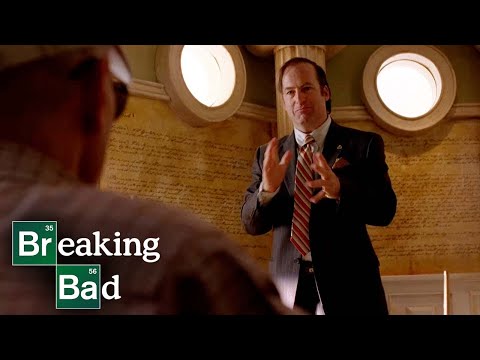
In the legal world, specifically in older common law texts, the 'goodman' sometimes refers to a 'man of good standing' who could serve on a jury. While the term is no longer used in courtrooms, its ghost remains in the concept of the 'reasonable person' or the 'upright citizen.' Furthermore, the surname 'Goodman' is a direct descendant of this title, held by millions of people today, including famous figures like Benny Goodman or Saul Goodman (the fictional lawyer).
- Religious Texts
- Older hymnals and liturgical texts occasionally use 'goodman' to refer to God as the master of the household of faith, though this is quite rare in contemporary worship.
The goodman of the vineyard paid each worker a penny, regardless of when they started.
In the play, the goodman represents the voice of common sense against the madness of the nobility.
Because goodman is an archaic term, modern speakers and writers often stumble when trying to use it. The most frequent errors involve confusion with modern phrases, incorrect capitalization, and a misunderstanding of the social hierarchy it represents.
- Confusing 'Goodman' with 'Good Man'
- This is the most common mistake. 'Goodman' (one word) is a title or a specific noun meaning 'master of the house.' 'Good man' (two words) is a description of a man's character. You can be a 'goodman' who is a 'bad man.' For example, 'The goodman of the house was a cruel and greedy person.'
Incorrect: He is a very kind goodman.
Correct: He is a very kind good man.
Another mistake is using 'goodman' for someone of high social rank. In the 17th century, calling a nobleman or a wealthy merchant 'Goodman' would have been a serious insult, as it demoted them to the rank of a commoner or yeoman. It would be like calling a CEO 'entry-level staff' today. Conversely, calling a common laborer 'Master' (Mr.) would have been seen as mocking or overly formal.
- Capitalization Errors
- When used as a title before a name, it must be capitalized: 'Goodman Brown.' When used as a general noun, it is usually lowercase: 'The goodman returned home.' Many writers forget this distinction, leading to inconsistent formatting.
Incorrect: I saw goodman Miller at the market.
Correct: I saw Goodman Miller at the market.
Misgendering is also a potential issue. 'Goodman' is strictly masculine. Its feminine equivalent is 'Goodwife' (or 'Goody'). Using 'goodman' to refer to a woman or a mixed group is historically inaccurate. For a mixed group of household heads, you might say 'the goodmen and goodwives of the parish.'
- Overuse in Modern Contexts
- Using the word too frequently in a modern setting can make writing feel 'purple' or overly flowery. It should be used sparingly and only when the historical context justifies it. If you are writing a modern legal thriller, calling the defendant 'Goodman' will likely confuse the reader unless it is his actual surname.
The goodman (referring to a modern plumber) fixed the sink quickly.
Even the goodman of the house could not explain the strange lights in the woods.
When exploring the semantic field of goodman, it is helpful to compare it with other titles and nouns that describe male roles and social standing. Depending on the context—whether you are emphasizing social rank, domestic authority, or moral character—different words might be more appropriate.
- Master vs. Goodman
- 'Master' (often abbreviated as Mr.) was a step above 'Goodman.' It was used for gentlemen, professionals, and those with significant wealth. While a goodman owned his home, a master often owned the land the goodman lived on.
- Yeoman vs. Goodman
- 'Yeoman' is a more technical term for the social class that a goodman belonged to. 'Yeoman' describes the legal and economic status (a freeholder who cultivates his own land), while 'goodman' is the social title used to address him.
While the goodman worked his fields, the squire rode past on a fine stallion.
In a domestic context, 'householder' or 'head of the family' are modern equivalents. These terms lack the historical flavor but convey the same sense of responsibility and authority over a residence. If you are translating an old text into modern English, 'master of the house' is often the most accurate substitute for 'goodman of the house.'
- Husband vs. Goodman
- In archaic English, 'husband' (from 'husbandry') also referred to a man who managed a household or farm. While 'husband' today refers to a marital partner, in the 1600s, it was closely linked to the role of a goodman.
The goodman and his wife, the goodwife, were the pillars of the village community.
For those looking for a more neutral modern term, 'citizen' or 'burgess' might work, though these emphasize political status rather than domestic or social rank. 'Burgess' specifically refers to an inhabitant of a town or borough with full municipal rights, which overlaps with the status of many urban goodmen.
- Comparison Table
- - **Goodman**: Respectable household head, worked for a living.
- **Gentleman**: High social status, did not perform manual labor.
- **Peasant/Churl**: Low social status, often worked on someone else's land.
The goodman of the inn welcomed the weary travelers with a warm fire and hearty stew.
Every goodman was required by law to keep a bow and arrows for the defense of the realm.
How Formal Is It?
趣味小知识
The feminine version, 'Goodwife,' was so commonly shortened to 'Goody' that it became a name in its own right. You might recognize it from the character 'Goody Proctor' in Arthur Miller's play 'The Crucible.'
发音指南
- Pronouncing it as two distinct words: 'GOOD MAN' (with equal stress).
- Pronouncing the 'a' in 'man' as a long 'a' /mæn/ instead of a schwa /mən/.
- Confusing it with the name 'Godman'.
- Over-emphasizing the 'd' sound.
- Pronouncing 'good' like 'food' (long vowel).
难度评级
Requires knowledge of historical context and archaic vocabulary.
Difficult to use correctly without sounding out of place in modern English.
Rarely spoken; mostly used in theatrical or historical reenactment.
Can be confused with 'good man' if not listening for the stress pattern.
接下来学什么
前置知识
接下来学习
高级
需要掌握的语法
Compound Nouns
Goodman is a closed compound noun formed from 'good' and 'man'.
Capitalization of Titles
Capitalize 'Goodman' when it precedes a name (e.g., Goodman Smith).
Archaic Plurals
The plural of goodman follows the irregular plural of man: goodmen.
Possessive Case
Add 's to form the possessive: 'the goodman's house'.
Vocative Case
Used in direct address: 'Come hither, Goodman!'
按水平分级的例句
The goodman lived in a small house.
The master of the house lived in a small house.
Goodman is the subject of the sentence.
Goodman John is a farmer.
Mr. John (the farmer) is a farmer.
Used as a title before a name.
The goodman has three cows.
The master of the house has three cows.
Singular noun with 'the'.
Is the goodman at home?
Is the master of the house at home?
Question form.
The goodman works hard.
The master of the house works hard.
Present simple tense.
Goodman Miller is my neighbor.
Mr. Miller is my neighbor.
Proper noun usage.
The goodman wore a brown hat.
The master of the house wore a brown hat.
Past simple tense.
We saw the goodman in the village.
We saw the master of the house in the village.
Object of the sentence.
The goodman of the house welcomed the guests.
The master of the house welcomed the guests.
Phrase: 'goodman of the house'.
Goodman Brown went for a walk in the forest.
Mr. Brown went for a walk in the forest.
Title usage.
The goodman's wife was called a goodwife.
The master's wife was called a goodwife.
Possessive form: goodman's.
Every goodman in the town paid his taxes.
Every household head in the town paid his taxes.
Used with 'every'.
The goodman was not a rich gentleman.
The household head was not a rich gentleman.
Contrast between social ranks.
They asked the goodman for some water.
They asked the master of the house for some water.
Indirect object.
The goodman sat at the head of the table.
The master of the house sat at the head of the table.
Prepositional phrase.
Goodman Silas was known for his honesty.
Mr. Silas was known for his honesty.
Title usage.
In the story, the goodman represents the common people.
In the story, the household head represents the common people.
Symbolic usage.
The goodman of the house must protect his family.
The master of the house must protect his family.
Modal verb 'must'.
Goodman Proctor was a central figure in the village.
Mr. Proctor was a central figure in the village.
Historical title.
The term 'goodman' is rarely used in modern conversation.
The term 'goodman' is rarely used in modern conversation.
Passive voice.
The goodman worked from dawn until dusk on his farm.
The master of the house worked from dawn until dusk on his farm.
Time expression.
He was addressed as Goodman because he was a yeoman.
He was addressed as Goodman because he was a yeoman.
Causal clause.
The goodman's authority was respected by all.
The master's authority was respected by all.
Possessive noun.
If the goodman were here, he would know what to do.
If the master of the house were here, he would know what to do.
Second conditional.
The goodman of the house was responsible for the moral upbringing of his children.
The master of the house was responsible for the moral upbringing of his children.
Complex subject.
Nathaniel Hawthorne uses the title 'Goodman' to ground his characters in Puritan history.
Nathaniel Hawthorne uses the title 'Goodman' to ground his characters in Puritan history.
Literary analysis context.
The distinction between a gentleman and a goodman was strictly enforced by social custom.
The distinction between a gentleman and a goodman was strictly enforced by social custom.
Abstract noun phrase.
Goodman was a title that implied economic independence without noble birth.
Goodman was a title that implied economic independence without noble birth.
Relative clause.
The goodman's role in the community was often tied to his membership in the church.
The master's role in the community was often tied to his membership in the church.
Passive construction.
In the King James Bible, the 'goodman of the house' is a translation of the Greek for householder.
In the King James Bible, the 'goodman of the house' is a translation of the Greek for householder.
Appositive phrase.
The goodman's simple attire contrasted sharply with the silk robes of the magistrate.
The master's simple attire contrasted sharply with the silk robes of the magistrate.
Comparative structure.
Being a goodman meant you had the right to vote in certain local elections.
Being a goodman meant you had the right to vote in certain local elections.
Gerund as subject.
The erosion of the term 'goodman' mirrors the decline of the traditional yeomanry class.
The erosion of the term 'goodman' mirrors the decline of the traditional yeomanry class.
Metaphorical usage.
Linguistically, 'goodman' is a fossilized honorific that provides insight into early modern social stratification.
Linguistically, 'goodman' is a fossilized honorific that provides insight into early modern social stratification.
Technical linguistic terms.
The goodman of the house exercised patriarchal authority over his wife, children, and servants.
The master of the house exercised patriarchal authority over his wife, children, and servants.
Academic tone.
Shakespeare often uses 'goodman' to characterize figures of lower-middle-class respectability.
Shakespeare often uses 'goodman' to characterize figures of lower-middle-class respectability.
Literary criticism.
The transition from 'Goodman' to 'Mr.' reflects a broader democratization of social titles in the 18th century.
The transition from 'Goodman' to 'Mr.' reflects a broader democratization of social titles in the 18th century.
Noun phrase as subject.
The goodman's economic viability was contingent upon the successful management of his smallholding.
The master's economic viability was contingent upon the successful management of his smallholding.
Advanced vocabulary (contingent, smallholding).
In legal parlance of the time, a goodman was a 'probus et legalis homo,' a law-abiding man.
In legal parlance of the time, a goodman was a 'probus et legalis homo,' a law-abiding man.
Latin integration.
The term 'goodman' effectively bridged the gap between the peasantry and the minor gentry.
The term 'goodman' effectively bridged the gap between the peasantry and the minor gentry.
Adverbial placement.
The semantic shift of 'goodman' from a moral descriptor to a rigid social honorific illustrates the codification of class in the Tudor era.
The semantic shift of 'goodman' from a moral descriptor to a rigid social honorific illustrates the codification of class in the Tudor era.
Highly academic syntax.
Hawthorne’s 'Young Goodman Brown' utilizes the titular honorific as a poignant irony, juxtaposing social respectability with internal depravity.
Hawthorne’s 'Young Goodman Brown' utilizes the titular honorific as a poignant irony, juxtaposing social respectability with internal depravity.
Literary theory application.
The 'goodman of the house' trope in the Synoptic Gospels serves as a focal point for parables concerning stewardship and vigilance.
The 'goodman of the house' trope in the Synoptic Gospels serves as a focal point for parables concerning stewardship and vigilance.
Theological context.
The gradual obsolescence of 'goodman' in favor of the universalized 'Mr.' signifies the collapse of the feudal-adjacent social hierarchy.
The gradual obsolescence of 'goodman' in favor of the universalized 'Mr.' signifies the collapse of the feudal-adjacent social hierarchy.
Historical sociology focus.
To address a gentleman as 'Goodman' was a performative act of social subversion, a linguistic 'demotion' that could provoke legal repercussions.
To address a gentleman as 'Goodman' was a performative act of social subversion, a linguistic 'demotion' that could provoke legal repercussions.
Infinitive phrase as subject.
The term 'goodman' functions as a linguistic artifact, preserving the socio-economic nuances of the pre-industrial English countryside.
The term 'goodman' functions as a linguistic artifact, preserving the socio-economic nuances of the pre-industrial English countryside.
Metaphorical 'artifact'.
The goodman’s identity was inextricably linked to his tenure of land, a status that granted him a voice in the local vestry.
The master’s identity was inextricably linked to his tenure of land, a status that granted him a voice in the local vestry.
Advanced prepositional usage.
In the dialectal variations of the borderlands, 'goodman' often carried a more intimate, domestic connotation than its formal southern counterpart.
In the dialectal variations of the borderlands, 'goodman' often carried a more intimate, domestic connotation than its formal southern counterpart.
Comparative analysis.
常见搭配
常用短语
— The master or head of a household.
The goodman of the house is responsible for his family's safety.
— A traditional way to refer to a husband and wife of the yeoman class.
Goodman Smith and Goody Smith were well-liked by everyone.
— To use the specific social title for a man of that rank.
You should address him as Goodman if you want to be polite.
— The share of food or resources reserved for the head of the house.
The goodman's portion was always the largest at the table.
— A man who is honest and hardworking but not wealthy or powerful.
He was a simple goodman, content with his life.
— A respected male resident of a specific church district.
He was a leading goodman of the parish.
— The promise or testimony of a respected householder.
The goodman's word was enough to settle the dispute.
— Everyone in the community, emphasizing the heads of households.
Every goodman and child came out to see the parade.
— The landlord or owner of a tavern or inn.
The goodman of the inn showed us to our room.
— The social and domestic obligations of a householder.
It is the goodman's duty to provide for his kin.
容易混淆的词
Two words referring to moral character, whereas 'goodman' is a social title.
A higher social rank than a goodman; gentlemen did not do manual labor.
A religious term for a man who is considered divine or a saint, unrelated to 'goodman'.
习语与表达
— A variation of 'the husband is the last to know,' referring to domestic secrets.
In that village, the goodman is often the last to know about his wife's gossip.
Archaic/Humorous— To act as the responsible head of a house or to take charge of a situation.
He tried to play the goodman, but no one listened to his orders.
Archaic— An old saying implying that a home needs a strong leader to function.
The farm fell into ruin after he died; as they say, no goodman, no house.
Archaic— Extremely honest and reliable, reflecting the reputation of the yeoman class.
You can trust his deal; he is as honest as a goodman.
Archaic— A deep, well-earned sleep after a day of hard manual labor.
After harvesting the wheat, he enjoyed a goodman's rest.
Archaic— To be in control of one's own destiny and moral choices.
In the end, every person must be the goodman of their own soul.
Literary— A symbol of domestic comfort and security.
Travelers were always welcome at the goodman's hearth.
Poetic— Simple, modest success achieved through hard work rather than chance.
He didn't win the lottery, but he had goodman's luck with his crops.
Archaic— To speak plainly, honestly, and without pretension.
He didn't use fancy words; he spoke like a goodman.
Archaic— The heavy responsibility of caring for a large family and property.
Managing the farm alone was a heavy goodman's burden.
Archaic容易混淆
Both refer to the head of a house.
Master (Mr.) was a higher social rank than Goodman. A Master usually had more wealth and status.
The Master of the manor hired the Goodman to farm the land.
They refer to the same social class.
Yeoman is the name of the class/job; Goodman is the title used to address the person.
As a yeoman, he was entitled to be called Goodman.
Both can mean the head of a household.
Husband now means a married man; Goodman specifically meant the master of a house or farm.
The goodman was a careful husband of his family's resources.
They sound similar and are related.
Goodman is masculine; Goody (Goodwife) is feminine.
Goodman Brown and Goody Cloyse were both in the forest.
Both are titles for men.
Sir is for knights or baronet; Goodman is for commoners of respectable standing.
The knight was called Sir, but the farmer was called Goodman.
句型
The goodman is [adjective].
The goodman is old.
Goodman [Name] is a [job].
Goodman Silas is a baker.
The goodman of the house [verb] [object].
The goodman of the house opened the door.
He was addressed as Goodman because [reason].
He was addressed as Goodman because he owned a small farm.
The title of Goodman signifies [abstract concept].
The title of Goodman signifies a specific social rank in the 17th century.
The juxtaposition of [concept] and the honorific 'goodman' [verb].
The juxtaposition of sin and the honorific 'goodman' creates irony in the text.
Neither the goodman nor the [other person] [verb].
Neither the goodman nor the servant knew the way.
Despite being a goodman, he [unexpected action].
Despite being a goodman, he was treated like a common thief.
词族
名词
相关
如何使用
Very low in modern English; high in 17th-century texts.
-
Using 'goodman' as a synonym for 'saint'.
→
He was a goodman (householder), but he was a sinner.
A goodman is a social rank, not necessarily a person of perfect moral character.
-
Writing 'Good man Brown' instead of 'Goodman Brown'.
→
Goodman Brown went into the forest.
When used as a title, it must be one word and capitalized.
-
Addressing a King as 'Goodman'.
→
Your Majesty, the goodman is waiting outside.
Calling a high-ranking person 'Goodman' was an insult in the past because it demoted them.
-
Using 'goodman' for a woman.
→
The goodwife prepared the meal.
Goodman is strictly masculine; goodwife is the feminine equivalent.
-
Pronouncing it like 'Good Man' with a long 'A'.
→
Pronounce it like 'Good-mun'.
The second syllable is unstressed and should be a schwa sound.
小贴士
Historical Accuracy
When writing historical fiction set in the 17th century, use 'Goodman' for farmers and 'Master' for doctors or lawyers to show social differences.
One Word
Always write 'goodman' as one word when using it as a title or a noun for a householder. Two words ('good man') means something different.
Symbolism
In literature, notice if a 'goodman' character acts in a way that contradicts his 'good' title. Authors often use this for irony.
The 'Middling Sort'
Remember that a goodman represents the 'middle class' of the past—not the richest, but not the poorest either.
Masculine Only
Never use 'goodman' for a woman. Use 'goodwife' or 'goody' instead to be historically correct.
Biblical Context
If you see 'goodman' in the Bible, just think 'owner of the house' or 'manager.' It helps make the parables easier to understand.
Surname Origin
If your last name is Goodman, your ancestors were likely respected householders or independent farmers!
Stress the First Part
Put the emphasis on 'GOOD' and say the 'man' part very quickly. This is how titles are usually pronounced in English.
Yeoman Connection
Associate 'goodman' with the word 'yeoman.' They often go together in history books.
World Building
Use 'goodman' to instantly make your fantasy or historical world feel more authentic and grounded in the past.
记住它
记忆技巧
Think of a 'Good Man' who stays at home to manage his 'Good Mansion' (even if it's just a small cottage). He is the Goodman of the house.
视觉联想
Imagine a man in a simple brown tunic and a wide-brimmed hat, holding a set of keys to a wooden farmhouse. He looks honest and hardworking.
Word Web
挑战
Try to write a three-sentence dialogue between a 'Goodman' and a 'Gentleman' where they discuss the weather or their crops.
词源
The word 'goodman' originated in Middle English as 'gode man,' a combination of 'good' (meaning virtuous or of high quality) and 'man.' By the 14th century, it had begun to coalesce into a single term used to describe a master of a household. It was a literal description that evolved into a formal social title.
原始含义: A man of good character or a respected head of a house.
Germanic (Old English roots).文化背景
The term is gender-specific (masculine) and reflects a patriarchal social structure where the male was the undisputed head of the house.
Primarily used in British and early American history. It is deeply tied to the Protestant work ethic.
在生活中练习
真实语境
Historical Fiction
- Goodman of the village
- Address him as Goodman
- The goodman's cottage
- A simple goodman's life
Bible Study
- Goodman of the house
- Master of the vineyard
- Householder
- Steward
Genealogy
- Ranked as a goodman
- Goodman in the census
- Title in the will
- Yeoman status
Shakespearean Theater
- Goodman Delver
- Goodman Dull
- Humble title
- Comic relief character
Literary Analysis
- Titular character
- Symbol of the everyman
- Social honorific
- Archaic address
对话开场白
"Have you ever noticed how titles like 'Goodman' have disappeared from modern English?"
"In 'Young Goodman Brown,' why do you think Hawthorne chose that specific title for his protagonist?"
"If we still used titles based on social rank today, what would your title be?"
"Do you think 'Goodman' sounds more or less respectful than 'Mr.'?"
"How does the word 'goodman' change the way you imagine a character in a story?"
日记主题
Imagine you are a 'goodman' in a 17th-century village. Describe your typical day and your responsibilities to your family and community.
Reflect on the difference between being a 'good man' (moral) and a 'goodman' (social rank). Can one exist without the other?
Write a short story set in the future where people have started using archaic titles like 'goodman' again. Why did they bring them back?
Compare the role of a 'goodman' to the modern concept of a 'head of household.' What has changed and what has stayed the same?
Research a famous person with the surname 'Goodman' and write about how their ancestor might have earned that title.
常见问题
10 个问题No, 'goodman' is considered archaic and is not used in modern daily conversation. It is only found in historical contexts, literature, or when someone is intentionally using old-fashioned language.
'Goodman' (one word) is a historical title for a householder or a specific social rank. 'Good man' (two words) is a description of a man who is morally good or kind. You can be a 'goodman' who is actually a 'bad man'!
A 'goodman' was typically a yeoman farmer, a skilled craftsman, or a small business owner. He was someone who owned his own home or land but was not wealthy enough to be considered a 'gentleman'.
The female version is 'goodwife,' which was often shortened to 'goody' in everyday speech.
Nathaniel Hawthorne used the title to show that the character was a typical, respectable member of his Puritan community. It emphasizes his status as an 'everyman' before his faith is tested.
Yes, 'Goodman' is a very common surname today. It originally came from the title given to ancestors who were heads of households or yeomen.
Unless you are in a historical play, it would be very strange and likely confusing. It is better to use 'Mr.' or their first name depending on your workplace culture.
Yes, in the King James Version of the Bible, the phrase 'goodman of the house' is used several times to refer to the master of a residence or a householder.
A 'gentleman' (addressed as Master or Mr.) was higher than a goodman. Above that were knights, lords, and the nobility.
It is pronounced 'GOOD-mən.' The first part sounds like the word 'good,' and the second part sounds like the end of 'woman' or 'human.'
自我测试 200 个问题
Write a short paragraph (3-4 sentences) describing a day in the life of a 'goodman' in the 17th century.
Well written! Good try! Check the sample answer below.
Explain the difference between a 'goodman' and a 'gentleman' in terms of social rank and daily activities.
Well written! Good try! Check the sample answer below.
Write a dialogue between two neighbors in a colonial village, one addressing the other as 'Goodman'.
Well written! Good try! Check the sample answer below.
How does Nathaniel Hawthorne use the title 'Goodman' in his story 'Young Goodman Brown'?
Well written! Good try! Check the sample answer below.
Describe the domestic responsibilities of a 'goodman of the house' based on historical context.
Well written! Good try! Check the sample answer below.
Translate the concept of 'goodman' into a modern equivalent and explain why the modern term is different.
Well written! Good try! Check the sample answer below.
Write a sentence using 'goodman' as a common noun and another using it as a title.
Well written! Good try! Check the sample answer below.
Why did the title 'Goodman' eventually fall out of use?
Well written! Good try! Check the sample answer below.
Create a character profile for a man named 'Goodman Silas'.
Well written! Good try! Check the sample answer below.
Discuss the linguistic evolution of 'goodman' from a phrase to a title.
Well written! Good try! Check the sample answer below.
Write a short poem or rhyme that uses the word 'goodman'.
Well written! Good try! Check the sample answer below.
What are the connotations of the word 'goodman' in a historical setting?
Well written! Good try! Check the sample answer below.
Imagine you are a 'goodwife' writing a letter to your husband, the 'goodman'.
Well written! Good try! Check the sample answer below.
Explain the significance of 'goodman' in the King James Bible.
Well written! Good try! Check the sample answer below.
Write a sentence that uses both 'goodman' and 'gentleman' to show their difference.
Well written! Good try! Check the sample answer below.
How does the word 'goodman' contribute to the 'world-building' of a story?
Well written! Good try! Check the sample answer below.
What is the relationship between 'goodman' and the modern surname?
Well written! Good try! Check the sample answer below.
Write a formal sentence describing a legal dispute involving a goodman.
Well written! Good try! Check the sample answer below.
Why is 'goodman' considered an 'honorific'?
Well written! Good try! Check the sample answer below.
Describe the visual image that comes to mind when you hear the word 'goodman'.
Well written! Good try! Check the sample answer below.
Pronounce the word 'goodman' and explain where the stress is placed.
Read this aloud:
你说的:
Speech recognition is not supported in your browser. Try Chrome or Edge.
Describe the social status of a 'goodman' compared to a 'gentleman'.
Read this aloud:
你说的:
Speech recognition is not supported in your browser. Try Chrome or Edge.
Use the word 'goodman' in a sentence about a historical village.
Read this aloud:
你说的:
Speech recognition is not supported in your browser. Try Chrome or Edge.
Explain the meaning of 'goodman of the house' to a friend.
Read this aloud:
你说的:
Speech recognition is not supported in your browser. Try Chrome or Edge.
Why is 'goodman' considered an archaic word?
Read this aloud:
你说的:
Speech recognition is not supported in your browser. Try Chrome or Edge.
How would you address a farmer named John Smith in the year 1650?
Read this aloud:
你说的:
Speech recognition is not supported in your browser. Try Chrome or Edge.
What is the feminine equivalent of 'goodman' and how is it used?
Read this aloud:
你说的:
Speech recognition is not supported in your browser. Try Chrome or Edge.
Summarize the story of 'Young Goodman Brown' in two sentences.
Read this aloud:
你说的:
Speech recognition is not supported in your browser. Try Chrome or Edge.
Discuss the importance of titles in Early Modern English society.
Read this aloud:
你说的:
Speech recognition is not supported in your browser. Try Chrome or Edge.
Can you name a famous fictional character with the title 'Goodman'?
Read this aloud:
你说的:
Speech recognition is not supported in your browser. Try Chrome or Edge.
Explain the difference between 'goodman' and 'good man' out loud.
Read this aloud:
你说的:
Speech recognition is not supported in your browser. Try Chrome or Edge.
What kind of work did a 'goodman' typically do?
Read this aloud:
你说的:
Speech recognition is not supported in your browser. Try Chrome or Edge.
How does the word 'goodman' sound to a modern ear?
Read this aloud:
你说的:
Speech recognition is not supported in your browser. Try Chrome or Edge.
Why would calling a lord 'Goodman' be an insult?
Read this aloud:
你说的:
Speech recognition is not supported in your browser. Try Chrome or Edge.
What does 'goodman' suggest about a person's character?
Read this aloud:
你说的:
Speech recognition is not supported in your browser. Try Chrome or Edge.
Use 'goodman' in a sentence about the Bible.
Read this aloud:
你说的:
Speech recognition is not supported in your browser. Try Chrome or Edge.
Describe a 'goodman's' house using at least three adjectives.
Read this aloud:
你说的:
Speech recognition is not supported in your browser. Try Chrome or Edge.
Why is the surname 'Goodman' common today?
Read this aloud:
你说的:
Speech recognition is not supported in your browser. Try Chrome or Edge.
Is 'goodman' a formal or informal word?
Read this aloud:
你说的:
Speech recognition is not supported in your browser. Try Chrome or Edge.
What is the most common collocation for 'goodman'?
Read this aloud:
你说的:
Speech recognition is not supported in your browser. Try Chrome or Edge.
Listen to the sentence: 'The goodman of the house was away at the market.' Who was away?
Listen to the title: 'Goodman Brown.' Is this a name or a description?
Listen to the difference: 'He is a good man' vs 'He is a goodman.' Which one refers to his job/status?
In a play, a character says: 'Goodman, lend me your axe.' What is the speaker's relationship to the man?
Listen to the plural: 'The goodmen gathered in the square.' How many people were there?
A narrator says: 'The goodman's estate was small but profitable.' What owned the estate?
Listen for the stress: 'GOOD-man.' Which syllable is louder?
In a story, someone is called 'Old Goodman Silas.' What does 'Old' tell you?
Listen to the phrase: 'Goodman and Goodwife.' Who are they?
A character says: 'I am but a simple goodman, sir.' Is the character wealthy?
Listen to the sentence: 'The goodman's word is his bond.' What does this mean?
Listen to the sentence: 'They addressed him as Goodman.' Was this a sign of respect?
Listen to the sentence: 'The goodman of the inn provided a warm fire.' Where are they?
Listen to the sentence: 'Goodman was a title for those below a gentleman.' Who was higher?
Listen to the sentence: 'The goodman worked from dawn to dusk.' When did he work?
/ 200 correct
Perfect score!
Summary
The word 'goodman' is a historical title for a respectable male householder of modest means. For example, in the 1600s, a neighbor might address a local farmer as 'Goodman Smith' to show respect without implying he was a wealthy gentleman.
- Goodman is an archaic title for a male head of a household, ranking below a gentleman but above a common laborer.
- It was commonly used in the 16th and 17th centuries as a formal way to address respected yeomen and artisans.
- The term is the masculine equivalent of 'goodwife' and is frequently found in historical literature like Shakespeare and Hawthorne.
- Today, it is primarily encountered in historical contexts, genealogy, and classic literature, rather than in modern daily conversation.
Historical Accuracy
When writing historical fiction set in the 17th century, use 'Goodman' for farmers and 'Master' for doctors or lawyers to show social differences.
One Word
Always write 'goodman' as one word when using it as a title or a noun for a householder. Two words ('good man') means something different.
Symbolism
In literature, notice if a 'goodman' character acts in a way that contradicts his 'good' title. Authors often use this for irony.
The 'Middling Sort'
Remember that a goodman represents the 'middle class' of the past—not the richest, but not the poorest either.