









satellite في 30 ثانية
- Describes a secondary location or entity that is separate from but dependent on a main central hub, like a satellite office or campus.
- Commonly used in business, urban planning, and politics to show a relationship of dependency and physical distance from a primary center.
- Functions as an adjective placed before a noun (e.g., satellite town, satellite state) to classify the type of entity being described.
- Implies a hierarchical structure where the 'satellite' orbits the 'main' body, following its rules and relying on its central resources.
The adjective satellite is a fascinating term that borrows its meaning from the world of astronomy to describe human organizations, urban planning, and political structures. In its most basic sense, when something is described as 'satellite,' it means it is physically separate from a main center but remains dependent on or controlled by that central hub. Imagine a planet and its moon; the moon is a separate body, yet it is held in place by the planet's gravity and revolves around it. Similarly, a satellite office or campus 'revolves' around the main headquarters or main campus. This term is most frequently used in professional, academic, and governmental contexts to describe expansion. For instance, a large hospital might find that its main building in the city center is too crowded or difficult for people in the suburbs to reach. To solve this, they might open a satellite clinic. This clinic is not a separate business; it is part of the main hospital, uses the same systems, and reports to the same management, but it exists in a different location. People use this word when they want to emphasize the relationship of dependency and the secondary nature of the location. It is not a 'branch' in the sense of a simple retail store, but often implies a more complex functional unit that performs specific tasks on behalf of the main body.
- Core Concept
- Physical separation combined with functional dependency on a central hub.
The university's satellite campus in the northern suburbs offers specialized courses in marine biology that are not available at the main city site.
In urban planning, the term is used to describe 'satellite towns.' These are smaller municipalities that are located near a large metropolis. Unlike a suburb, which is primarily residential and depends on the city for almost everything, a satellite town often has its own local government and some local industry, yet it remains economically and socially tied to the 'mother city.' The use of 'satellite' here suggests a structured relationship where the smaller town helps alleviate the pressure on the main city by providing housing and employment while still benefiting from the city's major infrastructure. In politics, the term 'satellite state' was famously used during the Cold War to describe countries that were technically independent but were under heavy political, economic, and military influence from a larger power, such as the Soviet Union. This usage highlights the 'control' aspect of the definition. Whether we are talking about a small office, a college campus, or an entire country, the adjective 'satellite' always points to a secondary status relative to a primary center. It is a word of hierarchy and spatial organization.
- Common Collocations
- Satellite campus, satellite office, satellite town, satellite clinic, satellite state.
To reduce commuting times for employees, the tech giant established several satellite offices across the tri-state area.
When discussing technology, specifically broadcasting, 'satellite' often acts as a noun, but as an adjective, it describes the method of transmission. A 'satellite link' or 'satellite feed' refers to communication that is routed through an orbiting satellite. However, the B2 CEFR level focus is usually on the organizational meaning. In business meetings, you might hear a manager say, 'We are moving our customer support team to a satellite location.' This tells the staff that the team is still part of the company but will be working from a different building. It is important to distinguish this from 'outsourcing.' If a company outsources, they hire a different company. If they use a satellite office, they are still using their own employees in their own (albeit secondary) space. This nuance is vital for clear professional communication. The word carries a sense of reach and expansion, suggesting that the central entity is so large or successful that it must spread its influence to other geographic areas. It is a term of growth and organized decentralization.
The news agency relied on a satellite connection to broadcast live from the remote mountain region.
- Historical Context
- The term gained significant usage in the mid-20th century during the rise of suburbanization and the Cold War geopolitical shifts.
Many Eastern European nations were considered satellite states of the Soviet Union until the late 1980s.
Finally, it is worth noting that 'satellite' as an adjective is almost always used before the noun it modifies (attributive position). You would rarely say 'The office is satellite,' but rather 'It is a satellite office.' This grammatical habit reinforces its role as a classifier—it tells us what *kind* of office or campus we are dealing with. In modern remote work discussions, the term is evolving. Some companies now refer to 'satellite hubs' where remote workers can go to work for a few days a week, providing a middle ground between working from home and commuting to a distant headquarters. This shows the word's continued relevance in a changing world. It remains the perfect descriptor for any entity that is 'out there' but still 'connected to the center.'
The regional bank is planning to shut down its main branch and instead open three smaller satellite branches to better serve the rural community.
Using the adjective satellite correctly requires an understanding of its attributive nature and its specific collocations. Because it describes a relationship between two entities, you must always have a 'main' entity in mind, even if it isn't explicitly mentioned in the sentence. The most common way to use it is to place it directly before a noun that represents a place of work, study, or residence. For example, 'The university is building a satellite campus.' Here, 'satellite' modifies 'campus,' telling the reader that this campus is not the primary one. It is important to avoid using 'satellite' to describe people or feelings; it is almost exclusively reserved for physical locations or political entities. You wouldn't call a junior employee a 'satellite worker' unless you meant they worked at a satellite office. Instead, focus on the structural arrangement of the organization you are describing.
- Sentence Structure
- [Main Entity] + [Verb] + [Satellite] + [Noun]. Example: 'The company operates a satellite office in London.'
Because the main hospital was over capacity, they redirected non-emergency patients to their satellite clinic downtown.
Another sophisticated way to use 'satellite' is in the context of urban development. When writing about city growth, you might use 'satellite town' to describe a planned community. For instance, 'The government is developing satellite towns to ease the housing crisis in the capital.' This usage sounds much more professional and precise than saying 'small towns near the city.' It implies a deliberate strategy of decentralization. In academic writing, you might use 'satellite' to describe secondary data or peripheral topics, though this is less common than the physical location meaning. For example, 'While the primary study focused on heart health, several satellite projects examined the impact of diet on sleep patterns.' Here, 'satellite' means 'related but secondary.' This demonstrates the word's versatility in formal English. Always ensure that the dependency relationship is clear; if the two entities are equal in power or importance, 'satellite' is not the right word—'partner' or 'affiliate' would be better.
- Professional Usage
- In business reports, use 'satellite' to describe geographical expansion that maintains central control.
Our satellite operations in Southeast Asia have reported a 20% increase in productivity since the new manager took over.
In the realm of technology and media, 'satellite' as an adjective often describes the medium of transmission. You will see phrases like 'satellite television,' 'satellite radio,' or 'satellite navigation.' In these cases, the word describes the technology used to deliver the service. For example, 'We installed a satellite dish to receive international channels.' While 'satellite' here is technically a noun acting as a modifier, it functions as an adjective in the sentence. When you are speaking, pay attention to the stress. In 'satellite office,' the stress is on the first syllable of 'SATE-llite.' This remains consistent across all its uses. If you are describing a political situation, 'satellite state' is a powerful term that carries a slightly negative connotation of lack of sovereignty. Use it carefully in political science essays to describe the relationship between a superpower and its smaller, dependent neighbors. For example, 'The historian argued that the country was merely a satellite state, with its domestic policies dictated by its larger neighbor.'
The car's satellite navigation system was unable to find a signal in the deep canyon.
- Variations
- Satellite-based (adj), Satellite-linked (adj).
The research team set up a satellite station in Antarctica to monitor melting ice caps.
To master this word, practice using it in different domains. Try writing a sentence about a business, then one about a city, and then one about technology. This will help you internalize the core meaning of 'separate but dependent.' Remember that 'satellite' is a formal and precise word. In casual conversation, people might just say 'the other office' or 'the small town nearby,' but in a professional or academic setting, 'satellite' is the preferred term. It shows that you understand the organizational structure and the hierarchy involved. As you reach B2 and C1 levels of English, using such specific adjectives will significantly improve the clarity and sophistication of your communication. It allows you to pack a lot of meaning into a single word, describing both the location and the relationship of an entity in one go.
The festival organizers set up satellite stages throughout the city to host smaller acoustic performances.
In the real world, you will encounter the adjective satellite in several specific environments. One of the most common is the corporate world. When a company grows beyond its headquarters, the news of a new 'satellite office' is often shared in internal memos or business journals. You might hear a CEO say, 'Our new satellite office in Berlin will help us tap into the European market.' In this context, it signals growth and a strategic presence in a new geographic area. It is also very common in the healthcare sector. Large medical groups often have a 'main' hospital and several 'satellite clinics' or 'satellite imaging centers.' This allows them to provide services like X-rays or routine check-ups closer to where patients live, while keeping the major surgeries and specialized equipment at the central hospital. If you are listening to a podcast about urban planning or architecture, the term 'satellite city' or 'satellite town' will frequently come up as a solution to urban sprawl and overpopulation.
- Real-World Context: Education
- Universities use satellite campuses to offer degrees in different regions, often focusing on adult education or specific trades.
I'm taking my evening classes at the university's satellite campus because it's only ten minutes from my house.
Another major area where you will hear this word is in the media and telecommunications industry. News anchors often talk about 'satellite feeds' or 'satellite links' when they are interviewing someone in a different country. You might hear, 'We're going live now via satellite to our correspondent in Tokyo.' In this case, 'satellite' describes the technology making the communication possible. Similarly, 'satellite radio' and 'satellite TV' are common household terms. In the world of international relations and history, the term 'satellite state' is used to describe the political landscape of the 20th century. Documentaries about the Cold War will often refer to Poland, Hungary, or East Germany as satellite states of the USSR. This usage is more formal and carries a heavy historical weight, implying that these nations had limited freedom to make their own decisions. Understanding these different contexts helps you realize that 'satellite' is not just about space; it's about how things are connected and controlled.
- Real-World Context: Technology
- Satellite navigation (GPS) is a daily part of modern life, found in every smartphone and modern vehicle.
The hiker was rescued after using a satellite phone to call for help in an area with no cellular service.
In modern tech startups, you might hear the term 'satellite team.' This refers to a small group of developers or designers who work in a different time zone or city from the main engineering hub. This is common in the 'remote-first' or 'hybrid' work culture. A manager might say, 'Our satellite team in Vietnam handles the overnight maintenance.' This usage is very contemporary and reflects the globalized nature of the modern workforce. You will also find the word in environmental science. Researchers use 'satellite imagery' to track deforestation, climate change, and weather patterns. In this context, 'satellite' describes the source of the data. When you hear a scientist say, 'Satellite data shows a significant decrease in Arctic ice,' they are referring to information gathered by instruments orbiting the Earth. This highlights the word's transition from a physical object (the satellite) to a descriptive adjective (the data from the satellite).
The government used satellite imagery to identify illegal mining operations in the rainforest.
- Real-World Context: Retail
- Department stores sometimes have satellite shops in airports or train stations that sell a limited range of their best-selling items.
I bought this perfume at the luxury brand's satellite boutique in the airport terminal.
Finally, you might encounter 'satellite' in the arts. A major film festival or art biennial might have 'satellite events'—smaller exhibitions or screenings that take place around the city at the same time as the main event. These are often more experimental or local in focus but are officially recognized by the main festival. This usage perfectly captures the 'separate but connected' essence of the word. Whether you are reading a business report, watching the news, or planning a trip, 'satellite' is a word that helps you understand the spatial and functional hierarchy of the world around you. It is a key part of the vocabulary for anyone looking to navigate professional and academic English successfully.
While the main exhibition is at the national gallery, there are several satellite shows in independent studios across the East End.
One of the most frequent mistakes learners make with the word satellite is confusing its noun and adjective forms. As a noun, a satellite is an object that orbits a planet (like the Moon or a communications satellite). As an adjective, it describes something secondary or dependent. A common error is saying 'The office is a satellite' when you mean 'It is a satellite office.' While people might understand you, it is more precise to use it as a modifier. Another mistake is using 'satellite' when 'branch' or 'subsidiary' would be more appropriate. A 'branch' is a general term for any local office of a business (like a bank branch). A 'satellite' office usually implies a more specific, often smaller or more specialized, relationship to the main hub. If you are talking about a completely independent company owned by another, 'subsidiary' is the correct technical term, not 'satellite.'
- Mistake 1: Confusing Noun and Adjective
- Incorrect: 'Our company has three satellites in other cities.' Correct: 'Our company has three satellite offices in other cities.'
Avoid saying 'The school is satellite'; instead, say 'It is a satellite school.'
Another common pitfall is misapplying the term to people. You should not describe a person as 'satellite' to mean they are secondary or unimportant. This can sound dehumanizing or simply confusing. If you want to say someone works at a satellite location, say 'He is based at the satellite office.' Don't say 'He is a satellite employee' unless that is a specific term used by that company. Furthermore, learners sometimes confuse 'satellite' with 'suburban.' While many satellite towns are in the suburbs, 'suburban' describes the *type* of area (residential, outside the city), whereas 'satellite' describes the *relationship* to the city (dependent but distinct). A town can be suburban without being a satellite town if it is entirely self-sufficient or very far from a major hub. Precision here is key to achieving a B2 or C1 level of fluency.
- Mistake 2: Misusing in Political Contexts
- Be careful with 'satellite state.' It is a strong term. Using it to describe a friendly ally might be seen as offensive, as it implies they have no real power.
Calling a modern democracy a satellite state is a serious political accusation.
Spelling is another area where mistakes occur. 'Satellite' has two 'l's and one 't' in the middle, and ends with 'ite.' It is frequently misspelled as 'satelite' or 'sattelite.' Remembering the Latin root 'satelles' (meaning 'attendant' or 'guard') can help you remember the double 'l.' In terms of pronunciation, ensure you don't over-emphasize the 't.' It should be a crisp, clear 't' sound, but the primary stress is at the beginning of the word. Finally, avoid using 'satellite' to describe things that are just 'far away.' If a company has an office in another country that operates completely independently, it's an 'international branch' or an 'overseas division,' not necessarily a satellite office. The 'satellite' label specifically highlights the ongoing, active connection and dependency on the central headquarters. If the connection is severed, it is no longer a satellite.
Check your spelling: satellite is the correct form, not 'satelite'.
- Mistake 3: Overuse
- Don't use 'satellite' for every secondary thing. Sometimes 'minor,' 'secondary,' or 'auxiliary' are better choices depending on the context.
Instead of 'satellite reason,' use 'secondary reason' or 'minor factor.'
To avoid these mistakes, always ask yourself: 'Is there a central hub that this thing depends on?' and 'Is it physically separate?' If the answer to both is yes, 'satellite' is likely the correct adjective. Also, pay attention to how native speakers use the word in business news or academic lectures. You will notice it is almost always paired with a noun of location or technology. By sticking to these common patterns, you will avoid the most frequent errors and use the word with the confidence of a high-level English speaker. Remember, 'satellite' is about the *structure* of a system, not just the distance between things.
The company's satellite network ensures that even the most remote offices stay connected to the central database.
When you want to describe something that is secondary or separate, satellite is a great choice, but it's not the only one. Depending on the context, other words might be more precise. For example, branch is the most common alternative in business. A branch is a local office of a larger organization, like a bank or a library. While 'satellite office' and 'branch office' are often used interchangeably, 'satellite' often implies a smaller, more specialized, or more distant location than a standard 'branch.' Another alternative is outpost. An outpost usually refers to a small station in a remote or frontier area. If a company opens a tiny office in a very far-away country where they have no other presence, 'outpost' might be a more descriptive word than 'satellite,' as it emphasizes the isolation and the distance from the center.
- Comparison: Satellite vs. Branch
- A branch is a standard local unit; a satellite is often more specialized or strategically placed to orbit a main hub.
While the bank has a branch on every corner, they only have one satellite office dedicated to high-net-worth clients.
In a more technical or corporate sense, you might use subsidiary. A subsidiary is a company that is completely or partly owned by another company (the parent company). The difference here is legal and structural: a satellite office is usually part of the same legal entity as the headquarters, while a subsidiary is a separate legal entity. If you are talking about cities, suburb is the most common related term. However, as discussed before, a suburb is mainly for living, while a satellite town is a more complete, though still dependent, community. Another useful word is annex. An annex is an addition to a main building or a nearby building used for the same purpose. If a school buys the building next door because they need more classrooms, that is an 'annex,' not a 'satellite campus,' because it is not physically separate enough to be 'orbiting' the main site.
- Comparison: Satellite vs. Subsidiary
- Satellite is about location and function; subsidiary is about legal ownership and corporate structure.
The tech giant acquired a small AI startup, which now operates as a subsidiary rather than a satellite office.
For more abstract concepts, you might use peripheral or secondary. If you are talking about an issue that is related to the main topic but not the most important part, you would say it is a 'peripheral issue.' Using 'satellite issue' would sound very strange and is not standard English. In the context of technology, remote is a common synonym. A 'remote location' is just a place that is far away, while a 'satellite location' specifically implies the connection back to the center. For example, 'He works from a remote location' (could be his home), versus 'He works at the satellite office' (a specific company-owned building). Understanding these nuances allows you to choose the exact word that fits your meaning, making your English more precise and natural. Finally, offshoot can be used to describe something that has developed from something else, like a new TV show that comes from a successful one. While an offshoot is separate, it's more about the *origin* than the *ongoing relationship* implied by 'satellite.'
The new drama series is an offshoot of the popular sitcom, featuring one of the original supporting characters.
- Comparison: Satellite vs. Annex
- An annex is usually right next to or attached to the main building; a satellite is further away.
The library's new annex houses the rare book collection, just across the courtyard from the main entrance.
In summary, while 'satellite' is a powerful and specific adjective, knowing its alternatives like 'branch,' 'subsidiary,' 'outpost,' 'annex,' and 'peripheral' will give you a much richer vocabulary. Each of these words carries a slightly different 'flavor' and describes a different kind of relationship or distance. By choosing 'satellite,' you are specifically highlighting the 'orbiting' nature of the entity—its physical separation combined with its functional dependency. This makes it one of the most useful words for describing modern, decentralized organizations and urban environments. Practice comparing these words in your own writing to see which one fits best in different scenarios.
The project had several peripheral goals, but the primary objective was to reduce carbon emissions by 30%.
How Formal Is It?
حقيقة ممتعة
The word was first used in astronomy by Johannes Kepler in 1610 to describe the moons of Jupiter discovered by Galileo.
دليل النطق
- Pronouncing it with only two syllables (sat-lite).
- Putting the stress on the last syllable (satell-ITE).
- Pronouncing the 'i' as a short 'i' (satell-it).
- Confusing the 't' and 'l' sounds.
- Mumbling the middle 'uh' sound.
مستوى الصعوبة
Common in news and business reports, easy to recognize.
Requires understanding of the attributive adjective position.
Pronunciation is straightforward but requires correct stress.
Clear sound, often paired with familiar nouns like 'office'.
ماذا تتعلّم بعد ذلك
المتطلبات الأساسية
تعلّم لاحقاً
متقدم
قواعد يجب معرفتها
Attributive Adjectives
A satellite office (Adjective before noun).
Compound Nouns
Satellite navigation (Two nouns acting together).
Non-gradable Adjectives
You cannot say 'a very satellite office'.
Prepositional Phrases with 'Via'
Broadcast via satellite.
Possessive Modifiers
The university's satellite campus.
أمثلة حسب المستوى
The big school has a satellite building.
The small extra building.
Adjective before noun.
We have a satellite office in the city.
A second, smaller office.
Used as a modifier.
The satellite clinic is near my house.
The small hospital branch.
Attributive use.
He works at the satellite campus.
The other part of the university.
Prepositional phrase.
Does the company have a satellite site?
Another location.
Question form.
The satellite town is very quiet.
The small town near the city.
Subject of the sentence.
I use satellite TV at home.
TV from space.
Common collocation.
They opened a satellite shop.
A small extra shop.
Past tense verb.
The hospital opened a satellite clinic to help more people.
A secondary medical center.
Infinitive of purpose.
Many people live in satellite towns and work in the city.
Dependent towns near a metropolis.
Plural noun.
The university's satellite campus is in the north of the country.
A secondary university location.
Possessive form.
Our satellite office handles all the customer calls.
A specialized secondary office.
Present simple.
Is there a satellite branch of the library in this area?
A small library location.
Existential 'there is'.
The satellite link was very slow during the storm.
The connection from space.
Subject with modifier.
They are building a new satellite community near the airport.
A planned housing area.
Present continuous.
The satellite navigation system told us to turn left.
GPS system.
Compound noun.
The company decided to close its main headquarters and move to several satellite offices.
Decentralized secondary locations.
Contrast between main and satellite.
A satellite town often relies on the nearby city for public transportation.
A town dependent on a larger hub.
Adverb of frequency.
The research team set up a satellite station to monitor the local wildlife.
A secondary observation post.
Purpose clause.
Students at the satellite campus have access to the same online resources as those at the main site.
Secondary campus location.
Comparison with 'as...as'.
The satellite feed was interrupted by heavy rain in the tropical region.
Broadcast connection.
Passive voice.
They established a satellite clinic to provide vaccinations to rural families.
A secondary medical outpost.
Past simple.
The satellite imagery showed that the forest was disappearing quickly.
Pictures from space.
Noun as adjective.
A satellite state is a country that is officially independent but controlled by another.
Politically dependent nation.
Defining relative clause.
The firm's satellite operations in Asia are managed by a local director.
Secondary business activities.
Passive voice with 'by'.
Urban planners are focusing on developing satellite cities to reduce congestion in the capital.
Planned dependent cities.
Gerund after 'focusing on'.
The satellite link-up allowed the surgeons to consult with experts across the globe.
Communication connection.
Causative 'allow'.
While the main gallery is closed for renovation, a satellite exhibition will be held downtown.
A temporary secondary show.
Concessive clause with 'while'.
The satellite campus offers a more intimate learning environment than the sprawling main university.
Smaller secondary campus.
Comparative adjective.
Many historians view the nations of the Eastern Bloc as former satellite states.
Politically controlled countries.
View...as structure.
The satellite data provided crucial evidence of climate change in the polar regions.
Information from space.
Adjective modifying 'data'.
The company's satellite network provides internet access to remote villages in the Andes.
System of connections.
Present simple for general truth.
The proliferation of satellite offices has fundamentally changed the nature of corporate culture.
The spread of secondary locations.
Present perfect with 'fundamentally'.
The satellite town's economy is inextricably linked to the fluctuations of the metropolitan market.
Deeply dependent town.
Adverb 'inextricably'.
The university is expanding its reach through a series of satellite learning centers in developing nations.
Secondary educational hubs.
Prepositional phrase 'through a series of'.
The satellite imagery was of such high resolution that individual vehicles could be identified.
Very clear space pictures.
Result clause with 'such...that'.
The collapse of the central government left the satellite provinces in a state of political limbo.
Dependent regions.
Metaphorical 'limbo'.
The festival's satellite events often showcase more avant-garde work than the main program.
Secondary, experimental events.
Comparative with 'than'.
The satellite link was established within seconds, allowing for a seamless live broadcast.
Instant communication connection.
Participle phrase 'allowing for'.
The company's satellite strategy involves placing small teams in key innovation hubs around the world.
Strategic expansion plan.
Noun as adjective modifying 'strategy'.
The intricate web of satellite entities ensures that the parent company maintains a global footprint without the need for massive central infrastructure.
Complex system of dependent parts.
Complex sentence with 'without'.
The historian's thesis posits that the region functioned as a satellite economy, existing solely to provide raw materials to the imperial center.
Dependent economic system.
Academic 'posits' and 'solely'.
The satellite campus, though geographically distant, remains culturally and administratively tethered to the main university's ethos.
Connected secondary location.
Concessive 'though' and 'tethered'.
The satellite imagery serves as a poignant reminder of the rapid environmental degradation occurring in the Amazon.
Powerful space pictures.
Poignant reminder collocation.
The geopolitical shift saw former satellite states asserting their sovereignty and forging new alliances.
Previously controlled nations.
Participial phrase 'asserting...and forging'.
The satellite navigation system's failure highlighted our over-reliance on automated technology in unfamiliar terrain.
GPS system's breakdown.
Possessive 'system's failure'.
The company's satellite hubs act as incubators for local talent, bridging the gap between regional potential and global opportunity.
Secondary growth centers.
Metaphorical 'incubators' and 'bridging the gap'.
The satellite link-up, while technically impressive, could not mask the awkwardness of the long-distance interview.
Communication connection.
Concessive 'while' and 'mask the awkwardness'.
المرادفات
الأضداد
تلازمات شائعة
العبارات الشائعة
— Using a satellite for communication or broadcasting.
The interview was conducted via satellite.
— A central point for several satellite locations.
The city acts as a satellite hub for the surrounding villages.
— A group of related things that work together like satellites.
The company uses a satellite system of management.
— A business activity located away from the main center.
Our satellite operation in India is growing fast.
— A group of connected satellite entities.
The university has a vast satellite network.
— A secondary place for observation or work.
The weather service has a satellite station on the mountain.
— A smaller project related to a main one.
This is a satellite project of the main research study.
— A physical location separate from the main one.
The construction company has several satellite sites.
— A link made using satellite technology.
We have a satellite connection in the remote cabin.
يُخلط عادةً مع
A branch is a general term; a satellite is often more specialized or strategically 'orbiting' a hub.
A subsidiary is a separate legal company; a satellite is usually just a separate location of the same company.
A suburb is a residential area; a satellite town is a more complete, though dependent, community.
تعبيرات اصطلاحية
— To stay close to someone or something powerful without being the center of attention.
He spent the whole party orbiting like a satellite around the host.
informal— A poetic or musical reference to a romantic connection (from the Lou Reed song).
The song describes a distant but strong satellite of love.
literary— A life that is entirely dependent on or revolves around another person.
She felt she was living a satellite existence, always following her husband's career.
neutral— Being overlooked because of a more prominent secondary entity.
The small town lived in the satellite's shadow of the nearby industrial hub.
metaphorical— A broad, high-level perspective on a situation.
Let's take a satellite view of the project before we dive into details.
business— A mind that is easily influenced by others (rare).
He has a satellite mind, always following the latest trends.
informal— A heart that feels distant or separate from others.
The poem spoke of a satellite heart, cold and far away.
poetic— A metaphor for a weak or intermittent connection between people.
Their friendship was like a satellite signal—strong one day, gone the next.
informal— A position of being secondary or dependent.
The department was reduced to satellite status after the merger.
formal— A person who supports a more brilliant thinker (humorous).
I'm just the satellite brain to his genius.
informalسهل الخلط
Spelling error.
The correct spelling has two 'l's.
Incorrect: satelite; Correct: satellite.
Both mean a separate location.
An outpost is usually very remote or isolated; a satellite is strategically connected to a hub.
The Arctic outpost is lonely; the satellite office is busy.
Both are extra buildings.
An annex is usually right next to the main building; a satellite is in a different area.
The school annex is across the street; the satellite campus is in another city.
Both show a connection.
An affiliate is often a separate organization that partners with another; a satellite is part of the same organization.
The TV station is an affiliate; the office is a satellite.
Both mean far away.
Remote just means distant; satellite means distant but specifically connected to a center.
He lives in a remote cabin; he works at a satellite office.
أنماط الجُمل
The [organization] has a satellite [location].
The bank has a satellite branch.
They opened a satellite [location] in [place].
They opened a satellite clinic in the suburbs.
I work at the satellite [location].
I work at the satellite office.
The [location] serves as a satellite for the [center].
The town serves as a satellite for the capital.
Using satellite [technology], they [action].
Using satellite imagery, they tracked the storm.
The proliferation of satellite [entities] has [result].
The proliferation of satellite campuses has increased access to education.
Despite being a satellite [entity], it [contrast].
Despite being a satellite office, it has its own unique culture.
The [entity] remains functionally satellite to the [hub].
The province remains functionally satellite to the central government.
عائلة الكلمة
الأسماء
الأفعال
الصفات
مرتبط
كيفية الاستخدام
Common in professional and technical English.
-
The office is a satellite.
→
It is a satellite office.
While understandable, 'satellite' is more commonly used as an adjective modifying a noun.
-
We have three satelites.
→
We have three satellite offices.
Incorrect spelling and missing the noun it modifies.
-
He is a satellite worker.
→
He works at the satellite office.
Avoid using 'satellite' to describe people directly; it sounds unnatural.
-
The town is very satellite.
→
It is a satellite town.
Satellite is not usually used as a predicative adjective (after 'is').
-
I used satelite navigation.
→
I used satellite navigation.
Common spelling error—forgetting the second 'l'.
نصائح
Business Context
Use 'satellite office' when describing a strategic expansion into a new area while keeping central control.
Academic Context
Use 'satellite campus' to describe regional university locations that offer specific programs.
Word Order
Always place 'satellite' before the noun it modifies. It is an attributive adjective.
Double L
Remember the double 'l' in satellite. Think of the two 'l's as two antennas on a satellite.
Stress the Start
The stress is on the first syllable: SATE-llite. Don't say sa-TELL-ite.
Town vs. Suburb
Use 'satellite town' for a place with its own identity that is still tied to a major city.
Tech Terms
In tech, 'satellite' often describes the source of data, like 'satellite imagery' or 'satellite navigation'.
Political Nuance
Be careful with 'satellite state' as it implies a lack of true independence.
Visual Aid
Visualize the hub-and-spoke model or a planet and its moon to remember the relationship.
Mix It Up
Don't over-use 'satellite.' Consider 'branch,' 'outpost,' or 'subsidiary' depending on the exact situation.
احفظها
وسيلة تذكّر
Think of a 'SATE-llite' as something that 'SITS' (SATE) in a 'LITTLE' (LLITE) place away from the center.
ربط بصري
Imagine a big planet (the main office) and a small moon (the satellite office) circling it.
Word Web
تحدٍّ
Try to use 'satellite' in three different ways today: once for a place, once for technology, and once for a relationship.
أصل الكلمة
Derived from the Latin word 'satelles' (genitive 'satellitis'), which originally meant an attendant, guard, or companion of a powerful person.
المعنى الأصلي: A person who follows or serves a more important individual.
Italic (Latin) -> French (satellite) -> English.السياق الثقافي
Be careful using 'satellite state' as it can imply a country lacks independence and is merely a puppet of another power.
In the UK, 'satellite towns' are often seen as commuter hubs for London. In the US, 'satellite campuses' are common for state universities.
تدرّب في الحياة الواقعية
سياقات واقعية
Business Expansion
- open a satellite office
- manage satellite operations
- decentralize into satellite hubs
- satellite team management
Urban Planning
- develop satellite towns
- commute from a satellite city
- satellite community growth
- urban sprawl and satellite hubs
Higher Education
- attend a satellite campus
- satellite learning center
- regional satellite facilities
- satellite degree programs
Telecommunications
- broadcast via satellite
- satellite link-up
- satellite feed interruption
- satellite navigation system
International Relations
- former satellite states
- political satellite relationship
- satellite nation status
- influence over satellite provinces
بدايات محادثة
"Does your company have any satellite offices, or is everyone in one building?"
"Would you prefer to study at a main university campus or a smaller satellite one?"
"What are the advantages of living in a satellite town compared to the city center?"
"How has satellite imagery changed the way we understand environmental issues?"
"Do you think satellite states still exist in modern politics, or is the term outdated?"
مواضيع للكتابة اليومية
Describe the relationship between a main headquarters and its satellite offices. What are the challenges of communication?
Reflect on the growth of satellite towns. Are they good for the environment or do they contribute to urban sprawl?
Imagine you are opening a satellite clinic for a hospital. Where would you put it and why?
Write about a time you used satellite navigation and it either saved you or led you astray.
Discuss the concept of a 'satellite existence.' Have you ever felt like you were just orbiting someone else's life?
الأسئلة الشائعة
10 أسئلةIt is generally not used for people. Instead of 'satellite worker,' say 'employee at a satellite office.' Using it for people can sound like they are just a 'follower' or unimportant.
They are very similar. However, 'branch' is more common for retail (like banks), while 'satellite' is often used for professional services or specialized teams (like a satellite design studio).
No, it is very commonly a noun (the object in space). You have to look at the context. If it's before another noun like 'office' or 'town,' it's an adjective.
Not exactly. A suburb is mostly houses for people who work in the city. A satellite town has its own shops and some jobs, but it still depends on the big city nearby.
It is spelled with two 'l's and one 't' in the middle: S-A-T-E-L-L-I-T-E. It's a very common spelling mistake to forget the second 'l'.
It means that a signal (like a TV broadcast or a phone call) is being sent using a satellite in space to reach a long distance.
Yes, in politics, a 'satellite state' is a country that is officially independent but is actually controlled by a more powerful country.
It is a neutral to formal word. You will hear it in business meetings, news reports, and university brochures. It's less common in very casual talk.
It is a smaller part of a university that is located in a different city or a different part of the city from the main campus.
It comes from the Latin word for 'attendant.' Just as a moon attends a planet, a satellite office 'attends' or follows the main headquarters.
اختبر نفسك 98 أسئلة
Write a sentence using 'satellite office' in a business context.
Well written! Good try! Check the sample answer below.
Explain the difference between a satellite town and a suburb.
Well written! Good try! Check the sample answer below.
Describe the benefits of a company having satellite offices.
Read this aloud:
قلت:
Speech recognition is not supported in your browser. Try Chrome or Edge.
Listen to the sentence: 'The satellite imagery was used to track the wildfire.' What was used to track the fire?
/ 98 correct
Perfect score!
Summary
The adjective 'satellite' is the perfect word to describe a 'hub-and-spoke' relationship. Use it when you need to emphasize that a location is separate but still part of a larger whole, such as a 'satellite clinic' that belongs to a major hospital.
- Describes a secondary location or entity that is separate from but dependent on a main central hub, like a satellite office or campus.
- Commonly used in business, urban planning, and politics to show a relationship of dependency and physical distance from a primary center.
- Functions as an adjective placed before a noun (e.g., satellite town, satellite state) to classify the type of entity being described.
- Implies a hierarchical structure where the 'satellite' orbits the 'main' body, following its rules and relying on its central resources.
Business Context
Use 'satellite office' when describing a strategic expansion into a new area while keeping central control.
Academic Context
Use 'satellite campus' to describe regional university locations that offer specific programs.
Word Order
Always place 'satellite' before the noun it modifies. It is an attributive adjective.
Double L
Remember the double 'l' in satellite. Think of the two 'l's as two antennas on a satellite.
مثال
We decided to buy a house in a satellite town because the city center was too expensive.
محتوى ذو صلة
شاهدها في الفيديوهات
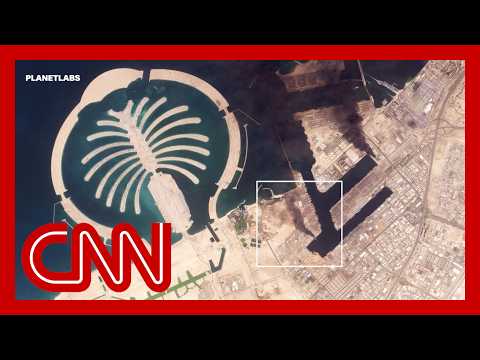 15:57
15:57
Iran war: What satellite images reveal after week 1
"We decided to buy a house in a satellite town because the city center was too expensive."
 5:23
5:23
Why don't we send our trash to space? - Jim Bentley and Imogen Ellen Napper
 4:45
4:45
How Satellites Are Supporting Farmers Across Africa | Catherine Nakalembe | TED
هذه الكلمة بلغات أخرى
مزيد من كلمات Technology
abautoal
C1عملية منهجية أو إطار تقني للمحاذاة والتكامل التلقائي لهياكل البيانات أو الوحدات اللغوية المتباينة، مما يضمن التزامن دون تدخل يدوي.
abautoence
C1أتمتة أو تبسيط عملية بشكل منهجي من خلال آليات ذاتية الحكم أو إجراءات مستقلة. يصف هذا الفعل تفويض المهام اليدوية إلى أنظمة فنية أو اعتيادية في الخلفية لزيادة الكفاءة وتقليل العبء المعرفي.
ablogtion
C1يعني 'ablogtion' إزالة السجلات الرقمية ومدخلات السجل الزمني بشكل منهجي من النظام الأساسي لإدارة السمعة عبر الإنترنت.
abmanless
C1إزالة الحاجة إلى التدخل البشري اليدوي من نظام أو عملية من خلال الأتمتة الكاملة.
activation
B2التنشيط هو عملية جعل شيء ما يبدأ في العمل، مثل تنشيط حساب بنكي جديد.
actuator
B2المشغل الميكانيكي هو جزء من الآلة المسؤول عن تحريك والتحكم في آلية أو نظام.
adpaterable
C1تعديل أو تكوين نظام بحيث يصبح متوافقًا مع محول.
adpaterward
C1يشير مصطلح 'adapterward' إلى مكون أو تعديل تكميلي يتم دمجه في نظام تقني بعد تجميعه الأولي لضمان التوافق مع المعايير الأحدث. إنه يشير إلى 'جسر' مادي أو رقمي يسهل المزامنة في مراحل متأخرة بين الأجزاء القديمة والحديثة.
aerospace
B2متعلق بتصميم وتصنيع وتشغيل المركبات التي تطير داخل الغلاف الجوي للأرض أو في الفضاء الخارجي.
algorithms
B2الخوارزمية هي مجموعة من الخطوات الرياضية والمنطقية والمتسلسلة اللازمة لحل مشكلة ما.

