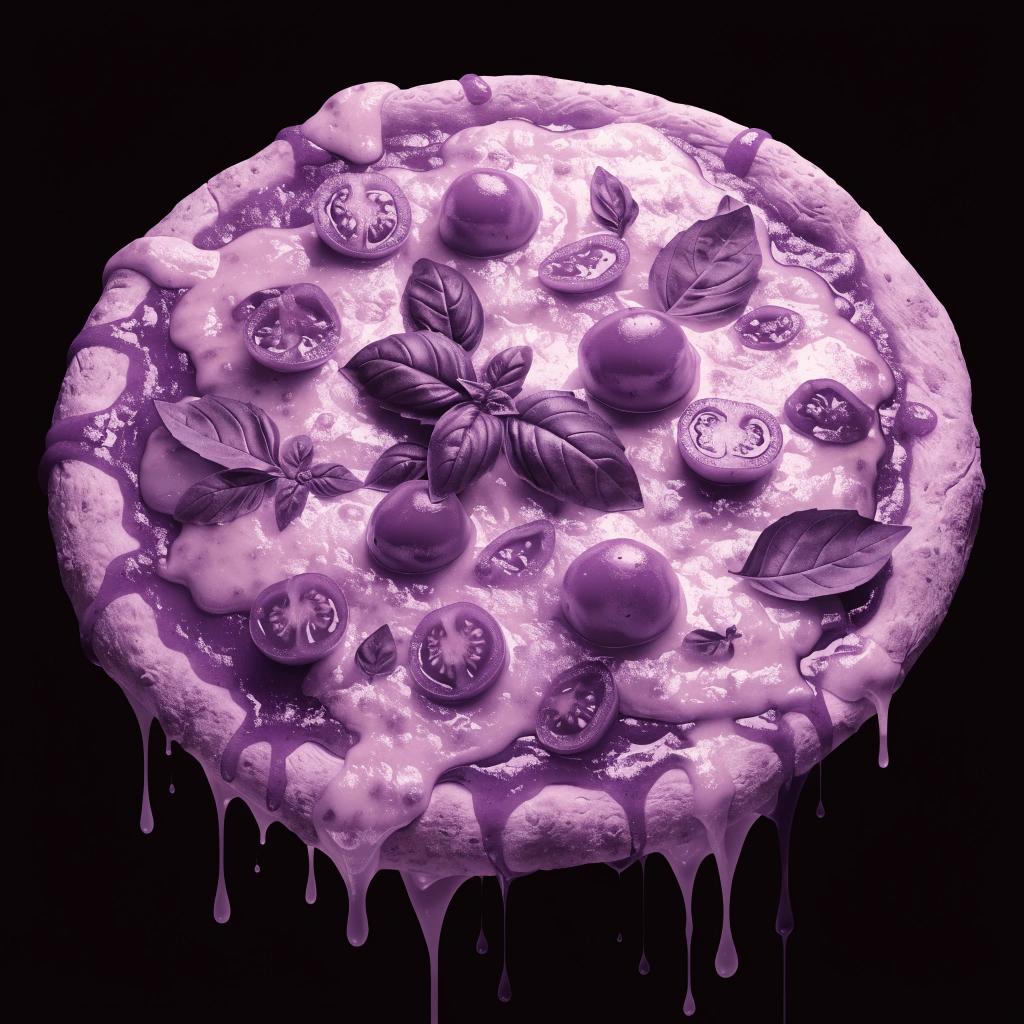
Pizza Margherita: A Special Italian Food
Pizza Margherita is a very famous food from Italy. It comes from the city of Naples. This pizza is very simple. It has three main colors: red, white, and green. These are the colors of the Italian flag.
The pizza has red tomatoes. It has white mozzarella cheese. It also has green basil leaves. A famous cook made this pizza for Queen Margherita in 1889. She loved the taste and the colors.
Today, many people around the world eat this pizza. It is delicious and healthy. You can find it in many restaurants. It is a symbol of Italy.
Grammar Spotlight
Pattern: Present Simple (to be)
"Pizza Margherita is a very famous food from Italy."
We use 'is' with singular nouns to describe facts or states. It connects the subject to a description.
Pattern: Present Simple (to have)
"It has three main colors: red, white, and green."
We use 'has' with the pronoun 'it' to show what something contains or possesses. It is common when describing food ingredients.
Test Your Understanding
10 questions · A1 Beginner · 1 free preview
Test what you learned from this article. Answer all questions to earn XP!
Which country is Pizza Margherita from?
Want to finish the quiz?
9 more questions are waiting for you. Sign up free to unlock the full quiz and earn XP!
Sign Up FreeAlready have an account? Sign In
Question Breakdown
Which country is Pizza Margherita from?
Your answer:
Correct answer: Italy
The pizza has four different colors.
Your answer:
Correct answer: False
What does 'delicious' mean?
Your answer:
Correct answer: Tastes very good
It has white mozzarella _____.
Your answer:
Correct answer: cheese
The Story of Pizza Margherita
Pizza Margherita is the most famous pizza in the world. It comes from Naples, a beautiful city in the south of Italy. People love it because it is simple and very delicious.
The story of this pizza began in June 1889. A famous baker named Raffaele Esposito wanted to honor Queen Margherita of Savoy. She was visiting Naples with the King. Esposito decided to make a special pizza for her.
He used three main ingredients: red tomatoes, white mozzarella cheese, and green basil leaves. These colors were important because they matched the colors of the Italian flag. The Queen tried the pizza and liked it very much. She wrote a letter to thank the baker. Because the Queen loved it, the pizza became famous and people called it "Pizza Margherita."
Today, you can find this pizza everywhere. It is often cheaper than other types of pizza, but many people think it is the best. It is a symbol of Italian culture and history. When you visit Italy, you must try a real Margherita in Naples!
Grammar Spotlight
Pattern: Past Simple
"Esposito decided to make a special pizza for her."
We use the past simple to talk about finished actions in the past. For regular verbs like 'decide', we add '-ed' to the end of the word.
Pattern: Comparatives
"It is often cheaper than other types of pizza."
We use comparatives to show the difference between two things. For short adjectives like 'cheap', we add '-er' and use the word 'than'.
Test Your Understanding
11 questions · A2 Elementary · 1 free preview
Test what you learned from this article. Answer all questions to earn XP!
Where does Pizza Margherita come from?
Want to finish the quiz?
10 more questions are waiting for you. Sign up free to unlock the full quiz and earn XP!
Sign Up FreeAlready have an account? Sign In
Question Breakdown
Where does Pizza Margherita come from?
Your answer:
Correct answer: Naples
The baker made the pizza for a King.
Your answer:
Correct answer: False
What does 'delicious' mean?
Your answer:
Correct answer: Tasting very good
The pizza has the same colors as the Italian _____.
Your answer:
Correct answer: flag
In what year did the story start?
Your answer:
Correct answer: 1889
The Story of Pizza Margherita: A Taste of Italy
Pizza Margherita is widely considered the most iconic symbol of Italian cuisine. This famous dish, which is loved by people all over the world, has a very interesting history that begins in the city of Naples.
According to a popular legend, the pizza was created in June 1889 by a talented chef named Raffaele Esposito. He was asked to prepare a special meal for Queen Margherita of Savoy during her visit to the city. To honor the Queen and the newly unified country, Esposito decided to make a pizza that represented the colors of the Italian flag. He used red tomatoes, white mozzarella cheese, and fresh green basil leaves. The Queen was so impressed by the flavors that the pizza was named after her.
Since that historic day, the Pizza Margherita has become a global favorite. It has been enjoyed by millions of tourists who travel to Italy just to taste the original version. However, making a traditional Neapolitan pizza is not easy. There are strict rules that must be followed by chefs. For instance, the dough must be kneaded by hand, and the pizza must be cooked in a very hot wood-fire oven for only 90 seconds.
Today, the Pizza Margherita is more than just food; it is a piece of Italian identity. Even though many new toppings have been invented over the years, the classic combination of tomato, mozzarella, and basil remains the most popular choice. It is a perfect example of how simple, high-quality ingredients can create something truly extraordinary. Whether you are in a busy street in Naples or a restaurant in New York, this pizza continues to bring a taste of Italy to the world.
Grammar Spotlight
Pattern: The Passive Voice
"According to a popular legend, the pizza was created in June 1889."
The passive voice is used when the action is more important than the person who did it. It is formed using the verb 'to be' and the past participle of the main verb.
Pattern: Relative Clauses
"This famous dish, which is loved by people all over the world, has a very interesting history."
Relative clauses give more information about a noun. 'Which' is used for things, and the clause is often separated by commas if the information is extra.
Test Your Understanding
11 questions · B1 Intermediate · 1 free preview
Test what you learned from this article. Answer all questions to earn XP!
Why did Raffaele Esposito choose red, white, and green ingredients?
Want to finish the quiz?
10 more questions are waiting for you. Sign up free to unlock the full quiz and earn XP!
Sign Up FreeAlready have an account? Sign In
Question Breakdown
Why did Raffaele Esposito choose red, white, and green ingredients?
Your answer:
Correct answer: To represent the colors of the Italian flag
The Pizza Margherita was named after a famous Italian chef.
Your answer:
Correct answer: False
What does 'traditional' mean in the context of the article?
Your answer:
Correct answer: Following long-established customs
The dough for a real Neapolitan pizza must be _____ by hand.
Your answer:
Correct answer: kneaded
How long should a traditional pizza be cooked in the oven?
Your answer:
Correct answer: 90 seconds
The Culinary Heritage of Naples: More Than Just a Pizza
It is widely acknowledged that the Pizza Margherita is far more than a mere culinary delight; it is a profound symbol of Italian national identity. While pizza had been a staple for the poor in Naples for centuries, its transformation into a global icon began with a significant historical event in 1889. During a royal visit to Naples, the renowned pizzaiolo Raffaele Esposito was commissioned to prepare various pizzas for Queen Margherita of Savoy. According to popular tradition, the Queen was particularly captivated by a version featuring red tomatoes, white mozzarella, and green basil. Had the Queen not expressed her preference for this specific combination, the dish might never have achieved such global fame. This particular arrangement was designed to commemorate the colors of the newly unified Italian flag, effectively turning a local meal into a patriotic statement.
In the modern era, the preservation of this heritage has become a matter of international importance. The art of the Neapolitan 'Pizzaiuolo' was officially recognized by UNESCO as part of the Intangible Cultural Heritage of Humanity in 2017. This recognition highlights the complexity of the process, which involves much more than simply stretching dough. It requires a specific set of skills passed down through generations, ensuring that the authenticity of the product is maintained. Furthermore, organizations such as the Associazione Verace Pizza Napoletana (AVPN) have established strict regulations regarding the ingredients and cooking methods allowed. To be considered an authentic Margherita, one must use specific components like San Marzano tomatoes and high-quality mozzarella, cooked in a wood-fired oven at extremely high temperatures.
Nevertheless, the globalization of Italian food has led to various adaptations that often deviate from the original standards. While some food critics argue that innovation is necessary for a cuisine to evolve, others maintain that the standardization of the Margherita is essential to protect its historical integrity. In essence, the Pizza Margherita serves as a fascinating case study of how food can represent a nation's history, politics, and cultural pride. Despite its simplicity, the dish continues to be an iconic representation of Italian craftsmanship, proving that even the most basic ingredients can carry immense cultural weight when combined with tradition and passion.
Grammar Spotlight
Pattern: Passive Voice with Reporting Verbs
"It is widely acknowledged that the Pizza Margherita is far more than a mere culinary delight."
This structure is used to express common opinions or facts in a formal way. It is formed using 'It + is + past participle + that clause'.
Pattern: Inverted Third Conditional
"Had the Queen not expressed her preference for this specific combination, the dish might never have achieved such global fame."
This is a formal way to express a hypothetical situation in the past. 'Had' replaces 'If' and comes before the subject.
Pattern: Non-defining Relative Clauses
"The art of the Neapolitan 'Pizzaiuolo' was officially recognized by UNESCO as part of the Intangible Cultural Heritage of Humanity in 2017."
These clauses add extra information about a noun. They are separated by commas and use relative pronouns like 'which' or 'who'.
Test Your Understanding
11 questions · B2 Upper Intermediate · 1 free preview
Test what you learned from this article. Answer all questions to earn XP!
What was the primary reason Raffaele Esposito used the specific ingredients for the Queen's pizza?
Want to finish the quiz?
10 more questions are waiting for you. Sign up free to unlock the full quiz and earn XP!
Sign Up FreeAlready have an account? Sign In
Question Breakdown
What was the primary reason Raffaele Esposito used the specific ingredients for the Queen's pizza?
Your answer:
Correct answer: To represent the colors of the Italian flag.
The Pizza Margherita was already a global icon long before the Queen's visit in 1889.
Your answer:
Correct answer: False
What does 'authenticity' mean in the context of the article?
Your answer:
Correct answer: Being genuine and true to traditional methods.
The Pizza Margherita is considered a _____ of Italian national identity.
Your answer:
Correct answer: symbol
What happened in 2017 regarding Neapolitan pizza?
Your answer:
Correct answer: UNESCO recognized the art of the 'Pizzaiuolo'.
The Gastronomic Emblem: Deconstructing the Myth and Artistry of Pizza Margherita
Rarely has a single culinary creation managed to encapsulate the socio-political identity of a nation as profoundly as the Pizza Margherita. While the global ubiquity of pizza might suggest a generic heritage, the Margherita is steeped in a narrative that blends historical fact with romanticized folklore. The genesis of this iconic dish is traditionally attributed to the summer of 1889, when the Neapolitan pizzaiolo Raffaele Esposito was summoned to the Capodimonte Palace. His task was to prepare a selection of pizzas for the visiting Queen Margherita of Savoy. It was the specific juxtaposition of red tomatoes, white mozzarella, and green basil that captured the Queen’s imagination, supposedly mirroring the colors of the recently unified Italian flag.
However, the institutionalization of this story warrants a more nuanced examination. Critics often argue that the 'invention' of the Margherita was less a spontaneous moment of creative genius and more a calculated act of culinary diplomacy. The unification of Italy was a tumultuous process, and the monarchy sought symbols that could bridge the cultural chasm between the industrial north and the agrarian south. By endorsing a Neapolitan specialty, the Queen effectively validated a regional tradition, integrating it into the national consciousness. This nominalization of a local foodstuff into a patriotic emblem highlights the power of gastronomy in state-building.
Beyond the political subtext, the Margherita represents a meticulous commitment to simplicity. In an era dominated by fusion and culinary experimentation, the adherence to the Associazione Verace Pizza Napoletana standards serves as a testament to the preservation of authenticity. The dough must be kneaded by hand, the tomatoes must be San Marzano, and the mozzarella must be fior di latte or bufala. Such rigidity ensures that the sensory experience remains unchanged across generations. It is not merely a meal; it is a ritualistic performance of heritage.
Ultimately, whether the story of Esposito and the Queen is historical gospel or a masterful piece of public relations is perhaps secondary to the pizza's enduring legacy. What remains indisputable is the dish's ability to transcend its humble Neapolitan roots to become a global shorthand for Italian excellence. The Margherita stands as a quintessential example of how a few basic ingredients, when elevated through skill and symbolism, can define the aesthetic of an entire culture.
Grammar Spotlight
Pattern: Negative Inversion
"Rarely has a single culinary creation managed to encapsulate the socio-political identity of a nation as profoundly as the Pizza Margherita."
Used for emphasis by placing a negative or restrictive adverb at the start of the sentence, followed by an auxiliary verb before the subject.
Pattern: Cleft Sentence
"It was the specific juxtaposition of red tomatoes, white mozzarella, and green basil that captured the Queen’s imagination."
This structure focuses on a specific part of the sentence (the ingredients) to highlight its importance using 'It was... that...'
Pattern: Nominalization
"The institutionalization of this story warrants a more nuanced examination."
Turning verbs (institutionalize, examine) into nouns (institutionalization, examination) to create a more formal, academic, and objective tone.
Test Your Understanding
12 questions · C1 Advanced · 1 free preview
Test what you learned from this article. Answer all questions to earn XP!
What does the author suggest about the origin story of Pizza Margherita?
Want to finish the quiz?
11 more questions are waiting for you. Sign up free to unlock the full quiz and earn XP!
Sign Up FreeAlready have an account? Sign In
Question Breakdown
What does the author suggest about the origin story of Pizza Margherita?
Your answer:
Correct answer: It might be a blend of historical fact and strategic marketing.
The unification of Italy was described as a smooth and easy process.
Your answer:
Correct answer: False
What does the word 'chasm' refer to in the text?
Your answer:
Correct answer: A large cultural or social divide.
The _____ of this iconic dish is traditionally attributed to the summer of 1889.
Your answer:
Correct answer: genesis
What is the purpose of the 'Associazione Verace Pizza Napoletana' mentioned in the text?
Your answer:
Correct answer: To preserve the authenticity and standards of Neapolitan pizza.
The article claims that the Margherita pizza's ingredients mirror the Italian flag.
Your answer:
Correct answer: True
The Gastronomic Semiotics of the Margherita: A Neapolitan Synthesis of National Identity
To analyze the Pizza Margherita through a purely culinary lens would be to overlook its status as a paradigmatic instance of national myth-making. While historical verity regarding the exact events of June 1889 may remain somewhat elusive, the narrative surrounding Raffaele Esposito’s creation for Queen Margherita of Savoy serves as a potent socio-political allegory. It is posited that Esposito, a celebrated Neapolitan pizzaiolo, sought to encapsulate the burgeoning spirit of a newly unified Italy within the confines of a circular dough. By employing a triad of ingredients—basil, mozzarella, and tomato—he effectively mirrored the tricolor of the Italian flag, thereby transforming a vernacular street food into a symbol of monarchical endorsement and national cohesion.
Lest the culinary tradition be diluted by modern expediency, the Specialità Tradizionale Garantita (STG) regulations now safeguard the technical orthodoxy of the Neapolitan pizza. This legal framework ensures that the artisanal integrity of the Margherita remains unadulterated by the creeping hegemony of globalized fast food. Scarcely had the Queen tasted the creation before the Margherita was elevated from its humble plebeian origins to a position of gastronomic prestige. The aesthetic minimalism of the pizza—a stark contrast to the baroque complexities of 19th-century courtly cuisine—suggests a deliberate proclivity toward authentic, regional simplicity.
Furthermore, the semiotics of the Margherita extend beyond mere visual representation. The heat of the wood-fired oven, reaching temperatures that would render lesser doughs carbonized, acts as a crucible for the transubstantiation of simple flour and water into a soft, elastic crust. It is this specific confluence of red, white, and green that continues to resonate as a vestige of the Risorgimento. Whether the story of Esposito is a historical fact or a clever marketing subterfuge concocted by later generations is perhaps secondary to the pizza's ubiquitous presence as a global signifier of 'Italian-ness.' In the contemporary era, the Margherita stands not merely as a menu item, but as a theoretical construct where tradition and modernity intersect. Should one delve deeper into the sociological implications, one finds that the Margherita represents a successful reconciliation between the local Neapolitan identity and the overarching Italian state. Ultimately, the pizza remains an enduring testament to the power of culinary symbolism in the construction of a collective national consciousness.
Grammar Spotlight
Pattern: Negative Subjunctive with 'Lest'
"Lest the culinary tradition be diluted by modern expediency, the Specialità Tradizionale Garantita (STG) regulations now safeguard the technical orthodoxy of the Neapolitan pizza."
The word 'lest' is followed by the base form of the verb (subjunctive) to express a negative purpose or to prevent something undesirable from happening. It is a highly formal construction common in C2 level academic writing.
Pattern: Inversion with Negative Adverbials
"Scarcely had the Queen tasted the creation before the Margherita was elevated from its humble plebeian origins to a position of gastronomic prestige."
When 'scarcely', 'hardly', or 'no sooner' begin a sentence for emphasis, the auxiliary verb is placed before the subject. This structure highlights the immediate sequence of two events in a formal narrative.
Pattern: Cleft Sentences for Emphasis
"It is this specific confluence of red, white, and green that continues to resonate as a vestige of the Risorgimento."
Cleft sentences use the structure 'It is/was... that...' to focus on a specific piece of information. Here, it emphasizes the visual combination of colors as the key factor in the pizza's symbolic resonance.
Test Your Understanding
12 questions · C2 Mastery · 1 free preview
Test what you learned from this article. Answer all questions to earn XP!
What is the primary analytical focus of the article regarding Pizza Margherita?
Want to finish the quiz?
11 more questions are waiting for you. Sign up free to unlock the full quiz and earn XP!
Sign Up FreeAlready have an account? Sign In
Question Breakdown
What is the primary analytical focus of the article regarding Pizza Margherita?
Your answer:
Correct answer: Its role as a symbolic construct of national identity.
The article states that the historical events of June 1889 are definitively proven facts.
Your answer:
Correct answer: False
Which word describes a trace of something that is disappearing or no longer exists?
Your answer:
Correct answer: Vestige
The author suggests the story might be a marketing _____ rather than historical fact.
Your answer:
Correct answer: subterfuge
What does the 'aesthetic minimalism' of the pizza contrast with in the text?
Your answer:
Correct answer: The complex courtly cuisine of the 19th century.
The STG regulations were created to encourage the globalization of pizza recipes.
Your answer:
Correct answer: False
