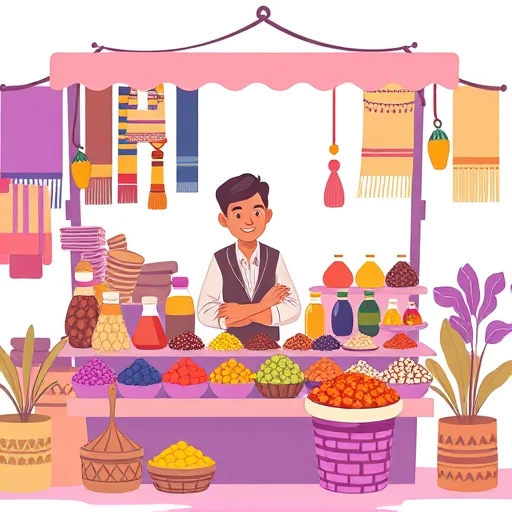
merchant in 30 Sekunden
- A merchant is a professional trader who buys and sells goods for profit, often on a large scale.
- The term covers historical traders, modern wholesalers, and businesses that process digital payments.
- It is more formal than 'seller' and implies a level of expertise or established business operation.
- Commonly used in phrases like 'merchant bank,' 'merchant navy,' and 'merchant account.'
The term merchant is a foundational word in the world of commerce, tracing its roots back to the Latin word 'mercari,' meaning to trade. In its most basic sense, a merchant is an individual or a business entity that engages in the purchase and sale of commodities for profit. However, the application of the word has evolved significantly over centuries. In historical contexts, a merchant was often a person of considerable social standing who traveled long distances—think of the Silk Road or the spice trade—to bring exotic goods to local markets. Today, while the word can still refer to a local shopkeeper, it is more frequently used in specialized business contexts, such as 'e-commerce merchants' who sell products online, or 'merchant banks' that provide financial services to large corporations. Understanding the word requires recognizing its dual nature: it is both a humble description of a seller and a prestigious title for those who drive global trade.
- Wholesale Merchant
- A merchant who operates at a large scale, buying goods directly from manufacturers and selling them to retailers rather than to the general public. They are the essential middle-link in the supply chain.
- Retail Merchant
- A merchant who sells goods directly to the end consumer. This includes everything from a local boutique owner to a massive multinational department store.
The Venetian merchant spent months at sea, braving storms and pirates to bring silk and spices back to Europe.
In modern digital economy, the word has seen a resurgence through 'merchant accounts.' When you buy something with a credit card, the business you are buying from must have a merchant account to process that payment. This technical usage has moved the word away from the image of a person standing behind a wooden counter and into the realm of digital infrastructure. Furthermore, the term 'merchant navy' or 'merchant marine' refers to a country's fleet of commercial ships, highlighting the word's enduring connection to maritime trade. Whether you are discussing the history of the Hanseatic League or the settings on a Shopify dashboard, 'merchant' remains the standard designation for the professional seller.
Online merchants must ensure their websites are secure to protect customer data during transactions.
- Merchant of Record
- The legal entity responsible for selling goods to a customer and processing their payments, often used in complex international e-commerce setups.
Historically, merchants were the primary agents of cultural exchange. As they moved goods, they also moved ideas, religions, and technologies. The 'merchant class' often sat between the peasantry and the nobility, sometimes gaining enough wealth to challenge the power of kings. This historical weight gives the word a more formal, slightly old-fashioned, or highly professional tone compared to 'vendor' or 'trader.' When using the word today, consider if you are emphasizing the commercial professionality or the historical legacy of the person selling the goods.
The local wine merchant is known for his extensive knowledge of French vineyards.
Using 'merchant' correctly involves understanding its grammatical role as a countable noun and its common associations with specific industries. It often appears as a modifier in compound nouns, such as 'merchant ship' or 'merchant bank.' When describing a person, it usually follows an adjective that specifies what they sell, such as 'grain merchant,' 'textile merchant,' or 'timber merchant.' This structure is very common in historical writing and formal business descriptions. For example, 'The 18th-century tea merchant amassed a fortune through trade with the East India Company.' Here, the word provides a specific professional identity that 'seller' would lack.
- As a Subject
- The merchant negotiated a lower price for the raw materials. (Focuses on the person performing the action of trading).
- As an Object
- The king granted the merchant exclusive rights to sell salt in the capital. (The merchant is the recipient of the rights).
Every merchant in the bazaar had a different story about where their rugs came from.
In modern contexts, 'merchant' is frequently used in the plural to describe a group of businesses. For instance, 'The city's merchants are protesting the new parking regulations.' This usage treats the businesses as a collective community with shared interests. It sounds more formal and established than 'shop owners.' Additionally, the word is used in technical financial sentences: 'The payment gateway facilitates the transfer of funds from the customer to the merchant.' In this case, 'merchant' is a precise term for the party receiving payment in a transaction.
The merchant navy plays a crucial role in maintaining global supply chains.
You can also use 'merchant' metaphorically, though this is less common. Phrases like 'merchant of ideas' or 'merchant of chaos' describe someone who 'deals' in abstract concepts rather than physical goods. These uses are often literary or journalistic. For example, 'The columnist was accused of being a merchant of fear, always predicting the worst possible outcomes.' This extends the idea of 'selling' to the spread of influence or emotion. However, for B1 learners, sticking to the commercial and historical uses is most effective for clear communication.
A successful merchant must possess a keen eye for quality and a strong head for numbers.
- Compound Usage
- Merchant shipping, merchant class, merchant guild, merchant account.
You will encounter 'merchant' in several distinct environments. First, in historical documentaries and period dramas, it is the standard term for anyone involved in trade before the 20th century. When watching a show set in the 1700s, you won't hear them talk about 'business owners'; they will talk about 'wealthy merchants.' Second, in the world of finance and fintech, the word is ubiquitous. If you work in a bank or for a company like Stripe or PayPal, you will hear 'merchant' every day. It refers to the business clients who use these platforms to accept payments. This is perhaps the most common modern use of the word.
"The merchant has requested a refund for the transaction fees," said the bank clerk.
Third, you will see it on signage in older cities or in specific luxury trades. A high-end shop selling rare teas might call itself a 'Tea Merchant' to sound more established and traditional. It evokes a sense of expertise and history that 'Tea Shop' does not. Fourth, in news reports about international shipping or naval activities, the term 'merchant vessel' or 'merchant ship' is used to distinguish commercial boats from military ones. If there is a report about a ship blocked in the Suez Canal, it will often be referred to as a merchant vessel.
Finally, the word appears in academic and educational settings. History textbooks discuss the 'rise of the merchant class' during the Renaissance as a key factor in the development of modern capitalism. In literature classes, students study 'The Merchant of Venice' or 'The Canterbury Tales,' where the Merchant is a specific character type. In these contexts, the word is used to analyze social structures and economic history. While you might not use it to describe the person at the checkout in a supermarket, you will hear it whenever the conversation turns to the broader systems of trade and finance.
The merchant marine is often called the 'fourth arm of defense' during times of war.
- Common Audio Contexts
- Business podcasts, history lectures, financial news, maritime reports, period films.
One of the most frequent mistakes learners make is using 'merchant' as a direct synonym for 'customer' or 'consumer.' Remember, the merchant is the one *selling*, not the one *buying*. If you say, 'The merchant bought a new pair of shoes for himself,' you are talking about the seller's personal life, but if you mean the person who came into the shop, you should use 'customer.' Another common error is using 'merchant' for very small-scale or casual selling. You wouldn't call someone selling their old clothes on a garage sale a 'merchant.' That person is just a 'seller.' 'Merchant' implies a business or a professional occupation.
Incorrect: I am a merchant of this coffee because I bought it.
Correct: I am a customer of this coffee shop.
Confusion also arises between 'merchant' and 'merchandise.' 'Merchant' is the person (noun), while 'merchandise' refers to the goods being sold (noun). You cannot say 'I like the merchant in this store' if you mean you like the products. You must say 'I like the merchandise.' Conversely, you can't say 'The merchandise was very polite' when you mean the person selling the goods was polite. Additionally, avoid using 'merchant' as a verb. While 'to trade' or 'to sell' are verbs, 'to merchant' is not a standard English verb. You might say 'He engages in merchant activities,' but never 'He merchants silk.'
Finally, be careful with the register. Using 'merchant' in a very casual setting can sound strange or even sarcastic. If you call your friend a 'snack merchant' because they have a lot of food, it's a joke. In a normal conversation about where you bought your phone, saying 'I went to the phone merchant' sounds overly formal or like you are in a fantasy novel. In everyday modern English, 'store,' 'shop,' or 'retailer' are more common for general purposes. Use 'merchant' when you want to sound professional, historical, or when referring to the business-to-business (B2B) side of trade.
- Merchant vs. Trader
- A 'trader' often implies someone who buys and sells quickly (like a stock trader), while a 'merchant' often implies someone who deals with physical inventory and long-term business.
To enrich your vocabulary, it's helpful to compare 'merchant' with its synonyms. Each has a slightly different nuance. 'Trader' is perhaps the closest synonym, but it often suggests someone who exchanges goods or financial instruments, sometimes on a smaller or more frequent basis. 'Vendor' is very common in modern business and often refers to someone selling at a specific event (like a food vendor at a concert) or a company that provides a service to another company. 'Dealer' is usually used for specific high-value items, like an 'art dealer' or a 'car dealer.' It implies a high level of expertise in a specific niche.
- Wholesaler
- Focuses on the scale of trade. A wholesaler is a specific type of merchant who sells in bulk to other businesses.
- Retailer
- Focuses on the end-user. A retailer is a merchant who sells to the public.
- Shopkeeper
- A more traditional, local term. It implies a person who owns and manages a small, physical shop.
While the merchant handles the bulk shipping, the local vendor sells the items at the street market.
In a more formal or academic context, you might use 'commercial entity' or 'business enterprise.' These terms are more abstract and less personal than 'merchant.' In the legal world, 'merchant' has a very specific definition—someone who deals in goods of the kind or otherwise by their occupation holds themselves out as having knowledge or skill peculiar to the practices or goods involved in the transaction. This is much more precise than 'seller.' Understanding these alternatives allows you to choose the word that best fits the scale, formality, and historical context of your sentence.
The merchant banker advised the company on its upcoming merger.
How Formal Is It?
Wusstest du?
The word is related to 'Mercury,' the Roman god of shopkeepers and merchants, and also to 'mercenary,' someone who works only for money.
Aussprachehilfe
- Pronouncing the 't' too softly or omitting it.
- Confusing the 'er' sound with 'ar' (marching).
- Stressing the second syllable.
- Pronouncing the 'a' in 'ant' as a strong 'ah' sound.
- Misspelling it as 'merchent'.
Schwierigkeitsgrad
Common in literature and news, but the meaning is usually clear from context.
Requires knowledge of specific collocations like 'merchant bank' to use naturally.
Not used often in casual speech, but essential for business or historical topics.
Easily recognized, though can be confused with 'merchandise' if heard quickly.
Was du als Nächstes lernen solltest
Voraussetzungen
Als Nächstes lernen
Fortgeschritten
Wichtige Grammatik
Noun as Adjective
In 'merchant bank,' the noun 'merchant' acts as an adjective to describe the type of bank.
Possessive Nouns
The merchant's ledger (singular possessive) vs. The merchants' protest (plural possessive).
Articles with Occupations
He is a merchant. (Use 'a' when stating someone's job).
Compound Nouns
Tea merchant, wine merchant, coal merchant—the first noun specifies the product.
Collective Nouns
The merchant class is treated as a singular unit or a plural group depending on the context.
Beispiele nach Niveau
The merchant has a small shop.
Le marchand a une petite boutique.
Simple subject-verb-object structure.
A merchant sells bread and milk.
Un marchand vend du pain et du lait.
Uses the indefinite article 'a'.
Is he a merchant?
Est-il marchand ?
Question form.
The merchant is very kind.
Le marchand est très gentil.
Adjective describing the noun.
I see a merchant in the market.
Je vois un marchand au marché.
Direct object of the verb 'see'.
The merchant has many toys.
Le marchand a beaucoup de jouets.
Plural noun 'toys' after the verb.
That merchant sells beautiful rugs.
Ce marchand vend de beaux tapis.
Demonstrative adjective 'that'.
The merchant opens at nine.
Le marchand ouvre à neuf heures.
Present simple for a schedule.
The tea merchant traveled to many countries.
Le marchand de thé a voyagé dans de nombreux pays.
Compound noun 'tea merchant'.
He wants to be a successful merchant.
Il veut être un marchand prospère.
Infinitive phrase 'to be a...'
The merchant ship is in the harbor.
Le navire marchand est dans le port.
Noun used as an adjective 'merchant ship'.
Local merchants sell fresh vegetables every morning.
Les marchands locaux vendent des légumes frais tous les matins.
Plural subject with an adjective.
The merchant bought silk from the factory.
Le marchand a acheté de la soie à l'usine.
Past simple tense.
She spoke to a spice merchant in the bazaar.
Elle a parlé à un marchand d'épices dans le bazar.
Prepositional phrase 'to a spice merchant'.
The merchant's shop is very old.
La boutique du marchand est très ancienne.
Possessive form 'merchant's'.
Many merchants live in this city.
Beaucoup de marchands vivent dans cette ville.
Quantifier 'many' with plural noun.
The merchant navy is responsible for transporting goods by sea.
La marine marchande est responsable du transport des marchandises par mer.
Fixed phrase 'merchant navy'.
To sell products online, you need a merchant account.
Pour vendre des produits en ligne, vous avez besoin d'un compte marchand.
Technical business term.
The wine merchant recommended a bottle of red wine.
Le marchand de vin a recommandé une bouteille de vin rouge.
Reporting a recommendation.
He made a deal with a grain merchant.
Il a conclu un accord avec un marchand de grains.
Idiomatic expression 'made a deal'.
The merchants in the town square are unhappy about the new tax.
Les marchands de la place du village sont mécontents de la nouvelle taxe.
Prepositional phrase 'in the town square'.
A merchant bank provides financial services to corporations.
Une banque d'affaires fournit des services financiers aux entreprises.
Specific industry term.
The merchant carefully inspected the quality of the timber.
Le marchand a soigneusement inspecté la qualité du bois.
Adverb 'carefully' modifying the verb.
The story is about a merchant who lost everything at sea.
L'histoire parle d'un marchand qui a tout perdu en mer.
Relative clause 'who lost everything'.
The merchant class became increasingly powerful during the Renaissance.
La classe marchande est devenue de plus en plus puissante pendant la Renaissance.
Historical collective noun.
The company acts as a merchant of record for international sales.
La société agit en tant que marchand officiel pour les ventes internationales.
Formal business role.
Merchant guilds were established to protect the interests of traders.
Des guildes de marchands ont été créées pour protéger les intérêts des commerçants.
Passive voice 'were established'.
The merchant's reputation for honesty was known throughout the region.
La réputation d'honnêteté du marchand était connue dans toute la région.
Abstract noun 'reputation' as the subject.
He works for a large merchant shipping company based in London.
Il travaille pour une grande compagnie de navigation marchande basée à Londres.
Complex noun phrase.
The merchant was able to negotiate a favorable contract.
Le marchand a pu négocier un contrat favorable.
Modal-like expression 'was able to'.
They are looking for a reliable merchant to supply the raw materials.
Ils recherchent un marchand fiable pour fournir les matières premières.
Infinitive of purpose 'to supply'.
The merchant bank helped the startup secure its first round of funding.
La banque d'affaires a aidé la startup à obtenir son premier tour de table.
Causative structure 'helped the startup secure'.
The rise of the merchant class fundamentally altered the social hierarchy.
L'ascension de la classe marchande a fondamentalement modifié la hiérarchie sociale.
Advanced academic vocabulary.
He was described as a 'merchant of doom' for his pessimistic economic forecasts.
Il a été décrit comme un « marchand de malheur » pour ses prévisions économiques pessimistes.
Metaphorical use in quotes.
The merchant marine played a pivotal role in the nation's wartime logistics.
La marine marchande a joué un rôle pivot dans la logistique de guerre de la nation.
Pivotal role (collocation).
In legal terms, a merchant is held to a higher standard of conduct in trade.
Sur le plan juridique, un marchand est tenu à une norme de conduite plus élevée dans le commerce.
Passive voice with 'held to a standard'.
The merchant's extensive network allowed him to bypass traditional intermediaries.
Le vaste réseau du marchand lui a permis de contourner les intermédiaires traditionnels.
Complex sentence with 'allowed him to'.
Critics argue that the platform is merely a merchant of attention, selling user data to advertisers.
Les critiques soutiennent que la plateforme n'est qu'un marchand d'attention, vendant les données des utilisateurs aux annonceurs.
Metaphorical and critical usage.
The merchant bank's involvement in the scandal tarnished its long-standing reputation.
L'implication de la banque d'affaires dans le scandale a terni sa réputation de longue date.
Participle phrase 'tarnished its...'
The merchant ventured into uncharted territories in search of rare commodities.
Le marchand s'est aventuré dans des territoires inexplorés à la recherche de denrées rares.
Literary verb 'ventured'.
The merchant's mercantile ambitions were often at odds with the local aristocracy's interests.
Les ambitions mercantiles du marchand étaient souvent en contradiction avec les intérêts de l'aristocratie locale.
Adjective 'mercantile' derived from 'merchant'.
The 'Merchant of Venice' serves as a poignant exploration of justice and mercy.
« Le Marchand de Venise » sert d'exploration poignante de la justice et de la miséricorde.
Literary reference.
The merchant of record model simplifies the complexities of global tax compliance for SaaS companies.
Le modèle du marchand officiel simplifie les complexités de la conformité fiscale mondiale pour les entreprises SaaS.
Highly technical business jargon.
He was a merchant prince, wielding more power than many of the minor nobility.
C'était un prince marchand, exerçant plus de pouvoir que beaucoup de membres de la petite noblesse.
Compound noun 'merchant prince'.
The merchant marine's contribution to the national economy is often underestimated in contemporary discourse.
La contribution de la marine marchande à l'économie nationale est souvent sous-estimée dans le discours contemporain.
Academic tone and structure.
The merchant's ledger provided invaluable insights into the trade patterns of the sixteenth century.
Le grand livre du marchand a fourni des informations inestimables sur les modes de commerce du XVIe siècle.
Historical analysis context.
The merchant bank facilitated the leveraged buyout with clinical precision.
La banque d'affaires a facilité le rachat par endettement avec une précision clinique.
Technical financial terminology.
The merchant's odyssey across the Silk Road is a testament to human resilience and commercial drive.
L'odyssée du marchand à travers la Route de la Soie est un témoignage de la résilience humaine et de l'élan commercial.
Elevated, literary style.
Synonyme
Gegenteile
Häufige Kollokationen
Häufige Phrasen
— Financial services provided to businesses, especially payment processing.
The bank offers a range of merchant services for small businesses.
— Another term for the merchant navy; the commercial ships of a country.
The merchant marine is vital for international trade.
— A ship used for commercial purposes rather than military ones.
The merchant vessel was inspected by the coast guard.
— A person or business that trades in wood.
The timber merchant supplied the wood for the new house.
— A person or business that trades in cereal crops.
The grain merchant predicted a shortage due to the drought.
— A very wealthy and powerful merchant.
He lived like a merchant prince in his marble villa.
— A tailor who also supplies the fabric for the clothes they make.
The merchant tailor fitted him for a bespoke suit.
— A business that buys goods in bulk and resells them to retailers.
The merchant wholesaler offers discounts for large orders.
— A person who works on a merchant ship.
The life of a merchant seaman involves long months away from home.
— A company that gives businesses the ability to accept credit card payments.
Choosing the right merchant account provider can save you money on fees.
Wird oft verwechselt mit
Merchandise is the goods; a merchant is the person who sells them.
A mercenary is a soldier for hire; a merchant is a trader. They share a Latin root but have very different meanings.
This is an adjective meaning 'fit to be sold,' not the person themselves.
Redewendungen & Ausdrücke
— A person who always predicts bad news or disaster.
Don't listen to him; he's just a merchant of doom.
informal— A derogatory term for an arms dealer.
The tabloid labeled the billionaire a merchant of death.
formal/journalistic— Someone who spreads uncertainty about a scientific or social consensus.
The lobbyists were accused of being merchants of doubt regarding climate change.
academic/journalistic— To act in a shrewd or purely commercial manner, often used negatively.
He tried to play the merchant and get a better price even from his friends.
archaic/literary— A reference to Shakespeare's play, often used to discuss themes of debt or justice.
The situation felt like a scene from the Merchant of Venice.
literary— Someone who is very fast, especially in sports or driving.
The new winger is a real speed merchant on the football pitch.
informal/British— Marketers who try to define and sell what is trendy to young people.
The documentary explored how merchants of cool influence teen culture.
journalistic— A term used to praise a businessman's integrity.
He built his empire on the reputation of being an honest merchant.
formal— Someone who spreads or 'sells' new concepts or philosophies.
The professor was a true merchant of ideas, inspiring all his students.
literary— The ability to quickly judge the value or quality of something.
She looked at the antique with a merchant's eye.
literaryLeicht verwechselbar
Both involve buying and selling.
A trader often implies quick exchanges (like stocks), while a merchant implies a more established business with physical stock.
The day trader works from home, but the merchant owns a warehouse.
Both sell things.
A vendor is often a temporary seller or a company providing a specific service; a merchant is a more general term for a professional trader.
The hot dog vendor is at the stadium, but the grain merchant is at the port.
Both are involved in commerce.
A broker facilitates a sale between two other parties; a merchant actually owns the goods they are selling.
The real estate broker showed the house, but the timber merchant sold the wood.
Both sell to people.
Retailer is a modern business term; merchant is broader and can include wholesalers and historical figures.
Walmart is a massive retailer, but Marco Polo was a famous merchant.
Both sell specific items.
Dealer is usually used for cars, art, or illegal items; merchant is used for commodities like grain, wine, or silk.
The car dealer sold me a sedan, but the wine merchant recommended a Merlot.
Satzmuster
The merchant sells [noun].
The merchant sells fruit.
He is a [adjective] merchant.
He is a rich merchant.
You need a [compound noun] to [verb].
You need a merchant account to accept payments.
The [noun] of the merchant was [adjective].
The reputation of the merchant was excellent.
Acting as a merchant of [abstract noun], he [verb].
Acting as a merchant of hope, he inspired the crowd.
The [adjective] [noun] of the merchant [verb] the [noun].
The mercantile ambitions of the merchant reshaped the city.
The merchant [verb] the [noun] from [place].
The merchant imported the spices from India.
The merchant navy [verb] [noun] during the [event].
The merchant navy transported supplies during the war.
Wortfamilie
Substantive
Verben
Adjektive
Verwandt
So verwendest du es
Common in business, history, and formal writing; rare in casual daily conversation.
-
Using 'merchant' for a customer.
→
The customer bought the goods.
A merchant is the seller, not the buyer. This is the most common confusion for beginners.
-
Saying 'I am merchanting silk.'
→
I am trading silk.
'Merchant' is a noun, not a verb. You cannot use it as an action word in this way.
-
Confusing 'merchant' with 'merchandise'.
→
The merchant sold the merchandise.
'Merchant' is the person; 'merchandise' is the stuff they sell. Don't swap them!
-
Using 'merchant' for a casual seller.
→
The person selling their old bike.
'Merchant' implies a professional business. It sounds too formal for a person selling one or two personal items.
-
Misspelling as 'merchent'.
→
Merchant
The suffix is -ant. This is a common spelling error even for advanced learners.
Tipps
Use for Professionalism
Use 'merchant' when you want to describe a business person in a way that sounds established and professional. It's great for formal reports.
Learn the Compounds
Don't just learn 'merchant' alone. Learn 'merchant bank,' 'merchant navy,' and 'merchant account' as single units of meaning.
Historical Context
When reading history, remember that merchants were often the most traveled and knowledgeable people of their time.
Watch the Ending
It ends in -ANT, not -ENT. Think of other people-words like 'servant' or 'assistant' to help you remember.
Digital Payments
If you are interested in tech, 'merchant' is the key word for anyone selling things online. It's essential for fintech vocabulary.
Archetypes
Look for the 'merchant' character in old stories; they often represent the link between different cultures or the desire for wealth.
Stress the First
Always put the emphasis on the 'MER' part. MER-chant. This makes you sound more natural.
Merchant vs. Seller
A seller can be anyone. A merchant is someone who makes a living from trading. Use 'merchant' for the career, 'seller' for the action.
Metaphorical Use
Once you are comfortable, try using 'merchant of [something]' to describe someone who spreads an idea, like a 'merchant of joy.'
Countable Noun
Always remember it's countable. 'There were many merchants,' not 'There was much merchant.'
Einprägen
Eselsbrücke
MER-CHANT: A MERchant sells MERchandise and sings a CHANT to attract customers.
Visuelle Assoziation
Imagine a person in a colorful market stall (chanting) while holding a large bag of gold (profit).
Word Web
Herausforderung
Try to use 'merchant' in three different ways today: one historical, one modern/digital, and one as a compound noun (like 'merchant bank').
Wortherkunft
Derived from the Old French word 'marchant,' which came from the Vulgar Latin 'mercatantem.' This ultimately traces back to the Latin 'mercari,' meaning 'to trade' or 'to buy.'
Ursprüngliche Bedeutung: A person who buys and sells goods, specifically one who travels to do so.
Indo-European (Latin branch via French).Kultureller Kontext
The term is generally neutral, but 'merchant of death' is a very strong negative label for arms dealers.
In the UK and US, 'merchant' is often associated with traditional, high-quality trades (e.g., 'Builders Merchant', 'Wine Merchant').
Im Alltag üben
Kontexte aus dem Alltag
History Class
- The rise of the merchant class
- Merchant guilds
- Silk Road merchants
- Maritime trade
E-commerce
- Merchant account
- Merchant of record
- Third-party merchant
- Merchant dashboard
Finance
- Merchant banking
- Merchant services
- Merchant fees
- Merchant acquisition
Literature
- The Merchant of Venice
- A wealthy merchant
- The merchant's journey
- A shrewd merchant
Maritime/Shipping
- Merchant navy
- Merchant vessel
- Merchant marine
- Merchant shipping
Gesprächseinstiege
"Do you think the role of a merchant has changed much since the Middle Ages?"
"If you were a merchant in the 1700s, what goods would you want to trade?"
"Have you ever had to set up a merchant account for a business?"
"Why do you think some high-end shops still call themselves 'merchants' today?"
"What are the biggest challenges facing online merchants in your country?"
Tagebuch-Impulse
Imagine you are a merchant traveling the Silk Road. Describe one day of your journey and the goods you are carrying.
Write about a local merchant in your town who has been there for a long time. What do they sell and what is their shop like?
Compare the life of a historical merchant with a modern e-commerce merchant. What are the similarities and differences?
Do you think 'merchants of doubt' are a major problem in modern society? Explain your view.
If you could be a merchant of any one thing (physical or abstract), what would it be and why?
Häufig gestellte Fragen
10 FragenYes, in a technical sense, they are an 'online merchant.' However, in casual conversation, you would probably just call them a 'seller.' Using 'merchant' makes it sound like a more serious business.
It is very common in business and finance (e.g., 'merchant services') and history, but you won't hear it much when people talk about going to the grocery store. It's a bit formal for everyday use.
A shopkeeper usually owns and works in one small shop. A merchant might own many shops, trade between countries, or sell large amounts of goods to other businesses. 'Merchant' is a broader and more professional term.
Historically, these banks grew out of the activities of large merchant houses that started providing loans and financial services to other traders. Today, they focus on corporate finance rather than individual savings.
No, 'merchant' is almost exclusively a noun. If you want a verb, use 'to trade,' 'to sell,' or 'to merchandise' (which means to promote or display goods).
This is a legal term for the entity that is authorized to sell goods to a consumer and is responsible for processing the payment and handling taxes. It's common in international e-commerce.
No, the merchant navy consists of commercial ships and their crews. However, in times of war, they often work closely with the military to transport supplies.
It's a literary or historical term for a merchant who has become so wealthy and influential that they have the social status of a prince.
Yes, it often acts as an adjective in compound nouns like 'merchant ship' or 'merchant account.' This is very common.
Yes, it is considered B1 because it is a fundamental word for discussing business, history, and commerce, which are common topics at this level.
Teste dich selbst 200 Fragen
Describe the job of a merchant in three sentences.
Well written! Good try! Check the sample answer below.
Write a short story about a merchant traveling on the Silk Road.
Well written! Good try! Check the sample answer below.
Explain why a business needs a 'merchant account'.
Well written! Good try! Check the sample answer below.
Compare a 'merchant' with a 'customer'.
Well written! Good try! Check the sample answer below.
What does the phrase 'merchant of doom' mean? Give an example.
Well written! Good try! Check the sample answer below.
Describe a 'merchant bank' and who it serves.
Well written! Good try! Check the sample answer below.
Write a dialogue between a merchant and a buyer in a market.
Well written! Good try! Check the sample answer below.
Explain the historical importance of the merchant class.
Well written! Good try! Check the sample answer below.
What is the 'merchant navy'? Why is it important?
Well written! Good try! Check the sample answer below.
Use the word 'merchant' in a sentence about modern technology.
Well written! Good try! Check the sample answer below.
Describe a 'wine merchant's' shop.
Well written! Good try! Check the sample answer below.
What are 'merchant services' in a banking context?
Well written! Good try! Check the sample answer below.
Write a formal letter from a merchant to a supplier.
Well written! Good try! Check the sample answer below.
Explain the term 'merchant of record'.
Well written! Good try! Check the sample answer below.
Describe a 'merchant prince' in a fantasy setting.
Well written! Good try! Check the sample answer below.
Why is 'merchant' considered a B1 level word?
Well written! Good try! Check the sample answer below.
Write a sentence using 'merchant' as a modifier for a ship.
Well written! Good try! Check the sample answer below.
What does it mean to have a 'merchant's eye'?
Well written! Good try! Check the sample answer below.
Describe a 'grain merchant's' role in a village.
Well written! Good try! Check the sample answer below.
Use 'merchant' in a sentence about a famous book or play.
Well written! Good try! Check the sample answer below.
Talk about a time you bought something from a local merchant.
Read this aloud:
Du hast gesagt:
Speech recognition is not supported in your browser. Try Chrome or Edge.
Explain the difference between a merchant and a customer.
Read this aloud:
Du hast gesagt:
Speech recognition is not supported in your browser. Try Chrome or Edge.
Do you think being a merchant was a dangerous job in the past? Why?
Read this aloud:
Du hast gesagt:
Speech recognition is not supported in your browser. Try Chrome or Edge.
What kind of merchant would you like to be if you lived 500 years ago?
Read this aloud:
Du hast gesagt:
Speech recognition is not supported in your browser. Try Chrome or Edge.
Discuss the importance of the merchant navy for your country.
Read this aloud:
Du hast gesagt:
Speech recognition is not supported in your browser. Try Chrome or Edge.
How has the internet changed the life of a merchant?
Read this aloud:
Du hast gesagt:
Speech recognition is not supported in your browser. Try Chrome or Edge.
What is a 'merchant bank' and how is it different from a normal bank?
Read this aloud:
Du hast gesagt:
Speech recognition is not supported in your browser. Try Chrome or Edge.
Describe the character of a merchant in a movie or book you know.
Read this aloud:
Du hast gesagt:
Speech recognition is not supported in your browser. Try Chrome or Edge.
Why do some businesses call themselves 'merchants' instead of 'shops'?
Read this aloud:
Du hast gesagt:
Speech recognition is not supported in your browser. Try Chrome or Edge.
What are the pros and cons of being an online merchant today?
Read this aloud:
Du hast gesagt:
Speech recognition is not supported in your browser. Try Chrome or Edge.
Explain the term 'merchant of doom' to a friend.
Read this aloud:
Du hast gesagt:
Speech recognition is not supported in your browser. Try Chrome or Edge.
How do merchants contribute to the culture of a city?
Read this aloud:
Du hast gesagt:
Speech recognition is not supported in your browser. Try Chrome or Edge.
What is a 'merchant of record' in simple terms?
Read this aloud:
Du hast gesagt:
Speech recognition is not supported in your browser. Try Chrome or Edge.
Discuss the role of merchant guilds in history.
Read this aloud:
Du hast gesagt:
Speech recognition is not supported in your browser. Try Chrome or Edge.
What qualities make a successful merchant?
Read this aloud:
Du hast gesagt:
Speech recognition is not supported in your browser. Try Chrome or Edge.
Would you rather be a wholesale merchant or a retail merchant? Why?
Read this aloud:
Du hast gesagt:
Speech recognition is not supported in your browser. Try Chrome or Edge.
Talk about the 'merchant marine' and its role in history.
Read this aloud:
Du hast gesagt:
Speech recognition is not supported in your browser. Try Chrome or Edge.
What is a 'merchant prince' and do they exist today?
Read this aloud:
Du hast gesagt:
Speech recognition is not supported in your browser. Try Chrome or Edge.
How does a merchant decide what price to sell their goods for?
Read this aloud:
Du hast gesagt:
Speech recognition is not supported in your browser. Try Chrome or Edge.
Explain the idiom 'to play the merchant'.
Read this aloud:
Du hast gesagt:
Speech recognition is not supported in your browser. Try Chrome or Edge.
Listen to the description: 'A person who trades in large amounts of grain.' What is this person called?
Listen to the phrase: 'Merchant Navy.' What does this refer to?
Listen to the sentence: 'He opened a merchant account.' Why did he do this?
Listen to the news report: 'The merchant vessel was carrying oil.' What kind of ship is it?
Listen to the dialogue: 'The wine merchant suggested a Merlot.' What is the merchant's specialty?
Listen to the lecture: 'The merchant class rose to power in the 16th century.' What group is being discussed?
Listen to the idiom: 'He's a real merchant of doom.' What is the person's attitude?
Listen to the term: 'Merchant of record.' What is this person or company responsible for?
Listen to the story: 'The wealthy merchant donated a library.' What did the merchant do?
Listen to the definition: 'A merchant who sells to other businesses.' What is the specific term?
Listen to the sentence: 'The merchant's reputation was ruined.' What happened to him?
Listen to the phrase: 'Merchant prince.' What does it imply about the person's wealth?
Listen to the instruction: 'Contact the merchant for a refund.' Who should you talk to?
Listen to the historical fact: 'Merchant guilds set the prices.' What did the guilds control?
Listen to the compound: 'Merchant shipping lanes.' What are these?
/ 200 correct
Perfect score!
Summary
The word 'merchant' identifies a person or business whose primary occupation is trading goods. While it can mean a simple shopkeeper, it most often refers to large-scale, professional, or historical commerce. Example: 'The international merchant coordinated the shipment of electronics from Asia to Europe.'
- A merchant is a professional trader who buys and sells goods for profit, often on a large scale.
- The term covers historical traders, modern wholesalers, and businesses that process digital payments.
- It is more formal than 'seller' and implies a level of expertise or established business operation.
- Commonly used in phrases like 'merchant bank,' 'merchant navy,' and 'merchant account.'
Use for Professionalism
Use 'merchant' when you want to describe a business person in a way that sounds established and professional. It's great for formal reports.
Learn the Compounds
Don't just learn 'merchant' alone. Learn 'merchant bank,' 'merchant navy,' and 'merchant account' as single units of meaning.
Historical Context
When reading history, remember that merchants were often the most traveled and knowledgeable people of their time.
Watch the Ending
It ends in -ANT, not -ENT. Think of other people-words like 'servant' or 'assistant' to help you remember.