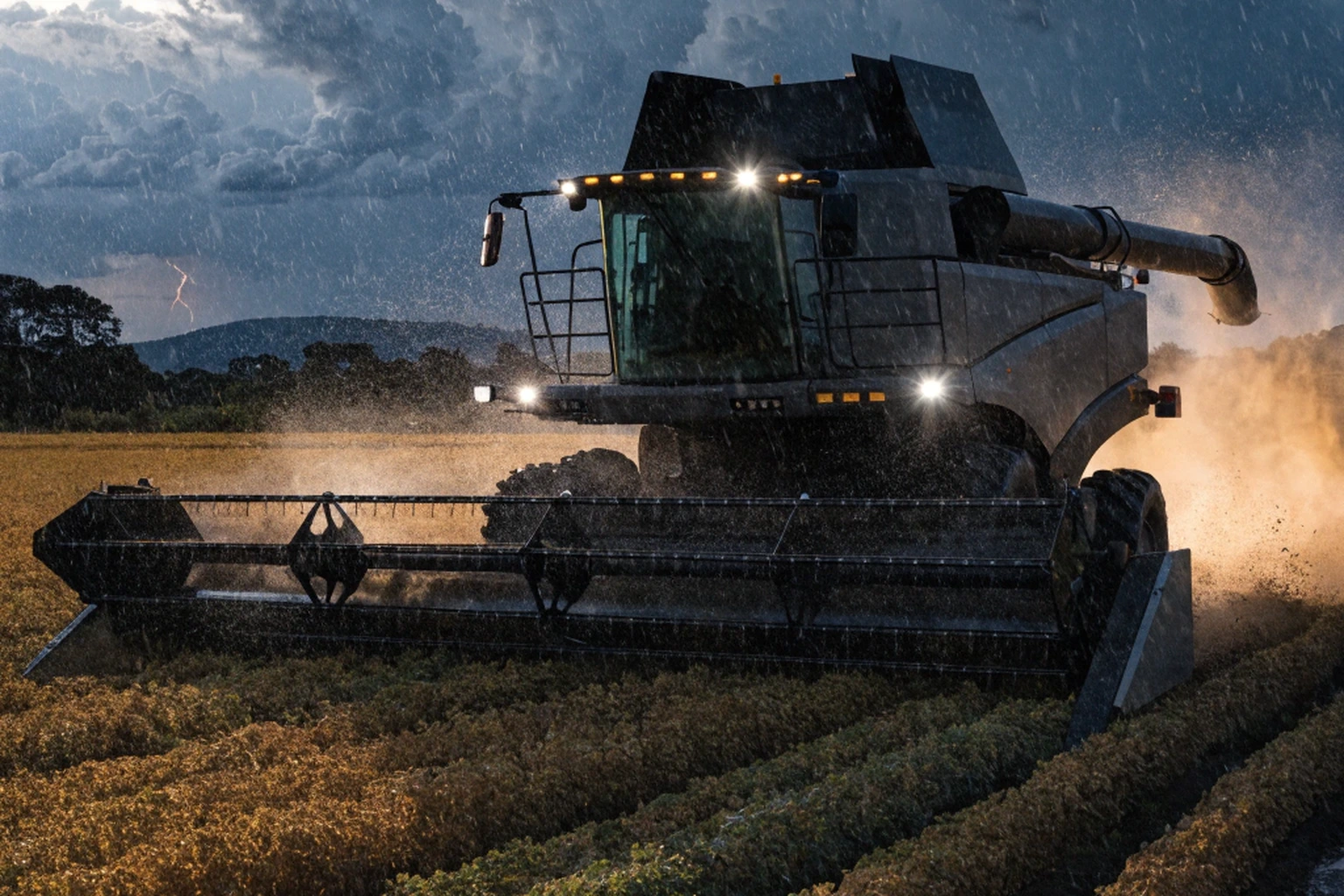
Brazil: Food for the World
Brazil is a very big country. It has many large farms. These farms are important for Brazil and for the world.
The farms grow a lot of food. They grow coffee, sugar, and fruit, like oranges. The farms also have many animals. This big business with food is called agribusiness.
Brazil sells this food to many other countries. People all over the world eat food from Brazil. Agribusiness helps Brazil's economy and provides food for everyone.
Gramática destacada
Patrón: Presente Simple
"Brazil sells this food to many other countries."
Usamos el presente simple para hablar de hechos o cosas que pasan todo el tiempo. Para 'he' (él), 'she' (ella) e 'it' (eso), añadimos una 's' al verbo.
Patrón: Sustantivos en plural con -s
"It has many large farms."
Para hablar de más de una cosa, a menudo añadimos una 's' al final del sustantivo. Por ejemplo, una granja ('farm') se convierte en muchas granjas ('farms'), y un país ('country') se convierte en muchos países ('countries').
Pon a prueba tu comprensión
10 preguntas · A1 Principiante · 1 vista previa gratis
Pon a prueba lo que aprendiste en este artículo. ¡Responde todas las preguntas para ganar XP!
¿Qué tipo de comida cultiva Brasil?
¿Quieres terminar el quiz?
9 preguntas más te esperan. ¡Regístrate gratis para desbloquear el quiz completo y ganar XP!
Regístrate gratis¿Ya tienes cuenta? Acceder
Desglose de preguntas
¿Qué tipo de comida cultiva Brasil?
Tu respuesta:
Respuesta correcta: Café, azúcar y fruta
Brasil es un país pequeño.
Tu respuesta:
Respuesta correcta: Falso
¿Qué significa 'world'?
Tu respuesta:
Respuesta correcta: La Tierra y todos los países
Las granjas cultivan mucha _____.
Tu respuesta:
Respuesta correcta: food
Brasil: La Agroindustria, una Canasta Global
Brasil es un país muy grande y hermoso. Tiene mucha tierra, y esta tierra es muy fértil. Por muchos años, Brasil cultivó productos para su gente, como café y frutas. Pero hoy, algo es diferente y más grande. La "agroindustria" en Brasil es ahora muy importante no solo para el país, sino también para todo el mundo.
Hace mucho tiempo, Brasil ya producía comida, pero la forma de trabajar era diferente. Ahora, la agroindustria es muy moderna. No es solo cultivar en el campo. También es procesar los productos en fábricas y después venderlos y distribuirlos. Brasil es como una gran "canasta de pan" para el mundo, porque exporta mucha comida a otros países. Por ejemplo, exporta grandes cantidades de soja, carne y azúcar.
La agroindustria ayuda mucho a la economía de Brasil. Representa casi un cuarto de todo el dinero que produce el país cada año. También es muy importante para las exportaciones, porque Brasil vende muchos productos agrícolas. Por eso, muchas personas trabajan en este sector. Es un sector que crece cada año y es más grande que antes. Brasil es un líder global en la agricultura moderna.
Gramática destacada
Patrón: Pretérito Indefinido (Pasado Simple)
"Por muchos años, Brasil cultivó productos para su gente."
Usamos el pretérito indefinido para hablar de acciones que empezaron y terminaron en el pasado. Indica un momento específico o un periodo cerrado en el tiempo.
Patrón: Comparativos (más... que)
"Es un sector que crece cada año y es más grande que antes."
Los comparativos se usan para comparar dos cosas. 'Más... que' significa que una cosa tiene una cualidad en mayor grado que otra. Por ejemplo, 'más rápido que' o 'más interesante que'.
Pon a prueba tu comprensión
11 preguntas · A2 Básico · 1 vista previa gratis
Pon a prueba lo que aprendiste en este artículo. ¡Responde todas las preguntas para ganar XP!
¿Cómo es la tierra de Brasil?
¿Quieres terminar el quiz?
10 preguntas más te esperan. ¡Regístrate gratis para desbloquear el quiz completo y ganar XP!
Regístrate gratis¿Ya tienes cuenta? Acceder
Desglose de preguntas
¿Cómo es la tierra de Brasil?
Tu respuesta:
Respuesta correcta: Es muy fértil.
La agroindustria en Brasil es solo cultivar en el campo.
Tu respuesta:
Respuesta correcta: Falso
¿Qué significa la palabra "exportar"?
Tu respuesta:
Respuesta correcta: Vender productos a otros países.
Brasil es como una gran _____ de pan para el mundo.
Tu respuesta:
Respuesta correcta: canasta
¿Qué porcentaje del dinero del país representa la agroindustria?
Tu respuesta:
Respuesta correcta: Casi un cuarto.
Brazil: The World's Breadbasket
Brazil is famous for its vibrant culture and beautiful landscapes, but its economy relies heavily on the land. In the last few decades, the country has developed a massive agribusiness sector. This industry includes everything from farming on fertile soil to processing and selling products globally. Because it supplies so much food, Brazil is often called the 'world's breadbasket.'
Large quantities of soybeans, sugar, and meat are produced in Brazil every year. These products have been exported to countries all over the world, including China and nations in Europe. In fact, agribusiness creates almost a quarter of Brazil's total wealth (GDP). This success has transformed the countryside. Modern technology is used to monitor the weather and the health of the crops, ensuring that harvest numbers remain high.
However, this rapid growth brings responsibility. Sustainable farming, which protects the environment, is a major topic today. Farmers who adopt these new methods can increase production without destroying forests. It is a complex balance between making money and preserving nature for future generations.
The logistics behind this sector are also impressive. Trucks and trains transport goods from inland farms to busy ports. From there, they are shipped across oceans to international markets. This system ensures that food reaches millions of people. As the world's population increases, Brazil's role remains essential for global food security.
Gramática destacada
Patrón: Voz Pasiva
"Large quantities of soybeans, sugar, and meat are produced in Brazil every year."
Usamos la voz pasiva (are produced) cuando la acción o el objeto (la soja, el azúcar) es más importante que la persona que realiza la acción. No necesitamos decir 'los agricultores los producen'.
Patrón: Cláusulas Relativas
"Sustainable farming, which protects the environment, is a major topic today."
La cláusula 'which protects the environment' (que protege el medio ambiente) añade información extra sobre el sujeto 'Sustainable farming' (La agricultura sostenible). Se separa con comas porque la oración tiene sentido sin ella.
Pon a prueba tu comprensión
11 preguntas · B1 Intermedio · 1 vista previa gratis
Pon a prueba lo que aprendiste en este artículo. ¡Responde todas las preguntas para ganar XP!
¿Por qué a Brasil se le llama el 'granero del mundo'?
¿Quieres terminar el quiz?
10 preguntas más te esperan. ¡Regístrate gratis para desbloquear el quiz completo y ganar XP!
Regístrate gratis¿Ya tienes cuenta? Acceder
Desglose de preguntas
¿Por qué a Brasil se le llama el 'granero del mundo'?
Tu respuesta:
Respuesta correcta: Porque suministra una gran cantidad de alimentos a nivel mundial.
El agronegocio genera casi el 25% de la riqueza de Brasil.
Tu respuesta:
Respuesta correcta: Verdadero
¿Qué significa 'monitor' (monitorear) en el texto?
Tu respuesta:
Respuesta correcta: Vigilar y revisar cuidadosamente
Los camiones y trenes _____ mercancías desde las granjas del interior hasta los puertos concurridos.
Tu respuesta:
Respuesta correcta: transport
¿Cuál es el objetivo de la agricultura sostenible mencionado en el texto?
Tu respuesta:
Respuesta correcta: Aumentar la producción sin destruir los bosques.
Brazil's Agribusiness: Feeding the World
While Brazil is internationally renowned for its vibrant culture and diverse ecosystems, its true economic engine lies in the vast fields that stretch across the continent. Brazil has transformed into a global agricultural powerhouse, often referred to as the 'world's breadbasket.' This sector, known as agribusiness, represents a sophisticated evolution from colonial-era farming to a high-tech industry that feeds billions. It is a complex value chain encompassing production, processing, and distribution, which accounts for a substantial portion of the nation's Gross Domestic Product (GDP).
The success of Brazilian agriculture is driven by scientific innovation and favorable geography. In the past, the tropical soil was considered too acidic for major crops. However, through the development of modern techniques such as soil correction and crop rotation, Brazil has made these lands incredibly fertile. Consequently, the country is now the world's leading exporter of soybeans, coffee, and beef. This massive production is not merely about quantity; it relies on advanced technology. Drones monitor crop health, and genetically modified seeds ensure that the cultivation of plants is resistant to pests and disease.
Despite these achievements, the sector faces significant challenges. One major hurdle is infrastructure. Although production yields are high, transporting goods from the interior to the ports can be slow and expensive due to road conditions. Furthermore, there is an intense global debate regarding environmental protection. As the demand for food rises, there is pressure to expand farming areas, often at the risk of deforestation in the Amazon and Cerrado biomes. Therefore, the concept of sustainable agriculture has become vital. Farmers are increasingly adopting methods that protect natural resources while maintaining high productivity.
Looking ahead, Brazil's role in the global market is set to grow. As the world population increases, the demand for reliable food sources will rise. By balancing economic growth with environmental responsibility, Brazil aims to secure its position not just as a producer of commodities, but as a leader in green technology. The future of global food security depends heavily on how this South American giant manages its natural wealth.
Gramática destacada
Patrón: Oraciones de relativo
"It is a complex value chain... which accounts for a substantial portion of the nation's GDP."
Las oraciones de relativo te dan más información sobre un sustantivo (en este caso, la 'cadena de valor'). Aquí se usa 'which' para añadir una oración no especificativa que aporta detalles extra.
Patrón: Voz pasiva
"In the past, the tropical soil was considered too acidic for major crops."
La voz pasiva se usa cuando el enfoque está en la acción o el objeto, en lugar de en quién la realiza. Aquí resalta la opinión sobre el suelo más que a las personas que tenían esa opinión.
Patrón: Marcadores del discurso
"However, through the development of modern techniques... Brazil has made these lands incredibly fertile."
Los marcadores del discurso como 'However', 'Furthermore' y 'Consequently' se usan para organizar el texto y mostrar la relación entre las ideas (contraste, adición o resultado).
Pon a prueba tu comprensión
11 preguntas · B2 Intermedio alto · 1 vista previa gratis
Pon a prueba lo que aprendiste en este artículo. ¡Responde todas las preguntas para ganar XP!
¿Cuál es la razón principal por la que el suelo de Brasil se volvió apto para los cultivos principales?
¿Quieres terminar el quiz?
10 preguntas más te esperan. ¡Regístrate gratis para desbloquear el quiz completo y ganar XP!
Regístrate gratis¿Ya tienes cuenta? Acceder
Desglose de preguntas
¿Cuál es la razón principal por la que el suelo de Brasil se volvió apto para los cultivos principales?
Tu respuesta:
Respuesta correcta: Se aplicaron técnicas modernas como la corrección del suelo.
Brasil es actualmente el principal exportador mundial de soja, café y carne de res.
Tu respuesta:
Respuesta correcta: Verdadero
¿Qué palabra significa 'sistemas físicos básicos como carreteras y energía'?
Tu respuesta:
Respuesta correcta: Infrastructure
El concepto de agricultura _____ se ha vuelto vital para proteger los recursos naturales.
Tu respuesta:
Respuesta correcta: sustainable
¿Cuál es uno de los desafíos logísticos mencionados en el artículo?
Tu respuesta:
Respuesta correcta: Transporte de mercancías desde el interior hacia los puertos.
The Agrarian Colossus: Brazil's Role in Global Food Security
Seldom has a nation transformed its economic landscape as radically as Brazil has in the last half-century. Once characterized by coastal population centers and vast, untapped interiors, the country has undergone a metamorphosis into an agricultural superpower. Today, Brazil is not merely a participant in the global food market; it is a protagonist, frequently hailed as the 'breadbasket of the world.' This title, however, belies the complexity of a sector that integrates cutting-edge science, logistical challenges, and intense environmental scrutiny.
What distinguishes modern Brazilian agribusiness is its reliance on technology. It was the adaptation of crop varieties to the acidic soils of the Cerrado—a vast tropical savanna—that unlocked the country's potential. Through the relentless research of institutions like Embrapa, Brazil managed to convert land previously deemed barren into highly productive fields. Consequently, the yield of soybeans, corn, and cotton has seen an exponential rise, positioning the nation as a primary exporter to Asian and European markets. Were it not for these technological interventions, global food prices would likely be significantly higher.
Nevertheless, the expansion of this frontier has not been without its detractors. The nominalisation of nature into 'resources' and 'commodities' often draws sharp criticism regarding biodiversity loss. Specifically, the deforestation rates in the Amazon and the Cerrado have provoked international outcry. It is this tension between economic development and ecological preservation that defines the current geopolitical discourse surrounding Brazil. The government and private sector now face the arduous task of proving that productivity need not come at the expense of the environment. Initiatives focusing on sustainable intensification—producing more on less land—are becoming increasingly indispensable.
Furthermore, the logistics of transporting these commodities remain a formidable hurdle. Despite the volume of production, the infrastructure required to move grain from the interior to the ports is often strained. The reliance on road transport, as opposed to rail or waterways, introduces inefficiencies that inflate costs. However, recent investments in the 'Northern Arc' ports have begun to mitigate these bottlenecks, streamlining the flow of goods to the Northern Hemisphere.
Looking ahead, Brazil's role appears destined to expand. As the global population surges towards nine billion, the demand for food will inevitably intensify. Brazil possesses the rare combination of available arable land, fresh water, and technological expertise required to meet this need. Yet, the path forward requires a delicate balancing act. Only by marrying robust environmental protections with continued innovation can Brazil secure its legacy not just as a producer of volume, but as a steward of global sustainability.
Gramática destacada
Patrón: Inversion for Emphasis
"Seldom has a nation transformed its economic landscape as radically as Brazil has in the last half-century."
In formal English, negative adverbs like 'seldom', 'rarely', or 'never' placed at the start of a sentence trigger the inversion of the subject and the auxiliary verb (has a nation) to add dramatic emphasis.
Patrón: Cleft Sentence
"It was the adaptation of crop varieties to the acidic soils of the Cerrado that unlocked the country's potential."
Cleft sentences (It was X that...) are used to focus attention on a specific part of the sentence. Here, it emphasizes the 'adaptation of crop varieties' as the primary cause.
Patrón: Conditional Inversion (Were it not for...)
"Were it not for these technological interventions, global food prices would likely be significantly higher."
This is a formal alternative to 'If it were not for...'. The auxiliary verb 'Were' is placed before the subject to create a hypothetical condition without using the word 'if'.
Pon a prueba tu comprensión
12 preguntas · C1 Avanzado · 1 vista previa gratis
Pon a prueba lo que aprendiste en este artículo. ¡Responde todas las preguntas para ganar XP!
According to the article, what key factor enabled Brazil to cultivate the Cerrado region?
¿Quieres terminar el quiz?
11 preguntas más te esperan. ¡Regístrate gratis para desbloquear el quiz completo y ganar XP!
Regístrate gratis¿Ya tienes cuenta? Acceder
Desglose de preguntas
According to the article, what key factor enabled Brazil to cultivate the Cerrado region?
Tu respuesta:
Respuesta correcta: The adaptation of crops to acidic soils through research
The article suggests that Brazil's infrastructure is fully optimized for transporting grain to ports.
Tu respuesta:
Respuesta correcta: Falso
Which word best matches the definition: 'To make something bad less severe or painful'?
Tu respuesta:
Respuesta correcta: Mitigate
Brazil is described not just as a participant, but as a ________ in the global food market.
Tu respuesta:
Respuesta correcta: protagonist
What is the 'Northern Arc' mentioned in the text?
Tu respuesta:
Respuesta correcta: A series of ports improving logistical flow
The text implies that economic development and ecological preservation are currently in tension in Brazil.
Tu respuesta:
Respuesta correcta: Verdadero
From Colonial Soil to Global Breadbasket: The Brazilian Agribusiness Paradigm
Were one to survey the annals of agricultural history, few narratives would rival the meteoric ascent of Brazil from a peripheral colonial outpost to a veritable titan of global food security. No longer restricted to the monocultural extraction that defined its economic infancy, Brazil’s contemporary agribusiness sector represents a sophisticated convergence of science, policy, and logistical prowess. It is a transformation that defies the simplistic label of 'farming'; rather, it constitutes a complex, vertically integrated value chain that has become inextricable from the nation's macroeconomic stability.
At the heart of this metamorphosis lies a radical shift in the technological paradigm. Historically dismissed as possessing soils too acidic for substantial yield, the vast Cerrado savanna was transformed through the application of lime and the development of crop varieties specifically adapted to tropical latitudes. Had it not been for the concerted efforts of state-sponsored research institutions, most notably Embrapa, this region would likely have remained barren of commercial agriculture. Today, however, it stands as the engine room of a sector that contributes nearly a quarter to Brazil’s GDP. The preponderance of high-tech solutions—from precision agriculture utilizing satellite telemetry to the genetic amelioration of seeds—has allowed production to decouple from mere acreage expansion, prioritizing yield efficiency instead.
Nevertheless, the hegemony Brazil enjoys in the global markets for soy, beef, and poultry is not without its concomitant challenges. The very logistical infrastructure required to transport these colossal volumes from the hinterlands to the ports remains a bottleneck, often susceptible to the vicissitudes of political investment and bureaucratic inertia. Furthermore, the environmental exigencies of the twenty-first century cast a long shadow over the sector. It is imperative that the drive for productivity be reconciled with the preservation of the Amazon and Cerrado biomes. International stakeholders increasingly demand that supply chains be free of deforestation, a pressure that acts as both a constraint and a catalyst for sustainable innovation.
Economically, the sector serves as a formidable buffer against external shocks. During periods of industrial stagnation, agribusiness has frequently provided the fiscal buoyancy required to keep the trade balance positive. Yet, this reliance raises questions about the 'primarization' of the economy—a potential regression wherein the nation becomes overly dependent on raw material exports at the expense of industrial development. Critics argue that while the 'breadbasket' metaphor is flattering, it risks obscuring the urgent need for diversification.
Ultimately, Brazil's role is critical. As the global population burgeons towards nine billion, the capacity of this South American giant to feed the world is not merely a matter of national pride but a geopolitical necessity. The sector stands at a crossroads: it must navigate the delicate tension between maximizing output and mitigating ecological impact. Only by maintaining this precarious equilibrium can Brazil ensure that its status as a global powerhouse is not a fleeting historical anomaly, but a sustainable legacy for future generations.
Gramática destacada
Patrón: Inversión en oraciones condicionales
"Had it not been for the concerted efforts of state-sponsored research institutions, most notably Embrapa, this region would likely have remained barren of commercial agriculture."
Esta es una forma formal de expresar una estructura de tercer condicional ('If it had not been for...'). Al omitir 'if' e invertir el verbo auxiliar 'had' y el sujeto 'it', el escritor logra un tono más académico y retórico, adecuado para textos de nivel C2.
Patrón: Modo subjuntivo para expresar necesidad
"It is imperative that the drive for productivity be reconciled with the preservation of the Amazon and Cerrado biomes."
El modo subjuntivo se utiliza aquí después de un adjetivo que expresa necesidad ('imperative'). El verbo 'be' permanece en su forma base, en lugar de cambiar a 'is' o 'should be'. Esto enfatiza la urgencia y la naturaleza formal del requisito.
Patrón: Inversión para dar énfasis
"Were one to survey the annals of agricultural history, few narratives would rival the meteoric ascent of Brazil..."
Esta estructura utiliza la inversión con 'Were' para crear una condición hipotética ('If one were to survey...'). Es un recurso estilístico sofisticado que se usa a menudo en introducciones formales para atraer al lector y establecer un tono académico.
Pon a prueba tu comprensión
12 preguntas · C2 Dominio · 1 vista previa gratis
Pon a prueba lo que aprendiste en este artículo. ¡Responde todas las preguntas para ganar XP!
Según el artículo, ¿cuál fue el principal catalizador para transformar el Cerrado en tierra cultivable?
¿Quieres terminar el quiz?
11 preguntas más te esperan. ¡Regístrate gratis para desbloquear el quiz completo y ganar XP!
Regístrate gratis¿Ya tienes cuenta? Acceder
Desglose de preguntas
Según el artículo, ¿cuál fue el principal catalizador para transformar el Cerrado en tierra cultivable?
Tu respuesta:
Respuesta correcta: La aplicación de cal y el desarrollo de variedades de cultivos adaptadas.
El artículo sugiere que la infraestructura logística de Brasil está actualmente optimizada a la perfección para manejar su producción agrícola.
Tu respuesta:
Respuesta correcta: Falso
¿Qué palabra es sinónimo de 'urgencies' o 'demands' (urgencias o demandas) tal como se usa en el texto?
Tu respuesta:
Respuesta correcta: Exigencies
El texto afirma que el sector de la agroindustria representa casi una _____ parte del PIB de Brasil.
Tu respuesta:
Respuesta correcta: quarter
¿Qué preocupación plantean los críticos con respecto a la dependencia del país en la agroindustria?
Tu respuesta:
Respuesta correcta: Conduce a una 'primarización' de la economía, obstaculizando el desarrollo industrial.
El autor insinúa que el crecimiento de la producción ahora está más impulsado por la eficiencia del rendimiento que por la simple expansión de la cantidad de tierra cultivada.
Tu respuesta:
Respuesta correcta: Verdadero
Brasil: Mucha Comida
Hola. Este es Brasil. Brasil es un país grande. Tiene mucha tierra. La tierra de Brasil es buena. Produce mucha comida. Comida para el mundo. Comida para todos. Brasil es importante. Es un gran productor de comida para muchas personas. ¡Mucha comida de Brasil!
Gramática destacada
Patrón: Verbo 'Ser' (es)
"Brasil es un país grande."
Usamos 'es' para decir cómo es algo o qué es algo. Es una palabra muy básica para describir personas o cosas.
Pon a prueba tu comprensión
9 preguntas · A0 Pre-principiante · 1 vista previa gratis
Pon a prueba lo que aprendiste en este artículo. ¡Responde todas las preguntas para ganar XP!
¿Qué es Brasil?
¿Quieres terminar el quiz?
8 preguntas más te esperan. ¡Regístrate gratis para desbloquear el quiz completo y ganar XP!
Regístrate gratis¿Ya tienes cuenta? Acceder
Desglose de preguntas
¿Qué es Brasil?
Tu respuesta:
Respuesta correcta: Un país
Brasil no tiene mucha tierra.
Tu respuesta:
Respuesta correcta: Falso
¿Qué significa 'comida'?
Tu respuesta:
Respuesta correcta: Alimento

