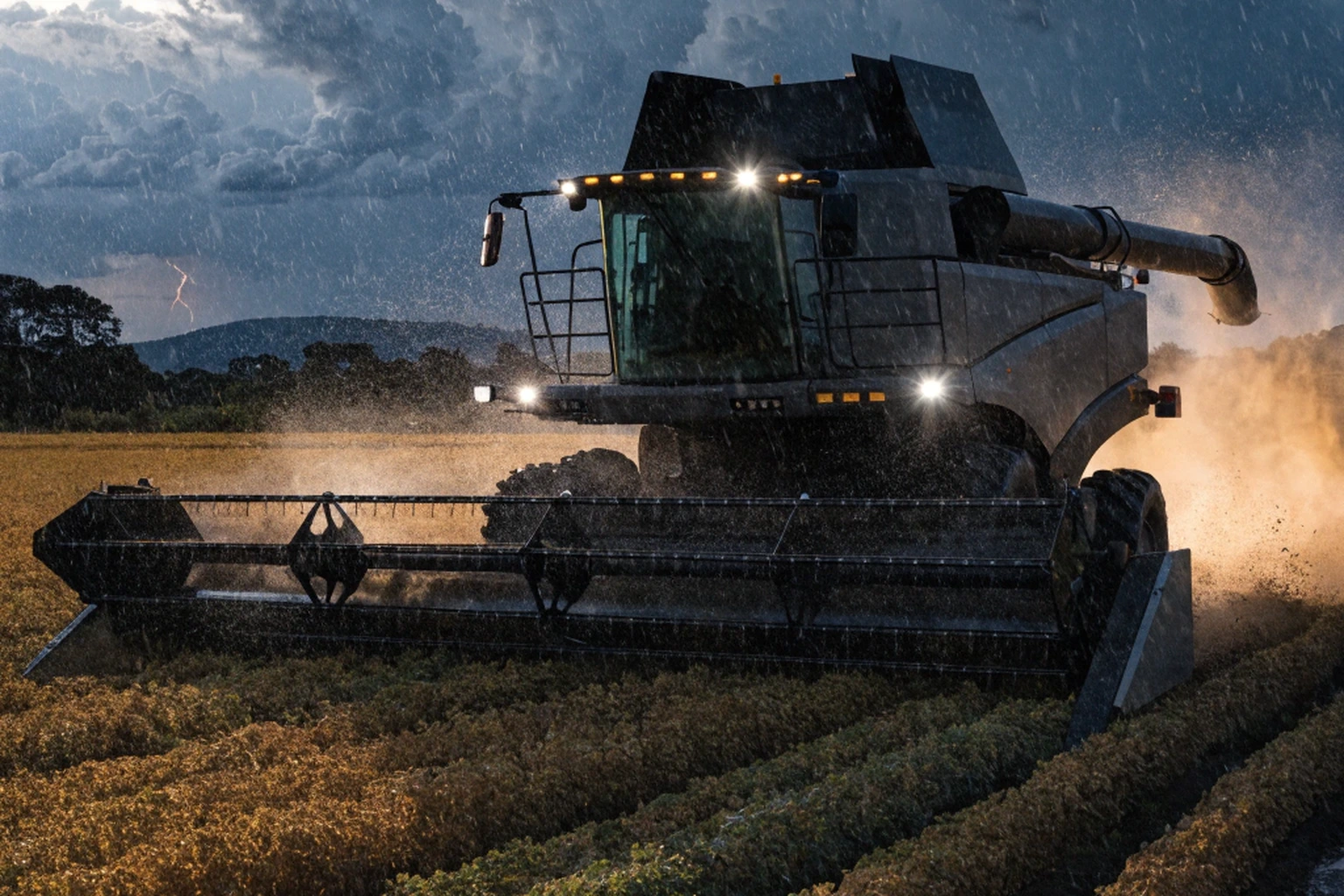
Brazil: Food for the World
Brazil is a very big country. It has many large farms. These farms are important for Brazil and for the world.
The farms grow a lot of food. They grow coffee, sugar, and fruit, like oranges. The farms also have many animals. This big business with food is called agribusiness.
Brazil sells this food to many other countries. People all over the world eat food from Brazil. Agribusiness helps Brazil's economy and provides food for everyone.
语法聚焦
句型: 一般现在时
"Brazil sells this food to many other countries."
我们用一般现在时来谈论事实或经常发生的事情。对于 'he' (他), 'she' (她), 和 'it' (它),我们在动词后面加 's'。
句型: 复数名词加 -s
"It has many large farms."
为了谈论多于一个的事物,我们通常在名词末尾加 's'。例如,一个农场 (one farm) 变成很多农场 (many farms),一个国家 (one country) 变成很多国家 (many countries)。
测试你的理解
10 个问题 · A1 初学 · 1 次免费预览
Farming in Brazil: The World's Breadbasket
Brazil is a very large and beautiful country in South America. It has a lot of green land and warm weather. In the past, farmers only grew coffee and sugar there. But today, farming is very different. It is modern and high-tech. We call this business "agribusiness." Agribusiness includes growing food, selling it to markets, and making new products.
Brazil is famous for producing soybeans, corn, and beef. It sells these healthy foods to many other countries around the world. China and Europe buy a lot of food from Brazil. Because the country produces so much, people call it the "world's breadbasket." It is like a giant basket of food for everyone to eat.
Technology helps the farmers every day. Big machines are faster than workers. Farmers use computers and drones to look at their plants from the sky. This makes the food better and cheaper to grow. Agribusiness is a very big part of Brazil's economy. It creates jobs and helps the country grow rich. The future of farming in Brazil is important for the whole world.
语法聚焦
句型: 比较级 (形容词 + -er + than)
"Big machines are faster than workers."
我们用比较级来比较两个事物。我们在短形容词后加“-er”,并在形容词后使用“than”一词。
句型: 连接词 (Because)
"Because the country produces so much, people call it the "world's breadbasket.""
我们用“because”来表示某事的原因。它连接结果和原因。
测试你的理解
11 个问题 · A2 基础 · 1 次免费预览
测试你从这篇文章中学到的知识。回答所有问题即可获得经验值!
题目详情
这篇文章的主题是什么?
你的回答:
正确答案: 巴西的现代农业和农业综合企业
过去,巴西的农民只种植大豆和玉米。
你的回答:
正确答案: 错误
单词“produce”是什么意思?
你的回答:
正确答案: 制造或种植某物
巴西因生产大豆、玉米和牛肉而____ (famous)。
你的回答:
正确答案: famous
为什么人们称巴西为“世界粮仓”?
你的回答:
正确答案: 它为世界生产大量食物
Brazil: The World's Breadbasket
Brazil is famous for its vibrant culture and beautiful landscapes, but its economy relies heavily on the land. In the last few decades, the country has developed a massive agribusiness sector. This industry includes everything from farming on fertile soil to processing and selling products globally. Because it supplies so much food, Brazil is often called the 'world's breadbasket.'
Large quantities of soybeans, sugar, and meat are produced in Brazil every year. These products have been exported to countries all over the world, including China and nations in Europe. In fact, agribusiness creates almost a quarter of Brazil's total wealth (GDP). This success has transformed the countryside. Modern technology is used to monitor the weather and the health of the crops, ensuring that harvest numbers remain high.
However, this rapid growth brings responsibility. Sustainable farming, which protects the environment, is a major topic today. Farmers who adopt these new methods can increase production without destroying forests. It is a complex balance between making money and preserving nature for future generations.
The logistics behind this sector are also impressive. Trucks and trains transport goods from inland farms to busy ports. From there, they are shipped across oceans to international markets. This system ensures that food reaches millions of people. As the world's population increases, Brazil's role remains essential for global food security.
语法聚焦
句型: 被动语态 (Passive Voice)
"Large quantities of soybeans, sugar, and meat are produced in Brazil every year."
当动作或对象(大豆、糖)比执行动作的人更重要时,我们使用被动语态(are produced)。我们不需要说“农民生产它们”。
句型: 关系从句 (Relative Clauses)
"Sustainable farming, which protects the environment, is a major topic today."
从句 'which protects the environment' 补充了关于主语 'Sustainable farming' 的额外信息。因为它被逗号隔开,所以即使去掉它,句子的意思依然完整。
测试你的理解
11 个问题 · B1 中级 · 1 次免费预览
测试你从这篇文章中学到的知识。回答所有问题即可获得经验值!
题目详情
为什么巴西被称为“世界粮仓”?
你的回答:
正确答案: 因为它向全球供应大量食物。
农业综合企业创造了巴西近25%的财富。
你的回答:
正确答案: 正确
文中 'monitor' 是什么意思?
你的回答:
正确答案: 仔细观察和检查
卡车和火车将货物从内陆农场_____到繁忙的港口。
你的回答:
正确答案: transport
文中提到的可持续农业的目标是什么?
你的回答:
正确答案: 增加产量而不破坏森林。
Brazil's Agribusiness: Feeding the World
While Brazil is internationally renowned for its vibrant culture and diverse ecosystems, its true economic engine lies in the vast fields that stretch across the continent. Brazil has transformed into a global agricultural powerhouse, often referred to as the 'world's breadbasket.' This sector, known as agribusiness, represents a sophisticated evolution from colonial-era farming to a high-tech industry that feeds billions. It is a complex value chain encompassing production, processing, and distribution, which accounts for a substantial portion of the nation's Gross Domestic Product (GDP).
The success of Brazilian agriculture is driven by scientific innovation and favorable geography. In the past, the tropical soil was considered too acidic for major crops. However, through the development of modern techniques such as soil correction and crop rotation, Brazil has made these lands incredibly fertile. Consequently, the country is now the world's leading exporter of soybeans, coffee, and beef. This massive production is not merely about quantity; it relies on advanced technology. Drones monitor crop health, and genetically modified seeds ensure that the cultivation of plants is resistant to pests and disease.
Despite these achievements, the sector faces significant challenges. One major hurdle is infrastructure. Although production yields are high, transporting goods from the interior to the ports can be slow and expensive due to road conditions. Furthermore, there is an intense global debate regarding environmental protection. As the demand for food rises, there is pressure to expand farming areas, often at the risk of deforestation in the Amazon and Cerrado biomes. Therefore, the concept of sustainable agriculture has become vital. Farmers are increasingly adopting methods that protect natural resources while maintaining high productivity.
Looking ahead, Brazil's role in the global market is set to grow. As the world population increases, the demand for reliable food sources will rise. By balancing economic growth with environmental responsibility, Brazil aims to secure its position not just as a producer of commodities, but as a leader in green technology. The future of global food security depends heavily on how this South American giant manages its natural wealth.
语法聚焦
句型: 定语从句 (Relative Clauses)
"It is a complex value chain... which accounts for a substantial portion of the nation's GDP."
定语从句用于提供关于名词(在这里指“价值链”)的更多信息。此处使用 'Which' 添加非限制性从句,提供额外的细节。
句型: 被动语态 (Passive Voice)
"In the past, the tropical soil was considered too acidic for major crops."
当焦点在于动作或接受动作的对象,而不是谁执行了动作时,使用被动语态。这里强调的是关于土壤的看法,而不是谁持有这种看法。
句型: 话语标记 (Discourse Markers)
"However, through the development of modern techniques... Brazil has made these lands incredibly fertile."
像 'However'(然而)、'Furthermore'(此外)和 'Consequently'(因此)这样的话语标记用于组织文本并显示观点之间的关系(对比、递进或结果)。
测试你的理解
11 个问题 · B2 中高级 · 1 次免费预览
测试你从这篇文章中学到的知识。回答所有问题即可获得经验值!
题目详情
巴西土壤变得适合种植主要作物的主要原因是什么?
你的回答:
正确答案: 应用了土壤改良等现代技术。
巴西目前是世界上大豆、咖啡和牛肉的主要出口国。
你的回答:
正确答案: 正确
哪个词的意思是“道路和电力等基本物理系统”?
你的回答:
正确答案: 基础设施 (Infrastructure)
_____ 农业的概念对于保护自然资源已变得至关重要。
你的回答:
正确答案: sustainable
文章中提到的物流挑战之一是什么?
你的回答:
正确答案: 将货物从内陆运输到港口。
The Agrarian Colossus: Brazil's Role in Global Food Security
Seldom has a nation transformed its economic landscape as radically as Brazil has in the last half-century. Once characterized by coastal population centers and vast, untapped interiors, the country has undergone a metamorphosis into an agricultural superpower. Today, Brazil is not merely a participant in the global food market; it is a protagonist, frequently hailed as the 'breadbasket of the world.' This title, however, belies the complexity of a sector that integrates cutting-edge science, logistical challenges, and intense environmental scrutiny.
What distinguishes modern Brazilian agribusiness is its reliance on technology. It was the adaptation of crop varieties to the acidic soils of the Cerrado—a vast tropical savanna—that unlocked the country's potential. Through the relentless research of institutions like Embrapa, Brazil managed to convert land previously deemed barren into highly productive fields. Consequently, the yield of soybeans, corn, and cotton has seen an exponential rise, positioning the nation as a primary exporter to Asian and European markets. Were it not for these technological interventions, global food prices would likely be significantly higher.
Nevertheless, the expansion of this frontier has not been without its detractors. The nominalisation of nature into 'resources' and 'commodities' often draws sharp criticism regarding biodiversity loss. Specifically, the deforestation rates in the Amazon and the Cerrado have provoked international outcry. It is this tension between economic development and ecological preservation that defines the current geopolitical discourse surrounding Brazil. The government and private sector now face the arduous task of proving that productivity need not come at the expense of the environment. Initiatives focusing on sustainable intensification—producing more on less land—are becoming increasingly indispensable.
Furthermore, the logistics of transporting these commodities remain a formidable hurdle. Despite the volume of production, the infrastructure required to move grain from the interior to the ports is often strained. The reliance on road transport, as opposed to rail or waterways, introduces inefficiencies that inflate costs. However, recent investments in the 'Northern Arc' ports have begun to mitigate these bottlenecks, streamlining the flow of goods to the Northern Hemisphere.
Looking ahead, Brazil's role appears destined to expand. As the global population surges towards nine billion, the demand for food will inevitably intensify. Brazil possesses the rare combination of available arable land, fresh water, and technological expertise required to meet this need. Yet, the path forward requires a delicate balancing act. Only by marrying robust environmental protections with continued innovation can Brazil secure its legacy not just as a producer of volume, but as a steward of global sustainability.
语法聚焦
句型: 为了强调而倒装
"Seldom has a nation transformed its economic landscape as radically as Brazil has in the last half-century."
在正式英语中,当 'seldom' (很少)、'rarely' (罕见) 或 'never' (从不) 这种否定副词放在句首时,会触发主语和助动词 (has a nation) 的倒装,从而产生一种戏剧性的强调效果。
句型: 分裂句
"It was the adaptation of crop varieties to the acidic soils of the Cerrado that unlocked the country's potential."
分裂句 (It was X that...) 用于将注意力集中在句子的特定部分。这里它强调了“作物品种的适应性”是开启国家潜力的主要原因。
句型: 条件倒装 (Were it not for...)
"Were it not for these technological interventions, global food prices would likely be significantly higher."
这是 'If it were not for...' 的正式替代表达。将助动词 'Were' 置于主语之前,可以在不使用 'if' 的情况下表达一个假设条件。
测试你的理解
12 个问题 · C1 高级 · 1 次免费预览
测试你从这篇文章中学到的知识。回答所有问题即可获得经验值!
根据文章,巴西能够开发塞拉多(Cerrado)地区的关键因素是什么?
题目详情
根据文章,巴西能够开发塞拉多(Cerrado)地区的关键因素是什么?
你的回答:
正确答案: 通过研究使作物适应酸性土壤
文章暗示巴西的基础设施已经为将谷物运往港口做好了充分优化。
你的回答:
正确答案: 错误
哪个词最符合这个定义:“使不好的事情变得不那么严重或痛苦”?
你的回答:
正确答案: 缓解 (Mitigate)
巴西不仅被描述为一个参与者,还是全球粮食市场的 ________。
你的回答:
正确答案: protagonist
文中提到的“北方弧线”(Northern Arc)是什么?
你的回答:
正确答案: 一系列旨在改善物流流量的港口
文本暗示巴西目前的经济发展与生态保护之间存在紧张关系。
你的回答:
正确答案: 正确
From Colonial Soil to Global Breadbasket: The Brazilian Agribusiness Paradigm
Were one to survey the annals of agricultural history, few narratives would rival the meteoric ascent of Brazil from a peripheral colonial outpost to a veritable titan of global food security. No longer restricted to the monocultural extraction that defined its economic infancy, Brazil’s contemporary agribusiness sector represents a sophisticated convergence of science, policy, and logistical prowess. It is a transformation that defies the simplistic label of 'farming'; rather, it constitutes a complex, vertically integrated value chain that has become inextricable from the nation's macroeconomic stability.
At the heart of this metamorphosis lies a radical shift in the technological paradigm. Historically dismissed as possessing soils too acidic for substantial yield, the vast Cerrado savanna was transformed through the application of lime and the development of crop varieties specifically adapted to tropical latitudes. Had it not been for the concerted efforts of state-sponsored research institutions, most notably Embrapa, this region would likely have remained barren of commercial agriculture. Today, however, it stands as the engine room of a sector that contributes nearly a quarter to Brazil’s GDP. The preponderance of high-tech solutions—from precision agriculture utilizing satellite telemetry to the genetic amelioration of seeds—has allowed production to decouple from mere acreage expansion, prioritizing yield efficiency instead.
Nevertheless, the hegemony Brazil enjoys in the global markets for soy, beef, and poultry is not without its concomitant challenges. The very logistical infrastructure required to transport these colossal volumes from the hinterlands to the ports remains a bottleneck, often susceptible to the vicissitudes of political investment and bureaucratic inertia. Furthermore, the environmental exigencies of the twenty-first century cast a long shadow over the sector. It is imperative that the drive for productivity be reconciled with the preservation of the Amazon and Cerrado biomes. International stakeholders increasingly demand that supply chains be free of deforestation, a pressure that acts as both a constraint and a catalyst for sustainable innovation.
Economically, the sector serves as a formidable buffer against external shocks. During periods of industrial stagnation, agribusiness has frequently provided the fiscal buoyancy required to keep the trade balance positive. Yet, this reliance raises questions about the 'primarization' of the economy—a potential regression wherein the nation becomes overly dependent on raw material exports at the expense of industrial development. Critics argue that while the 'breadbasket' metaphor is flattering, it risks obscuring the urgent need for diversification.
Ultimately, Brazil's role is critical. As the global population burgeons towards nine billion, the capacity of this South American giant to feed the world is not merely a matter of national pride but a geopolitical necessity. The sector stands at a crossroads: it must navigate the delicate tension between maximizing output and mitigating ecological impact. Only by maintaining this precarious equilibrium can Brazil ensure that its status as a global powerhouse is not a fleeting historical anomaly, but a sustainable legacy for future generations.
语法聚焦
句型: Inversion in Conditional Sentences
"Had it not been for the concerted efforts of state-sponsored research institutions, most notably Embrapa, this region would likely have remained barren of commercial agriculture."
This is a formal way of expressing a third conditional structure ('If it had not been for...'). By omitting 'if' and inverting the auxiliary verb 'had' and the subject 'it', the writer achieves a more academic and rhetorical tone suitable for C2 level texts.
句型: Subjunctive Mood for Necessity
"It is imperative that the drive for productivity be reconciled with the preservation of the Amazon and Cerrado biomes."
The subjunctive mood is used here after an adjective expressing necessity ('imperative'). The verb 'be' remains in its base form, rather than changing to 'is' or 'should be'. This emphasizes the urgency and formal nature of the requirement.
句型: Inversion for Emphasis
"Were one to survey the annals of agricultural history, few narratives would rival the meteoric ascent of Brazil..."
This structure uses inversion with 'Were' to create a hypothetical condition ('If one were to survey...'). It is a sophisticated stylistic device often used in formal introductions to engage the reader and establish a scholarly tone.
测试你的理解
12 个问题 · C2 精通 · 1 次免费预览
测试你从这篇文章中学到的知识。回答所有问题即可获得经验值!
According to the article, what was the primary catalyst for transforming the Cerrado into arable land?
题目详情
According to the article, what was the primary catalyst for transforming the Cerrado into arable land?
你的回答:
正确答案: The application of lime and the development of adapted crop varieties.
The article suggests that Brazil's logistical infrastructure is currently perfectly optimized to handle its agricultural output.
你的回答:
正确答案: 错误
Which word is synonymous with 'urgencies' or 'demands' as used in the text?
你的回答:
正确答案: Exigencies
The text states that the agribusiness sector accounts for nearly a _____ of Brazil's GDP.
你的回答:
正确答案: quarter
What concern do critics raise regarding the country's reliance on agribusiness?
你的回答:
正确答案: It leads to a 'primarization' of the economy, hindering industrial development.
The author implies that production growth is now driven more by yield efficiency than by simply expanding the amount of land farmed.
你的回答:
正确答案: 正确

