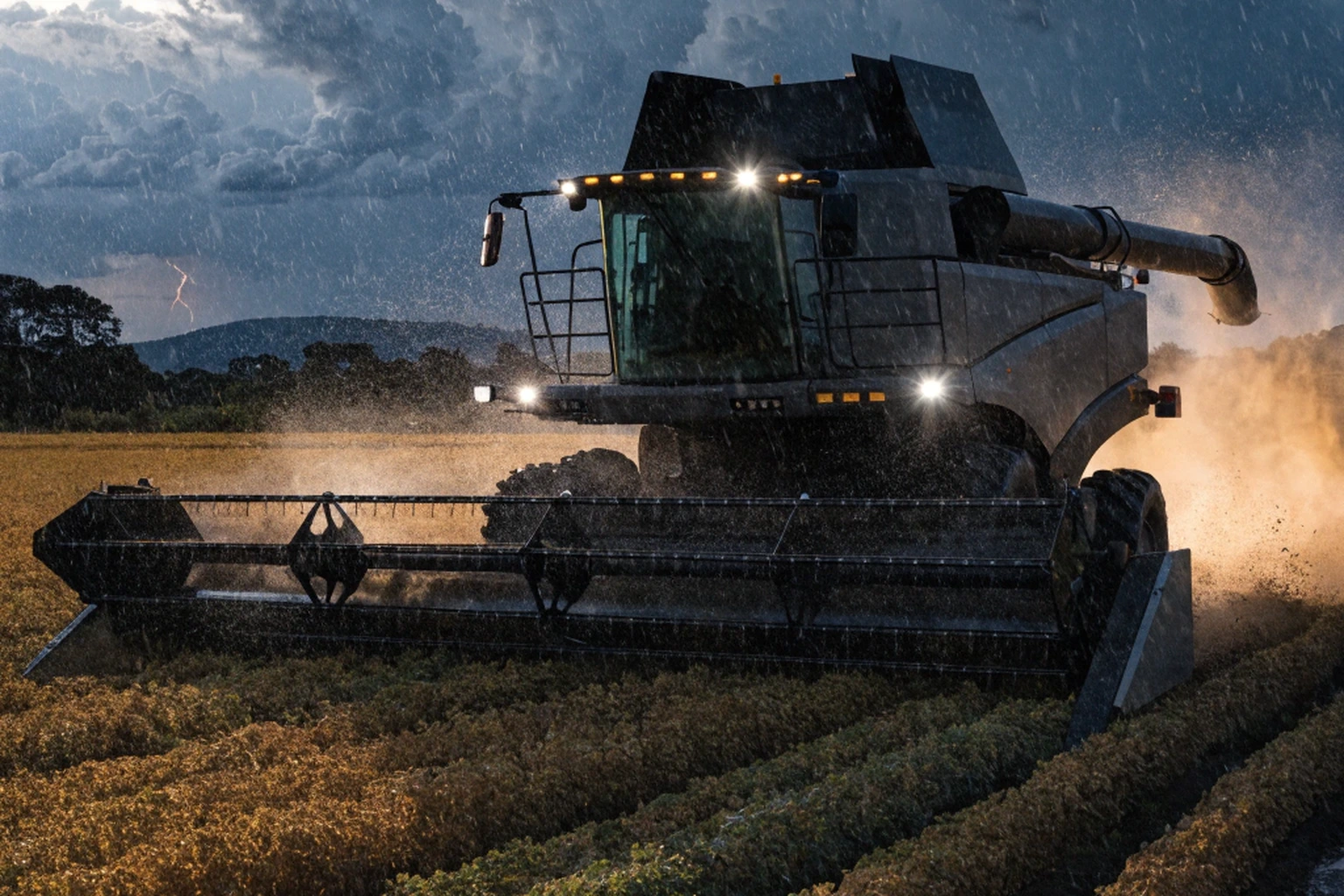
Brazil: Food for the World
Brazil is a very big country. It has many large farms. These farms are important for Brazil and for the world.
The farms grow a lot of food. They grow coffee, sugar, and fruit, like oranges. The farms also have many animals. This big business with food is called agribusiness.
Brazil sells this food to many other countries. People all over the world eat food from Brazil. Agribusiness helps Brazil's economy and provides food for everyone.
نکته دستوری
الگو: زمان حال ساده
"Brazil sells this food to many other countries."
ما از زمان حال ساده برای گفتن حقایق یا کارهایی که همیشه تکرار میشن استفاده میکنیم. برای فاعلهای 'he'، 'she' و 'it'، به آخر فعل یک 's' اضافه میکنیم.
الگو: اسمهای جمع با -s
"It has many large farms."
برای حرف زدن درباره بیشتر از یک چیز، معمولاً به آخر اسم 's' اضافه میکنیم. مثلاً یک مزرعه (farm) میشه چند تا مزرعه (farms) و یک کشور (country) میشه چند تا کشور (countries).
درک خود را بسنجید
10 سوال · A1 مبتدی · 1 پیشنمایش رایگان
آنچه از این مقاله آموختید را بسنجید. به همه سؤالات پاسخ دهید و XP کسب کنید!
برزیل چه جور غذاهایی میکاره؟
آیا میخواهید آزمون را تمام کنید؟
9 سؤال دیگر منتظر شماست. ثبتنام رایگان کنید تا آزمون کامل را باز کنید و XP کسب کنید!
ثبتنام رایگانقبلاً ثبتنام کردی؟ ورود
جزئیات سؤالات
برزیل چه جور غذاهایی میکاره؟
پاسخ شما:
پاسخ درست: قهوه، شکر و میوه
برزیل یک کشور کوچیکه.
پاسخ شما:
پاسخ درست: نادرست
معنی 'world' چیه؟
پاسخ شما:
پاسخ درست: زمین و تمام کشورها
مزرعهها کلی _____ تولید میکنن.
پاسخ شما:
پاسخ درست: food
Farming in Brazil: The World's Breadbasket
Brazil is a very large and beautiful country in South America. It has a lot of green land and warm weather. In the past, farmers only grew coffee and sugar there. But today, farming is very different. It is modern and high-tech. We call this business "agribusiness." Agribusiness includes growing food, selling it to markets, and making new products.
Brazil is famous for producing soybeans, corn, and beef. It sells these healthy foods to many other countries around the world. China and Europe buy a lot of food from Brazil. Because the country produces so much, people call it the "world's breadbasket." It is like a giant basket of food for everyone to eat.
Technology helps the farmers every day. Big machines are faster than workers. Farmers use computers and drones to look at their plants from the sky. This makes the food better and cheaper to grow. Agribusiness is a very big part of Brazil's economy. It creates jobs and helps the country grow rich. The future of farming in Brazil is important for the whole world.
نکته دستوری
الگو: Comparatives (adjective + -er + than)
"Big machines are faster than workers."
We use comparatives to compare two things. We add '-er' to short adjectives and use the word 'than' after the adjective.
الگو: Connectors (Because)
"Because the country produces so much, people call it the "world's breadbasket.""
We use 'because' to show the reason for something. It connects the result with the cause.
درک خود را بسنجید
11 سوال · A2 مقدماتی · 1 پیشنمایش رایگان
آنچه از این مقاله آموختید را بسنجید. به همه سؤالات پاسخ دهید و XP کسب کنید!
What is the main topic of the article?
آیا میخواهید آزمون را تمام کنید؟
10 سؤال دیگر منتظر شماست. ثبتنام رایگان کنید تا آزمون کامل را باز کنید و XP کسب کنید!
ثبتنام رایگانقبلاً ثبتنام کردی؟ ورود
جزئیات سؤالات
What is the main topic of the article?
پاسخ شما:
پاسخ درست: Modern farming and agribusiness in Brazil
In the past, farmers in Brazil only grew soybeans and corn.
پاسخ شما:
پاسخ درست: نادرست
What does the word 'produce' mean?
پاسخ شما:
پاسخ درست: To make or grow something
Brazil is _____ for producing soybeans, corn, and beef.
پاسخ شما:
پاسخ درست: famous
Why do people call Brazil the "world's breadbasket"?
پاسخ شما:
پاسخ درست: It produces a lot of food for the world
Brazil: The World's Breadbasket
Brazil is famous for its vibrant culture and beautiful landscapes, but its economy relies heavily on the land. In the last few decades, the country has developed a massive agribusiness sector. This industry includes everything from farming on fertile soil to processing and selling products globally. Because it supplies so much food, Brazil is often called the 'world's breadbasket.'
Large quantities of soybeans, sugar, and meat are produced in Brazil every year. These products have been exported to countries all over the world, including China and nations in Europe. In fact, agribusiness creates almost a quarter of Brazil's total wealth (GDP). This success has transformed the countryside. Modern technology is used to monitor the weather and the health of the crops, ensuring that harvest numbers remain high.
However, this rapid growth brings responsibility. Sustainable farming, which protects the environment, is a major topic today. Farmers who adopt these new methods can increase production without destroying forests. It is a complex balance between making money and preserving nature for future generations.
The logistics behind this sector are also impressive. Trucks and trains transport goods from inland farms to busy ports. From there, they are shipped across oceans to international markets. This system ensures that food reaches millions of people. As the world's population increases, Brazil's role remains essential for global food security.
نکته دستوری
الگو: ساختار مجهول
"Large quantities of soybeans, sugar, and meat are produced in Brazil every year."
ما از ساختار مجهول (are produced) زمانی استفاده میکنیم که عمل یا مفعول (سویا، شکر) مهمتر از فاعل (انجامدهنده کار) باشد. نیازی نیست بگوییم 'کشاورزان آنها را تولید میکنند'.
الگو: جملات موصولی
"Sustainable farming, which protects the environment, is a major topic today."
عبارت 'which protects the environment' اطلاعات بیشتری در مورد فاعل 'Sustainable farming' اضافه میکند. این عبارت با کاما جدا شده است چون جمله بدون آن هم معنی کاملی دارد.
درک خود را بسنجید
11 سوال · B1 متوسط · 1 پیشنمایش رایگان
آنچه از این مقاله آموختید را بسنجید. به همه سؤالات پاسخ دهید و XP کسب کنید!
چرا برزیل 'سبد نان جهان' نامیده میشود؟
آیا میخواهید آزمون را تمام کنید؟
10 سؤال دیگر منتظر شماست. ثبتنام رایگان کنید تا آزمون کامل را باز کنید و XP کسب کنید!
ثبتنام رایگانقبلاً ثبتنام کردی؟ ورود
جزئیات سؤالات
چرا برزیل 'سبد نان جهان' نامیده میشود؟
پاسخ شما:
پاسخ درست: چون مقدار زیادی غذا در سطح جهانی تامین میکند.
کسب و کار کشاورزی نزدیک به ۲۵٪ از ثروت برزیل را ایجاد میکند.
پاسخ شما:
پاسخ درست: درست
معنی 'monitor' در متن چیست؟
پاسخ شما:
پاسخ درست: با دقت تماشا و بررسی کردن
کامیونها و قطارها کالاها را از مزارع داخلی به بنادر شلوغ _____ میکنند.
پاسخ شما:
پاسخ درست: transport
هدف کشاورزی پایدار که در متن به آن اشاره شده چیست؟
پاسخ شما:
پاسخ درست: افزایش تولید بدون از بین بردن جنگلها.
Brazil's Agribusiness: Feeding the World
While Brazil is internationally renowned for its vibrant culture and diverse ecosystems, its true economic engine lies in the vast fields that stretch across the continent. Brazil has transformed into a global agricultural powerhouse, often referred to as the 'world's breadbasket.' This sector, known as agribusiness, represents a sophisticated evolution from colonial-era farming to a high-tech industry that feeds billions. It is a complex value chain encompassing production, processing, and distribution, which accounts for a substantial portion of the nation's Gross Domestic Product (GDP).
The success of Brazilian agriculture is driven by scientific innovation and favorable geography. In the past, the tropical soil was considered too acidic for major crops. However, through the development of modern techniques such as soil correction and crop rotation, Brazil has made these lands incredibly fertile. Consequently, the country is now the world's leading exporter of soybeans, coffee, and beef. This massive production is not merely about quantity; it relies on advanced technology. Drones monitor crop health, and genetically modified seeds ensure that the cultivation of plants is resistant to pests and disease.
Despite these achievements, the sector faces significant challenges. One major hurdle is infrastructure. Although production yields are high, transporting goods from the interior to the ports can be slow and expensive due to road conditions. Furthermore, there is an intense global debate regarding environmental protection. As the demand for food rises, there is pressure to expand farming areas, often at the risk of deforestation in the Amazon and Cerrado biomes. Therefore, the concept of sustainable agriculture has become vital. Farmers are increasingly adopting methods that protect natural resources while maintaining high productivity.
Looking ahead, Brazil's role in the global market is set to grow. As the world population increases, the demand for reliable food sources will rise. By balancing economic growth with environmental responsibility, Brazil aims to secure its position not just as a producer of commodities, but as a leader in green technology. The future of global food security depends heavily on how this South American giant manages its natural wealth.
نکته دستوری
الگو: جملات موصولی
"It is a complex value chain... which accounts for a substantial portion of the nation's GDP."
جملات موصولی اطلاعات بیشتری درباره یک اسم (در اینجا 'زنجیره ارزش') میدن. کلمه 'which' در اینجا برای اضافه کردن یک عبارت توضیحی و ارائه جزئیات بیشتر استفاده شده.
الگو: حالت مجهول
"In the past, the tropical soil was considered too acidic for major crops."
از حالت مجهول زمانی استفاده میکنیم که تمرکز روی خودِ عمل یا مفعول باشه، نه روی کسی که اون کار رو انجام داده. اینجا روی نظر درباره خاک تأکید شده، نه روی کسانی که این نظر رو داشتن.
الگو: نشانگرهای گفتمان
"However, through the development of modern techniques... Brazil has made these lands incredibly fertile."
نشانگرهای گفتمان مثل 'However' (با این حال)، 'Furthermore' (علاوه بر این) و 'Consequently' (در نتیجه) برای سازماندهی متن و نشون دادن رابطه بین ایدهها (مثل تضاد، اضافه کردن مطلب یا نتیجهگیری) استفاده میشن.
درک خود را بسنجید
11 سوال · B2 بالاتر از متوسط · 1 پیشنمایش رایگان
آنچه از این مقاله آموختید را بسنجید. به همه سؤالات پاسخ دهید و XP کسب کنید!
دلیل اصلی اینکه خاک برزیل برای محصولات مهم کشاورزی مناسب شد چیه؟
آیا میخواهید آزمون را تمام کنید؟
10 سؤال دیگر منتظر شماست. ثبتنام رایگان کنید تا آزمون کامل را باز کنید و XP کسب کنید!
ثبتنام رایگانقبلاً ثبتنام کردی؟ ورود
جزئیات سؤالات
دلیل اصلی اینکه خاک برزیل برای محصولات مهم کشاورزی مناسب شد چیه؟
پاسخ شما:
پاسخ درست: تکنیکهای مدرن مثل اصلاح خاک به کار گرفته شدن.
برزیل در حال حاضر بزرگترین صادرکننده سویا، قهوه و گوشت گاو در جهانه.
پاسخ شما:
پاسخ درست: درست
کدوم کلمه به معنی 'سیستمهای فیزیکی پایه مثل جادهها و شبکه برق' هست؟
پاسخ شما:
پاسخ درست: زیرساخت
مفهومِ کشاورزیِ _____ برای حفاظت از منابع طبیعی حیاتی شده.
پاسخ شما:
پاسخ درست: sustainable
یکی از چالشهای لجستیکی که در مقاله بهش اشاره شده چیه؟
پاسخ شما:
پاسخ درست: حمل و نقل کالاها از مناطق داخلی به بندرها.
The Agrarian Colossus: Brazil's Role in Global Food Security
Seldom has a nation transformed its economic landscape as radically as Brazil has in the last half-century. Once characterized by coastal population centers and vast, untapped interiors, the country has undergone a metamorphosis into an agricultural superpower. Today, Brazil is not merely a participant in the global food market; it is a protagonist, frequently hailed as the 'breadbasket of the world.' This title, however, belies the complexity of a sector that integrates cutting-edge science, logistical challenges, and intense environmental scrutiny.
What distinguishes modern Brazilian agribusiness is its reliance on technology. It was the adaptation of crop varieties to the acidic soils of the Cerrado—a vast tropical savanna—that unlocked the country's potential. Through the relentless research of institutions like Embrapa, Brazil managed to convert land previously deemed barren into highly productive fields. Consequently, the yield of soybeans, corn, and cotton has seen an exponential rise, positioning the nation as a primary exporter to Asian and European markets. Were it not for these technological interventions, global food prices would likely be significantly higher.
Nevertheless, the expansion of this frontier has not been without its detractors. The nominalisation of nature into 'resources' and 'commodities' often draws sharp criticism regarding biodiversity loss. Specifically, the deforestation rates in the Amazon and the Cerrado have provoked international outcry. It is this tension between economic development and ecological preservation that defines the current geopolitical discourse surrounding Brazil. The government and private sector now face the arduous task of proving that productivity need not come at the expense of the environment. Initiatives focusing on sustainable intensification—producing more on less land—are becoming increasingly indispensable.
Furthermore, the logistics of transporting these commodities remain a formidable hurdle. Despite the volume of production, the infrastructure required to move grain from the interior to the ports is often strained. The reliance on road transport, as opposed to rail or waterways, introduces inefficiencies that inflate costs. However, recent investments in the 'Northern Arc' ports have begun to mitigate these bottlenecks, streamlining the flow of goods to the Northern Hemisphere.
Looking ahead, Brazil's role appears destined to expand. As the global population surges towards nine billion, the demand for food will inevitably intensify. Brazil possesses the rare combination of available arable land, fresh water, and technological expertise required to meet this need. Yet, the path forward requires a delicate balancing act. Only by marrying robust environmental protections with continued innovation can Brazil secure its legacy not just as a producer of volume, but as a steward of global sustainability.
نکته دستوری
الگو: Inversion for Emphasis
"Seldom has a nation transformed its economic landscape as radically as Brazil has in the last half-century."
In formal English, negative adverbs like 'seldom', 'rarely', or 'never' placed at the start of a sentence trigger the inversion of the subject and the auxiliary verb (has a nation) to add dramatic emphasis.
الگو: Cleft Sentence
"It was the adaptation of crop varieties to the acidic soils of the Cerrado that unlocked the country's potential."
Cleft sentences (It was X that...) are used to focus attention on a specific part of the sentence. Here, it emphasizes the 'adaptation of crop varieties' as the primary cause.
الگو: Conditional Inversion (Were it not for...)
"Were it not for these technological interventions, global food prices would likely be significantly higher."
This is a formal alternative to 'If it were not for...'. The auxiliary verb 'Were' is placed before the subject to create a hypothetical condition without using the word 'if'.
درک خود را بسنجید
12 سوال · C1 پیشرفته · 1 پیشنمایش رایگان
آنچه از این مقاله آموختید را بسنجید. به همه سؤالات پاسخ دهید و XP کسب کنید!
According to the article, what key factor enabled Brazil to cultivate the Cerrado region?
آیا میخواهید آزمون را تمام کنید؟
11 سؤال دیگر منتظر شماست. ثبتنام رایگان کنید تا آزمون کامل را باز کنید و XP کسب کنید!
ثبتنام رایگانقبلاً ثبتنام کردی؟ ورود
جزئیات سؤالات
According to the article, what key factor enabled Brazil to cultivate the Cerrado region?
پاسخ شما:
پاسخ درست: The adaptation of crops to acidic soils through research
The article suggests that Brazil's infrastructure is fully optimized for transporting grain to ports.
پاسخ شما:
پاسخ درست: نادرست
Which word best matches the definition: 'To make something bad less severe or painful'?
پاسخ شما:
پاسخ درست: Mitigate
Brazil is described not just as a participant, but as a ________ in the global food market.
پاسخ شما:
پاسخ درست: protagonist
What is the 'Northern Arc' mentioned in the text?
پاسخ شما:
پاسخ درست: A series of ports improving logistical flow
The text implies that economic development and ecological preservation are currently in tension in Brazil.
پاسخ شما:
پاسخ درست: درست
From Colonial Soil to Global Breadbasket: The Brazilian Agribusiness Paradigm
Were one to survey the annals of agricultural history, few narratives would rival the meteoric ascent of Brazil from a peripheral colonial outpost to a veritable titan of global food security. No longer restricted to the monocultural extraction that defined its economic infancy, Brazil’s contemporary agribusiness sector represents a sophisticated convergence of science, policy, and logistical prowess. It is a transformation that defies the simplistic label of 'farming'; rather, it constitutes a complex, vertically integrated value chain that has become inextricable from the nation's macroeconomic stability.
At the heart of this metamorphosis lies a radical shift in the technological paradigm. Historically dismissed as possessing soils too acidic for substantial yield, the vast Cerrado savanna was transformed through the application of lime and the development of crop varieties specifically adapted to tropical latitudes. Had it not been for the concerted efforts of state-sponsored research institutions, most notably Embrapa, this region would likely have remained barren of commercial agriculture. Today, however, it stands as the engine room of a sector that contributes nearly a quarter to Brazil’s GDP. The preponderance of high-tech solutions—from precision agriculture utilizing satellite telemetry to the genetic amelioration of seeds—has allowed production to decouple from mere acreage expansion, prioritizing yield efficiency instead.
Nevertheless, the hegemony Brazil enjoys in the global markets for soy, beef, and poultry is not without its concomitant challenges. The very logistical infrastructure required to transport these colossal volumes from the hinterlands to the ports remains a bottleneck, often susceptible to the vicissitudes of political investment and bureaucratic inertia. Furthermore, the environmental exigencies of the twenty-first century cast a long shadow over the sector. It is imperative that the drive for productivity be reconciled with the preservation of the Amazon and Cerrado biomes. International stakeholders increasingly demand that supply chains be free of deforestation, a pressure that acts as both a constraint and a catalyst for sustainable innovation.
Economically, the sector serves as a formidable buffer against external shocks. During periods of industrial stagnation, agribusiness has frequently provided the fiscal buoyancy required to keep the trade balance positive. Yet, this reliance raises questions about the 'primarization' of the economy—a potential regression wherein the nation becomes overly dependent on raw material exports at the expense of industrial development. Critics argue that while the 'breadbasket' metaphor is flattering, it risks obscuring the urgent need for diversification.
Ultimately, Brazil's role is critical. As the global population burgeons towards nine billion, the capacity of this South American giant to feed the world is not merely a matter of national pride but a geopolitical necessity. The sector stands at a crossroads: it must navigate the delicate tension between maximizing output and mitigating ecological impact. Only by maintaining this precarious equilibrium can Brazil ensure that its status as a global powerhouse is not a fleeting historical anomaly, but a sustainable legacy for future generations.
نکته دستوری
الگو: وارونگی در جملات شرطی
"Had it not been for the concerted efforts of state-sponsored research institutions, most notably Embrapa, this region would likely have remained barren of commercial agriculture."
این یک روش رسمی برای بیان ساختار شرطی نوع سوم است ('If it had not been for...'). با حذف 'if' و وارونه کردن فعل کمکی 'had' و فاعل 'it'، نویسنده به لحنی آکادمیکتر و بلیغتر میرسد که مناسب متون سطح C2 است.
الگو: وجه التزامی برای ضرورت
"It is imperative that the drive for productivity be reconciled with the preservation of the Amazon and Cerrado biomes."
وجه التزامی در اینجا بعد از صفتی که ضرورت را بیان میکند ('imperative') استفاده شده است. فعل 'be' به شکل پایهی خود باقی میماند، به جای اینکه به 'is' یا 'should be' تغییر کند. این موضوع بر فوریت و ماهیت رسمی این الزام تأکید میکند.
الگو: وارونگی برای تأکید
"Were one to survey the annals of agricultural history, few narratives would rival the meteoric ascent of Brazil..."
این ساختار از وارونگی با 'Were' برای ایجاد یک شرط فرضی استفاده میکند ('If one were to survey...'). این یک ابزار سبکی پیچیده است که اغلب در مقدمههای رسمی برای درگیر کردن خواننده و ایجاد لحنی علمی استفاده میشود.
درک خود را بسنجید
12 سوال · C2 تسلط · 1 پیشنمایش رایگان
آنچه از این مقاله آموختید را بسنجید. به همه سؤالات پاسخ دهید و XP کسب کنید!
بر اساس مقاله، کاتالیزور اصلی برای تبدیل 'سِرادو' به زمین قابل کشت چه بود؟
آیا میخواهید آزمون را تمام کنید؟
11 سؤال دیگر منتظر شماست. ثبتنام رایگان کنید تا آزمون کامل را باز کنید و XP کسب کنید!
ثبتنام رایگانقبلاً ثبتنام کردی؟ ورود
جزئیات سؤالات
بر اساس مقاله، کاتالیزور اصلی برای تبدیل 'سِرادو' به زمین قابل کشت چه بود؟
پاسخ شما:
پاسخ درست: استفاده از آهک و توسعه ارقام محصولات سازگار شده.
مقاله اشاره دارد که زیرساختهای لجستیکی برزیل در حال حاضر برای مدیریت تولیدات کشاورزیاش کاملاً بهینه شده است.
پاسخ شما:
پاسخ درست: نادرست
کدام کلمه مترادف 'urgencies' یا 'demands' است که در متن استفاده شده؟
پاسخ شما:
پاسخ درست: ضرورتها
متن بیان میکند که بخش کشتوصنعت تقریباً _____ از تولید ناخالص داخلی برزیل را تشکیل میدهد.
پاسخ شما:
پاسخ درست: quarter
منتقدان چه نگرانیای را در مورد اتکای کشور به کشتوصنعت مطرح میکنند؟
پاسخ شما:
پاسخ درست: این امر منجر به 'اولیه شدن' اقتصاد شده و مانع توسعه صنعتی میشود.
نویسنده به طور ضمنی بیان میکند که رشد تولید اکنون بیشتر ناشی از بهرهوری محصول است تا صرفاً گسترش میزان زمینهای کشاورزی.
پاسخ شما:
پاسخ درست: درست

