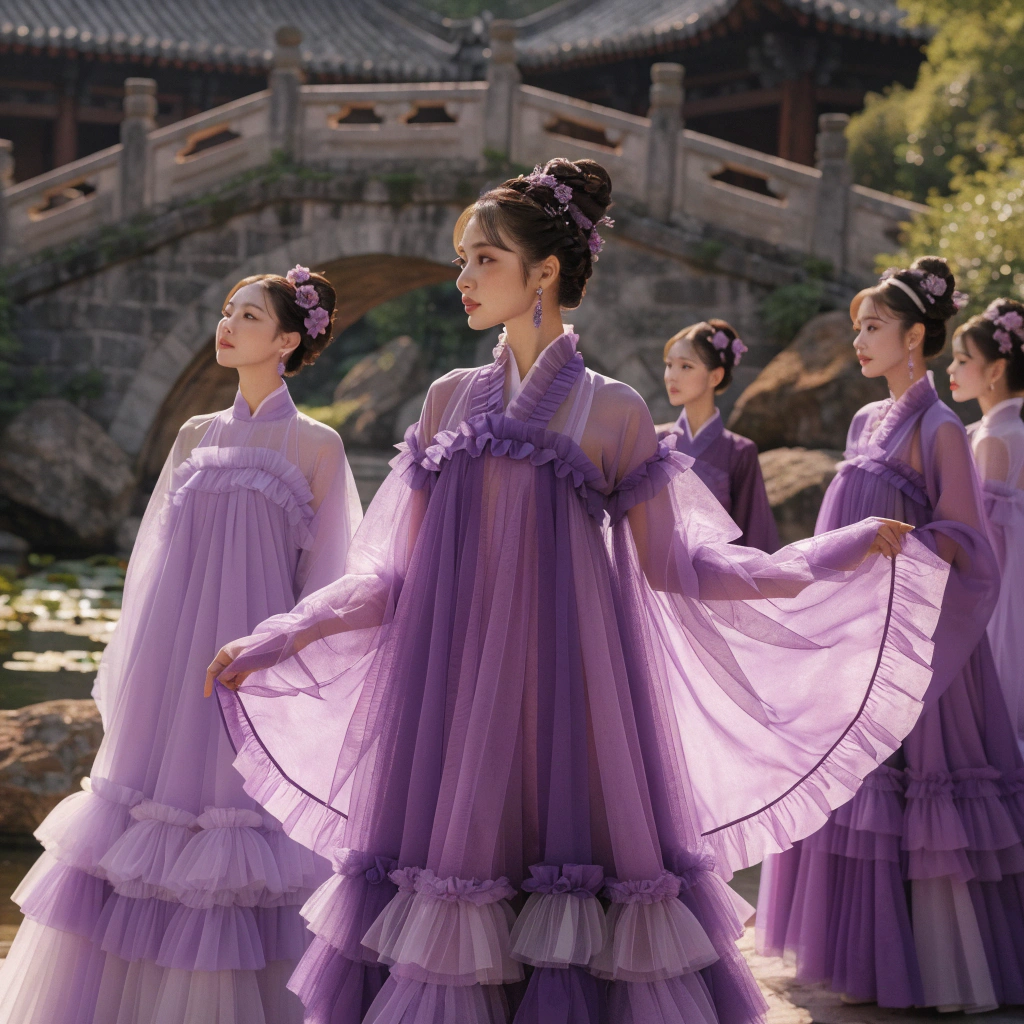
Beautiful Clothes in China
China has a very old style of clothes. People call it Hanfu. Hanfu is beautiful and very long. It has many colors like red, blue, and white. Today, many young people in China wear Hanfu. They wear it in parks and at schools.
Hanfu is different from the Qipao. It is very loose. It has long sleeves. People like Hanfu because it is part of Chinese history. They feel happy when they wear these clothes. It is a special tradition for the Han people.
Gramática destacada
Patrón: Present Simple (to be)
"Hanfu is beautiful and very long."
We use 'is' for singular subjects to describe things. It shows a fact or a state.
Patrón: Present Simple (regular verbs)
"They wear it in parks and at schools."
We use the base form of the verb for 'they' to talk about habits or things people do often.
Pon a prueba tu comprensión
10 preguntas · A1 Principiante · 1 vista previa gratis
Pon a prueba lo que aprendiste en este artículo. ¡Responde todas las preguntas para ganar XP!
What is Hanfu?
¿Quieres terminar el quiz?
9 preguntas más te esperan. ¡Regístrate gratis para desbloquear el quiz completo y ganar XP!
Regístrate gratis¿Ya tienes cuenta? Acceder
Desglose de preguntas
What is Hanfu?
Tu respuesta:
Respuesta correcta: A style of clothes
Hanfu is only for old people.
Tu respuesta:
Respuesta correcta: Falso
What does 'loose' mean?
Tu respuesta:
Respuesta correcta: Not tight; has space
Hanfu has many _____ like red, blue, and white.
Tu respuesta:
Respuesta correcta: colors
The Return of Hanfu: China's Traditional Fashion
Many people think the Qipao is the only traditional dress in China. However, another style is becoming very popular today. It is called Hanfu. Hanfu is the traditional clothing of the Han people. It is much older than the Qipao.
In the past, people wore Hanfu for thousands of years. It has long robes and wide sleeves. In the 17th century, people stopped wearing it. But now, the style is back. Today, young people wear Hanfu in big cities like Beijing and Shanghai. They wear it because it is beautiful and they are proud of their history.
Hanfu is different from modern clothes. It is more colorful and the materials are very soft. Some people wear it for festivals, but others wear it to go to school or work. It is more than just fashion. It helps people feel connected to their culture. Now, there are many Hanfu clubs and shops in China. It is an exciting time for traditional fashion.
Gramática destacada
Patrón: Comparatives
"It is much older than the Qipao."
We use the comparative form to compare two things. For short adjectives, we add '-er' and use the word 'than'.
Patrón: Past Simple
"In the past, people wore Hanfu for thousands of years."
The past simple is used to talk about finished actions in the past. 'Wore' is the irregular past tense of the verb 'wear'.
Pon a prueba tu comprensión
11 preguntas · A2 Básico · 1 vista previa gratis
Pon a prueba lo que aprendiste en este artículo. ¡Responde todas las preguntas para ganar XP!
What is Hanfu?
¿Quieres terminar el quiz?
10 preguntas más te esperan. ¡Regístrate gratis para desbloquear el quiz completo y ganar XP!
Regístrate gratis¿Ya tienes cuenta? Acceder
Desglose de preguntas
What is Hanfu?
Tu respuesta:
Respuesta correcta: Traditional clothing
Hanfu is a newer style than the Qipao.
Tu respuesta:
Respuesta correcta: Falso
What does 'popular' mean?
Tu respuesta:
Respuesta correcta: Liked by many people
Young people wear Hanfu because they are _____ of their history.
Tu respuesta:
Respuesta correcta: proud
Where do young people wear Hanfu today?
Tu respuesta:
Respuesta correcta: In big cities like Beijing
Hanfu: The Return of China's Traditional Fashion
In recent years, a beautiful fashion trend has returned to the busy streets of China. While many people around the world have seen the Qipao, which is a famous tight dress, a much older style has become popular again. This style is called Hanfu.
Hanfu refers to the traditional clothing that was worn by the Han ethnic group for more than three thousand years. It was the main style of dress from the era of the Yellow Emperor until the end of the Ming Dynasty in the 17th century. Unlike the Qipao, which has different origins, Hanfu is characterized by long, flowing robes and collars that cross over. These clothes are often made of soft silk and are decorated with patterns that have been used for centuries.
The movement to bring back Hanfu started about twenty years ago, but the interest has grown significantly in the last decade. Today, thousands of young people can be seen wearing these traditional outfits in public places like parks and museums. For these enthusiasts, Hanfu is not just a costume for a party. It is a meaningful way to connect with their long history and express their cultural identity.
Social media has played a very important role in this cultural renaissance. Beautiful photos of people in Hanfu are shared by millions of users every day, which has inspired others to try the style. Because of this high demand, many successful businesses have been created to design and sell these garments. Although Hanfu was almost forgotten for a long time, it has been rediscovered by a new generation that is proud of its heritage. This trend shows that traditional culture can still be relevant in the modern world.
Gramática destacada
Patrón: Present Perfect
"The interest has grown significantly in the last decade."
This pattern uses 'has/have' plus the past participle. It describes an action that started in the past and continues to be important or true in the present.
Patrón: Relative Clauses
"the Qipao, which is a famous tight dress"
A relative clause uses words like 'which' or 'that' to give more information about a noun. In this sentence, it explains what the Qipao is without starting a new sentence.
Pon a prueba tu comprensión
11 preguntas · B1 Intermedio · 1 vista previa gratis
Pon a prueba lo que aprendiste en este artículo. ¡Responde todas las preguntas para ganar XP!
What is the main physical feature of Hanfu mentioned in the text?
¿Quieres terminar el quiz?
10 preguntas más te esperan. ¡Regístrate gratis para desbloquear el quiz completo y ganar XP!
Regístrate gratis¿Ya tienes cuenta? Acceder
Desglose de preguntas
What is the main physical feature of Hanfu mentioned in the text?
Tu respuesta:
Respuesta correcta: It has long, flowing robes and crossed collars.
Hanfu was the main style of dress for the Han people for over 3,000 years.
Tu respuesta:
Respuesta correcta: Verdadero
What is the meaning of 'garments'?
Tu respuesta:
Respuesta correcta: Pieces of clothing
Hanfu is often made of soft _____, which is a traditional material.
Tu respuesta:
Respuesta correcta: silk
Why do young people wear Hanfu today?
Tu respuesta:
Respuesta correcta: To connect with their history and cultural identity.
The Hanfu Renaissance: Reclaiming Ancient Identity in Modern China
In recent years, the streets of major Chinese cities have witnessed a remarkable cultural phenomenon: the resurgence of Hanfu. While many international observers might associate Chinese fashion primarily with the Qipao, this form-fitting dress actually has Manchu origins. In contrast, Hanfu represents the traditional attire of the Han ethnic group, which dominated Chinese history for over three millennia. This movement is not merely a fashion trend; it is a profound exploration of cultural identity and historical pride among the younger generation.
The revival began in the early 2000s, driven by enthusiasts who felt that a significant part of their heritage had been overlooked. Unlike the modern Qipao, Hanfu is characterized by its flowing robes, wide sleeves, and crossed collars. These garments are often layered, creating an elegant silhouette that reflects ancient aesthetic values. Furthermore, the resurgence has been significantly accelerated by social media platforms, where 'Hanfu influencers' showcase elaborate outfits in historical settings, blending traditional styles with contemporary life.
However, the movement is not without its complexities. Some critics argue that the focus on Hanfu might unintentionally exclude other ethnic minorities within China. Nevertheless, proponents suggest that celebrating Hanfu is a way to reconnect with a lost aesthetic and philosophical past. For many young people, wearing these clothes is an act of reclaiming their history. They are not simply dressing up; they are participating in a cultural renaissance that seeks to integrate ancient wisdom into a modern context.
As this trend continues to evolve, it has also sparked a booming industry. From high-end silk robes to affordable daily wear, the market for Hanfu has expanded rapidly. It is now common to see students or office workers incorporating Hanfu elements into their everyday wardrobes. Ultimately, the Hanfu renaissance illustrates how a society can look backward to move forward, finding new meaning in the threads of the past.
Gramática destacada
Patrón: Passive Voice
"the resurgence has been significantly accelerated by social media platforms"
The passive voice is used here to emphasize the action (the acceleration of the trend) and its cause (social media) rather than the person doing it. It is formed using 'has been' + the past participle.
Patrón: Relative Clauses
"enthusiasts who felt that a significant part of their heritage had been overlooked"
The relative pronoun 'who' introduces a defining relative clause that provides essential information about the 'enthusiasts'. This structure is common in B2 writing to combine ideas smoothly.
Patrón: Modal Verbs for Possibility
"While many international observers might associate Chinese fashion primarily with the Qipao"
The modal verb 'might' is used to express a possibility or a common assumption. It suggests that while the association exists, it may not be the complete picture.
Pon a prueba tu comprensión
11 preguntas · B2 Intermedio alto · 1 vista previa gratis
Pon a prueba lo que aprendiste en este artículo. ¡Responde todas las preguntas para ganar XP!
What is the primary difference mentioned between the Qipao and Hanfu?
¿Quieres terminar el quiz?
10 preguntas más te esperan. ¡Regístrate gratis para desbloquear el quiz completo y ganar XP!
Regístrate gratis¿Ya tienes cuenta? Acceder
Desglose de preguntas
What is the primary difference mentioned between the Qipao and Hanfu?
Tu respuesta:
Respuesta correcta: The Qipao has Manchu origins, while Hanfu is the traditional dress of the Han group
The Hanfu revival is driven solely by the fashion industry without any cultural motivation.
Tu respuesta:
Respuesta correcta: Falso
What does 'contemporary' mean in the context of the article?
Tu respuesta:
Respuesta correcta: Relating to the current time
This movement is not merely a fashion _____; it is a profound exploration of cultural identity.
Tu respuesta:
Respuesta correcta: trend
How has social media influenced the Hanfu movement?
Tu respuesta:
Respuesta correcta: By allowing influencers to showcase outfits and blend styles
El Hanfu: Un Renacimiento Cultural y la Reafirmación de la Identidad China
Mientras que a menudo se asocia la moda china con el ceñido Qipao, una tradición mucho más antigua y de significado profundo ha regresado al primer plano: el Hanfu. Lejos de ser una mera tendencia pasajera, este resurgimiento representa un movimiento cultural complejo que busca reconectar con las raíces de la identidad Han, el grupo étnico mayoritario en China.
El Hanfu, cuyo nombre se traduce literalmente como "vestimenta Han", fue el atuendo predominante durante más de tres milenios, desde la era del Emperador Amarillo hasta el final de la dinastía Ming en el siglo XVII. Sus características distintivas –amplias túnicas, cuellos cruzados (izquierda sobre derecha), mangas largas y holgadas, y faldas fluidas– lo distinguen marcadamente del Qipao, cuya génesis se sitúa en la dinastía Qing y tiene orígenes manchúes. Es precisamente en esta diferencia de procedencia donde radica gran parte de su relevancia contemporánea, pues el Hanfu simboliza la estética y los valores de una civilización milenaria que, por diversas vicisitudes históricas, vio su indumentaria tradicional relegada al olvido.
El movimiento Hanfu, que cobró impulso a principios del siglo XXI, no es solo una cuestión de vestimenta; es, en esencia, una manifestación de orgullo cultural y un intento consciente de recuperar un patrimonio inmaterial. Quienes lo visten, en su mayoría jóvenes, no solo lo hacen por estética, sino también como una declaración de principios, una forma de expresar su identidad y su aprecio por la historia y la filosofía chinas. Se les ve en festivales tradicionales, ceremonias de té, o incluso en la vida cotidiana, transformando las calles de las ciudades chinas en lienzos vivos de historia y tradición.
La revitalización del Hanfu, sin embargo, no está exenta de desafíos y debates. Algunos críticos argumentan que su adopción masiva podría diluir su autenticidad o que, al centrarse en la etnia Han, podría inadvertidamente marginar a otras minorías étnicas de China. Además, la cuestión de la "autenticidad" es objeto de constante discusión, pues la moda Hanfu actual a menudo fusiona elementos históricos con sensibilidades modernas, lo que plantea interrogantes sobre hasta qué punto esta recreación es fiel a las prendas originales o si es una interpretación contemporánea.
No obstante, lo que resulta innegable es el impacto cultural del Hanfu. Ha catalizado un renovado interés en la historia, la literatura, la música y las artes tradicionales chinas. Sirve como un puente entre el pasado y el presente, permitiendo a las nuevas generaciones explorar y reinterpretar su herencia cultural de una manera tangible y visualmente impactante. Más que una simple prenda, el Hanfu es un símbolo potente de autoafirmación y un vibrante testimonio de la resiliencia de la cultura china en un mundo globalizado. Es, en definitiva, un fenómeno que trasciende la moda para convertirse en un pilar fundamental de la identidad cultural moderna de China.
Gramática destacada
Patrón: Nominalización (Sustantivación de adjetivos o verbos)
"Es precisamente en esta diferencia de procedencia donde radica gran parte de su relevancia contemporánea."
La nominalización consiste en transformar un adjetivo o verbo en un sustantivo, a menudo para dar mayor formalidad o concisión al texto. Aquí, 'relevancia' es la forma nominal del adjetivo 'relevante', y 'procedencia' del verbo 'proceder', lo cual dota a la frase de un tono más elevado y abstracto.
Patrón: Oraciones de relativo explicativas con "lo que"
"No obstante, lo que resulta innegable es el impacto cultural del Hanfu."
La estructura "lo que" + verbo se utiliza para referirse a una idea, una situación o una frase completa previamente mencionada, o para introducir un concepto abstracto. Funciona como un pronombre neutro que antecede a una oración de relativo con valor explicativo, enfatizando el contenido de la proposición.
Patrón: Inversión del sujeto y el verbo para énfasis
"De crucial importancia resulta que este movimiento ha catalizado un renovado interés."
La inversión del sujeto y el verbo, especialmente con adjetivos o frases preposicionales al inicio, se usa para enfatizar la información que precede al verbo. En este caso, "De crucial importancia" se coloca antes de "resulta" para destacar la relevancia de la afirmación, dotando a la frase de un estilo más formal y retórico.
Pon a prueba tu comprensión
12 preguntas · C1 Avanzado · 1 vista previa gratis
Pon a prueba lo que aprendiste en este artículo. ¡Responde todas las preguntas para ganar XP!
¿Cuál es la principal diferencia entre el Hanfu y el Qipao según el artículo?
¿Quieres terminar el quiz?
11 preguntas más te esperan. ¡Regístrate gratis para desbloquear el quiz completo y ganar XP!
Regístrate gratis¿Ya tienes cuenta? Acceder
Desglose de preguntas
¿Cuál es la principal diferencia entre el Hanfu y el Qipao según el artículo?
Tu respuesta:
Respuesta correcta: El Hanfu es de origen Han y el Qipao es de origen manchú.
El movimiento Hanfu es principalmente una moda estética sin un significado cultural profundo.
Tu respuesta:
Respuesta correcta: Falso
¿Qué significa "relegada" en el contexto del artículo?
Tu respuesta:
Respuesta correcta: Apartada o dejada en segundo plano
El Hanfu fue el atuendo __________ durante más de tres milenios en China.
Tu respuesta:
Respuesta correcta: predominante
¿Qué grupo demográfico es el principal impulsor del movimiento Hanfu?
Tu respuesta:
Respuesta correcta: Jóvenes chinos
Una crítica al movimiento Hanfu es que podría diluir la autenticidad de la vestimenta tradicional.
Tu respuesta:
Respuesta correcta: Verdadero
The Sartorial Reclamation: Hanfu and the Ontological Renaissance of Traditional Chinese Dress
The sartorial landscape of the People’s Republic of China has, in recent decades, undergone a metamorphosis so profound that it borders on the revolutionary. While the global imagination has long been captivated by the body-conscious silhouettes of the Qipao—a garment whose origins are inextricably linked to the Manchu-led Qing Dynasty—a more ancient and arguably more significant tradition has re-emerged from the shadows of historical obscurity. This is the Hanfu: the traditional attire of the Han ethnicity, which enjoyed a hegemony lasting over three millennia before its abrupt suppression in the 17th century. The current resurgence, termed the 'Hanfu Movement,' is not merely a whimsical flirtation with historical cosplay; it represents a sophisticated, grassroots endeavor to reclaim a cultural identity that was once thought to have been irrevocably subsumed by the tides of modernity and foreign imposition.
Should the observer peer beneath the aesthetic surface of this revival, they would find a complex tapestry of socio-political yearnings. The movement, spearheaded primarily by the Gen-Z and Millennial cohorts, seeks to navigate the precarious balance between a globalized future and an idealized past. It is imperative that this phenomenon be understood not as a monolithic retreat into isolationist nationalism, but as a nuanced search for ontological security. In an era where the homogenization of global fashion threatens to erase local idiosyncrasies, the act of donning flowing robes and crossed collars becomes a potent semiotic statement. It is a performance of 'Chineseness' that transcends the Western-centric paradigms of modernity, offering instead a vision of a future that is deeply rooted in the aesthetic and philosophical tenets of the Ming, Song, and Tang dynasties.
Historical records elucidate that Hanfu is characterized by its 'Y-shaped' collar, wrapped from left to right, and its voluminous sleeves, which stand in stark contrast to the structured tailoring of Western garments. These features were not merely stylistic but were imbued with Confucian symbolism, representing harmony between the wearer and the natural world. However, one must be cautious not to conflate the Hanfu movement with a simple desire for stagnant historical accuracy. The contemporary iteration of these garments often incorporates modern fabrics and conveniences, reflecting a living tradition rather than a vestigial relic. This synthesis has birthed a burgeoning 'Hanfu economy,' where high-end designers and mass-market retailers alike cater to a demographic eager to manifest their cultural pride through consumption. The juxtaposition of these ancient silhouettes against the backdrop of hyper-modern skyscrapers creates a visual dissonance that is uniquely evocative of the current Chinese zeitgeist. It is a testament to the enduring power of dress as a vehicle for identity, proving that even in the face of radical technological change, the threads of the past remain integral to the fabric of the present.
Gramática destacada
Patrón: Inversion with 'Should' in Conditionals
"Should the observer peer beneath the aesthetic surface of this revival, they would find a complex tapestry of socio-political yearnings."
This formal alternative to 'If' uses inversion to create a more academic or literary tone. It is formed by placing 'Should' at the beginning followed by the subject and the base form of the verb.
Patrón: The Subjunctive Mood after 'Imperative'
"It is imperative that this phenomenon be understood not as a monolithic retreat into isolationist nationalism."
The subjunctive 'be understood' is used after adjectives of urgency or importance (imperative, crucial, essential). This structure uses the base form of the verb regardless of the subject.
Patrón: Nominalization for Analytical Precision
"The juxtaposition of these ancient silhouettes against the backdrop of hyper-modern skyscrapers creates a visual dissonance."
Nominalization involves turning verbs or adjectives into nouns (e.g., 'juxtapose' to 'juxtaposition'). This is a hallmark of C2 writing, allowing the author to treat complex actions as abstract concepts.
Pon a prueba tu comprensión
12 preguntas · C2 Dominio · 1 vista previa gratis
Pon a prueba lo que aprendiste en este artículo. ¡Responde todas las preguntas para ganar XP!
What distinguishes Hanfu from the Qipao according to the text?
¿Quieres terminar el quiz?
11 preguntas más te esperan. ¡Regístrate gratis para desbloquear el quiz completo y ganar XP!
Regístrate gratis¿Ya tienes cuenta? Acceder
Desglose de preguntas
What distinguishes Hanfu from the Qipao according to the text?
Tu respuesta:
Respuesta correcta: Hanfu predates the Qipao and was the dominant style for three millennia.
The Hanfu movement is primarily a government-led initiative to promote nationalism.
Tu respuesta:
Respuesta correcta: Falso
What does the term 'ontological' refer to in the context of the article?
Tu respuesta:
Respuesta correcta: The nature of being and cultural identity.
The author argues that Hanfu is a living tradition rather than a _____ relic.
Tu respuesta:
Respuesta correcta: vestigial
Which demographic is noted as being the primary driver of the Hanfu revival?
Tu respuesta:
Respuesta correcta: Gen-Z and Millennial cohorts
Modern Hanfu often incorporates contemporary materials and fabrics.
Tu respuesta:
Respuesta correcta: Verdadero

