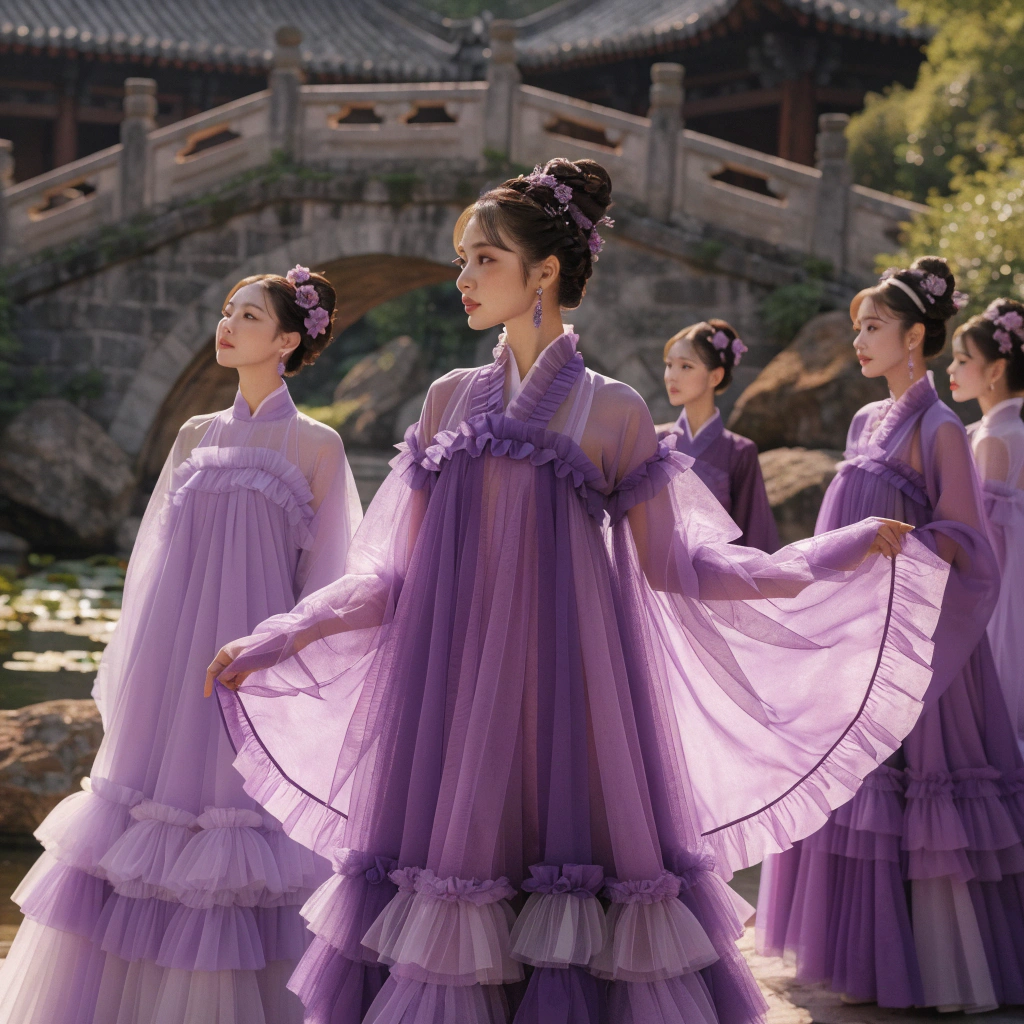
Beautiful Clothes in China
China has a very old style of clothes. People call it Hanfu. Hanfu is beautiful and very long. It has many colors like red, blue, and white. Today, many young people in China wear Hanfu. They wear it in parks and at schools.
Hanfu is different from the Qipao. It is very loose. It has long sleeves. People like Hanfu because it is part of Chinese history. They feel happy when they wear these clothes. It is a special tradition for the Han people.
문법 스포트라이트
패턴: Present Simple (to be)
"Hanfu is beautiful and very long."
We use 'is' for singular subjects to describe things. It shows a fact or a state.
패턴: Present Simple (regular verbs)
"They wear it in parks and at schools."
We use the base form of the verb for 'they' to talk about habits or things people do often.
이해도를 테스트하세요
10 질문 · A1 초급 · 무료 미리보기 1회
이 기사에서 배운 내용을 테스트하세요. 모든 질문에 답하여 XP를 획득하세요!
What is Hanfu?
문제별 결과
What is Hanfu?
내 답변:
정답: A style of clothes
Hanfu is only for old people.
내 답변:
정답: 거짓
What does 'loose' mean?
내 답변:
정답: Not tight; has space
Hanfu has many _____ like red, blue, and white.
내 답변:
정답: colors
The Return of Hanfu: China's Traditional Fashion
Many people think the Qipao is the only traditional dress in China. However, another style is becoming very popular today. It is called Hanfu. Hanfu is the traditional clothing of the Han people. It is much older than the Qipao.
In the past, people wore Hanfu for thousands of years. It has long robes and wide sleeves. In the 17th century, people stopped wearing it. But now, the style is back. Today, young people wear Hanfu in big cities like Beijing and Shanghai. They wear it because it is beautiful and they are proud of their history.
Hanfu is different from modern clothes. It is more colorful and the materials are very soft. Some people wear it for festivals, but others wear it to go to school or work. It is more than just fashion. It helps people feel connected to their culture. Now, there are many Hanfu clubs and shops in China. It is an exciting time for traditional fashion.
문법 스포트라이트
패턴: Comparatives
"It is much older than the Qipao."
We use the comparative form to compare two things. For short adjectives, we add '-er' and use the word 'than'.
패턴: Past Simple
"In the past, people wore Hanfu for thousands of years."
The past simple is used to talk about finished actions in the past. 'Wore' is the irregular past tense of the verb 'wear'.
이해도를 테스트하세요
11 질문 · A2 초등급 · 무료 미리보기 1회
이 기사에서 배운 내용을 테스트하세요. 모든 질문에 답하여 XP를 획득하세요!
What is Hanfu?
문제별 결과
What is Hanfu?
내 답변:
정답: Traditional clothing
Hanfu is a newer style than the Qipao.
내 답변:
정답: 거짓
What does 'popular' mean?
내 답변:
정답: Liked by many people
Young people wear Hanfu because they are _____ of their history.
내 답변:
정답: proud
Where do young people wear Hanfu today?
내 답변:
정답: In big cities like Beijing
Hanfu: The Return of China's Traditional Fashion
In recent years, a beautiful fashion trend has returned to the busy streets of China. While many people around the world have seen the Qipao, which is a famous tight dress, a much older style has become popular again. This style is called Hanfu.
Hanfu refers to the traditional clothing that was worn by the Han ethnic group for more than three thousand years. It was the main style of dress from the era of the Yellow Emperor until the end of the Ming Dynasty in the 17th century. Unlike the Qipao, which has different origins, Hanfu is characterized by long, flowing robes and collars that cross over. These clothes are often made of soft silk and are decorated with patterns that have been used for centuries.
The movement to bring back Hanfu started about twenty years ago, but the interest has grown significantly in the last decade. Today, thousands of young people can be seen wearing these traditional outfits in public places like parks and museums. For these enthusiasts, Hanfu is not just a costume for a party. It is a meaningful way to connect with their long history and express their cultural identity.
Social media has played a very important role in this cultural renaissance. Beautiful photos of people in Hanfu are shared by millions of users every day, which has inspired others to try the style. Because of this high demand, many successful businesses have been created to design and sell these garments. Although Hanfu was almost forgotten for a long time, it has been rediscovered by a new generation that is proud of its heritage. This trend shows that traditional culture can still be relevant in the modern world.
문법 스포트라이트
패턴: Present Perfect
"The interest has grown significantly in the last decade."
This pattern uses 'has/have' plus the past participle. It describes an action that started in the past and continues to be important or true in the present.
패턴: Relative Clauses
"the Qipao, which is a famous tight dress"
A relative clause uses words like 'which' or 'that' to give more information about a noun. In this sentence, it explains what the Qipao is without starting a new sentence.
이해도를 테스트하세요
11 질문 · B1 중급 · 무료 미리보기 1회
이 기사에서 배운 내용을 테스트하세요. 모든 질문에 답하여 XP를 획득하세요!
What is the main physical feature of Hanfu mentioned in the text?
문제별 결과
What is the main physical feature of Hanfu mentioned in the text?
내 답변:
정답: It has long, flowing robes and crossed collars.
Hanfu was the main style of dress for the Han people for over 3,000 years.
내 답변:
정답: 참
What is the meaning of 'garments'?
내 답변:
정답: Pieces of clothing
Hanfu is often made of soft _____, which is a traditional material.
내 답변:
정답: silk
Why do young people wear Hanfu today?
내 답변:
정답: To connect with their history and cultural identity.
The Hanfu Renaissance: Reclaiming Ancient Identity in Modern China
In recent years, the streets of major Chinese cities have witnessed a remarkable cultural phenomenon: the resurgence of Hanfu. While many international observers might associate Chinese fashion primarily with the Qipao, this form-fitting dress actually has Manchu origins. In contrast, Hanfu represents the traditional attire of the Han ethnic group, which dominated Chinese history for over three millennia. This movement is not merely a fashion trend; it is a profound exploration of cultural identity and historical pride among the younger generation.
The revival began in the early 2000s, driven by enthusiasts who felt that a significant part of their heritage had been overlooked. Unlike the modern Qipao, Hanfu is characterized by its flowing robes, wide sleeves, and crossed collars. These garments are often layered, creating an elegant silhouette that reflects ancient aesthetic values. Furthermore, the resurgence has been significantly accelerated by social media platforms, where 'Hanfu influencers' showcase elaborate outfits in historical settings, blending traditional styles with contemporary life.
However, the movement is not without its complexities. Some critics argue that the focus on Hanfu might unintentionally exclude other ethnic minorities within China. Nevertheless, proponents suggest that celebrating Hanfu is a way to reconnect with a lost aesthetic and philosophical past. For many young people, wearing these clothes is an act of reclaiming their history. They are not simply dressing up; they are participating in a cultural renaissance that seeks to integrate ancient wisdom into a modern context.
As this trend continues to evolve, it has also sparked a booming industry. From high-end silk robes to affordable daily wear, the market for Hanfu has expanded rapidly. It is now common to see students or office workers incorporating Hanfu elements into their everyday wardrobes. Ultimately, the Hanfu renaissance illustrates how a society can look backward to move forward, finding new meaning in the threads of the past.
문법 스포트라이트
패턴: Passive Voice
"the resurgence has been significantly accelerated by social media platforms"
The passive voice is used here to emphasize the action (the acceleration of the trend) and its cause (social media) rather than the person doing it. It is formed using 'has been' + the past participle.
패턴: Relative Clauses
"enthusiasts who felt that a significant part of their heritage had been overlooked"
The relative pronoun 'who' introduces a defining relative clause that provides essential information about the 'enthusiasts'. This structure is common in B2 writing to combine ideas smoothly.
패턴: Modal Verbs for Possibility
"While many international observers might associate Chinese fashion primarily with the Qipao"
The modal verb 'might' is used to express a possibility or a common assumption. It suggests that while the association exists, it may not be the complete picture.
이해도를 테스트하세요
11 질문 · B2 중상급 · 무료 미리보기 1회
이 기사에서 배운 내용을 테스트하세요. 모든 질문에 답하여 XP를 획득하세요!
What is the primary difference mentioned between the Qipao and Hanfu?
문제별 결과
What is the primary difference mentioned between the Qipao and Hanfu?
내 답변:
정답: The Qipao has Manchu origins, while Hanfu is the traditional dress of the Han group
The Hanfu revival is driven solely by the fashion industry without any cultural motivation.
내 답변:
정답: 거짓
What does 'contemporary' mean in the context of the article?
내 답변:
정답: Relating to the current time
This movement is not merely a fashion _____; it is a profound exploration of cultural identity.
내 답변:
정답: trend
How has social media influenced the Hanfu movement?
내 답변:
정답: By allowing influencers to showcase outfits and blend styles
The Hanfu Resurgence: Cultural Reclamation or Commodified Nostalgia?
For decades, the global imagination of Chinese fashion was dominated by the Qipao, a form-fitting garment with Manchu roots. Yet, in recent years, this narrative has been radically disrupted by the meteoric rise of Hanfu. Seldom has a sartorial shift in contemporary China been as evocative or as contentious as this resurgence of Han ethnic dress. Spanning three millennia of history, Hanfu represents a complex tapestry of cultural reclamation, often positioned as a more 'authentic' alternative to the Qing-era styles that preceded the modern age. It is not merely the aesthetic appeal of flowing robes and crossed collars that captivates the younger generation; rather, it is the underlying desire for a distinct cultural identity in an increasingly globalized world.
To many enthusiasts, donning Hanfu is an act of historical restoration, a way to bridge the chasm between the disparate vestiges of ancient dynasties and the hyper-modernity of the 21st century. The construction of Hanfu itself is steeped in symbolism; the crossed collars, for instance, are often interpreted as a representation of balance, while the flowing sleeves embody the Confucian ideal of grace and restraint. This philosophical depth provides a stark contrast to the utilitarian nature of Western-style clothing. However, this movement is not without its critics, who argue that the trend occasionally borders on anachronistic romanticism or, more significantly, a form of ethnocentric signaling.
The juxtaposition of these ancient silhouettes against the backdrop of glass-and-steel metropolises serves as a visual testament to a nation grappling with its heritage. As the burgeoning industry around Hanfu grows, reaching billions in market value, the line between genuine cultural appreciation and the commodification of heritage becomes increasingly blurred. Critics point out that the rapid commercialization of these garments often strips them of their ritualistic significance, reducing a complex social hierarchy of dress to a mere fashion statement or a social media aesthetic.
Furthermore, the hegemony of the Hanfu movement within the broader context of Chinese diversity raises nuanced questions about inclusivity. While the movement celebrates the quintessential beauty of Han culture, some scholars worry it might overshadow the rich sartorial traditions of China’s 55 other ethnic minorities. Despite these debates, the Hanfu renaissance remains a powerful paradigm of how a society can look backward to move forward, utilizing the threads of the past to weave a new sense of national belonging. Whether viewed as a profound reclamation of history or a transient trend fueled by consumerism, Hanfu has undeniably altered the landscape of Chinese identity.
문법 스포트라이트
패턴: Negative Inversion
"Seldom has a sartorial shift in contemporary China been as evocative or as contentious as this resurgence of Han ethnic dress."
When negative or restrictive adverbs (like seldom, rarely, never) start a sentence, the auxiliary verb moves before the subject for emphasis. This is common in formal and C1-level writing.
패턴: It-Cleft Sentence
"It is not merely the aesthetic appeal of flowing robes and crossed collars that captivates the younger generation."
Cleft sentences use 'It + be + [focus] + relative clause' to emphasize a specific part of the sentence. Here, it emphasizes that the 'desire for identity' is more important than the 'aesthetic appeal'.
패턴: Nominalisation
"The rapid commercialization of these garments often strips them of their ritualistic significance."
Nominalisation is the use of a noun phrase ('rapid commercialization') instead of a verb ('commercialize quickly'). It makes the writing more objective, formal, and concise.
이해도를 테스트하세요
12 질문 · C1 고급 · 무료 미리보기 1회
이 기사에서 배운 내용을 테스트하세요. 모든 질문에 답하여 XP를 획득하세요!
What is the primary motivation for the Hanfu movement among the younger generation according to the text?
문제별 결과
What is the primary motivation for the Hanfu movement among the younger generation according to the text?
내 답변:
정답: A desire for a distinct cultural identity in a globalized world
The author suggests that the Hanfu movement is universally praised without any controversy.
내 답변:
정답: 거짓
What does 'anachronistic' mean in the context of the article?
내 답변:
정답: Belonging to a different time period than the present
The _____ of ancient silhouettes against modern cities serves as a visual testament to China's heritage.
내 답변:
정답: juxtaposition
What concern do critics have regarding the commercialization of Hanfu?
내 답변:
정답: It removes the clothing's philosophical and ritualistic meaning
The article states that Hanfu was used for three millennia until the end of the Ming Dynasty.
내 답변:
정답: 참
한푸(漢服)의 귀환: 복식의 재발견과 문화적 정체성의 재구성
중국 패션의 대명사로 각인된 치파오(旗袍)의 그늘에 가려져 있던 ‘한푸(漢服)’가 21세기 문화적 르네상스의 중심부로 급부상하고 있다. 치파오가 만주족의 복식에서 기원하여 근대화 과정을 거친 산물이라면, 한푸는 황제 시기부터 명나라 말기에 이르기까지 약 3,000년 동안 한족이 향유해 온 전통 복식 체계를 통칭한다. 최근 중국의 젊은 세대를 중심으로 확산되고 있는 ‘한푸 운동’은 단순한 복고풍의 유행을 넘어, 서구화된 현대 사회 속에서 잃어버린 민족적 자긍심과 주체적 정체성을 회복하려는 고도의 심리적 발로라 할 수 있다.
한푸의 구조적 특징은 치파오의 신체 밀착형 실루엣과는 궤를 달리한다. 넉넉한 소매와 왼쪽 깃을 오른쪽으로 여미는 교령우임(交領右衽), 그리고 허리띠로 고정하는 형태는 유교적 가치관이 투영된 절제의 미학을 보여준다. 이러한 복식의 부활은 과거의 유물을 단순히 복제하는 데 그치지 않고, 현대적 감각으로 재해석되어 일상 속으로 침투하고 있는바, 이는 전통의 현대적 변용이라는 측면에서 시사하는 바가 크다. 특히 소셜 미디어를 매개로 한 시각적 서사의 확산은 한푸를 하나의 문화적 아이콘으로 공고히 하는 데 결정적인 역할을 수행하였다.
학계에서는 이러한 현상을 에릭 홉스봄이 제기한 ‘발명된 전통(Invented Tradition)’의 관점에서 분석하기도 한다. 즉, 역사적 사실에 근거하면서도 현대적 필요에 의해 선택적으로 재구성된 전통이라는 것이다. 한푸 운동은 민족주의적 담론과 결합하여 대내적으로는 결속력을 강화하고, 대외적으로는 중국의 문화적 영향력, 즉 소프트 파워를 과시하는 수단으로 활용되기도 한다. 그러나 이러한 움직임이 타 문화권과의 배타적 경계를 설정하거나 역사적 왜곡으로 비화될 가능성에 대해서는 비판적 성찰이 요구되는 시점이다.
결론적으로 한푸의 르네상스는 복식이라는 가시적 매체를 통해 발현되는 정체성의 정치학이라 할 수 있다. 그것은 과거로의 무분별한 회귀가 아니라, 급변하는 글로벌 질서 속에서 '나'라는 존재의 뿌리를 확인하고자 하는 실존적 몸부림에 다름 아니다. 전통 복식이 박물관의 박제된 유물에서 벗어나 거리의 살아있는 문화로 호흡할 때, 비로소 진정한 의미의 문화적 연속성이 확보될 수 있을 것이다. 앞으로 한푸가 어떠한 층위의 담론을 형성하며 진화해 나갈지 귀추가 주목된다.
문법 스포트라이트
패턴: -는바
"일상 속으로 침투하고 있는바, 이는 전통의 현대적 변용이라는 측면에서 시사하는 바가 크다."
앞의 사실이 뒤의 사실에 대한 근거, 상황, 배경이 됨을 나타내는 연결 어미로, 주로 격식적인 문어체에서 사용된다.
패턴: -거니와
"한푸는 심미적 가치를 지니거니와, 역사적 정통성을 대변한다."
앞의 사실을 인정하면서 그에 더하여 뒤의 사실을 덧붙일 때 사용하는 연결 어미이다.
패턴: -에 다름 아니다
"존재의 뿌리를 확인하고자 하는 실존적 몸부림에 다름 아니다."
‘결국 ~와 같다’ 또는 ‘~인 것이나 마찬가지다’라는 의미로, 대상을 강조하여 정의할 때 사용한다.
이해도를 테스트하세요
12 질문 · C2 마스터 · 무료 미리보기 1회
이 기사에서 배운 내용을 테스트하세요. 모든 질문에 답하여 XP를 획득하세요!
본문에서 설명하는 한푸와 치파오의 가장 큰 차이점은 무엇입니까?
문제별 결과
본문에서 설명하는 한푸와 치파오의 가장 큰 차이점은 무엇입니까?
내 답변:
정답: 한푸는 넓은 소매와 교령우임이 특징이며, 치파오는 신체 밀착형 구조를 가진다.
필자는 한푸 운동을 단순한 유행이 아닌 정체성 회복의 과정으로 보고 있다.
내 답변:
정답: 참
'비화되다'의 문맥적 의미와 가장 가까운 것은?
내 답변:
정답: 사건이 확대되어 번지다
한푸의 부활은 과거의 유물을 단순히 복제하는 데 그치지 않고 현대적 감각으로 _____되어 일상으로 스며들고 있다.
내 답변:
정답: 재해석
학계에서 한푸 현상을 '발명된 전통'의 관점에서 분석하는 이유는 무엇입니까?
내 답변:
정답: 현대적 필요에 의해 과거의 전통이 선택적으로 재구성되었기 때문에
필자는 한푸 운동이 타 문화권에 대해 항상 개방적인 태도를 유지하고 있다고 주장한다.
내 답변:
정답: 거짓

