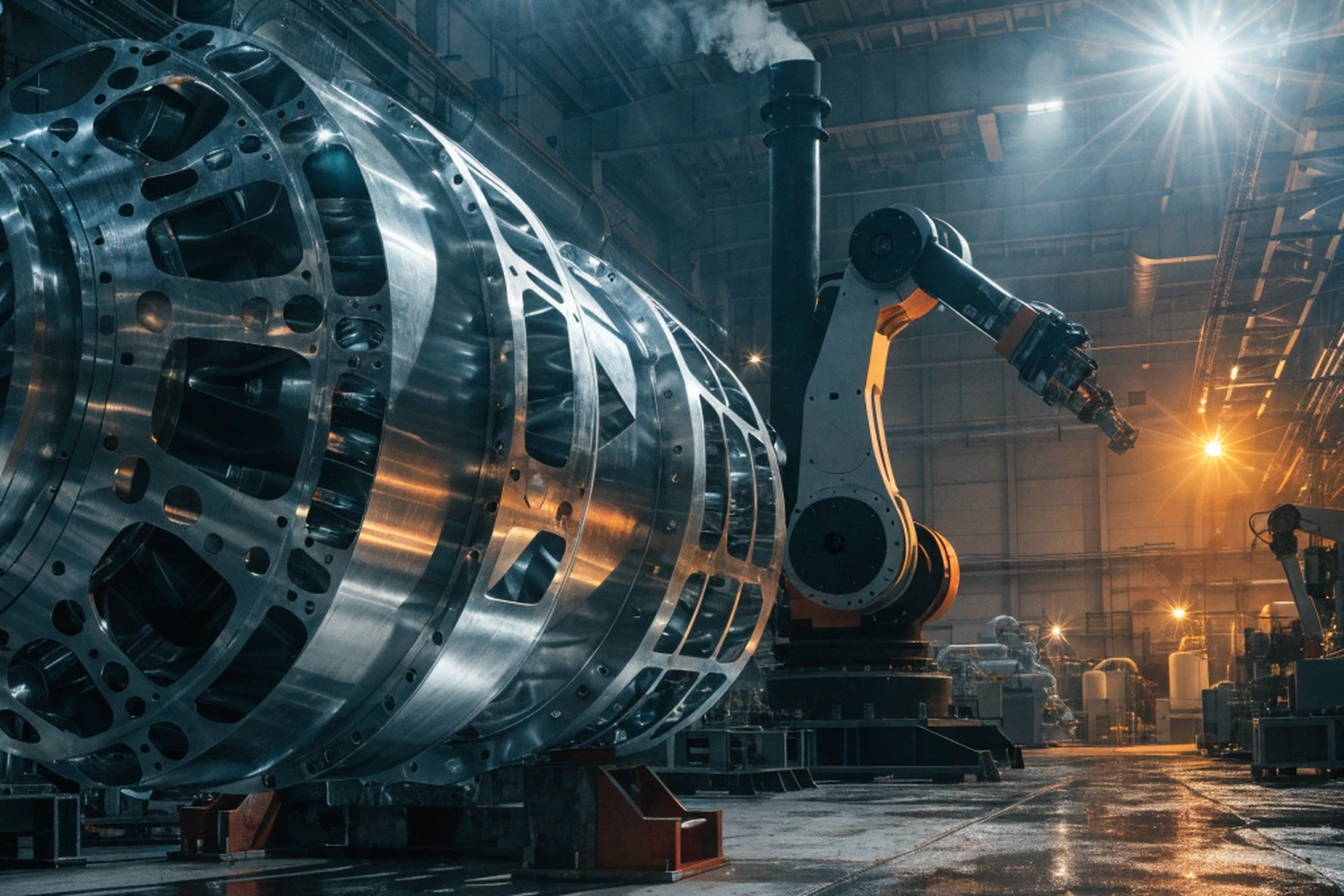
Turkey: A Country That Makes Cars
Turkey is a big country for cars. It has many big factories. These factories make cars, vans, and buses. It is a top country in Europe for making buses.
Many famous companies have factories in Turkey. A lot of people work in these factories. They build the cars every day. The cars are good quality and famous around the world.
Turkey sells these cars to many countries. This is a very important business for the country. It helps the economy of Turkey grow and provides many jobs.
Gramática destacada
Patrón: Presente Simple (La 's' de la tercera persona)
"It helps the economy of Turkey grow."
Usamos el presente simple para hechos. Para 'he', 'she' e 'it' (él, ella, eso), añadimos '-s' al final del verbo. Por ejemplo, 'I help' (yo ayudo) pero 'It helps' (eso ayuda).
Patrón: Sustantivos Plurales
"These factories make cars, vans, and buses."
Para hablar de más de una cosa, normalmente añadimos '-s' al final del sustantivo. Por ejemplo, un 'car' (coche) se convierte en muchos 'cars' (coches).
Pon a prueba tu comprensión
10 preguntas · A1 Principiante · 1 vista previa gratis
Pon a prueba lo que aprendiste en este artículo. ¡Responde todas las preguntas para ganar XP!
¿Qué fabrica Turquía en sus factorías?
¿Quieres terminar el quiz?
9 preguntas más te esperan. ¡Regístrate gratis para desbloquear el quiz completo y ganar XP!
Regístrate gratis¿Ya tienes cuenta? Acceder
Desglose de preguntas
¿Qué fabrica Turquía en sus factorías?
Tu respuesta:
Respuesta correcta: Coches, furgonetas y autobuses
El negocio de los coches no es importante para Turquía.
Tu respuesta:
Respuesta correcta: Falso
¿Qué significa 'sells'?
Tu respuesta:
Respuesta correcta: Recibir dinero por algo
Mucha ______ trabaja en estas fábricas.
Tu respuesta:
Respuesta correcta: people
Turkey: A Giant Factory for Cars
Turkey is famous for its history and beaches, but it is also a giant factory for cars. In the mid-20th century, the country started its automotive journey with the 'Anadol'. This was Turkey's first domestic car. It was a simple start, but the people worked hard to learn engineering. Today, the industry is very different and much bigger. Now, Turkey is one of the top 15 vehicle producers in the world. It is also the largest maker of commercial vehicles, like buses and trucks, in Europe.
Big global companies like Ford and Fiat work in Turkey because the engineers are talented and the location is perfect. The automotive industry helps the Turkish economy grow. It provides important jobs for thousands of people. The industry is stronger now than it was in the past. Turkey exports millions of cars to many countries around the world. Recently, Turkey began making its own electric cars too. This shows that Turkey is a modern and successful power in the automotive world.
Gramática destacada
Patrón: Comparativos (er/more + than)
"The industry is stronger now than it was in the past."
Usamos los comparativos para comparar dos cosas. Agregamos '-er' a los adjetivos cortos (strong -> stronger) o usamos 'more' para los adjetivos largos para mostrar una diferencia.
Patrón: Pasado Simple
"In the mid-20th century, the country started its automotive journey with the 'Anadol'."
Usamos el pasado simple para hablar de acciones que ya terminaron. Para los verbos regulares, usualmente agregamos '-ed' al final del verbo (start -> started).
Pon a prueba tu comprensión
11 preguntas · A2 Básico · 1 vista previa gratis
Pon a prueba lo que aprendiste en este artículo. ¡Responde todas las preguntas para ganar XP!
¿Cuál fue el nombre del primer coche nacional de Turquía?
¿Quieres terminar el quiz?
10 preguntas más te esperan. ¡Regístrate gratis para desbloquear el quiz completo y ganar XP!
Regístrate gratis¿Ya tienes cuenta? Acceder
Desglose de preguntas
¿Cuál fue el nombre del primer coche nacional de Turquía?
Tu respuesta:
Respuesta correcta: El Anadol
Turquía es el mayor fabricante de vehículos comerciales de Europa.
Tu respuesta:
Respuesta correcta: Verdadero
¿Qué significa 'factory' (fábrica)?
Tu respuesta:
Respuesta correcta: Un edificio donde se hacen cosas
La industria automotriz ayuda a que la _____ turca crezca.
Tu respuesta:
Respuesta correcta: economy
¿Por qué las empresas globales eligen Turquía?
Tu respuesta:
Respuesta correcta: Por sus ingenieros talentosos y buena ubicación
Turkey: A Global Hub for Car Manufacturing
Turkey has established itself as a true giant in the global automotive industry. Over the last few decades, the country has consistently ranked among the top 15 vehicle producers in the world. In addition, it is frequently recognized as Europe’s largest manufacturer of commercial vehicles. This success story began in the mid-20th century with the production of the 'Anadol'. The Anadol, which was Turkey's first domestic car, helped create a culture of engineering and industrial discipline.
Since those early days, the sector has evolved into a sophisticated network. Many international companies have formed a partnership with Turkish firms. Giants like Ford, Fiat, Renault, and Toyota have invested billions of dollars in modern factories. These facilities are primarily located in cities such as Bursa and Kocaeli, which are near major ports. Consequently, vehicles that are manufactured in Turkey are easily exported to countries across Europe and the Middle East.
The industry is not just about assembling parts; it is also about design and innovation. Recently, Turkey has launched TOGG, a national project that focuses on electric vehicles. This ambitious move proves that Turkey has adapted to modern technology. With a skilled workforce and a strategic location between continents, Turkey continues to drive forward as a manufacturing powerhouse.
Gramática destacada
Patrón: Presente Perfecto Simple
"Turkey has established itself as a true giant in the global automotive industry."
Usamos el Presente Perfecto (has/have + participio pasado) para hablar de acciones que comenzaron en el pasado y continúan en el presente, o acciones recientes del pasado que tienen un resultado ahora. En este artículo, muestra el estado continuo de Turquía.
Patrón: Voz Pasiva
"Consequently, vehicles that are manufactured in Turkey are easily exported to countries across Europe."
La Voz Pasiva (be + participio pasado) se usa cuando queremos enfocarnos en la acción o el objeto (los vehículos) en lugar de quién realiza la acción. Es muy común en la escritura industrial y técnica.
Pon a prueba tu comprensión
11 preguntas · B1 Intermedio · 1 vista previa gratis
Pon a prueba lo que aprendiste en este artículo. ¡Responde todas las preguntas para ganar XP!
¿Qué era el 'Anadol'?
¿Quieres terminar el quiz?
10 preguntas más te esperan. ¡Regístrate gratis para desbloquear el quiz completo y ganar XP!
Regístrate gratis¿Ya tienes cuenta? Acceder
Desglose de preguntas
¿Qué era el 'Anadol'?
Tu respuesta:
Respuesta correcta: El primer coche nacional de Turquía
Turquía es considerada el mayor fabricante de vehículos comerciales de Europa.
Tu respuesta:
Respuesta correcta: Verdadero
¿Qué palabra significa 'enviar mercancías a otro país para su venta'?
Tu respuesta:
Respuesta correcta: Exportar
Grandes empresas internacionales han _____ miles de millones de dólares en fábricas turcas.
Tu respuesta:
Respuesta correcta: invested
Según el texto, ¿qué ciudades se mencionan como ubicaciones para las fábricas?
Tu respuesta:
Respuesta correcta: Bursa y Kocaeli
Turkey's Automotive Evolution: A Manufacturing Titan
Turkey has long been recognized as a physical and cultural bridge between East and West, yet its modern influence extends far beyond simple geography. In recent decades, the nation has successfully transformed itself into a formidable powerhouse within the global automotive industry. This impressive evolution is not merely a result of favorable economic policy but rather a testament to a deep-rooted culture of engineering and industrial discipline. Although the journey began modestly in the mid-20th century with the production of the 'Anadol,' Turkey’s first domestic passenger car, the sector has since matured into a sophisticated network of international partnerships and high-tech manufacturing capabilities.
One of the primary factors contributing to this enduring success is Turkey's strategic location. Situated at the crossroads of Europe, Asia, and the Middle East, the country offers manufacturers unique logistical advantages that reduce shipping times and costs. Consequently, major global brands such as Ford, Fiat, Toyota, and Renault have established significant production facilities in the region to serve multiple markets. These long-standing collaborations have allowed the Turkish workforce to acquire advanced technical skills, ensuring that the vehicles produced meet rigorous European safety and quality standards. In fact, Turkey frequently ranks among the top 15 vehicle producers worldwide and proudly holds the position of Europe’s largest manufacturer of commercial vehicles.
Furthermore, the industry is currently undergoing a significant shift towards sustainability and digital innovation. Recognizing the rapid global transition to electric mobility, Turkey has launched its own national electric vehicle project, known as TOGG. This ambitious initiative represents more than just a car; it symbolizes the country's determination to compete in the high-technology sector. By investing heavily in research and development, Turkey aims to reduce its dependency on foreign energy while simultaneously exporting high-value technology to international markets. The production of domestic batteries and software integration are key components of this strategy.
Despite these remarkable achievements, the sector faces inevitable challenges such as global supply chain disruptions and fluctuating economic conditions. However, the proven resilience of Turkish manufacturers suggests that they are well-equipped to navigate these obstacles. As the automotive landscape continues to evolve towards automation and green energy, Turkey remains poised to maintain its status as a vital hub for production and design. Ultimately, the country's commitment to quality and innovation ensures that its engines will keep running efficiently for years to come.
Gramática destacada
Patrón: Cláusulas de participio
"Situated at the crossroads of Europe, Asia, and the Middle East, the country offers manufacturers unique logistical advantages..."
Esta oración comienza con un participio pasado ('Situated') para dar información de fondo sobre el sujeto ('the country'). Esta es una estructura común de nivel B2+ utilizada para combinar oraciones y hacer la escritura más fluida y formal.
Patrón: Gerundios después de preposiciones
"By investing heavily in research and development, Turkey aims to reduce its dependency on foreign energy..."
Después de la preposición 'by' (que indica método o medio), el verbo debe estar en la forma -ing (gerundio). Aquí, 'by investing' explica *cómo* Turquía pretende alcanzar su objetivo.
Patrón: Frases nominales complejas
"...the sector has since matured into a sophisticated network of international partnerships and high-tech manufacturing capabilities."
La escritura académica a menudo utiliza frases nominales largas para condensar la información. Aquí, 'a sophisticated network...' actúa como un único objeto, modificado por múltiples adjetivos y frases preposicionales.
Pon a prueba tu comprensión
11 preguntas · B2 Intermedio alto · 1 vista previa gratis
Pon a prueba lo que aprendiste en este artículo. ¡Responde todas las preguntas para ganar XP!
Según el artículo, ¿por qué es significativo el 'Anadol'?
¿Quieres terminar el quiz?
10 preguntas más te esperan. ¡Regístrate gratis para desbloquear el quiz completo y ganar XP!
Regístrate gratis¿Ya tienes cuenta? Acceder
Desglose de preguntas
Según el artículo, ¿por qué es significativo el 'Anadol'?
Tu respuesta:
Respuesta correcta: Fue el primer coche de pasajeros de fabricación nacional de Turquía.
Actualmente, Turquía es el mayor productor de todo tipo de vehículos en Europa.
Tu respuesta:
Respuesta correcta: Falso
¿Qué significa la palabra 'rigorous' en el contexto de las normas de seguridad?
Tu respuesta:
Respuesta correcta: Extremadamente minucioso y estricto
La posición de Turquía entre Europa, Asia y Oriente Medio le da una ventaja ______.
Tu respuesta:
Respuesta correcta: strategic
¿Cuál es el objetivo principal de la iniciativa TOGG mencionada en el texto?
Tu respuesta:
Respuesta correcta: Competir en el sector tecnológico y reducir la dependencia energética.
The Anatolian Engine: Turkey’s Ascent as an Automotive Titan
Turkey has long stood at the crossroads of civilizations, acting as a physical and cultural bridge between East and West. However, in recent decades, it is not merely trade caravans or spices that traverse this Anatolian expanse, but sophisticated machinery and high-tech components. Rarely has a nation transformed its industrial landscape with such alacrity as Turkey, establishing itself as a formidable global titan in the automotive industry. Consistently ranking among the top 15 vehicle producers worldwide, it is frequently the case that Turkey holds the position of Europe’s largest commercial vehicle manufacturer. This robust sector, which currently accounts for a significant portion of the country's total exports, did not emerge overnight; rather, it is the culmination of decades of strategic planning, economic reforms, and unwavering industrial discipline.
It was in the mid-20th century that the journey truly began with the production of the 'Anadol', the country's first domestic mass-produced passenger vehicle. While modest by contemporary standards, the Anadol fostered a nascent culture of engineering and manufacturing competence that would prove indispensable in the years to follow. Little did observers at the time realize that this initial foray would blossom into a sophisticated network of global partnerships involving industry giants such as Ford, Fiat, Toyota, Hyundai, and Renault. Cities like Bursa, Kocaeli, and Sakarya have morphed into bustling industrial hubs, often referred to as the 'Detroit of Turkey', hosting massive production facilities that churn out thousands of units daily.
What makes the Turkish automotive sector particularly resilient is its deep integration into the European supply chain, solidified by the Customs Union agreement with the EU in 1996. The adherence to rigorous European standards has ensured that vehicles manufactured in Turkish plants are indistinguishable in quality from those assembled in Stuttgart or Turin. Consequently, global brands have increasingly relied on their Turkish operations not just for assembly, but for Research and Development (R&D). The shift from pure manufacturing to design and engineering is evident in the numerous R&D centers established by multinational corporations within the country.
Crucially, the industry is not solely reliant on foreign licensing and partnerships. The recent unveiling of TOGG, Turkey's indigenous electric vehicle, signals a significant paradigm shift. No longer content with merely assembling the designs of others, Turkey is asserting its autonomy in design, innovation, and intellectual property. Were the country to rely only on internal combustion engines, its future relevance in a green economy might be in question. However, by pivoting aggressively towards electrification and autonomous driving technologies, Turkish manufacturers are future-proofing their operations against the inevitable decline of fossil fuels.
Furthermore, the geographical advantage Turkey possesses cannot be overstated. Situated within easy reach of European, Middle Eastern, and Central Asian markets, the logistics of distribution are streamlined efficiently. It is this proximity that international investors find so alluring, reducing shipping times and costs significantly. Had Turkey not invested heavily in its ports and transportation infrastructure, this logistical advantage would have remained theoretical. Instead, the seamless flow of components inwards and finished vehicles outwards acts as the lifeblood of the economy.
Yet, challenges remain. Fluctuations in the global economy and local currency volatility pose periodic risks to production costs and domestic demand. Nevertheless, the adaptability of the Turkish workforce and the steadfast commitment of the government to industrial growth provide a buffer against such instability. What stands out most remarkably is the sector's ability to reinvent itself in the face of adversity. As the world transitions towards sustainable mobility, Turkey is poised not just to participate, but to lead. The roaring engines of the past are quieting down, replaced by the hum of electric motors, yet the drive for industrial excellence remains as potent as ever.
Gramática destacada
Patrón: Inversión con adverbiales negativos
"Little did observers at the time realize that this initial foray would blossom into a sophisticated network."
Cuando una oración comienza con un adverbio negativo (como 'Little', 'Rarely', 'Never'), el sujeto y el verbo auxiliar se invierten (intercambian) para añadir énfasis dramático y formalidad.
Patrón: Frases partidas (Cleft Sentences)
"It was in the mid-20th century that the journey truly began with the production of the 'Anadol'."
Las frases partidas o 'cleft sentences' (que comienzan con 'It was...' o 'It is...') se usan para centrar la atención en una parte específica de la oración, a menudo para aclarar exactamente cuándo, dónde o quién realizó una acción.
Patrón: Nominalización
"The adherence to rigorous European standards has ensured that vehicles manufactured in Turkish plants are indistinguishable in quality."
La nominalización consiste en convertir verbos (como 'adhere') en sustantivos ('adherence'). Esto crea un tono más formal y académico y permite que ideas complejas se presenten como el sujeto de una oración.
Pon a prueba tu comprensión
12 preguntas · C1 Avanzado · 1 vista previa gratis
Pon a prueba lo que aprendiste en este artículo. ¡Responde todas las preguntas para ganar XP!
¿Qué sugiere el autor sobre el coche 'Anadol'?
¿Quieres terminar el quiz?
11 preguntas más te esperan. ¡Regístrate gratis para desbloquear el quiz completo y ganar XP!
Regístrate gratis¿Ya tienes cuenta? Acceder
Desglose de preguntas
¿Qué sugiere el autor sobre el coche 'Anadol'?
Tu respuesta:
Respuesta correcta: Fomentó una cultura de ingeniería esencial en Turquía.
La industria automotriz de Turquía actualmente depende únicamente de los diseños de fabricación proporcionados por empresas extranjeras.
Tu respuesta:
Respuesta correcta: Falso
¿Qué definición se ajusta mejor a la palabra 'nascent' tal como se usa en el texto?
Tu respuesta:
Respuesta correcta: Que apenas comienza a existir
_____ se dieron cuenta los observadores en ese momento de que esta incursión inicial se convertiría en una red sofisticada.
Tu respuesta:
Respuesta correcta: Little
¿Por qué la ubicación geográfica de Turquía se describe como una ventaja?
Tu respuesta:
Respuesta correcta: Permite una fácil distribución a múltiples regiones importantes.
¿Qué significa 'paradigm' en la frase 'paradigm shift' (cambio de paradigma)?
Tu respuesta:
Respuesta correcta: Un ejemplo o patrón típico
The Anatolian Engine: Turkey’s Ascent as an Automotive Titan
The trajectory of Turkey’s automotive industry is nothing short of a masterclass in industrial metamorphosis. Situated at the crossroads of Europe and Asia, the nation has leveraged its geostrategic advantage to transform from a peripheral assembler into a veritable powerhouse of global manufacturing. While the mid-20th century witnessed the nascent steps of this journey with the 'Anadol'—the country's first domestic passenger vehicle—contemporary Turkey stands as a testament to the efficacy of sustained industrial policy and export-oriented growth strategies. It is no exaggeration to posit that the automotive sector has become the lynchpin of the Turkish economy, driving innovation and employment with equal vigour.
Historically, the sector’s evolution was predicated on import substitution, a model that sought to foster domestic production by restricting foreign competition. However, the liberalization of the economy in the 1980s precipitated a paradigm shift. Were it not for this pivotal transition towards integration with global markets, Turkey might have remained a closed loop of limited technological advancement. Instead, international giants such as Ford, Fiat, Renault, and Toyota found in Turkey not merely a market, but a sophisticated manufacturing hub characterized by a skilled workforce and high-quality standards. Consequently, Turkey has consistently ranked among the top global vehicle producers, frequently claiming the title of Europe’s leading manufacturer of commercial vehicles.
A critical analysis of this success reveals that it is not solely attributable to low labour costs, a common misconception regarding emerging markets. Rather, it is the depth of the supply chain and the proliferation of Research and Development (R&D) centres that distinguish the Turkish ecosystem. The supplier industry, once limited to basic components, now exports complex systems to the most demanding markets in the West. This sophisticated network ensures that value creation is not confined to final assembly but is distributed across a myriad of subsidiary industries. Furthermore, had the government not incentivized R&D through tax deductions and grants, the sector would likely have stagnated at the level of licensed production.
Furthermore, the logistical prowess of the region cannot be overstated. Proximity to the European market allows for 'Just-in-Time' delivery, a critical component of modern lean manufacturing. This geographical endowment, augmented by significant investment in ports and transportation infrastructure, renders Turkey an indispensable link in the global automotive value chain. Had the infrastructure remained underdeveloped, the sheer volume of exports—encompassing everything from nuts and bolts to fully assembled buses—would have been logistically unfeasible. The synthesis of location, infrastructure, and industrial capacity creates a virtuous cycle that attracts further foreign direct investment.
The narrative of Turkish automotive prowess has recently entered a new, more ambitious chapter with the introduction of TOGG (Türkiye'nin Otomobili Girişim Grubu). This initiative represents a departure from the traditional role of manufacturing foreign brands under licence. By focusing on electric and autonomous vehicles, TOGG embodies the nation's aspiration to secure technological sovereignty in a rapidly decarbonizing world. It is essential that this venture succeed, not merely for economic gain, but as a proof of concept for indigenous innovation. The TOGG project suggests that Turkey is no longer content with playing catch-up; it intends to leapfrog into the future of mobility.
Nevertheless, challenges remain. The industry stands on a precipice, facing the dual pressures of global supply chain disruptions and the urgent need for green transformation. The European Union’s Carbon Border Adjustment Mechanism poses a significant risk to exporters unless the carbon footprint of production is drastically reduced. Moreover, the ubiquity of software in modern vehicles demands a workforce proficient in coding and artificial intelligence, necessitating a reform in vocational training. Should the nation continue to navigate the complexities of the global market with the same dexterity it has shown in the past, its position as a global automotive hub is all but assured.
Gramática destacada
Patrón: Inversión con 'Were it not for' (De no ser por)
"Were it not for this pivotal transition towards integration with global markets, Turkey might have remained a closed loop..."
Esta es una forma elegante de expresar una idea condicional sin usar 'if'. Reemplaza a 'If it were not for...' y se usa para describir una situación hipotética en la que la ausencia de un factor cambiaría el resultado.
Patrón: Inversión con 'Had' (Si hubiera)
"Furthermore, had the government not incentivized R&D through tax deductions and grants, the sector would likely have stagnated..."
Esta es la forma invertida del Tercer Condicional ('If the government had not incentivized...'). Se usa en la escritura formal para hipotetizar sobre el pasado, sugiriendo que una acción pasada diferente habría llevado a un resultado diferente.
Patrón: Precisión académica con 'It is...'
"It is no exaggeration to posit that the automotive sector has become the lynchpin of the Turkish economy..."
En la escritura de nivel C2, a menudo se usan estructuras impersonales como 'It is no exaggeration to...' ('No es exagerado...') o 'It is reasonable to assume...' ('Es razonable suponer...') para presentar opiniones fuertes como si fueran observaciones objetivas. 'Posit' es un verbo formal que significa 'postular' o 'dar por sentado'.
Pon a prueba tu comprensión
12 preguntas · C2 Dominio · 1 vista previa gratis
Pon a prueba lo que aprendiste en este artículo. ¡Responde todas las preguntas para ganar XP!
¿Según el artículo, qué idea errónea existe sobre el éxito automotriz de Turquía?
¿Quieres terminar el quiz?
11 preguntas más te esperan. ¡Regístrate gratis para desbloquear el quiz completo y ganar XP!
Regístrate gratis¿Ya tienes cuenta? Acceder
Desglose de preguntas
¿Según el artículo, qué idea errónea existe sobre el éxito automotriz de Turquía?
Tu respuesta:
Respuesta correcta: Depende únicamente de los bajos costos de mano de obra.
El 'Anadol' se menciona como un ejemplo del enfoque actual de Turquía en los vehículos eléctricos.
Tu respuesta:
Respuesta correcta: Falso
¿Qué implica la palabra 'indigenous' en el contexto del proyecto TOGG?
Tu respuesta:
Respuesta correcta: Desarrollado localmente y nativo
El artículo describe el sector automotriz como el _____ de la economía turca.
Tu respuesta:
Respuesta correcta: lynchpin
¿Cómo se presenta el Mecanismo de Ajuste en Frontera por Carbono en el texto?
Tu respuesta:
Respuesta correcta: Un riesgo significativo que requiere reducir la huella de carbono.
El cambio de la sustitución de importaciones a la integración global se describe como un cambio de _____.
Tu respuesta:
Respuesta correcta: paradigm

