









mdma en 30 segundos
- MDMA is a synthetic drug (3,4-methylenedioxymethamphetamine) that combines stimulant and hallucinogenic properties, primarily used recreationally and in clinical research for trauma therapy.
- It is famous for inducing intense feelings of empathy, social connection, and euphoria by releasing large amounts of serotonin, dopamine, and norepinephrine in the brain.
- Commonly known as 'Ecstasy' or 'Molly', it is illegal in most jurisdictions but is currently being fast-tracked for medical approval in psychiatric settings.
- Physical risks include hyperthermia, dehydration, and a significant emotional 'comedown' due to neurotransmitter depletion following its use.
MDMA is a complex synthetic compound that functions as both a stimulant and a mild hallucinogen. When we discuss MDMA, we are referring to 3,4-methylenedioxymethamphetamine, a substance that has transitioned from a laboratory curiosity to a therapeutic tool, then to a widely used recreational substance, and finally back into the realm of clinical research. In a technical sense, it belongs to the phenethylamine and amphetamine chemical classes. Its primary effect on the human brain is the massive release of neurotransmitters, specifically serotonin, dopamine, and norepinephrine. This chemical flood results in what users describe as an increased sense of empathy, emotional warmth, and a significant reduction in fear responses. Because of these unique emotional effects, researchers often categorize it as an 'empathogen' or 'entactogen,' terms coined to describe substances that 'generate a touch within' or 'generate empathy.'
- Chemical Identity
- MDMA is short for 3,4-methylenedioxymethamphetamine, a synthetic molecule that does not occur naturally in plants or animals.
Historically, MDMA was first synthesized in 1912 by the pharmaceutical company Merck, not as a weight-loss drug as commonly rumored, but as an intermediate precursor for a compound intended to stop abnormal bleeding. It remained largely forgotten until the late 1970s when the chemist Alexander Shulgin rediscovered its effects and introduced it to psychotherapists. During this period, it was used in controlled clinical settings to help patients open up and process trauma, as it seemed to lower the psychological defenses that often hinder therapy. However, by the mid-1980s, the substance escaped the laboratory and the therapist's office, becoming a staple of the burgeoning rave and dance music culture. This shift led to its emergency classification as a Schedule I substance in the United States in 1985, effectively halting most legal research for decades.
The researchers administered a controlled dose of mdma to the participants to study its effects on social anxiety.
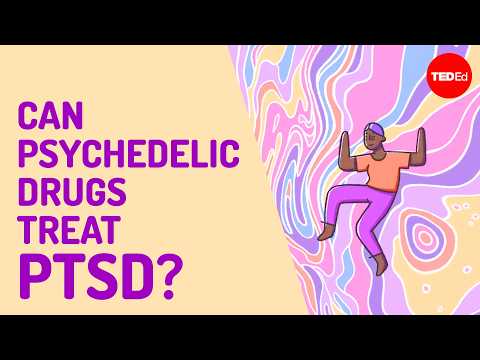
In contemporary usage, the term MDMA is often used in two distinct contexts: medical research and recreational culture. In the medical context, scientists are currently investigating its potential to treat Post-Traumatic Stress Disorder (PTSD). In these clinical trials, MDMA is used as an adjunct to psychotherapy, meaning it is not a 'cure' on its own but a tool that makes the therapy more effective. Participants are given pure MDMA in a quiet, supervised setting to help them revisit traumatic memories without being overwhelmed by the intense fear usually associated with them. This is a far cry from the recreational use of the drug, where it is often sold under the street names 'ecstasy' (usually in pill form) or 'molly' (usually in powder or crystal form). It is important to note that in recreational settings, what is sold as MDMA is frequently adulterated with other substances like caffeine, methamphetamine, or synthetic cathinones, making the distinction between 'pure MDMA' and 'street ecstasy' vital in medical and safety discussions.
The sensory experience of MDMA is characterized by 'heightened perception.' Users often report that colors seem more vivid, music sounds more profound, and physical touch feels more pleasant. This is why it became so popular in environments focused on sensory stimulation, such as music festivals. However, the 'energizing effect' mentioned in the definition is also a key component. Because it is chemically related to amphetamines, it increases heart rate and body temperature, which can lead to physical risks like dehydration or hyperthermia if the user is in a hot, crowded environment. The 'distortions in time' refer to the feeling that hours have passed in what feels like minutes, a common effect of many psychoactive substances that alter the brain's internal clock.
- Therapeutic Context
- In modern psychiatry, MDMA-assisted therapy is being fast-tracked by organizations like the FDA for its breakthrough potential in treating severe trauma.
While mdma is illegal for recreational use, its potential as a medicine is being reconsidered by the global scientific community.
The word MDMA is also used in legal and policy debates. Discussions about 'harm reduction' often focus on MDMA, advocating for pill-testing services at festivals to ensure that what people believe is MDMA does not contain dangerous contaminants. Furthermore, the 'come down' or the period after the drug's effects wear off is a significant part of the word's broader context. Because the brain's serotonin stores are depleted, users may experience several days of low mood, fatigue, and irritability. This pharmacological reality has influenced how the word is used in health education, emphasizing that the 'enhanced enjoyment' of the experience comes with a physiological cost.
- Recreational Terms
- Terms like 'Ecstasy' or 'Molly' are often used interchangeably with MDMA in casual speech, though they may not always refer to the pure chemical.
The documentary explored the history of mdma from its synthesis in Germany to the dance floors of Manchester.
Neurologists study how mdma affects the oxytocin levels in the brain, which facilitates social bonding.
Many users of mdma report a feeling of profound connection with those around them.
Using the word MDMA correctly requires an understanding of its grammatical role as an uncountable noun and its specific semantic domains. Most commonly, MDMA appears in scientific, legal, and sociological contexts. Because it is a chemical name, it does not typically take a plural form (you wouldn't say 'three MDMAs'), and it is often used without an article when referring to the substance in general. For example, 'MDMA is being studied' is more common than 'The MDMA is being studied,' unless you are referring to a specific batch or sample. In academic writing, the word is used with clinical precision, often paired with verbs like 'administer,' 'synthesize,' 'ingest,' or 'metabolize.' These verbs reflect the biological and chemical processes associated with the drug.
- Scientific Precision
- 'The clinical trial involved the administration of a 125mg dose of MDMA to each subject.' Here, MDMA is the object of the preposition 'of'.
In a sociological or journalistic context, the word MDMA is frequently used as a subject to describe cultural trends or legal shifts. You might see sentences like, 'The rise of MDMA in the 1990s changed the landscape of youth culture.' In this case, MDMA acts as a representative for the entire subculture associated with the drug. When discussing the effects of the drug, it is common to use MDMA as the agent of an action: 'MDMA triggers the release of serotonin.' This highlights the drug's active role in altering brain chemistry. It is also frequently used in the possessive or as a modifier, such as 'MDMA's effects' or 'MDMA research.' These structures allow for a concise description of phenomena related to the substance.
The long-term impact of mdma on cognitive function remains a topic of intense debate among neuroscientists.
When writing about the legal status of the drug, the word is often paired with legal terminology. For instance, 'The possession of MDMA is a criminal offense in many jurisdictions.' Here, the word is part of a formal legal statement. In contrast, in harm reduction literature, the tone is more pragmatic: 'Users are encouraged to test their MDMA for the presence of dangerous fillers.' This use of the word focuses on the physical substance and its purity. Note how the word 'their' is used to indicate a specific quantity possessed by individuals, even though MDMA remains an uncountable noun. This is similar to how one might say 'their water' or 'their luggage.'
Another common way to use MDMA in a sentence is within a comparative framework. Writers often compare MDMA to other substances to clarify its unique properties. For example, 'Unlike traditional stimulants, MDMA has a significant effect on emotional empathy.' This sentence uses the word to distinguish the substance from a broader category. Similarly, 'MDMA is often confused with ecstasy, but the latter may contain other drugs.' This sentence uses MDMA to represent the pure chemical entity as opposed to the potentially impure street product. This distinction is crucial for clarity in both medical and legal writing.
- Comparative Usage
- 'While LSD is primarily a hallucinogen, MDMA is often described as an empathogen due to its unique social effects.'
Public health campaigns often focus on the risks associated with mdma use in high-temperature environments.
Finally, the word is used in the context of personal narratives or case studies, although usually in a more clinical or detached manner. A case study might state, 'The patient reported using MDMA once a month for a period of two years.' In this context, the word is a neutral label for a behavior. It is rarely used in a poetic or highly metaphorical way, as its identity is so closely tied to its chemical and legal status. Even in literature, when MDMA is mentioned, it usually serves to ground the story in a specific social reality or to signal a character's involvement in a particular subculture. Using the word effectively means respecting its status as a technical term while acknowledging its heavy social baggage.
- Legal Phrasing
- 'The defendant was charged with the distribution of MDMA, a controlled substance under the Misuse of Drugs Act.'
The sudden popularity of mdma in the mid-80s caught many law enforcement agencies by surprise.
Scientific journals often publish peer-reviewed articles on the neurotoxicity of mdma in animal models.
The documentary filmmaker interviewed several people whose lives were changed by mdma-assisted therapy.
The word MDMA is heard in a variety of settings, ranging from the sterile environment of a medical conference to the high-energy atmosphere of a nightclub, and even in the halls of government. Each setting brings a different nuance to the word. In medical and scientific circles, you will hear MDMA discussed with a focus on its pharmacological properties and therapeutic potential. Researchers might talk about 'MDMA-assisted psychotherapy' or the 'pharmacokinetics of MDMA.' In these contexts, the word is treated as a neutral, technical term, similar to 'aspirin' or 'insulin.' The focus is on data, safety profiles, and clinical outcomes. You might hear a doctor say, 'The patient showed significant improvement after the second MDMA session,' where the word refers to a specific, controlled medical intervention.
- Medical Discourse
- In psychiatry, MDMA is frequently mentioned in the context of 'breakthrough therapy' for PTSD, often appearing in podcasts and journals like The Lancet or Nature.
In contrast, in the world of electronic dance music (EDM) and festival culture, the word MDMA is heard as a part of the social fabric. While street names like 'Molly' or 'E' are more common in casual conversation, 'MDMA' is often used when people want to sound more informed or when they are discussing the purity of the substance. You might hear a festival-goer say, 'I only use tested MDMA,' which reflects a growing awareness of harm reduction within the community. In this setting, the word carries a connotation of social bonding, music, and shared experience. It is often linked to the 'PLUR' (Peace, Love, Unity, Respect) philosophy that has defined rave culture for decades. Here, MDMA is not just a chemical; it is a catalyst for a specific type of social interaction.
At the music festival, harm reduction volunteers provided educational pamphlets about the risks of mdma use.
The word also appears frequently in news media and documentaries. Journalists use 'MDMA' when they want to maintain a professional, objective tone. A news report might state, 'Police seized a large shipment of MDMA at the border,' or 'New legislation aims to reclassify MDMA for medical use.' In these instances, the word is used to provide factual information to the public. Documentaries, particularly those focused on the 'War on Drugs' or the history of counterculture, use the word to trace the substance's journey through society. You might hear a narrator say, 'MDMA became the fuel for the Second Summer of Love in 1988,' connecting the chemical to a specific historical moment. This usage helps to contextualize the drug within broader social and political movements.
In the legal system, MDMA is a term used in courtrooms and legislative chambers. Lawyers and judges use it when referring to the specific chemical listed in drug schedules. A prosecutor might argue, 'The defendant was in possession of five grams of MDMA,' using the word to establish a legal fact. Similarly, policy advocates use the word when lobbying for changes in drug laws. They might speak about 'MDMA decriminalization' or 'MDMA rescheduling.' In these formal settings, the word is stripped of its cultural associations and treated as a legal entity with specific penalties or regulations attached to it. Hearing the word in a courtroom is very different from hearing it at a concert, as the stakes are much higher and the tone is strictly adversarial or procedural.
- Legal and Policy Context
- The term is central to debates about drug scheduling, where MDMA's status as a Schedule I substance is often challenged by medical advocates.
The senator spoke about the need for more research into mdma as a treatment for veterans with PTSD.
Finally, you may hear the word MDMA in educational settings, such as health classes or university lectures. Professors of pharmacology, sociology, or history use the word to teach students about the drug's impact on the brain and society. A biology teacher might explain, 'MDMA works by reversing the action of the serotonin transporter,' while a sociology professor might discuss 'the role of MDMA in the globalization of rave culture.' In these settings, the word is an object of study, analyzed and deconstructed to help students understand complex systems. Whether it's the chemistry of a synapse or the dynamics of a subculture, MDMA serves as a powerful example of how a single molecule can influence many different aspects of human life.
- Academic Discourse
- University lectures on neurobiology often use MDMA to illustrate the 'serotonin syndrome' and the importance of neurotransmitter balance.
The textbook provides a detailed diagram of how mdma interacts with the brain's receptors.
During the seminar, the psychologist discussed the emotional 'after-effects' of mdma use.
The podcast host asked the expert about the difference between mdma and other synthetic drugs like ketamine.
One of the most frequent mistakes people make when using the word MDMA is treating it as a synonym for 'Ecstasy' or 'Molly' without qualification. While they are often used interchangeably in casual speech, in a technical or safety-conscious context, this is an error. MDMA refers specifically to the chemical compound 3,4-methylenedioxymethamphetamine. 'Ecstasy' usually refers to MDMA in pill form, which is often mixed with other substances. 'Molly' is a slang term for what is supposed to be pure MDMA powder or crystals, but in reality, it is frequently adulterated. Using the word MDMA when you actually mean a potentially impure street drug can lead to dangerous misunderstandings, especially in medical or harm-reduction contexts. It is more accurate to say, 'The pill was sold as ecstasy but contained no MDMA.'
- Chemical vs. Street Name
- Mistake: 'He took some MDMA at the party.' Correction: Unless the substance was chemically tested, it is more accurate to say 'He took a pill sold as ecstasy.'
Another common mistake involves the grammar of the word. Because MDMA is an acronym, some people struggle with how to use articles and plurals. As mentioned before, MDMA is an uncountable noun. You should avoid saying 'an MDMA' or 'many MDMAs.' Instead, use 'a dose of MDMA,' 'some MDMA,' or 'MDMA pills.' Furthermore, because it starts with a consonant sound when pronounced ('em-dee-em-ay'), the correct indefinite article to use before it is 'an' (because the letter 'M' starts with a vowel sound /ɛm/). So, you would write 'an MDMA-assisted therapy session,' not 'a MDMA-assisted therapy session.' This is a subtle point that even native speakers often get wrong in writing.
Incorrect: The doctor prescribed mdmas for the patient's condition. Correct: The doctor administered a specific dose of mdma during the session.
Misunderstanding the pharmacological category of MDMA is another frequent error. Many people mistakenly classify it solely as a 'hallucinogen' like LSD or solely as a 'stimulant' like cocaine. In reality, it is a hybrid. Using the word MDMA to describe a purely hallucinogenic experience is inaccurate, as it lacks the intense visual distortions typical of 'classic' psychedelics. Similarly, describing it only as a stimulant ignores its profound emotional and empathetic effects. When discussing its effects, it is a mistake to overlook this duality. Professional writers and scientists avoid this by using the specific terms 'empathogen' or 'entactogen' to describe MDMA's unique profile.
There is also a common mistake regarding the spelling and capitalization of the acronym. While 'MDMA' is the standard, you might see 'Mdma' or 'mdma' in informal settings. In any formal, academic, or professional writing, it should always be fully capitalized. Additionally, some people confuse the acronym with others, such as 'MDA' (methylenedioxyamphetamine), which is a related but different chemical with more hallucinogenic and toxic properties. Confusing MDMA with MDA in a scientific or medical discussion is a significant error, as their safety profiles and effects differ. Always double-check the acronym to ensure you are referring to the correct substance.
- Acronym Confusion
- Mistake: Using MDMA and MDA as if they are the same thing. Correction: MDMA is 3,4-methylenedioxymethamphetamine; MDA is 3,4-methylenedioxyamphetamine.
The researcher clarified that mdma has a different metabolic pathway than its cousin, MDA.
Finally, a conceptual mistake is assuming that MDMA is 'safe' because it is being used in therapy. While clinical trials show it can be used safely in a controlled medical environment with pure substance and professional supervision, this does not translate to recreational use. Using the word MDMA to imply safety in a non-medical context is misleading. Public health experts emphasize that the risks of MDMA—such as neurotoxicity, overheating, and serotonin depletion—are real and significant. When using the word, it is important to maintain a balance between acknowledging its therapeutic potential and its physical risks. Failing to do so can result in a biased or dangerous portrayal of the substance.
- Safety Misconceptions
- Mistake: 'Since MDMA is medicine now, it's not dangerous.' Correction: MDMA is being studied as a medicine under strict conditions; recreational use remains risky.
Health educators warn that the purity of mdma found on the street is highly unreliable.
The report emphasized that mdma should not be combined with certain antidepressants due to the risk of serotonin syndrome.
It is a common error to think that mdma is a natural substance; it is entirely man-made.
When exploring words similar to MDMA, it is essential to distinguish between chemical relatives, functional alternatives, and slang synonyms. The most direct chemical relative is MDA (3,4-methylenedioxyamphetamine). While MDA is similar to MDMA, it is generally considered more stimulating and hallucinogenic, with a longer duration and higher potential for neurotoxicity. In a scientific discussion, you might use MDA as a point of comparison to highlight MDMA's more 'empathogenic' qualities. Another related compound is MDE or MDEA (3,4-methylenedioxy-N-ethylamphetamine), which was briefly popular in the 1980s but is less potent and has shorter-lasting effects than MDMA. These chemical names are precise and should only be used when referring to the specific molecules.
- Chemical Relatives
- MDA: More hallucinogenic and toxic. MDEA: Less potent and shorter duration. Both are often found as adulterants in ecstasy pills.
In terms of functional alternatives—words that describe the *effects* of the drug—the terms 'empathogen' and 'entactogen' are the most important. An 'empathogen' is a substance that produces feelings of empathy and social connection. An 'entactogen' (meaning 'touching within') is a term preferred by some researchers to avoid the emotional baggage of the word 'empathy' and to focus on the internal emotional openness the drug facilitates. If you are writing a psychological paper, using 'entactogen' instead of 'MDMA' can help shift the focus from the chemical to the psychological experience. Other functional descriptors include 'stimulant' and 'hallucinogen,' though as discussed, MDMA is a hybrid of both. You might also hear it described as a 'psychoactive substance,' which is a broad, neutral category for any drug that affects the mind.
The term 'entactogen' was specifically created to describe the unique psychological profile of mdma.
Slang synonyms are the most common alternatives in everyday speech. 'Ecstasy' (often shortened to 'E' or 'X') is the most famous. It carries a strong connotation of 1990s rave culture and pill-based consumption. 'Molly' is the more modern slang, often associated with the 2010s and the American festival scene. It implies a 'pure' crystalline form, though this is often a marketing tactic rather than a chemical reality. 'Adam' was an early slang term used by therapists in the 1970s to describe the drug's ability to return a person to a 'primordial, innocent state.' While 'Adam' is rarely heard today, it remains a fascinating piece of the word's history. When choosing between these, consider your audience: use 'MDMA' for science and law, 'Ecstasy' for history and culture, and 'Molly' for contemporary social descriptions.
Finally, in a medical context, you might see MDMA compared to other 'breakthrough' treatments like psilocybin (the active ingredient in magic mushrooms) or ketamine. While these are different chemicals with different effects, they are often grouped together in discussions about the 'psychedelic renaissance' in psychiatry. Psilocybin is a 'classic psychedelic' that causes intense visual and ego-dissolving experiences, whereas MDMA is more 'grounded' and focused on emotional processing. Ketamine is a dissociative anesthetic that is also used for depression. Understanding these distinctions is key to using the word MDMA correctly within the broader landscape of modern mental health treatments. Each word represents a different tool with a specific purpose and mechanism of action.
- Functional Comparisons
- Psilocybin: Focuses on visual and spiritual experiences. Ketamine: Focuses on dissociation and rapid antidepressant effects. MDMA: Focuses on emotional empathy and trauma processing.
Unlike psilocybin, mdma does not typically cause significant visual hallucinations.
The clinician explained that mdma is an empathogen, making it ideal for couples therapy.
In the 1980s, mdma was often referred to by the street name 'Ecstasy' in the United Kingdom.
How Formal Is It?
Dato curioso
MDMA was once briefly marketed in the 1980s in Texas under the name 'Sassy' before it was banned. It was even sold in bars and through toll-free numbers.
Guía de pronunciación
- Pronouncing it as a single word (e.g., 'mud-ma').
- Putting the stress on the first 'M'.
- Confusing the letters with MDA.
- Mumbling the 'D' so it sounds like 'N'.
- Adding an extra syllable.
Nivel de dificultad
The word itself is easy, but the context is often scientific or legal.
Requires knowledge of acronym rules and specific collocations.
Pronunciation is straightforward once you know it's an acronym.
Can be confused with MDA or other similar-sounding acronyms.
Qué aprender después
Requisitos previos
Aprende después
Avanzado
Gramática que debes saber
Acronym Pronunciation
Use 'an' before MDMA because 'M' starts with a vowel sound (/ɛm/).
Uncountable Nouns
Say 'some MDMA' or 'a lot of MDMA', not 'an MDMA'.
Hyphenated Adjectives
Use a hyphen when MDMA modifies a noun, as in 'MDMA-assisted therapy'.
Capitalization
Always capitalize all letters in MDMA as it is a chemical acronym.
Prepositional Usage
We say someone is 'on MDMA' when they are under its influence.
Ejemplos por nivel
MDMA is a drug made in a lab.
MDMA est une drogue fabriquée en laboratoire.
MDMA is used as a proper noun here.
Some people call MDMA 'Ecstasy'.
Certaines personnes appellent la MDMA 'Ecstasy'.
MDMA is the object of the sentence.
MDMA makes people feel very happy.
La MDMA rend les gens très heureux.
Present simple tense for a general fact.
Is MDMA legal in your country?
La MDMA est-elle légale dans votre pays ?
Question form using the verb 'to be'.
The news spoke about MDMA today.
Les informations ont parlé de la MDMA aujourd'hui.
Past simple tense.
MDMA can be dangerous for the heart.
La MDMA peut être dangereuse pour le cœur.
Modal verb 'can' for possibility/risk.
I read a book about MDMA.
J'ai lu un livre sur la MDMA.
Preposition 'about' followed by the noun.
MDMA gives you a lot of energy.
La MDMA vous donne beaucoup d'énergie.
Uncountable noun 'energy' used with MDMA.
MDMA is famous for its effects on feelings.
La MDMA est célèbre pour ses effets sur les sentiments.
Adjective 'famous' followed by 'for'.
Doctors use MDMA in some medical tests.
Les médecins utilisent la MDMA dans certains tests médicaux.
Present simple for regular actions.
Many people used MDMA at raves in the 90s.
Beaucoup de gens utilisaient la MDMA lors de raves dans les années 90.
Past simple with a time reference.
You should not take MDMA because it is illegal.
Vous ne devriez pas prendre de MDMA car c'est illégal.
Modal 'should not' for advice.
MDMA changes how the brain works.
La MDMA change le fonctionnement du cerveau.
Third person singular 'changes'.
The police found MDMA in the car.
La police a trouvé de la MDMA dans la voiture.
MDMA as a direct object.
MDMA is a type of synthetic drug.
La MDMA est un type de drogue synthétique.
Noun phrase 'type of'.
He felt very close to his friends on MDMA.
Il se sentait très proche de ses amis sous MDMA.
Preposition 'on' to indicate being under the influence.
MDMA is currently being researched as a treatment for PTSD.
La MDMA fait actuellement l'objet de recherches en tant que traitement du SSPT.
Present continuous passive voice.
The effects of MDMA usually last for about four to six hours.
Les effets de la MDMA durent généralement de quatre à six heures.
Present simple for general truths.
Researchers are interested in how MDMA increases empathy.
Les chercheurs s'intéressent à la manière dont la MDMA augmente l'empathie.
Indirect question 'how MDMA increases...'.
MDMA was first created over a hundred years ago.
La MDMA a été créée pour la première fois il y a plus de cent ans.
Past simple passive.
It is important to distinguish pure MDMA from street ecstasy.
Il est important de distinguer la MDMA pure de l'ecstasy de rue.
Infinitive phrase 'to distinguish... from'.
MDMA can cause severe dehydration if you are not careful.
La MDMA peut provoquer une déshydratation sévère si vous ne faites pas attention.
Conditional 'if' clause.
The government decided to ban MDMA in the mid-1980s.
Le gouvernement a décidé d'interdire la MDMA au milieu des années 1980.
Verb 'decided' followed by infinitive.
Many veterans have participated in MDMA-assisted therapy trials.
De nombreux vétérans ont participé à des essais de thérapie assistée par MDMA.
Present perfect for past actions with present relevance.
MDMA triggers a massive release of serotonin in the brain.
La MDMA déclenche une libération massive de sérotonine dans le cerveau.
Active verb 'triggers' showing cause and effect.
The therapeutic potential of MDMA is a major topic in modern psychiatry.
Le potentiel thérapeutique de la MDMA est un sujet majeur de la psychiatrie moderne.
Compound subject 'The therapeutic potential of MDMA'.
MDMA is often classified as an empathogen due to its social effects.
La MDMA est souvent classée comme un empathogène en raison de ses effets sociaux.
Passive voice with 'due to' for reason.
Despite its illegal status, MDMA remains popular in some subcultures.
Malgré son statut illégal, la MDMA reste populaire dans certaines sous-cultures.
Concessive phrase 'Despite its...'.
The 'comedown' after using MDMA can involve feelings of depression.
La 'descente' après avoir utilisé de la MDMA peut entraîner des sentiments de dépression.
Gerund 'using' after the preposition 'after'.
MDMA-assisted therapy involves several sessions with trained professionals.
La thérapie assistée par MDMA implique plusieurs séances avec des professionnels formés.
Compound adjective 'MDMA-assisted'.
The purity of MDMA is a significant concern for harm reduction groups.
La pureté de la MDMA est une préoccupation majeure pour les groupes de réduction des risques.
Noun 'purity' modified by 'of MDMA'.
MDMA affects the body's ability to regulate temperature.
La MDMA affecte la capacité du corps à réguler la température.
Possessive 'body's' and infinitive 'to regulate'.
The FDA has granted 'breakthrough therapy' designation to MDMA for PTSD.
La FDA a accordé la désignation de 'thérapie révolutionnaire' à la MDMA pour le SSPT.
Present perfect with specific regulatory terminology.
MDMA's unique pharmacological profile distinguishes it from other amphetamines.
Le profil pharmacologique unique de la MDMA la distingue des autres amphétamines.
Possessive 'MDMA's' acting as a modifier.
Critics argue that the long-term neurotoxicity of MDMA is not yet fully understood.
Les critiques soutiennent que la neurotoxicité à long terme de la MDMA n'est pas encore totalement comprise.
Complex sentence with a subordinate 'that' clause.
The resurgence of interest in MDMA marks a shift in drug policy attitudes.
Le regain d'intérêt pour la MDMA marque un changement dans les attitudes vis-à-vis de la politique des drogues.
Noun 'resurgence' followed by 'of interest in'.
MDMA acts as a potent monoamine releaser, primarily targeting serotonin.
La MDMA agit comme un puissant libérateur de monoamines, ciblant principalement la sérotonine.
Participial phrase 'targeting serotonin' modifying the main clause.
The subjective effects of MDMA are often described as 'entactogenic'.
Les effets subjectifs de la MDMA sont souvent décrits comme 'entactogènes'.
Adjective 'subjective' modifying 'effects'.
Ethical considerations are paramount when administering MDMA in a clinical setting.
Les considérations éthiques sont primordiales lors de l'administration de MDMA dans un cadre clinique.
Adverbial clause 'when administering...'.
MDMA's role in the 1980s rave scene is a staple of cultural sociology.
Le rôle de la MDMA dans la scène rave des années 1980 est un classique de la sociologie culturelle.
Possessive used to denote a historical role.
The ontological shift prompted by MDMA-assisted therapy is a subject of philosophical inquiry.
Le changement ontologique provoqué par la thérapie assistée par MDMA est un sujet d'enquête philosophique.
High-level vocabulary like 'ontological' and 'inquiry'.
MDMA's capacity to facilitate the 'extinction of fear' is central to its efficacy in treating trauma.
La capacité de la MDMA à faciliter 'l'extinction de la peur' est au cœur de son efficacité dans le traitement des traumatismes.
Complex noun phrase as the subject.
The prohibition of MDMA has been criticized for impeding vital neuropsychiatric research.
L'interdiction de la MDMA a été critiquée pour avoir entravé des recherches neuropsychiatriques vitales.
Passive voice with a gerund phrase 'for impeding...'.
MDMA functions as a catalyst, accelerating the therapeutic process by bypassing emotional avoidance.
La MDMA fonctionne comme un catalyseur, accélérant le processus thérapeutique en contournant l'évitement émotionnel.
Appositive 'a catalyst' and multiple participial phrases.
The pharmacodynamics of MDMA involve a complex interplay between various neurotransmitter systems.
La pharmacodynamie de la MDMA implique une interaction complexe entre divers systèmes de neurotransmetteurs.
Technical plural 'pharmacodynamics' and 'systems'.
Sociological analyses often frame MDMA as a 'technology of the self' within dance cultures.
Les analyses sociologiques présentent souvent la MDMA comme une 'technologie de soi' au sein des cultures de la danse.
Academic framing using 'frame... as'.
The structural similarity between MDMA and mescaline accounts for its mild hallucinogenic properties.
La similitude structurelle entre la MDMA et la mescaline explique ses légères propriétés hallucinogènes.
Phrasal verb 'accounts for' meaning 'explains'.
Legislative inertia has historically hindered the clinical application of MDMA.
L'inertie législative a historiquement entravé l'application clinique de la MDMA.
Abstract noun 'inertia' and adverb 'historically'.
Colocaciones comunes
Frases Comunes
— A specific measured amount of the drug.
The patient was given a single dose of MDMA.
— The intense feeling of happiness caused by the drug.
The study described the MDMA-induced euphoria as profound.
— How much of a sample is actually the chemical MDMA.
The purity of MDMA has decreased in recent years.
— The combination of the drug with talk therapy.
The synergy between MDMA and psychotherapy is key to its success.
— Using the drug repeatedly over a long period.
Long-term MDMA use may affect memory function.
— The specific medical application for trauma.
MDMA for PTSD is currently in Phase 3 trials.
— How the drug works inside the body.
Scientists are still mapping MDMA's mechanism of action.
— Fatalities where the drug was a contributing factor.
Most MDMA-related deaths are due to overheating or adulterants.
— The use of the drug for fun rather than medicine.
Recreational MDMA use remains a public health concern.
— The chronological story of the drug's development.
The history of MDMA is full of legal and social controversy.
Se confunde a menudo con
A similar drug that is more hallucinogenic and longer-lasting.
A much more addictive and destructive stimulant with different effects.
A natural psychedelic that has a similar chemical structure but different effects.
Modismos y expresiones
— A slang term for being under the influence of the drug, referring to the 'waves' of effects.
He spent the whole night rolling on MDMA at the rave.
Slang— An offensive slang term for the temporary cognitive impairment during a comedown.
He felt completely e-tarded the Monday after the festival.
Highly Informal / Offensive— A slang term for the deep depression felt a few days after weekend MDMA use.
After the party on Saturday, he suffered from a bad case of Suicide Tuesday.
Slang— Slang for feeling mentally slow after heavy MDMA use.
Too much MDMA left him feeling a bit puddle-brained.
Slang— A common nickname for MDMA due to its empathy-inducing effects.
MDMA earned its reputation as the love drug in the 80s.
Informal— A group of people on MDMA sitting or lying together in a heap.
The corner of the room was filled with a giant cuddle puddle.
Slang— The involuntary grinding of teeth or moving of the jaw caused by MDMA.
You could tell he was on something by his constant jaw-jacking.
Slang— A positive feeling of peace and clarity that some people feel the day after MDMA use.
Instead of a comedown, she experienced a pleasant afterglow.
Informal— Combining MDMA with LSD.
He described candy flipping as an incredibly intense experience.
Slang— Combining MDMA with psilocybin mushrooms.
Hippie flipping is common among experienced psychedelic users.
SlangFácil de confundir
They are often used as synonyms.
MDMA is the chemical; Ecstasy is the street pill which may be impure.
The lab found that the ecstasy pill contained no MDMA at all.
Both refer to the same substance.
Molly is a slang term for powder/crystal form; MDMA is the technical name.
In the US, MDMA is frequently called Molly in social settings.
The acronyms are very similar.
MDA is a related compound (Tenamfetamine) with more visual effects.
The researcher noted that MDA is more neurotoxic than MDMA.
Another similar chemical acronym.
MDEA (Eve) has milder effects and a shorter duration than MDMA (Adam).
MDEA was briefly popular as a legal alternative to MDMA in the 80s.
MDMA has stimulant properties.
A pure stimulant (like caffeine) doesn't have the emotional/hallucinogenic effects of MDMA.
While MDMA is a stimulant, its primary appeal is its empathogenic effect.
Patrones de oraciones
MDMA is [adjective].
MDMA is illegal.
People use MDMA to [verb].
People use MDMA to feel happy.
MDMA is being studied for [noun].
MDMA is being studied for trauma.
The effects of MDMA include [noun] and [noun].
The effects of MDMA include euphoria and empathy.
MDMA-assisted therapy has shown [adjective] results.
MDMA-assisted therapy has shown promising results.
The pharmacodynamics of MDMA involve [complex phrase].
The pharmacodynamics of MDMA involve the release of serotonin.
Unlike [other drug], MDMA [verb].
Unlike cocaine, MDMA increases empathy.
Despite [noun], MDMA remains [adjective].
Despite its ban, MDMA remains influential.
Familia de palabras
Sustantivos
Adjetivos
Relacionado
Cómo usarlo
Common in news, medicine, and youth culture.
-
Saying 'a MDMA'
→
an MDMA
Because 'M' is pronounced 'em', it starts with a vowel sound, requiring 'an'.
-
Using 'MDMA' as a verb
→
using MDMA
MDMA is a noun and should not be used as a verb like 'he was MDMA-ing'.
-
Confusing MDMA with Meth
→
MDMA is different from Methamphetamine
While related, they have very different effects and safety profiles.
-
Pluralizing it as 'MDMAs'
→
doses of MDMA
MDMA is an uncountable chemical name.
-
Thinking MDMA is natural
→
MDMA is synthetic
It is entirely man-made in a lab and does not come from a plant.
Consejos
Use the Acronym
In almost all situations, use 'MDMA'. Only use the full chemical name if you are writing a very technical chemistry paper.
The 'An' Rule
Remember to use 'an' before MDMA (an MDMA trial) because the letter M sounds like it starts with 'E' (em).
Medical vs. Street
If you are talking about health, use 'MDMA'. If you are talking about parties or history, 'Ecstasy' is often more appropriate.
Purity Matters
When discussing MDMA, always keep in mind that street versions are rarely pure. This is a key point in any serious discussion.
Individual Letters
Never try to pronounce MDMA as a word. Always say the four letters separately: M-D-M-A.
All Caps
Always write MDMA in capital letters. Writing 'mdma' is considered informal and unprofessional.
Empathogen vs. Psychedelic
While MDMA is often grouped with psychedelics, 'empathogen' is a more accurate term for its specific effects.
1912 vs. 1970s
Don't confuse its creation (1912) with its rise in therapy (1970s). Both dates are important for its history.
No Plurals
Avoid saying 'MDMAs'. If you mean more than one, say 'doses of MDMA' or 'MDMA pills'.
Be Objective
Because MDMA is a controversial topic, try to use neutral, fact-based language when writing about it.
Memorízalo
Mnemotecnia
M-D-M-A: Many Dreams, Many Allies. This helps you remember the 'dream-like' perception and the 'ally-building' empathy it creates.
Asociación visual
Imagine a bright glowing heart (empathy) inside a chemical beaker (synthetic) with a lightning bolt (stimulant) through it.
Word Web
Desafío
Try to explain the difference between MDMA and Ecstasy to a friend using at least three technical terms like 'synthetic' or 'adulterated'.
Origen de la palabra
The term MDMA is an acronym for the chemical name 3,4-methylenedioxymethamphetamine. It was first synthesized in 1912 by Merck chemist Anton Köllisch in Darmstadt, Germany.
Significado original: It was originally developed as a precursor for a different medicine (hydrastinine) and was not intended for human consumption at the time.
Chemical nomenclature (Latin/Greek roots).Contexto cultural
Always handle this word with care; it refers to an illegal substance in many places and a sensitive medical topic.
In the US and UK, MDMA is deeply tied to the history of electronic music and the 'War on Drugs' political era.
Practica en la vida real
Contextos reales
Medical Research
- Clinical trial
- Therapeutic potential
- Adjunct to therapy
- Breakthrough status
Law Enforcement
- Controlled substance
- Illegal possession
- Drug seizure
- Schedule I
Music Festivals
- Harm reduction
- Pill testing
- Stay hydrated
- Ecstasy use
Neuroscience
- Serotonin release
- Brain chemistry
- Neural pathways
- Oxytocin levels
History
- Rave culture
- Second Summer of Love
- Alexander Shulgin
- 1980s ban
Inicios de conversación
"Have you read about the new research into MDMA-assisted therapy for veterans?"
"What do you think about the reclassification of MDMA for medical use?"
"Did you know that MDMA was originally synthesized over a hundred years ago?"
"How does MDMA differ from other psychedelics like psilocybin in its effects?"
"Why do you think MDMA became so popular in the dance music scene?"
Temas para diario
Reflect on how the perception of MDMA has changed from a 'party drug' to a potential 'medicine'.
Write about the ethical implications of using psychoactive substances like MDMA in psychiatric treatment.
Describe the impact of the 1980s rave culture on modern society, mentioning the role of MDMA.
How would you explain the risks and benefits of MDMA to someone who knows nothing about it?
Research a specific clinical trial involving MDMA and summarize its findings and importance.
Preguntas frecuentes
10 preguntasMDMA stands for 3,4-methylenedioxymethamphetamine. It is a long chemical name that describes the specific arrangement of atoms in the molecule. Because the full name is so difficult to say, almost everyone uses the acronym MDMA.
Technically, MDMA is the pure chemical. Ecstasy is the street name for MDMA, usually sold in pill form. However, ecstasy pills often contain other drugs like caffeine or meth, so they are not always the same thing as pure MDMA.
MDMA causes the brain to release a large amount of serotonin, which is a chemical that regulates mood and social behavior. It also releases dopamine and norepinephrine. This combination creates feelings of extreme happiness and closeness to others.
In most countries, MDMA is a 'Schedule I' or 'Class A' drug, meaning it is illegal to buy, sell, or possess. However, some countries like Australia have recently legalized its use specifically for medical treatment under very strict conditions.
This is a type of treatment where a patient takes a controlled dose of pure MDMA during a therapy session. The drug helps the patient feel safe enough to talk about very difficult or traumatic memories with their therapist.
The main risks include overheating (hyperthermia), dehydration, and a fast heart rate. It can also cause a 'comedown' where the person feels very sad for several days after the drug wears off because their brain is low on serotonin.
While MDMA is not considered as addictive as drugs like heroin or cocaine, some people can still develop a psychological dependence on it. They may feel they need it to enjoy social events or to feel happy.
MDMA was first made by a chemist at the Merck company in Germany in 1912. It was later rediscovered and tested for its psychological effects by the American chemist Alexander Shulgin in the 1970s.
It is called an empathogen because it generates ('gen') a feeling of empathy ('empatho'). This refers to the drug's unique ability to make people feel deeply connected and understanding toward others.
The effects of MDMA last about 4 to 6 hours. However, it can be detected in a person's urine for 2 to 4 days and in their hair for up to 90 days after use.
Ponte a prueba 200 preguntas
Explain why MDMA is called an 'empathogen'.
Well written! Good try! Check the sample answer below.
Describe the history of MDMA from 1912 to the present.
Well written! Good try! Check the sample answer below.
What are the main risks associated with recreational MDMA use?
Well written! Good try! Check the sample answer below.
Compare and contrast MDMA with a pure stimulant like caffeine.
Well written! Good try! Check the sample answer below.
How does MDMA-assisted therapy help people with PTSD?
Well written! Good try! Check the sample answer below.
Write a short paragraph about the role of MDMA in 1990s rave culture.
Well written! Good try! Check the sample answer below.
Discuss the ethical issues of legalizing MDMA for medical use.
Well written! Good try! Check the sample answer below.
Explain the chemical name of MDMA and what each part represents.
Well written! Good try! Check the sample answer below.
What is 'harm reduction' in the context of MDMA use?
Well written! Good try! Check the sample answer below.
Describe the 'comedown' process after using MDMA.
Well written! Good try! Check the sample answer below.
How did Alexander Shulgin influence the popularity of MDMA?
Well written! Good try! Check the sample answer below.
What is the difference between MDMA, Ecstasy, and Molly?
Well written! Good try! Check the sample answer below.
Why is hydration important when someone is on MDMA?
Well written! Good try! Check the sample answer below.
Summarize a recent news article you've read about MDMA.
Well written! Good try! Check the sample answer below.
Discuss the impact of MDMA on the serotonergic system.
Well written! Good try! Check the sample answer below.
Write a dialogue between a doctor and a patient discussing MDMA therapy.
Well written! Good try! Check the sample answer below.
How does MDMA change a person's perception of time?
Well written! Good try! Check the sample answer below.
What are the legal penalties for MDMA possession in your country?
Well written! Good try! Check the sample answer below.
Explain the concept of 'breakthrough therapy' designation.
Well written! Good try! Check the sample answer below.
Describe the physical sensations often reported by MDMA users.
Well written! Good try! Check the sample answer below.
Pronounce the acronym MDMA three times clearly.
Read this aloud:
Dijiste:
Speech recognition is not supported in your browser. Try Chrome or Edge.
Give a 1-minute speech on the potential medical benefits of MDMA.
Read this aloud:
Dijiste:
Speech recognition is not supported in your browser. Try Chrome or Edge.
Explain the risks of MDMA to a younger person in simple terms.
Read this aloud:
Dijiste:
Speech recognition is not supported in your browser. Try Chrome or Edge.
Debate with a partner: Should MDMA be legalized for recreational use?
Read this aloud:
Dijiste:
Speech recognition is not supported in your browser. Try Chrome or Edge.
Describe the feeling of empathy in your own words.
Read this aloud:
Dijiste:
Speech recognition is not supported in your browser. Try Chrome or Edge.
Tell a story about a fictional character who discovers the history of MDMA.
Read this aloud:
Dijiste:
Speech recognition is not supported in your browser. Try Chrome or Edge.
Explain the difference between a stimulant and a hallucinogen.
Read this aloud:
Dijiste:
Speech recognition is not supported in your browser. Try Chrome or Edge.
Present a summary of the 1980s rave scene and MDMA's role in it.
Read this aloud:
Dijiste:
Speech recognition is not supported in your browser. Try Chrome or Edge.
Role-play a conversation between a researcher and a government official.
Read this aloud:
Dijiste:
Speech recognition is not supported in your browser. Try Chrome or Edge.
Discuss the importance of harm reduction at music festivals.
Read this aloud:
Dijiste:
Speech recognition is not supported in your browser. Try Chrome or Edge.
Explain why MDMA is called 'Molly' in some places.
Read this aloud:
Dijiste:
Speech recognition is not supported in your browser. Try Chrome or Edge.
Talk about the 'comedown' and how it affects a person's week.
Read this aloud:
Dijiste:
Speech recognition is not supported in your browser. Try Chrome or Edge.
Describe the chemical structure of MDMA (as much as you know).
Read this aloud:
Dijiste:
Speech recognition is not supported in your browser. Try Chrome or Edge.
Discuss the cultural shift in how we view 'drugs' vs 'medicines'.
Read this aloud:
Dijiste:
Speech recognition is not supported in your browser. Try Chrome or Edge.
Explain the 'an' rule for the word MDMA.
Read this aloud:
Dijiste:
Speech recognition is not supported in your browser. Try Chrome or Edge.
Talk about the 'Second Summer of Love'.
Read this aloud:
Dijiste:
Speech recognition is not supported in your browser. Try Chrome or Edge.
Describe the physical symptoms of MDMA use.
Read this aloud:
Dijiste:
Speech recognition is not supported in your browser. Try Chrome or Edge.
Explain the term 'entactogen' to a classmate.
Read this aloud:
Dijiste:
Speech recognition is not supported in your browser. Try Chrome or Edge.
Discuss the role of serotonin in the brain.
Read this aloud:
Dijiste:
Speech recognition is not supported in your browser. Try Chrome or Edge.
Summarize the key takeaways from this lesson on MDMA.
Read this aloud:
Dijiste:
Speech recognition is not supported in your browser. Try Chrome or Edge.
Listen to a clip of a news report. How many times is 'MDMA' mentioned?
Listen to a scientist explain MDMA's effect. What part of the brain is mentioned?
Listen to a podcast about raves. What year did the speaker start using MDMA?
Listen to a doctor describe PTSD therapy. How does MDMA help the patient?
Listen to a legal debate. What is the argument against rescheduling MDMA?
Listen to a person describing a comedown. How do they feel?
Listen to a chemical name being read. Is it MDMA or MDA?
Listen to a safety announcement at a festival. What should you drink?
Listen to an interview with Alexander Shulgin. What was his first experience like?
Listen to a list of drugs. Identify which one is the empathogen.
Listen to a history lecture. Who synthesized MDMA first?
Listen to a patient testimonial. What changed in their life?
Listen to a police report. Where was the MDMA found?
Listen to a discussion on 'Suicide Tuesday'. Why does it happen?
Listen to a technical explanation of serotonin reuptake. How does MDMA interfere?
/ 200 correct
Perfect score!
Summary
MDMA is a unique 'empathogenic' substance that bridges the gap between stimulants and psychedelics. While historically associated with rave culture, its primary significance today lies in its potential as a breakthrough medical treatment for PTSD. Example: 'The clinical trial demonstrated that MDMA-assisted therapy could help patients process trauma more effectively than traditional methods.'
- MDMA is a synthetic drug (3,4-methylenedioxymethamphetamine) that combines stimulant and hallucinogenic properties, primarily used recreationally and in clinical research for trauma therapy.
- It is famous for inducing intense feelings of empathy, social connection, and euphoria by releasing large amounts of serotonin, dopamine, and norepinephrine in the brain.
- Commonly known as 'Ecstasy' or 'Molly', it is illegal in most jurisdictions but is currently being fast-tracked for medical approval in psychiatric settings.
- Physical risks include hyperthermia, dehydration, and a significant emotional 'comedown' due to neurotransmitter depletion following its use.
Use the Acronym
In almost all situations, use 'MDMA'. Only use the full chemical name if you are writing a very technical chemistry paper.
The 'An' Rule
Remember to use 'an' before MDMA (an MDMA trial) because the letter M sounds like it starts with 'E' (em).
Medical vs. Street
If you are talking about health, use 'MDMA'. If you are talking about parties or history, 'Ecstasy' is often more appropriate.
Purity Matters
When discussing MDMA, always keep in mind that street versions are rarely pure. This is a key point in any serious discussion.
Ejemplo
Clinical trials for MDMA-assisted therapy have entered the final phase.
Contenido relacionado
Míralo en videos
Más palabras de Health
abortion
B2El aborto es la terminación de un embarazo antes de que el feto pueda vivir de forma independiente.
abortions
C1Los abortos son la terminación del embarazo, ya sea de forma espontánea o mediante un procedimiento médico inducido.
abrasion
B2Una abrasión es una lesión superficial de la piel causada por el roce contra una superficie rugosa. También se refiere al desgaste de materiales por fricción.
acuity
B2La agudeza se refiere a la nitidez o perspicacia del pensamiento, la visión o el oído.
acute
B2Agudo o grave (problema); perspicaz o penetrante (sentidos/mente).
addictary
C1Inducir sistemáticamente un estado de dependencia en un sujeto.
addicted
B1Él es adicto al trabajo y nunca se toma vacaciones.
addiction
B2La adicción es una dependencia de una sustancia o actividad. La adicción al juego puede arruinar familias.
adrenaline
B2La adrenalina es una hormona producida por el cuerpo en momentos de estrés o emoción.
advivcy
C1La política <span class='italic'>advivcy</span> de la empresa mejoró la vitalidad de los empleados.

