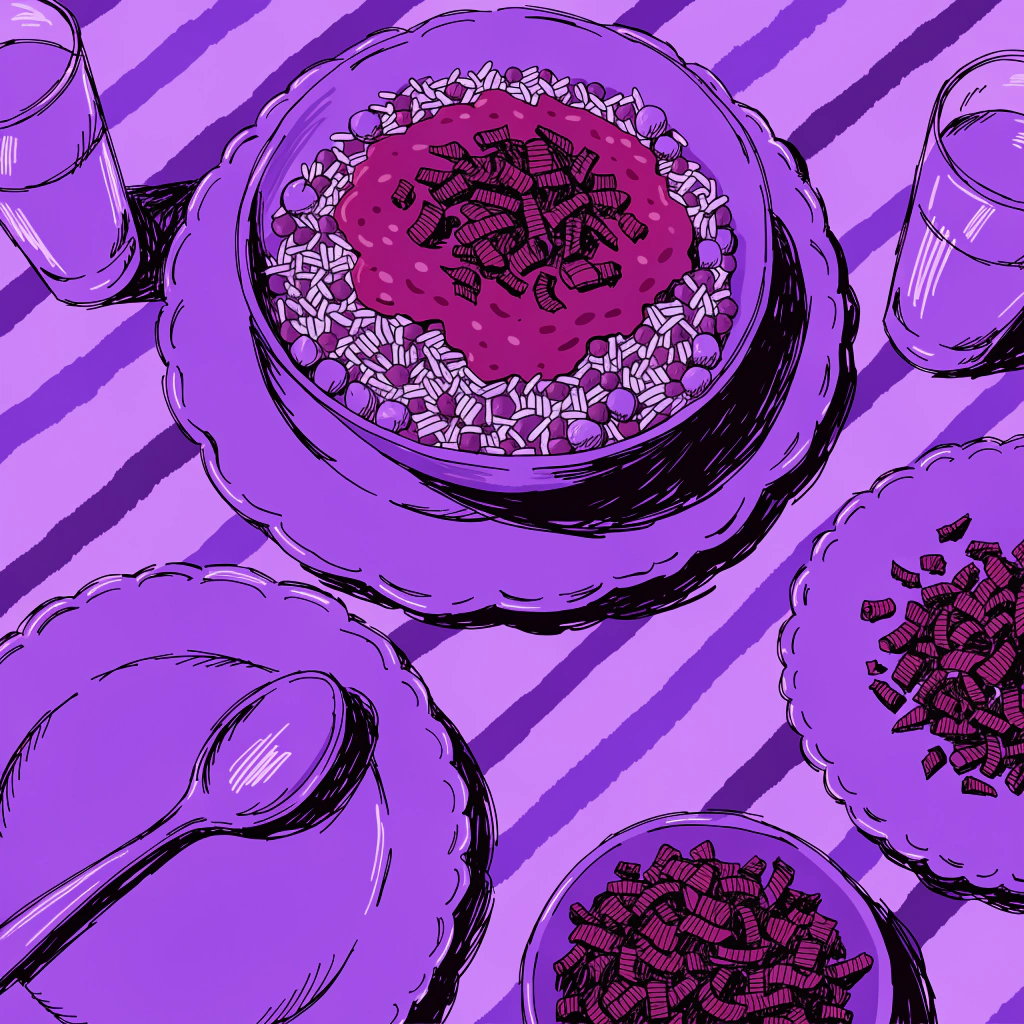
Koshary: A Famous Egyptian Food
Koshary is a very famous food in Egypt. Many people eat it every day because it is cheap and delicious. It is the national dish of Egypt.
There are many things in Koshary. It has rice, pasta, and lentils. It also has small fried onions and a red tomato sauce on top. Some people like it spicy. They add a special hot sauce.
You can find Koshary in many shops in Cairo and other cities. It is special because it comes from different cultures, but now it is 100% Egyptian. Everyone loves Koshary!
نکته دستوری
الگو: Present Simple with 'Be'
"Koshary is a very famous food in Egypt."
We use 'is' with singular nouns to describe facts or states. In this sentence, it describes what Koshary is.
الگو: Present Simple with 'Has'
"It has rice, pasta, and lentils."
We use 'has' with the pronoun 'it' to show possession or parts of a whole. Here, it lists the ingredients of the dish.
درک خود را بسنجید
10 سوال · A1 مبتدی · 1 پیشنمایش رایگان
آنچه از این مقاله آموختید را بسنجید. به همه سؤالات پاسخ دهید و XP کسب کنید!
What ingredients are in Koshary?
آیا میخواهید آزمون را تمام کنید؟
9 سؤال دیگر منتظر شماست. ثبتنام رایگان کنید تا آزمون کامل را باز کنید و XP کسب کنید!
ثبتنام رایگانقبلاً ثبتنام کردی؟ ورود
جزئیات سؤالات
What ingredients are in Koshary?
پاسخ شما:
پاسخ درست: Rice, pasta, and lentils
Koshary is the national dish of Egypt.
پاسخ شما:
پاسخ درست: درست
What does 'cheap' mean?
پاسخ شما:
پاسخ درست: Not expensive
Some people like it _____ and add hot sauce.
پاسخ شما:
پاسخ درست: spicy
Koshary: The Most Popular Meal in Egypt
Koshary is the national dish of Egypt and it is a very special meal. It is a mix of many different ingredients. You can find it in big restaurants or small shops on the street. It is cheaper than a steak, but it is very delicious and filling.
The history of koshary is very interesting. In the 19th century, British soldiers came to Egypt. They brought a dish from India called 'khichdi'. This Indian meal had rice and lentils. Later, the Egyptian people changed the recipe. They added pasta because of Italian influence. They also added a spicy tomato sauce and vinegar.
Today, a bowl of koshary has rice, macaroni, and brown lentils. On top, there are crispy fried onions and chickpeas. Some people think it is better than other fast foods because it gives you a lot of energy. When you visit Cairo, you must try koshary. It is a famous part of Egyptian culture and everyone loves it.
نکته دستوری
الگو: Comparatives
"It is cheaper than a steak, but it is very delicious and filling."
We use the comparative form to compare two things. For short adjectives, we add '-er' and use the word 'than' after the adjective.
الگو: Past Simple
"British soldiers came to Egypt."
The past simple is used for actions that finished in the past. Many common verbs are irregular, such as 'come' which changes to 'came'.
درک خود را بسنجید
11 سوال · A2 مقدماتی · 1 پیشنمایش رایگان
آنچه از این مقاله آموختید را بسنجید. به همه سؤالات پاسخ دهید و XP کسب کنید!
Where did the original dish 'khichdi' come from?
آیا میخواهید آزمون را تمام کنید؟
10 سؤال دیگر منتظر شماست. ثبتنام رایگان کنید تا آزمون کامل را باز کنید و XP کسب کنید!
ثبتنام رایگانقبلاً ثبتنام کردی؟ ورود
جزئیات سؤالات
Where did the original dish 'khichdi' come from?
پاسخ شما:
پاسخ درست: India
Koshary only contains one ingredient.
پاسخ شما:
پاسخ درست: نادرست
What does 'spicy' mean?
پاسخ شما:
پاسخ درست: Strong, hot taste
Koshary is the _____ dish of Egypt.
پاسخ شما:
پاسخ درست: national
What is on top of a koshary bowl?
پاسخ شما:
پاسخ درست: Fried onions
Koshary: The Heart of Egyptian Street Food
Koshary is widely known as the national dish of Egypt. It is a unique meal that has been enjoyed by millions of people for many years. Although it is now a symbol of Egyptian culture, its history is actually quite international. This dish is a perfect example of how different cultures can influence each other through food.
In the mid-19th century, British soldiers brought a dish called 'khichdi' from India to Egypt. This simple meal, which consisted of rice and lentils, was quickly adapted by local cooks. Later, Italian migrants who lived in Egypt added pasta and tomato sauce to the recipe. This mix of different traditions created the modern Koshary that is served today in every Egyptian city.
The dish is made from a variety of ingredients, including rice, macaroni, and brown lentils. These are layered carefully and then topped with a spicy tomato sauce, chickpeas, and crispy fried onions. Many people also add 'da'ah', which is a sharp garlic vinegar, or a hot chili sauce. Because it contains no meat, it is a perfect choice for vegetarians and is very affordable for everyone.
Koshary has become a culinary phenomenon because it is both filling and delicious. It is sold by street vendors and in specialized restaurants that only serve this one dish. These places are often very loud and busy, reflecting the energetic atmosphere of Egyptian life. If you visit Cairo, you must try this amazing meal which represents the rich history of trade and cultural exchange in the region. It is more than just food; it is a piece of Egyptian history on a plate.
نکته دستوری
الگو: Passive Voice
"Koshary is widely known as the national dish of Egypt."
The passive voice is used here to focus on the dish rather than the people who know it. It is formed using 'to be' + the past participle (known).
الگو: Relative Clauses
"Italian migrants who lived in Egypt added pasta and tomato sauce to the recipe."
The relative clause 'who lived in Egypt' provides essential information about the migrants. We use 'who' for people to connect two ideas into one sentence.
درک خود را بسنجید
11 سوال · B1 متوسط · 1 پیشنمایش رایگان
آنچه از این مقاله آموختید را بسنجید. به همه سؤالات پاسخ دهید و XP کسب کنید!
Where did the original idea for Koshary come from?
آیا میخواهید آزمون را تمام کنید؟
10 سؤال دیگر منتظر شماست. ثبتنام رایگان کنید تا آزمون کامل را باز کنید و XP کسب کنید!
ثبتنام رایگانقبلاً ثبتنام کردی؟ ورود
جزئیات سؤالات
Where did the original idea for Koshary come from?
پاسخ شما:
پاسخ درست: India
Koshary contains several types of meat.
پاسخ شما:
پاسخ درست: نادرست
What does 'affordable' mean?
پاسخ شما:
پاسخ درست: Not expensive
Koshary has become a culinary _____ because it is both filling and delicious.
پاسخ شما:
پاسخ درست: phenomenon
Which group added pasta to the dish?
پاسخ شما:
پاسخ درست: Italian migrants
کوشاری: نمادی از همزیستی فرهنگی در آشپزی مصری
کوشاری، غذای ملی و بیبدیل مصر، نه تنها یک وعده غذایی ساده است، بلکه بازتابی از تاریخ غنی و تبادلات فرهنگی این کشور به شمار میآید. این غذای محبوب که در میان اقشار مختلف جامعه مصر از جایگاه ویژهای برخوردار است، داستانی جذاب از تکامل و تلفیق فرهنگهای گوناگون را روایت میکند. هرچند امروزه کوشاری به نمادی جداییناپذیر از هویت مصری تبدیل شده است، اما ریشههای آن به فراتر از مرزهای این سرزمین پهناور میرسد.
بر اساس شواهد تاریخی، پیدایش کوشاری به اواسط قرن نوزدهم میلادی بازمیگردد. بسیاری معتقدند که این غذا از «کیچری» هندی الهام گرفته شده است؛ غذایی که در دوران اشغال هند توسط بریتانیا، توسط کارگران و مهاجران هندی به مصر آورده شد. کیچری که ترکیبی از برنج و عدس بود، به تدریج در فرهنگ آشپزی مصریان جای گرفت و با ذائقه محلی تطبیق یافت. این دوره، سرآغاز مسیری بود که کوشاری را به سوی شکل امروزی خود هدایت کرد.
با گذشت زمان و تحت تأثیر حضور گسترده مهاجران ایتالیایی در مصر، عناصر جدیدی به این غذای اولیه اضافه شد. پاستا و سس گوجهفرنگی، که از اجزای اصلی آشپزی ایتالیایی هستند، به شیوهای خلاقانه وارد دستور پخت کوشاری شدند. این تلفیق هوشمندانه، نه تنها طعم و بافت کوشاری را غنیتر کرد، بلکه آن را به غذایی منحصر به فرد با لایههای متنوع تبدیل نمود. افزودن نخود و پیاز داغ نیز به این ترکیب، به تدریج کوشاری را به همان شکلی که امروز میشناسیم، کامل کرد.
امروزه، کوشاری نه تنها یک غذای خیابانی محبوب است، بلکه در رستورانهای مجلل نیز سرو میشود و نمادی از وحدت و همزیستی در جامعه مصر محسوب میگردد. توانایی این غذا در جذب و ادغام عناصر فرهنگی مختلف، آن را به شاهدی زنده بر تاریخ چندفرهنگی مصر تبدیل کرده است. کوشاری با هر قاشق، داستانی از تجارت، مهاجرت و سازگاری را بازگو میکند؛ داستانی که از هند آغاز شد، از اروپا عبور کرد و در قلب مصر به کمال رسید.
بنابراین، میتوان گفت که کوشاری فراتر از یک غذای لذیذ، یک پدیده فرهنگی است که توانسته میراث غنی و پیچیده مصر را در خود جای دهد. این غذا، با ترکیبات ساده اما پرمغز و طعمهای دلنشین، همچنان یکی از ستونهای اصلی فرهنگ آشپزی مصر باقی مانده و هر روزه میلیونها نفر را در سراسر این کشور و حتی فراتر از آن، به خود جلب میکند.
نکته دستوری
الگو: فعل مجهول (Passive Voice)
"بسیاری معتقدند که این غذا از «کیچری» هندی الهام گرفته شده است."
فعل مجهول زمانی به کار میرود که فاعل جمله مشخص نباشد یا اهمیت کمتری نسبت به مفعول و عملی که روی آن انجام شده، داشته باشد. در فارسی، معمولاً با استفاده از اسم مفعول (صفت مفعولی) و فعل «شدن» ساخته میشود، مانند «گرفته شده است».
الگو: جملات موصولی با «که» (Relative Clauses with 'ke')
"این غذای محبوب که در میان اقشار مختلف جامعه مصر از جایگاه ویژهای برخوردار است، داستانی جذاب از تکامل و تلفیق فرهنگهای گوناگون را روایت میکند."
«که» در اینجا برای وصل کردن یک جمله فرعی (جمله موصولی) به جمله اصلی به کار رفته و اطلاعات بیشتری در مورد اسم یا ضمیر قبل از خود میدهد. این ساختار به گسترش و پیچیدگی جمله کمک میکند و روابط معنایی بین اجزا را روشنتر میسازد.
الگو: عبارات ربطی و قیدی برای بیان روابط علّی و نتیجهای
"این تلفیق هوشمندانه، نه تنها طعم و بافت کوشاری را غنیتر کرد، بلکه آن را به غذایی منحصر به فرد با لایههای متنوع تبدیل نمود."
عباراتی مانند «نه تنها... بلکه...» برای بیان روابط علت و معلولی یا اضافه کردن اطلاعات به صورت تأکیدی استفاده میشوند. این ساختارها به انسجام متن کمک کرده و امکان بیان ایدههای پیچیدهتر و جامعتر را فراهم میآورند و برای سطح B2 بسیار کاربردی هستند.
درک خود را بسنجید
11 سوال · B2 بالاتر از متوسط · 1 پیشنمایش رایگان
آنچه از این مقاله آموختید را بسنجید. به همه سؤالات پاسخ دهید و XP کسب کنید!
کدام یک از موارد زیر، به عنوان غذای ملی مصر شناخته میشود؟
آیا میخواهید آزمون را تمام کنید؟
10 سؤال دیگر منتظر شماست. ثبتنام رایگان کنید تا آزمون کامل را باز کنید و XP کسب کنید!
ثبتنام رایگانقبلاً ثبتنام کردی؟ ورود
جزئیات سؤالات
کدام یک از موارد زیر، به عنوان غذای ملی مصر شناخته میشود؟
پاسخ شما:
پاسخ درست: کوشاری
کوشاری تنها در رستورانهای مجلل مصر سرو میشود و در خیابانها یافت نمیشود.
پاسخ شما:
پاسخ درست: نادرست
معنی کلمه «تلفیق» چیست؟
پاسخ شما:
پاسخ درست: ترکیب کردن
پیدایش کوشاری به اواسط قرن ______ میلادی بازمیگردد.
پاسخ شما:
پاسخ درست: نوزدهم
کدام کشور الهامبخش اولیه غذای کوشاری بوده است؟
پاسخ شما:
پاسخ درست: هند
The Culinary Synthesis of Cairo: Deconstructing the Koshary Phenomenon
To the uninitiated observer, the bustling streets of Cairo present a sensory overload, yet amidst the cacophony of commerce and traffic, one aroma remains pervasive: the pungent, comforting scent of fried onions and spiced tomato sauce. This is the olfactory signature of Koshary, Egypt’s undisputed national dish. While it is now deeply ingrained in the Egyptian psyche, Koshary is a fascinating study in cultural amalgamation, serving as a palatable record of the nation's multifaceted history. Rarely does a single bowl of food encapsulate such a complex narrative of trade, colonialism, and adaptation.
The origins of Koshary are not found in the ancient granaries of the Pharaohs, but rather in the globalized networks of the 19th century. Historians posit that the dish’s blueprint was the Indian 'khichdi,' a modest mixture of rice and lentils. It was the British occupation of Egypt that facilitated this culinary transfer, as Indian soldiers brought their dietary staples to the banks of the Nile. However, the Egyptian populace did not merely adopt this foreign import; they radically reimagined it. The subsequent proliferation of Italian communities in cities like Alexandria and Cairo introduced pasta and tomato sauce into the mix, transforming a simple legume-based meal into a high-carb architectural marvel.
What makes Koshary truly remarkable is its egalitarian nature. In a society often divided by socio-economic strata, the Koshary shop serves as a rare confluence where the elite and the working class dine side-by-side. The dish’s affordability and nutritional density have ensured its ubiquity, yet its appeal transcends mere sustenance. The meticulous layering of rice, macaroni, lentils, and chickpeas, topped with a zesty tomato sauce, garlic vinegar (da’ah), and a crown of caramelized onions, requires a precision that belies its humble status. This complexity reflects the resilience of a culture that takes disparate, often colonial, influences and synthesizes them into something uniquely and fiercely local.
Critically speaking, the evolution of Koshary mirrors the broader Egyptian experience of the last two centuries. It represents a form of culinary resistance; by incorporating ingredients from their occupiers—the British and the Italians—Egyptians effectively decolonized their plates, creating a dish that belongs to no one else. The nominalisation of this process—the ‘Egyptianization’ of global ingredients—is a testament to the country's creative agency. Today, Koshary stands as a vestige of a cosmopolitan past and a symbol of modern national identity. It is not merely a meal; it is a historical document in a bowl, reminding every diner that identity is never static, but always a work of delicious synthesis.
نکته دستوری
الگو: Negative Inversion
"Rarely does a single bowl of food encapsulate such a complex narrative of trade, colonialism, and adaptation."
Used for emphasis, the auxiliary verb 'does' precedes the subject 'a single bowl' because the sentence begins with the negative adverb 'Rarely'.
الگو: Cleft Sentences
"What makes Koshary truly remarkable is its egalitarian nature."
This 'What-cleft' focuses the reader's attention on the specific quality being discussed (egalitarian nature) by introducing it with a relative clause.
الگو: Nominalisation
"The nominalisation of this process—the ‘Egyptianization’ of global ingredients—is a testament to the country's creative agency."
The text uses nouns like 'Egyptianization' and 'nominalisation' instead of verbs to create a more formal, academic tone and to treat complex actions as single concepts.
درک خود را بسنجید
12 سوال · C1 پیشرفته · 1 پیشنمایش رایگان
آنچه از این مقاله آموختید را بسنجید. به همه سؤالات پاسخ دهید و XP کسب کنید!
According to the article, what was the primary Indian influence on Koshary?
آیا میخواهید آزمون را تمام کنید؟
11 سؤال دیگر منتظر شماست. ثبتنام رایگان کنید تا آزمون کامل را باز کنید و XP کسب کنید!
ثبتنام رایگانقبلاً ثبتنام کردی؟ ورود
جزئیات سؤالات
According to the article, what was the primary Indian influence on Koshary?
پاسخ شما:
پاسخ درست: The base mixture of rice and lentils
The article suggests that Koshary was a dish eaten by Ancient Egyptians during the time of the Pharaohs.
پاسخ شما:
پاسخ درست: نادرست
What does the word 'ubiquity' refer to in the text?
پاسخ شما:
پاسخ درست: The fact that it is found everywhere in Egypt
The article describes Koshary as a rare _____ where different social classes eat together.
پاسخ شما:
پاسخ درست: confluence
How does the author characterize the 'Egyptianization' of the dish?
پاسخ شما:
پاسخ درست: As a form of culinary resistance and creative agency
The dish is described as being both a historical record and a symbol of modern identity.
پاسخ شما:
پاسخ درست: درست
The Gastronomic Palimpsest: Koshary and the Sociocultural Synthesis of Modern Egypt
To the uninitiated observer, the bustling streets of Cairo offer a sensory overload that is as chaotic as it is captivating. Yet, amidst the cacophony of car horns and the aromatic tendrils of shisha smoke, there exists a culinary constant: Koshary. Often heralded as the undisputed national dish of Egypt, Koshary is far more than a mere caloric staple; it is a gastronomic palimpsest, a dish whose layers reveal the complex history of trade, empire, and cultural syncretism that has defined the Nile Delta for centuries. Seldom has a single dish so effectively encapsulated the tumultuous narrative of colonial legacy and subsequent cultural appropriation as does Koshary. Were one to dissect its components, one would find not just a meal, but a map of the British Empire’s reach and the Italian diaspora’s influence.
The genesis of Koshary is purportedly rooted in the Indian 'khichdi,' a modest mixture of rice and lentils. It is widely posited by historians that this precursor arrived on Egyptian shores during the mid-19th century, transported by the British who had encountered the dish in the Indian subcontinent. However, to suggest that Koshary is merely a derivative of Indian cuisine would be to overlook the transformative agency of the Egyptian people. Be it the addition of macaroni—a clear vestige of the Italian presence in Egypt during the late 19th and early 20th centuries—or the spicy tomato coulis that provides its characteristic bite, the dish underwent a radical evolution. This juxtaposition of seemingly disparate elements—Indian grains, Italian pasta, and Middle Eastern legumes—creates a panoply of textures and flavors that is uniquely Egyptian.
From a sociological perspective, the ubiquity of Koshary speaks to its egalitarian nature. It is a dish of the proletariat, originally devised as a cost-effective means of providing sustenance using non-perishable pantry staples. Yet, its appeal transcends class boundaries, finding a place in both the humblest street stalls and the most affluent of households. This democratization of consumption suggests a shared national identity that is forged through the ritual of the meal. The veracity of its status as a national icon is unassailable, as it represents a successful synthesis of foreign influences into a coherent, localized whole. In an era where globalization often threatens to homogenize local cultures, Koshary stands as a testament to the resilience of local adaptation.
Furthermore, the preparation of Koshary involves a level of precision that belies its rustic appearance. The lentils must maintain their structural integrity against the softness of the rice, while the fried onions—the 'ward' or 'flowers'—must achieve a crystalline crunch. The dish might arguably be construed as a culinary metaphor for the Egyptian spirit: a resilient core, layered with diverse influences, and topped with a fiery, unapologetic zest. While some purists might lament the loss of 'authentic' pre-colonial diets, most scholars agree that Koshary represents a superior form of cultural hybridity. It is not a symbol of subjugation, but rather one of triumph—the ability of a culture to take the remnants of its occupiers and forge something entirely its own. Ultimately, to consume Koshary is to partake in a historical dialogue, one that continues to evolve with every bowl served in the heart of Cairo.
نکته دستوری
الگو: Negative Inversion
"Seldom has a single dish so effectively encapsulated the tumultuous narrative of colonial legacy and subsequent cultural appropriation as does Koshary."
Inversion is used for rhetorical emphasis after negative or restrictive adverbs (seldom, rarely, never). The auxiliary verb is placed before the subject to create a more formal, academic tone.
الگو: Subjunctive with 'Be it...'
"Be it the addition of macaroni—a clear vestige of the Italian presence in Egypt during the late 19th and early 20th centuries—or the spicy tomato coulis that provides its characteristic bite, the dish underwent a radical evolution."
The phrase 'Be it X or Y' is a fixed subjunctive construction used to express that the following statement is true regardless of which of the mentioned options is the case. It serves to introduce inclusive examples.
الگو: Academic Hedging with Modal Verbs
"The dish might arguably be construed as a culinary metaphor for the Egyptian spirit."
Hedging is a crucial C2 skill used to soften claims and avoid over-generalization. The combination of 'might' (possibility), 'arguably' (adverb of degree), and 'be construed' (passive interpretation) demonstrates scholarly caution.
درک خود را بسنجید
12 سوال · C2 تسلط · 1 پیشنمایش رایگان
آنچه از این مقاله آموختید را بسنجید. به همه سؤالات پاسخ دهید و XP کسب کنید!
What does the author suggest by calling Koshary a 'gastronomic palimpsest'?
آیا میخواهید آزمون را تمام کنید؟
11 سؤال دیگر منتظر شماست. ثبتنام رایگان کنید تا آزمون کامل را باز کنید و XP کسب کنید!
ثبتنام رایگانقبلاً ثبتنام کردی؟ ورود
جزئیات سؤالات
What does the author suggest by calling Koshary a 'gastronomic palimpsest'?
پاسخ شما:
پاسخ درست: It is a meal that contains visible layers of different historical and cultural influences.
The author argues that Koshary is a direct, unedited copy of the Indian dish 'khichdi'.
پاسخ شما:
پاسخ درست: نادرست
What does 'syncretism' mean in the context of the article?
پاسخ شما:
پاسخ درست: The merging of different cultural or historical elements into a new form.
The article states that the _____ of Koshary speaks to its egalitarian nature, as it is found everywhere.
پاسخ شما:
پاسخ درست: ubiquity
According to the text, what role did the British play in the history of Koshary?
پاسخ شما:
پاسخ درست: They acted as the conduit for the Indian influence to reach Egypt.
The author believes that Koshary represents a symbol of triumph over colonial occupiers.
پاسخ شما:
پاسخ درست: درست

