شب والپورگیس: جشن بهار در آلمان
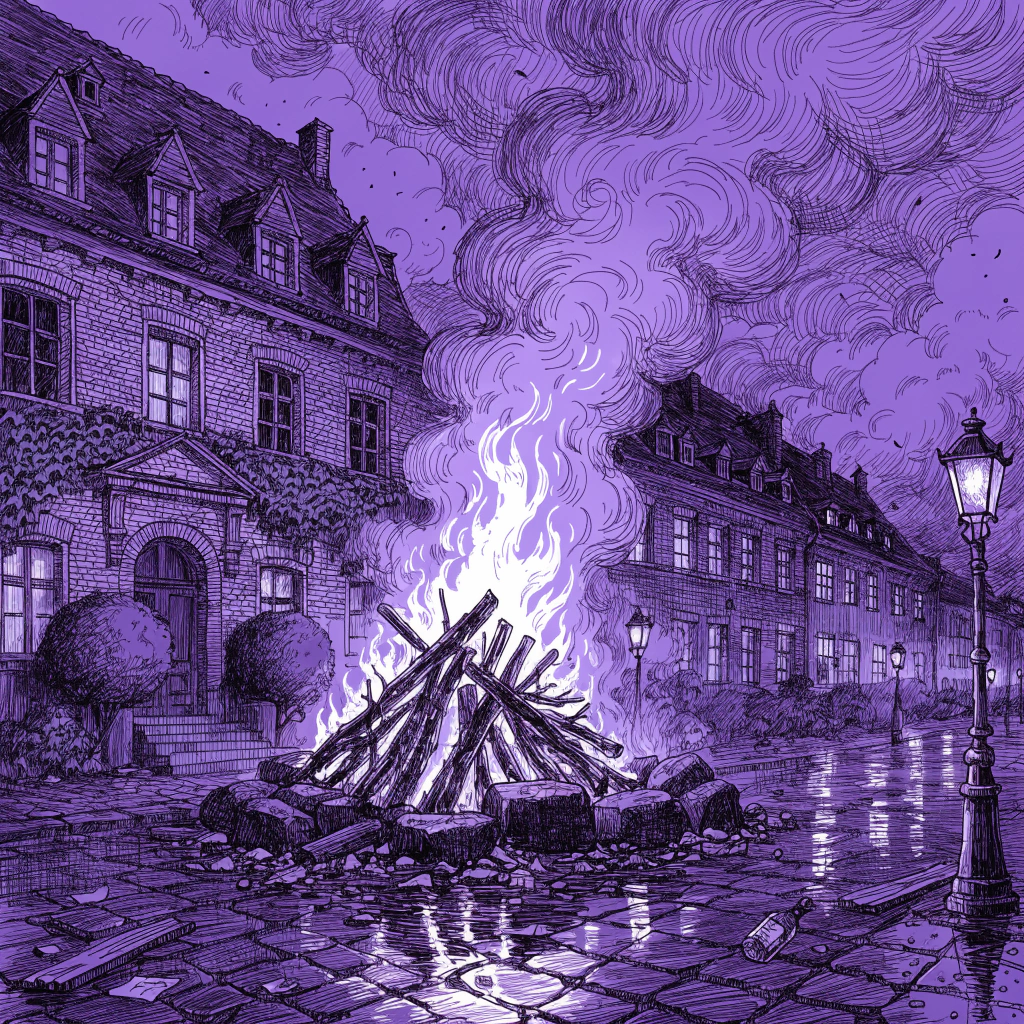
شب والپورگیس یک جشن قدیمی در آلمان است. این جشن در شب ۳۰ آوریل برگزار میشود. مردم این شب را "شب جادوگرها" هم میگویند. در این شب، مردم آتش روشن میکنند. آنها میخواهند زمستان برود و بهار بیاید. این یک جشن برای آمدن بهار است. کوه هارتس در آلمان مهم است. داستانها میگویند جادوگرها به این کوه میروند. آنها در آنجا جشن میگیرند. مردم در آلمان این شب را خیلی دوست دارند. آنها میرقصند و آواز میخوانند.
نکته دستوری
الگو: فعل "است" (Is/Are)
"شب والپورگیس یک جشن قدیمی در آلمان است."
"است" شکل ساده فعل "بودن" به معنی "to be" برای سوم شخص مفرد است. ما از آن برای معرفی یا توصیف یک چیز استفاده میکنیم. مثال: "این یک کتاب است."
الگو: مضاف و مضافالیه (Noun + Noun/Adjective construction)
"شب جادوگرها"
وقتی دو اسم یا یک اسم و یک صفت را با هم میآوریم، اسم اول مضاف و اسم دوم مضافالیه است. یک "ـِـ" (کسره) بین آنها قرار میگیرد که در نوشتار همیشه نمیآید. این ساختار برای نشان دادن مالکیت یا توصیف استفاده میشود. مثال: "خانه دوست".
درک خود را بسنجید
10 سوال · A1 مبتدی · 1 پیشنمایش رایگان
آنچه از این مقاله آموختید را بسنجید. به همه سؤالات پاسخ دهید و XP کسب کنید!
جشن والپورگیس در چه ماهی برگزار میشود؟
آیا میخواهید آزمون را تمام کنید؟
9 سؤال دیگر منتظر شماست. ثبتنام رایگان کنید تا آزمون کامل را باز کنید و XP کسب کنید!
ثبتنام رایگانقبلاً ثبتنام کردی؟ ورود
جزئیات سؤالات
جشن والپورگیس در چه ماهی برگزار میشود؟
پاسخ شما:
پاسخ درست: آوریل
مردم آتش روشن میکنند تا بهار نیاید.
پاسخ شما:
پاسخ درست: نادرست
معنی کلمه "قدیمی" چیست؟
پاسخ شما:
پاسخ درست: چیزی که از گذشته دور است
مردم این شب را "شب ____" هم میگویند.
پاسخ شما:
پاسخ درست: جادوگرها
Witches' Night: A German Spring Tradition
Walpurgisnacht is a very special night in Germany. People celebrate it every year on the night of April 30th. It is also called 'Witches’ Night.' The tradition is older than many modern holidays. It started a long time ago in the Harz Mountains.
According to the stories, witches flew on their brooms to the Brocken mountain. They went there to meet and dance because they wanted to welcome the spring. Today, people still celebrate this night. They wear scary costumes and paint their faces. In many towns, people light big bonfires to stay warm and have fun.
The celebration is louder and more exciting in the Harz region than in other places. Children often play jokes on their neighbors, like hiding garden tools. It is a time for music, dancing, and old stories. People enjoy the festival because it means that the cold winter is finally over.
نکته دستوری
الگو: Past Simple
"It started a long time ago in the Harz Mountains."
We use the past simple to talk about actions that finished in the past. For regular verbs like 'start', we add '-ed' to the end.
الگو: Comparatives
"The celebration is louder and more exciting in the Harz region than in other places."
We use comparatives to compare two things. For short adjectives like 'loud', we add '-er'. For long adjectives like 'exciting', we use the word 'more' before the adjective.
درک خود را بسنجید
11 سوال · A2 مقدماتی · 1 پیشنمایش رایگان
آنچه از این مقاله آموختید را بسنجید. به همه سؤالات پاسخ دهید و XP کسب کنید!
When do people celebrate Walpurgisnacht?
آیا میخواهید آزمون را تمام کنید؟
10 سؤال دیگر منتظر شماست. ثبتنام رایگان کنید تا آزمون کامل را باز کنید و XP کسب کنید!
ثبتنام رایگانقبلاً ثبتنام کردی؟ ورود
جزئیات سؤالات
When do people celebrate Walpurgisnacht?
پاسخ شما:
پاسخ درست: On the night of April 30th
People wear scary costumes during the festival.
پاسخ شما:
پاسخ درست: درست
What is a 'bonfire'?
پاسخ شما:
پاسخ درست: A large fire built outside
The tradition is _____ than many modern holidays.
پاسخ شما:
پاسخ درست: older
Why do people light big fires?
پاسخ شما:
پاسخ درست: To stay warm and have fun
شب والپورگیس: جشنی باستانی و مرموز در آلمان
شب والپورگیس، که در آلمان به آن "هکسنناخت" یا "شب جادوگران" نیز گفته میشود، یک جشن باستانی و جذاب است که هر سال در شب سیام آوریل جشن گرفته میشود. این شب نام خود را از سنت والپورگا، یک راهبه انگلیسی، گرفته است که روز جشن او با جشنهای باستانی بهار در میان مردم همزمان بوده است. به همین دلیل، این جشن ریشههای عمیقی در فرهنگهای پاگانی و مسیحی دارد. این مراسم بیشتر با کوههای هارتس در مرکز آلمان شناخته شده است، جایی که افسانههای زیادی درباره آن وجود دارد.
بر اساس افسانههای محلی و آنچه در کتاب مشهور "فاوست" اثر گوته جاودانه شده است، این شبی است که جادوگران از سراسر اروپا به قله بروکن، بلندترین قله در کوههای هارتس، پرواز میکنند. آنها در آنجا با شیطان ملاقات کرده و به استقبال تغییر فصلها، به خصوص آمدن بهار، میروند. مردم آلمان برای قرنها این شب را جشن گرفتهاند و اعتقاد بر این بوده که این شب مرز بین زمستان سرد و بهار گرم و سرسبز را مشخص میکند. در گذشته، مردم برای محافظت از خود در برابر جادوگران، چوبهای جارو را در مقابل خانههایشان قرار میدادند.
امروزه، جشنهای شب والپورگیس بیشتر جنبه تفریحی و فرهنگی دارند و از ترس و خرافات گذشته فاصله گرفتهاند. در بسیاری از شهرها و روستاها، مردم آتشهای بزرگی روشن میکنند. این آتشها نه تنها برای گرم کردن هوا و دور کردن سرما هستند، بلکه نمادی برای دور کردن ارواح بد و انرژیهای منفی نیز محسوب میشوند. شرکتکنندگان لباسهای جادوگری یا موجودات افسانهای میپوشند و با رقص و موسیقی تا صبح جشن میگیرند. این جشنها، به ویژه در منطقه هارتس، گردشگران زیادی را از سراسر جهان به خود جذب کرده است.
این جشن نشاندهنده ترکیب سنتهای پاگانی قدیمی با اعتقادات مسیحی است و به ما یادآوری میکند که چگونه گذشته و افسانهها در فرهنگ امروز ما نقش دارند. اگرچه جادوگران واقعی دیگر به بروکن پرواز نمیکنند، اما روح این سنت قدیمی همچنان زنده است و هر سال در آلمان با شور و هیجان خاصی برگزار میشود. این رویداد فرصتی عالی برای تجربه فرهنگ غنی آلمان و لذت بردن از یک شب پر از شادی و رمز و راز است.
نکته دستوری
الگو: فعل مجهول (Passive Voice)
"شب والپورگیس ... هر سال در شب سیام آوریل جشن گرفته میشود."
فعل مجهول زمانی استفاده میشود که فاعل جمله (انجامدهنده کار) مهم نیست یا مشخص نیست. برای ساختن آن، از فعل "شدن" به همراه صفت مفعولی فعل اصلی استفاده میکنیم.
الگو: جملات موصولی با "که" (Relative Clauses with "ke")
"شب والپورگیس، که در آلمان به آن 'هکسنناخت' یا 'شب جادوگران' نیز گفته میشود، یک جشن باستانی و جذاب است."
از "که" برای اضافه کردن اطلاعات بیشتر درباره یک اسم یا ضمیر در جمله اصلی استفاده میکنیم. این جملات به ما کمک میکنند تا توصیف دقیقتری ارائه دهیم و جملات پیچیدهتری بسازیم.
درک خود را بسنجید
11 سوال · B1 متوسط · 1 پیشنمایش رایگان
آنچه از این مقاله آموختید را بسنجید. به همه سؤالات پاسخ دهید و XP کسب کنید!
شب والپورگیس در چه تاریخی جشن گرفته میشود؟
آیا میخواهید آزمون را تمام کنید؟
10 سؤال دیگر منتظر شماست. ثبتنام رایگان کنید تا آزمون کامل را باز کنید و XP کسب کنید!
ثبتنام رایگانقبلاً ثبتنام کردی؟ ورود
جزئیات سؤالات
شب والپورگیس در چه تاریخی جشن گرفته میشود؟
پاسخ شما:
پاسخ درست: ۳۰ آوریل
در گذشته، مردم برای دور کردن جادوگران، چوبهای جارو را در مقابل خانههایشان قرار میدادند.
پاسخ شما:
پاسخ درست: درست
"باستانی" به چه معناست؟
پاسخ شما:
پاسخ درست: قدیمی
جادوگران در شب والپورگیس به قله _____ در کوههای هارتس پرواز میکنند.
پاسخ شما:
پاسخ درست: بروکن
جشنهای شب والپورگیس بیشتر جنبه تفریحی و _____ دارند.
پاسخ شما:
پاسخ درست: فرهنگی
The Mystique of Walpurgisnacht: From Ancient Folklore to Modern Celebration
Walpurgisnacht, often referred to as 'Witches' Night,' is a traditional German festival celebrated annually on the night of April 30th. While its name originates from Saint Walpurga, an English missionary who lived during the eighth century and was canonized for her work in Germany, the roots of the celebration stretch back much further into pre-Christian pagan history. Historically, it marked the arrival of spring and the end of the dark, cold winter. Today, it remains a prominent cultural event, particularly in the Harz region, where legendary tales of supernatural gatherings continue to captivate the public imagination and attract thousands of tourists.
According to local folklore, this is the night when witches are said to fly on broomsticks to the Brocken, the highest peak in northern Germany, to meet with the devil. This concept was famously immortalized in Johann Wolfgang von Goethe’s masterpiece 'Faust,' where the protagonist witnesses a chaotic and eerie gathering of spirits. In modern times, these ancient beliefs have evolved into lively festivities that blend historical myths with contemporary fun. Many towns throughout Germany commemorate the occasion with large bonfires, which were originally intended to ward off evil spirits and protect livestock from harm. While the superstitious elements have largely faded in the face of modern science, the sense of community and regional pride remains incredibly strong.
In addition to the bonfires, many young people participate in 'Hexennacht' pranks, which involve playful mischief such as wrapping cars in toilet paper or hiding garden gates. However, the most widespread modern tradition is the 'Tanz in den Mai' or 'Dance into May.' As the clock strikes midnight, the focus shifts from the eerie legends of the night to the joyful celebration of May Day. This transition symbolizes the final victory of spring over winter, as participants dance the night away to welcome the new season.
For language learners, understanding Walpurgisnacht provides a fascinating insight into how Germany balances its Christian heritage with its ancient past. Although the original religious significance of Saint Walpurga's feast day has diminished for many, the festival has been preserved as a vital part of regional identity. Whether through dancing, lighting fires, or retelling old myths, the spirit of Walpurgisnacht continues to thrive, seamlessly blending history with modern entertainment. Consequently, the event serves as a powerful reminder of how cultural traditions can adapt over centuries while maintaining their core essence and charm.
نکته دستوری
الگو: Passive Voice
"This concept was famously immortalized in Johann Wolfgang von Goethe’s masterpiece 'Faust'."
The passive voice is used when the focus is on the action or the object receiving the action rather than the person performing it. It is formed using 'to be' + past participle.
الگو: Relative Clauses
"Saint Walpurga, an English missionary who lived during the eighth century..."
Relative clauses provide essential or extra information about a noun. 'Who' is used for people, and 'which' or 'that' is used for things.
الگو: Present Perfect Passive
"...the festival has been preserved as a vital part of regional identity."
This tense describes an action that was completed in the past but has relevance in the present, focusing on the result. It is formed with 'has/have' + 'been' + past participle.
درک خود را بسنجید
11 سوال · B2 بالاتر از متوسط · 1 پیشنمایش رایگان
آنچه از این مقاله آموختید را بسنجید. به همه سؤالات پاسخ دهید و XP کسب کنید!
Where is the most famous location for Walpurgisnacht celebrations in Germany?
آیا میخواهید آزمون را تمام کنید؟
10 سؤال دیگر منتظر شماست. ثبتنام رایگان کنید تا آزمون کامل را باز کنید و XP کسب کنید!
ثبتنام رایگانقبلاً ثبتنام کردی؟ ورود
جزئیات سؤالات
Where is the most famous location for Walpurgisnacht celebrations in Germany?
پاسخ شما:
پاسخ درست: The Harz Mountains
The name 'Walpurgisnacht' comes from an ancient pagan deity.
پاسخ شما:
پاسخ درست: نادرست
What does 'diminished' mean in the context of the article?
پاسخ شما:
پاسخ درست: Became smaller or less important
The night of April 30th marks the _____ from winter to spring.
پاسخ شما:
پاسخ درست: transition
What was the original purpose of lighting bonfires during this night?
پاسخ شما:
پاسخ درست: To ward off evil spirits
The Confluence of Myth and Modernity: Unpacking the Enigma of Walpurgisnacht
Seldom does a tradition encapsulate the tension between the archaic and the modern as vividly as Walpurgisnacht. Celebrated on the night of April 30th, this German festival, often referred to as Hexennacht or 'Witches' Night,' serves as a profound case study in cultural syncretism. While its nomenclature honors Saint Walpurga, an eighth-century abbess whose canonization coincided with the onset of May, the event’s core is inextricably linked to pre-Christian, pagan vestiges. It is this peculiar marriage of the hagiographic and the occult that defines the night’s unique character, particularly within the fog-shrouded peaks of the Harz Mountains.
In the collective consciousness of Germany, the Brocken—the highest summit in the Harz range—acts as the epicenter of this ethereal revelry. According to local folklore, it is here that witches congregate to commune with the devil, ushering in the arrival of spring through subversive rituals. However, it was the literary transmutation of these legends by Johann Wolfgang von Goethe in his magnum opus, 'Faust,' that elevated Walpurgisnacht from localized superstition to a cornerstone of European literary iconography. Through Goethe’s lens, the mountain becomes a site of chaotic beauty, where the boundaries between the terrestrial and the supernatural are rendered porous.
What remains most striking about contemporary celebrations is the sheer endurance of these mythic narratives in a secularized society. In modern-day towns like Thale and Goslar, the intensification of tourism has led to a commodification of the witch figure. Yet, beneath the veneer of commercialized costumes and public bonfires, there persists a genuine psychological fascination with the 'other.' The act of donning masks and dancing around flames represents a momentary suspension of societal norms—a brief, ephemeral escape from the rigid structures of modern life. It is not merely a celebration of spring’s triumph over winter, but a ritualistic acknowledgment of the darkness that precedes the light.
Furthermore, the sociopolitical implications of Walpurgisnacht cannot be overlooked. Historically, the 'witch' was often a figure of marginalization, representing those who existed outside the ecclesiastical or patriarchal order. By reclaiming this imagery, modern participants engage in a form of symbolic empowerment. The bonfire, once a tool of purification or execution, is transformed into a beacon of community and warmth. This shift illustrates the fluidity of cultural symbols and their ability to be repurposed across centuries.
Ultimately, Walpurgisnacht persists because it addresses a fundamental human need for narrative and mystery. In an era dominated by empirical rationalism, the allure of the Brocken provides a necessary counter-narrative. Whether viewed through the prism of Goethe’s poetry or the lens of modern sociology, the night remains a testament to the power of folklore to adapt, survive, and provoke critical reflection on our shared heritage. As the flames flicker against the Harz skyline, the distinction between history and myth becomes as thin as the mountain mist, reminding us that the past is never truly buried; it is simply waiting for the right season to resurface.
نکته دستوری
الگو: Inversion after negative or restrictive adverbials
"Seldom does a tradition encapsulate the tension between the archaic and the modern as vividly as Walpurgisnacht."
When a sentence starts with a restrictive word like 'seldom', 'never', or 'rarely', the auxiliary verb comes before the subject. This structure is used for emphasis and is common in formal C1-level writing.
الگو: Cleft Sentences
"It is this peculiar marriage of the hagiographic and the occult that defines the night’s unique character."
Cleft sentences use the structure 'It is/was + [focused part] + that/who' to emphasize a specific piece of information. Here, it highlights the specific cause of the festival's character.
الگو: Nominalisation
"The intensification of tourism has led to a commodification of the witch figure."
Nominalisation involves turning verbs (intensify, commodify) into nouns (intensification, commodification). This makes the text more abstract, formal, and concise, which is a hallmark of advanced English.
درک خود را بسنجید
12 سوال · C1 پیشرفته · 1 پیشنمایش رایگان
آنچه از این مقاله آموختید را بسنجید. به همه سؤالات پاسخ دهید و XP کسب کنید!
What does the author suggest is the primary reason for the unique character of Walpurgisnacht?
آیا میخواهید آزمون را تمام کنید؟
11 سؤال دیگر منتظر شماست. ثبتنام رایگان کنید تا آزمون کامل را باز کنید و XP کسب کنید!
ثبتنام رایگانقبلاً ثبتنام کردی؟ ورود
جزئیات سؤالات
What does the author suggest is the primary reason for the unique character of Walpurgisnacht?
پاسخ شما:
پاسخ درست: The blend of Christian hagiography and ancient pagan remnants.
Goethe's 'Faust' helped transition Walpurgisnacht from a local belief to a significant European cultural symbol.
پاسخ شما:
پاسخ درست: درست
Which word describes something that lasts for only a very short time?
پاسخ شما:
پاسخ درست: Ephemeral
The author notes that the 'witch' was historically a figure of _____, representing those outside societal orders.
پاسخ شما:
پاسخ درست: marginalization
According to the text, what does the modern act of wearing masks during the festival represent?
پاسخ شما:
پاسخ درست: A temporary escape from the rigid structures of daily life.
The article argues that the bonfire has retained its historical meaning of execution and purification.
پاسخ شما:
پاسخ درست: نادرست
Nocturnal Transgressions and the Vernal Threshold: A Socio-Cultural Deconstruction of Walpurgisnacht
The transition from the dormant chill of winter to the burgeoning vitality of spring has long served as a focal point for human ritual, yet few traditions encapsulate this liminality with such visceral intensity as Walpurgisnacht. Celebrated on the eve of May 1st, particularly within the fog-shrouded peaks of the Harz Mountains in Germany, this 'Witches’ Night' represents a complex tapestry of hagiography, pagan residue, and literary artifice. While contemporary iterations may lean toward the carnivalesque, a deeper scholarly interrogation reveals a festival predicated upon the subversion of social norms and the negotiation of spiritual boundaries.
Etymologically, the name derives from Saint Walpurga, an eighth-century abbess whose canonization coincided with the traditional pagan celebrations of the spring equinox. This syncretism is not merely an incidental historical footnote; rather, it reflects the Church's strategic efforts to assimilate pre-Christian agrarian rites into a Christian framework. Should one examine the historical records, it becomes evident that the 'Hexennacht' (Witches' Night) was less about the veneration of a saint and more about the perceived threat of the 'other.' In the medieval imagination, the Brocken—the highest peak of the Harz—was envisioned as a topographical locus for diabolical congress. It was here, folklore suggested, that witches would congregate to commune with the devil, a narrative that served to reinforce moral boundaries through the depiction of their transgression.
The apotheosis of this mythos occurred not in the annals of folk history, but in the realm of high literature. Johann Wolfgang von Goethe’s 'Faust' immortalized the Walpurgisnacht, elevating a local superstition into a profound philosophical inquiry. Through the lens of Mephistopheles and Faust, the mountain becomes a site of chaotic energy where the boundaries between the material and the ethereal dissolve. Were it not for Goethe’s poetic intervention, it is highly probable that the specific imagery of witches riding broomsticks toward the Brocken would have remained a vestigial curiosity rather than a globally recognized cultural trope. Goethe utilizes the night to explore the atavistic impulses that reside beneath the veneer of Enlightenment rationality, suggesting that the human psyche requires a periodic release of its more subversive elements.
In the modern era, Walpurgisnacht has undergone a significant transformation, oscillating between folkloric preservation and commercialized spectacle. In towns like Schierke and Thale, the night is characterized by a theatrical embrace of the macabre. Participants, adorned in elaborate costumes, partake in 'Maifeuer' (May fires), intended to purge the remnants of winter and ward off malevolent spirits. However, one must apply academic hedging when discussing the 'authenticity' of these practices. Much of what is currently performed is a 'reinvented tradition,' a nostalgic reconstruction that satisfies the contemporary appetite for the mystical while simultaneously serving as a lucrative driver for regional tourism.
Nevertheless, the enduring allure of Walpurgisnacht suggests a persistent human need to mark the passage of time through the lens of the supernatural. It is not merely a celebration of spring's arrival, but a sophisticated cultural mechanism for confronting the unknown. By projecting our anxieties and desires onto the figure of the witch and the wild landscape of the Harz, we navigate the precarious threshold between the civilized world and the untamed wilderness. Thus, Walpurgisnacht remains a potent reminder that, despite our technological advancements, the ancient rhythms of the earth and the shadows of the past continue to exert a profound influence on the collective unconscious.
نکته دستوری
الگو: The Subjunctive Mood with 'Should'
"Should one examine the historical records, it becomes evident that the 'Hexennacht' was less about the veneration of a saint..."
This is a formal alternative to a first-conditional 'if' clause. It uses 'should' at the beginning of the sentence to express a hypothetical condition in a scholarly, sophisticated manner.
الگو: Inverted Conditionals (Third Conditional)
"Were it not for Goethe’s poetic intervention, it is highly probable that the specific imagery... would have remained a vestigial curiosity."
The 'if' is omitted and the verb 'were' is moved to the front. This structure is used in formal writing to hypothesize about how the past might have been different.
الگو: Academic Hedging
"However, one must apply academic hedging when discussing the 'authenticity' of these practices."
This involves using cautious language to avoid making over-generalized or absolute claims. It acknowledges the complexity and potential for varying interpretations in scholarly discourse.
درک خود را بسنجید
12 سوال · C2 تسلط · 1 پیشنمایش رایگان
آنچه از این مقاله آموختید را بسنجید. به همه سؤالات پاسخ دهید و XP کسب کنید!
According to the article, what was the primary reason for the association between Saint Walpurga and the pagan spring rites?
آیا میخواهید آزمون را تمام کنید؟
11 سؤال دیگر منتظر شماست. ثبتنام رایگان کنید تا آزمون کامل را باز کنید و XP کسب کنید!
ثبتنام رایگانقبلاً ثبتنام کردی؟ ورود
جزئیات سؤالات
According to the article, what was the primary reason for the association between Saint Walpurga and the pagan spring rites?
پاسخ شما:
پاسخ درست: The date of her canonization happened to coincide with existing pagan festivals.
The author suggests that the modern celebration of Walpurgisnacht is an entirely authentic and unchanged ancient ritual.
پاسخ شما:
پاسخ درست: نادرست
What does the term 'apotheosis' refer to in the context of the Brocken mythos?
پاسخ شما:
پاسخ درست: The highest point or culmination of the myth's development.
What role did Goethe's 'Faust' play in the history of Walpurgisnacht?
پاسخ شما:
پاسخ درست: It transformed a local superstition into a globally recognized literary and philosophical trope.
The article argues that Walpurgisnacht serves as a way for humans to confront the unknown and project their anxieties.
پاسخ شما:
پاسخ درست: درست
The author describes the transition period between winter and spring as a state of _____, representing a threshold between two phases.
پاسخ شما:
پاسخ درست: liminality

