Magha Puja in Thailand
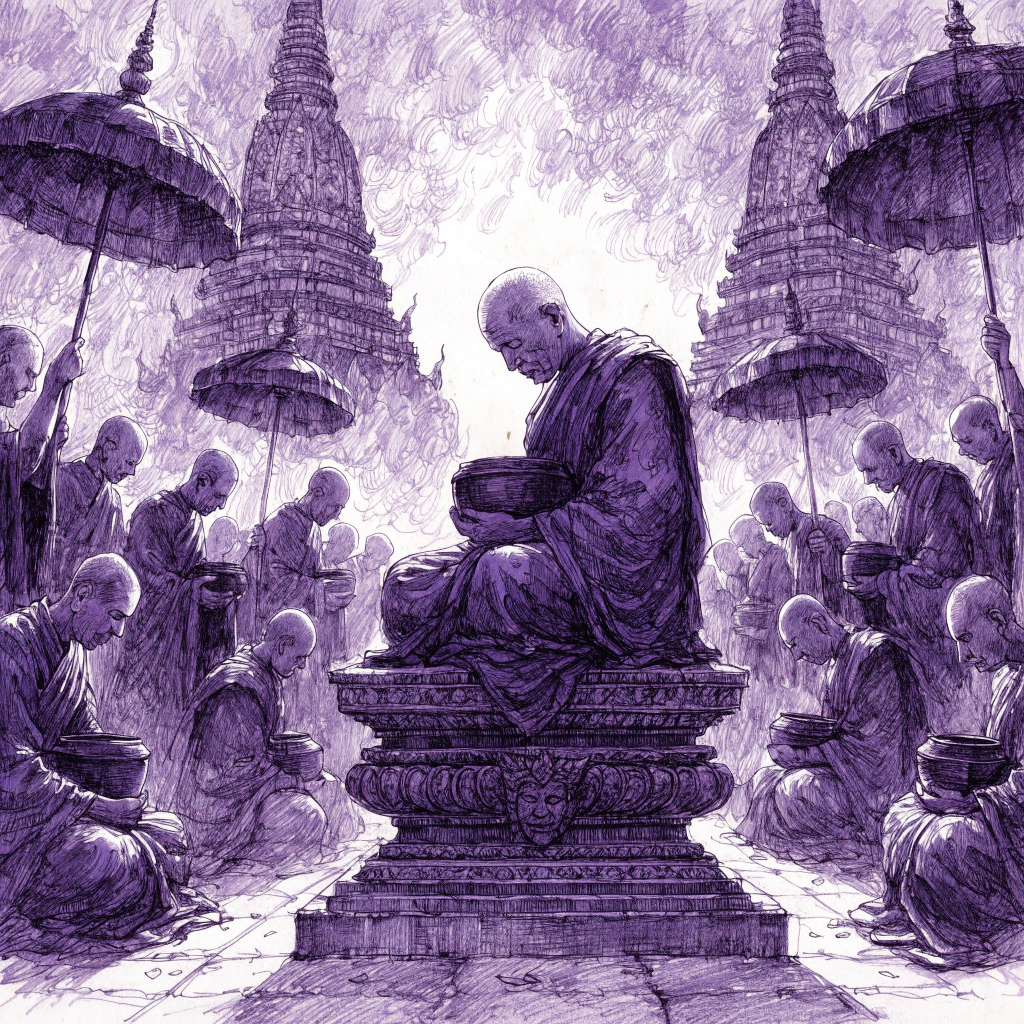
Magha Puja is a big day in Thailand. It is a Buddhist festival. It happens on the full moon in February or March. Many people go to the temple. They listen to the monks. The monks talk about the Buddha. People walk around the temple three times. They carry flowers and candles. This is a very peaceful time. People want to do good things. They want to be kind and help others. Families eat together and pray. It is a beautiful holiday in Thailand.
نکته دستوری
الگو: Present Simple (Third Person Singular)
"It happens on the full moon in February or March."
We use the Present Simple to talk about facts or things that happen regularly. For 'it', 'he', or 'she', we usually add -s to the verb.
الگو: Plural Nouns
"They carry flowers and candles."
To make a noun plural (more than one), we usually add -s to the end of the word. For example, one flower becomes many flowers.
درک خود را بسنجید
10 سوال · A1 مبتدی · 1 پیشنمایش رایگان
آنچه از این مقاله آموختید را بسنجید. به همه سؤالات پاسخ دهید و XP کسب کنید!
When does Magha Puja happen?
آیا میخواهید آزمون را تمام کنید؟
9 سؤال دیگر منتظر شماست. ثبتنام رایگان کنید تا آزمون کامل را باز کنید و XP کسب کنید!
ثبتنام رایگانقبلاً ثبتنام کردی؟ ورود
جزئیات سؤالات
When does Magha Puja happen?
پاسخ شما:
پاسخ درست: On the full moon
People go to the temple for the festival.
پاسخ شما:
پاسخ درست: درست
What is a temple?
پاسخ شما:
پاسخ درست: A religious building
People carry flowers and _____.
پاسخ شما:
پاسخ درست: candles
جشن ماها پوجا در تایلند
جشن ماها پوجا یکی از مهمترین روزهای مذهبی در کشور تایلند است. این جشن هر سال در روز ماه کامل ماه سوم قمری برگزار میشود. برای بوداییها، این روز بسیار خاص و مقدس است و آنها به آن احترام زیادی میگذارند.
داستان ماها پوجا به گذشتههای دور برمیگردد. در آن روز، ۱۲۵۰ راهب روشنبین، که به آنها "آرهانت" میگفتند، بدون هیچ قرار قبلی، به دیدار بودا در معبد ولووانا ویهارا آمدند. این یک اتفاق شگفتانگیز و معجزهآسا بود. بودا در این جمع بزرگ، درسهای بسیار مهمی درباره زندگی و آرامش به آنها آموخت.
بودا به راهبان گفت که همیشه کارهای خوب انجام دهند، از هر نوع کار بد دوری کنند و ذهن خود را پاک و آرام نگه دارند. این سه اصل، پایه اصلی آموزههای بودا هستند. مردم تایلند هر سال این روز را با شور و اشتیاق جشن میگیرند. آنها به معابد میروند، شمع روشن میکنند، دعا میخوانند و به نیازمندان کمک میکنند. این جشن به مردم کمک میکند تا زندگی بهتر و آرامتری داشته باشند و به اصول بودا فکر کنند.
نکته دستوری
الگو: فعل ماضی ساده (Past Simple Verb)
"بودا در این جمع بزرگ، درسهای بسیار مهمی درباره زندگی و آرامش به آنها آموخت."
ما برای صحبت درباره کارهایی که در گذشته تمام شدهاند، از فعل ماضی ساده استفاده میکنیم. برای ساختن آن، ریشه فعل را با شناسه مناسب ترکیب میکنیم. مثلاً: من رفتم، تو رفتی، او رفت.
الگو: حرف ربط 'و' (Conjunction 'و')
"آنها به معابد میروند، شمع روشن میکنند، دعا میخوانند و به نیازمندان کمک میکنند."
ما از حرف ربط 'و' برای وصل کردن دو کلمه، دو عبارت یا دو جمله به یکدیگر استفاده میکنیم. این حرف به معنی 'همچنین' یا 'به علاوه' است. مثلاً: من سیب و پرتقال دوست دارم.
درک خود را بسنجید
11 سوال · A2 مقدماتی · 1 پیشنمایش رایگان
آنچه از این مقاله آموختید را بسنجید. به همه سؤالات پاسخ دهید و XP کسب کنید!
جشن ماها پوجا در تایلند چه زمانی برگزار میشود؟
آیا میخواهید آزمون را تمام کنید؟
10 سؤال دیگر منتظر شماست. ثبتنام رایگان کنید تا آزمون کامل را باز کنید و XP کسب کنید!
ثبتنام رایگانقبلاً ثبتنام کردی؟ ورود
جزئیات سؤالات
جشن ماها پوجا در تایلند چه زمانی برگزار میشود؟
پاسخ شما:
پاسخ درست: در روز ماه کامل ماه سوم قمری
۱۲۵۰ راهب روشنبین با قرار قبلی به دیدار بودا آمدند.
پاسخ شما:
پاسخ درست: نادرست
کلمه 'معبد' به چه معناست؟
پاسخ شما:
پاسخ درست: یک مکان مقدس برای دعا
بودا به راهبان گفت که کارهای خوب انجام دهند، از کارهای بد دوری کنند و ذهن خود را ______ نگه دارند.
پاسخ شما:
پاسخ درست: پاک
بودا در روز ماها پوجا چه چیزی به راهبان آموخت؟
پاسخ شما:
پاسخ درست: سه اصل مهم زندگی
Magha Puja: The Festival of Light and Peace
Magha Puja is a significant religious festival in Thailand which is celebrated on the full moon of the third lunar month. It is often described as a day of spiritual love because it commemorates a miraculous event in Buddhist history. According to legend, 1,250 monks, who were all enlightened 'Arahants', gathered spontaneously to see the Buddha at Veluvana Vihara. No appointments had been made, yet they all arrived at the same place at the same time. This event is considered extraordinary because all the monks had been ordained personally by the Buddha.
During this historical gathering, the Buddha delivered a sermon called the 'Ovada Patimokkha', which summarized the heart of his teachings. He told his followers that they should avoid evil, perform good deeds, and purify their minds. These core principles have been followed by Buddhists for centuries and continue to guide people today. Because of these teachings, the festival is observed with great respect across the country.
In the morning, many people visit their local temples to give food to monks and listen to religious stories. This act of kindness is known as 'making merit', and it is believed to bring good luck. In the evening, the most beautiful part of the day begins. A special ceremony called 'Wian Tian' is performed at temples nationwide. During this ritual, people walk three times around the main temple building while they are holding lighted candles, incense sticks, and lotus flowers. The atmosphere is incredibly peaceful, and the sight of thousands of flickering candles is truly moving. Magha Puja has remained an essential part of Thai culture, helping people to reconnect with their faith and find inner peace in the modern world.
نکته دستوری
الگو: Present Perfect Passive
"These core principles have been followed by Buddhists for centuries."
This pattern is used to talk about an action that started in the past and continues to the present, focusing on the action rather than the person doing it. It is formed with 'have/has been' + past participle.
الگو: Relative Clauses
"Magha Puja is a significant religious festival in Thailand which is celebrated on the full moon."
Relative clauses provide extra information about a noun. Here, 'which' introduces more details about the festival.
درک خود را بسنجید
11 سوال · B1 متوسط · 1 پیشنمایش رایگان
آنچه از این مقاله آموختید را بسنجید. به همه سؤالات پاسخ دهید و XP کسب کنید!
Why is Magha Puja sometimes called a day of spiritual love?
آیا میخواهید آزمون را تمام کنید؟
10 سؤال دیگر منتظر شماست. ثبتنام رایگان کنید تا آزمون کامل را باز کنید و XP کسب کنید!
ثبتنام رایگانقبلاً ثبتنام کردی؟ ورود
جزئیات سؤالات
Why is Magha Puja sometimes called a day of spiritual love?
پاسخ شما:
پاسخ درست: Because it remembers a miraculous event of 1,250 monks
The 1,250 monks had planned to meet the Buddha months in advance.
پاسخ شما:
پاسخ درست: نادرست
What does 'spontaneously' mean?
پاسخ شما:
پاسخ درست: Happening without being planned
The Buddha delivered a _____ called the Ovada Patimokkha.
پاسخ شما:
پاسخ درست: sermon
What direction do people walk during the Wian Tian ceremony?
پاسخ شما:
پاسخ درست: Clockwise
Magha Puja: A Spiritual Reflection on Buddhist Unity and Ethics
Magha Puja, observed on the full moon of the third lunar month, stands as one of the most profound religious observances in the Thai calendar. This significant occasion commemorates a miraculous event that occurred early in the Buddha’s ministry. According to historical accounts, a spontaneous assembly of 1,250 enlightened monks, known as Arahants, gathered at Veluvana Vihara without any prior appointment. Remarkably, all these monks had been ordained personally by the Buddha, and they arrived from various locations simultaneously. This unplanned convergence is viewed by many as a testament to the spiritual connection shared by those who have attained a high level of realization.
During this extraordinary gathering, the Buddha delivered the 'Ovada Patimokkha,' a sermon that serves as the cornerstone of Buddhist philosophy. This teaching outlines three fundamental principles: to abstain from all evil, to cultivate what is good, and to purify the mind. For practitioners of the faith, this day represents more than just a historical milestone; it is an opportunity for deep ethical reflection and a renewal of spiritual commitment. Consequently, the atmosphere in Thailand becomes one of quiet contemplation and communal devotion.
The modern observance of Magha Puja involves several traditional rituals aimed at merit-making. Devotees typically visit local temples in the morning to offer food to monks and listen to Dhamma talks. However, the most visually striking aspect of the festival occurs after sunset. This is known as the 'Wian Tian' ceremony, where practitioners participate in a candlelight procession. Holding a lit candle, three incense sticks, and a lotus flower, they walk clockwise around the temple’s main chapel three times. Each circuit symbolizes one of the Three Jewels of Buddhism: the Buddha, the Dhamma (teachings), and the Sangha (the monastic community).
Furthermore, the festival encourages individuals to evaluate their personal conduct. Many Buddhists choose to observe the Five Precepts more strictly on this day, or even take on the Eight Precepts, which include fasting after noon and avoiding entertainment. By engaging in meditation and mindfulness, participants aim to achieve a state of mental clarity and emotional balance. In conclusion, Magha Puja is not merely a celebration of a past miracle but a living tradition that reinforces core values. Notwithstanding the modern distractions of the 21st century, the essence of Magha Puja continues to resonate deeply within the hearts of the Thai people.
نکته دستوری
الگو: Past Perfect Passive
"Remarkably, all these monks had been ordained personally by the Buddha."
This pattern is used to describe an action that was completed before another past action or time, emphasizing the recipient of the action. It is formed using 'had been' + past participle.
الگو: Defining Relative Clauses
"the Buddha delivered the 'Ovada Patimokkha,' a sermon that serves as the cornerstone of Buddhist philosophy."
The relative clause starting with 'that' provides essential information about the noun 'sermon'. It identifies exactly which sermon is being discussed.
الگو: Concessive Connectors
"Notwithstanding the modern distractions of the 21st century, the essence of Magha Puja continues to resonate."
The word 'notwithstanding' is a formal preposition meaning 'despite' or 'in spite of'. It is used to introduce a contrast or a surprising fact that doesn't prevent the main clause from happening.
درک خود را بسنجید
11 سوال · B2 بالاتر از متوسط · 1 پیشنمایش رایگان
آنچه از این مقاله آموختید را بسنجید. به همه سؤالات پاسخ دهید و XP کسب کنید!
How many enlightened monks gathered for the original assembly mentioned in the text?
آیا میخواهید آزمون را تمام کنید؟
10 سؤال دیگر منتظر شماست. ثبتنام رایگان کنید تا آزمون کامل را باز کنید و XP کسب کنید!
ثبتنام رایگانقبلاً ثبتنام کردی؟ ورود
جزئیات سؤالات
How many enlightened monks gathered for the original assembly mentioned in the text?
پاسخ شما:
پاسخ درست: 1,250
Magha Puja is celebrated on the full moon of the third lunar month.
پاسخ شما:
پاسخ درست: درست
What does 'spontaneous' mean in the context of the article?
پاسخ شما:
پاسخ درست: Happening naturally without prior planning
One of the three core principles mentioned by the Buddha is to _____ the mind.
پاسخ شما:
پاسخ درست: purify
What are the three fundamental principles of the 'Ovada Patimokkha'?
پاسخ شما:
پاسخ درست: Abstain from evil, do good, and purify the mind
The Celestial Convergence: Decoding the Philosophical Profundity of Magha Puja
Under the ethereal glow of the third lunar month’s full moon, Thailand undergoes a spiritual transformation. Magha Puja, a cornerstone of the Theravada Buddhist calendar, represents more than a mere religious holiday; it serves as a profound commemoration of a miraculous event that occurred over 2,500 years ago. Never before had the Buddha witnessed such a phenomenon as the spontaneous gathering of 1,250 Arahants—monks who had achieved the highest state of enlightenment—without any prior summons or coordination. This assembly at Veluvana Vihara was not merely a logistical marvel but a symbolic manifestation of spiritual synchronicity.
It is the 'Ovada Patimokkha', the sermon delivered by the Buddha on this auspicious evening, that constitutes the ethical backbone of the faith. The discourse offers a concise yet exhaustive blueprint for human conduct, distilled into three cardinal imperatives: the avoidance of all evil, the systematic cultivation of merit, and the purification of the mind. For the C1 scholar of sociology or religion, this triad represents a sophisticated framework for individual and collective self-regulation. The adherence to these principles is seen not as a set of restrictive dogmas, but as a path toward ultimate liberation from the cycle of suffering.
In contemporary Thailand, the observance of Magha Puja is characterized by a blend of solemnity and communal vibrancy. As dusk falls, the 'Wian Tian' ceremony begins. Devotees circle the central shrine of their local temple three times in a clockwise direction, carrying a lit candle, three incense sticks, and a lotus flower. Each circuit symbolizes a pillar of Buddhism: the Buddha, the Dhamma (teachings), and the Sangha (monastic community). Not only does this ritual serve as an outward display of piety, but it also functions as a meditative practice, encouraging participants to reflect on the impermanence of existence as they watch the flickering flames.
The sociocultural significance of Magha Puja extends beyond the temple walls. It is a day where the secular and the sacred intertwine, manifesting in acts of merit-making such as providing alms to monks or releasing captive birds and fish. Critics might argue that the commercialization of such festivals risks diluting their spiritual essence; however, proponents maintain that the public nature of these celebrations is vital for the preservation of cultural identity and moral cohesion. Indeed, the persistence of these traditions in a rapidly modernizing society underscores a deep-seated reverence for the transcendent.
Ultimately, Magha Puja invites a critical introspection into the nature of community and purpose. The spontaneous assembly of the Arahants serves as a metaphor for the potential of collective enlightenment—a state where individuals, through the purification of their own minds, can exist in perfect harmony without the need for external coercion. Whether viewed through a theological lens or as a cultural phenomenon, Magha Puja remains a testament to the enduring power of ethical living and the perennial quest for inner peace.
نکته دستوری
الگو: Inversion after negative adverbials
"Never before had the Buddha witnessed such a phenomenon as the spontaneous gathering of 1,250 Arahants."
When we start a sentence with a negative adverbial like 'never before' or 'seldom', the auxiliary verb comes before the subject. This is used in formal writing to add emphasis and dramatic effect.
الگو: It-cleft sentences for emphasis
"It is the 'Ovada Patimokkha'... that constitutes the ethical backbone of the faith."
Cleft sentences are used to focus on a specific part of the sentence. By using 'It is/was + [focused item] + that/who', the writer highlights the specific subject as the most important information.
الگو: Nominalisation
"The systematic cultivation of merit, and the purification of the mind."
Nominalisation involves turning verbs (cultivate, purify) into nouns (cultivation, purification). This is a hallmark of C1 academic writing as it makes the text more abstract and concise.
درک خود را بسنجید
12 سوال · C1 پیشرفته · 1 پیشنمایش رایگان
آنچه از این مقاله آموختید را بسنجید. به همه سؤالات پاسخ دهید و XP کسب کنید!
What was unique about the gathering of the 1,250 Arahants?
آیا میخواهید آزمون را تمام کنید؟
11 سؤال دیگر منتظر شماست. ثبتنام رایگان کنید تا آزمون کامل را باز کنید و XP کسب کنید!
ثبتنام رایگانقبلاً ثبتنام کردی؟ ورود
جزئیات سؤالات
What was unique about the gathering of the 1,250 Arahants?
پاسخ شما:
پاسخ درست: They met without any prior appointment or summons.
Magha Puja occurs on the full moon of the third lunar month.
پاسخ شما:
پاسخ درست: درست
What does 'coercion' mean?
پاسخ شما:
پاسخ درست: The act of persuading someone via force or threats
The systematic _____ of merit is one of the three cardinal imperatives.
پاسخ شما:
پاسخ درست: cultivation
What does the 'Wian Tian' ceremony involve?
پاسخ شما:
پاسخ درست: Walking clockwise around a shrine three times.
The article suggests that the Buddha's sermon is seen as a set of restrictive dogmas by believers.
پاسخ شما:
پاسخ درست: نادرست
The Metaphysical Resonance of Magha Puja: A Synthesis of Spontaneity and Ethical Imperative
The tapestry of Thai Theravada Buddhism is intricately woven with threads of historical mythos and contemporary praxis, nowhere more palpably than during the annual observance of Magha Puja. This festival, occurring on the full moon day of the third lunar month, serves as a profound epistemological anchor for the Thai faithful. It commemorates a confluence of events that, were they to be viewed through a purely secular lens, might be dismissed as mere serendipity, yet within the Buddhist tradition, they are venerated as a miraculous manifestation of spiritual alignment. The occasion marks the spontaneous assembly of 1,250 'Arahants'—enlightened monks—who converged upon the Veluvana Vihara without prior appointment. This fortuitous gathering provided the backdrop for the Buddha’s delivery of the 'Ovada Patimokkha', a discourse that remains the axiomatic foundation of Buddhist ethics.
To understand the gravity of Magha Puja, one must delve into the philosophical underpinnings of the Ovada Patimokkha. It is not merely a collection of moralistic injunctions but a comprehensive paradigm for existence. The Buddha summarized the path to enlightenment through a tripartite imperative: to abstain from all evil, to cultivate that which is good, and to purify the mind. While these tenets might appear deceptively simple, their implementation requires a rigorous intellectual and spiritual rectitude. In the scholarly analysis of Thai Buddhism, this discourse is often framed as the 'heart of the Dhamma', providing a universal moral compass that transcends the specificities of time and geography. Albeit the historical event occurred over two millennia ago, its resonance within the modern Thai consciousness is maintained through meticulous ritual and collective introspection.
In contemporary Thailand, the observance of Magha Puja is characterized by a palpable sense of communal devotion. The most striking visual element is the 'Wian Tian' ceremony, a ritualistic circumambulation of the temple’s central sanctuary. Devotees, bearing lit candles, incense, and lotus blossoms, circle the Uposatha hall three times in a clockwise direction. This act of circumambulation is symbolic of the practitioner’s commitment to the Triple Gem: the Buddha, the Dhamma, and the Sangha. It is a physical manifestation of an internal spiritual journey, where the external movement mirrors the internal pursuit of transcendental wisdom. Rarely does one witness such a harmonious blend of individual piety and collective solidarity as seen in these candlelit processions.
Furthermore, the festival provides a lens through which we can examine the interplay between tradition and modernity. In an era dominated by the relentless pace of globalization, the continued relevance of Magha Puja suggests that the ancient ethical frameworks of Buddhism continue to offer a viable alternative to the materialist zeitgeist. The emphasis on purifying the mind is particularly pertinent in a world increasingly characterized by digital distractions and cognitive fragmentation. By retreating into the quietude of the temple, the Thai practitioner engages in a form of psychological recalibration, reaffirming their dedication to a life of mindfulness and moral clarity. It might be argued that the enduring appeal of Magha Puja lies in its ability to provide a sense of ontological security in an otherwise volatile world.
Ultimately, Magha Puja is more than a historical commemoration; it is a living tradition that continues to shape the moral landscape of Thailand. Were the principles of the Ovada Patimokkha to be ignored, the social fabric of the nation would arguably lose its cohesive ethical core. The festival stands as a testament to the power of shared values and the possibility of achieving a state of harmony through individual discipline. As the full moon illuminates the night sky, the flickering candles of the 'Wian Tian' serve as a poignant reminder that the light of wisdom, once ignited, has the potential to dispel the shadows of ignorance across generations. The confluence of the ancient and the modern on this sacred night reaffirms that the pursuit of spiritual excellence remains a timeless endeavor.
نکته دستوری
الگو: Mixed Conditional (Subjunctive focus)
"This festival... commemorates a confluence of events that, were they to be viewed through a purely secular lens, might be dismissed as mere serendipity."
This uses 'were they to be' (a formal subjunctive structure) to hypothesize about a hypothetical perspective on a past/present event, followed by 'might be' to express a speculative consequence.
الگو: Inversion for Emphasis
"Rarely does one witness such a harmonious blend of individual piety and collective solidarity as seen in these candlelit processions."
When negative or restrictive adverbs like 'Rarely' start a sentence, the subject and auxiliary verb are inverted to create a more formal and emphatic tone.
الگو: Concessive Clause with 'Albeit'
"Albeit the festival is deeply rooted in antiquity, its resonance in modern Bangkok or Chiang Mai is palpable."
'Albeit' is used to introduce a concession, functioning similarly to 'although' but typically followed by a noun phrase or a reduced clause to add academic nuance.
درک خود را بسنجید
12 سوال · C2 تسلط · 1 پیشنمایش رایگان
آنچه از این مقاله آموختید را بسنجید. به همه سؤالات پاسخ دهید و XP کسب کنید!
What is the primary significance of the 'Ovada Patimokkha' as described in the text?
آیا میخواهید آزمون را تمام کنید؟
11 سؤال دیگر منتظر شماست. ثبتنام رایگان کنید تا آزمون کامل را باز کنید و XP کسب کنید!
ثبتنام رایگانقبلاً ثبتنام کردی؟ ورود
جزئیات سؤالات
What is the primary significance of the 'Ovada Patimokkha' as described in the text?
پاسخ شما:
پاسخ درست: A foundational ethical framework for Buddhist practice
The 1,250 Arahants had pre-arranged their meeting at Veluvana Vihara.
پاسخ شما:
پاسخ درست: نادرست
Which word describes the act of walking around a sacred building during Magha Puja?
پاسخ شما:
پاسخ درست: Circumambulation
The three pillars of the Ovada Patimokkha are to avoid evil, do good, and _____ the mind.
پاسخ شما:
پاسخ درست: purify
According to the article, what does the 'Wian Tian' ceremony physically symbolize?
پاسخ شما:
پاسخ درست: An internal spiritual journey and commitment to the Triple Gem
The author suggests that Magha Puja is less relevant today due to globalization.
پاسخ شما:
پاسخ درست: نادرست

