shrimping در ۳۰ ثانیه
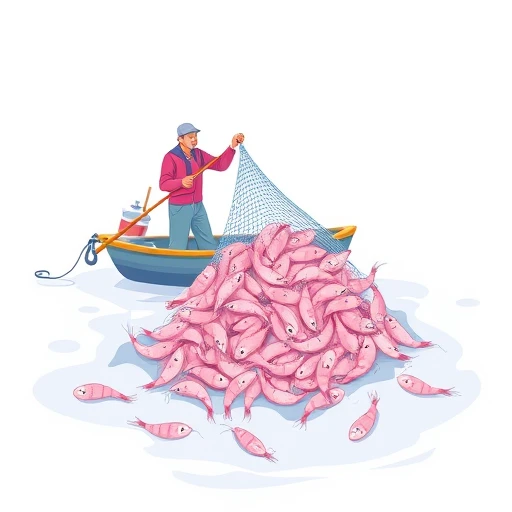
- Shrimping is the act of catching shrimp, either as a professional job or a fun hobby, typically using nets in coastal waters.
- The word is often used in the phrase 'go shrimping' and is a major industry in many coastal regions around the world.
- It involves specific equipment like shrimping boats and nets, and is subject to seasonal regulations to protect the marine environment.
- While common in North America, other regions like the UK and Australia often use the term 'prawning' for the same activity.
The term shrimping primarily describes the specialized activity of harvesting shrimp, a popular type of decapod crustacean, from their natural aquatic habitats. While it sounds like a simple derivative of the noun 'shrimp,' the word encompasses a vast array of meanings ranging from a casual weekend hobby to a multi-billion dollar global industry. When people use this word, they are usually referring to the physical act of catching these creatures using various methods such as cast nets, trawl nets, or specialized traps. In coastal communities, shrimping is not just a job; it is a cultural cornerstone that dictates the rhythm of life, especially during the peak seasons when the waters are teeming with brown, white, or pink shrimp. The word is most frequently encountered in geographical regions with significant coastlines, such as the Gulf of Mexico in the United States, the coastal waters of Southeast Asia, and the North Sea in Europe. In these areas, the local economy often revolves around the success of the shrimping fleet, and the word is used in daily conversation to discuss weather conditions, fuel prices, and the size of the daily catch.
- Commercial Context
- In a commercial sense, shrimping involves large vessels equipped with 'otter trawls'—massive nets that are dragged along the seafloor. This industrial application of the word focuses on efficiency, volume, and the complex logistics of processing the catch while still at sea.
The coastal town's economy relied heavily on the success of the local shrimping fleet during the summer months.
Beyond the commercial aspect, shrimping is a beloved recreational pastime. Families might head to a pier or a shallow marsh at night, armed with high-powered flashlights and dip nets. In this context, the word carries a sense of leisure and tradition. It is often associated with 'low country boils' or community feasts where the day's harvest is shared. The word also appears in environmental discussions, particularly regarding 'bycatch'—the accidental capture of other marine life like sea turtles or non-target fish species during the shrimping process. This has led to the development of 'Turtle Excluder Devices' (TEDs), which are now a standard part of the shrimping vocabulary in many parts of the world. Historically, the term has evolved from simple subsistence gathering to a highly mechanized operation. In literature and film, most notably in the movie 'Forrest Gump,' shrimping is depicted as a gritty, high-stakes endeavor that requires resilience and a deep understanding of the sea's unpredictable nature.
- Recreational Context
- Recreational shrimping often takes place at night because many shrimp species are nocturnal and move toward the surface or closer to shore under the cover of darkness, making them easier to spot with lights.
We spent the entire evening shrimping by the old wooden pier, hoping to catch enough for a family dinner.
Furthermore, the term can be used as an adjective to describe things related to the activity, such as a 'shrimping boat,' 'shrimping net,' or 'shrimping license.' In some niche slang contexts, which are less common and should be used with caution, 'shrimping' has been used to describe certain behaviors or fetishes, but in 99% of standard English communication, it remains strictly tied to the crustacean. Understanding the word requires an appreciation for the maritime environment. It is a word that smells of salt air and diesel fuel, a word that implies hard work, patience, and a connection to the cycles of the moon and the tides. Whether you are reading a menu that boasts 'locally caught shrimping' or watching a documentary about the challenges of the maritime industry, the word serves as a bridge between the natural world and the human plate. It is a vital part of the vocabulary for anyone living near the coast or interested in the global food supply chain.
- Environmental Impact
- Modern shrimping is heavily regulated to prevent overfishing and to minimize the impact on the seafloor ecosystem, which can be damaged by heavy trawl nets.
New regulations were introduced to ensure that shrimping practices do not harm the local sea turtle population.
The documentary provided a fascinating look into the history of shrimping in the Louisiana bayous.
After the storm, many of the shrimping vessels were forced to stay in the harbor for repairs.
Using the word shrimping correctly involves understanding its role as a gerund or a present participle. As a gerund, it functions as a noun, representing the activity itself. For example, 'Shrimping is a difficult way to make a living.' In this sentence, the word is the subject. As a present participle, it often follows verbs of motion like 'go' or 'start.' A very common construction is 'to go shrimping,' which mirrors other outdoor activities like 'to go fishing' or 'to go hiking.' This structure implies a planned outing or a recreational trip. When discussing the industry, the word often acts as an attributive noun, modifying another noun to create a compound term. Phrases like 'shrimping industry,' 'shrimping season,' and 'shrimping grounds' are standard in both technical and casual English. It is important to note that 'shrimping' is almost always associated with saltwater or brackish water environments, as that is where the majority of harvestable shrimp species reside.
- As a Subject (Gerund)
- 'Shrimping requires a lot of specialized equipment, including nets and sorting tables.'
For many families in the village, shrimping is a tradition passed down through generations.
When describing the action in progress, you might say, 'They are out shrimping right now.' This uses the word as part of a continuous verb tense. In more formal or academic writing, you might see the word used to describe ecological or economic trends. For instance, 'The decline in shrimping yields has been attributed to rising water temperatures.' Here, 'shrimping' modifies 'yields,' specifying exactly what kind of harvest is being discussed. It is also useful to understand the collocations—words that naturally go together with 'shrimping.' Adjectives like 'commercial,' 'recreational,' 'sustainable,' and 'illegal' frequently precede it. Verbs that commonly precede it include 'prohibit,' 'regulate,' 'promote,' and 'abandon.' For example, 'The government decided to prohibit shrimping in the protected marine sanctuary.' This sentence demonstrates how the word fits into legal and regulatory frameworks. Another interesting usage is in the context of gear: 'shrimping gear' or 'shrimping tackle.' These terms refer to the specific tools needed for the job.
- As a Modifier (Attributive Noun)
- 'The captain checked the weather forecast before heading out to the shrimping grounds.'
The local museum has an exhibit dedicated to the history of the shrimping industry in this region.
In conversational English, especially in the Southern United States, you might hear the phrase 'shrimping and crabbing' used together to describe a general day of coastal foraging. 'We're going shrimping and crabbing this weekend' implies a multi-species harvesting trip. The word can also be used in the past tense as 'shrimped,' though this is less common than the gerund form. 'He shrimped for twenty years before retiring' is a perfectly valid sentence. However, the 'ing' form is the most versatile and frequently used. When using the word, consider the level of formality. In a scientific paper, you might use 'shrimp harvesting' or 'crustacean extraction,' but in almost every other context—from news reports to casual chats—'shrimping' is the standard and most natural term. It effectively communicates both the action and the industry without the need for overly technical jargon. By mastering the different ways 'shrimping' can be integrated into sentences, you can accurately describe a wide range of maritime activities and economic realities.
- In a Compound Verb Phrase
- 'They spent the whole night shrimping under the full moon.'
Because of the high fuel costs, many boat owners have stopped shrimping for the season.
Is shrimping allowed in this part of the bay, or is it a protected area?
The old man told stories about his days shrimping in the North Sea.
The word shrimping is a staple in several specific environments, each providing a different nuance to its meaning. The most obvious place is in coastal communities where the seafood industry is a primary employer. If you walk along the docks in places like Biloxi, Mississippi; Savannah, Georgia; or even coastal towns in Thailand and Vietnam, you will hear fishermen discussing the 'shrimping season' or the 'shrimping conditions.' In these contexts, the word is spoken with a sense of urgency and professional focus. It’s about the weather, the price of diesel, and the location of the schools of shrimp. You’ll also hear it in local news reports, especially when the season opens or closes. News anchors might announce, 'The shrimping season officially opens tomorrow at dawn,' which is a major event for the local economy. This usage is very literal and tied to the calendar and government regulations.
- In Popular Culture
- Perhaps the most famous global reference to the word is in the film 'Forrest Gump.' The protagonist's venture into the 'shrimping business' with the Bubba Gump Shrimp Company made the term a household word even for people who live thousands of miles from the ocean.
'It's a shrimping boat, Captain Dan!' is one of the most recognizable lines in modern cinema.
Another place you will frequently encounter the word is in environmental and scientific discourse. Marine biologists and conservationists use 'shrimping' when discussing the health of marine ecosystems. You might hear it in a documentary or read it in a journal article concerning 'bottom trawling,' a controversial shrimping method. In these settings, the word is often linked to terms like 'sustainability,' 'habitat destruction,' and 'bycatch.' For example, a scientist might say, 'Industrial shrimping practices are being scrutinized for their impact on coral reefs.' Here, the word takes on a more serious, analytical tone. It’s not just an activity; it’s a variable in an ecological equation. Furthermore, in the culinary world, chefs and food critics use the word to emphasize the freshness and origin of their ingredients. A menu might highlight 'wild-caught shrimping from the Atlantic,' using the word to evoke a sense of authenticity and quality that farmed shrimp might lack.
- In Recreational Circles
- In online forums and local bait shops, hobbyists discuss 'recreational shrimping.' They share tips on the best lights to use or the most effective spots for 'dip-netting' shrimp from the shore.
The local bait shop was crowded with people buying supplies for the upcoming shrimping weekend.
In the Southern United States, 'shrimping' is part of the regional dialect and identity. It’s common to hear people talk about 'shrimping' as a weekend plan, similar to how someone in the Midwest might talk about 'going to the lake.' It’s a social activity that often ends in a community meal. You might hear someone say, 'We’re heading down to the coast for some shrimping and a bonfire.' This usage is warm, informal, and deeply rooted in community traditions. Lastly, in the world of international trade and economics, 'shrimping' appears in reports about export volumes and market prices. Economists might discuss the 'shrimping industry's contribution to the GDP' of a developing nation. In this context, the word is a cold, hard statistic. Whether it's the gritty reality of a fisherman's life, the analytical focus of a scientist, or the nostalgic tone of a movie fan, 'shrimping' is a word that carries significant weight across various domains of human life.
- In Legal and Regulatory Documents
- State and federal wildlife agencies publish 'shrimping regulations' that detail where, when, and how shrimp can be harvested to ensure the long-term health of the population.
The Coast Guard is responsible for enforcing shrimping laws in federal waters.
Many coastal towns have festivals celebrating the start of the shrimping season.
The rise of aquaculture has significantly changed the global shrimping market.
One of the most frequent mistakes learners make with the word shrimping is confusing it with the more general term 'fishing.' While shrimping is technically a form of fishing, the two are rarely used interchangeably in coastal or professional contexts. If you tell a commercial shrimper that they are 'going fishing,' they might correct you, as shrimping requires entirely different gear, techniques, and often different licenses. Fishing usually implies using a hook and line (angling), whereas shrimping almost always involves nets. Another common error is related to the word 'prawn.' In many parts of the world, particularly the UK, Australia, and India, the word 'prawning' is used instead of 'shrimping.' Using 'shrimping' in London might sound a bit American, while using 'prawning' in New Orleans might cause a bit of confusion. It’s important to be aware of these regional preferences to sound more like a native speaker.
- Mistake: Shrimping vs. Fishing
- Incorrect: 'He caught a lot of shrimp while fishing with his rod.' Correct: 'He caught a lot of shrimp while shrimping with his cast net.'
Many people mistakenly use the word 'fishing' when they specifically mean shrimping.
Spelling and grammar also present hurdles. Because 'shrimp' ends in a consonant, some learners are unsure whether to double the 'p' when adding '-ing.' The correct spelling is 'shrimping' with a single 'p.' Doubling the 'p' (shrimpping) is a common misspelling. Grammatically, as mentioned before, the phrase is 'go shrimping.' A common mistake is to say 'do shrimping' or 'make shrimping.' These are non-idiomatic and will sound unnatural. Furthermore, some learners use 'shrimping' to describe the act of eating shrimp. This is incorrect; 'shrimping' only refers to the act of catching them. If you are eating them, you are simply 'eating shrimp' or perhaps 'having a shrimp boil.' Another nuance involves the countability of the word. 'Shrimping' as an activity is uncountable. You cannot say 'I did three shrimping today.' Instead, you would say 'I went shrimping three times' or 'I went on three shrimping trips.'
- Mistake: Regional Terms
- Using 'shrimping' in Australia might be understood, but 'prawning' is the local term that will make you sound much more natural.
It is a common mistake to think that shrimping and prawning are two different activities; they are just different names for the same thing.
A more subtle mistake involves the context of 'shrimping' in slang. As noted previously, the word has a specific meaning in certain subcultures (related to feet). While this is rare, using the word in a non-maritime context or with a suggestive tone can lead to unintended misunderstandings. It is best to keep the word strictly within the context of seafood and the ocean unless you are absolutely sure of your audience. Additionally, some people confuse 'shrimping' with 'trawling.' While most commercial shrimping is done via trawling, not all trawling is for shrimp. You can trawl for many types of fish. Therefore, 'shrimping' is the more specific and accurate term when the target is shrimp. Finally, avoid using 'shrimping' as a synonym for 'small' or 'insignificant.' While 'shrimp' can be used as a derogatory term for a small person, the gerund 'shrimping' does not carry this meaning and should not be used that way.
- Mistake: Over-generalization
- Don't use 'shrimping' to describe catching other shellfish like crabs or lobsters. Those are 'crabbing' and 'lobstering' respectively.
He said he was going shrimping, but he came back with a bucket full of crabs.
The student's essay about shrimping was marked down for using the word 'shrimpping' repeatedly.
Using 'shrimping' as a verb for eating is a mistake; the correct verb is simply 'eating'.
When looking for alternatives to shrimping, the best choice depends heavily on the context and the region. The most direct synonym, as previously mentioned, is 'prawning.' This is the preferred term in British, Australian, and New Zealand English. While 'shrimp' and 'prawn' are biologically different (though very similar), the terms are often used interchangeably in the kitchen and on the boat. If you are in a professional maritime setting, you might use the term 'trawling.' This refers to the specific method of pulling a net through the water. While you can trawl for many things, in many coastal areas, 'trawling' is understood to mean shrimping because that is the primary target of the local fleet. However, 'trawling' is a broader term and can also refer to catching groundfish like cod or flounder.
- Comparison: Shrimping vs. Prawning
- Shrimping is common in North America; Prawning is the standard in the UK and Australia. They describe the same basic activity of catching small crustaceans.
In Sydney, people go prawning in the estuaries, while in New Orleans, they go shrimping in the bayous.
Another alternative is 'harvesting.' This is a more formal and scientific term. It is often used in the context of 'shrimp harvesting' to describe both wild-caught and farmed shrimp production. 'Harvesting' sounds more like an industrial or agricultural process and lacks the adventurous or gritty connotations of 'shrimping.' In recreational contexts, you might hear people talk about 'dipping' or 'netting.' These terms refer to the specific action of using a hand net to scoop shrimp out of the water. For example, 'We spent the night netting shrimp off the pier.' This is more descriptive of the actual physical movement than the general term 'shrimping.' If you are talking about the commercial industry as a whole, you might use the term 'the shrimp fishery.' This is a technical term used by economists and policy-makers to describe the entire system of catching, processing, and selling shrimp.
- Comparison: Shrimping vs. Trawling
- Shrimping specifies the target (shrimp); trawling specifies the method (dragging a net). Most commercial shrimping is done by trawling.
The environmental group is campaigning against bottom trawling, which is the most common form of industrial shrimping.
For those interested in more specific terminology, 'cast-netting' is a popular alternative for recreational shrimping. It describes the act of throwing a circular net that sinks and traps shrimp underneath. 'We went cast-netting for shrimp at low tide.' This is very specific and tells the listener exactly how the activity was performed. In some regions, 'drifting' is used to describe a specific type of shrimping where the boat moves with the current while the nets are deployed. While 'fishing' is a broader term, it can sometimes be used as a synonym in very casual conversation, but it loses the specificity that 'shrimping' provides. If you want to be precise, stick with 'shrimping.' It is the most widely recognized and accurate term for the activity across the United States and many other English-speaking regions. By understanding these alternatives, you can choose the word that best fits your geographic location and the level of detail you want to provide.
- Comparison: Shrimping vs. Harvesting
- Shrimping feels like an active pursuit or a trade; harvesting feels like a controlled, often industrial, collection of a resource.
The company focuses on the sustainable shrimping and harvesting of Atlantic seafood.
Instead of commercial shrimping, he prefers the quiet of cast-netting by the shore.
The local dialect uses 'prawning' exclusively, making shrimping sound like a foreign term.
چقدر رسمی است؟
نکته جالب
The word 'shrimp' was used as a derogatory term for a small or puny person long before 'shrimping' became a common term for the industry.
راهنمای تلفظ
- Pronouncing it as 'shrimp-in' (dropping the 'g').
- Adding an extra 'p' sound: 'shrimp-ping'.
- Confusing the 'sh' with a 's' sound: 'srimping'.
- Over-emphasizing the 'g' at the end.
- Pronouncing the 'i' like an 'ee' sound: 'shreemping'.
سطح دشواری
Easy to recognize in context, especially with related words like boat or net.
The spelling is straightforward, but remember not to double the 'p'.
Simple pronunciation, though the 'ng' sound can be tricky for some.
Clear sound, though it might be confused with 'shipping' in noisy environments.
بعداً چه یاد بگیریم؟
پیشنیازها
بعداً یاد بگیرید
پیشرفته
گرامر لازم
Gerunds as Subjects
Shrimping is a vital part of the local culture.
Go + -ing for Activities
We like to go shrimping during the summer holidays.
Attributive Nouns
The shrimping fleet was visible on the horizon.
Present Participle in Continuous Tenses
They have been shrimping since four o'clock this morning.
Compound Nouns with Gerunds
He bought a new shrimping license yesterday.
مثالها بر اساس سطح
I like to go shrimping in the summer.
Me gusta ir a pescar camarones en el verano.
Uses 'go + -ing' for an activity.
The shrimping boat is very big.
El barco camaronero es muy grande.
Uses 'shrimping' as an adjective to describe the boat.
We saw many people shrimping at the pier.
Vimos a mucha gente pescando camarones en el muelle.
Uses 'shrimping' as a participle describing the people.
Is shrimping fun?
¿Es divertido pescar camarones?
Uses 'shrimping' as the subject of the sentence.
He has a new shrimping net.
Él tiene una red camaronera nueva.
Compound noun: shrimping net.
They go shrimping every Saturday.
Ellos van a pescar camarones cada sábado.
Present simple for a regular activity.
Shrimping is his favorite hobby.
Pescar camarones es su pasatiempo favorito.
Gerund as a subject.
Can we go shrimping today?
¿Podemos ir a pescar camarones hoy?
Modal verb 'can' followed by 'go shrimping'.
My grandfather taught me how to go shrimping.
Mi abuelo me enseñó cómo ir a pescar camarones.
Uses 'how to' + infinitive phrase.
You need a license for shrimping in this area.
Necesitas una licencia para pescar camarones en esta zona.
Preposition 'for' followed by a gerund.
The shrimping season starts in May.
La temporada de camarón comienza en mayo.
Compound noun: shrimping season.
We caught a lot of shrimp while shrimping last night.
Atrapamos muchos camarones mientras pescábamos anoche.
Conjunction 'while' followed by a participle.
Is that a shrimping boat or a fishing boat?
¿Es ese un barco camaronero o un barco de pesca?
Comparing two types of vessels.
Shrimping is a very important job in this town.
La pesca de camarón es un trabajo muy importante en este pueblo.
Gerund as a subject with an adjective phrase.
He bought some new boots for shrimping.
Él compró unas botas nuevas para pescar camarones.
Purpose expressed with 'for' + gerund.
They were shrimping when the storm started.
Estaban pescando camarones cuando comenzó la tormenta.
Past continuous tense.
The local economy depends on the shrimping industry.
La economía local depende de la industria camaronera.
Uses 'shrimping' to modify 'industry'.
Many families have been shrimping for generations.
Muchas familias han estado pescando camarones por generaciones.
Present perfect continuous tense.
They are discussing new rules for commercial shrimping.
Están discutiendo nuevas reglas para la pesca comercial de camarón.
Adjective 'commercial' modifying the gerund.
Shrimping can be dangerous during the hurricane season.
La pesca de camarón puede ser peligrosa durante la temporada de huracanes.
Modal 'can' expressing possibility.
We decided to go shrimping instead of going to the beach.
Decidimos ir a pescar camarones en lugar de ir a la playa.
Uses 'instead of' to compare activities.
The documentary explained the history of shrimping in the region.
El documental explicó la historia de la pesca de camarón en la región.
Noun phrase: history of shrimping.
Is recreational shrimping allowed in the national park?
¿Está permitida la pesca recreativa de camarón en el parque nacional?
Passive voice question.
He spent the whole afternoon repairing his shrimping nets.
Pasó toda la tarde reparando sus redes camaroneras.
Verb 'spend' + time + participle.
The environmental impact of bottom shrimping is a major concern.
El impacto ambiental de la pesca de arrastre de camarón es una gran preocupación.
Compound term: bottom shrimping.
Shrimping yields have declined due to overfishing and pollution.
Los rendimientos de la pesca de camarón han disminuido debido a la sobrepesca y la contaminación.
Noun phrase: shrimping yields.
The captain was fined for shrimping in a protected marine area.
El capitán fue multado por pescar camarones en un área marina protegida.
Passive voice with a prepositional phrase.
Technological advances have transformed the shrimping fleet.
Los avances tecnológicos han transformado la flota camaronera.
Present perfect tense with a compound noun.
The festival celebrates the cultural heritage of shrimping.
El festival celebra la herencia cultural de la pesca de camarón.
Noun phrase: cultural heritage of shrimping.
Bycatch is a significant issue in the industrial shrimping sector.
La captura incidental es un problema significativo en el sector de la pesca industrial de camarón.
Uses 'shrimping' as an adjective for 'sector'.
They are researching more sustainable shrimping methods.
Están investigando métodos de pesca de camarón más sostenibles.
Comparative adjective 'more sustainable'.
The shrimping moratorium was lifted after the population recovered.
La moratoria de la pesca de camarón se levantó después de que la población se recuperó.
Technical term: shrimping moratorium.
The socio-economic ramifications of the shrimping ban were profound.
Las ramificaciones socioeconómicas de la prohibición de la pesca de camarón fueron profundas.
Complex noun phrase: socio-economic ramifications.
Artisanal shrimping practices are often more eco-friendly than industrial ones.
Las prácticas artesanales de pesca de camarón suelen ser más ecológicas que las industriales.
Comparison of two types of shrimping.
The court ruled on the legality of shrimping in international waters.
El tribunal dictaminó sobre la legalidad de la pesca de camarón en aguas internacionales.
Formal legal context.
Shrimping subsidies have been criticized for encouraging overcapacity.
Los subsidios a la pesca de camarón han sido criticados por fomentar el exceso de capacidad.
Passive voice with a complex reason.
The intricate mesh size of shrimping nets is strictly regulated.
El intrincado tamaño de la malla de las redes camaroneras está estrictamente regulado.
Technical description of equipment.
Climate change is altering the traditional shrimping grounds.
El cambio climático está alterando las zonas tradicionales de pesca de camarón.
Present continuous describing a trend.
The documentary highlights the grueling nature of life on a shrimping trawler.
El documental destaca la naturaleza agotadora de la vida en un arrastrero camaronero.
Uses 'grueling nature' to describe the activity.
The conflict between shrimping and conservation efforts remains unresolved.
El conflicto entre la pesca de camarón y los esfuerzos de conservación sigue sin resolverse.
Abstract noun phrase: conflict between... and...
The hegemony of industrial shrimping has marginalized traditional coastal communities.
La hegemonía de la pesca industrial de camarón ha marginado a las comunidades costeras tradicionales.
High-level vocabulary: hegemony, marginalized.
Ecological restoration requires a total cessation of shrimping in the estuary.
La restauración ecológica requiere un cese total de la pesca de camarón en el estuario.
Formal academic tone: cessation, restoration.
The dialectical relationship between shrimping and tourism is a key study area.
La relación dialéctica entre la pesca de camarón y el turismo es un área de estudio clave.
Philosophical/Academic term: dialectical relationship.
Technological determinism has played a role in the mechanization of shrimping.
El determinismo tecnológico ha desempeñado un papel en la mecanización de la pesca de camarón.
Complex theoretical concept.
The proliferation of shrimping permits led to an eventual collapse of the stock.
La proliferación de permisos de pesca de camarón provocó un colapso eventual de las existencias.
Uses 'proliferation' and 'collapse' for dramatic effect.
One must account for the carbon footprint of the global shrimping supply chain.
Se debe tener en cuenta la huella de carbono de la cadena de suministro global de la pesca de camarón.
Formal 'one must' construction.
The poem uses shrimping as a metaphor for the futility of human endeavor.
El poema utiliza la pesca de camarón como una metáfora de la futilidad del esfuerzo humano.
Literary analysis context.
The regulatory framework governing shrimping is a labyrinth of state and federal laws.
El marco regulatorio que rige la pesca de camarón es un laberinto de leyes estatales y federales.
Metaphorical use of 'labyrinth'.
ترکیبهای رایج
عبارات رایج
— Refers to a specific time or area where the government allows shrimp to be caught.
The bay is finally open for shrimping after a long closure.
— A common pairing describing a general day of catching coastal seafood.
We spent the whole day shrimping and crabbing by the shore.
— Refers to the difficult but traditional lifestyle of those in the industry.
He chose the life of shrimping over a job in the city.
— The collective tools and equipment needed for the activity.
Don't forget to pack all the shrimping gear in the truck.
— Catching shrimp without a license or in a restricted area.
The authorities are cracking down on illegal shrimping in the sanctuary.
— Methods of catching shrimp that do not harm the environment or deplete the population.
Consumers are increasingly looking for labels that guarantee sustainable shrimping.
— A specific outing or excursion for the purpose of catching shrimp.
Our last shrimping trip was very successful; we caught twenty pounds!
— The practice of catching shrimp after dark, often using lights.
Night shrimping is much cooler and often more productive than during the day.
— A small community whose primary economy is based on shrimping.
The old shrimping village has become a popular spot for tourists.
— The specific parts of the ocean or bay where shrimp are commonly found.
These are some of the most productive shrimping waters in the world.
اغلب اشتباه گرفته میشود با
Fishing is the general category; shrimping is the specific activity of catching shrimp.
Shipping refers to transporting goods by ship, not catching seafood.
This is the same activity, but the term is used in different geographic regions.
اصطلاحات و عبارات
— Describes someone who is working very hard under difficult or chaotic conditions.
The office was so busy that I felt like a shrimper in a storm.
Informal/Regional— A play on 'fishing for compliments,' specifically used in coastal areas.
She was clearly shrimping for compliments on her new boat.
Humorous/Regional— To be deeply connected to the sea and maritime traditions.
He may live in the city now, but he still has a shrimping heart.
Poetic/Regional— All talk and no action; having a lot of equipment or potential but no results.
He has the best gear in the world, but he's big net, no shrimp.
Informal/Slang— The opportunity has passed or the business is no longer profitable.
I think the tide's out on shrimping in this part of the coast.
Informal— Hard-earned money from physical labor, often inconsistent in amount.
He paid for his college with shrimping money.
Informal— While not exclusive to shrimping, it is often used in the industry to mean trying many different spots.
We need to cast a wide net to find where the shrimp are hiding today.
General— The very last or least desirable part of something.
By the time I got to the sale, only the bottom of the net was left.
Informal— Specific weather conditions (often slightly rough or overcast) believed to be good for catching shrimp.
Grab your gear; this is perfect shrimping weather.
Informal— To have deep, expert knowledge of a specific area or subject.
If you want to succeed in this business, you have to know the shrimping grounds.
Professional/Metaphoricalبهراحتی اشتباه گرفته میشود
Both refer to the same animal.
'Shrimp' is the noun for the animal; 'shrimping' is the noun for the activity.
I caught a shrimp while shrimping.
Most commercial shrimping uses trawling.
Trawling is the method (dragging a net); shrimping is the target (catching shrimp).
They were trawling for shrimp.
Both are coastal harvesting activities.
Crabbing is for crabs; shrimping is for shrimp.
We went crabbing and shrimping on the same day.
Similar sound and spelling.
Skimping means spending too little money or effort on something.
Don't go skimping on your shrimping gear.
Rhyming word.
Limping is walking with difficulty due to an injury.
He was limping after a long day of shrimping.
الگوهای جملهسازی
I like [gerund].
I like shrimping.
Let's go [gerund].
Let's go shrimping.
The [gerund] industry is [adjective].
The shrimping industry is struggling.
Despite the [gerund] [noun], they [verb].
Despite the shrimping ban, they continued to fish.
The [noun] of [gerund] has [past participle].
The regulation of shrimping has improved recently.
The [adjective] [noun] of [gerund] is [adjective].
The ecological impact of shrimping is undeniable.
Have you ever been [gerund]?
Have you ever been shrimping?
It is [adjective] to go [gerund].
It is common to go shrimping here.
خانواده کلمه
اسمها
فعلها
صفتها
مرتبط
نحوه استفاده
Common in coastal regions; rare in inland areas.
-
Using 'shrimping' to mean eating shrimp.
→
Eating shrimp.
Shrimping only refers to the act of catching them, not the act of consuming them.
-
Spelling it as 'shrimpping'.
→
Shrimping.
In English, we do not double the 'p' when adding '-ing' to 'shrimp'.
-
Saying 'do shrimping'.
→
Go shrimping.
Like most outdoor activities (fishing, hiking, hunting), we use the verb 'go'.
-
Confusing shrimping with crabbing.
→
Shrimping.
Shrimping is specifically for shrimp; catching crabs is called crabbing.
-
Using 'shrimping' for freshwater fishing.
→
Fishing.
While there are freshwater shrimp, 'shrimping' almost always implies a saltwater environment.
نکات
Watch the Tides
When shrimping from the shore or a pier, always be aware of the tide. The water can rise quickly and trap you if you aren't careful.
Use Bright Lights
If you are shrimping at night, use the brightest light possible. Shrimp eyes reflect light, making them look like tiny glowing sparks in the water.
Check Local Rules
Shrimping regulations change frequently. Always check the latest rules from the local wildlife department before you head out.
Rinse Your Nets
Saltwater is very corrosive. Always rinse your shrimping nets and gear with fresh water after every trip to make them last longer.
Release Small Catch
If you catch very small shrimp or other animals, release them immediately. This helps keep the population healthy for future shrimping.
Keep Them Cold
Shrimp spoil very quickly. Bring plenty of ice on your shrimping trip and put the shrimp on ice as soon as you catch them.
Practice Casting
Using a cast net for shrimping takes practice. Try practicing on your lawn before you head to the water to get the perfect circle.
Go at Dawn or Dusk
The best shrimping often happens during the 'golden hours' of dawn and dusk when shrimp are most active and moving.
Talk to Locals
Local shrimpers usually know the best spots. Being friendly and asking for advice can lead you to the most productive shrimping grounds.
Support Sustainable Brands
When buying shrimp, look for labels that indicate they were caught using sustainable shrimping methods that protect the ocean.
حفظ کنید
روش یادسپاری
Think of a 'Shrimp' jumping into a 'Ring' (ing) of a net. Shrimp + Ring = Shrimping!
تداعی تصویری
Imagine a large, colorful boat with two giant nets spreading out like wings on either side—this is the classic image of a shrimping vessel.
شبکه واژگان
چالش
Try to use the word 'shrimping' in three different ways: as a subject, as part of a 'go' phrase, and as an adjective for a boat.
ریشه کلمه
The word 'shrimp' comes from the Middle English 'shrimpe,' which is likely related to the Middle Low German 'schrimpen,' meaning 'to shrink' or 'to shrivel.' This refers to the way the animal's body is curled or 'shrunken' in appearance. The suffix '-ing' was added to create the gerund form, describing the activity.
معنای اصلی: The original meaning of the root word was related to being small, thin, or shrunken.
Germanicبافت فرهنگی
Be aware that 'shrimping' has a niche slang meaning in some online subcultures; stick to the maritime context in professional settings.
In the US South, 'shrimping' is a common weekend activity. In the UK, you are more likely to hear 'prawning'.
تمرین در زندگی واقعی
موقعیتهای واقعی
At a Seafood Market
- Is this from local shrimping?
- When does the shrimping season start?
- Do you sell shrimping nets?
- How was the shrimping this year?
On a Coastal Vacation
- Where can we go shrimping?
- Do I need a license for shrimping?
- Can we rent a shrimping boat?
- Is night shrimping safe here?
In an Environmental Discussion
- What is the impact of shrimping?
- How can we make shrimping more sustainable?
- What about the bycatch from shrimping?
- Are there shrimping restrictions in the reef?
In a Business Meeting
- The shrimping industry is growing.
- We need to analyze the shrimping data.
- Fuel costs are hurting shrimping.
- The shrimping market is volatile.
Casual Conversation
- I love going shrimping.
- Have you ever been shrimping?
- My dad used to go shrimping.
- Shrimping is harder than it looks.
شروعکنندههای مکالمه
"Have you ever tried shrimping, or do you prefer just eating them?"
"What do you think is the biggest challenge facing the shrimping industry today?"
"If you had a shrimping boat, what would you name it?"
"Do you think recreational shrimping should require a license everywhere?"
"Have you seen any movies or documentaries about shrimping?"
موضوعات نگارش
Describe a day spent on a shrimping boat. What do you see, smell, and hear?
Write about the importance of shrimping to a small coastal town's economy.
Discuss the ethical dilemma between industrial shrimping and marine conservation.
Imagine you are a shrimper during a major storm. Describe your experience.
How has the way we do shrimping changed over the last hundred years?
سوالات متداول
10 سوالBiologically, shrimp and prawns are different, but in common usage, the terms are regional. 'Shrimping' is the standard term in the United States, while 'prawning' is used in the UK, Australia, and other Commonwealth countries to describe the same activity of catching these crustaceans.
In most places, yes. Most coastal states and countries require a recreational fishing license that specifically covers shrimping. There are often limits on how many shrimp you can catch per day and what kind of nets you can use.
The best time often depends on the species and the location, but many people go shrimping at night. Shrimp are often more active and move closer to the surface or the shore after dark, making them easier to catch with lights and nets.
For recreational shrimping, you typically need a cast net or a dip net, a bucket, and a high-powered light if you are going at night. Commercial shrimping requires much larger equipment, including specialized boats called trawlers and massive nets.
It can be. Industrial shrimping, especially bottom trawling, can damage the seafloor and catch other animals by mistake (bycatch). However, many modern shrimping operations use 'Turtle Excluder Devices' and other methods to be more sustainable.
The length of the shrimping season varies by region and is determined by government wildlife agencies. It usually lasts a few months during the time of year when the shrimp population is most abundant and has reached a harvestable size.
While most shrimping happens in saltwater or brackish water (a mix of salt and fresh), there are some species of freshwater shrimp. However, the term 'shrimping' almost always refers to the maritime activity.
A shrimping trawler is a commercial fishing boat designed specifically to pull large nets through the water to catch shrimp. They are easily recognized by the long arms (outriggers) on the sides that hold the nets open.
Bycatch refers to the fish, turtles, and other marine life that are accidentally caught in shrimping nets along with the shrimp. Reducing bycatch is a major goal for sustainable shrimping practices.
Yes, commercial shrimping is considered one of the most dangerous occupations. It involves working with heavy machinery on a moving deck, often in rough seas and bad weather, far from medical help.
خودت رو بسنج 200 سوال
Describe your ideal shrimping trip. Where would you go and who would you take with you?
خوب نوشتید! تلاش خوبی بود! پاسخ نمونه را ببینید.
Write a short paragraph explaining why shrimping is important for coastal towns.
خوب نوشتید! تلاش خوبی بود! پاسخ نمونه را ببینید.
Do you think industrial shrimping should be more strictly regulated? Why or why not?
خوب نوشتید! تلاش خوبی بود! پاسخ نمونه را ببینید.
Imagine you are a shrimper. Write a journal entry about a difficult day at sea.
خوب نوشتید! تلاش خوبی بود! پاسخ نمونه را ببینید.
Compare recreational shrimping with commercial shrimping. What are the main differences?
خوب نوشتید! تلاش خوبی بود! پاسخ نمونه را ببینید.
Write a letter to a friend inviting them to go shrimping for the first time.
خوب نوشتید! تلاش خوبی بود! پاسخ نمونه را ببینید.
What are the environmental pros and cons of the shrimping industry?
خوب نوشتید! تلاش خوبی بود! پاسخ نمونه را ببینید.
Describe the equipment needed for a successful shrimping outing.
خوب نوشتید! تلاش خوبی بود! پاسخ نمونه را ببینید.
How has technology changed the way people go shrimping?
خوب نوشتید! تلاش خوبی بود! پاسخ نمونه را ببینید.
Write a story about a boy who finds something unexpected while shrimping.
خوب نوشتید! تلاش خوبی بود! پاسخ نمونه را ببینید.
Explain the meaning of 'bycatch' and why it is a problem in shrimping.
خوب نوشتید! تلاش خوبی بود! پاسخ نمونه را ببینید.
What is the cultural significance of shrimping in your country or a country you know?
خوب نوشتید! تلاش خوبی بود! پاسخ نمونه را ببینید.
Write a dialogue between two fishermen discussing the upcoming shrimping season.
خوب نوشتید! تلاش خوبی بود! پاسخ نمونه را ببینید.
Should shrimping be banned in certain areas to protect coral reefs? Argue your point.
خوب نوشتید! تلاش خوبی بود! پاسخ نمونه را ببینید.
Describe the process of shrimping from the moment the boat leaves the dock.
خوب نوشتید! تلاش خوبی بود! پاسخ نمونه را ببینید.
How does the weather affect shrimping? Provide examples.
خوب نوشتید! تلاش خوبی بود! پاسخ نمونه را ببینید.
Write a review of a documentary you watched about the shrimping industry.
خوب نوشتید! تلاش خوبی بود! پاسخ نمونه را ببینید.
What are the most common mistakes people make when they go shrimping?
خوب نوشتید! تلاش خوبی بود! پاسخ نمونه را ببینید.
Discuss the future of shrimping in the face of climate change.
خوب نوشتید! تلاش خوبی بود! پاسخ نمونه را ببینید.
Write a poem about the lights of a shrimping fleet at night.
خوب نوشتید! تلاش خوبی بود! پاسخ نمونه را ببینید.
Describe the last time you went fishing or shrimping. What did you catch?
این را بلند بخوانید:
تو گفتی:
تشخیص گفتار در مرورگر شما پشتیبانی نمیشود. از کروم یا اج استفاده کنید.
Would you ever want to work on a shrimping boat? Why or why not?
این را بلند بخوانید:
تو گفتی:
تشخیص گفتار در مرورگر شما پشتیبانی نمیشود. از کروم یا اج استفاده کنید.
Explain the difference between recreational and commercial shrimping to a friend.
این را بلند بخوانید:
تو گفتی:
تشخیص گفتار در مرورگر شما پشتیبانی نمیشود. از کروم یا اج استفاده کنید.
What are some of the dangers of shrimping in the open ocean?
این را بلند بخوانید:
تو گفتی:
تشخیص گفتار در مرورگر شما پشتیبانی نمیشود. از کروم یا اج استفاده کنید.
How do you think shrimping affects the local community in a coastal town?
این را بلند بخوانید:
تو گفتی:
تشخیص گفتار در مرورگر شما پشتیبانی نمیشود. از کروم یا اج استفاده کنید.
Talk about the importance of sustainable shrimping practices.
این را بلند بخوانید:
تو گفتی:
تشخیص گفتار در مرورگر شما پشتیبانی نمیشود. از کروم یا اج استفاده کنید.
If you were in charge of shrimping regulations, what rules would you make?
این را بلند بخوانید:
تو گفتی:
تشخیص گفتار در مرورگر شما پشتیبانی نمیشود. از کروم یا اج استفاده کنید.
Describe a scene from a movie that involves shrimping.
این را بلند بخوانید:
تو گفتی:
تشخیص گفتار در مرورگر شما پشتیبانی نمیشود. از کروم یا اج استفاده کنید.
What kind of gear do you think is most important for shrimping?
این را بلند بخوانید:
تو گفتی:
تشخیص گفتار در مرورگر شما پشتیبانی نمیشود. از کروم یا اج استفاده کنید.
How does shrimping compare to other types of seafood harvesting like crabbing?
این را بلند بخوانید:
تو گفتی:
تشخیص گفتار در مرورگر شما پشتیبانی نمیشود. از کروم یا اج استفاده کنید.
Why do you think shrimping is such a popular hobby for some people?
این را بلند بخوانید:
تو گفتی:
تشخیص گفتار در مرورگر شما پشتیبانی نمیشود. از کروم یا اج استفاده کنید.
Discuss the impact of climate change on the shrimping industry.
این را بلند بخوانید:
تو گفتی:
تشخیص گفتار در مرورگر شما پشتیبانی نمیشود. از کروم یا اج استفاده کنید.
What is your favorite way to eat the shrimp caught during a shrimping trip?
این را بلند بخوانید:
تو گفتی:
تشخیص گفتار در مرورگر شما پشتیبانی نمیشود. از کروم یا اج استفاده کنید.
Do you think shrimping is a dying industry? Explain your answer.
این را بلند بخوانید:
تو گفتی:
تشخیص گفتار در مرورگر شما پشتیبانی نمیشود. از کروم یا اج استفاده کنید.
Describe the feeling of being out on the water during a shrimping trip at night.
این را بلند بخوانید:
تو گفتی:
تشخیص گفتار در مرورگر شما پشتیبانی نمیشود. از کروم یا اج استفاده کنید.
How would you explain the word 'shrimping' to someone who has never heard it?
این را بلند بخوانید:
تو گفتی:
تشخیص گفتار در مرورگر شما پشتیبانی نمیشود. از کروم یا اج استفاده کنید.
What are the pros and cons of using large nets for shrimping?
این را بلند بخوانید:
تو گفتی:
تشخیص گفتار در مرورگر شما پشتیبانی نمیشود. از کروم یا اج استفاده کنید.
Talk about a festival or tradition related to shrimping that you know about.
این را بلند بخوانید:
تو گفتی:
تشخیص گفتار در مرورگر شما پشتیبانی نمیشود. از کروم یا اج استفاده کنید.
What skills do you think a successful shrimper needs to have?
این را بلند بخوانید:
تو گفتی:
تشخیص گفتار در مرورگر شما پشتیبانی نمیشود. از کروم یا اج استفاده کنید.
How does the price of shrimp in the store relate to the shrimping industry?
این را بلند بخوانید:
تو گفتی:
تشخیص گفتار در مرورگر شما پشتیبانی نمیشود. از کروم یا اج استفاده کنید.
Listen to the description: 'A large boat with two long arms holding nets open as it moves through the water.' What is this boat doing?
Listen to the news report: 'The department announced today that the shrimping season will close two weeks early due to low population numbers.' Why is the season closing?
Listen to the fisherman: 'We spent all night shrimping but only caught a few pounds. The tide just wasn't right.' What was the problem?
Listen to the guide: 'Make sure your shrimping license is visible at all times while you are on the pier.' What must be visible?
Listen to the scientist: 'The use of TEDs has significantly reduced turtle mortality in the shrimping industry.' What has been reduced?
Listen to the child: 'I love going shrimping with my grandpa because we get to see the stars on the water.' When do they go shrimping?
Listen to the chef: 'This shrimp was caught by local shrimping boats just this morning, so it's as fresh as it gets.' How fresh is the shrimp?
Listen to the economist: 'The decline in the shrimping sector has led to higher unemployment in coastal counties.' What is the result of the decline?
Listen to the instructions: 'To go shrimping, first you need to find a good spot where the water is brackish.' What kind of water is needed?
Listen to the story: 'The old shrimper looked at the sky and knew a storm was coming, so he turned his boat back to the harbor.' Why did he turn back?
Listen to the conversation: 'Are you going shrimping or crabbing today?' 'Actually, I think I'll just go fishing.' What did the person decide to do?
Listen to the warning: 'Shrimping is prohibited in this marine sanctuary to protect the coral reefs.' Why is it prohibited?
Listen to the fact: 'Shrimping generates millions of dollars for the state every year.' How much money does it generate?
Listen to the complaint: 'The new shrimping regulations are too complicated for small boat owners.' Who is struggling with the rules?
Listen to the question: 'Do you have any shrimping nets for sale in this shop?' What is the person looking for?
/ 200 درست
نمره کامل!
Summary
Shrimping is a specific maritime activity focused on harvesting shrimp. It is best used with the verb 'go' (e.g., 'We went shrimping') and is a key term for discussing coastal economies, seafood, and environmental conservation. Example: 'The town's festival celebrates the start of the shrimping season.'
- Shrimping is the act of catching shrimp, either as a professional job or a fun hobby, typically using nets in coastal waters.
- The word is often used in the phrase 'go shrimping' and is a major industry in many coastal regions around the world.
- It involves specific equipment like shrimping boats and nets, and is subject to seasonal regulations to protect the marine environment.
- While common in North America, other regions like the UK and Australia often use the term 'prawning' for the same activity.
Watch the Tides
When shrimping from the shore or a pier, always be aware of the tide. The water can rise quickly and trap you if you aren't careful.
Use Bright Lights
If you are shrimping at night, use the brightest light possible. Shrimp eyes reflect light, making them look like tiny glowing sparks in the water.
Check Local Rules
Shrimping regulations change frequently. Always check the latest rules from the local wildlife department before you head out.
Rinse Your Nets
Saltwater is very corrosive. Always rinse your shrimping nets and gear with fresh water after every trip to make them last longer.