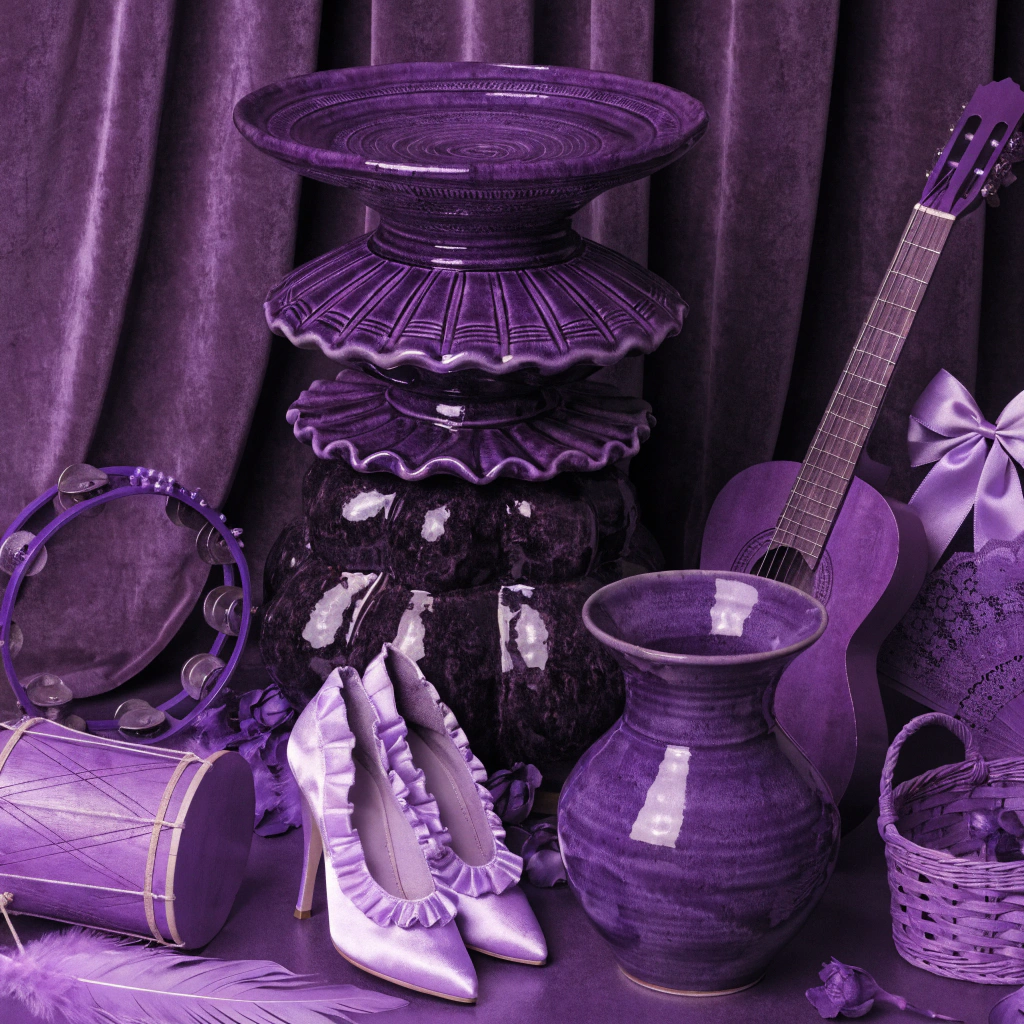
Flamenco: The Music of Spain
Flamenco is a famous dance from Spain. It is very popular in the south of the country. Many people love this art.
There are four important parts of flamenco. First, there is singing. Second, there is guitar music. Third, there is dancing. Finally, there is clapping with hands.
The dancers wear beautiful clothes. Women often wear long, red dresses. The music is loud and fast. People watch flamenco in small places called 'tablaos'. It is very exciting to see. Flamenco is the heart of Spanish culture.
Point grammaire
Structure: Present Simple (to be)
"Flamenco is a famous dance from Spain."
We use 'is' with singular subjects like 'Flamenco' to state facts or descriptions. It is the most common verb in English for giving information.
Structure: Present Simple (plural verbs)
"The dancers wear beautiful clothes."
When the subject is plural (dancers), we use the base form of the verb (wear) without an 's'. This describes a regular action or a general truth.
Teste ta compréhension
10 questions · A1 Débutant · 1 aperçu gratuit
Teste ce que tu as appris dans cet article. Réponds à toutes les questions pour gagner des XP !
Where is Flamenco very popular?
Tu veux terminer le quiz ?
9 questions supplémentaires t'attendent. Inscris-toi gratuitement pour débloquer le quiz complet et gagner des XP !
S'inscrire gratuitementTu as dj un compte ? Connexion
Bien joué !
Continue à pratiquer !
Déjà terminé — pas de XP supplémentaire
Inscris-toi pour gagner des XPDétail des questions
Where is Flamenco very popular?
Ta réponse:
Bonne réponse: In the south of Spain
There are five important parts of flamenco.
Ta réponse:
Bonne réponse: Faux
What does 'loud' mean?
Ta réponse:
Bonne réponse: Making a lot of noise
Women often wear long, red _____.
Ta réponse:
Bonne réponse: dresses
The Soul of Spain: Flamenco
Flamenco is a very famous part of Spanish culture. It started in the south of Spain, in a place called Andalusia. This art is special because it has four main parts: singing, guitar playing, dancing, and clapping hands.
In the past, people started flamenco in the 18th century. It became popular because the music and dance show many strong feelings. Sometimes the music is happy, but sometimes it is sadder than other types of music. The dancers move their arms and feet with a lot of energy. They wear colorful clothes and shoes that make a loud noise on the floor.
Today, many people visit Spain to watch flamenco shows in small theaters called 'tablaos'. These shows are louder and more exciting than a normal concert. Flamenco is now famous all over the world because it is beautiful and powerful. If you visit cities like Seville or Granada, you must see a show! It is an experience you will never forget.
Point grammaire
Structure: Comparatives
"Sometimes the music is happy, but sometimes it is sadder than other types of music."
We use comparatives to compare two things. For short adjectives like 'sad', we add '-er' and use the word 'than'.
Structure: Past Simple
"It started in the south of Spain, in a place called Andalusia."
We use the past simple to talk about finished actions in the past. For regular verbs, we add '-ed' to the end of the base verb.
Teste ta compréhension
11 questions · A2 mentaire · 1 aperçu gratuit
Teste ce que tu as appris dans cet article. Réponds à toutes les questions pour gagner des XP !
Where did flamenco begin?
Tu veux terminer le quiz ?
10 questions supplémentaires t'attendent. Inscris-toi gratuitement pour débloquer le quiz complet et gagner des XP !
S'inscrire gratuitementTu as dj un compte ? Connexion
Bien joué !
Continue à pratiquer !
Déjà terminé — pas de XP supplémentaire
Inscris-toi pour gagner des XPDétail des questions
Where did flamenco begin?
Ta réponse:
Bonne réponse: South of Spain
Flamenco has four main parts, including singing and dancing.
Ta réponse:
Bonne réponse: Vrai
What does 'famous' mean?
Ta réponse:
Bonne réponse: Known by many people
Flamenco is a very _____ part of Spanish culture.
Ta réponse:
Bonne réponse: famous
In which century did flamenco start?
Ta réponse:
Bonne réponse: 18th
Flamenco: The Soul of Spanish Culture
Flamenco is one of the most famous cultural symbols of Spain. While many people think it is just a dance, it is actually a complex art form that has been part of Spanish culture for centuries. It mainly comes from Andalusia, which is a beautiful region in the south of Spain.
Flamenco consists of four main elements. First, there is 'cante', which is the soulful singing that expresses deep emotions. Second, 'toque' refers to the skillful guitar playing that accompanies the singer. Third, 'baile' is the passionate dance that most tourists recognize. Finally, there is 'jaleo', which includes rhythmic handclaps and vocal shouts that encourage the performers. These elements are combined to create a powerful performance.
The history of flamenco is very interesting. It was influenced by many different cultures, including Romani, Moorish, and Jewish traditions. In the past, flamenco was performed in private homes or small cafes, but today it is seen on big stages all over the world. Since 2010, flamenco has been recognized by UNESCO as a masterpiece of the oral and intangible heritage of humanity.
Nowadays, many young artists have experimented with new styles, mixing traditional flamenco with jazz or pop music. However, the emotional heart of the music remains the same. Whether you see it in a small 'tablao' or a large theater, flamenco is an experience that you will never forget. It is a tradition that has been kept alive by passionate artists who believe in the power of their history.
Point grammaire
Structure: Passive Voice
"Since 2010, flamenco has been recognized by UNESCO as a masterpiece."
The passive voice is used here because the action (recognizing) is more important than who did it. It is formed using 'has/have been' plus the past participle.
Structure: Relative Clauses
"It mainly comes from Andalusia, which is a beautiful region in the south of Spain."
Relative clauses starting with 'which' or 'who' provide extra information about a noun. In this case, 'which' adds more detail about Andalusia.
Teste ta compréhension
11 questions · B1 Intermédiaire · 1 aperçu gratuit
Teste ce que tu as appris dans cet article. Réponds à toutes les questions pour gagner des XP !
In which part of Spain did flamenco originate?
Tu veux terminer le quiz ?
10 questions supplémentaires t'attendent. Inscris-toi gratuitement pour débloquer le quiz complet et gagner des XP !
S'inscrire gratuitementTu as dj un compte ? Connexion
Bien joué !
Continue à pratiquer !
Déjà terminé — pas de XP supplémentaire
Inscris-toi pour gagner des XPDétail des questions
In which part of Spain did flamenco originate?
Ta réponse:
Bonne réponse: Andalusia
Flamenco is only a style of dancing.
Ta réponse:
Bonne réponse: Faux
What is the meaning of 'cante'?
Ta réponse:
Bonne réponse: Singing
Flamenco has been recognized as a masterpiece of world heritage by _____.
Ta réponse:
Bonne réponse: UNESCO
What does 'jaleo' include?
Ta réponse:
Bonne réponse: Handclaps and vocal shouts
The Soul of Andalusia: Understanding the Complexity of Flamenco
Flamenco is often perceived as a mere spectacle for tourists; however, for those who delve deeper, it reveals itself as a profound and multifaceted art form. Originating in the southern autonomous communities of Spain, particularly Andalusia, Extremadura, and Murcia, flamenco represents a sophisticated synthesis of diverse cultural influences. It is not merely a dance but a comprehensive discipline consisting of four fundamental elements: 'cante' (singing), 'toque' (guitar playing), 'baile' (dance), and 'jaleo'. This latter component, which involves rhythmic handclaps known as 'palmas' and spontaneous vocal encouragements, is what truly drives the intensity of a performance. Without the 'jaleo', the interaction between the performer and the audience would lack its characteristic vitality.
Historically, flamenco emerged during the 18th century, although its foundations had been laid much earlier through the interaction of various marginalized groups. The Gitanos (Romani people), Moors, and Jews all contributed to a unique musical landscape that eventually coalesced into the flamenco we recognize today. Despite its humble beginnings in the private gatherings of families, it has evolved into a globally recognized heritage. This evolution was not immediate; rather, it was a gradual process of cultural exchange that mirrored the complex history of the Iberian Peninsula itself.
The 'cante' is widely considered the heart of the tradition. It is through the singer’s voice that the raw emotions of grief, joy, and struggle are expressed. Traditionally, these songs were improvised, requiring the performers to possess an extraordinary level of intuition and technical skill. Furthermore, the 'toque' or guitar playing provides the harmonic structure, while the 'baile' interprets the rhythm through intricate footwork and expressive body movements. Every gesture made by the dancer is a response to the singer's lament or the guitarist's melody.
In recent decades, flamenco has undergone significant transformations. While purists argue that the art form should remain untouched by modern influences, others have successfully blended it with jazz, rock, and electronic music. Regardless of these debates, the essence of flamenco remains rooted in its ability to evoke 'duende'—a mysterious power that a performer experiences when they are completely immersed in the art. In 2010, UNESCO recognized flamenco as a Masterpiece of the Oral and Intangible Heritage of Humanity, solidifying its status as an invaluable cultural treasure. Consequently, flamenco continues to thrive, bridging the gap between historical tradition and contemporary artistic expression.
Point grammaire
Structure: Passive Voice (Present Simple)
"Flamenco is often perceived as a mere spectacle for tourists."
This is used to focus on the art form rather than the people perceiving it. It is formed using 'am/is/are' followed by the past participle.
Structure: Past Perfect Passive
"its foundations had been laid much earlier through the interaction of various marginalized groups."
This shows an action that was completed before another point in the past. It is formed with 'had been' + past participle.
Structure: Present Perfect Simple
"In recent decades, flamenco has undergone significant transformations."
This tense connects the past to the present, focusing on a change that occurred over a period of time leading up to now.
Teste ta compréhension
11 questions · B2 Intermédiaire supérieur · 1 aperçu gratuit
Teste ce que tu as appris dans cet article. Réponds à toutes les questions pour gagner des XP !
Which Spanish region is most closely associated with the origins of flamenco?
Tu veux terminer le quiz ?
10 questions supplémentaires t'attendent. Inscris-toi gratuitement pour débloquer le quiz complet et gagner des XP !
S'inscrire gratuitementTu as dj un compte ? Connexion
Bien joué !
Continue à pratiquer !
Déjà terminé — pas de XP supplémentaire
Inscris-toi pour gagner des XPDétail des questions
Which Spanish region is most closely associated with the origins of flamenco?
Ta réponse:
Bonne réponse: Andalusia
Flamenco is exclusively a form of dance and does not include singing.
Ta réponse:
Bonne réponse: Faux
What does 'multifaceted' mean in the context of the article?
Ta réponse:
Bonne réponse: Having many different aspects or parts
The 'cante' is widely considered the _____ of the tradition.
Ta réponse:
Bonne réponse: heart
What does the term 'duende' refer to in flamenco?
Ta réponse:
Bonne réponse: A mysterious power or emotional immersion
The Soul of Andalusia: Decoding the Visceral Art of Flamenco
Beyond the superficial veneer of castanets and polka-dot dresses often peddled to tourists lies the profound, often agonizing, soul of flamenco. Originating in the sun-drenched landscapes of Andalusia, Extremadura, and Murcia, flamenco is not merely a genre of music or dance; it is a complex socio-cultural phenomenon that articulates the history of a marginalized people. The amalgamation of disparate cultural strands—Romaní, Moorish, and Sephardic—laid the foundations for what we now recognize as flamenco, resulting in a unique synthesis of rhythms and vocal modalities. Seldom has an art form provided such a visceral capture of the collective consciousness of a people, serving as a medium for expressing the poignant realities of persecution and survival. The historical marginalization of the Romaní people meant that their art was forged in a crucible of social exclusion, giving the music its characteristic grit and defiance.
Central to the flamenco experience are four intrinsic components: 'cante' (song), 'toque' (guitar), 'baile' (dance), and 'jaleo' (rhythmic encouragement). The 'cante' itself is categorized into various 'palos' or styles, each reflecting a specific emotional landscape, from the 'soleá's' profound sorrow to the 'alegría's' vibrant exuberance. While the technical proficiency of the guitarist and the dancer is undeniable, it is the elusive quality of 'duende' that separates a technical performance from a transcendental experience. Duende, described by Federico García Lorca as a 'power, not a work,' is the momentary eruption of authentic emotion that pierces through the performer's technique. Without this raw, spiritual resonance, the performance remains a mere exhibition of skill rather than an act of artistic communion.
Historically, flamenco emerged in the 18th century as a clandestine expression within the 'gitanerías' or Romaní quarters. It was a voice for the voiceless, a way to subvert the dominant cultural narratives of the time. However, the 20th century brought about a significant shift, as the art form transitioned from private gatherings to the public 'cafés cantantes'. This transition sparked a perennial debate regarding the commodification of the art. Critics argue that the pressures of global tourism have diluted the raw intensity of traditional flamenco, favoring a sanitized version that lacks the grit of its ancestors. The tension between preserving 'purity' and embracing commercial success remains a central theme in modern flamenco discourse.
In the contemporary era, flamenco continues to evolve, navigating the delicate balance between preservation and innovation. Modern artists are increasingly willing to incorporate elements of jazz, rock, and electronic music, seeking to expand the boundaries of the genre. Modern artists rely on the tradition of improvisation while incorporating these new textures. Yet, even as they experiment, the core of flamenco remains tethered to its roots. This ongoing dialogue between the past and the present ensures that flamenco remains a living, breathing entity. Ultimately, the enduring power of flamenco lies in its ability to transform individual suffering into a universal aesthetic experience, proving that even in the face of modernization, the human spirit's need for authentic expression remains unchanged.
Point grammaire
Structure: Inversion
"Seldom has an art form provided such a visceral capture of the collective consciousness of a people."
Inversion occurs when the subject and auxiliary verb are swapped, often after negative or restrictive adverbs (like 'seldom'). This is used for emphasis and to create a more formal, literary tone.
Structure: Cleft Sentences
"It is the elusive quality of 'duende' that separates a technical performance from a transcendental experience."
Cleft sentences use the structure 'It is/was + [emphasized part] + that/who' to focus the reader's attention on a specific element. Here, it highlights 'duende' as the most crucial factor.
Structure: Nominalisation
"The amalgamation of disparate cultural strands—Romaní, Moorish, and Sephardic—laid the foundations for what we now recognize as flamenco."
Nominalisation involves turning verbs or adjectives into nouns (e.g., 'amalgamate' to 'amalgamation'). It allows for more abstract, dense, and formal academic writing by focusing on concepts rather than actions.
Teste ta compréhension
12 questions · C1 Avancé · 1 aperçu gratuit
Teste ce que tu as appris dans cet article. Réponds à toutes les questions pour gagner des XP !
According to the article, what is 'duende'?
Tu veux terminer le quiz ?
11 questions supplémentaires t'attendent. Inscris-toi gratuitement pour débloquer le quiz complet et gagner des XP !
S'inscrire gratuitementTu as dj un compte ? Connexion
Bien joué !
Continue à pratiquer !
Déjà terminé — pas de XP supplémentaire
Inscris-toi pour gagner des XPDétail des questions
According to the article, what is 'duende'?
Ta réponse:
Bonne réponse: A momentary eruption of authentic emotion that transcends technique.
Flamenco was originally developed as a public performance for commercial profit.
Ta réponse:
Bonne réponse: Faux
Which word describes a combination of various components into a whole?
Ta réponse:
Bonne réponse: Synthesis
Flamenco was used as a way to _____ the dominant cultural narratives of the time.
Ta réponse:
Bonne réponse: subvert
What does the author imply about modern flamenco?
Ta réponse:
Bonne réponse: It balances tradition with new musical influences like jazz and rock.
The 'cante' (song) is categorized into different styles called 'palos'.
Ta réponse:
Bonne réponse: Vrai
The Duende’s Lament: An Ontological Inquiry into the Flamenco Tradition
To approach the subject of Flamenco is to confront a labyrinthine tapestry woven from the disparate threads of historical marginalization and profound artistic catharsis. While the casual observer might perceive it as a mere spectacle of rhythmic footwork and percussive guitar, it remains, in its quintessence, an ontological expression of the human condition. Emerging from the crucible of Andalusia, Flamenco represents a complex syncretism of Romani, Sephardic, and Moorish cultural legacies, coalescing into an art form that defies simplistic categorization. It is an aesthetic of the 'subaltern', a term used by scholars to describe populations historically excluded from the traditional power structures of society.
Were one to dissect the anatomy of Flamenco, the 'cante' (song) would invariably emerge as its primordial heartbeat. It is not merely singing in the Western operatic sense; rather, it is an excavation of the soul, characterized by microtonal modulations and a raw, guttural intensity. The 'toque' (guitar) and 'baile' (dance) serve as auxiliary conduits for this raw emotionality, yet they are intrinsically bound by the 'jaleo'—the rhythmic clapping (palmas) and vocal exhortations that propel the performance toward its zenith. This collective participation ensures that Flamenco is never a solitary endeavor but a communal exorcism of grief and joy.
Central to the appreciation of Flamenco is the elusive and often misunderstood concept of 'duende'. As the poet Federico García Lorca famously articulated in his seminal lectures, duende is not a matter of mere technique or aesthetic grace, but a visceral struggle with the 'black sounds' of the earth. It is an ephemeral manifestation of creative spirit that occurs only when the artist confronts their own mortality and vulnerability. One might posit that duende is the antithesis of the Apollonian ideal of order; it is Dionysian, chaotic, and devastatingly honest. Without this spark, the performance, however technically proficient, remains devoid of its transcendental potential.
Furthermore, the socio-political trajectory of Flamenco cannot be overstated. For centuries, it served as a vital medium through which the pangs of persecution and social exclusion could be transmuted into aesthetic power. The 'cante jondo' (deep song), in particular, echoes the historical traumas of the Gitano people. It is perhaps paradoxical that an art form born of such profound isolation and systemic neglect has become Spain’s most recognizable cultural export. The transition from the private 'juerga' (gathering) to the public 'tablao' (commercial venue) has sparked ongoing debates regarding the 'authenticity' of the form.
The commodification of Flamenco in contemporary tourism often risks diluting its raw, idiosyncratic nature into a palatable stereotype for foreign consumption. One must wonder whether the institutionalization of Flamenco by UNESCO as an Intangible Cultural Heritage of Humanity serves to preserve its fragile soul or merely to ossify its form into a museum piece. Critics argue that once an art form is 'protected,' it may lose the transgressive edge that defined its origins. Nevertheless, the global proliferation of Flamenco schools from Tokyo to New York suggests a universal resonance that transcends linguistic and geographical boundaries.
In conclusion, Flamenco persists as a living testament to the resilience of the human spirit and its capacity to find beauty within suffering. It demands of its practitioners not just technical virtuosity, but an unflinching honesty and a willingness to be emotionally flayed before an audience. Should the 'duende' fail to appear, the performance remains a hollow shell, a mere mimicry of tradition. Thus, Flamenco remains a paradoxical entity: simultaneously ancient and immediate, local and universal, a transient moment of brilliance that lingers long after the final 'palmas' have faded into silence. It is, ultimately, a dialogue between the past and the present, conducted through the language of the body and the cry of the voice.
Point grammaire
Structure: Inversion in Conditional Clauses (Subjunctive)
"Were one to dissect the anatomy of Flamenco, the 'cante' would invariably emerge as its primordial heartbeat."
This formal structure replaces 'If one were to...'. It is used in C2 writing to add rhetorical weight and sophistication to hypothetical statements.
Structure: Conditional Inversion with 'Should'
"Should the 'duende' fail to appear, the performance remains a hollow shell."
This inversion is a formal alternative to 'If the duende should fail...'. It emphasizes the conditionality of the outcome in a polished, literary style.
Structure: Academic Hedging
"One might posit that duende is the antithesis of the Apollonian ideal of order."
The phrase 'One might posit' is a common academic device used to propose a theory or interpretation without making an overly aggressive or absolute claim.
Teste ta compréhension
12 questions · C2 Maîtrise · 1 aperçu gratuit
Teste ce que tu as appris dans cet article. Réponds à toutes les questions pour gagner des XP !
According to the text, what is the 'primordial heartbeat' of Flamenco?
Tu veux terminer le quiz ?
11 questions supplémentaires t'attendent. Inscris-toi gratuitement pour débloquer le quiz complet et gagner des XP !
S'inscrire gratuitementTu as dj un compte ? Connexion
Bien joué !
Continue à pratiquer !
Déjà terminé — pas de XP supplémentaire
Inscris-toi pour gagner des XPDétail des questions
According to the text, what is the 'primordial heartbeat' of Flamenco?
Ta réponse:
Bonne réponse: The singing (cante)
The author suggests that Flamenco is a purely solitary art form.
Ta réponse:
Bonne réponse: Faux
What is the meaning of 'syncretism' as used in the article?
Ta réponse:
Bonne réponse: The merging of different cultural legacies
Emerging from the _____ of Andalusia, Flamenco represents a complex cultural legacy.
Ta réponse:
Bonne réponse: crucible
How did Federico García Lorca define 'duende'?
Ta réponse:
Bonne réponse: As a visceral struggle with creative spirit
The commodification of Flamenco is presented as a potential threat to its authenticity.
Ta réponse:
Bonne réponse: Vrai

