









shield en 30 secondes
- A physical object held by soldiers or police to block attacks and prevent injury.
- Any abstract concept or thing that provides protection from harm, danger, or pain.
- As a verb, the action of protecting someone or something from a specific threat.
- Commonly used in metaphors (e.g., 'a shield against illness') and specialized terms (e.g., 'heat shield').
The word shield refers to a broad piece of defensive armor carried on the arm or in the hand. Historically, soldiers used shields made of wood, animal hide, or metal to protect themselves from swords, arrows, and other weapons during combat. In a modern and more general sense, a shield is anything that provides protection from danger, pain, damage, or unpleasant situations. For example, sunglasses act as a shield against harmful UV rays, and a vaccine acts as a shield against disease. Understanding both the literal and metaphorical uses of this word is essential for mastering English vocabulary.
- Literal Meaning
- A physical object used by warriors or police to block attacks.
The brave knight raised his shield to block the dragon's fire.
When we use the word metaphorically, we are drawing a comparison between a physical barrier and an abstract form of protection. For instance, parents often try to act as a shield for their children, keeping them away from the harsh realities of the world. In science, the Earth's magnetic field is a vital shield that protects our planet from solar radiation. Without this invisible shield, life as we know it could not exist. The concept of a shield is deeply embedded in human culture, representing safety, defense, and guardianship.
- Metaphorical Meaning
- An abstract concept, person, or thing that prevents harm or damage.
Her sense of humor was a shield against the sadness she felt inside.
Furthermore, the word appears in various specialized contexts. In engineering, a shield might be a protective casing around a piece of machinery to prevent accidents. In finance, a 'tax shield' is a legal strategy used to reduce taxable income. Despite these different applications, the core meaning remains exactly the same: a barrier that stands between something valuable and something harmful. By visualizing a medieval knight defending a castle, you can easily remember the fundamental purpose of any shield.
- Technical Meaning
- A protective cover or structure in machinery or electronics.
The mechanic installed a heat shield to protect the engine components.
The ozone layer is a natural shield for the Earth.
He used his umbrella as a shield against the heavy rain.
Using the word shield correctly depends on whether you are using it as a noun or a verb. As a noun, it typically follows articles like 'a', 'the', or possessive pronouns like 'his' or 'her'. You will often see it combined with adjectives that describe its material, purpose, or size, such as 'a wooden shield', 'a riot shield', or 'an invisible shield'. When used as a verb, 'shield' means to protect someone or something. It is usually followed by the preposition 'from'. For example, 'She shielded her eyes from the sun.' This structure (shield + object + from + threat) is one of the most common sentence patterns you will encounter.
- Noun Usage
- Used to identify the protective object or concept itself.
The police officers held up their riot shields as the crowd approached.
It is also important to understand the collocations associated with 'shield'. Verbs that frequently pair with the noun form include 'carry', 'raise', 'lower', 'drop', and 'use'. For instance, a soldier might 'raise a shield' in battle. When discussing abstract shields, we might say someone 'uses their wealth as a shield'. In passive constructions, you might hear that someone is 'shielded by' something. For example, 'The valley is shielded by the mountains.' This means the mountains provide a natural barrier against harsh weather or winds.
- Verb Usage
- Used to describe the action of providing protection.
He tried to shield his younger brother from the harsh criticism.
In professional and academic writing, 'shield' is often employed to describe regulatory or protective measures. A company might 'shield its assets' from bankruptcy, or a law might 'shield journalists' from having to reveal their sources. These advanced usages build directly upon the basic A1 concept of physical protection. Whether you are writing a simple story about a knight or a complex essay on environmental policy, the word 'shield' provides a powerful, evocative image of defense and safety.
- Advanced Collocations
- Phrases like 'human shield', 'tax shield', or 'heat shield'.
The terrorists cowardly used innocent civilians as a human shield.
Sunscreen is an effective shield against ultraviolet radiation.
The atmosphere acts as a shield for our planet.
The word shield is ubiquitous in English, appearing across a wide variety of contexts ranging from everyday conversation to specialized fields. One of the most common places you will hear this word is in historical documentaries, fantasy movies, and video games. In these entertainment mediums, shields are literal pieces of armor. Characters like Captain America are famous for carrying an iconic shield. In gaming, players frequently look for 'shield potions' or 'energy shields' to protect their avatars from taking damage. This widespread cultural presence makes the word easily recognizable even to beginner English learners.
- Pop Culture
- Movies, comic books, and video games frequently feature shields.
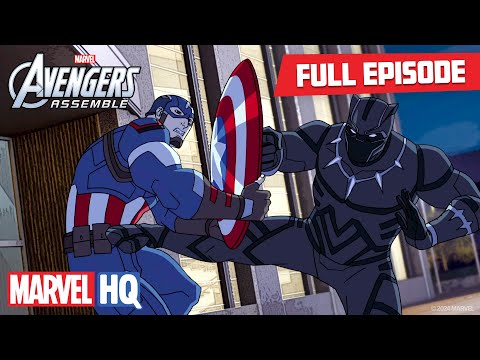
Captain America threw his vibranium shield at the enemy.
Beyond entertainment, you will frequently hear 'shield' in news reports and journalism. During protests or civil unrest, reporters often mention police officers using 'riot shields'. In international news, you might hear about 'missile defense shields', which are complex military systems designed to intercept incoming attacks. In environmental discussions, the 'ozone shield' is a critical topic. Scientists and activists use this term to describe the layer of the Earth's stratosphere that absorbs most of the Sun's ultraviolet radiation, emphasizing its protective role.
- News and Media
- Used to describe military defense systems or police equipment.
The country is developing a new missile defense shield.
In everyday life, you might encounter the word when buying products. Car waxes are advertised as providing a 'protective shield' for the paint. Antivirus software claims to offer a 'shield' against malware and hackers. Even in psychology, therapists talk about people putting up 'emotional shields' to avoid getting hurt in relationships. Because the concept of protection is so universal, the word 'shield' has seamlessly integrated into marketing, technology, and interpersonal communication, making it a highly versatile vocabulary word.
- Everyday Products
- Marketing language often uses 'shield' to imply durability and safety.
This new toothpaste creates a shield against cavities.
He bought a screen shield for his new smartphone.
Her sarcasm is just a shield to hide her insecurities.
While shield is a relatively straightforward word, learners often make a few common mistakes, particularly regarding prepositions and spelling. The most frequent error occurs when using 'shield' as a verb. Learners sometimes use the preposition 'against' or 'of' instead of the correct preposition 'from'. For example, saying 'He shielded her against the rain' is understandable but less natural than saying 'He shielded her from the rain.' Remembering the pattern 'shield [someone/something] from [threat]' will instantly improve your grammatical accuracy and make your English sound much more native.
- Preposition Error
- Using incorrect prepositions after the verb form.
Correct: She used her hand to shield her eyes from the bright light.
Another common mistake involves spelling. Because of the 'i before e except after c' rule, many learners misspell the word as 'sheild'. This is a very common typographical error even among native speakers. To remember the correct spelling, you can think of the word 'hide'—a shield helps you hide from danger, and both 'shield' and 'hide' contain the letter 'i' before the 'e' (or just remember the standard rule applies here: i before e). Pronunciation can also be slightly tricky; the 'ie' makes a long 'ee' sound, so it rhymes with 'field' and 'yield'.
- Spelling Error
- Writing 'sheild' instead of 'shield'.
Incorrect: The knight dropped his sheild. / Correct: The knight dropped his shield.
Finally, learners sometimes confuse 'shield' with 'armor'. While both are used for protection, they are not strictly synonymous in physical contexts. Armor refers to the protective clothing worn on the body (like a metal suit or a bulletproof vest), whereas a shield is a separate piece of equipment held in the hand or placed in front of something. You wear armor, but you carry a shield. Understanding this distinction is particularly important when reading historical texts or playing role-playing games where equipment types are specifically categorized.
- Vocabulary Confusion
- Confusing 'shield' (held object) with 'armor' (worn clothing).
The warrior wore heavy armor and carried a large wooden shield.
Make sure to shield the microphone from the wind.
The law acts as a shield for consumer rights.
When expanding your vocabulary, it is helpful to learn words that are similar to shield. One of the most common synonyms is 'protection'. While 'protection' is a broader, abstract noun, a 'shield' is a specific type of protection. Another closely related word is 'barrier'. A barrier is anything that prevents movement or access, and a shield acts as a barrier against weapons or harm. 'Defense' is also a strong synonym, often used in sports or military contexts to describe the act of protecting a goal or territory.
- Protection
- The action of protecting, or the state of being protected.
The vaccine provides a strong shield (protection) against the virus.
If you are looking for words related to physical objects, 'buckler' is a specific type of small, round shield used in medieval times. 'Screen' is another word that can function similarly to 'shield', especially when talking about blocking light, wind, or view. For example, a 'windscreen' (or windshield in American English) on a car protects the driver from the wind. In the context of the verb form, synonyms include 'protect', 'guard', 'defend', and 'safeguard'. Each of these verbs carries a slightly different nuance, but they all share the core meaning of keeping something safe.
- Guard
- To watch over in order to protect or control.
The dog acts as a shield (guard) for the family home.
Conversely, it is useful to know antonyms—words that mean the opposite. Antonyms for the verb 'shield' include 'expose', 'endanger', and 'reveal'. If you take away a shield, you expose the person to danger. Understanding these opposites helps clarify the exact boundaries of the word's meaning. By learning 'shield' alongside its synonyms like 'barrier' and 'defense', and its antonyms like 'exposure', you build a rich, interconnected web of vocabulary that will significantly improve your fluency and comprehension in English.
- Expose (Antonym)
- To leave without protection; to make vulnerable.
Without his shield, the knight was completely exposed to the arrows.
The forest acts as a natural buffer and shield against the strong coastal winds.
She used her book as a shield to avoid making eye contact.
How Formal Is It?
Niveau de difficulté
Grammaire à connaître
Prepositions of protection (shield *from*, protect *against*)
Passive voice (was shielded by)
Noun adjuncts (riot shield, heat shield)
Infinitive of purpose (used an umbrella *to shield* himself)
Metaphorical extensions of physical verbs
Exemples par niveau
The knight has a big shield.
A large piece of armor for protection.
'Shield' is used as a singular countable noun.
He holds the shield in his left hand.
The object used to block attacks.
Uses the definite article 'the' to refer to a specific shield.
A shield protects you.
It keeps you safe.
Used as the subject of the sentence.
The police use a shield.
Law enforcement protective gear.
Simple subject-verb-object structure.
My umbrella is my shield from the rain.
Something that stops the rain.
Metaphorical use introduced simply with 'is'.
The toy shield is made of plastic.
A child's plaything for defense.
'Shield' modified by the noun adjunct 'toy'.
Draw a shield on the paper.
Create the shape of a shield.
Used as the object of the imperative verb 'draw'.
The shield is very heavy.
It weighs a lot.
Subject of a simple descriptive sentence.
She shielded her eyes from the bright sun.
Covered her eyes to protect them.
'Shield' used as a regular past tense verb.
He bought a screen shield for his new phone.
A protective cover for a device.
Compound noun 'screen shield'.
The trees shield our house from the strong wind.
The trees block the wind.
Verb used in the present simple for a general truth.
Captain America threw his famous shield.
The iconic weapon/defense of the superhero.
Possessive pronoun 'his' modifying 'shield'.
You need a shield to fight the dragon in this game.
An item required for defense in a video game.
Infinitive of purpose 'to fight' following the noun phrase.
The mother tried to shield her child from the dog.
Protect the child by standing in front.
Verb followed by the preposition 'from'.
His jacket was a poor shield against the cold.
It did not protect him well.
Noun followed by the preposition 'against'.
They found an old wooden shield in the castle.
Discovered a historical artifact.
Multiple adjectives 'old wooden' modifying the noun.
The ozone layer acts as a vital shield against ultraviolet radiation.
A natural protective barrier for the Earth.
Phrase 'acts as a shield' is a common collocation.
He used humor as a shield to hide his true feelings.
A psychological defense mechanism.
Metaphorical use of the noun.
The new privacy laws will shield consumers from data theft.
Legal protection from harm.
Verb used in the future tense with 'will'.
During the riot, the police formed a wall with their shields.
A defensive formation using physical barriers.
Plural noun used in a prepositional phrase.
The vaccine provides a strong shield against the virus.
Medical protection against disease.
Noun used to describe immunity.
She was shielded from the harsh reality of the situation by her parents.
Kept unaware of bad news for protection.
Passive voice construction 'was shielded'.
The spacecraft's heat shield was damaged during reentry.
A specific protective component of a vehicle.
Compound noun 'heat shield' as the subject.
A good education is a shield against poverty.
Knowledge protects you from being poor.
Abstract metaphorical statement.
The terrorists cowardly used innocent civilians as a human shield.
People forced to protect a military target.
Specific collocation 'human shield'.
The corporation set up an offshore account as a tax shield.
A financial strategy to avoid paying taxes.
Business terminology 'tax shield'.
He was accused of shielding the criminal from the police.
Hiding or protecting someone who broke the law.
Gerund 'shielding' used after the preposition 'of'.
The magnetic field shields the Earth from deadly solar flares.
An invisible force field providing planetary defense.
Scientific context using the verb form.
She wore sunglasses to shield her eyes from the glare of the snow.
To block intense reflected light.
Infinitive phrase 'to shield' expressing purpose.
The confidentiality agreement shields the company's trade secrets.
A legal contract that protects sensitive information.
Abstract subject performing the action of the verb.
His arrogant attitude is just a shield for his deep insecurities.
A false front used to protect a fragile ego.
Psychological metaphor using 'shield for'.
The riot police advanced, banging their batons against their shields.
Making a loud, intimidating noise with their equipment.
Noun used as the object of the preposition 'against'.
The journalist invoked the state's shield law to avoid revealing her source.
A specific law protecting reporters' rights.
Legal terminology 'shield law'.
The atmosphere acts as a vital radiation shield, without which life would be impossible.
A crucial layer that blocks harmful energy.
Complex sentence structure with a relative clause.
He has lived a very sheltered life, completely shielded from adversity.
Protected to the point of lacking real-world experience.
Past participle 'shielded' used as an adjective.
The depreciation of the new machinery provided a significant tax shield for the firm.
A reduction in taxable income due to allowable deductions.
Advanced financial vocabulary.
The lead lining serves to shield the technicians from X-ray exposure.
A dense material used to block radiation.
Infinitive 'to shield' following the verb 'serves'.
Her sarcasm is a preemptive shield, deployed before anyone can hurt her.
A defensive behavior used in advance to prevent emotional pain.
Metaphorical phrase 'preemptive shield'.
The mountain range effectively shields the valley from the harsh northern weather systems.
Geographical features providing a microclimate.
Adverb 'effectively' modifying the verb 'shields'.
They accused the government of shielding corrupt officials from prosecution.
Protecting powerful people from legal consequences.
Verb 'shielding' taking a complex object 'corrupt officials'.
The concept of the 'nuclear umbrella' served as a geopolitical shield during the Cold War.
A strategic deterrent providing international security.
Highly abstract, historical and political context.
The quantum shielding effect explains why inner-shell electrons reduce the effective nuclear charge.
A phenomenon in atomic physics where electrons block the nucleus's pull.
Specialized scientific terminology 'shielding effect'.
He retreated behind a shield of impenetrable academic jargon to avoid answering the direct question.
Using complex language as a defense mechanism to evade scrutiny.
Sophisticated metaphor 'shield of impenetrable academic jargon'.
The corporate veil acts as a liability shield, protecting shareholders from the company's debts.
A legal concept separating a corporation's liabilities from its owners.
Advanced legal terminology 'liability shield'.
Her stoicism was not a lack of feeling, but a carefully constructed shield against a chaotic world.
A philosophical approach used as emotional armor.
Nuanced psychological and philosophical description.
The electromagnetic shielding of the cables prevents interference from external radio frequencies.
A physical barrier around wires to stop signal disruption.
Technical engineering context.
They argued that the First Amendment should not be used as a shield for hate speech.
A constitutional right misused to protect harmful behavior.
Complex legal and ethical debate context.
The protagonist's cynical exterior is gradually revealed to be a fragile shield masking profound trauma.
A character's tough attitude is shown to be a weak defense hiding deep pain.
Literary analysis terminology.
Collocations courantes
Phrases Courantes
Souvent confondu avec
Expressions idiomatiques
Facile à confondre
Structures de phrases
Comment l'utiliser
While 'protect' is a general verb, 'shield' implies a specific, often physical or direct, barrier standing between the subject and the danger.
-
He shielded her against the rain.
When used as a verb, 'shield' is almost always followed by the preposition 'from', not 'against'.
-
The knight dropped his sheild.
A very common spelling error. Remember the 'i before e' rule: s-h-i-e-l-d.
-
He wore a shield on his chest.
A shield is carried in the hand or on the arm; armor is worn on the body.
-
The umbrella shielded to the sun.
The verb 'shield' requires a direct object (who/what is being protected) before the preposition 'from'.
-
I need to shield my computer of viruses.
Again, the correct preposition is 'from', not 'of'.
Astuces
Use 'From' with the Verb
Always remember to use the preposition 'from' when using 'shield' as a verb. You shield someone FROM something. For example: 'Shield your eyes from the sun.' Do not use 'against' or 'of' in this verb pattern.
I before E
The spelling of 'shield' trips up many learners. Remember the rule 'I before E'. It is spelled S-H-I-E-L-D. Think of a knight in a FIELD with a SHIELD; both words end in '-ield'.
Long E Sound
The 'ie' in shield makes a long 'ee' sound. Pronounce it like 'sheeld'. Make sure not to rush the vowel sound, or it might sound like 'shelled' (like a seashell).
Noun vs. Armor
Do not confuse 'shield' with 'armor'. Armor is what you wear on your body (like a vest). A shield is what you hold in your hand. This distinction is important in historical or gaming contexts.
Abstract Protection
Don't just think of physical metal shields. Use the word to describe abstract protection. A good diet is a shield against disease. A savings account is a shield against financial ruin.
Riot Shield
If you are watching the news, you will often hear 'riot shield'. This is the clear plastic shield used by police. Learning this specific compound noun will help you understand news broadcasts.
Human Shield
Be aware of the term 'human shield'. It is a serious political and military term used when civilians are forced to protect a target. It is a common phrase in international news.
Strong Imagery
Use 'shield' instead of 'protect' in your writing to create a stronger visual image. 'The trees shielded the house' paints a better picture than 'The trees protected the house'.
Emotional Shield
In psychology or deep conversations, talk about 'putting up a shield'. This means hiding your true feelings so you don't get hurt. It's a very natural, native-sounding metaphor.
Gaming Vocabulary
If you play video games in English, 'shields' usually refers to a blue health bar or a magical barrier. Knowing this slang usage will help you communicate better with other players online.
Mémorise-le
Moyen mnémotechnique
Imagine a knight in a FIELD holding a SHIELD to protect himself.
Origine du mot
Old English 'scield'
Contexte culturel
The shield icon is universally recognized in software to denote security features or administrator privileges.
The shape of a shield (escutcheon) is the central element of a coat of arms in heraldry.
Pratique dans la vie réelle
Contextes réels
Amorces de conversation
“If you could have a magical shield, what would it protect you from?”
“Do you think parents sometimes shield their children too much from the real world?”
“What is something you use as an 'emotional shield' when you feel stressed?”
“Have you ever played a video game where shields were an important mechanic?”
“Why do you think police badges are often shaped like shields?”
Sujets d'écriture
Describe a time when someone acted as a shield for you, protecting you from harm or criticism.
Write about a 'shield' you have put up in your own life. Is it helping or hurting you?
Imagine you are a knight designing your own shield. What colors and symbols would you paint on it and why?
Discuss the importance of the Earth's ozone shield and what we should do to protect it.
Write a short story about a magical shield that protects the user from sadness instead of physical attacks.
Questions fréquentes
10 questionsIt is both. As a noun, it is the physical object used for protection (e.g., a knight's shield). As a verb, it is the action of protecting someone or something (e.g., to shield your eyes). Both forms are very common in English. You will use the noun form to talk about the object, and the verb form to describe the action of blocking danger. Understanding both is key to mastering the word.
The most common preposition to use after the verb 'shield' is 'from'. For example, 'She shielded her baby from the rain.' You are putting a barrier between the person and the threat. Sometimes you might see 'against' used with the noun form (a shield against illness), but 'from' is the standard choice for the verb. Remembering 'shield from' will help you avoid common grammar mistakes.
Armor is protective clothing that you wear on your body. Examples include a metal breastplate, a helmet, or a bulletproof vest. A shield is a separate piece of equipment that you carry in your hand or on your arm. You can move a shield around to block attacks from different directions. While both provide protection, armor is worn, and a shield is carried.
A 'human shield' is a term used in military and political contexts. It refers to the illegal and unethical practice of placing innocent civilians in or around a military target. The goal is to prevent the enemy from attacking that target, because the enemy does not want to kill innocent people. It is considered a war crime under international law. The term uses 'shield' metaphorically to describe people being used as a barrier.
Yes, absolutely. 'Shield' is frequently used as a metaphor in psychology and everyday conversation. People might 'put up a shield' to protect themselves from emotional pain, criticism, or rejection. For example, someone might use humor or sarcasm as a shield to hide their true, vulnerable feelings. This metaphorical use is very common at the B1 level and above.
A 'tax shield' is a term used in business and finance. It refers to a legal strategy or allowable deduction that reduces a company's or individual's taxable income. For example, the depreciation of equipment or the interest paid on a mortgage can act as a tax shield. By reducing the taxable income, the entity pays less in taxes. It 'shields' their money from being taxed.
It is spelled S-H-I-E-L-D. A very common mistake is to spell it 'sheild'. You can remember the correct spelling by thinking of the old rule 'i before e except after c'. Since there is no 'c', the 'i' comes before the 'e'. It also rhymes with 'field', which has the exact same 'ield' ending.
In science, particularly physics and chemistry, 'shielding' refers to a barrier that blocks radiation, magnetic fields, or electric fields. For example, lead is used as shielding against X-rays in hospitals. In chemistry, the 'shielding effect' describes how inner electrons block the positive charge of the nucleus from pulling on the outer electrons. It always refers to blocking a force or energy.
Yes, but they look different from medieval times. Police forces around the world use clear polycarbonate 'riot shields' to protect themselves from thrown objects during protests. Special tactical units use heavy, bullet-resistant 'ballistic shields' during dangerous operations. So while knights no longer use wooden shields, the concept and the tool are still very much in use today.
The 'ozone shield', more commonly known as the ozone layer, is a region of Earth's stratosphere that absorbs most of the Sun's ultraviolet (UV) radiation. It acts as a planetary shield. Without it, the intense UV radiation would cause severe harm to all life on Earth, including high rates of skin cancer in humans. Environmentalists often use the term 'shield' to emphasize how crucial it is to protect it.
Teste-toi 180 questions
/ 180 correct
Perfect score!
Summary
The word 'shield' fundamentally represents protection. Whether it is a physical piece of armor held by a knight, a layer of ozone protecting the Earth, or the act of a parent keeping a child safe, 'shield' always implies a barrier between something valuable and something harmful.
- A physical object held by soldiers or police to block attacks and prevent injury.
- Any abstract concept or thing that provides protection from harm, danger, or pain.
- As a verb, the action of protecting someone or something from a specific threat.
- Commonly used in metaphors (e.g., 'a shield against illness') and specialized terms (e.g., 'heat shield').
Use 'From' with the Verb
Always remember to use the preposition 'from' when using 'shield' as a verb. You shield someone FROM something. For example: 'Shield your eyes from the sun.' Do not use 'against' or 'of' in this verb pattern.
I before E
The spelling of 'shield' trips up many learners. Remember the rule 'I before E'. It is spelled S-H-I-E-L-D. Think of a knight in a FIELD with a SHIELD; both words end in '-ield'.
Long E Sound
The 'ie' in shield makes a long 'ee' sound. Pronounce it like 'sheeld'. Make sure not to rush the vowel sound, or it might sound like 'shelled' (like a seashell).
Noun vs. Armor
Do not confuse 'shield' with 'armor'. Armor is what you wear on your body (like a vest). A shield is what you hold in your hand. This distinction is important in historical or gaming contexts.
Exemple
The knight carried a heavy shield to protect himself.
Contenu associé


Ce mot dans d'autres langues
Expressions liées
Plus de mots sur Military
warheads
B2La tête explosive d'un missile ou d'une torpille.
gun
B1Une arme à feu qui projette des projectiles à travers un tube métallique.
silos
B1Un silo est une grande tour de stockage pour le grain ou, au sens figuré, un département isolé dans une entreprise.
bomber
B2Un bombardier est un avion militaire conçu pour transporter et larguer des bombes.
spies
B1Les espions sont des personnes qui collectent secrètement des informations. 'Il espionne' signifie qu'il observe quelqu'un en secret.
warriors
B1Un guerrier est un soldat ou un combattant courageux ou expérimenté, surtout dans le passé. Le terme implique souvent un sens de l'honneur, de l'habileté et du courage au combat.
attack
B1L'armée a lancé une attaque à l'aube.
missile
B1Un missile est un système d'arme autopropulsé conçu pour être lancé sur une cible.
battle
B1Une bataille est un combat organisé entre des forces armées.
bombing
B2La campagne de bombardement a duré plusieurs semaines.
