The video owner has disabled playback on external websites.
This video is no longer available on YouTube.
This video cannot be played right now.
Watch on YouTube
Débloquez les outils d'apprentissage IA
Inscrivez-vous pour accéder à des outils puissants qui vous aident à apprendre plus vite avec chaque vidéo.
Integration and the fundamental theorem of calculus | Chapter 8, Essence of calculus
Statistiques d apprentissage
Niveau CECRL
Difficulté
Sous-titres (292 segments)
This guy, Grothendieck, is somewhat of a mathematical idol to me,
and I just love this quote, don't you?
Too often in math, we dive into showing that a certain fact is true
with a long series of formulas before stepping back and making sure it feels reasonable,
and preferably obvious, at least at an intuitive level.
In this video, I want to talk about integrals,
and the thing that I want to become almost obvious is that they are an
inverse of derivatives.
Here we're just going to focus on one example,
which is a kind of dual to the example of a moving car that I talked about in chapter
2 of the series, introducing derivatives.
Then in the next video we're going to see how this same idea generalizes,
but to a couple other contexts.
Imagine you're sitting in a car, and you can't see out the window,
all you see is the speedometer.
At some point the car starts moving, speeds up,
and then slows back down to a stop, all over the course of 8 seconds.
The question is, is there a nice way to figure out how far you've
travelled during that time based only on your view of the speedometer?
Or better yet, can you find a distance function, s of t,
that tells you how far you've travelled after a given amount of time, t,
somewhere between 0 and 8 seconds?
Let's say you take note of the velocity at every second,
and make a plot over time that looks something like this.
And maybe you find that a nice function to model that velocity
over time in meters per second is v of t equals t times 8 minus t.
You might remember, in chapter 2 of this series we were looking at
the opposite situation, where you knew what a distance function was,
s of t, and you wanted to figure out the velocity function from that.
There I showed how the derivative of a distance vs.
time function gives you a velocity vs.
time function.
So in our current situation, where all we know is velocity,
it should make sense that finding a distance vs.
time function is going to come down to asking what
function has a derivative of t times 8 minus t.
This is often described as finding the antiderivative of a function, and indeed,
that's what we'll end up doing, and you could even pause right now and try that.
But first, I want to spend the bulk of this video showing how this question is related
to finding the area bounded by the velocity graph,
because that helps to build an intuition for a whole class of problems,
things called integral problems in math and science.
To start off, notice that this question would be a lot easier
if the car was just moving at a constant velocity, right?
In that case, you could just multiply the velocity in meters per second times the amount
of time that has passed in seconds, and that would give you the number of meters traveled.
And notice, you can visualize that product, that distance, as an area.
And if visualizing distance as area seems kind of weird, I'm right there with you.
It's just that on this plot, where the horizontal direction has units of seconds,
and the vertical direction has units of meters per second,
units of area just very naturally correspond to meters.
But what makes our situation hard is that velocity is not constant,
it's incessantly changing at every single instant.
It would even be a lot easier if it only ever changed at a handful of points,
maybe staying static for the first second, and then suddenly discontinuously
jumping to a constant 7 meters per second for the next second, and so on,
with discontinuous jumps to portions of constant velocity.
That would make it uncomfortable for the driver,
in fact it's actually physically impossible, but it would make your calculations
Sous-titres complets disponibles dans le lecteur vidéo
Entraînez-vous avec des exercices
Générez des exercices de vocabulaire, grammaire et compréhension à partir de cette vidéo
Commentaires (0)
Connectez-vous pour CommenterInscris-toi pour débloquer toutes les fonctionnalités
Suis ta progression, sauvegarde du vocabulaire et entraîne-toi
Mode interactif
Quiz
Rponse correcte :
Vidéos liées

Captain Marvel vs Thanos | Avengers: Endgame (2019) (HD)
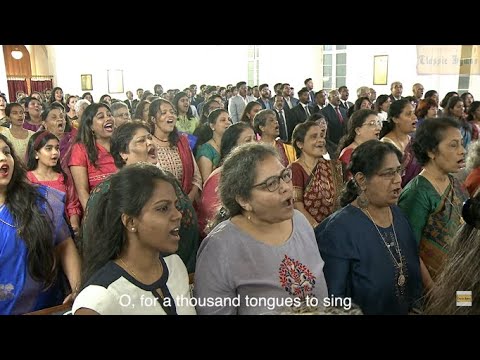
"O For A Thousand Tongues To Sing" by 250 Voice Mass Choir for Classic Hymns Album "Our God Reigns"

Cosmos A Spacetime Odyssey episode 5 Last part

LOTR The Fellowship of the Ring - The Argonath

Edward VIII argues with his mother about his allowance - The Crown Season 1

3Blue1Brown
Quiz
Rponse correcte :
Les quiz apparaissent pendant que tu regardes la vidéo
Astuce mémo
Dans cette vidéo
Apprendre les langues gratuitement

