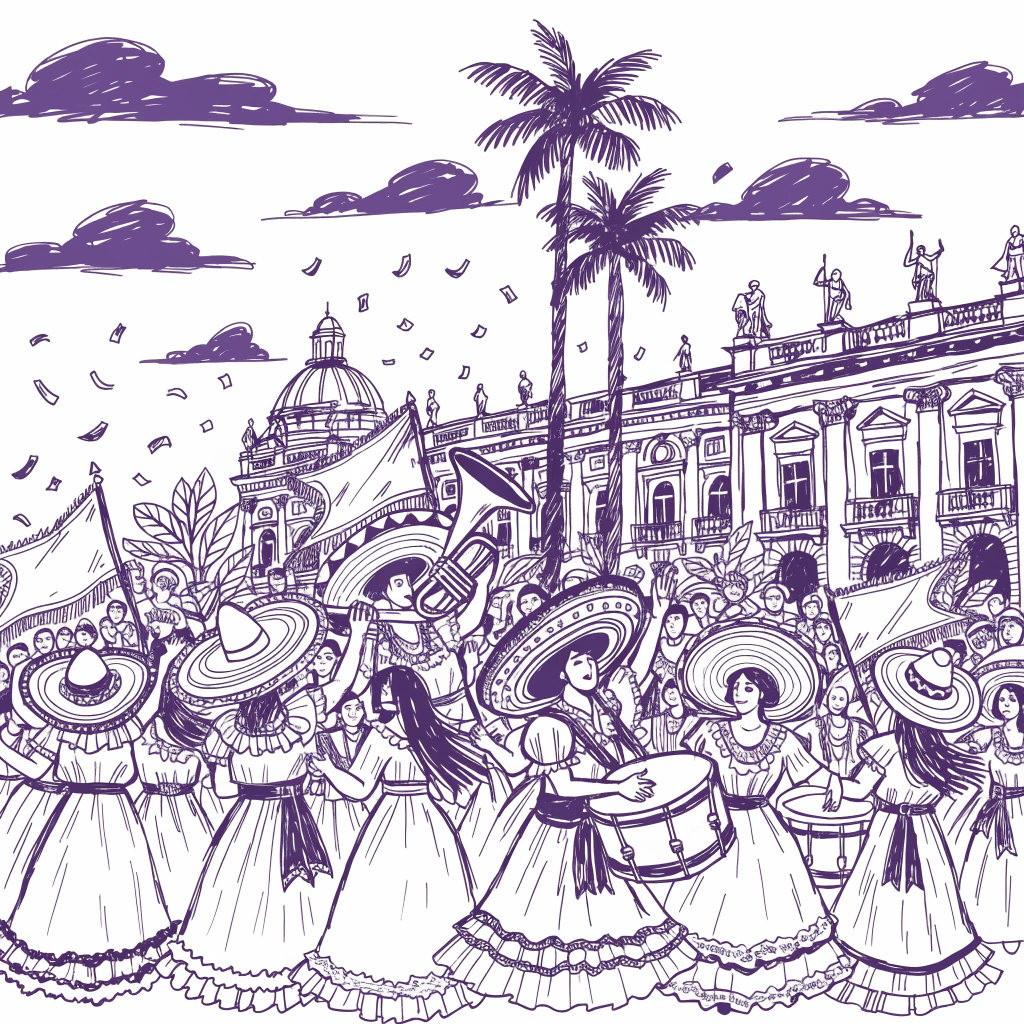
मेक्सिको का स्वतंत्रता दिवस
मेक्सिको का स्वतंत्रता दिवस। यह एक बहुत बड़ा त्योहार है। लोग इस दिन बहुत खुश होते हैं। यह हर साल 16 सितंबर को मनाया जाता है। लेकिन उत्सव 15 सितंबर की रात को शुरू होता है। बहुत साल पहले, 1810 में, एक छोटे से शहर में एक पादरी थे। उनका नाम मिगेल हिडाल्गो था। उन्होंने चर्च की घंटी बजाई। उन्होंने लोगों से कहा, "हमें आज़ादी चाहिए!" यह मेक्सिको की आज़ादी की शुरुआत थी। आज भी मेक्सिको के लोग इस दिन को गर्व से याद करते हैं और बड़े उत्साह से खुशी मनाते हैं। वे गीत गाते हैं और नाचते हैं।
व्याकरण स्पॉटलाइट
पैटर्न: वर्तमान काल (Present Tense) - 'होता है/करते हैं'
"लोग इस दिन बहुत खुश होते हैं।"
यह क्रिया रूप बताता है कि कोई काम हर दिन या अक्सर होता है। यह एक सामान्य क्रिया को दर्शाता है। क्रिया के अंत में 'ता है', 'ती है', 'ते हैं' का प्रयोग होता है।
पैटर्न: संबंध कारक (Possessive Case) - 'का/के/की'
"मेक्सिको का स्वतंत्रता दिवस।"
यह कारक बताता है कि कोई चीज़ किसकी है या किससे संबंधित है। 'का' पुरुष एकवचन के लिए, 'की' स्त्री एकवचन के लिए और 'के' बहुवचन या आदर के लिए प्रयोग होता है।
अपनी समझ जाँचें
10 सवाल · A1 शुरुआती · 1 मुफ्त प्रीव्यू
इस लेख से आपने जो सीखा उसकी जाँच करें। सभी सवालों के जवाब दें और XP कमाएँ!
मेक्सिको का स्वतंत्रता दिवस कब मनाया जाता है?
क्या आप क्विज़ समाप्त करना चाहते हैं?
9 और सवाल आपका इंतज़ार कर रहे हैं। पूरा क्विज़ अनलॉक करने और XP कमाने के लिए मुफ्त साइन अप करें!
मुफ़्त साइन अप करोपहले से अकाउंट है? साइन इन करो
बहुत बढ़िया!
अभ्यास जारी रखें!
पहले से पूर्ण — कोई अतिरिक्त XP नहीं
XP कमाने के लिए साइन अप करोसवालों का विवरण
मेक्सिको का स्वतंत्रता दिवस कब मनाया जाता है?
आपका जवाब:
सही जवाब: 16 सितंबर
मिगेल हिडाल्गो ने चर्च की घंटी बजाई थी।
आपका जवाब:
सही जवाब: सही
'त्योहार' का क्या मतलब है?
आपका जवाब:
सही जवाब: एक विशेष खुशी का दिन
लोग इस दिन बहुत ______ होते हैं।
आपका जवाब:
सही जवाब: खुश
मेक्सिको का स्वतंत्रता दिवस: एक बड़ा उत्सव
मेक्सिको का स्वतंत्रता दिवस एक बहुत खास और बड़ा उत्सव है। यह हर साल 16 सितंबर को मनाया जाता है। लेकिन, इसका जश्न 15 सितंबर की रात से ही शुरू हो जाता है। यह दिन मेक्सिको की स्पेनिश शासन से आज़ादी की लंबी लड़ाई की याद दिलाता है। मेक्सिको लगभग 300 साल तक स्पेनिश शासन के अधीन था।
साल 1810 में, डोलोरेस नाम के एक छोटे शहर में, मिगुएल हिडाल्गो नाम के एक पादरी रहते थे। 15 सितंबर की रात को, उन्होंने चर्च की घंटी बजाई। फिर उन्होंने एक बहुत महत्वपूर्ण भाषण दिया, जिसे 'ग्रितो दे डोलोरेस' कहते हैं। इस भाषण में उन्होंने लोगों को स्पेनिश शासन के खिलाफ खड़े होने के लिए बुलाया। यह मेक्सिको के इतिहास का एक बहुत बड़ा और महत्वपूर्ण पल था, जब आज़ादी की लड़ाई शुरू हुई।
आज, मेक्सिको के लोग इस दिन को बहुत उत्साह और राष्ट्रीय गौरव के साथ मनाते हैं। वे अपने घरों और सड़कों पर मेक्सिको के झंडे लगाते हैं। लोग परेड में भाग लेते हैं, गाने गाते हैं और स्वादिष्ट भोजन का आनंद लेते हैं। यह मेक्सिको के लिए आज़ादी और एकता का प्रतीक है।
व्याकरण स्पॉटलाइट
पैटर्न: भूतकाल के क्रिया रूप (Simple Past Tense Verbs)
"उन्होंने चर्च की घंटी बजाई।"
भूतकाल के क्रिया रूप किसी ऐसे काम के बारे में बताते हैं जो पहले हो चुका है। हिंदी में, क्रिया के लिंग और वचन के अनुसार 'था/थी/थे' या 'आ/ई/ए' जैसे प्रत्यय लगते हैं।
पैटर्न: संबंध कारक: 'का/के/की' (Possessive Postpositions)
"यह मेक्सिको की स्पेनिश शासन से आज़ादी की लंबी लड़ाई की याद दिलाता है।"
'का', 'के', 'की' शब्द किसी चीज़ का दूसरी चीज़ से संबंध बताते हैं। 'का' पुल्लिंग एकवचन के लिए, 'के' पुल्लिंग बहुवचन के लिए, और 'की' स्त्रीलिंग एकवचन या बहुवचन के लिए इस्तेमाल होता है।
अपनी समझ जाँचें
11 सवाल · A2 बिगिनर · 1 मुफ्त प्रीव्यू
इस लेख से आपने जो सीखा उसकी जाँच करें। सभी सवालों के जवाब दें और XP कमाएँ!
मेक्सिको का स्वतंत्रता दिवस आधिकारिक तौर पर कब मनाया जाता है?
क्या आप क्विज़ समाप्त करना चाहते हैं?
10 और सवाल आपका इंतज़ार कर रहे हैं। पूरा क्विज़ अनलॉक करने और XP कमाने के लिए मुफ्त साइन अप करें!
मुफ़्त साइन अप करोपहले से अकाउंट है? साइन इन करो
बहुत बढ़िया!
अभ्यास जारी रखें!
पहले से पूर्ण — कोई अतिरिक्त XP नहीं
XP कमाने के लिए साइन अप करोसवालों का विवरण
मेक्सिको का स्वतंत्रता दिवस आधिकारिक तौर पर कब मनाया जाता है?
आपका जवाब:
सही जवाब: 16 सितंबर
मेक्सिको की आज़ादी की लड़ाई 300 साल पहले शुरू हुई थी।
आपका जवाब:
सही जवाब: सही
'शासन' का क्या अर्थ है?
आपका जवाब:
सही जवाब: नियम या राज
मिगुएल हिडाल्गो ने चर्च की _______ बजाई।
आपका जवाब:
सही जवाब: घंटी
'ग्रितो दे डोलोरेस' क्या था?
आपका जवाब:
सही जवाब: एक भाषण
Mexico's Night of Freedom: The Grito de Dolores
Mexico’s Independence Day is a vibrant celebration that captures the heart of the nation. Although the official holiday is September 16th, the festivities have always started on the night of the 15th. This event commemorates the beginning of Mexico's struggle for freedom from Spanish rule, which lasted for three hundred years.
The story began in 1810 in the small town of Dolores. A priest named Miguel Hidalgo y Costilla, who is now considered the father of the nation, took a brave step. He rang his church bell to gather the people and gave a powerful speech known as the 'Grito de Dolores.' This cry was a call for independence and justice. Today, this historic moment is remembered by millions of people across the globe.
Every year at 11:00 PM on September 15th, the President of Mexico stands on the balcony of the National Palace in Mexico City. The original bell, which was moved from Dolores, is rung once again. The President shouts '¡Viva México!' and the crowd responds with equal energy. This ceremony has been performed for many decades and remains a symbol of national pride.
In the streets, the atmosphere is electric. Cities are decorated with green, white, and red lights. Families gather to eat traditional food like 'Chiles en Nogada,' a dish that represents the colors of the Mexican flag. People also enjoy folk music and dancing. It is a time when the history of the country is celebrated with joy and respect. If you ever visit Mexico during this time, you will see how much the people value their hard-won liberty.
व्याकरण स्पॉटलाइट
पैटर्न: Passive Voice
"Today, this historic moment is remembered by millions of people across the globe."
The passive voice is used here because the action (remembering) is more important than who is doing it. It is formed using the verb 'to be' plus the past participle.
पैटर्न: Relative Clauses
"A priest named Miguel Hidalgo y Costilla, who is now considered the father of the nation, took a brave step."
The relative clause 'who is now considered the father of the nation' provides extra information about the subject. It is introduced by the relative pronoun 'who' because it refers to a person.
अपनी समझ जाँचें
11 सवाल · B1 मध्यम · 1 मुफ्त प्रीव्यू
इस लेख से आपने जो सीखा उसकी जाँच करें। सभी सवालों के जवाब दें और XP कमाएँ!
When do the independence celebrations actually begin in Mexico?
क्या आप क्विज़ समाप्त करना चाहते हैं?
10 और सवाल आपका इंतज़ार कर रहे हैं। पूरा क्विज़ अनलॉक करने और XP कमाने के लिए मुफ्त साइन अप करें!
मुफ़्त साइन अप करोपहले से अकाउंट है? साइन इन करो
बहुत बढ़िया!
अभ्यास जारी रखें!
पहले से पूर्ण — कोई अतिरिक्त XP नहीं
XP कमाने के लिए साइन अप करोसवालों का विवरण
When do the independence celebrations actually begin in Mexico?
आपका जवाब:
सही जवाब: On the night of September 15th
The original bell from the town of Dolores is still used in the ceremony today.
आपका जवाब:
सही जवाब: सही
What does 'struggle' mean in the context of the article?
आपका जवाब:
सही जवाब: A long and difficult effort for freedom
The President of Mexico _____ '¡Viva México!' from the balcony.
आपका जवाब:
सही जवाब: shouts
Who is known as the father of the Mexican nation?
आपका जवाब:
सही जवाब: Miguel Hidalgo y Costilla
मेक्सिको का स्वतंत्रता दिवस: एक ऐतिहासिक और सांस्कृतिक गौरव
मेक्सिको का स्वतंत्रता दिवस केवल एक वार्षिक अवकाश नहीं है, बल्कि यह देश की सामूहिक आत्मा और उसके दीर्घकालिक संघर्ष की एक प्रेरणादायक गाथा है। हर साल 16 सितंबर को मनाया जाने वाला यह राष्ट्रीय पर्व उस महत्वपूर्ण क्षण की याद दिलाता है जब मेक्सिको ने स्पेनिश औपनिवेशिक शासन की बेड़ियों को तोड़ने का दृढ़ संकल्प लिया था। हालांकि आधिकारिक छुट्टी 16 सितंबर को होती है, लेकिन उत्सव का वास्तविक उत्साह 15 सितंबर की रात से ही चरम पर पहुँच जाता है।
इस महान क्रांति की ऐतिहासिक शुरुआत 1810 में हुई थी, जब 'डोलोरेस' नामक एक छोटे से शहर के पादरी, मिगुएल हिडाल्गो ई कोस्टिला ने चर्च की घंटी बजाकर स्थानीय लोगों को एकजुट किया। उनके इस साहसी आह्वान को इतिहास में 'ग्रिटो डी डोलोरेस' (डोलोरेस की पुकार) के रूप में अमर कर दिया गया है। हिडाल्गो ने न केवल विदेशी शासन से मुक्ति की मांग की, बल्कि उन्होंने सामाजिक अन्याय और नस्लीय असमानता के विरुद्ध भी मुखर होकर आवाज उठाई। तीन सौ वर्षों के दमनकारी औपनिवेशिक शासन के पश्चात, यह भाषण मेक्सिको के इतिहास में एक निर्णायक मोड़ साबित हुआ, जिसने स्वतंत्रता के युद्ध की ज्वाला प्रज्वलित की।
वर्तमान समय में, इस ऐतिहासिक घटना को अत्यंत भव्य और औपचारिक रूप में दोहराया जाता है। 15 सितंबर की रात को ठीक 11 बजे, मेक्सिको के राष्ट्रपति राजधानी के राष्ट्रीय महल की बालकनी पर खड़े होकर वही जोशपूर्ण नारे लगाते हैं जो हिडाल्गो ने लगाए थे। 'विवा मेक्सिको!' (मेक्सिको अमर रहे!) की गूँज जब पूरे ज़ोकालो यानी मुख्य चौक में सुनाई देती है, तो वहाँ उपस्थित हजारों लोगों का जनसैलाब देशभक्ति के रंग में सराबोर हो जाता है। यह अनुष्ठान केवल एक राजनीतिक औपचारिकता मात्र नहीं है, बल्कि यह मेक्सिकोवासियों के लिए अपनी ऐतिहासिक जड़ों और राष्ट्रीय पहचान से पुनः जुड़ने का एक सशक्त माध्यम है।
उत्सव के दौरान, देश के कोने-कोने में सड़कों और इमारतों को हरे, सफेद और लाल रंगों से सुसज्जित किया जाता है—जो मेक्सिको के राष्ट्रीय ध्वज के गौरवशाली प्रतीक हैं। लोग अपनी पारंपरिक वेशभूषा पहनकर गर्व से बाहर निकलते हैं और 'मारियाची' संगीत की जीवंत धुनों पर थिरकते हैं। खान-पान के मामले में भी यह दिन विशेष है; 'चिली एन नोगडा' जैसे पारंपरिक व्यंजन तैयार किए जाते हैं, जो अपनी सामग्री के माध्यम से राष्ट्रीय ध्वज के रंगों को प्रदर्शित करते हैं। इस प्रकार, यह दिवस न केवल राजनीतिक संप्रभुता का प्रतीक है, बल्कि यह मेक्सिको की समृद्ध सांस्कृतिक विरासत और अटूट राष्ट्रीय एकता का एक जीवंत और रंगीन प्रदर्शन भी है।
व्याकरण स्पॉटलाइट
पैटर्न: कर्मवाच्य (Passive Voice)
"इस ऐतिहासिक घटना को भव्य रूप में दोहराया जाता है।"
जब वाक्य में कर्ता (Subject) के बजाय कर्म (Object) पर अधिक ध्यान दिया जाता है, तो 'जाना' क्रिया का प्रयोग सहायक क्रिया के रूप में होता है। यहाँ घटना को दोहराने वाले से अधिक महत्वपूर्ण 'दोहराने की क्रिया' है।
पैटर्न: सापेक्ष संबंधवाचक (Relative-Correlative Clauses)
"उस महत्वपूर्ण क्षण की याद दिलाता है जब मेक्सिको ने..."
यहाँ 'उस' और 'जब' का प्रयोग समय और घटना के बीच संबंध स्थापित करने के लिए किया गया है। यह जटिल वाक्यों को जोड़ने का एक मानक तरीका है।
पैटर्न: पूर्वकालिक क्रिया (Conjunctive Participle)
"चर्च की घंटी बजाकर लोगों को एकजुट किया।"
जब एक ही कर्ता दो क्रियाएं करता है, तो पहली क्रिया के साथ 'कर' जोड़कर उसे पूर्वकालिक बनाया जाता है। यहाँ 'बजाना' पहली क्रिया है जिसे 'बजाकर' लिखा गया है।
अपनी समझ जाँचें
11 सवाल · B2 अपर इंटरमीडिएट · 1 मुफ्त प्रीव्यू
इस लेख से आपने जो सीखा उसकी जाँच करें। सभी सवालों के जवाब दें और XP कमाएँ!
मेक्सिको में उत्सव का मुख्य उत्साह कब शुरू होता है?
क्या आप क्विज़ समाप्त करना चाहते हैं?
10 और सवाल आपका इंतज़ार कर रहे हैं। पूरा क्विज़ अनलॉक करने और XP कमाने के लिए मुफ्त साइन अप करें!
मुफ़्त साइन अप करोपहले से अकाउंट है? साइन इन करो
बहुत बढ़िया!
अभ्यास जारी रखें!
पहले से पूर्ण — कोई अतिरिक्त XP नहीं
XP कमाने के लिए साइन अप करोसवालों का विवरण
मेक्सिको में उत्सव का मुख्य उत्साह कब शुरू होता है?
आपका जवाब:
सही जवाब: 15 सितंबर की रात
मिगुएल हिडाल्गो एक पादरी थे जिन्होंने क्रांति की शुरुआत की थी।
आपका जवाब:
सही जवाब: सही
'विरासत' शब्द का सही अर्थ क्या है?
आपका जवाब:
सही जवाब: सांस्कृतिक और ऐतिहासिक मूल्य
हिडाल्गो के आह्वान को 'ग्रिटो डी _____' के रूप में जाना जाता है।
आपका जवाब:
सही जवाब: डोलोरेस
मेक्सिको के राष्ट्रीय ध्वज में कौन से रंग शामिल हैं?
आपका जवाब:
सही जवाब: हरा, सफेद और लाल
The Clarion Call of Liberty: A Nuanced Analysis of Mexico’s Independence
Seldom does a national holiday encapsulate the collective psyche of a people as profoundly as Mexico’s Independence Day. To the uninitiated, the festivities of September 15th and 16th might appear to be a mere explosion of color and pyrotechnics. However, beneath the surface lies a multifaceted commemoration of emancipation that challenges the very vestiges of colonial identity. It was in the early hours of September 16, 1810, that Miguel Hidalgo y Costilla, a parish priest in the small town of Dolores, uttered the 'Grito de Dolores.' This clarion call acted as the ultimate catalyst for the burgeoning insurgent movement against Spanish hegemony, marking the definitive commencement of a decade-long struggle for autonomy.
The transition from colonial subjugation to sovereign statehood was by no means a linear progression. Rather, it was a convoluted struggle characterized by shifting alliances and ideological fractures. Central to this narrative is the figure of Hidalgo, whose radical proclamation of liberty sought to dismantle three centuries of European dominance. What remains particularly striking to modern historians is the populist nature of the uprising; it wasn't merely an orchestrated political coup by the elite, but a visceral reclamation of land and dignity by the marginalized indigenous and mestizo masses. This grassroots involvement underscored a burgeoning national consciousness that transcended class boundaries.
In contemporary Mexico, the 'Grito' is reenacted annually with solemnity and fervor from the balcony of the National Palace in Mexico City. This ritualistic performance serves as a potent reminder of the inherent fragility of independence. Not only does the President echo Hidalgo’s historical cry, but the collective response of the populace also reaffirms a shared cultural idiosyncrasy that defines the nation. This celebration is inextricably linked to the concept of 'Mexicanidad,' a complex identity forged in the fires of revolution and tempered by the ongoing pursuit of social justice. The atmosphere is one of profound historical resonance, where the past and present converge in a singular moment of national unity.
Critically analyzing the event reveals a nuanced duality that is often overlooked in simplified historical accounts. While the official narrative emphasizes a unified front against oppression, the historical reality of the independence movement was marked by intense internal dissent and conflicting visions for the nation's future. The eventual achievement of independence in 1821, following the entry of the Army of the Three Guarantees into Mexico City, did not immediately rectify the systemic inequalities rooted in the colonial era. Consequently, the modern celebration functions as both a nostalgic look at a heroic past and a forward-looking aspiration for a more equitable future.
The perpetuation of these traditions ensures that the spirit of the insurgency remains a living component of the national discourse, rather than a stagnant historical artifact. It is through this lens that we see the true significance of the holiday: it is a rejection of historical amnesia. By celebrating the 'Grito,' Mexicans are not just honoring a date, but are participating in a continuous dialogue about what it means to be a free and sovereign people.
Ultimately, Mexico’s Independence Day transcends the boundaries of simple patriotism. It is a sophisticated tapestry of historical memory, social critique, and cultural pride. Through the lens of this holiday, one can observe the enduring resilience of a nation that continues to navigate its complex post-colonial legacy while fiercely guarding its hard-won sovereignty. The echoes of the bell rung in Dolores continue to vibrate through the halls of history, reminding the world that the quest for liberty is an ongoing endeavor.
व्याकरण स्पॉटलाइट
पैटर्न: Negative Inversion
"Seldom does a national holiday encapsulate the collective psyche of a people as profoundly as Mexico’s Independence Day."
When using negative or restrictive adverbs like 'seldom' or 'rarely' at the beginning of a sentence for emphasis, the auxiliary verb is placed before the subject.
पैटर्न: It-Cleft Sentence
"It was in the early hours of September 16, 1810, that Miguel Hidalgo y Costilla, a parish priest, uttered the 'Grito de Dolores.'"
Cleft sentences are used to focus on a specific piece of information. The structure 'It is/was [emphasized part] that/who...' highlights the specific time or person.
पैटर्न: Nominalisation
"The transition from colonial subjugation to sovereign statehood was by no means a linear progression."
This involves turning verbs or adjectives into nouns (e.g., 'subjugation' instead of 'subjugating'). This creates a more formal, academic tone typical of C1 level writing.
अपनी समझ जाँचें
12 सवाल · C1 उन्नत · 1 मुफ्त प्रीव्यू
इस लेख से आपने जो सीखा उसकी जाँच करें। सभी सवालों के जवाब दें और XP कमाएँ!
What does the author suggest about the 'Grito de Dolores' in the context of the insurgent movement?
क्या आप क्विज़ समाप्त करना चाहते हैं?
11 और सवाल आपका इंतज़ार कर रहे हैं। पूरा क्विज़ अनलॉक करने और XP कमाने के लिए मुफ्त साइन अप करें!
मुफ़्त साइन अप करोपहले से अकाउंट है? साइन इन करो
बहुत बढ़िया!
अभ्यास जारी रखें!
पहले से पूर्ण — कोई अतिरिक्त XP नहीं
XP कमाने के लिए साइन अप करोसवालों का विवरण
What does the author suggest about the 'Grito de Dolores' in the context of the insurgent movement?
आपका जवाब:
सही जवाब: It served as the primary trigger for the revolution.
The author argues that Mexico's path to independence was straightforward and lacked internal conflict.
आपका जवाब:
सही जवाब: गलत
Which word best describes a deep, instinctive feeling as mentioned in the text?
आपका जवाब:
सही जवाब: Visceral
The transition from colonial _____ to sovereign statehood was characterized by ideological fractures.
आपका जवाब:
सही जवाब: subjugation
According to the article, how does the modern 'Grito' ceremony function for the Mexican people?
आपका जवाब:
सही जवाब: As a reaffirmation of a unique shared identity and social justice pursuit.
The independence movement was officially concluded in 1821.
आपका जवाब:
सही जवाब: सही
मेक्सिको का स्वतंत्रता संग्राम: औपनिवेशिक बेड़ियों से संप्रभुता तक का दार्शनिक सफर
मेक्सिको का स्वतंत्रता दिवस केवल एक वार्षिक उत्सव मात्र नहीं है, बल्कि यह उस सामूहिक चेतना का प्रतिबिंब है जिसने तीन शताब्दियों के दमनकारी औपनिवेशिक शासन के विरुद्ध विद्रोह किया। 16 सितंबर, 1810 की उस ऐतिहासिक सुबह, जब मिगुएल हिडाल्गो ने डोलोरेस के चर्च की घंटी बजाई, तो वह केवल एक धार्मिक आह्वान नहीं था, अपितु एक न्यायपूर्ण समाज की स्थापना का उद्घोष था। इस घटना को 'ग्रिटो डी डोलोरेस' के नाम से जाना जाता है, जो आज भी मेक्सिको की राष्ट्रीय अस्मिता का आधार स्तंभ बनी हुई है।
यदि हम उस समय की सामाजिक-राजनीतिक परिस्थितियों का विश्लेषण करें, तो हम पाएंगे कि स्पेनिश साम्राज्य के अधीन मेक्सिको (जिसे तब 'न्यू स्पेन' कहा जाता था) एक कठोर जातीय पदानुक्रम में विभाजित था। इस व्यवस्था में 'पेनिन्सुलारेस' (स्पेन में जन्मे लोग) को सर्वोच्च स्थान प्राप्त था, जबकि स्थानीय 'क्रियोलोस' और स्वदेशी आबादी को हाशिए पर रखा गया था। यह वैचारिक असंतोष ही वह उत्प्रेरक बना जिसने स्वतंत्रता की ज्वाला को प्रज्वलित किया। हिडाल्गो, जो स्वयं एक पादरी थे, ने न केवल राजनीतिक स्वायत्तता की मांग की, बल्कि उन्होंने दासता के उन्मूलन और भूमि सुधारों जैसे क्रांतिकारी विचारों का भी समर्थन किया। उनके इस साहसिक कदम ने एक ऐसे संघर्ष की नींव रखी जो अगले ग्यारह वर्षों तक निरंतर चलता रहा।
समकालीन परिप्रेक्ष्य में, 15 सितंबर की रात को मेक्सिको के राष्ट्रपति द्वारा 'ग्रिटो' का दोहराव करना एक प्रतीकात्मक कृत्य है। यह रस्म हमें याद दिलाती है कि स्वतंत्रता कोई स्थायी उपहार नहीं, बल्कि एक निरंतर चलने वाली प्रक्रिया है। इस उत्सव की भव्यता और इसमें निहित देशभक्ति का आवेग यह दर्शाता है कि कैसे एक ऐतिहासिक घटना समय की सीमाओं को लांघकर वर्तमान पीढ़ी के लिए प्रेरणा का स्रोत बन सकती है। यद्यपि मेक्सिको को पूर्ण संप्रभुता 1821 में जाकर प्राप्त हुई, लेकिन 1810 का वह क्षण अपरिहार्य था, क्योंकि उसने जनता के मानस में आत्म-निर्णय के अधिकार को प्रतिध्वनित किया।
अकादमिक दृष्टिकोण से देखें तो, मेक्सिको की स्वतंत्रता का संघर्ष केवल स्पेन से अलग होने की प्रक्रिया नहीं थी, बल्कि यह विभिन्न संस्कृतियों और विचारधाराओं के संश्लेषण का परिणाम था। चर्च की घंटी की वह गूँज आज भी मेक्सिको के कोने-कोने में सुनाई देती है, जो यह संदेश देती है कि जब न्याय और गरिमा के लिए आवाज उठाई जाती है, तो बड़े से बड़े साम्राज्य की नींव हिल जाती है। यह लेख इस बात पर जोर देता है कि ऐतिहासिक घटनाओं का मूल्यांकन उनके तात्कालिक परिणामों के बजाय उनके दीर्घकालिक वैचारिक प्रभाव के आधार पर किया जाना चाहिए।
व्याकरण स्पॉटलाइट
पैटर्न: न केवल... अपितु (Not only... but also)
"हिडाल्गो ने न केवल राजनीतिक स्वायत्तता की मांग की, बल्कि उन्होंने दासता के उन्मूलन का भी समर्थन किया।"
यह संरचना दो समान महत्व वाले विचारों को जोड़ने के लिए उपयोग की जाती है। 'न केवल' पहले विचार के साथ आता है और 'अपितु' या 'बल्कि' दूसरे विचार पर जोर देता है।
पैटर्न: यदि... तो (Conditional Subjunctive)
"यदि हम उस समय की परिस्थितियों का विश्लेषण करें, तो हम पाएंगे कि साम्राज्य विभाजित था।"
यह एक शर्त को दर्शाता है। C2 स्तर पर, इसका उपयोग भविष्य की संभावनाओं या काल्पनिक स्थितियों के तार्किक परिणामों का वर्णन करने के लिए किया जाता है।
पैटर्न: के विरुद्ध (Postpositional Opposition)
"सामूहिक चेतना ने दमनकारी औपनिवेशिक शासन के विरुद्ध विद्रोह किया।"
यह 'विरोध' को व्यक्त करने के लिए उपयोग किया जाने वाला एक औपचारिक कारक चिन्ह है। यह अक्सर राजनीतिक या सामाजिक संघर्ष के संदर्भ में प्रयुक्त होता है।
अपनी समझ जाँचें
12 सवाल · C2 महारत · 1 मुफ्त प्रीव्यू
इस लेख से आपने जो सीखा उसकी जाँच करें। सभी सवालों के जवाब दें और XP कमाएँ!
मिगुएल हिडाल्गो द्वारा चर्च की घंटी बजाने की घटना को किस नाम से जाना जाता है?
क्या आप क्विज़ समाप्त करना चाहते हैं?
11 और सवाल आपका इंतज़ार कर रहे हैं। पूरा क्विज़ अनलॉक करने और XP कमाने के लिए मुफ्त साइन अप करें!
मुफ़्त साइन अप करोपहले से अकाउंट है? साइन इन करो
बहुत बढ़िया!
अभ्यास जारी रखें!
पहले से पूर्ण — कोई अतिरिक्त XP नहीं
XP कमाने के लिए साइन अप करोसवालों का विवरण
मिगुएल हिडाल्गो द्वारा चर्च की घंटी बजाने की घटना को किस नाम से जाना जाता है?
आपका जवाब:
सही जवाब: ग्रिटो डी डोलोरेस
मेक्सिको को 1810 में ही पूर्ण संप्रभुता प्राप्त हो गई थी।
आपका जवाब:
सही जवाब: गलत
'अपरिहार्य' शब्द का सही अर्थ क्या है?
आपका जवाब:
सही जवाब: जिसे टाला न जा सके
हिडाल्गो ने दासता के _____ और भूमि सुधारों का समर्थन किया।
आपका जवाब:
सही जवाब: उन्मूलन
'पेनिन्सुलारेस' कौन थे?
आपका जवाब:
सही जवाब: स्पेन में जन्मे लोग
मेक्सिको के राष्ट्रपति आज भी 15 सितंबर को 'ग्रिटो' की रस्म निभाते हैं।
आपका जवाब:
सही जवाब: सही

