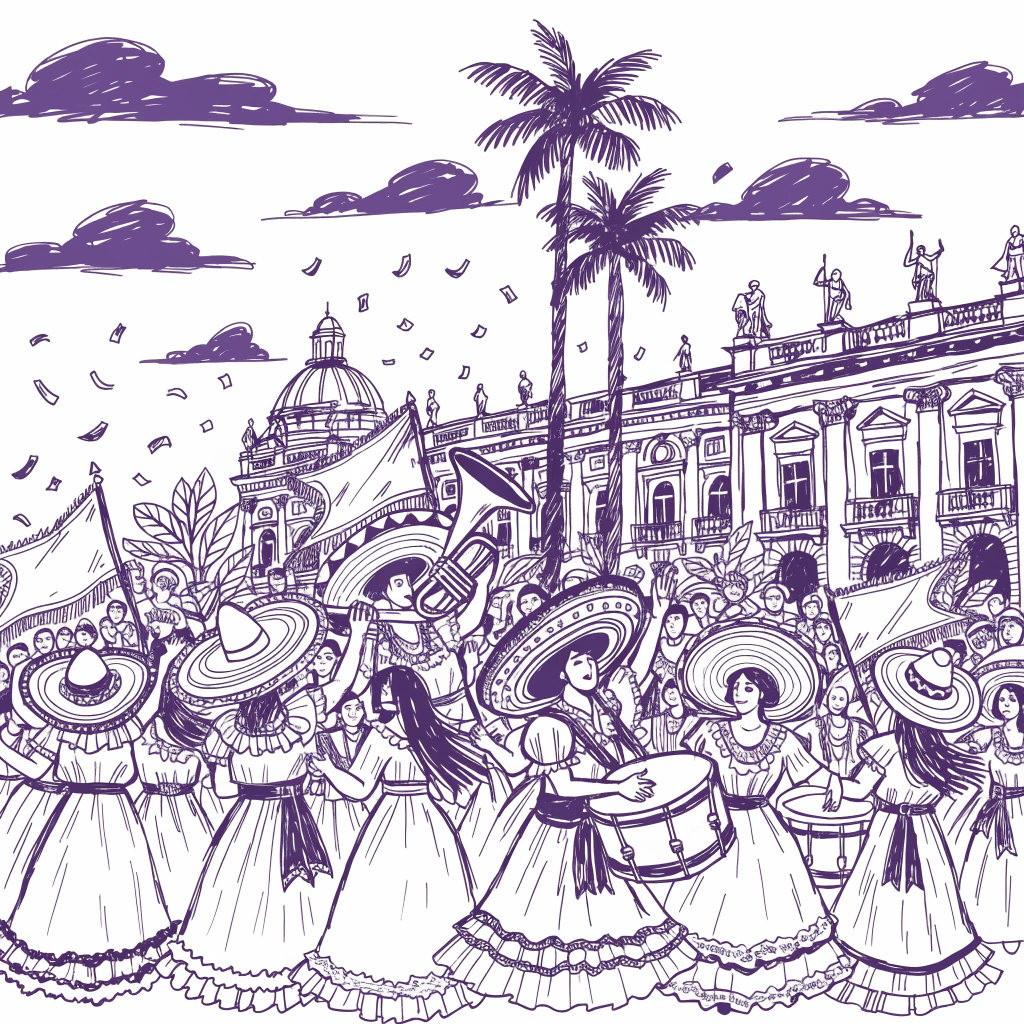
メキシコの独立記念日
メキシコには大切な日があります。それは独立記念日です。9月16日です。でも、お祝いは9月15日の夜に始まります。 昔、ミゲル・イダルゴという司祭がいました。彼はドロレスという町で鐘を鳴らしました。そして、「自由のために戦いましょう」と言いました。これは「ドロレスの叫び」と言います。 メキシコの人々は、この日をとても大切にします。みんなで歌を歌ったり、踊ったりして、国を祝います。とても楽しい日です。
文法スポットライト
パターン: 〜は〜です
"メキシコには大切な日があります。それは独立記念日です。"
「〜は〜です」は、物や事柄を説明するときに使います。「AはBです」で、「AはBである」という意味になります。日本語の基本的な文の形です。
パターン: 〜と言います
"これは「ドロレスの叫び」と言います。"
「〜と言います」は、名前や呼び方を言うときに使います。「AはBと言います」で、「AはBという名前です」という意味になります。人や物の名前を紹介するときに便利です。
理解度をチェック
10 問 · A1 初級 · 無料プレビュー 1回
この記事で学んだことをテストしよう。全問正解してXPを獲得!
メキシコの独立記念日は何月何日ですか。
問題の内訳
メキシコの独立記念日は何月何日ですか。
あなたの回答:
正解: 9月16日
お祝いは9月16日の朝に始まります。
あなたの回答:
正解: 間違い
「司祭」の意味は何ですか。
あなたの回答:
正解: 教会の仕事をする人
ミゲル・イダルゴは_____を鳴らしました。
あなたの回答:
正解: 鐘
メキシコの独立記念日
メキシコには「独立記念日」という大切なお祭りがあります。これはスペインからの自由を祝う日です。公式には9月16日ですが、お祝いは9月15日の夜から始まります。
1810年、ドローレスという小さな町で、ミゲル・イダルゴというお坊さんがいました。彼は教会の鐘を鳴らしました。そして、「ドローレスの叫び」という有名なスピーチをしました。このスピーチは、スペインの支配を終わらせるためのものでした。
この日、メキシコの人々は大きなパーティーをします。家族や友達と一緒に美味しい食べ物を食べます。そして、歌を歌ったり、踊ったりします。町は緑、白、赤のメキシコの色で飾られます。夜には、花火もたくさん上がります。
独立記念日は、メキシコの人々にとって、国の歴史と自由を思い出すとても大切な日です。この日は、みんながメキシコ人であることに誇りを感じます。
文法スポットライト
パターン: ~から (origin/starting point/reason)
"これはスペインからの自由を祝う日です。"
「~から」は、場所や時間の始まり、または理由を示すときに使います。「どこから」来たか、「いつから」始まったか、「なぜ」そうなのかを説明します。
パターン: ~たり~たりします (listing actions/activities)
"歌を歌ったり、踊ったりします。"
「~たり~たりします」は、いくつかある行動の中から例を挙げて説明するときに使います。全部ではなく、いくつか代表的な行動を言うときに便利です。
理解度をチェック
11 問 · A2 初級 · 無料プレビュー 1回
この記事で学んだことをテストしよう。全問正解してXPを獲得!
メキシコの独立記念日はいつですか?
問題の内訳
メキシコの独立記念日はいつですか?
あなたの回答:
正解: 9月16日
独立記念日のお祝いは9月16日の夜から始まります。
あなたの回答:
正解: 間違い
「祝う」の意味は何ですか?
あなたの回答:
正解: お祝いをする
ドローレスで、ミゲル・イダルゴは教会の__を鳴らしました。
あなたの回答:
正解: 鐘
ミゲル・イダルゴのスピーチは何についてでしたか?
あなたの回答:
正解: スペインの支配を終わらせること
メキシコの独立記念日:国民の誇りを感じる日
メキシコでは、毎年9月16日が独立記念日として祝われます。しかし、実際のお祝いは15日の夜から始まります。この日は、メキシコがスペインの支配から自由になるための戦いを始めた、国にとって非常に大切な日です。
1810年の9月15日の夜、ドローレスという小さな町で、ミゲル・イダルゴという司祭がいました。彼は教会の鐘を鳴らし、人々に独立を呼びかけるスピーチをしました。これは「ドローレスの叫び」として今でもよく知られています。このスピーチは、300年間続いたスペインの植民地支配を終わらせるための大きな一歩でした。
現在、メキシコでは、15日の夜に大統領が「ドローレスの叫び」を再現します。首都の広場には多くの人々が集まり、「ビバ・メヒコ!」と叫びながら、国の独立を祝います。花火が打ち上げられ、音楽が演奏され、家族や友人と一緒に特別な食事を楽しむのが伝統です。
この二日間は、メキシコ国民にとって、国の歴史と文化、そして自由への誇りを感じる特別な時間です。街はメキシコの国旗の色である緑、白、赤で飾られ、人々は国への深い愛情を示します。メキシコの独立記念日は、単なる祝日ではなく、国民の強い団結と歴史を振り返る機会なのです。
文法スポットライト
パターン: 受身形 (Passive Voice) 「~れる/られる」
"メキシコでは、毎年9月16日が独立記念日として祝われます。"
この文法は、行動をする人ではなく、行動の対象に焦点を当てる時に使います。動詞の形を変えて「~れる」や「~られる」をつけます。ここでは「祝う(お祝いする)」という行動が、「独立記念日」に対して行われることを表しています。
パターン: 連体修飾節 (Relative Clause) 「~名詞」
"人々に独立を呼びかけるスピーチをしました。"
この文法は、名詞を詳しく説明する時に使います。動詞の普通形や「~ている」形などが、直接名詞の前について、その名詞がどのようなものかを説明します。この例では、「スピーチ」が「独立を呼びかける」内容であることを示しています。
理解度をチェック
11 問 · B1 中級 · 無料プレビュー 1回
この記事で学んだことをテストしよう。全問正解してXPを獲得!
メキシコの独立記念日のお祝いは、何日の夜から始まりますか?
問題の内訳
メキシコの独立記念日のお祝いは、何日の夜から始まりますか?
あなたの回答:
正解: 9月15日
ミゲル・イダルゴは、メキシコの王様でした。
あなたの回答:
正解: 間違い
「司祭」の意味は何ですか?
あなたの回答:
正解: 教会の宗教的な人
ミゲル・イダルゴは教会の____を鳴らしました。
あなたの回答:
正解: 鐘
メキシコの独立記念日には、街は何色で飾られますか?
あなたの回答:
正解: 緑、白、赤
The Spirit of Sovereignty: Celebrating Mexican Independence
Every year, as September approaches, the streets of Mexico are transformed into a vibrant display of green, white, and red. Although the official holiday falls on the 16th, the heart of the celebration beats strongest on the night of the 15th. This tradition serves to commemorate the pivotal moment in 1810 when Miguel Hidalgo y Costilla, a local priest, issued the 'Grito de Dolores'. Had he not taken this bold step, the course of Mexican history might have been entirely different.
The 'Grito' was not merely a speech; it was a defiant call for an uprising against three centuries of colonial rule. At that time, the social hierarchy imposed by the Spanish crown had created significant tension among the various classes of society. Consequently, what began as a localized movement in the small town of Dolores quickly evolved into a nationwide struggle for sovereignty. Throughout the eleven-year conflict that followed, various leaders such as José María Morelos emerged, each contributing to the eventual liberation of the country. This period was marked by immense resilience and sacrifice, qualities that are still celebrated by Mexicans today.
In contemporary Mexico, the reenactment of the 'Grito' by the President at the National Palace is a deeply symbolic event. As the bell rings, thousands of citizens gather in the Zócalo, the main square, to echo the patriotic shouts of their ancestors. The atmosphere is electric, filled with a sense of unity that transcends political differences. Furthermore, the festivities are characterized by traditional music, fireworks, and culinary delights such as 'Chiles en Nogada'. This dish, which features the colors of the national flag, represents the fusion of cultures that defines the modern Mexican identity. It is often said that to taste this dish is to consume the history of the nation itself.
Nevertheless, beyond the fireworks and parties, Independence Day provides an opportunity for citizens to reflect on the nation's legacy. It is a time when the complexities of the past are acknowledged, and the achievements of the present are proclaimed with pride. The event serves as a reminder that freedom is a continuous process rather than a static goal. By honoring their history, Mexicans reinforce their collective identity and look toward a future shaped by the same spirit of independence that ignited the revolution over two centuries ago. This enduring commitment to liberty remains the cornerstone of the Mexican spirit.
文法スポットライト
パターン: Third Conditional
"Had he not taken this bold step, the course of Mexican history might have been entirely different."
This structure is used to imagine a different past. It uses 'had + past participle' in the condition and 'might/would have + past participle' in the result.
パターン: Passive Voice
"the streets of Mexico are transformed into a vibrant display of green, white, and red."
The passive voice is used here to focus on the streets (the object) rather than who is decorating them. It is formed with the verb 'to be' and the past participle.
パターン: Non-defining Relative Clause
"This dish, which features the colors of the national flag, represents the fusion of cultures..."
This clause provides extra information about 'this dish'. It is separated by commas and uses 'which' to add descriptive detail without changing the core meaning of the sentence.
理解度をチェック
11 問 · B2 中上級 · 無料プレビュー 1回
この記事で学んだことをテストしよう。全問正解してXPを獲得!
What was the primary purpose of the 'Grito de Dolores'?
問題の内訳
What was the primary purpose of the 'Grito de Dolores'?
あなたの回答:
正解: To call for a rebellion against Spanish rule
The struggle for Mexican independence was resolved in a matter of months.
あなたの回答:
正解: 間違い
What does the word 'sovereignty' mean in the context of the article?
あなたの回答:
正解: The power of a country to govern itself
Every year, the streets are _____ into a vibrant display of national colors.
あなたの回答:
正解: transformed
What does the dish 'Chiles en Nogada' symbolize?
あなたの回答:
正解: The fusion of cultures and national identity
The Clarion Call of Liberty: A Nuanced Analysis of Mexico’s Independence
Seldom does a national holiday encapsulate the collective psyche of a people as profoundly as Mexico’s Independence Day. To the uninitiated, the festivities of September 15th and 16th might appear to be a mere explosion of color and pyrotechnics. However, beneath the surface lies a multifaceted commemoration of emancipation that challenges the very vestiges of colonial identity. It was in the early hours of September 16, 1810, that Miguel Hidalgo y Costilla, a parish priest in the small town of Dolores, uttered the 'Grito de Dolores.' This clarion call acted as the ultimate catalyst for the burgeoning insurgent movement against Spanish hegemony, marking the definitive commencement of a decade-long struggle for autonomy.
The transition from colonial subjugation to sovereign statehood was by no means a linear progression. Rather, it was a convoluted struggle characterized by shifting alliances and ideological fractures. Central to this narrative is the figure of Hidalgo, whose radical proclamation of liberty sought to dismantle three centuries of European dominance. What remains particularly striking to modern historians is the populist nature of the uprising; it wasn't merely an orchestrated political coup by the elite, but a visceral reclamation of land and dignity by the marginalized indigenous and mestizo masses. This grassroots involvement underscored a burgeoning national consciousness that transcended class boundaries.
In contemporary Mexico, the 'Grito' is reenacted annually with solemnity and fervor from the balcony of the National Palace in Mexico City. This ritualistic performance serves as a potent reminder of the inherent fragility of independence. Not only does the President echo Hidalgo’s historical cry, but the collective response of the populace also reaffirms a shared cultural idiosyncrasy that defines the nation. This celebration is inextricably linked to the concept of 'Mexicanidad,' a complex identity forged in the fires of revolution and tempered by the ongoing pursuit of social justice. The atmosphere is one of profound historical resonance, where the past and present converge in a singular moment of national unity.
Critically analyzing the event reveals a nuanced duality that is often overlooked in simplified historical accounts. While the official narrative emphasizes a unified front against oppression, the historical reality of the independence movement was marked by intense internal dissent and conflicting visions for the nation's future. The eventual achievement of independence in 1821, following the entry of the Army of the Three Guarantees into Mexico City, did not immediately rectify the systemic inequalities rooted in the colonial era. Consequently, the modern celebration functions as both a nostalgic look at a heroic past and a forward-looking aspiration for a more equitable future.
The perpetuation of these traditions ensures that the spirit of the insurgency remains a living component of the national discourse, rather than a stagnant historical artifact. It is through this lens that we see the true significance of the holiday: it is a rejection of historical amnesia. By celebrating the 'Grito,' Mexicans are not just honoring a date, but are participating in a continuous dialogue about what it means to be a free and sovereign people.
Ultimately, Mexico’s Independence Day transcends the boundaries of simple patriotism. It is a sophisticated tapestry of historical memory, social critique, and cultural pride. Through the lens of this holiday, one can observe the enduring resilience of a nation that continues to navigate its complex post-colonial legacy while fiercely guarding its hard-won sovereignty. The echoes of the bell rung in Dolores continue to vibrate through the halls of history, reminding the world that the quest for liberty is an ongoing endeavor.
文法スポットライト
パターン: Negative Inversion
"Seldom does a national holiday encapsulate the collective psyche of a people as profoundly as Mexico’s Independence Day."
When using negative or restrictive adverbs like 'seldom' or 'rarely' at the beginning of a sentence for emphasis, the auxiliary verb is placed before the subject.
パターン: It-Cleft Sentence
"It was in the early hours of September 16, 1810, that Miguel Hidalgo y Costilla, a parish priest, uttered the 'Grito de Dolores.'"
Cleft sentences are used to focus on a specific piece of information. The structure 'It is/was [emphasized part] that/who...' highlights the specific time or person.
パターン: Nominalisation
"The transition from colonial subjugation to sovereign statehood was by no means a linear progression."
This involves turning verbs or adjectives into nouns (e.g., 'subjugation' instead of 'subjugating'). This creates a more formal, academic tone typical of C1 level writing.
理解度をチェック
12 問 · C1 上級 · 無料プレビュー 1回
この記事で学んだことをテストしよう。全問正解してXPを獲得!
What does the author suggest about the 'Grito de Dolores' in the context of the insurgent movement?
問題の内訳
What does the author suggest about the 'Grito de Dolores' in the context of the insurgent movement?
あなたの回答:
正解: It served as the primary trigger for the revolution.
The author argues that Mexico's path to independence was straightforward and lacked internal conflict.
あなたの回答:
正解: 間違い
Which word best describes a deep, instinctive feeling as mentioned in the text?
あなたの回答:
正解: Visceral
The transition from colonial _____ to sovereign statehood was characterized by ideological fractures.
あなたの回答:
正解: subjugation
According to the article, how does the modern 'Grito' ceremony function for the Mexican people?
あなたの回答:
正解: As a reaffirmation of a unique shared identity and social justice pursuit.
The independence movement was officially concluded in 1821.
あなたの回答:
正解: 正しい
The Historiography of Hegemony: Deconstructing the Mexican Insurrection of 1810
The genesis of Mexican sovereignty is frequently relegated to the annals of romanticized mythology, yet a rigorous academic inquiry reveals a far more convoluted tapestry of geopolitical shifts and Enlightenment-era fervor. To understand the 'Grito de Dolores' is to engage not merely with a singular moment of auditory rebellion, but with the culmination of centuries of systemic friction within the Viceroyalty of New Spain. Were one to scrutinize the socio-political landscape of the early 19th century, the inevitability of the rupture between the metropole and its colonial periphery becomes manifest. The Bourbon Reforms, intended to centralize Iberian control, paradoxically served as the very catalyst for insurrectionary sentiment among the criollo elite, who found themselves increasingly marginalized by a peninsular hegemony. The Napoleonic invasion of Spain in 1808 further exacerbated this instability, creating a power vacuum that necessitated a re-evaluation of local governance and colonial loyalty.
On the night of September 15th, 1810, Miguel Hidalgo y Costilla, a priest whose intellectual leanings were deeply steeped in the egalitarian philosophies of the age, initiated a movement that would irrevocably alter the trajectory of the Americas. His call to arms, delivered from the parish of Dolores, was not merely a localized grievance against high taxes or bad harvests; it was a sophisticated rhetorical locus where the frustrations of the disenfranchised coalesced into a unified, albeit heterogeneous, front. The 'Grito' was, in essence, a performative act of defiance that sought to dismantle the epistemological foundations of colonial rule. It was a clarion call that transcended class boundaries, mobilizing the mestizo and indigenous populations under the banner of the Virgin of Guadalupe, a symbol of syncretic national identity.
Furthermore, the subsequent decade of conflict was characterized by a syncretic blending of indigenous aspirations and republican ideals. It might be argued that the struggle for independence was less a clean break from the past and more an arduous negotiation of identity. The transition from the First Mexican Empire to a federal republic underscores the volatility inherent in such a profound structural metamorphosis. Rarely has a single rhetorical act, such as Hidalgo’s, reverberated with such sustained intensity through the corridors of history. The conflict was not a monolithic march toward liberty but a fragmented series of regional uprisings, often marred by protracted subterfuge and shifting alliances that defined the era's complex political landscape.
In contemporary Mexico, the commemoration of this event transcends mere historical recollection. It has evolved into a ritualistic reaffirmation of statehood, a liturgical event where the 'Grito' is reenacted from the balconies of government palaces across the nation. This annual performance serves to bridge the temporal chasm between the revolutionary past and the precarious present. While some critics suggest that such celebrations risk obscuring the nuanced complexities of the actual conflict, the symbolic resonance of the bell remains an indomitable vestige of the national psyche. The modern state utilizes this collective memory to bolster a sense of continuity, ensuring that the revolutionary spirit remains a cornerstone of the national narrative.
Ultimately, the independence of Mexico should be viewed through a scholarly lens as a multifaceted phenomenon. It was a movement predicated on the rejection of external dominance and the pursuit of self-determination. The historical narrative, while often simplified for public consumption, remains a fertile ground for analytical discourse. By examining the interplay between enlightened thought and grassroots mobilization, one gains a deeper appreciation for the profound legacy of 1810. The 'Grito' continues to echo, not as a static memory, but as a dynamic testament to the enduring human quest for autonomy in the face of institutionalized oppression. This legacy reminds us that sovereignty is not merely granted but is perpetually reclaimed through the collective will of a people striving for justice.
文法スポットライト
パターン: Second Conditional with Subjunctive 'Were'
"Were one to scrutinize the socio-political landscape of the early 19th century, the inevitability of the rupture between the metropole and its colonial periphery becomes manifest."
This formal construction uses 'were' instead of 'if... was' to express a hypothetical condition. It is common in academic writing to present a scholarly perspective or analytical scenario.
パターン: Negative Inversion
"Rarely has a single rhetorical act, such as Hidalgo’s, reverberated with such sustained intensity through the corridors of history."
Starting a sentence with a negative or restrictive adverb (Rarely) requires the auxiliary verb to come before the subject. This adds rhetorical emphasis and is typical of high-level literary or academic English.
パターン: Academic Hedging with Modal Verbs
"It might be argued that the struggle for independence was less a clean break from the past and more an arduous negotiation of identity."
The use of 'might be argued' is a form of hedging, allowing the writer to present a claim as a possibility rather than an absolute fact. This is essential for maintaining a balanced and critical scholarly tone.
理解度をチェック
12 問 · C2 マスター · 無料プレビュー 1回
この記事で学んだことをテストしよう。全問正解してXPを獲得!
According to the text, what was a paradoxical result of the Bourbon Reforms?
問題の内訳
According to the text, what was a paradoxical result of the Bourbon Reforms?
あなたの回答:
正解: They inadvertently fueled revolutionary feelings among those they sought to control.
The author suggests that the 'Grito de Dolores' was primarily a reaction to agricultural failure.
あなたの回答:
正解: 間違い
What does 'syncretic' mean in the context of the article?
あなたの回答:
正解: The blending of diverse cultural or political elements.
The author describes the symbolic bell as an indomitable _____ of the national psyche.
あなたの回答:
正解: vestige
What role does the 'Grito' play in contemporary Mexico according to the text?
あなたの回答:
正解: It serves as a liturgical reaffirmation of the country's statehood.
The text describes the Mexican struggle for independence as a monolithic and unified movement.
あなたの回答:
正解: 間違い

