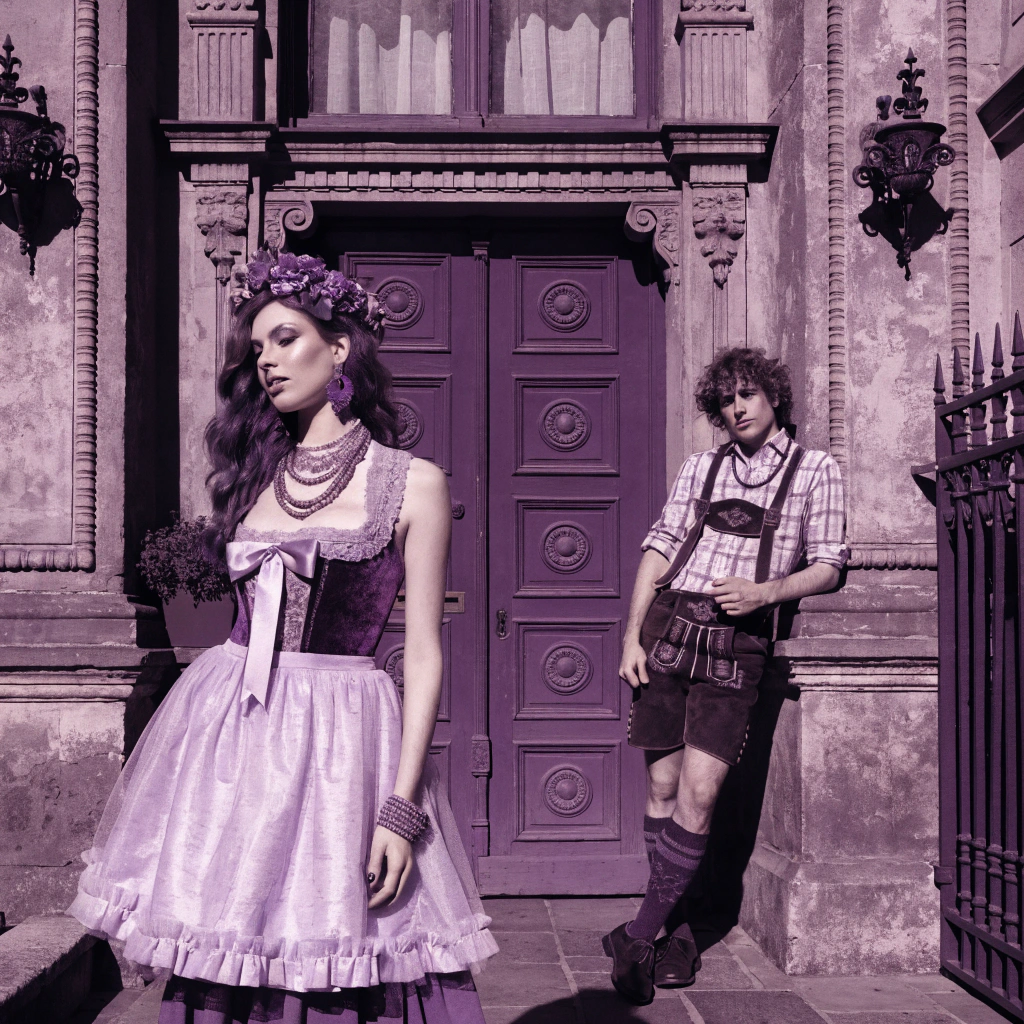
ドイツの伝統的な服:ディアンドルとレーダーホーゼン
ドイツには、とても有名な伝統的な服があります。これは「トラハト」と呼ばれます。 女性は「ディアンドル」を着ます。ディアンドルはかわいいドレスです。きれいなエプロンもつけます。 男性は「レーダーホーゼン」を着ます。レーダーホーゼンは短いズボンです。革でできていて、とても丈夫です。 これらの服は、お祭りで人気があります。例えば、オクトーバーフェストです。ドイツの南の地域、バイエルン州で特に有名です。 トラハトはドイツの大切な文化の一つです。多くの人がこの服を好きです。
文法スポットライト
パターン: 〜は〜です
"ディアンドルはかわいいドレスです。"
これは、何かを説明するときに使います。「AはBです」で、「AイコールB」という意味になります。名詞や形容詞の後ろにつけて使います。
パターン: 〜があります
"ドイツには、とても有名な伝統的な服があります。"
これは、物があることを言うときに使います。「場所には物があります」で、「場所に物がある」という意味になります。物がある場所を示すときによく使います。
理解度をチェック
10 問 · A1 初級 · 無料プレビュー 1回
この記事で学んだことをテストしよう。全問正解してXPを獲得!
問題の内訳
女性は何を着ますか?
あなたの回答:
正解: ディアンドル
レーダーホーゼンは女性の服です。
あなたの回答:
正解: 間違い
「お祭り」の意味は何ですか?
あなたの回答:
正解: フェスティバル
ドイツには、とても有名な_____な服があります。
あなたの回答:
正解: 伝統的
ドイツの伝統的な服:ディアンドルとレーダーホーゼン
ドイツの服と言えば、多くの人が「ディアンドル」と「レーダーホーゼン」を思い出します。これらはドイツの伝統的な服、「トラハト」の一部です。ディアンドルは女性が着る服で、スカートとブラウスがあります。レーダーホーゼンは男性が着るズボンで、革でできています。
これらの服は、特にバイエルン州やアルプス地方でとても有名です。世界中で、ドイツの文化のシンボルとして知られています。昔、この服は寒さや仕事のために必要でした。だから、とても丈夫に作られました。
今は、特別な祭りやイベントで人々がトラハトを着ます。例えば、オクトーバーフェストでは、たくさんの人がディアンドルやレーダーホーゼンを着ています。この服は、ドイツの楽しい文化を見せてくれます。とてもかわいくて、かっこいい服です。
文法スポットライト
パターン: 〜と言えば
"ドイツの服と言えば、多くの人が「ディアンドル」と「レーダーホーゼン」を思い出します。"
ある話題について話すとき、「〜と言えば」を使って、その話題から連想されるものを紹介します。「〜について話すなら」という意味です。
パターン: 〜から (because/so)
"昔、この服は寒さや仕事のために必要でした。だから、とても丈夫に作られました。"
「〜から」は理由や原因を説明するときに使います。前の文が理由で、後ろの文が結果になります。カジュアルな会話でもよく使われます。
理解度をチェック
11 問 · A2 初級 · 無料プレビュー 1回
この記事で学んだことをテストしよう。全問正解してXPを獲得!
ディアンドルは誰が着る服ですか?
問題の内訳
ディアンドルは誰が着る服ですか?
あなたの回答:
正解: 女性
レーダーホーゼンは女性が着るズボンです。
あなたの回答:
正解: 間違い
「伝統的」の意味は何ですか?
あなたの回答:
正解: 昔からあること
ドイツの服と言えば、多くの人が「ディアンドル」と「______」を思い出します。
あなたの回答:
正解: レーダーホーゼン
これらの服は特にどこの地方で有名ですか?
あなたの回答:
正解: バイエルン州やアルプス地方
ドイツの伝統的な服:ディアンドルとレーダーホーゼン
ドイツの文化について考えるとき、多くの人が「トラハト」と呼ばれる伝統的な衣装を思い浮かべるかもしれません。特に、女性の着る「ディアンドル」と男性の着る「レーダーホーゼン」は、世界中でドイツの象徴として知られています。これらは、主にドイツ南部のバイエルン地方やアルプス山脈の地域で長い歴史を持っていますが、今ではドイツ全体や世界中でその魅力が認識されています。
もともと、トラハトは特別な日だけでなく、日常生活でも着られていました。寒い地域で働く人々のために、機能的で丈夫な服として作られたのです。例えば、レーダーホーゼンは革でできていて、とても丈夫なので、農作業や狩猟のときに便利でした。ディアンドルも、もともとは農家の女性たちが着ていた仕事着でした。しかし、19世紀になると、貴族や裕福な人々がこれらの服を気に入り、休日やパーティーで着るようになりました。
現在、トラハトはドイツの多くの地域で、お祭りや特別なイベントのときに着られています。特に、世界的に有名なビールの祭典「オクトーバーフェスト」では、たくさんの人がディアンドルやレーダーホーゼンを着て楽しんでいる姿を見ることができます。これらの服は、ドイツの豊かな歴史と文化を私たちに伝えています。伝統を守りながらも、新しいデザインが生まれていて、若い人たちの間でも人気があります。世界中の観光客も、ドイツを訪れた際にこれらの美しい衣装に魅了され、お土産として購入することがあります。トラハトは、単なる服ではなく、ドイツのアイデンティティの一部なのです。
文法スポットライト
パターン: 受身形(〜として知られています)
"特に、女性の着る「ディアンドル」と男性の着る「レーダーホーゼン」は、世界中でドイツの象徴として知られています。"
動詞の受身形は、「〜れる/られる」の形で、何かによって行動が受けたことを表します。この文では、「知られています」が使われており、「(人々によって)知られている」という意味になります。B1レベルでは、このような受身形を使って、出来事や状態を客観的に説明することができます。
パターン: 名詞を修飾する文(関係節)
"寒い地域で働く人々のために、機能的で丈夫な服として作られたのです。"
日本語では、名詞を説明する文が名詞の前に来ます。この文では、「働く」という動詞を含む「寒い地域で働く」が「人々」を詳しく説明しています。このように、動詞や文が名詞の前に来て、その名詞がどんなものかを説明する形は、B1レベルでよく使われる表現です。
理解度をチェック
11 問 · B1 中級 · 無料プレビュー 1回
この記事で学んだことをテストしよう。全問正解してXPを獲得!
ディアンドルとレーダーホーゼンは、世界中で何として知られていますか?
問題の内訳
ディアンドルとレーダーホーゼンは、世界中で何として知られていますか?
あなたの回答:
正解: ドイツの象徴
トラハトは、もともと特別な日だけにしか着られていませんでした。
あなたの回答:
正解: 間違い
「象徴」の意味として正しいものを選びなさい。
あなたの回答:
正解: 何かを表すもの
レーダーホーゼンは__でできていて、とても丈夫です。
あなたの回答:
正解: 革
19世紀にトラハトを休日やパーティーで着るようになったのは誰ですか?
あなたの回答:
正解: 貴族や裕福な人々
Beyond the Costume: The Cultural Evolution of German Tracht
When international observers envision German culture, the iconic image of 'Tracht'—specifically the Dirndl for women and Lederhosen for men—frequently emerges as a primary symbol. Although these garments are most strongly associated with Bavaria and the Alpine regions, they have historically functioned as significant markers of regional identity throughout Central Europe. The term 'Tracht' actually encompasses any traditional costume specific to a particular region, occupation, or social class. Historically, these garments were born out of practical necessity rather than aesthetic preference. Lederhosen, crafted from durable animal hides, were designed to withstand the rigorous physical labor of the peasantry, while the Dirndl served as a functional uniform for female domestic servants.
During the 19th century, a significant shift occurred as the urban aristocracy began to romanticize rural life. Consequently, what was once considered humble workwear was adopted by the elite, leading to more elaborate and decorative versions of the attire. Had the Bavarian royalty not embraced these styles during this period, the tradition might have faded into obscurity. Instead, this royal patronage ensured the preservation of these styles, transforming them into a sophisticated expression of national heritage. Today, the resurgence of Tracht is most visible during the world-famous Oktoberfest, where millions of attendees don these outfits to celebrate their roots.
Modern fashion designers have also begun to reinterpret these traditional elements, blending historical silhouettes with contemporary fabrics. This evolution demonstrates that Tracht is not a static relic of the past but a living tradition that continues to adapt. While the garments have become highly commercialized, for many Germans, wearing them remains a distinctive way to honor their local history and community. The intricate embroidery and specific accessories often indicate a wearer's specific village or marital status, proving that these clothes still communicate complex social messages. Ultimately, the enduring popularity of Dirndl and Lederhosen highlights a collective desire to maintain a tangible link to the past in an increasingly globalized world.
文法スポットライト
パターン: Passive Voice
"Lederhosen, crafted from durable animal hides, were designed to withstand the rigorous physical labor of the peasantry."
The passive voice is used here to focus on the object (Lederhosen) rather than the unknown or less important creators. It is formed using the verb 'to be' and the past participle.
パターン: Third Conditional (Inverted)
"Had the Bavarian royalty not embraced these styles during this period, the tradition might have faded into obscurity."
This is a formal way of saying 'If the royalty had not embraced...'. It describes a hypothetical past situation and its probable result, using inversion for emphasis.
パターン: Non-defining Relative Clause
"The term 'Tracht' actually encompasses any traditional costume specific to a particular region, occupation, or social class."
This clause adds extra information about the subject. In B2 writing, these clauses help create more complex and informative sentences.
理解度をチェック
11 問 · B2 中上級 · 無料プレビュー 1回
この記事で学んだことをテストしよう。全問正解してXPを獲得!
What was the primary reason Lederhosen were originally created?
問題の内訳
What was the primary reason Lederhosen were originally created?
あなたの回答:
正解: For practical use during hard physical work
The word 'Tracht' refers exclusively to clothing from the Bavarian region.
あなたの回答:
正解: 間違い
Which word describes a revival or a return to popularity?
あなたの回答:
正解: Resurgence
The Dirndl originally served as a functional _____ for female domestic servants.
あなたの回答:
正解: uniform
According to the text, why did Tracht become more decorative in the 19th century?
あなたの回答:
正解: The elite began to romanticize rural life
The Fabric of Identity: Deconstructing the Alpine Tracht
Beyond the kitsch of beer tents and tourist souvenirs lies a complex narrative of identity, class, and cultural preservation. Seldom has a regional garment achieved such global recognition as the Alpine Tracht, yet its evolution is far from straightforward. While many perceive the Dirndl and Lederhosen as timeless relics of a pastoral past, their current form is a sophisticated amalgamation of historical necessity and deliberate romanticization. It was during the 19th century that the Bavarian nobility, seeking a connection to the 'authentic' peasantry, adopted and refined these costumes, effectively bridging the gap between social strata. This royal patronage transformed what was once mundane rural attire into a symbol of regional pride, a process that continues to influence modern perceptions of German heritage today.
The transition from functional workwear to symbolic attire represents a fascinating case of cultural nominalization. What began as durable leather breeches for farmers and practical dresses for maids has morphed into a high-fashion statement. This resurgence of interest is not merely a nostalgic whim; it is a rejection of the homogenization inherent in modern global fashion. By donning Tracht, individuals signal their belonging to a specific locale, an act of defiance against the anonymity of the digital age. In this context, the garment serves as a visual anchor, grounding the wearer in a lineage that predates the fleeting trends of the contemporary fashion industry. Moreover, the meticulous craftsmanship required for authentic pieces reinforces a commitment to quality over the disposability of fast fashion.
However, the commercialization of Tracht is not without its critics. The juxtaposition of cheap, mass-produced 'costumes' against hand-crafted, bespoke pieces highlights a tension between accessibility and authenticity. Critics argue that the commodification of the Dirndl for global festivals risks stripping the garment of its regional sovereignty. Yet, the manifestation of local pride through these garments remains potent. It is the intricate knot of the Dirndl apron that serves as a subtle communicative tool, indicating the wearer’s marital status—a vestige of a time when community signals were paramount. This nuanced system of communication demonstrates how Tracht functions as a living language, rather than a static museum piece, adapting its syntax to the modern world while retaining its historical grammar.
Rarely do we witness such a successful integration of anachronistic fashion into contemporary life. Whether viewed as an egalitarian expression of folk culture or a conspicuous display of regionalism, Tracht continues to evolve. In an era defined by rapid change, these garments offer a sense of continuity, proving that identity is not just something we feel, but something we wear. The enduring appeal of the Dirndl and Lederhosen lies in their ability to adapt while maintaining a core of tradition, suggesting that the search for 'Heimat'—or homeland—is a universal human endeavor that transcends the borders of Bavaria. As the world becomes increasingly interconnected, the significance of such distinct cultural markers only grows, providing a necessary counterpoint to the forces of globalization and ensuring that the past remains a vibrant part of the present.
文法スポットライト
パターン: Inversion for Emphasis
"Seldom has a regional garment achieved such global recognition as the Alpine Tracht."
Inversion occurs when the auxiliary verb comes before the subject, typically after negative or restrictive adverbs like 'seldom' or 'rarely'. This structure is used in formal writing to add rhetorical weight or emphasis to the statement.
パターン: It-Cleft Sentence
"It is the intricate knot of the Dirndl apron that serves as a subtle communicative tool."
Cleft sentences divide a single clause into two parts to focus on specific information. By starting with 'It is...', the writer highlights 'the intricate knot' as the most important piece of information in the sentence.
パターン: Nominalization
"The transition from functional workwear to symbolic attire represents a fascinating case of cultural nominalization."
Nominalization is the use of a verb or adjective as a noun (e.g., 'transition' from 'transit'). In C1 level writing, it allows for more abstract, concise, and academic expression of complex ideas.
理解度をチェック
12 問 · C1 上級 · 無料プレビュー 1回
この記事で学んだことをテストしよう。全問正解してXPを獲得!
What was the primary factor in the 19th century that elevated Tracht from rural workwear to a symbol of pride?
問題の内訳
What was the primary factor in the 19th century that elevated Tracht from rural workwear to a symbol of pride?
あなたの回答:
正解: The patronage and adoption of the style by Bavarian nobility
The article suggests that the resurgence of Tracht is partly a reaction against the lack of uniqueness in modern global fashion.
あなたの回答:
正解: 正しい
Which word describes the act of placing two contrasting things together?
あなたの回答:
正解: Juxtaposition
_____ has a regional garment achieved such global recognition as the Alpine Tracht.
あなたの回答:
正解: Seldom
According to the text, what does the knot on a Dirndl apron signify?
あなたの回答:
正解: The wearer's marital status
The author argues that Tracht is a static museum piece that refuses to adapt to the modern world.
あなたの回答:
正解: 間違い
The Semiotics of Sartorial Heritage: Deconstructing the Phenomenon of Tracht
The sartorial landscape of Central Europe is perhaps nowhere more vividly encapsulated than in the enduring tradition of Tracht. While the casual observer might perceive the Dirndl and Lederhosen as mere vestiges of a bygone agrarian epoch, a more nuanced semiotic analysis reveals a complex interplay of regionalism, class dynamics, and the persistent negotiation of German identity. Were one to scrutinize the historical genesis of these garments, one would find that their ubiquity today belies a far more localized and functional origin. Historically, Tracht served as a visual nomenclature, a codified system of dress that signaled an individual’s social standing, occupation, and regional provenance. Each stitch and fabric choice was imbued with meaning, hitherto understood only by those within the immediate community.
The 19th century, however, heralded a pivotal shift in the perception of these garments. Influenced by the Romantic movement’s idealization of the 'Volk', the urban aristocracy and nascent bourgeoisie began to adopt stylized versions of peasant attire. This juxtaposition of rural pragmatism and urban artifice led to the creation of the 'Gebirgstracht' (mountain costume) as we recognize it today. Scarcely had the urban elite embraced these styles than the garments were elevated to symbols of a broader national heritage, a process that arguably involved a significant degree of commodification. This transformation was not without its controversies, as the transition from functional workwear to ceremonial attire often stripped the garments of their original socio-cultural context, rendering them ephemeral fashion statements rather than enduring cultural markers.
In the contemporary era, the resurgence of Tracht, particularly during the Oktoberfest season, presents a fascinating case study in post-modern identity. Having been relegated to the periphery of fashion for much of the mid-20th century due to problematic historical associations, Tracht has undergone a remarkable rehabilitation. Today, it is often viewed through the lens of 'Heimat'—a uniquely German concept of belonging that transcends simple nationalism. Yet, this revival is frequently critiqued for its descent into kitsch, where the ephemeral nature of fast fashion clashes with the supposedly immutable traditions of the past. The mass production of 'Wiesn-Tracht' represents a departure from the artisanal roots of the craft, signaling a shift toward a more egalitarian, albeit commercialized, expression of culture.
Furthermore, the semiotic weight of the Dirndl’s bow—indicating the wearer’s marital status—serves as a vestigial reminder of the garment’s role as a social signifier. While some purists bemoan the dilution of traditional standards, others argue that the adaptability of Tracht is precisely what ensures its continued relevance. Whether viewed as an authentic expression of heritage or a commodified spectacle, Tracht remains an indelible component of the German cultural imaginary. It invites us to consider how tradition is not a static relic to be preserved in amber, but a living, breathing entity that is constantly being renegotiated in the face of globalization and shifting societal norms. Ultimately, the enduring appeal of the Dirndl and Lederhosen lies in their ability to bridge the chasm between the historical and the contemporary, providing a sense of continuity in an increasingly fragmented world. Notwithstanding the criticisms of commercialization, the phenomenon underscores a profound human desire for tangible connections to a perceived ancestral past.
文法スポットライト
パターン: Inverted Conditional (Subjunctive)
"Were one to scrutinize the historical genesis of these garments, one would find that their ubiquity today belies a far more localized and functional origin."
This formal structure replaces 'If one were to...' by inverting the verb and subject. It is used in academic prose to present a hypothetical scenario with a high degree of stylistic sophistication.
パターン: Negative Inversion
"Scarcely had the urban elite embraced these styles than the garments were elevated to symbols of a broader national heritage..."
When a negative or restrictive adverb like 'scarcely' starts a sentence, the subject and auxiliary verb are inverted. This emphasizes the immediate sequence of two events.
パターン: Perfect Participle Clause
"Having been relegated to the periphery of fashion for much of the mid-20th century due to problematic historical associations, Tracht has undergone a remarkable rehabilitation."
The perfect participle (having + past participle) indicates that the action in the clause was completed before the action in the main clause. It is a concise way to provide background context or cause.
理解度をチェック
12 問 · C2 マスター · 無料プレビュー 1回
この記事で学んだことをテストしよう。全問正解してXPを獲得!
What does the author suggest about the modern ubiquity of Dirndl and Lederhosen?
問題の内訳
What does the author suggest about the modern ubiquity of Dirndl and Lederhosen?
あなたの回答:
正解: It hides the fact that they were originally very localized and functional.
The 19th-century adoption of Tracht by the urban bourgeoisie was influenced by the Romantic movement.
あなたの回答:
正解: 正しい
What does 'commodification' mean in the context of the article?
あなたの回答:
正解: The turning of cultural heritage into a commercial product.
Historically, Tracht served as a codified system of dress that signaled an individual’s social _____.
あなたの回答:
正解: standing
Which term describes the uniquely German concept of 'belonging' mentioned in the text?
あなたの回答:
正解: Heimat
The author argues that tradition is a static relic that must be preserved exactly as it was.
あなたの回答:
正解: 間違い

