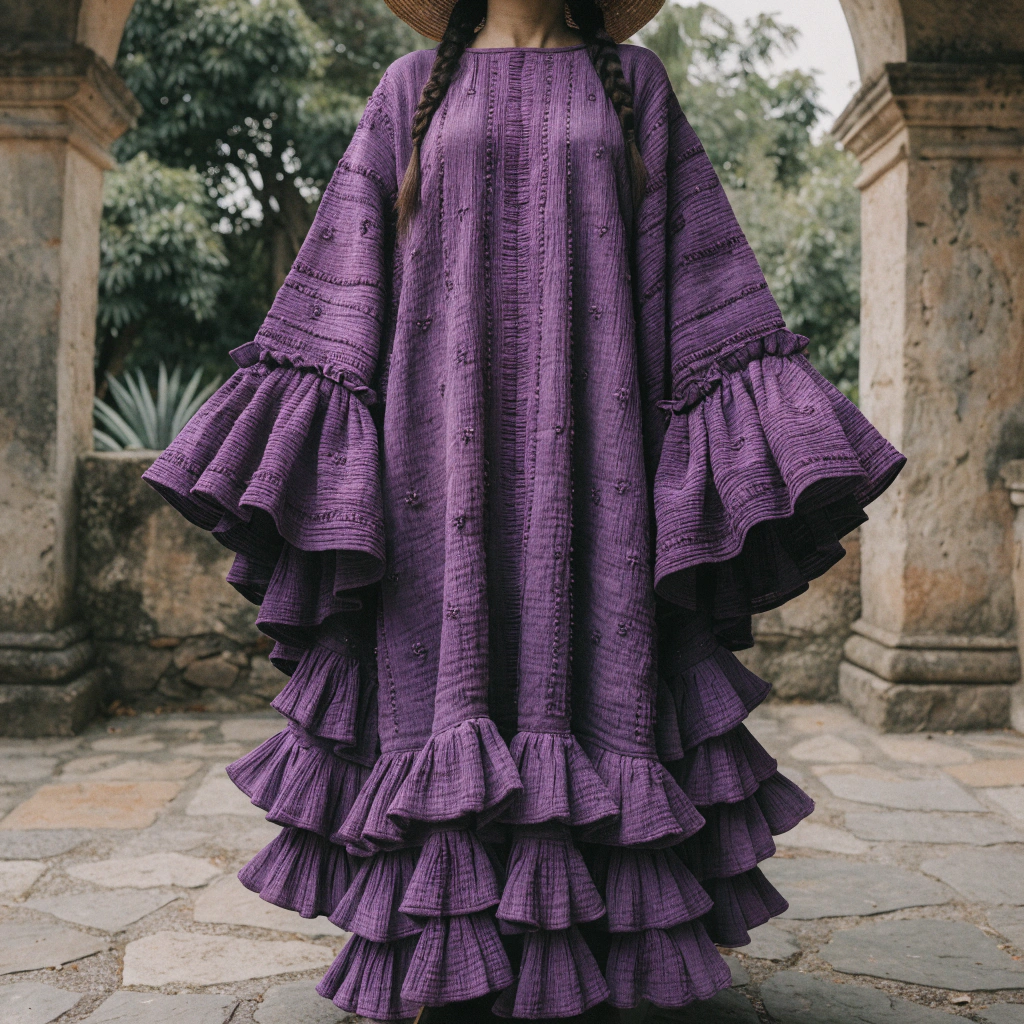
The Traditional Huipil of Mexico
The huipil is a traditional dress from Mexico. It is a very old garment. Indigenous women wear this dress every day. The huipil is a simple tunic. It has two or three pieces of fabric. The pieces are long and rectangular.
The huipil is not just a piece of clothing. It shows the history of the person. Each dress has special colors and patterns. These patterns tell a story about the family and the village.
Today, many women in Mexico still wear the huipil. It is very beautiful and colorful. It is an important part of Mexican culture.
文法スポットライト
パターン: Present Simple: To Be
"The huipil is a traditional dress from Mexico."
We use 'is' for singular objects like 'the huipil'. It describes a fact or a state that is true right now.
パターン: Present Simple: Plural Verbs
"Indigenous women wear this dress every day."
When the subject is plural (women), we use the base form of the verb (wear). We do not add an 's' at the end.
理解度をチェック
10 問 · A1 初級 · 無料プレビュー 1回
この記事で学んだことをテストしよう。全問正解してXPを獲得!
Where is the huipil from?
問題の内訳
Where is the huipil from?
あなたの回答:
正解: Mexico
The huipil is a new type of dress.
あなたの回答:
正解: 間違い
What is fabric?
あなたの回答:
正解: Material for clothes
Each dress has special colors and _____.
あなたの回答:
正解: patterns
メキシコの伝統的な服:ウィピル
ウィピルは、メキシコのとても古い服です。これは、二つか三つの四角い布をつなげて作られます。袖がない服で、主に先住民の女性たちが着ています。ウィピルは、色々な色や美しいデザインがあり、とてもきれいです。
ウィピルは、ただの服ではありません。メキシコの人々の歴史や文化を強く表しています。それぞれのウィピルには、独特の色や模様があります。これらのデザインは、作られた地域や着る人の家族によって少し違います。例えば、特定の村では花や動物の模様が多いです。これは、その場所の自然や信仰を示しています。
ウィピルの歴史は、二千年よりもずっと長いです。昔、マヤ文明やアステカ文明の時代から、人々はウィピルを着ていました。長い時間が経ちましたが、今でも多くの女性がウィピルを着ています。ウィピルは、メキシコの豊かな文化の大切な一部です。
文法スポットライト
パターン: 〜で作られます (tsukura re masu)
"ウィピルは、二つか三つの四角い布をつなげて作られます。"
これは「〜によって作られる」という受身の形です。何かが何かの材料や方法で作られる時に使います。この文では、「布」がウィピルの材料であることを示しています。
パターン: 〜だけではありません (dake de wa arimasen)
"ウィピルは、ただの服ではありません。"
これは「AだけでなくBでもある」という意味を表すときに使います。「ただの服ではない」は「服という以上の意味がある」ことを示しています。A2レベルでは、何かを強調したいときに便利です。
理解度をチェック
11 問 · A2 初級 · 無料プレビュー 1回
この記事で学んだことをテストしよう。全問正解してXPを獲得!
ウィピルは、どのような服ですか?
問題の内訳
ウィピルは、どのような服ですか?
あなたの回答:
正解: メキシコのとても古い服です。
ウィピルのデザインは、地域や家族によって違います。
あなたの回答:
正解: 正しい
「伝統的」の意味は何ですか?
あなたの回答:
正解: 昔から続いていて、大切なこと
ウィピルは、メキシコの人々の歴史や___を強く表しています。
あなたの回答:
正解: 文化
ウィピルの歴史は、どのくらい長いですか?
あなたの回答:
正解: 二千年よりもずっと長いです。
The Huipil: A Living History of Mexican Tradition
The huipil is perhaps the most famous traditional garment in Mexico. It is a beautiful tunic that has been worn by indigenous women for over two thousand years. This simple but elegant clothing is made from two or three rectangular pieces of fabric which are joined together.
The history of the huipil is very long. Evidence of its origins has been found in ancient Mayan murals and Aztec books. Even though many things have changed in Mexico over the centuries, the huipil has remained a powerful symbol of cultural identity. In many indigenous communities, the style of the huipil tells a specific story. The colors and patterns that are chosen by the weavers often represent the village where the woman lives. For example, some designs show local flowers, animals, or even the religious beliefs of the family.
The process of making a huipil takes a lot of time and skill. Most traditional huipils are woven on a backstrap loom. This is a special tool that is tied to a tree at one end and around the weaver's waist at the other. Because the work is so detailed, a single garment can take several months to finish. Each piece is unique because it reflects the personality of the person who created it.
Today, the huipil is still an important part of daily life in states like Oaxaca and Chiapas. It is not just a piece of history; it is a living tradition that connects the past with the present. Recently, many young designers have started to include these traditional patterns in modern fashion. By doing this, they ensure that the art of the huipil will be protected for future generations.
文法スポットライト
パターン: Present Perfect
"The huipil has remained a powerful symbol of cultural identity."
The present perfect is used here to describe a state that started in the past and continues into the present. It is formed with 'has/have' + the past participle.
パターン: Passive Voice
"The colors and patterns that are chosen by the weavers often represent the village."
The passive voice is used to focus on the action (choosing colors) rather than the person doing it. It is formed with 'to be' + the past participle.
理解度をチェック
11 問 · B1 中級 · 無料プレビュー 1回
この記事で学んだことをテストしよう。全問正解してXPを獲得!
How long have indigenous women been wearing the huipil?
問題の内訳
How long have indigenous women been wearing the huipil?
あなたの回答:
正解: Over 2,000 years
The style of a huipil can indicate which village a woman is from.
あなたの回答:
正解: 正しい
What does the word 'garment' mean?
あなたの回答:
正解: An item of clothing
The huipil is made from rectangular pieces of _____.
あなたの回答:
正解: fabric
What tool is traditionally used to make a huipil?
あなたの回答:
正解: A backstrap loom
メキシコの伝統衣装「ウィピル」:二千年の歴史を織りなす文化の象徴
メキシコの先住民女性たちが二千年以上にわたり着用してきた「ウィピル」は、その歴史的深さと文化的重要性において、他に類を見ない伝統衣装です。単なる衣服としてのみならず、着用者のアイデンティティ、地域の歴史、そして宇宙観を物語る「生きた文書」として、その価値が広く認識されています。
ウィピルの起源は、メキシコの先ヒスパニック時代にまで遡ります。古代マヤ文明の壁画やアステカの絵文書には、既にウィピルを着用した人物の姿が描かれており、この衣装がメソアメリカ文明の初期から存在していたことを明確に示唆しています。これは、ウィピルが単なる流行ではなく、時代を超えて受け継がれてきた文化的な根源を持つことを意味します。
ウィピルは、一般的に長方形の布を二枚または三枚縫い合わせ、頭と腕を通すための開口部を設けた袖なしのチュニック型衣装です。しかし、そのシンプルな基本構造にもかかわらず、地域ごとに驚くほどの多様性を見せます。織りの技法、使用される素材(綿、ウール、絹など)、色、模様、そして刺繍の一つ一つに、その共同体の歴史、信仰、社会階層、さらには個人の物語が込められています。例えば、特定の動植物のモチーフは、その土地の自然環境や神話的世界観を反映していることが少なくありません。
スペインによる植民地化、そしてその後の近代化の波は、メキシコの先住民文化に大きな影響を与えましたが、ウィピルは消滅することなく、むしろその形や意味を変えながら生き延びてきました。先住民文化が抑圧された時代において、ウィピルは抵抗と自己表現の手段となり、民族的アイデンティティを保持する上で極めて重要な役割を果たしました。この不屈の精神は、現代においてもウィピルがメキシコの文化的多様性の象徴であり続ける理由の一つです。
今日、ウィピルはメキシコの多くの先住民コミュニティで日常的に着用され続けているだけでなく、その芸術的な価値が国際的にも高く評価されています。ファッションデザイナーがインスピレーションを得たり、美術品として展示されたりすることもあります。また、ウィピルの生産は、特に農村部の女性たちにとって、経済的な自立を支える重要な産業でもあります。
ウィピルは、メキシコの豊かな歴史、多様な文化、そして人々の創造性と不屈の精神を象徴する、かけがえのない文化遺産です。二千年以上にわたるその歴史は、織物の糸一本一本に込められた物語として、これからも未来へと語り継がれていくことでしょう。
文法スポットライト
パターン: 〜のみならず〜も (Not only... but also...)
"単なる衣服としてのみならず、着用者のアイデンティティ、地域の歴史、そして宇宙観を物語る「生きた文書」として、その価値が広く認識されています。"
「AのみならずBも」は、「AだけでなくBも」という意味で、AとBの両方に当てはまることを強調する表現です。AとBは同種の品詞や文が来ることが多く、フォーマルな文脈で使われます。
パターン: 〜にまで遡る (to go back as far as...)
"ウィピルの起源は、メキシコの先ヒスパニック時代にまで遡ります。"
「〜にまで遡る」は、物事の起源や歴史が非常に遠い過去まで及ぶことを表す表現です。「〜まで」で範囲を示し、「遡る」で時間を遡る動作を示します。歴史やルーツを語る際によく使われます。
パターン: 〜にもかかわらず (Despite... / Although...)
"しかし、そのシンプルな基本構造にもかかわらず、地域ごとに驚くほどの多様性を見せます。"
「〜にもかかわらず」は、ある状況や事実があるにもかかわらず、予想とは異なる結果や状況が生じることを表します。逆接の意味を持ち、フォーマルな文脈で使われます。動詞の普通形、名詞+である、形容詞+であるなどに接続します。
理解度をチェック
11 問 · B2 中上級 · 無料プレビュー 1回
この記事で学んだことをテストしよう。全問正解してXPを獲得!
ウィピルは、メキシコの先住民女性によってどのくらいの期間着用されてきましたか?
問題の内訳
ウィピルは、メキシコの先住民女性によってどのくらいの期間着用されてきましたか?
あなたの回答:
正解: 二千年以上にわたり
ウィピルは、古代マヤの壁画やアステカの絵文書には描かれていません。
あなたの回答:
正解: 間違い
「多様性」という言葉が記事中で意味するのは何ですか?
あなたの回答:
正解: 様々な種類や形があり、多くの異なった要素が含まれていること
ウィピルは、着用者のアイデンティティや地域の歴史を物語る「生きた_____」としてその価値が認識されています。
あなたの回答:
正解: 文書
スペインによる植民地化後、ウィピルはどのように変化しましたか?
あなたの回答:
正解: その形や意味を変えながら生き延びた
The Huipil: A Semiotic Tapestry of Mexican Indigenous Identity
Rarely has a garment maintained such a profound grip on the collective consciousness of a nation as the Mexican huipil. For over two millennia, this sleeveless tunic, constructed from rectangular pieces of backstrap-loomed fabric, has served as a primary medium for indigenous self-expression. Far from being a mere vestige of the past, the huipil remains a vibrant, evolving sartorial tradition that bridges the chasm between the Pre-Hispanic era and the contemporary globalized world. To the casual observer, it is a colorful garment; to the wearer and her community, it is a living document of heritage.
The sheer complexity of the huipil’s construction belies the apparent simplicity of its form. Traditionally, two or three webs of cloth are joined together, leaving an opening for the head and arms. However, it is the intricate interplay between geometric motifs and ancestral narratives that elevates the garment beyond mere apparel. Not only does the huipil serve as a utilitarian tunic, but it also functions as a sophisticated semiotic system. Each embroidered thread or woven pattern acts as a signifier, denoting the wearer’s village, marital status, and social standing. In many regions, the iconography includes representations of the cosmos, local flora, and mythological deities, effectively turning the wearer into a walking map of her culture's worldview.
Throughout the colonial period, the huipil underwent a process of cultural syncretism. While the fundamental structure remained indigenous, the introduction of European materials—such as silk and wool—and new motifs transformed its aesthetic landscape. Yet, despite centuries of external pressure to conform to Western standards of dress, the huipil has demonstrated remarkable resilience. It is the meticulous selection of threads and the persistence of ancestral techniques that allow indigenous women to assert their agency in a society that has often marginalized them. The preservation of these laborious weaving techniques represents a defiant rejection of homogenized global fashion.
In the modern era, the huipil faces a dichotomy of appreciation and appropriation. While it is celebrated as a pinnacle of Mexican textile art in international galleries, the indigenous artisans often struggle against the commercialization of their intellectual property. Nevertheless, the garment continues to evolve. Modern weavers are increasingly incorporating contemporary themes while maintaining the core structural integrity of the traditional design. Ultimately, the huipil is not a static artifact; it is a testament to the indefatigable spirit of Mexico’s indigenous peoples, weaving the threads of history into the fabric of the future.
文法スポットライト
パターン: Inversion with Negative Adverbials
"Rarely has a garment maintained such a profound grip on the collective consciousness of a nation as the Mexican huipil."
When an adverb with a negative or restrictive meaning (like 'rarely') starts a sentence, the subject and auxiliary verb are inverted for emphasis and formal tone.
パターン: Cleft Sentences
"It is the intricate interplay between geometric motifs and ancestral narratives that elevates the garment beyond mere apparel."
Cleft sentences use 'It is... that' to focus on a specific part of the information, emphasizing the subject of the sentence.
パターン: Nominalisation
"The preservation of these laborious weaving techniques represents a defiant rejection of homogenized global fashion."
Nominalisation involves turning verbs or adjectives into nouns (e.g., 'preserve' to 'preservation') to create a more formal, academic, and concise style.
理解度をチェック
12 問 · C1 上級 · 無料プレビュー 1回
この記事で学んだことをテストしよう。全問正解してXPを獲得!
What is the primary function of the huipil beyond being a piece of clothing?
問題の内訳
What is the primary function of the huipil beyond being a piece of clothing?
あなたの回答:
正解: A semiotic system communicating identity and heritage
The structural form of the huipil changed drastically during the colonial era to mimic Western styles.
あなたの回答:
正解: 間違い
Which word refers to the merging of different cultural influences?
あなたの回答:
正解: Syncretism
The huipil demonstrates remarkable _____ by surviving centuries of external pressure.
あなたの回答:
正解: resilience
What does the author suggest about modern huipil production?
あなたの回答:
正解: It faces a conflict between artistic appreciation and commercial appropriation.
Nominalisation is used in the article to create a more formal and academic tone.
あなたの回答:
正解: 正しい
メキシコの伝統衣装「ウィピル」:二千年を紡ぐアイデンティティの表象
メキシコ先住民文化において、ウィピルは単なる衣服の範疇を超え、着用者のアイデンティティ、共同体の歴史、そして宇宙観を脈々と受け継ぐ生きた文化財として、二千年以上にわたりその姿を留めてきました。その起源はプレヒスパニック時代にまで遡り、マヤ文明の壁画やアステカの絵文書にもその原型が確認されるほど、メソアメリカ文明の深奥に根差しています。スペインによる征服という激動の時代を経てもなお、その本質的な形態を変えることなく現代に至るのは、まさに稀有な文化現象と言えましょう。
ウィピルは、通常二枚または三枚の長方形の布を縫い合わせた筒状の、袖のないチュニック型の衣服を指します。しかし、その簡素な構造からは想像もつかないほど、各共同体、ひいては個々の着用者によって、素材、織り方、刺繍の模様、色彩が千差万別であり、それぞれが固有の物語を紡ぎ出しています。例えば、特定の動植物のモチーフは、その土地の生態系や神話的世界観を象徴し、色彩の組み合わせは、共同体の社会階層や儀式の意味合いを暗示するといった具合です。これらの文様や色彩の選択には、単なる美的感覚を超えた、深い意味合いが込められているのです。
この伝統衣装が持つ不朽の価値は、それが単なる装飾品に留まらず、共同体の歴史と記憶、そして宇宙との対話を視覚的に表現する媒体であるという点に他なりません。各地域のウィピルは、その共同体の地理的環境、歴史的背景、そして信仰体系が複雑に絡み合って形成された、まさに「身に着ける歴史書」と称される所以です。特に、機織りから刺繍に至るまでの全工程が手作業で行われる場合、それは単なる手仕事ではなく、祖先から受け継いだ技術と知識を次世代へと継承する営為であり、着用者の精神性をも映し出す鏡たる所以です。
然るに、現代社会においてウィピルは、グローバル化の波、ファストファッションの台頭、そして文化の盗用という複合的な課題に直面しています。大量生産された安価な模倣品が出回ることで、伝統的な手仕事の価値が損なわれ、作り手の生計が脅かされる事態も散見されます。また、民族衣装としてのウィピルが、その文化的背景や意味合いを顧みられることなく、単なるエキゾチックなファッションアイテムとして消費されることに対する懸念も拭えません。これは、文化の多様性を尊重するという現代社会の趨勢に逆行するものであると言わざるを得ません。
このような状況に鑑み、メキシコ政府や様々なNGOは、ウィピルを含む先住民の伝統工芸品の知的財産権保護、公正な取引の推進、そして伝統技術の保存と継承を目的とした多角的な取り組みを展開しています。作り手である先住民共同体が自らの文化遺産に対する権利を主張し、その価値を国際社会に問い直す動きも活発化しています。これにより、ウィピルの真価が再認識され、持続可能な形でその伝統が維持されることが期待されます。
結論として、ウィピルは単なる織物や刺繍の集合体ではなく、二千年以上の時を超えてメキシコの多様な先住民文化の精髄を体現し続ける、生きた哲学であり、不屈の精神の象徴です。その複雑な文様の一つ一つ、織り込まれた糸の一本一本に、先人たちの知恵と祈り、そして未来への希望が込められていると解釈しても、決して過言ではないでしょう。ウィピルの継承は、過去を尊重し、現在を生き、未来を創造する営為に他ならず、その輝きは今後も失われることなく、人類の文化遺産として脈々と受け継がれていくに違いありません。
文法スポットライト
パターン: 〜に他ならない
"この伝統衣装が持つ不朽の価値は、それが単なる装飾品に留まらず、共同体の歴史と記憶、そして宇宙との対話を視覚的に表現する媒体であるという点に他なりません。"
「〜に他ならない」は、「〜であると断言できる」「〜以外の何物でもない」という強い断定のニュアンスを表します。ある事柄がまさにそれである、と強調する際に用います。名詞句や動詞の終止形に接続します。
パターン: 〜たる所以
"各地域のウィピルは、その共同体の地理的環境、歴史的背景、そして信仰体系が複雑に絡み合って形成された、まさに「身に着ける歴史書」と称される所以です。"
「〜たる所以(ゆえん)」は、「〜である理由」「〜と呼ばれる根拠」を意味するやや硬い表現です。ある事柄が特定の評価や性質を持つに至った本質的な理由を説明する際に使われます。名詞に接続し、「〜である所以」の形で用いられます。
パターン: 〜と言わざるを得ません
"これは、文化の多様性を尊重するという現代社会の趨勢に逆行するものであると言わざるを得ません。"
「〜と言わざるを得ません」は、「〜と言わざるを得ない」の丁寧語で、「〜と言わないわけにはいかない」「そう言うしかない」という、状況から見てそう判断せざるを得ない、という強い必然性や断定を表します。客観的な事実や論理に基づいて結論を述べる際に使われます。
理解度をチェック
12 問 · C2 マスター · 無料プレビュー 1回
この記事で学んだことをテストしよう。全問正解してXPを獲得!
ウィピルが単なる衣服の範疇を超えているとされる最も主要な理由は何ですか?
問題の内訳
ウィピルが単なる衣服の範疇を超えているとされる最も主要な理由は何ですか?
あなたの回答:
正解: 着用者のアイデンティティ、歴史、宇宙観を表現する生きた文化財だから。
ウィピルの起源は、メキシコのスペイン植民地時代にまで遡るとされています。
あなたの回答:
正解: 間違い
「稀有」の最も適切な意味は何ですか?
あなたの回答:
正解: 非常に珍しいこと。
ウィピルは、通常二枚または三枚の長方形の布を縫い合わせた筒状の、袖のない______型の衣服を指します。
あなたの回答:
正解: チュニック
ウィピルの文様や色彩が示すものとして、記事中で言及されていないのはどれですか?
あなたの回答:
正解: 着用者の個人的な好物。
現代において、ウィピルは文化の盗用といった課題に直面していると記事に書かれています。
あなたの回答:
正解: 正しい

