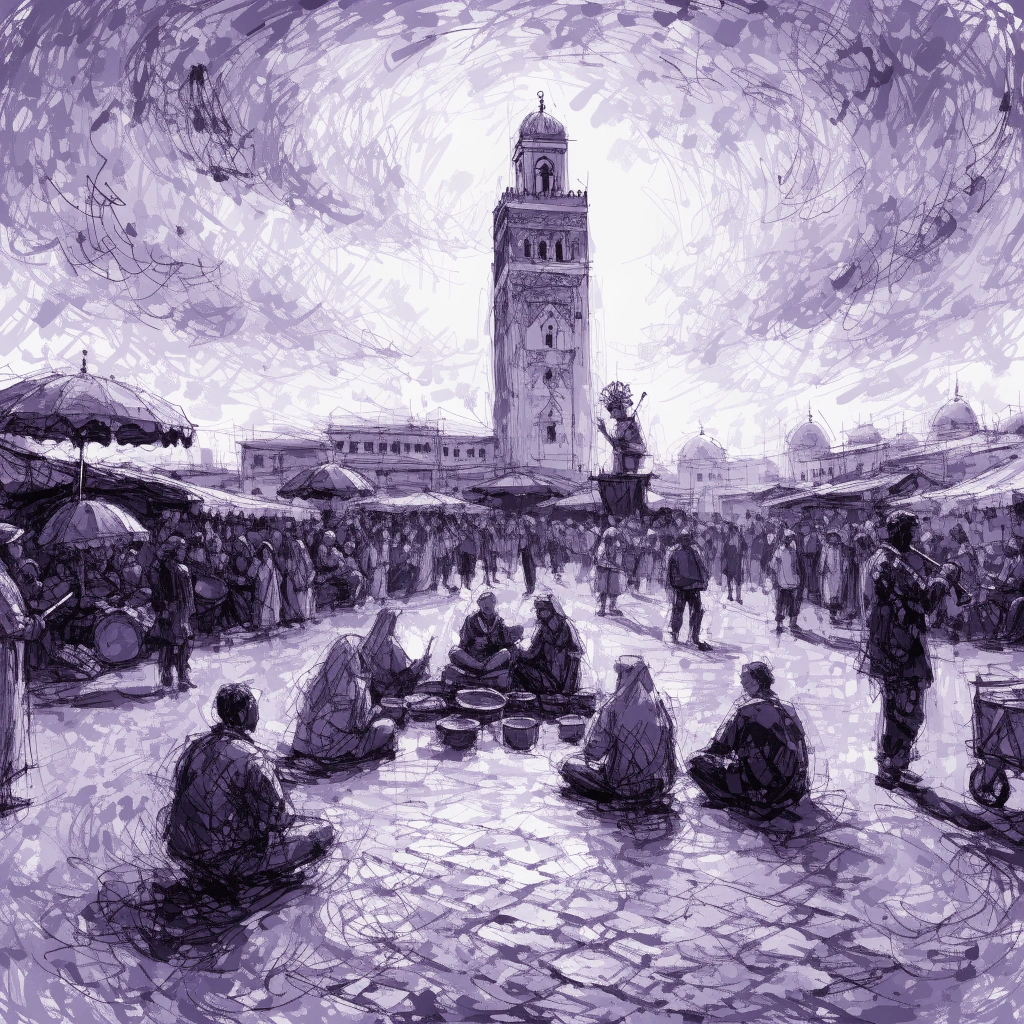
モロッコのマラケシュ:ジェマ・エル・フナ広場
ジェマ・エル・フナは モロッコのマラケシュに あります。ここは とても 有名な 場所です。 毎日、たくさんの 人々が この広場に 来ます。広場には おいしい 食べ物が あります。ジュースも 飲むことができます。 夜になると、もっと 賑やかになります。人々は 音楽を 聴いたり、踊ったり します。物語を 話す人も います。 ジェマ・エル・フナは、とても 活気のある 楽しい 場所です。世界中の 人々が この場所を 見に 来ます。
文法スポットライト
パターン: 〜にあります
"ジェマ・エル・フナは モロッコのマラケシュに あります。"
「〜にあります」は、物や場所がどこにあるかを言うときに使います。「に」は場所を示し、「あります」は「ある」の丁寧な形です。この文法は、物の位置を説明するのに使います。
パターン: 〜があります
"広場には おいしい 食べ物が あります。"
「〜があります」は、物があることを言うときに使います。「が」は主語を示し、「あります」は「ある」の丁寧な形です。この文法は、何かが存在する時に使います。
理解度をチェック
10 問 · A1 初級 · 無料プレビュー 1回
この記事で学んだことをテストしよう。全問正解してXPを獲得!
ジェマ・エル・フナは どこの国に ありますか?
問題の内訳
ジェマ・エル・フナは どこの国に ありますか?
あなたの回答:
正解: モロッコ
ジェマ・エル・フナは 静かな 場所です。
あなたの回答:
正解: 間違い
「人々」の 意味は 何ですか?
あなたの回答:
正解: people
夜になると、広場は もっと ____ になります。
あなたの回答:
正解: 賑やか
The Magic of Djemaa el-Fnaa
Djemaa el-Fnaa is a very famous square in Marrakech, Morocco. It is the heart of the city and it is always busy. Many years ago, the city’s founders built the square for trade and public meetings. In 2001, UNESCO said it was a special place for history and culture because of its old traditions.
During the day, the square is full of life. You can see orange juice stalls, henna artists, and many people. It is louder and more exciting than other places in the city. In the evening, the square changes completely. Many cooks arrive and prepare delicious food. You can smell the meat and spices in the air. There are also storytellers, musicians, and traditional dancers.
Djemaa el-Fnaa is bigger than most squares in Africa. It is a great place because it is very old but also very modern. Visitors love it because they can see the traditions of Morocco. It is a magical experience for everyone who visits this beautiful city.
文法スポットライト
パターン: Comparatives
"It is louder and more exciting than other places in the city."
We use comparatives to compare two things. For short words, we add '-er' (louder), and for long words, we use 'more' (more exciting).
パターン: Past Simple
"Many years ago, the city’s founders built the square for trade and public meetings."
The past simple is used for finished actions in the past. 'Built' is the irregular past form of the verb 'build'.
理解度をチェック
11 問 · A2 初級 · 無料プレビュー 1回
この記事で学んだことをテストしよう。全問正解してXPを獲得!
Where is the famous square Djemaa el-Fnaa located?
問題の内訳
Where is the famous square Djemaa el-Fnaa located?
あなたの回答:
正解: Marrakech, Morocco
The square is quiet and empty during the day.
あなたの回答:
正解: 間違い
What does 'delicious' mean?
あなたの回答:
正解: Tasting very good
Djemaa el-Fnaa is _____ than most squares in Africa.
あなたの回答:
正解: bigger
Why did UNESCO recognize the square in 2001?
あなたの回答:
正解: Because of its history and culture
The Magic of Djemaa el-Fnaa: The Heart of Marrakech
Djemaa el-Fnaa is a famous square in Marrakech, Morocco, which has been the center of city life for centuries. Since the city was founded in the 11th century, this place has welcomed travelers from all over the world. In 2001, the square was declared a 'Masterpiece of the Oral and Intangible Heritage of Humanity' by UNESCO because it protects traditional culture.
During the day, the square is a busy marketplace where you can find orange juice stalls and snake charmers. However, the real magic starts when the sun goes down. As evening approaches, the space is transformed into a huge open-air restaurant. Hundreds of food stalls are set up, and the air is filled with the smell of grilled meat and spices. Local people and tourists sit together at long wooden tables to enjoy traditional Moroccan dishes like couscous and tagine.
Djemaa el-Fnaa is also famous for its performers. You can see storytellers who tell ancient tales to large crowds. These traditions have been passed down through many generations. Musicians play traditional instruments, and dancers entertain people who have traveled long distances to see the show. It is a place where the past and the present meet in a beautiful way.
Visitors have often described the square as a chaotic but exciting experience. The square serves as a bridge between different cultures, allowing everyone to share a unique moment in the heart of the city. If you visit Marrakech, you should spend an evening here. It is not just a tourist attraction; it is a living piece of history that continues to thrive today. Many people who visit Morocco say that they have never seen anything like it.
文法スポットライト
パターン: The Passive Voice
"In 2001, the square was declared a 'Masterpiece of the Oral and Intangible Heritage of Humanity' by UNESCO."
The passive voice is used when the focus is on the action or the object receiving the action. It is formed using 'to be' + past participle.
パターン: The Present Perfect
"Many people who visit Morocco say that they have never seen anything like it."
The present perfect is used to talk about experiences in our lives up to now. It is formed using 'have/has' + past participle.
理解度をチェック
11 問 · B1 中級 · 無料プレビュー 1回
この記事で学んだことをテストしよう。全問正解してXPを獲得!
Why did UNESCO declare the square a masterpiece?
問題の内訳
Why did UNESCO declare the square a masterpiece?
あなたの回答:
正解: Because it protects traditional culture
The square is transformed into a restaurant during the morning.
あなたの回答:
正解: 間違い
What does 'thrive' mean?
あなたの回答:
正解: To grow and be successful
What kind of food can you find at the square?
あなたの回答:
正解: Couscous and tagine
The storytellers tell _____ tales to large crowds.
あなたの回答:
正解: ancient
マラケシュの魂、ジャマ・エル・フナ広場:無形文化遺産の生きた証
モロッコ、マラケシュの中心部に位置するジャマ・エル・フナ広場は、単なる公共の場というだけでなく、モロッコの豊かな歴史と文化が脈打つ生きた心臓部として世界に知られています。この広場は、2001年にユネスコによって「人類の口承及び無形遺産の傑作」に認定されたことからも、その文化的価値の高さが伺えます。古代と現代が混沌とした、しかし活気に満ちたシンフォニーの中で融合する、まさに唯一無二の場所と言えるでしょう。
歴史を紐解けば、11世紀にムラービト朝によってマラケシュが建都されて以来、ジャマ・エル・フナ広場は、市民が集い、交易が行われる場所として機能してきました。しかしながら、この広場の真の遺産は、その商業的役割のみならず、口承伝統の継承の場としての役割にあります。物語語り、詩の朗読、音楽演奏といった多様な文化活動が何世紀にもわたり、この場所で育まれ、世代から世代へと伝えられてきたのです。
日が暮れるにつれて、広場は活気に満ちた劇場へと変貌し、その賑わいは最高潮に達します。大道芸人、ヘビ使い、タトゥーアーティスト、薬草医、そして様々な演者が、それぞれのパフォーマンスを繰り広げ、訪れる人々を魅了します。また、広場を埋め尽くす屋台からは、モロッコの伝統的な料理の香りが漂い、五感を刺激します。これらの光景は、単なる観光アトラクションというよりも、地域社会の日常生活と文化が息づく、生きた博物館のようです。
ジャマ・エル・フナ広場は、マラケシュのアイデンティティを象徴する場所であり、その文化的な連続性を保証する重要な役割を担っています。グローバル化が進む現代社会において、このような伝統文化が絶え間なく息づく空間は、非常に貴重であると言えるでしょう。そこでは、過去の記憶が現代の活気と見事に融合し、訪れるすべての人々に忘れがたい体験を提供し続けています。
この広場を訪れることは、単に観光地を巡ることに留まらず、モロッコの魂に触れることに他なりません。ジャマ・エル・フナ広場は、その混沌と美しさの中に、人類共通の文化遺産の重要性、そして口承伝統の持つ力強さを今もなお語り続けているのです。この場所が未来永劫、その魅力を失うことなく存在し続けることを願ってやみません。
文法スポットライト
パターン: 〜だけでなく〜としても
"ジャマ・エル・フナ広場は、単なる公共の場というだけでなく、モロッコの豊かな歴史と文化が脈打つ生きた心臓部として世界に知られています。"
「〜だけでなく〜としても」は、「AだけでなくBでもある」というように、AとBの二つの側面や役割があることを示す表現です。AとBが同等か、Bがより強調される場合に使われます。
パターン: 〜ことからも伺えます
"この広場は、2001年にユネスコによって「人類の口承及び無形遺産の傑作」に認定されたことからも、その文化的価値の高さが伺えます。"
「〜ことからも伺えます」は、「〜という事実から、ある状況や気持ちが推測できる」という意味を表します。間接的な情報源に基づいて判断する際に用いられる丁寧な表現です。
パターン: 〜のみならず〜も
"この広場の真の遺産は、その商業的役割のみならず、口承伝統の継承の場としての役割にあります。"
「AのみならずBも」は、「AだけでなくBもまた」という意味で、Aに加えてBも当てはまることを強調する表現です。「だけでなく」よりもやや硬い印象で、文章でよく使われます。
理解度をチェック
11 問 · B2 中上級 · 無料プレビュー 1回
この記事で学んだことをテストしよう。全問正解してXPを獲得!
ジャマ・エル・フナ広場がユネスコに認定されたのはいつですか?
問題の内訳
ジャマ・エル・フナ広場がユネスコに認定されたのはいつですか?
あなたの回答:
正解: 2001年
ジャマ・エル・フナ広場は、マラケシュが建都された11世紀から、口承伝統の継承の場として利用されてきました。
あなたの回答:
正解: 正しい
「脈打つ」の最も近い意味は何ですか?
あなたの回答:
正解: 活発に活動する
日が暮れるにつれて、広場は活気に満ちた劇場へと______し、その賑わいは最高潮に達します。
あなたの回答:
正解: 変貌
ジャマ・エル・フナ広場の「真の遺産」として記事で強調されているのは何ですか?
あなたの回答:
正解: 口承伝統の継承の場としての役割
The Ephemeral Permanence of Djemaa el-Fnaa: A Sensory Tapestry of Marrakech
Rarely has a public space managed to encapsulate the paradoxical nature of a nation as effectively as Djemaa el-Fnaa. Situated at the crossroads of the Medina in Marrakech, this vast esplanade serves as a living museum, a theater of the absurd, and a marketplace of dreams. Since its inception under the Almoravid dynasty in the 11th century, the square has undergone numerous transformations, yet its core identity as a site for public assembly remains unyielding. The designation of the square as a 'Masterpiece of the Oral and Intangible Heritage of Humanity' by UNESCO in 2001 was not merely a symbolic gesture; it was a recognition of the evanescent nature of the performances that occur here daily.
Seldom does one encounter such a visceral assault on the senses as that experienced upon entering the square at dusk. As the sun dips below the horizon, the space undergoes a metamorphosis. What was a sparse expanse in the heat of the afternoon becomes a dense cacophony of sound and movement. It is within this architectural void that the soul of Marrakech resides, manifested through the rhythmic drumming of Gnaoua musicians and the enticing aromas of grilled meats. The orchestration of these elements creates a palpable energy that transcends the physical boundaries of the square.
Central to the square’s allure are the 'halqa'—circles of spectators gathered around storytellers, acrobats, and musicians. It is the storytellers who carry the weight of history, weaving narratives that have been passed down through generations. These tales, often laden with moral allegories and local folklore, provide a window into the Moroccan psyche. However, the preservation of these oral traditions remains a paramount concern. In an era dominated by digital distractions and the homogenization of global culture, the traditional storyteller faces an uphill battle for relevance.
Critics argue that the increasing commercialization of Djemaa el-Fnaa threatens to dilute its authenticity. The influx of tourism has led to a convergence of traditional practices and modern consumerism, where some performances feel more orchestrated for the camera than for the community. Yet, despite these pressures, the square retains a vestige of its ancient spirit. The ephemeral nature of the nightly festivities ensures that no two visits are identical. Each evening is a unique convergence of individuals, an alchemist's blend of the ancient and the contemporary.
Ultimately, the significance of Djemaa el-Fnaa lies in its ability to bridge the gap between the past and the present. It stands as a testament to the resilience of intangible culture. While the physical structures of Marrakech may crumble or be renovated, the spirit of the square persists through the collective memory of those who participate in its daily rituals. It is this very evanescence that makes it permanent—a paradox that continues to captivate the imagination of all who wander into its embrace.
文法スポットライト
パターン: Negative Inversion
"Seldom does one encounter such a visceral assault on the senses as that experienced upon entering the square at dusk."
Inversion is used for emphasis by placing a negative or restrictive adverb at the beginning of the sentence followed by an auxiliary verb and the subject. This creates a more formal and dramatic tone typical of C1 level writing.
パターン: Cleft Sentences
"It is within this architectural void that the soul of Marrakech resides."
Cleft sentences focus on specific information by splitting a single clause into two. Here, 'It is... that' emphasizes the location (the architectural void) as the essential site for the city's soul.
パターン: Nominalization
"The designation of the square as a 'Masterpiece of the Oral and Intangible Heritage of Humanity' by UNESCO in 2001 was not merely a symbolic gesture."
Nominalization turns verbs (designate) into nouns (designation) to package complex ideas into the subject of a sentence. This allows for more abstract and nuanced academic or professional analysis.
理解度をチェック
12 問 · C1 上級 · 無料プレビュー 1回
この記事で学んだことをテストしよう。全問正解してXPを獲得!
What was the primary reason UNESCO designated Djemaa el-Fnaa a 'Masterpiece'?
問題の内訳
What was the primary reason UNESCO designated Djemaa el-Fnaa a 'Masterpiece'?
あなたの回答:
正解: Its role as a platform for oral and intangible traditions
The article suggests that the square's atmosphere remains identical from morning to night.
あなたの回答:
正解: 間違い
What does 'ephemeral' mean in the context of the article?
あなたの回答:
正解: Lasting for a very short time
The article mentions that the square has undergone numerous changes since its _____ in the 11th century.
あなたの回答:
正解: inception
According to the text, what is the main threat to the traditional storytellers?
あなたの回答:
正解: Digital distractions and global cultural homogenization
The author believes that the square's commercialization has completely destroyed its ancient spirit.
あなたの回答:
正解: 間違い
The Ephemeral Palimpsest: A Socio-Cultural Anatomy of Djemaa el-Fnaa
To traverse the threshold of Djemaa el-Fnaa is to surrender oneself to a sensory cacophony that defies the sterile categorization of modern urban planning. Situated at the cardinal heart of Marrakech, this square serves not merely as a geographic locus but as a living palimpsest, where layers of Almoravid history, oral tradition, and contemporary globalization intersect in a volatile, yet harmonious, flux. Declared a 'Masterpiece of the Oral and Intangible Heritage of Humanity' by UNESCO in 2001, the square represents a rare survival of the medieval public sphere, albeit one that is perpetually renegotiating its identity amidst the pressures of late-stage capitalism. Seldom does a public space encapsulate such a profound tension between the preservation of atavistic traditions and the inevitable commodification that accompanies international acclaim.
Should one deconstruct the auditory landscape of the square, the 'halqa' emerges as the quintessential element of its cultural fabric. These circles of spectators, gathered around storytellers, musicians, and performers, constitute a liminal space where the boundaries between performer and audience are porous. The storytelling tradition, or 'hikayat', is particularly noteworthy; it is a repository of collective memory that predates the written word. However, the survival of these oral narratives is not guaranteed. As the younger generation gravitates toward digital consumption, there is a palpable concern that the nuanced dialectics of the traditional storyteller might undergo a process of ossification, becoming a mere caricature for the tourist gaze rather than a vibrant medium of social critique.
Furthermore, the physical environment of Djemaa el-Fnaa undergoes a diurnal metamorphosis that is almost liturgical in its precision. By day, the square is a labyrinthine marketplace, punctuated by the presence of water sellers and henna artists. Yet, as twilight descends, the space is reclaimed by a temporary architecture of food stalls, their rising steam creating a chiaroscuro effect against the backdrop of the Koutoubia Mosque. This transition is not merely logistical but ontological; the square shifts from a site of pragmatic commerce to one of ritualistic communal consumption. It is imperative that the observer remain cognizant of the socio-economic undercurrents at play here; the vibrancy of the night market is sustained by a complex network of labor that remains largely invisible to the casual visitor.
One might argue that the UNESCO designation has acted as a double-edged sword. While it has undoubtedly provided a protective framework against aggressive urban redevelopment, it has also catalyzed a shift toward the museumification of the square. When a living tradition is institutionalized, it risks losing the very spontaneity that defined its inception. The challenge, therefore, lies in fostering an environment where the 'halqa' can evolve without being stifled by the expectations of authenticity imposed by external observers. The square remains a site of resistance against the homogenization of global culture, a place where the local vernacular continues to assert its sovereignty through music, jest, and narrative.
In conclusion, Djemaa el-Fnaa is less a destination and more an experiential phenomenon. It is a testament to the resilience of human connection in an increasingly atomized world. To truly comprehend the square, one must look beyond the spectacle and engage with the underlying rhythms of a community that has, for nearly a millennium, turned a void into a vibrant theater of existence. Whether it will withstand the encroaching tides of modernity remains to be seen, but for now, it stands as a defiant bastion of the intangible.
文法スポットライト
パターン: Inversion after Negative/Restrictive Adverbs
"Seldom does a public space encapsulate such a profound tension between the preservation of atavistic traditions and the inevitable commodification that accompanies international acclaim."
When using restrictive words like 'seldom', 'rarely', or 'never' at the start of a sentence for emphasis, the auxiliary verb is placed before the subject.
パターン: Conditional Inversion (Subjunctive)
"Should one deconstruct the auditory landscape of the square, the 'halqa' emerges as the quintessential element of its cultural fabric."
The word 'should' replaces 'if' in formal contexts to express a hypothetical condition. This structure is common in academic and scholarly writing.
パターン: The Subjunctive Mood with 'Imperative'
"It is imperative that the observer remain cognizant of the socio-economic undercurrents at play here."
After adjectives expressing urgency or requirement (imperative, essential, crucial), the base form of the verb ('remain' instead of 'remains') is used in a 'that' clause.
理解度をチェック
12 問 · C2 マスター · 無料プレビュー 1回
この記事で学んだことをテストしよう。全問正解してXPを獲得!
According to the article, why is the UNESCO designation described as a 'double-edged sword'?
問題の内訳
According to the article, why is the UNESCO designation described as a 'double-edged sword'?
あなたの回答:
正解: It provided protection but also risked turning a living tradition into a static museum piece.
The author suggests that the 'halqa' is a rigid performance where the audience has no role.
あなたの回答:
正解: 間違い
What does 'atavistic' mean in the context of the article?
あなたの回答:
正解: Characterized by a return to ancestral or ancient ways.
The square undergoes a diurnal _____ that changes it from a marketplace to a food court.
あなたの回答:
正解: metamorphosis
What does the author identify as a threat to the traditional storytelling ('hikayat')?
あなたの回答:
正解: The shift of younger generations toward digital media.
The transition of the square from day to night is described as being almost liturgical in its precision.
あなたの回答:
正解: 正しい

