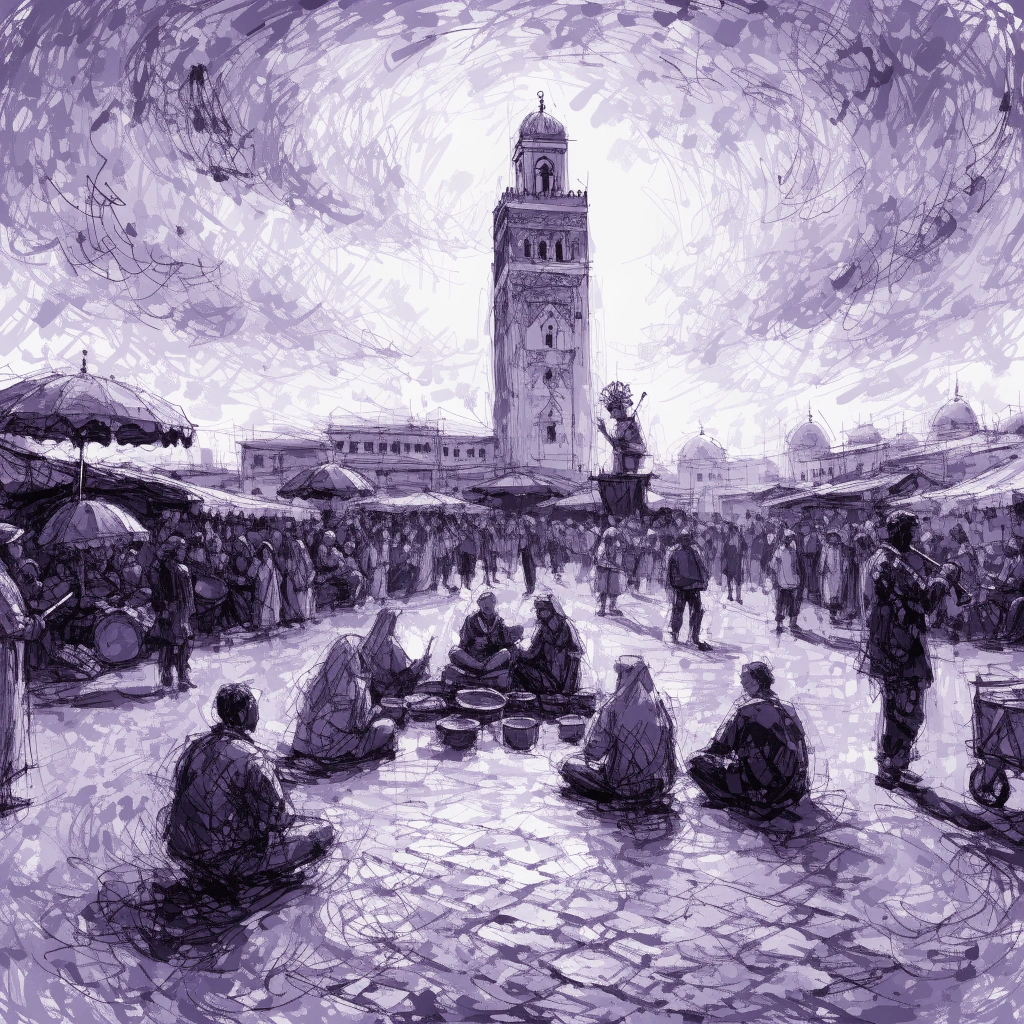
摩洛哥的德吉玛广场
摩洛哥有一个美丽的城市,叫马拉喀什。 马拉喀什有一个很有名的广场,它的名字是德吉玛广场。 每天,很多当地人和游客都来这里。 在广场上,人们可以看到有趣的表演。比如,有人讲故事,有人唱歌,也有人演奏音乐。 大家也可以在这里吃到很多好吃的摩洛哥食物。 德吉玛广场非常热闹。它是一个充满活力和故事的特别地方。很多人喜欢这里。
语法聚焦
句型: 有 (yǒu)
"摩洛哥有一个美丽的城市。"
“有”表示拥有或者存在。它可以说明一个地方有什么东西,或者一个人有什么东西。比如,“我有一个苹果”或者“桌子上有一本书”。
句型: 很 / 非常 + 形容词 (hěn / fēicháng + xíngróngcí)
"德吉玛广场非常热闹。"
“很”和“非常”放在形容词前面,表示程度高。它们让形容词的意义更强烈。比如,“很漂亮”就是“非常漂亮”。
测试你的理解
10 个问题 · A1 初学 · 1 次免费预览
摩洛哥的杰马夫纳广场
摩洛哥有一个很有名的地方,叫做杰马夫纳广场。它在马拉喀什,是这个城市最热闹的地方。很多人说,它是非洲最有名、最重要的广场之一。
杰马夫纳广场的历史很长。在很久以前,这里是人们做生意和聚会的地方。现在,它仍然是一个非常特别的文化中心。每天晚上,广场上都非常热闹。你可以看到讲故事的人、玩音乐的人和跳舞的人。还有很多卖食物的小摊位,你可以尝到好吃的摩洛哥菜。
联合国教科文组织在2001年说,杰马夫纳广场是一个“人类口头和非物质遗产的杰作”。因为这里有很丰富的文化活动和传统故事。如果你去摩洛哥,一定要去杰马夫纳广场看看。它很美,也很有趣!
语法聚焦
句型: 最… (zuì…)
"它是这个城市最热闹的地方。"
“最”放在形容词前面,表示最高程度,意思是“最…的”。比如“最美”就是“very beautiful”。这个结构可以用来比较三个或更多的事物。
句型: 因为…所以… (yīnwèi…suǒyǐ…)
"因为这里有很丰富的文化活动和传统故事,所以它是一个“人类口头和非物质遗产的杰作”。"
“因为…所以…”用来表示因果关系。“因为”介绍原因,“所以”介绍结果。这两个词经常一起使用,让句子更清晰地表达原因和结果。
测试你的理解
11 个问题 · A2 基础 · 1 次免费预览
测试你从这篇文章中学到的知识。回答所有问题即可获得经验值!
题目详情
杰马夫纳广场在哪个国家?
你的回答:
正确答案: 摩洛哥
杰马夫纳广场以前是人们做生意的地方。
你的回答:
正确答案: 正确
“热闹”是什么意思?
你的回答:
正确答案: 有很多活动和人的
杰马夫纳广场是马拉喀什最______的地方。
你的回答:
正确答案: 热闹
在杰马夫纳广场的晚上,你不能看到什么?
你的回答:
正确答案: 非常安静的街道
摩洛哥的杰马夫纳广场:活着的历史
摩洛哥马拉喀什的杰马夫纳广场是北非最著名的广场之一,它也是这座城市的“心跳”。这个广场已经成为了世界各地游客必去的地方,每年吸引了许多来自世界各地的人。
自11世纪马拉喀什建城以来,杰马夫纳广场就一直是人们聚集和交易的重要场所。它不仅是市场,更是一个充满活力的舞台。2001年,联合国教科文组织将杰马夫纳广场评为“人类口头和非物质文化遗产代表作”,这表明了它在文化上的重要性。
每天傍晚,广场上就会变得热闹非凡。你可以看到讲故事的人、耍蛇人、音乐家、舞者和各种小贩。空气中弥漫着香料、烤肉和薄荷茶的香味。这里的一切都让人感觉仿佛回到了过去,体验着摩洛哥独特的传统生活。
虽然时代在变,但杰马夫纳广场的核心精神一直没有改变。它被视为一个活着的博物馆,保存着摩洛哥的口头传统和民间艺术。许多当地的表演者已经在这里表演了几十年,他们的故事和技艺被一代又一代地传承下来。
如果你有机会去摩洛哥,一定不要错过杰马夫纳广场。在这里,历史与现代、传统与创新巧妙地结合在一起,为你带来一次难忘的文化体验。这个充满魔力的地方,会让你对摩洛哥留下深刻的印象。
语法聚焦
句型: “被”字句 (Passive Voice with “bèi”)
"他们的故事和技艺被一代又一代地传承下来。"
“被”字句用于表示动作的承受者。它的基本结构是:主语 + 被 + (动作发出者)+ 动词 + 其他成分。这个句子强调故事和技艺是怎样被动地传给后代的。
句型: “已经……”表示完成 (Using “yǐjīng” for Completed Actions)
"这个广场已经成为了世界各地游客必去的地方。"
“已经”表示一个动作或状态已经完成,并且这个结果持续到现在。它通常放在动词或动词短语前面。这个句子说明广场成为著名地点的事实已经发生,并且现在仍然是这样。
测试你的理解
11 个问题 · B1 中级 · 1 次免费预览
测试你从这篇文章中学到的知识。回答所有问题即可获得经验值!
题目详情
杰马夫纳广场被联合国教科文组织评为什么?
你的回答:
正确答案: 人类口头和非物质文化遗产代表作
杰马夫纳广场只在白天热闹。
你的回答:
正确答案: 错误
“弥漫”是什么意思?
你的回答:
正确答案: 充满空间
杰马夫纳广场是摩洛哥马拉喀什的“______”。
你的回答:
正确答案: 心跳
文章提到,杰马夫纳广场的核心精神有什么特点?
你的回答:
正确答案: 一直没有改变
摩洛哥马拉喀什的灵魂:杰马夫纳广场
在摩洛哥的红色城市马拉喀什,有一个地方被誉为它的“心脏”——那就是著名的杰马夫纳广场。这个广场不仅是当地居民日常生活的重要组成部分,更因其独特的文化魅力和悠久历史,于2001年被联合国教科文组织宣布为“人类口头和非物质遗产代表作”。它是一个时间与空间交织的舞台,古老传统与现代生活在此碰撞出绚烂的火花。
杰马夫纳广场的历史可以追溯到11世纪,当时由阿尔摩拉维王朝建立的马拉喀什城,便以这个广场为中心展开。最初,它是一个公共集会和贸易的场所,商品琳琅满目,人们在此交换货物、分享信息。然而,随着时间的推移,广场逐渐演变为口头传统艺术的殿堂。数百年来,说书人、乐师、舞者、耍蛇人以及各种民间艺人在此汇聚,通过世代相传的表演艺术,讲述着历史故事、传播着文化精髓。
每当夜幕降临,杰马夫纳广场便焕发出勃勃生机。白天的喧嚣被另一种迷人的活力所取代:成百上千的灯光亮起,空气中弥漫着烤肉、薄荷茶和香料的诱人气息。游客和当地居民熙熙攘攘,在各个摊位前驻足,品尝当地美食,欣赏精彩的街头表演。从传统的柏柏尔音乐到神秘的占卜,从杂技表演到即兴戏剧,这里的一切都显得如此真实而富有感染力,仿佛将人们带回了古老的北非市集。
杰马夫纳广场不仅仅是一个旅游景点,它更是摩洛哥文化多样性的一个缩影,见证了马拉喀什乃至整个国家的历史变迁。它以其独特的包容性和生命力,持续吸引着世界各地的人们前来探索和体验。在这里,每一次呼吸都充满了故事,每一次驻足都能感受到历史的脉搏和文化的深度。对于任何想要深入了解摩洛哥文化的人来说,杰马夫纳广场无疑是一个不容错过的目的地。
语法聚焦
句型: 被字句 (Passive Voice with '被')
"于2001年被联合国教科文组织宣布为“人类口头和非物质遗产代表作”。"
“被”字句用于表示主语是动作的承受者。它的基本结构是“主语 + 被 + 施动者 (可选) + 动词 + 其他成分”。这种句型常用于强调动作的结果或当施动者不重要或不明确时。
句型: 不仅...而且... (Not only... but also...)
"这个广场不仅是当地居民日常生活的重要组成部分,更因其独特的文化魅力和悠久历史,于2001年被联合国教科文组织宣布为“人类口头和非物质遗产代表作”。"
“不仅...而且...”是一个表示递进关系的关联词组,用于连接两个分句或词语,表示后者比前者更进一步。它强调了不止一个方面或事实,通常第二个分句的内容更重要或更令人关注。
句型: V+着 (Verb + zhe, indicating continuous state or action)
"空气中弥漫着烤肉、薄荷茶和香料的诱人气息。"
动词后加“着”表示动作正在进行或某种状态的持续。在例句中,“弥漫着”说明了空气中充满各种气息的持续状态。它也可以用于表示伴随动作,即一个动作在另一个动作进行时发生。
测试你的理解
11 个问题 · B2 中高级 · 1 次免费预览
测试你从这篇文章中学到的知识。回答所有问题即可获得经验值!
题目详情
杰马夫纳广场的历史可以追溯到哪个世纪?
你的回答:
正确答案: 11世纪
杰马夫纳广场只在白天热闹,晚上就安静了。
你的回答:
正确答案: 错误
“熙熙攘攘”在文章中主要用来形容什么?
你的回答:
正确答案: 人来人往,非常热闹拥挤的景象
杰马夫纳广场于2001年被联合国教科文组织宣布为“人类口头和______遗产代表作”。
你的回答:
正确答案: 非物质
以下哪种表演艺术在杰马夫纳广场上不常见?
你的回答:
正确答案: 歌剧表演
The Ephemeral Permanence of Djemaa el-Fnaa: A Sensory Tapestry of Marrakech
Rarely has a public space managed to encapsulate the paradoxical nature of a nation as effectively as Djemaa el-Fnaa. Situated at the crossroads of the Medina in Marrakech, this vast esplanade serves as a living museum, a theater of the absurd, and a marketplace of dreams. Since its inception under the Almoravid dynasty in the 11th century, the square has undergone numerous transformations, yet its core identity as a site for public assembly remains unyielding. The designation of the square as a 'Masterpiece of the Oral and Intangible Heritage of Humanity' by UNESCO in 2001 was not merely a symbolic gesture; it was a recognition of the evanescent nature of the performances that occur here daily.
Seldom does one encounter such a visceral assault on the senses as that experienced upon entering the square at dusk. As the sun dips below the horizon, the space undergoes a metamorphosis. What was a sparse expanse in the heat of the afternoon becomes a dense cacophony of sound and movement. It is within this architectural void that the soul of Marrakech resides, manifested through the rhythmic drumming of Gnaoua musicians and the enticing aromas of grilled meats. The orchestration of these elements creates a palpable energy that transcends the physical boundaries of the square.
Central to the square’s allure are the 'halqa'—circles of spectators gathered around storytellers, acrobats, and musicians. It is the storytellers who carry the weight of history, weaving narratives that have been passed down through generations. These tales, often laden with moral allegories and local folklore, provide a window into the Moroccan psyche. However, the preservation of these oral traditions remains a paramount concern. In an era dominated by digital distractions and the homogenization of global culture, the traditional storyteller faces an uphill battle for relevance.
Critics argue that the increasing commercialization of Djemaa el-Fnaa threatens to dilute its authenticity. The influx of tourism has led to a convergence of traditional practices and modern consumerism, where some performances feel more orchestrated for the camera than for the community. Yet, despite these pressures, the square retains a vestige of its ancient spirit. The ephemeral nature of the nightly festivities ensures that no two visits are identical. Each evening is a unique convergence of individuals, an alchemist's blend of the ancient and the contemporary.
Ultimately, the significance of Djemaa el-Fnaa lies in its ability to bridge the gap between the past and the present. It stands as a testament to the resilience of intangible culture. While the physical structures of Marrakech may crumble or be renovated, the spirit of the square persists through the collective memory of those who participate in its daily rituals. It is this very evanescence that makes it permanent—a paradox that continues to captivate the imagination of all who wander into its embrace.
语法聚焦
句型: Negative Inversion
"Seldom does one encounter such a visceral assault on the senses as that experienced upon entering the square at dusk."
Inversion is used for emphasis by placing a negative or restrictive adverb at the beginning of the sentence followed by an auxiliary verb and the subject. This creates a more formal and dramatic tone typical of C1 level writing.
句型: Cleft Sentences
"It is within this architectural void that the soul of Marrakech resides."
Cleft sentences focus on specific information by splitting a single clause into two. Here, 'It is... that' emphasizes the location (the architectural void) as the essential site for the city's soul.
句型: Nominalization
"The designation of the square as a 'Masterpiece of the Oral and Intangible Heritage of Humanity' by UNESCO in 2001 was not merely a symbolic gesture."
Nominalization turns verbs (designate) into nouns (designation) to package complex ideas into the subject of a sentence. This allows for more abstract and nuanced academic or professional analysis.
测试你的理解
12 个问题 · C1 高级 · 1 次免费预览
测试你从这篇文章中学到的知识。回答所有问题即可获得经验值!
What was the primary reason UNESCO designated Djemaa el-Fnaa a 'Masterpiece'?
题目详情
What was the primary reason UNESCO designated Djemaa el-Fnaa a 'Masterpiece'?
你的回答:
正确答案: Its role as a platform for oral and intangible traditions
The article suggests that the square's atmosphere remains identical from morning to night.
你的回答:
正确答案: 错误
What does 'ephemeral' mean in the context of the article?
你的回答:
正确答案: Lasting for a very short time
The article mentions that the square has undergone numerous changes since its _____ in the 11th century.
你的回答:
正确答案: inception
According to the text, what is the main threat to the traditional storytellers?
你的回答:
正确答案: Digital distractions and global cultural homogenization
The author believes that the square's commercialization has completely destroyed its ancient spirit.
你的回答:
正确答案: 错误
The Ephemeral Palimpsest: A Socio-Cultural Anatomy of Djemaa el-Fnaa
To traverse the threshold of Djemaa el-Fnaa is to surrender oneself to a sensory cacophony that defies the sterile categorization of modern urban planning. Situated at the cardinal heart of Marrakech, this square serves not merely as a geographic locus but as a living palimpsest, where layers of Almoravid history, oral tradition, and contemporary globalization intersect in a volatile, yet harmonious, flux. Declared a 'Masterpiece of the Oral and Intangible Heritage of Humanity' by UNESCO in 2001, the square represents a rare survival of the medieval public sphere, albeit one that is perpetually renegotiating its identity amidst the pressures of late-stage capitalism. Seldom does a public space encapsulate such a profound tension between the preservation of atavistic traditions and the inevitable commodification that accompanies international acclaim.
Should one deconstruct the auditory landscape of the square, the 'halqa' emerges as the quintessential element of its cultural fabric. These circles of spectators, gathered around storytellers, musicians, and performers, constitute a liminal space where the boundaries between performer and audience are porous. The storytelling tradition, or 'hikayat', is particularly noteworthy; it is a repository of collective memory that predates the written word. However, the survival of these oral narratives is not guaranteed. As the younger generation gravitates toward digital consumption, there is a palpable concern that the nuanced dialectics of the traditional storyteller might undergo a process of ossification, becoming a mere caricature for the tourist gaze rather than a vibrant medium of social critique.
Furthermore, the physical environment of Djemaa el-Fnaa undergoes a diurnal metamorphosis that is almost liturgical in its precision. By day, the square is a labyrinthine marketplace, punctuated by the presence of water sellers and henna artists. Yet, as twilight descends, the space is reclaimed by a temporary architecture of food stalls, their rising steam creating a chiaroscuro effect against the backdrop of the Koutoubia Mosque. This transition is not merely logistical but ontological; the square shifts from a site of pragmatic commerce to one of ritualistic communal consumption. It is imperative that the observer remain cognizant of the socio-economic undercurrents at play here; the vibrancy of the night market is sustained by a complex network of labor that remains largely invisible to the casual visitor.
One might argue that the UNESCO designation has acted as a double-edged sword. While it has undoubtedly provided a protective framework against aggressive urban redevelopment, it has also catalyzed a shift toward the museumification of the square. When a living tradition is institutionalized, it risks losing the very spontaneity that defined its inception. The challenge, therefore, lies in fostering an environment where the 'halqa' can evolve without being stifled by the expectations of authenticity imposed by external observers. The square remains a site of resistance against the homogenization of global culture, a place where the local vernacular continues to assert its sovereignty through music, jest, and narrative.
In conclusion, Djemaa el-Fnaa is less a destination and more an experiential phenomenon. It is a testament to the resilience of human connection in an increasingly atomized world. To truly comprehend the square, one must look beyond the spectacle and engage with the underlying rhythms of a community that has, for nearly a millennium, turned a void into a vibrant theater of existence. Whether it will withstand the encroaching tides of modernity remains to be seen, but for now, it stands as a defiant bastion of the intangible.
语法聚焦
句型: Inversion after Negative/Restrictive Adverbs
"Seldom does a public space encapsulate such a profound tension between the preservation of atavistic traditions and the inevitable commodification that accompanies international acclaim."
When using restrictive words like 'seldom', 'rarely', or 'never' at the start of a sentence for emphasis, the auxiliary verb is placed before the subject.
句型: Conditional Inversion (Subjunctive)
"Should one deconstruct the auditory landscape of the square, the 'halqa' emerges as the quintessential element of its cultural fabric."
The word 'should' replaces 'if' in formal contexts to express a hypothetical condition. This structure is common in academic and scholarly writing.
句型: The Subjunctive Mood with 'Imperative'
"It is imperative that the observer remain cognizant of the socio-economic undercurrents at play here."
After adjectives expressing urgency or requirement (imperative, essential, crucial), the base form of the verb ('remain' instead of 'remains') is used in a 'that' clause.
测试你的理解
12 个问题 · C2 精通 · 1 次免费预览
测试你从这篇文章中学到的知识。回答所有问题即可获得经验值!
According to the article, why is the UNESCO designation described as a 'double-edged sword'?
题目详情
According to the article, why is the UNESCO designation described as a 'double-edged sword'?
你的回答:
正确答案: It provided protection but also risked turning a living tradition into a static museum piece.
The author suggests that the 'halqa' is a rigid performance where the audience has no role.
你的回答:
正确答案: 错误
What does 'atavistic' mean in the context of the article?
你的回答:
正确答案: Characterized by a return to ancestral or ancient ways.
The square undergoes a diurnal _____ that changes it from a marketplace to a food court.
你的回答:
正确答案: metamorphosis
What does the author identify as a threat to the traditional storytelling ('hikayat')?
你的回答:
正确答案: The shift of younger generations toward digital media.
The transition of the square from day to night is described as being almost liturgical in its precision.
你的回答:
正确答案: 正确

