meme 30秒で
- A meme is a humorous digital item, like an image or video, that spreads rapidly among internet users through social media and messaging apps.
- The term was originally coined by Richard Dawkins to describe how cultural ideas evolve and spread similarly to biological genes through imitation.
- Modern memes often use specific templates that users 'remix' with their own text to create relatable jokes or social and political commentary.
- Understanding memes is essential for navigating modern informal English, as they function as a form of cultural shorthand and shared digital language.
The word meme has undergone a fascinating evolution from a specialized biological analogy to a cornerstone of global digital culture. Originally coined by evolutionary biologist Richard Dawkins in his 1976 book The Selfish Gene, the term was intended to describe a unit of cultural transmission or a unit of imitation. Dawkins hypothesized that just as genes propagate themselves in the gene pool by leaping from body to body via sperms or eggs, memes propagate themselves in the meme pool by leaping from brain to brain via a process which, in the broad sense, can be called imitation. In this original academic context, a meme could be anything from a catchy tune, a fashion trend, a way of building arches, or even the idea of a deity. It represents the way ideas evolve and survive based on their ability to be remembered and shared by human beings. However, in the modern era, the word has been adopted and transformed by the internet. Today, when most people use the word meme, they are referring specifically to an internet meme. This is typically a piece of media—such as an image with a clever caption, a short video clip, or a specific phrase—that is shared rapidly across social media platforms like Instagram, Twitter, TikTok, and Reddit. These digital memes often rely on humor, irony, and shared cultural experiences to resonate with a wide audience. They function as a form of social shorthand, allowing people to express complex emotions or reactions through a single, recognizable image. People use memes to participate in global conversations, to mock political figures, to express relatable daily struggles, or simply to entertain one another. The power of a meme lies in its adaptability; a single template can be modified thousands of times to fit different contexts, yet it remains recognizable as part of the original trend.
- Cultural Shorthand
- Memes act as a universal language in digital spaces, allowing users to communicate complex feelings or opinions without using many words. For example, using a specific 'face-palm' meme immediately communicates frustration more effectively than a long paragraph of text.
That funny meme about Monday mornings perfectly describes how I feel today.
Furthermore, memes are not static; they are inherently dynamic. A meme's lifecycle usually begins with an original post that strikes a chord with a specific community. As it is shared, other users begin to 'remix' it, changing the text or combining it with other images to create new meanings. This process of variation and selection is exactly what Dawkins described in his biological theory. If a variation is funny or relevant, it survives and spreads; if it is boring, it dies out. This makes memes a form of democratic folk art, where the audience decides what is valuable. In professional contexts, marketing teams now use memes to make brands feel more 'human' and relatable to younger generations, though this can sometimes backfire if the brand appears to be trying too hard to be 'cool.' In political spheres, memes have become potent tools for propaganda or activism, capable of distilling complex policy debates into simple, viral images that can influence public opinion. Despite their often silly appearance, memes are a serious subject of study in sociology and media studies because they reflect the collective consciousness of the internet age. They are the artifacts of our digital history, capturing the zeitgeist of specific moments in time. When you use a meme, you are not just sharing a joke; you are participating in a vast, interconnected web of cultural exchange that transcends geographical and linguistic boundaries.
- Virality
- The defining characteristic of a modern meme is its virality. It must be shared by many people in a short period to truly be considered a meme rather than just a private joke.
The 'Distracted Boyfriend' meme is one of the most versatile templates in internet history.
In summary, a meme is a bridge between the individual and the collective. It allows an individual to take a personal observation and frame it within a structure that thousands of others already understand. This creates a sense of belonging and shared identity. Whether it is a 'Doge' image, a 'Rickroll' video, or a 'Keep Calm and Carry On' parody, memes are the building blocks of our modern social interaction. They are ubiquitous, appearing in our private messages, our news feeds, and even on physical merchandise like t-shirts and mugs. Understanding memes is essential for anyone looking to navigate the nuances of modern English communication, especially in informal and digital environments. They are the slang of the 21st century, constantly evolving and requiring users to stay updated with the latest trends to remain 'in the loop.'
I didn't understand the meme at first, but after seeing it five times, I finally got the joke.
- Evolutionary Origin
- The word comes from the Greek 'mimema,' meaning 'that which is imitated.' Richard Dawkins shortened it to 'meme' to sound like 'gene.'
The biologist explained that a catchy song is a meme because it spreads through imitation.
Internet memes often use irony to make a point about society.
Using the word meme correctly involves understanding its grammatical role as a countable noun and its common collocations. In most everyday conversations, 'meme' refers to a specific digital object. You can 'see' a meme, 'share' a meme, 'create' a meme, or 'understand' a meme. Because it is a countable noun, you must use articles or pluralize it correctly. For example, you would say 'I saw a funny meme' or 'I love memes about cats.' It is rarely used as an uncountable concept like 'information' or 'advice.' When describing the action of a meme spreading, we often use the adjective 'viral.' A sentence like 'The meme went viral' is perhaps the most common way to describe its success. You can also use 'meme' as a modifier in compound nouns, such as 'meme culture,' 'meme template,' or 'meme marketing.' These terms describe the broader environment or specific tools used in the creation and distribution of these cultural units. Interestingly, in very informal internet slang, 'meme' has occasionally been used as a verb (e.g., 'He memed his way into the spotlight'), meaning to use memes to achieve a goal or to turn someone into a meme. However, for B1 learners, sticking to its noun form is the safest and most accurate approach.
- Common Verbs
- Post, share, tag, remix, create, delete, viralize, reference, misunderstand, enjoy.
Don't forget to tag me if you find a good meme about the new movie.
When constructing sentences, it is important to distinguish between the 'template' and the 'instance.' The template is the original image or video without specific text, while the instance is the specific version you are looking at. You might say, 'This is a new version of an old meme template.' This shows a deeper understanding of how memes work. Additionally, memes are often described by their 'vibe' or 'register.' You might encounter 'wholesome memes' (which are positive and supportive), 'dank memes' (which are often surreal, obscure, or highly ironic), or 'political memes.' Using these adjectives helps specify what kind of content you are discussing. In a sentence, you could say, 'I prefer wholesome memes because they make me feel happy.' Another important aspect is the 'reference.' Memes are often 'referenced' in speech. If someone says something funny that originated from a meme, you could say, 'Is that a meme reference?' or 'I recognize that meme!' This demonstrates that you are part of the shared cultural group that understands the joke. Remember that memes are inherently informal, so while the word itself is perfectly fine to use in a professional discussion about media or marketing, the memes themselves are usually reserved for casual social interactions.
- Adjective Usage
- You can describe a meme as 'hilarious,' 'relatable,' 'outdated,' 'viral,' 'offensive,' or 'clever.'
That meme is so relatable that it has been shared over a million times.
In more academic or formal writing, you might use 'meme' in its original Dawkinsian sense. In this case, you would be discussing the 'propagation of memes' or 'memetic theory.' For example: 'The concept of the meme provides a framework for understanding how cultural traits evolve over time.' Here, 'meme' is treated as a serious theoretical unit. However, in 99% of modern English contexts, the word will refer to the internet variety. When writing about internet memes, you might also use the word 'caption.' A meme often consists of an image and a caption. You could say, 'The caption on that meme is what makes it so funny.' Or, 'I'm trying to think of a good caption for this meme.' This level of detail shows you understand the components of the media. Finally, consider the lifecycle of a meme in your sentences. You might say a meme is 'dead' or 'stale' if it is no longer popular. 'That meme is so 2016; it's completely dead now.' This indicates that the cultural relevance of the meme has passed, which is a common way for native speakers to talk about internet trends.
I'm making a meme to send to our group chat.
- Sentence Patterns
- [Subject] + [Verb: share/post/see] + [Article] + meme. / [Subject] + is + a + [Adjective] + meme.
She became a meme after her funny reaction was caught on camera.
The marketing team is looking for a way to create a viral meme.
The word meme is omnipresent in the 21st century, but its frequency and context vary depending on the setting. You are most likely to encounter it in digital environments. Social media platforms are the primary 'habitat' for memes. On apps like TikTok, users often talk about 'meme sounds' or 'meme trends.' On Reddit, there are entire communities (subreddits) dedicated to specific types of memes. In these spaces, the word is used constantly as a label for the content being consumed. However, the word has successfully 'leaped' from the screen into real-world spoken English. In casual conversations among friends, especially those under the age of 40, 'meme' is a standard part of the vocabulary. You might hear someone say, 'Did you see that meme I sent you?' or 'That situation is basically a living meme.' This latter expression means that a real-life event is so absurd or perfectly fits a known pattern that it feels like it should be an internet joke. You will also hear it in workplace environments, particularly in creative industries like advertising, social media management, and tech. A manager might say, 'We need to capitalize on this meme to reach a younger demographic.' In this context, the word is treated as a strategic asset or a cultural metric.
- Pop Culture
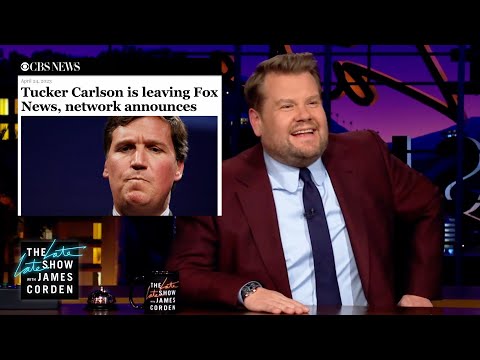
- Late-night talk show hosts like Jimmy Fallon or Stephen Colbert often feature 'meme of the week' segments, bringing internet humor to a mainstream television audience.
The news anchor mentioned the viral meme during the morning broadcast.
Beyond entertainment and work, you will hear 'meme' in educational settings, though often with a different tone. Sociology or media studies professors might lecture on 'memetics' or the 'sociopolitical impact of memes.' In these lectures, the word is used to analyze how information spreads and how digital communities form. You might also hear it in news reports. When a particular image or video becomes a national talking point, news outlets will often describe it as a 'viral meme.' For instance, during an election, a candidate's awkward gesture might be described as 'the latest political meme.' This usage highlights the word's role as a descriptor for significant cultural moments. Even in more traditional settings, like a family dinner, you might hear the word. A teenager might explain a joke to their parents by saying, 'It's just a meme, Dad.' Here, the word acts as a boundary-marker between generations, often implying that the joke requires a specific digital literacy to understand. Interestingly, the word is also heard in the gaming community, where 'meme builds' or 'meme strategies' refer to playing a game in a funny, unconventional, or intentionally sub-optimal way just for the sake of a joke.
- Gaming & Tech
- In software development, 'meme code' might refer to code that is written in a funny way or includes inside jokes for other developers.
He only wore that ridiculous hat 'for the memes'.
In summary, you will hear 'meme' anywhere that digital culture intersects with daily life. It is a word that bridges the gap between the virtual and the physical. Whether it is a podcast host discussing the 'meme-ification' of the stock market (like the GameStop saga) or a friend laughing at a 'relatable meme' on their phone, the word is a constant presence. It has become so common that it is no longer considered 'tech jargon' but is instead a basic noun in the modern English lexicon. Its pronunciation is now widely known, and its meaning is understood by a broad cross-section of society. If you are in an English-speaking environment, especially one with a lot of screen time, you will likely hear the word 'meme' several times a week, if not several times a day. It is the definitive word for how we share ideas in the age of the internet.
The professor used a meme in his PowerPoint to keep the students engaged.
- Global Reach
- The word is used globally, often without translation, in many different languages, from Spanish to Japanese.
I saw a Japanese meme that was funny even though I couldn't read the text.
The podcast discussed how memes can influence financial markets.
Despite its popularity, the word meme is frequently misused or mispronounced by English learners. The most common mistake is pronunciation. Because of its spelling, many people assume it is pronounced as two syllables, like 'me-me' (/miːmiː/) or 'mem' (/mɛm/). However, the correct pronunciation is a single syllable that rhymes with 'team' or 'dream' (/miːm/). Mispronouncing it can immediately mark someone as being 'out of touch' with digital culture. Another frequent error is confusing a 'meme' with a 'picture' or 'photo.' While many memes are pictures, not every picture is a meme. To be a meme, the image must have a shared cultural meaning and be part of a trend of imitation or variation. If you just take a photo of your lunch and post it, that is a photo. If you take a photo of your lunch and add a specific caption that follows a popular internet trend, then it becomes a meme. Learners often use the word too broadly to describe any funny image they see online, which can lead to confusion when talking to native speakers who distinguish between 'original content' and 'memetic content.'
- Pronunciation Error
- Incorrect: 'Did you see that me-me?' / Correct: 'Did you see that meme?' (rhymes with 'beam').
I used to call it a 'me-me' until my friend corrected me; now I know it's a meme.
Grammatically, a common mistake is treating 'meme' as an uncountable noun. You might hear a learner say, 'There is much meme on the internet.' This is incorrect. 'Meme' is a countable noun, so you should say, 'There are many memes on the internet.' Similarly, you cannot say 'I like meme'; you must say 'I like memes' or 'I like this meme.' Another subtle mistake involves the context of 'dead' memes. Internet culture moves very fast. Using a meme that was popular three years ago can sometimes be seen as 'cringe' (embarrassing) or 'outdated.' While this isn't a linguistic error in the strict sense, it is a cultural mistake. If you use the word 'meme' to describe something that is no longer relevant, people might correct you by saying, 'That's not a meme anymore; it's a dead meme.' Understanding the 'shelf-life' of a meme is part of mastering its usage. Furthermore, learners sometimes confuse 'meme' with 'joke.' While memes are often jokes, they are a specific type of joke that relies on visual repetition and internet distribution. A verbal pun told at a party is a joke, but it isn't a meme unless it starts being shared and remixed online.
- Category Error
- Don't call every viral video a meme. If it's just a video of a news event, it's a viral video. If people start parodying that video, those parodies are the memes.
Calling every funny picture a meme is a common mistake for new internet users.
Finally, there is the mistake of 'over-explaining.' The whole point of a meme is that it is a shared cultural reference. If you have to explain the meme in great detail while using the word, it often defeats the purpose. Native speakers usually just drop the word 'meme' and assume the other person knows what they are talking about. For example, instead of saying 'I am going to show you a meme which is an image of a cat that has text on it saying I can has cheezburger,' a native speaker would simply say, 'Check out this cat meme.' Using the word too formally can also be a mistake. In a very formal business report, unless you are specifically discussing digital marketing, using the word 'meme' might be seen as too casual. However, this is changing as memes become a more recognized part of professional communication. To avoid these mistakes, observe how native speakers use the word in social media comments and casual conversations. Notice the adjectives they pair with it and the way they pronounce it in videos. This will help you use 'meme' naturally and accurately.
I thought 'meme' was an uncountable noun, but my teacher said I should say 'too many memes'.
- Verb Confusion
- Avoid using 'meme' as a verb in formal writing. While 'he memed it' is okay in a chat, it is not yet standard English for essays.
The student was marked down for using the word meme as a verb in his formal essay.
It is better to say 'He created a meme' than 'He memed'.
While meme is a very specific term, there are several related words that you might use depending on the context. Understanding these alternatives will help you be more precise in your communication. The most common alternative is 'joke.' A joke is a general term for anything intended to be funny. All memes are jokes (or at least attempt to be), but not all jokes are memes. If you are talking about a funny story someone told you, use 'joke.' If you are talking about a funny image shared on the internet, 'meme' is better. Another similar word is 'trend.' A trend is a general direction in which something is developing or changing. A meme is often part of a trend. For example, 'The latest TikTok trend involves a specific dance meme.' Here, the 'trend' is the overall movement, and the 'meme' is the specific unit being imitated. Another useful word is 'viral.' This is often used as an adjective to describe a meme, but it can also be used as a noun in some contexts (e.g., 'The video became a viral hit'). If something is 'viral,' it means it is spreading quickly, which is a key characteristic of a meme.
- Meme vs. Viral Video
- A viral video is a single video that many people watch. A meme is a concept or template that people copy and change. A viral video can become a meme if people start making their own versions of it.
That video is funny, but I wouldn't call it a meme yet because no one is remixing it.
In the world of social media, you might also hear the term 'image macro.' This is a more technical term for the classic meme format: a picture with bold text (usually in the 'Impact' font) at the top and bottom. While 'meme' is the popular word, 'image macro' is what a digital media expert might call it. Another related term is 'GIF.' A GIF is a file format for short, looping animations. Many memes are GIFs, but not all GIFs are memes. If you send a GIF of a cat waving, it's just a GIF. If that specific GIF becomes a widely recognized way to say 'hello' or 'goodbye' on the internet, it has become a meme. 'Inside joke' is another close relative. A meme is essentially an inside joke that is shared by millions of people. If only you and your best friend understand a joke, it's an inside joke. If the whole internet understands it, it's a meme. You might also encounter the word 'trope.' A trope is a common or overused theme or device in storytelling. While memes are usually digital and humorous, tropes are more about narrative patterns. However, some memes can become tropes if they are used repeatedly in movies or TV shows.
- Meme vs. Trope
- A trope is a storytelling convention (like the 'chosen one' in fantasy). A meme is a specific unit of culture that is copied (like the 'Distracted Boyfriend' image).
The movie used the 'hero's journey' trope, but it also included a funny meme reference.
Finally, consider the word 'fad.' A fad is a short-lived enthusiasm or fashion. Many internet memes are fads; they are incredibly popular for a few weeks and then forgotten. However, some memes have staying power and become part of the permanent internet vocabulary. If you want to sound more academic, you could use 'cultural artifact.' A meme is a digital cultural artifact that provides insight into the values and humor of a specific time. In a professional setting, you might use 'user-generated content' (UGC). Memes are a form of UGC because they are created by regular people rather than companies. By knowing these different words, you can choose the one that best fits your situation. If you are joking with friends, 'meme' is perfect. If you are writing a marketing report, 'viral user-generated content' might sound more professional. If you are talking about a joke that only your family knows, 'inside joke' is the correct choice. Mastering these nuances will make your English sound more natural and precise.
The marketing report analyzed the impact of memes as a form of user-generated content.
- Meme vs. Satire
- Satire is a genre of humor that uses irony to criticize. A meme can be a tool for satire, but not all memes are satirical; some are just silly.
That political meme is a great example of modern satire.
The 'Harlem Shake' was a massive meme fad back in 2013.
How Formal Is It?
豆知識
Dawkins originally wanted to use the word 'mimeme', but he shortened it to 'meme' because he wanted it to be a monosyllable that sounded like 'gene'. He had no idea it would one day describe funny cat pictures!
発音ガイド
- Pronouncing it as two syllables: 'me-me' (/miːmiː/).
- Pronouncing it with a short 'e' sound: 'mem' (/mɛm/).
- Confusing it with the word 'mime' (/maɪm/).
- Adding an 's' sound at the end when it is singular.
- Thinking the 'e' at the end makes a 'y' sound.
難易度
The word is easy to read, but the content of memes can be difficult due to cultural references.
Easy to use as a noun, but learners must remember it is countable.
Pronunciation is a very common stumbling block for learners.
Usually clear in context, though it can be spoken quickly in casual conversation.
次に学ぶべきこと
前提知識
次に学ぶ
上級
知っておくべき文法
Countable Nouns
I have one meme (singular) / I have many memes (plural).
Compound Nouns
Meme template, meme culture, meme generator.
Adjective Placement
A funny meme (adjective before noun).
Articles with Nouns
A meme (indefinite), the meme (definite).
Verb-Noun Collocation
To share a meme, to post a meme.
レベル別の例文
Look at this funny meme on my phone.
Regarde ce mème drôle sur mon téléphone.
Uses 'this' to point to a singular countable noun.
I like memes about cats.
J'aime les mèmes sur les chats.
Plural form 'memes' used for a general preference.
Is this a meme?
Est-ce un mème ?
Simple question structure with the indefinite article 'a'.
My friend sends me a meme every day.
Mon ami m'envoie un mème chaque jour.
Present simple tense for a habitual action.
This meme is very funny.
Ce mème est très drôle.
Adjective 'funny' modifying the noun 'meme'.
I don't understand this meme.
Je ne comprends pas ce mème.
Negative sentence in the present simple.
He made a meme for his sister.
Il a fait un mème pour sa sœur.
Past simple of 'make' used with 'meme'.
There are many memes on the internet.
Il y a beaucoup de mèmes sur internet.
'There are' used with the plural 'memes'.
That meme became very popular last week.
Ce mème est devenu très populaire la semaine dernière.
Past simple 'became' used to describe a trend.
I share memes with my classmates in a group chat.
Je partage des mèmes avec mes camarades de classe dans une discussion de groupe.
Verb 'share' followed by the object 'memes'.
The meme is about a dog that can talk.
Le mème parle d'un chien qui peut parler.
Preposition 'about' used to describe the subject of the meme.
Do you know the 'Doge' meme?
Connais-tu le mème 'Doge' ?
Using a specific name as a proper noun modifier for 'meme'.
I think this meme is relatable because I am always tired.
Je pense que ce mème est parlant parce que je suis toujours fatigué.
Using 'relatable' to explain why the meme is effective.
She posted a meme on her Instagram story.
Elle a publié un mème dans sa story Instagram.
Preposition 'on' used for digital platforms.
We laughed at the meme for a long time.
Nous avons ri du mème pendant longtemps.
Phrasal verb 'laugh at' followed by the noun.
There is a new meme every hour on Twitter.
Il y a un nouveau mème toutes les heures sur Twitter.
Using 'every' to show frequency.
The meme went viral after a famous actor shared it.
Le mème est devenu viral après qu'un acteur célèbre l'a partagé.
Idiomatic expression 'go viral' in the past tense.
I don't get the joke; I think I'm missing the context of the meme.
Je ne comprends pas la blague ; je pense qu'il me manque le contexte du mème.
Using 'context' to describe the background information needed.
Memes are a big part of modern internet culture.
Les mèmes sont une grande partie de la culture internet moderne.
Using 'part of' to show the relationship between the noun and a concept.
He uses a meme template to create his own jokes.
Il utilise un modèle de mème pour créer ses propres blagues.
Compound noun 'meme template'.
That meme is a bit outdated now; nobody shares it anymore.
Ce mème est un peu démodé maintenant ; plus personne ne le partage.
Adjective 'outdated' used to describe the lifecycle.
The company tried to use a meme in their ad, but it was cringe.
L'entreprise a essayé d'utiliser un mème dans sa publicité, mais c'était gênant.
Using the slang adjective 'cringe' to describe a failed meme.
You can find the history of almost any meme on 'Know Your Meme'.
Tu peux trouver l'histoire de presque n'importe quel mème sur 'Know Your Meme'.
Using 'almost any' to show the broad availability of information.
The politician became a meme after his funny dance went viral.
L'homme politique est devenu un mème après que sa danse amusante est devenue virale.
Verb 'become' used to describe a person's status change.
Memes often rely on irony to criticize social issues.
Les mèmes s'appuient souvent sur l'ironie pour critiquer les problèmes sociaux.
Phrasal verb 'rely on' followed by a noun.
The rapid spread of the meme illustrates how quickly information travels today.
La propagation rapide du mème illustre la vitesse à laquelle l'information circule aujourd'hui.
Noun phrase 'rapid spread of the meme' as the subject.
Some memes are so niche that only a few people understand them.
Certains mèmes sont si spécialisés que seules quelques personnes les comprennent.
Adjective 'niche' used to describe a specific audience.
The marketing department is analyzing meme trends to improve engagement.
Le département marketing analyse les tendances des mèmes pour améliorer l'engagement.
Present continuous tense for an ongoing professional action.
A meme can be seen as a unit of cultural evolution.
Un mème peut être considéré comme une unité d'évolution culturelle.
Passive voice 'can be seen as' for a theoretical perspective.
The meme's meaning changed as it was remixed by different communities.
La signification du mème a changé au fur et à mesure qu'il était réutilisé par différentes communautés.
Passive voice 'was remixed' to show the action of the users.
Wholesome memes have become popular as an antidote to internet negativity.
Les mèmes bienveillants sont devenus populaires comme antidote à la négativité sur internet.
Present perfect 'have become' for a recent trend.
The creator of the original image was surprised when it turned into a meme.
Le créateur de l'image originale a été surpris quand elle s'est transformée en mème.
Phrasal verb 'turn into' to describe a transformation.
The memetic spread of the video was fueled by its relatable humor.
La propagation mémétique de la vidéo a été alimentée par son humour parlant.
Using the adjective 'memetic' to describe the type of spread.
Memes function as a form of social shorthand in digital discourse.
Les mèmes fonctionnent comme une forme de sténographie sociale dans le discours numérique.
Using 'function as' to describe a sociological role.
The 'meme-ification' of serious political events can sometimes trivialize important issues.
La 'mémification' d'événements politiques sérieux peut parfois banaliser des questions importantes.
Gerund 'meme-ification' used as the subject.
Internet memes often utilize subversion and meta-humor to engage their audience.
Les mèmes internet utilisent souvent la subversion et le méta-humour pour attirer leur public.
Using advanced nouns like 'subversion' and 'meta-humor'.
The study explores how memes propagate within specific online subcultures.
L'étude explore comment les mèmes se propagent au sein de sous-cultures en ligne spécifiques.
Academic verb 'propagate' used in a research context.
A meme's longevity is often determined by its versatility and adaptability.
La longévité d'un mème est souvent déterminée par sa polyvalence et son adaptabilité.
Abstract nouns 'longevity,' 'versatility,' and 'adaptability'.
Brands that fail to understand the nuances of meme culture often face backlash.
Les marques qui ne parviennent pas à comprendre les nuances de la culture des mèmes font souvent face à un retour de bâton.
Relative clause 'that fail to understand...' modifying 'Brands'.
The meme served as a catalyst for a broader conversation about mental health.
Le mème a servi de catalyseur pour une conversation plus large sur la santé mentale.
Metaphorical use of 'catalyst' to describe the meme's impact.
The ontological status of the meme remains a subject of debate among media theorists.
Le statut ontologique du mème reste un sujet de débat parmi les théoriciens des médias.
Using highly academic terminology like 'ontological status'.
Memes encapsulate the zeitgeist of the digital age with unparalleled efficiency.
Les mèmes résument l'esprit du temps de l'ère numérique avec une efficacité inégalée.
Using 'encapsulate' and 'zeitgeist' for high-level analysis.
The pervasive nature of memes suggests a fundamental shift in cultural transmission.
La nature envahissante des mèmes suggère un changement fondamental dans la transmission culturelle.
Using 'pervasive nature' to describe the widespread influence.
Memetic warfare has emerged as a potent tool for influencing geopolitical narratives.
La guerre mémétique est apparue comme un outil puissant pour influencer les récits géopolitiques.
Term 'memetic warfare' used in a strategic/political context.
The semiotic complexity of certain memes requires a high degree of digital literacy.
La complexité sémiotique de certains mèmes nécessite un haut degré de littératie numérique.
Using 'semiotic complexity' to describe the meaning-making process.
By commodifying memes, corporations risk alienating the very subcultures that created them.
En marchandisant les mèmes, les entreprises risquent de s'aliéner les sous-cultures mêmes qui les ont créés.
Using the gerund 'commodifying' to describe a commercial process.
The iterative nature of memes mirrors the evolutionary process of natural selection.
La nature itérative des mèmes reflète le processus évolutif de la sélection naturelle.
Using 'iterative nature' to describe the repetitive and changing process.
The democratization of cultural production via memes has challenged traditional media hierarchies.
La démocratisation de la production culturelle via les mèmes a défié les hiérarchies médiatiques traditionnelles.
Using 'democratization' to describe the social shift.
よく使う組み合わせ
よく使うフレーズ
— Doing something purely for the sake of humor or to create a funny situation. It implies the action isn't serious.
He decided to run for class president just for the memes.
— A person or situation that is so funny or absurd that they seem like a meme in real life.
With his constant funny faces, he is basically a living meme.
— Something that is funny or interesting enough to be turned into a meme.
That awkward moment during the interview was definitely meme-worthy.
— Used when a joke or a meme actually happens in real life.
I saw a cat actually trying to eat a cheeseburger; the meme is real!
— A slang term for memes that are particularly good, or sometimes memes that are intentionally weird and obscure.
This subreddit is the best place to find high-quality dank memes.
— A person who creates or shares a lot of memes, often seen as an expert in internet humor.
My cousin is a total meme lord; his Twitter feed is hilarious.
— A meme that is no longer popular or funny because it has been overused.
Don't post that; it's a dead meme and everyone will think you're out of touch.
— To turn something (a person, a photo, an event) into a meme.
The internet was quick to meme-ify the senator's mittens.
— A meme that is positive, supportive, and kind rather than sarcastic or mean.
I need some wholesome memes today to cheer me up.
— The specific layout or structure of a meme that others copy.
The 'Expanding Brain' is a classic meme format for comparing ideas.
よく混同される語
A mime is a performer who uses silent gestures. A meme is a digital joke. They sound slightly similar but are very different.
While 'meme' was named after 'gene', a gene is biological information, whereas a meme is cultural information.
A theme is a broad subject or idea, while a meme is a specific, shareable unit of humor or information.
慣用句と表現
— To spread very quickly across the internet, which is the goal of most memes.
The video of the baby laughing went viral overnight.
Informal/Neutral— To cause a massive amount of online activity and discussion, often due to a meme or a shocking photo.
The celebrity's new photo literally broke the internet.
Slang/Hyperbole— To do something specifically to take a photo or create content for social media, often resulting in memes.
She's not actually enjoying the hike; she's just doing it for the 'gram.
Slang— To join a popular trend or start sharing a meme just because everyone else is doing it.
Every brand is jumping on the bandwagon of this new TikTok meme.
Informal— To understand the hidden meaning or the context of a meme that others might find confusing.
If you don't follow the show, you won't be in on the joke of this meme.
Informal— When a meme starts being used in ways the original creator never intended.
The simple drawing took a life of its own and became a global meme.
Neutral— A meme that is old but still funny and relevant.
This cat video is from 2010, but it's old but gold.
Informal— Used after describing how a meme started to indicate that its subsequent success is well-known.
He posted the photo on Reddit, and the rest is history.
Neutral— To suddenly become very popular or successful, often used for memes.
The new meme really caught fire after the Super Bowl.
Informal— Something that is very popular right now but likely won't be for long, like many memes.
That dance meme is just the flavor of the month; people will forget it soon.
Informal間違えやすい
Both spread quickly online.
A viral video is a single piece of content; a meme is a concept or template that is imitated and changed.
The 'Charlie Bit My Finger' video was viral, but the parodies of it were memes.
Both are intended to be funny.
A joke can be verbal or written; a meme specifically involves cultural imitation and often a visual element.
He told a knock-knock joke, but he shared a cat meme.
Both are recurring cultural elements.
A trope is a storytelling device (like a 'cliffhanger'); a meme is a specific unit of media that is shared.
The 'damsel in distress' is a trope, but 'Distracted Boyfriend' is a meme.
Many memes are in GIF format.
GIF is a file type (like .jpg); a meme is a cultural concept. Not all GIFs are memes.
I saved the meme as a GIF to send it to you.
Both are short-lived trends.
A fad is a general behavior or fashion; a meme is a specific piece of information or media.
Fidget spinners were a fad, but the jokes about them were memes.
文型パターン
I like [Adjective] memes.
I like funny memes.
He sent me a meme about [Topic].
He sent me a meme about school.
The meme went viral because [Reason].
The meme went viral because it was very relatable.
Using a meme template, she created [Object].
Using a meme template, she created a hilarious joke.
The memetic spread of [Noun] illustrates [Concept].
The memetic spread of the video illustrates the power of social media.
The meme encapsulates the [Noun] of the [Time Period].
The meme encapsulates the zeitgeist of the early 2020s.
I don't get the meme; what is the [Noun]?
I don't get the meme; what is the context?
This is my favorite meme.
This is my favorite meme.
語族
名詞
動詞
形容詞
関連
使い方
Extremely high in digital and casual spoken English.
-
Pronouncing it 'me-me'.
→
Pronouncing it 'meem'.
This is the most common mistake. The word has only one syllable and rhymes with 'team'.
-
Saying 'I like to look at meme'.
→
Saying 'I like to look at memes'.
Meme is a countable noun, so you must use the plural form when talking about them in general.
-
Calling every internet photo a meme.
→
Distinguishing between a photo and a meme.
A photo is just an image; a meme is an image that is part of a cultural trend of imitation and variation.
-
Using 'meme' as a verb in a formal essay.
→
Using 'create a meme' or 'the spread of the meme'.
While 'to meme' is used in slang, it is not yet accepted in formal or academic writing.
-
Confusing 'meme' with 'mime'.
→
Using the correct word for the context.
A mime is a silent actor; a meme is an internet joke. Don't mix them up in conversation!
ヒント
Use 'Relatable'
When you want to explain why you like a meme, use the word 'relatable'. It's the perfect way to say 'this happens to me too'.
Don't Over-share
Sharing too many memes in a group chat can be annoying. Pick the best ones to keep your friends laughing.
Check the Context
Some memes are specific to one country. If your friend doesn't understand, they might be missing the cultural background.
Count Your Memes
Remember that 'meme' is countable. Say 'I saw three memes' rather than 'I saw much meme'.
One Syllable Only
Always pronounce it as 'meem'. If you say 'me-me', people might think you don't use the internet often.
Be Kind
Some memes can be mean or make fun of people. Try to share 'wholesome memes' that make everyone feel good.
Know Your Audience
If you use memes for work, make sure they are current. Using a 'dead meme' can make a brand look old-fashioned.
Learn the Parts
A meme usually has 'top text' and 'bottom text'. Knowing these terms helps you describe memes more accurately.
Use 'Know Your Meme'
If you see a meme you don't understand, look it up on the website 'Know Your Meme' to learn its history.
Try a Generator
Use a 'meme generator' website to practice your English by writing your own funny captions for famous templates.
暗記しよう
記憶術
Think of a 'meme' as a 'me-me' (me and me) joke that I share with you so we both laugh. Or, remember it rhymes with 'team' because a meme is shared by a whole team of people online.
視覚的連想
Imagine a picture of a funny cat with large white letters on it. This is the classic visual representation of a meme.
Word Web
チャレンジ
Try to find three different memes today and explain to a friend why they are funny using the word 'relatable'.
語源
The word was coined by British evolutionary biologist Richard Dawkins in his 1976 book 'The Selfish Gene'. He wanted a word that sounded like 'gene' but related to cultural imitation.
元の意味: A unit of cultural transmission or imitation, such as an idea, belief, or fashion, that spreads from person to person within a culture.
Derived from the Greek word 'mimema', meaning 'that which is imitated'.文化的な背景
Be careful, as some memes can be offensive or used to spread misinformation. Always consider the source and the intent.
In the US and UK, memes are often used to bond over shared frustrations, like work stress or bad weather.
実生活で練習する
実際の使用場面
Social Media
- Tag a friend in this meme
- This meme is so me
- Viral meme of the day
- Stop sharing dead memes
Marketing
- Meme-based marketing strategy
- Engage users with memes
- The meme-ification of brands
- Create shareable memes
Casual Conversation
- Did you get that meme?
- It's just a meme, don't take it seriously
- That's a classic meme
- I'm here for the memes
Politics
- Political memes on Twitter
- The power of memetic warfare
- A meme that changed the election
- Satirical memes about the government
Gaming
- Meme builds in RPGs
- Gaming memes are the best
- He's a meme in the community
- That glitch became a meme
会話のきっかけ
"What is the funniest meme you have seen recently on your phone?"
"Do you think memes are a good way to learn about a new culture?"
"Why do you think some memes go viral while others are ignored?"
"Do you ever create your own memes or do you only share them?"
"Is there a specific meme that perfectly describes your personality?"
日記のテーマ
Describe a meme that made you laugh today and explain why it was funny to you.
Write about how meme culture has changed the way you communicate with your friends.
Do you think memes can be dangerous or harmful? Explain your opinion with examples.
If you could create a viral meme about your life, what would the image and caption be?
Discuss the difference between a traditional joke and a modern internet meme.
よくある質問
10 問It is pronounced as one syllable: /miːm/. It rhymes with 'team', 'beam', and 'dream'. Never say 'me-me' or 'mem'.
The word was coined by the biologist Richard Dawkins in 1976 in his book 'The Selfish Gene' to describe cultural evolution.
A picture becomes a meme when it is shared widely and other people start to change it or add their own text to it.
While memes are very popular with young people, people of all ages now use and enjoy them on platforms like Facebook and WhatsApp.
Yes, memes can be images, videos, GIFs, or even just specific phrases or sounds that people repeat and remix.
It is slang for a meme that is very good, or sometimes a meme that is intentionally weird, obscure, or ironic.
Yes, 'meme' is an official word in major dictionaries like Oxford and Merriam-Webster, reflecting its widespread use.
A meme template is the original image without any text, which people use as a base to create their own versions of the meme.
Memes go viral because they are usually funny, relatable, or easy to share, allowing people to express themselves quickly.
Yes, but be careful. Only use memes if they are appropriate for your audience and help explain your point in a funny way.
自分をテスト 200 問
Describe your favorite meme in two sentences.
Well written! Good try! Check the sample answer below.
Explain why memes are popular among young people.
Well written! Good try! Check the sample answer below.
Write a short paragraph about a meme that went viral recently.
Well written! Good try! Check the sample answer below.
How can memes be used in education? Give one example.
Well written! Good try! Check the sample answer below.
Compare a traditional joke with an internet meme.
Well written! Good try! Check the sample answer below.
Describe a 'wholesome' meme you have seen.
Well written! Good try! Check the sample answer below.
Write a caption for a meme about being late for work.
Well written! Good try! Check the sample answer below.
Discuss the pros and cons of using memes in political campaigns.
Well written! Good try! Check the sample answer below.
What does 'relatable' mean to you in the context of internet humor?
Well written! Good try! Check the sample answer below.
Explain the concept of 'memetics' in your own words.
Well written! Good try! Check the sample answer below.
Describe a situation where a meme might be misunderstood.
Well written! Good try! Check the sample answer below.
Write a message to a friend sharing a funny meme.
Well written! Good try! Check the sample answer below.
How do memes transcend language barriers?
Well written! Good try! Check the sample answer below.
What makes a meme 'dead' or 'outdated'?
Well written! Good try! Check the sample answer below.
Describe the 'Distracted Boyfriend' meme format.
Well written! Good try! Check the sample answer below.
Write about a time you became 'in on the joke' of a meme.
Well written! Good try! Check the sample answer below.
Do you think memes are a form of art? Why or why not?
Well written! Good try! Check the sample answer below.
How do brands use memes to sell products?
Well written! Good try! Check the sample answer below.
Create a short story about someone who accidentally becomes a meme.
Well written! Good try! Check the sample answer below.
Discuss the impact of memes on the 'attention economy'.
Well written! Good try! Check the sample answer below.
Pronounce the word 'meme' correctly.
Read this aloud:
あなたの回答:
Speech recognition is not supported in your browser. Try Chrome or Edge.
Tell a friend about a funny meme you saw today.
Read this aloud:
あなたの回答:
Speech recognition is not supported in your browser. Try Chrome or Edge.
Explain the meaning of a popular meme to someone who doesn't know it.
Read this aloud:
あなたの回答:
Speech recognition is not supported in your browser. Try Chrome or Edge.
Discuss whether memes are a good or bad influence on society.
Read this aloud:
あなたの回答:
Speech recognition is not supported in your browser. Try Chrome or Edge.
Describe a meme template and how it can be used.
Read this aloud:
あなたの回答:
Speech recognition is not supported in your browser. Try Chrome or Edge.
Talk about a time you shared a meme that was misunderstood.
Read this aloud:
あなたの回答:
Speech recognition is not supported in your browser. Try Chrome or Edge.
Explain the difference between a meme and a viral video.
Read this aloud:
あなたの回答:
Speech recognition is not supported in your browser. Try Chrome or Edge.
Debate the importance of memes in modern marketing.
Read this aloud:
あなたの回答:
Speech recognition is not supported in your browser. Try Chrome or Edge.
Give a short presentation on the history of the word 'meme'.
Read this aloud:
あなたの回答:
Speech recognition is not supported in your browser. Try Chrome or Edge.
Describe what makes a meme 'relatable'.
Read this aloud:
あなたの回答:
Speech recognition is not supported in your browser. Try Chrome or Edge.
Talk about your favorite type of meme (e.g., cat memes, sports memes).
Read this aloud:
あなたの回答:
Speech recognition is not supported in your browser. Try Chrome or Edge.
Explain why some memes become 'dead' so quickly.
Read this aloud:
あなたの回答:
Speech recognition is not supported in your browser. Try Chrome or Edge.
Discuss the role of irony in internet memes.
Read this aloud:
あなたの回答:
Speech recognition is not supported in your browser. Try Chrome or Edge.
Tell a story about someone who became a 'living meme'.
Read this aloud:
あなたの回答:
Speech recognition is not supported in your browser. Try Chrome or Edge.
Explain the concept of 'memetic warfare' to a classmate.
Read this aloud:
あなたの回答:
Speech recognition is not supported in your browser. Try Chrome or Edge.
Describe a 'wholesome' meme and why people like them.
Read this aloud:
あなたの回答:
Speech recognition is not supported in your browser. Try Chrome or Edge.
Talk about how memes are used on different social media platforms.
Read this aloud:
あなたの回答:
Speech recognition is not supported in your browser. Try Chrome or Edge.
Explain the Greek origin of the word 'meme'.
Read this aloud:
あなたの回答:
Speech recognition is not supported in your browser. Try Chrome or Edge.
Discuss the future of memes in the age of AI.
Read this aloud:
あなたの回答:
Speech recognition is not supported in your browser. Try Chrome or Edge.
Describe a meme that perfectly represents your current mood.
Read this aloud:
あなたの回答:
Speech recognition is not supported in your browser. Try Chrome or Edge.
Listen to a podcast clip about internet trends. What word do they use for funny pictures?
Listen to a person describing a meme. Can you guess which meme it is?
Listen to the pronunciation of 'meme'. Is it one or two syllables?
Listen to a news report about a viral meme. How many times was it shared?
Listen to a marketing expert talk about 'meme-ification'. What is their main point?
Listen to a conversation between two friends. Why is one friend laughing?
Listen to a lecture on Richard Dawkins. What book did he write?
Listen for the word 'meme' in a movie trailer. How is it used?
Listen to a comedian's joke about memes. What is the punchline?
Listen to a tutorial on making memes. What software do they recommend?
Listen to a discussion about 'dead memes'. Which meme are they talking about?
Listen to an interview with a 'meme creator'. How did they start?
Listen to a talk on 'memetic evolution'. How is it like biology?
Listen to a child explaining a meme to their parent. Is the parent confused?
Listen to a brand's advertisement. Did they use a meme correctly?
I saw a funny me-me on the internet.
There is much meme on Reddit today.
The meme went virus after he shared it.
He memed the photo and sent it to me.
I don't understand the contexture of this meme.
That is a dead memes from last year.
Richard Dawkins coin the word in 1976.
I like wholesome meme.
The memetic spread was fuel by humor.
Tag me into that meme.
/ 200 correct
Perfect score!
Summary
A meme is a viral unit of cultural information, typically a funny image or video, that people copy and adapt. For example, the 'Distracted Boyfriend' meme uses one photo to represent thousands of different funny situations by changing the labels on the people.
- A meme is a humorous digital item, like an image or video, that spreads rapidly among internet users through social media and messaging apps.
- The term was originally coined by Richard Dawkins to describe how cultural ideas evolve and spread similarly to biological genes through imitation.
- Modern memes often use specific templates that users 'remix' with their own text to create relatable jokes or social and political commentary.
- Understanding memes is essential for navigating modern informal English, as they function as a form of cultural shorthand and shared digital language.
Use 'Relatable'
When you want to explain why you like a meme, use the word 'relatable'. It's the perfect way to say 'this happens to me too'.
Don't Over-share
Sharing too many memes in a group chat can be annoying. Pick the best ones to keep your friends laughing.
Check the Context
Some memes are specific to one country. If your friend doesn't understand, they might be missing the cultural background.
Count Your Memes
Remember that 'meme' is countable. Say 'I saw three memes' rather than 'I saw much meme'.