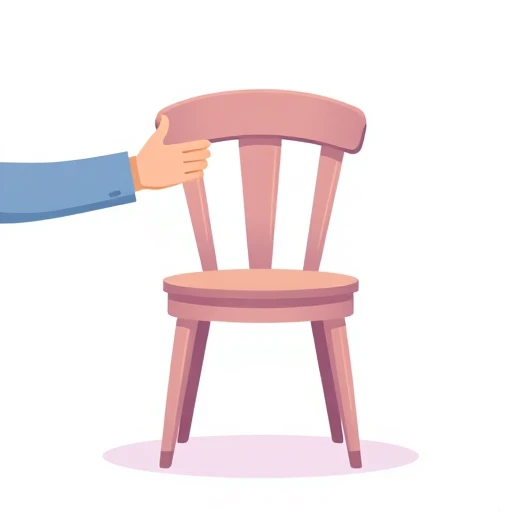
tas — visual vocabulary card
B1 interjection #1 よく出る 16分で読める

tas

Tas is a short word. It means 'sit down'.

People use tas when they text or chat online.

It's a quick way to tell someone, 'Please, have a seat.' It's like saying 'sit' very fast.

"Tas" is a very casual and quick way to tell someone to sit down.

Imagine you are texting a friend and want them to sit next to you. Instead of saying "take a seat," you could just type "tas."

It's like a shortcut for "sit here."

You would usually use this with friends or family, not in a formal situation.

When someone says "tas", it's a quick and informal way to tell you to "take a seat." It's like saying "sit down" but in a very casual, short form. You'll usually see this in texts or online chats, not in formal writing or speaking. It's a relaxed way to invite someone to sit down, showing that the situation is informal and friendly.

The interjection "tas" serves as an informal contraction of the phrase "take a seat."

It is predominantly encountered in casual written communication, for example, text messages or online chats, as a swift and direct invitation for someone to sit down.

Its usage implies a familiar context, where formality is not required and brevity is valued.

Therefore, while acceptable in informal digital exchanges, it would be inappropriate in formal writing or speech.

The interjection "tas" originates from a colloquial abbreviation of the imperative phrase "take a seat."

It predominantly features in informal digital communication, such as instant messaging or social media platforms.

Its function is to succinctly and directly invite an individual to be seated.

This usage underscores a linguistic trend towards conciseness and informality in digital discourse.

Mastery of "tas" at the C1 level implies not only comprehension of its literal meaning but also an understanding of its sociolinguistic context and its role in conveying casual directives within digital communication.

Therefore, its appropriate deployment reflects an advanced pragmatic awareness in English.

The interjection "tas," situated at a B1 CEFR level, functions as a clipped, colloquial elision of the imperative phrase "take a seat."

Its usage is predominantly observed in informal digital discourse, such as instant messaging or social media platforms, where conciseness and immediacy are prioritized.

"Tas" serves to proffer an unceremonious invitation to be seated, reflecting a pragmatic efficiency typical of digital communication.

This linguistic compression underscores a broader sociolinguistic trend wherein phrasal imperatives are reduced to monosyllabic forms for rapid exchange.

tas 30秒で

  • Informal abbreviation
  • Means "take a seat"
  • Used in casual written communication

§ What does 'tas' mean and when do people use it?

The word 'tas' is a relatively new informal abbreviation that has emerged in casual digital communication. It is a shortened form of the phrase 'take a seat' and is used as an interjection to quickly and directly invite someone to sit down. This term is primarily found in written contexts like text messages, instant messaging, and online chats, where conciseness and speed are often prioritized.

Definition
An informal abbreviation or slang term derived from 'take a seat,' used as an interjection to invite someone to sit down quickly and directly.

The use of 'tas' reflects a broader trend in digital communication where words and phrases are abbreviated to save time and effort. Similar to other internet slang like 'lol' (laughing out loud) or 'brb' (be right back), 'tas' offers a quick and easy way to convey a common instruction without typing out the full phrase. Its informal nature means it's generally not used in formal writing or spoken conversations, although it might occasionally spill over into very casual spoken exchanges among close friends.

People use 'tas' in situations where they want to offer a seat to someone in a relaxed and friendly manner. This could be when someone walks into a room, arrives at a gathering, or is simply standing when there are available seats. It implies a sense of welcome and informality, and its brevity makes it suitable for quick interactions where a longer phrase might feel too formal or cumbersome.

"Hey, glad you could make it! Tas over here, we're about to start the game."

"The movie's starting soon, tas wherever you like!"

"Long day, huh? Tas and relax."

While 'tas' is widely understood in certain online communities and among younger demographics, it may not be universally recognized, especially by older generations or those less familiar with internet slang. Therefore, it's important to consider your audience when using this term to ensure your message is clear and understood as intended. If you're unsure, it's always safer to use the full phrase 'take a seat' or other more common alternatives like 'have a seat' or 'sit down.'

The evolution of words like 'tas' highlights the dynamic nature of language, particularly in the digital age. As new forms of communication emerge, so too do new linguistic shortcuts and expressions. Understanding these informal terms can help you navigate casual conversations more effectively and connect with others in online spaces. However, always remember that context and audience are key to appropriate language use.

  • **When to use 'tas':**
    • In text messages with friends.
    • In online chat rooms or instant messages.
    • When you want to be quick and informal.
  • **When to avoid 'tas':**
    • In formal emails or written documents.
    • In professional settings.
    • When speaking to someone you don't know well or who might not understand internet slang.
    • In any situation where clarity and formality are important.

In summary, 'tas' is a convenient and informal way to invite someone to sit down in casual digital communication. Its meaning is straightforward, but its usage is restricted to informal contexts where brevity and familiarity are valued. As with any slang term, be mindful of your audience to ensure effective communication.

§ Understanding "tas"

DEFINITION
The word "tas" is an informal abbreviation or slang term derived from the phrase "take a seat." It is primarily used in casual written communication, such as text messages or online chats, to invite someone to sit down quickly and directly.

"Tas" is a highly informal interjection, meaning it's a word or phrase that expresses a sudden feeling or emotion. In this case, it's used to give a quick, direct instruction or invitation to sit down. Because of its informal nature, it's almost exclusively found in written contexts where quick, concise communication is valued, such as:

  • Text messages
  • Online chat rooms
  • Social media comments
  • Instant messaging applications

It is very rare to hear "tas" in spoken conversation, as it sounds awkward and incomplete. In spoken English, the full phrase "take a seat" or a more polite variation like "please have a seat" would be used.

§ Grammatical Considerations

As an interjection, "tas" doesn't typically interact with grammar in the same way a verb or noun would. It stands alone or is followed by punctuation. It functions as a complete thought in itself.

§ No Prepositions Needed

Since "tas" is a direct command or invitation, it does not typically require any prepositions. It already implies the action of sitting down.

§ How to Use it in Sentences (Examples)

Here are a few examples of how "tas" might be used in casual written communication:

Hey, the meeting's about to start, tas!

In this example, "tas" is used to quickly urge someone to sit down because an event is beginning.

Come on in, make yourself comfortable, tas.

Here, "tas" is used as a friendly, informal invitation to sit down, often in a home or casual setting.

The bus is almost here, tas if you want a window seat!

This example shows "tas" being used to quickly suggest sitting down to secure a preferred spot.

Okay, everyone quiet now, tas, we're starting.

In this usage, "tas" acts as a swift command to settle down before an activity begins.

§ Important Considerations for "tas"

In summary, "tas" is a handy, quick way to tell someone to sit down in very informal written contexts. However, its usage is quite niche, and a good understanding of social context and audience is crucial to using it appropriately.

§ Where You Actually Hear This Word – Work, School, News

The word "tas" is a relatively niche term, primarily found in very casual, informal digital communication. Given its nature as an abbreviation of "take a seat," its usage is highly context-dependent and would almost exclusively appear in specific social or digital settings rather than formal environments like work meetings, academic settings, or news broadcasts.

§ In Everyday Digital Communication

The most common place you'd encounter "tas" is in rapid-fire text messages, instant messaging apps, or online chats among friends, family, or close acquaintances. Its brevity makes it suitable for quick exchanges where formality is not expected. It's a way to quickly invite someone to sit down without typing out the full phrase.

Hey, the meeting's about to start, tas!

Come on over, there's plenty of space, tas.

Usage Context
You might see "tas" when someone is urging another person to sit down quickly, perhaps in a casual social gathering, during a gaming session, or when preparing for an informal online meeting among friends.

§ Why Not in Formal Settings?

The informality of "tas" makes it unsuitable for professional or academic environments. In a work meeting, a classroom, or any official communication, using such an abbreviation would be perceived as unprofessional or disrespectful. For example, a boss wouldn't text an employee "Meeting starts in 5, tas!" Nor would a professor tell students "Ok class, tas.".

§ Absence in News or Public Discourse

Similarly, "tas" would never appear in news articles, broadcasts, or any form of public discourse. These platforms prioritize clarity, formality, and broad accessibility, none of which are served by a niche internet abbreviation. Journalists and public speakers use standard, formal language to ensure their message is understood by the widest possible audience without ambiguity.

Key Takeaway
"Tas" is firmly rooted in the lexicon of casual digital communication. Its use signals a very relaxed environment and a close relationship between communicators. Encountering it outside of these specific contexts would be highly unusual.

In summary, if you're looking for "tas" in the wild, your best bet is to peek into the chat logs of teenagers and young adults, or casual group chats among friends. It's a fleeting term of convenience, not a pillar of formal English communication.

  • Online gaming chats
  • Casual text messages
  • Social media direct messages
  • Informal group chats

Understanding where to expect words like "tas" helps in distinguishing between formal and informal language, a crucial skill for CEFR B1 learners navigating the nuances of English communication.

§ Overview of Common Mistakes

While "tas" is a simple and straightforward abbreviation, its informal nature and specific usage context can lead to several common mistakes for English learners, especially those at the B1 CEFR level. These errors often stem from misunderstanding its register, over-application, or misinterpreting its intent. Below, we'll delve into the most frequent pitfalls and how to avoid them.

§ Mistake 1: Using "tas" in Formal Contexts

One of the most significant errors is using "tas" in formal or semi-formal situations. As an abbreviation derived from slang, it carries a very casual tone. Employing it in professional emails, academic writing, or formal conversations can make the speaker or writer appear unprofessional or disrespectful. The informality of "tas" clashes sharply with the expectations of formal communication, where full, polite phrases like "Please have a seat" or "Would you like to sit down?" are appropriate.

DEFINITION
Using "tas" in any context that requires a formal or polite tone.

Incorrect: "Dear Professor Smith, please come in and tas."

Correct: "Dear Professor Smith, please come in and have a seat."

§ Mistake 2: Using "tas" in Spoken Conversation

Although "tas" means "take a seat," it is predominantly a written abbreviation. Attempting to use it in spoken conversation can sound awkward, unnatural, and confusing to native speakers. The abbreviation is designed for the brevity of text-based communication. In face-to-face interactions, the full phrase "take a seat" or variations like "have a seat" or "sit down" are the expected and natural ways to invite someone to sit.

DEFINITION
Pronouncing or attempting to use "tas" verbally in a conversation.

Incorrect: (Speaking) "Hey, come on in, tas."

Correct: (Speaking) "Hey, come on in, take a seat."

§ Mistake 3: Overusing "tas" or Using it with Strangers

Even in informal written contexts, there's a fine line between appropriate usage and overuse. "Tas" is best reserved for quick, casual exchanges with close friends, family, or people with whom you have an established informal relationship. Using it excessively or with individuals you don't know well, such as new acquaintances or colleagues you haven't befriended, can come across as overly familiar or even abrupt. It can imply a lack of respect or proper social etiquette if the relationship isn't sufficiently informal to warrant such casual language.

DEFINITION
Using "tas" too frequently or with people outside your close social circle in written communication.

Context: First text to a new colleague.
Incorrect: "Hi [Colleague's Name], when you get to the meeting room, tas."

Context: First text to a new colleague.
Correct: "Hi [Colleague's Name], when you get to the meeting room, please take a seat."

§ Mistake 4: Misinterpreting the Urgency or Directness

While "tas" implies a quick invitation to sit, it doesn't necessarily convey a sense of extreme urgency or a command. Some learners might use it thinking it's a stronger or more emphatic way to tell someone to sit down. In reality, its directness comes from its brevity, not from an inherent sense of command. It's an invitation, albeit a very casual one. If you need to convey a more urgent or authoritative instruction to sit, using phrases like "Sit down, please" or "You need to sit now" would be more appropriate, though these are typically used in very specific, often serious, circumstances.

DEFINITION
Assuming "tas" carries a strong sense of urgency or is a command, rather than a casual invitation.

Context: Trying to quickly direct someone in an emergency.
Incorrect: "Quick, get in here, tas!"

Context: Trying to quickly direct someone in an emergency.
Correct: "Quick, get in here, sit down!"

§ Mistake 5: Not Understanding the Cultural Nuance of Abbreviations

English, especially in informal digital communication, is rich with abbreviations and acronyms. However, not all abbreviations are interchangeable, and their usage often depends on subcultures, age groups, and specific platforms. Learners might mistakenly assume that because one abbreviation is common, others are equally widespread or appropriate in similar contexts. "Tas" is relatively niche compared to more universal abbreviations like "lol" or "brb." Its usage is more prevalent among certain demographics and in contexts where extreme brevity is prioritized, like quick text messages.

  • Not all abbreviations are created equal: Just because you know one common abbreviation (e.g., LOL, BRB) doesn't mean all others are universally understood or used in the same way.
  • Platform-specific usage: Some abbreviations gain popularity within specific online communities or social media platforms before potentially spreading.
  • Evolving language: The landscape of online slang and abbreviations is constantly changing. What's common today might be outdated tomorrow.
DEFINITION
Applying the rules or prevalence of one abbreviation to all others without understanding their specific cultural and contextual boundaries.

Incorrect: (Email to a general mailing list) "FYI, the new policy is out. Tas at the meeting to discuss."

Correct: (Email to a general mailing list) "FYI, the new policy is out. We'll discuss it at the meeting, so please take a seat when you arrive."

§ Conclusion

Understanding when and how to use "tas" correctly hinges on recognizing its highly informal, written-only nature and the social context in which it's appropriate. For B1 learners, the key takeaway is to be cautious with abbreviations and slang, prioritizing clarity and politeness, especially when unsure. When in doubt, using the full, polite phrase "take a seat" or "have a seat" is always the safest and most widely accepted option across various communication scenarios.

§ Definition

Word Type
Interjection
CEFR Level
B1
Meaning
The word "tas" is an informal abbreviation or slang term derived from the phrase "take a seat." It is primarily used in casual written communication, such as text messages or online chats, to invite someone to sit down quickly and directly.

§ Usage and Context

"Tas" is a highly informal term, best suited for conversations with close friends, family, or individuals with whom you share a very relaxed relationship. It's common in digital communication where brevity and speed are often prioritized. Think of it as a quick, digital nudge to encourage someone to sit down, whether it's to start a conversation, watch something, or just relax.

Because of its informal nature, it should be avoided in professional settings, formal writing, or when communicating with individuals you don't know well or want to show particular respect to. Using "tas" in such contexts could come across as rude or overly casual.

§ Examples

Hey, the movie's starting! Tas!

Come on over, we're all here. Tas!

Long day, huh? Tas and relax.

§ Similar Words and Alternatives

While "tas" serves a very specific, informal purpose, there are numerous ways to invite someone to sit, each with varying degrees of formality and nuance.

  • Take a seat: This is the full phrase from which "tas" is derived. It's generally informal but more polite and complete than "tas." It can be used in a wider range of casual settings.
  • Have a seat: Similar to "take a seat," this is a polite and common way to invite someone to sit. It's suitable for most informal and semi-formal situations.
  • Please sit down: This is a direct and polite instruction. Adding "please" makes it courteous and can be used in both informal and formal contexts.
  • Sit here: This is more directive and can be used when you want someone to sit in a specific spot. It's generally informal.
  • Make yourself comfortable: This phrase is more inviting and suggests that the person should relax. It's a very polite and warm way to invite someone to sit and settle in.
  • Would you like to sit?: This is a question, offering a choice, and is very polite. It's appropriate for almost any situation, especially when you want to be solicitous.
  • Why don't you sit down?: This is a slightly more casual suggestion, often used when you notice someone standing for a long time or when you're encouraging them to relax.

§ When to Use "Tas" vs. Alternatives

The choice between "tas" and its alternatives hinges entirely on context, your relationship with the other person, and the desired tone.

  • Use "tas" when:
    • You're in a very casual, informal setting (e.g., texting friends, online chat).
    • You want to be quick and brief.
    • You have an established, close relationship with the person.
    • You're not concerned about being perceived as overly formal.
  • Use "Take a seat" or "Have a seat" when:
    • You need a slightly more complete and polite option than "tas" but still informal.
    • You're speaking in person to friends or acquaintances.
    • You want to sound friendly and welcoming without being overly casual.
  • Use "Please sit down" or "Would you like to sit?" when:
    • You're in a more formal or semi-formal situation (e.g., a meeting, speaking to an elder, addressing a stranger).
    • You want to convey respect and politeness.
    • You are directing someone and want to ensure clarity and courtesy.
  • Use "Make yourself comfortable" when:
    • You want to be particularly welcoming and hospitable.
    • You're inviting someone into your home or a comfortable space.
    • You want to encourage relaxation.

In summary, "tas" is a niche term for very specific, informal digital communication. For almost all other scenarios, a more complete and polite alternative is preferable. Always consider your audience and the situation before opting for this highly abbreviated form.

How Formal Is It?

フォーマル

"The usher politely requested the latecomers to be seated."

ニュートラル

"Please sit down, the meeting is about to begin."

カジュアル

"Hey, grab a seat, I'll be right with you."

Child friendly

"Mommy said, 'Sweetie, have a seat so we can read a story!'"

スラング

"Yo, pull up a chair and hang out with us."

知っておくべき文法

Abbreviations and slang are common in informal written communication but should generally be avoided in formal contexts.

Using 'tas' in a text to a friend is fine, but in a professional email, you would write 'Please take a seat.'

Interjections like 'tas' often stand alone or are followed by an exclamation mark to convey urgency or directness.

'Tas!' or 'Tas, come on in!'

As an imperative, 'tas' implies a direct command or invitation, similar to 'Sit down!' or 'Have a seat!'

The host waved them over and said, 'Tas!'

The context of the conversation is crucial for understanding the meaning and intent of informal abbreviations.

If someone texts 'Tas at the coffee shop,' it means they are inviting you to meet them and sit down there.

While 'tas' is a verb phrase abbreviation, it functions as an interjection, emphasizing the act of sitting rather than being a conjugated verb.

You wouldn't say 'He tases' or 'They are tasing'; rather, it's a standalone call to action.

レベル別の例文

1

Upon entering the bustling coffee shop, I spotted my friend waving me over and, with a knowing smile, she gestured to the empty chair beside her, tacitly conveying 'tas' amidst the din.

When I walked into the busy coffee shop, I saw my friend waving at me. She smiled, pointed to the empty chair next to her, and silently told me to 'take a seat' over the noise.

The sentence uses 'tacitly conveying' to show the non-verbal communication, aligning with C1 vocabulary. 'Amidst the din' is a more sophisticated way to say 'in the noise'.

2

The professor, noticing my lingering uncertainty after the lecture, simply nodded towards the consultation hours sign and mouthed 'tas,' a clear invitation to discuss my questions further.

After the lecture, the professor saw I was still unsure. He just nodded at the sign for consultation hours and mouthed 'take a seat,' inviting me to talk about my questions more.

Here, 'lingering uncertainty' and 'clear invitation' elevate the vocabulary to C1. 'Mouthed 'tas'' implies a silent, direct instruction.

3

As the meeting began, the director, with an air of practiced efficiency, merely swept his hand towards the available chairs, a non-verbal 'tas' encouraging everyone to settle in promptly.

When the meeting started, the director, very efficiently, just waved his hand at the open chairs, silently telling everyone to 'take a seat' quickly.

'Practiced efficiency' and 'non-verbal 'tas'' are C1 expressions, showing a nuanced understanding of social cues and efficient communication.

4

My grandmother, observing my exhaustion after a long journey, gently patted the sofa cushion and, with a comforting smile, whispered 'tas,' knowing I needed no further prompting.

My grandmother saw how tired I was after my trip. She gently patted the sofa and, with a kind smile, whispered 'take a seat,' knowing I didn't need more convincing.

This sentence uses 'observing my exhaustion' and 'no further prompting' as C1-level vocabulary. The action of whispering 'tas' adds intimacy.

5

During the intense chess match, my opponent, after making a particularly clever move, leaned back and subtly motioned to the empty chair opposite, a silent yet confident 'tas' for me to resume play.

During the intense chess game, my opponent made a very clever move, then leaned back and subtly gestured to the empty chair across from him, silently but confidently telling me to 'take a seat' and continue playing.

'Intense chess match' and 'subtly motioned' are C1 expressions. The 'silent yet confident 'tas'' adds a layer of strategic communication.

6

The interviewer, with a welcoming but firm gaze, indicated the chair across from his desk and, without uttering a word, conveyed 'tas,' initiating the formal discussion.

The interviewer, with a welcoming but firm look, pointed to the chair across his desk and, without saying anything, told me to 'take a seat,' starting the formal conversation.

'Welcoming but firm gaze' and 'initiating the formal discussion' demonstrate C1 complexity. The implicit nature of 'tas' is highlighted.

7

At the crowded bar, my friend, spotting me struggling to find a spot, quickly cleared a space and, with a knowing wink, simply stated 'tas,' making room for me amongst the revelers.

At the busy bar, my friend saw me trying to find a place. He quickly cleared a spot and, with a knowing wink, just said 'take a seat,' making space for me among the other people.

'Struggling to find a spot' and 'amongst the revelers' are C1 phrases. The casual 'stated 'tas'' fits the informal setting.

8

The coach, seeing my eagerness to join the practice, merely tapped the bench with his foot and, with an encouraging nod, a tacit 'tas' allowing me to participate.

The coach, seeing how eager I was to join practice, just tapped the bench with his foot and, with an encouraging nod, silently told me to 'take a seat,' letting me participate.

'Eagerness to join the practice' and 'tacit 'tas'' are C1-level vocabulary choices, emphasizing the unspoken communication and context.

よく使う組み合わせ

tas over there take a seat over there
tas here take a seat here
tas next to me take a seat next to me
tas anywhere take a seat anywhere
tas in the front take a seat in the front
tas on the couch take a seat on the couch
tas for a sec take a seat for a second
tas and chill take a seat and relax
tas, we need to talk take a seat, we need to talk
tas while I get snacks take a seat while I get snacks

よく使うフレーズ

Hey, tas!

Hey, take a seat!

Come in, tas.

Come in, take a seat.

Just tas, I'll be right there.

Just take a seat, I'll be right there.

You look tired, tas.

You look tired, take a seat.

Welcome! Tas.

Welcome! Take a seat.

Don't stand, tas.

Don't stand, take a seat.

Room for one more, tas.

Room for one more, take a seat.

Find a spot and tas.

Find a spot and take a seat.

Grab a chair, tas.

Grab a chair, take a seat.

Ready for the show? Tas!

Ready for the show? Take a seat!

慣用句と表現

"sit tight"

To wait patiently and not move from where you are.

We'll have to sit tight and wait for the results.

neutral

"pull up a chair"

An invitation for someone to sit down, often implying joining a group or discussion.

Come on in, pull up a chair and tell us what happened.

neutral

"take a load off (your feet)"

To sit down and relax, especially after standing for a long time.

You've been on your feet all day, why don't you take a load off?

informal

"have a seat"

A polite way to invite someone to sit down.

Please, have a seat while you wait for your appointment.

neutral

"grab a seat"

A more casual way to invite someone to sit down.

The movie's about to start, grab a seat anywhere.

informal

"make yourself at home"

To feel comfortable and relaxed, often implying that someone should sit down and get settled.

Come in, make yourself at home, the kettle's just boiled.

neutral

"park yourself"

To sit down, often used informally and can imply settling in for a while.

Just park yourself on the sofa, I'll be right with you.

informal

"take your place"

To sit in a designated or customary seat, often in a more formal context.

The ceremony is about to begin, please take your places.

neutral

"settle down"

To become quiet and calm, often by sitting down, especially used for children or in a boisterous situation.

Okay everyone, settle down now so we can start the lesson.

neutral

"perch (on something)"

To sit on the edge of something, often implying a temporary or slightly uncomfortable position.

She perched on the arm of the sofa, listening intently.

neutral

使い方

When using "tas," consider the context and your relationship with the person you're addressing. It's best suited for informal settings among friends or close acquaintances. For example, if you're in a casual hangout with friends, you might text: "Hey, get over here, tas!" or "Movie's about to start, tas on the couch." Avoid using it in formal or professional environments, as it can appear overly casual or even rude. It's primarily a written form of communication, so you wouldn't typically say "tas" out loud.

よくある間違い

One common mistake is using "tas" in formal situations. For instance, texting your boss "Meeting's starting, tas" would be inappropriate. Another mistake is assuming everyone understands this slang term. While common in certain circles, someone unfamiliar with internet slang might not grasp its meaning. Therefore, if there's any doubt about comprehension, it's better to use the full phrase, "take a seat." Also, avoid using it as a verb itself, like "I'm going to tas over there." It's strictly an abbreviation for the command "take a seat."

ヒント

Contextual Clues for 'Tas'

Always look at the surrounding words and the conversation flow to understand how 'tas' is being used. Is someone entering a room? Is there a discussion about where to sit?

Recognizing Slang in Text

Understand that 'tas' is a form of internet slang or textspeak. Many common phrases are abbreviated in this way, especially in informal digital communication.

Informal Use Only

Remember that 'tas' is highly informal. Do not use it in formal settings, academic writing, or professional emails. It's best reserved for close friends in casual chats.

Common in Youth Culture

Be aware that 'tas' is more prevalent among younger demographics and those who frequently engage in online communication. Older generations might not recognize it.

Pronunciation (Implied)

While primarily written, if you were to say 'tas' aloud, it would likely be pronounced to rhyme with 'pass' or 'class'. However, it's rarely spoken aloud.

Evolution of Abbreviations

Consider how abbreviations like 'tas' evolve. They often start as convenient shortcuts and can become widely adopted within specific online communities. Look for patterns in how English is abbreviated.

Practice Identifying Slang

Actively try to identify other examples of abbreviated words or slang in the text messages and online conversations you encounter. This will help you recognize 'tas' more easily.

Avoid Overuse

Even in informal settings, overusing slang can make your communication unclear or sound unnatural. Use 'tas' sparingly and appropriately.

Relate to 'Sit Down'

Always connect 'tas' back to its full form, 'take a seat'. This mental association will reinforce its meaning and help you remember it. Think: 'tas' = take a seat.

Regional Variations

While 'tas' is fairly widespread, some slang can have regional variations. Be open to encountering other ways people abbreviate 'take a seat' or similar phrases depending on the online community.

暗記しよう

記憶術

Imagine a **T**iny **A**nt **S**itting. This can help you remember that 'tas' means 'take a seat.'

視覚的連想

Picture someone quickly patting a chair and saying 'tas!' to invite another person to sit down in a casual, almost hurried way. You could also visualize a text message bubble with 'tas' and a small chair emoji next to it.

Word Web

take a seat sit down be seated informal abbreviation casual chat

チャレンジ

Try using 'tas' in a few informal text messages or online chats today when you want to invite someone to sit down. For example, 'Hey, the meeting is about to start, tas!' or 'Long day, huh? Tas and relax.'

よくある質問

10 問

No, 'tas' is highly informal. It's an abbreviation of 'take a seat' and is primarily used in very casual written contexts like texting or online chat.

Absolutely not. Using 'tas' in an email to your boss would be considered inappropriate and unprofessional due to its extreme informality.

The full phrase that 'tas' is an abbreviation for is 'take a seat.'

While it's possible some people might say it, 'tas' is much more common in written communication, especially in quick, casual messages. In spoken English, you'd usually hear the full phrase 'take a seat' or 'have a seat'.

It's fairly common in casual online and text communication, especially among younger people or in very informal groups.

Since 'tas' means 'take a seat,' synonyms would be phrases like 'have a seat,' 'sit down,' or 'pull up a chair.'

It's largely a Western, English-speaking internet/texting phenomenon. People unfamiliar with internet slang might not understand it.

Given its informal and slang nature, it's typically encountered by learners at a B1 CEFR level or higher, as it requires a good grasp of conversational and informal language.

No, 'tas' is completely inappropriate for academic writing. You should always use formal language in academic contexts.

You could use it like this: 'Hey, come over! Tas, we need to talk.' Or, 'Party's starting, tas!' Remember, it's for very informal situations.

自分をテスト 156 問

fill blank A1

Please ___ a seat here.

正解! おしい! 正解: take

The phrase is 'take a seat,' meaning to sit down.

fill blank A1

Can I ___ a seat next to you?

正解! おしい! 正解: have

'Have a seat' is another common way to say 'sit down.'

fill blank A1

The teacher told the students to ___ down.

正解! おしい! 正解: sit

'Sit down' means to move from a standing position to a seated one.

fill blank A1

We need to ___ quickly for the meeting.

正解! おしい! 正解: sit

To 'sit quickly' means to take a seat without delay.

fill blank A1

There is an empty ___ over there, you can sit.

正解! おしい! 正解: chair

A chair is something you sit on.

fill blank A1

Please ___ down, it's time for the movie.

正解! おしい! 正解: sit

'Sit down' is a common instruction when an event is about to start.

multiple choice A1

Which word is an informal way to ask someone to sit down?

正解! おしい! 正解: Tas

'Tas' is a short, informal way to say 'take a seat.'

multiple choice A1

If your friend texts you 'Come over, tas!', what does 'tas' mean?

正解! おしい! 正解: Take a seat

'Tas' is an abbreviation for 'take a seat,' used informally.

multiple choice A1

Which situation is best for using 'Tas'?

正解! おしい! 正解: Texting a friend

'Tas' is an informal term, best used in casual communication like texting with friends.

true false A1

'Tas' is a very formal word.

正解! おしい! 正解: 間違い

'Tas' is an informal abbreviation, not a formal word.

true false A1

You can use 'Tas' to tell someone to stand up.

正解! おしい! 正解: 間違い

'Tas' means 'take a seat,' so it's used to tell someone to sit down.

true false A1

'Tas' is short for 'take a seat'.

正解! おしい! 正解: 正しい

'Tas' is indeed an abbreviation for 'take a seat'.

listening A1

Imagine someone quickly telling you to sit down.

正解! おしい! 正解: Tas, over here!
正解! おしい! 正解:
listening A1

This is a very casual way to ask someone to sit.

正解! おしい! 正解: Hey, tas!
正解! おしい! 正解:
listening A1

The teacher wants everyone to sit down.

正解! おしい! 正解: The teacher said, 'Tas, everyone.'
正解! おしい! 正解:
speaking A1

Read this aloud:

Tas!

Focus: Tas

正解! おしい! 正解:
speaking A1

Read this aloud:

Tas, please.

Focus: Tas, please

正解! おしい! 正解:
speaking A1

Read this aloud:

Hey, tas over here.

Focus: Hey, tas over here

正解! おしい! 正解:
writing A1

Imagine you are inviting a friend to sit next to you at a table. Write a short message.

Well written! Good try! Check the sample answer below.

Sample answer

Hey! Come sit here at the table.

正解! おしい! 正解:
writing A1

You want to tell someone to sit down. What informal word can you use?

Well written! Good try! Check the sample answer below.

Sample answer

Tas!

正解! おしい! 正解:
writing A1

Your friend is standing. You want them to sit. Write a text message.

Well written! Good try! Check the sample answer below.

Sample answer

Please sit down.

正解! おしい! 正解:
reading A1

What does 'Tas!' mean?

Read this passage:

My friend is standing. I want him to sit next to me. I can say, 'Tas!' It means 'take a seat'.

What does 'Tas!' mean?

正解! おしい! 正解: Take a seat.

The passage states, 'It means 'take a seat'.

正解! おしい! 正解: Take a seat.

The passage states, 'It means 'take a seat'.

reading A1

Why does Sarah text 'Tas!' to Tom?

Read this passage:

Sarah is at a cafe. Her friend, Tom, arrives. Sarah wants Tom to sit. She texts him, 'Tas!'

Why does Sarah text 'Tas!' to Tom?

正解! おしい! 正解: She wants him to sit.

The passage says, 'Sarah wants Tom to sit. She texts him, 'Tas!'

正解! おしい! 正解: She wants him to sit.

The passage says, 'Sarah wants Tom to sit. She texts him, 'Tas!'

reading A1

When do you use 'Tas'?

Read this passage:

In English, 'Tas' is a short way to say 'take a seat'. It is very informal. You use it with friends.

When do you use 'Tas'?

正解! おしい! 正解: With friends.

The passage states, 'You use it with friends.'

正解! おしい! 正解: With friends.

The passage states, 'You use it with friends.'

sentence order A1

下の単語をタップして文を組み立てよう
正解! おしい! 正解: Tas, sit here.

The correct order to form a polite invitation to sit down is 'Tas, sit here.'

sentence order A1

下の単語をタップして文を組み立てよう
正解! おしい! 正解: Take a seat.

The phrase 'Take a seat.' is a common way to invite someone to sit.

sentence order A1

下の単語をタップして文を組み立てよう
正解! おしい! 正解: Sit down here.

This sentence politely asks someone to sit in a specific spot.

fill blank A2

The teacher told the students, "Please ___ on your chairs."

正解! おしい! 正解: sit

To invite someone to sit down, 'sit' is the correct verb.

fill blank A2

Can you ___ a seat, please? The movie is about to start.

正解! おしい! 正解: take

'Take a seat' is a common phrase meaning to sit down.

fill blank A2

My friend sent me a text: "Hey, ___! We're starting the game."

正解! おしい! 正解: tas

'Tas' is an informal abbreviation for 'take a seat'.

fill blank A2

When you arrive, just ___ a seat in the waiting room.

正解! おしい! 正解: find

'Find a seat' means to locate an available place to sit.

fill blank A2

The concert is crowded, but I hope we can ___ a seat soon.

正解! おしい! 正解: get

'Get a seat' means to obtain a place to sit.

fill blank A2

He said, "Please ___ down here, there's an empty chair."

正解! おしい! 正解: sit

'Sit down' is a common phrase meaning to take a sitting position.

multiple choice A2

Which of these means the same as 'tas'?

正解! おしい! 正解: Sit down

'Tas' is a short way to say 'take a seat,' which means 'sit down.'

multiple choice A2

When would you most likely use 'tas'?

正解! おしい! 正解: In a text message to a friend

'Tas' is informal and used in casual written messages, like texts or chats.

multiple choice A2

What kind of word is 'tas'?

正解! おしい! 正解: An interjection

An interjection is a word or phrase that expresses a strong feeling or command, like 'tas' in this context.

true false A2

The word 'tas' is a very formal way to ask someone to sit.

正解! おしい! 正解: 間違い

'Tas' is an informal abbreviation, not a formal one.

true false A2

You can use 'tas' when you want someone to sit down quickly.

正解! おしい! 正解: 正しい

'Tas' is used to invite someone to sit down quickly and directly.

true false A2

The full phrase for 'tas' is 'take a stand'.

正解! おしい! 正解: 間違い

The full phrase for 'tas' is 'take a seat'.

listening A2

The speaker is inviting someone to sit.

正解! おしい! 正解: Hey, tas, let's talk.
正解! おしい! 正解:
listening A2

The speaker wants the other person to sit down to talk about something.

正解! おしい! 正解: Oh, you're here! Tas, we need to discuss the project.
正解! おしい! 正解:
listening A2

The speaker is suggesting to sit down and rest.

正解! おしい! 正解: It's been a long day. Tas and relax for a bit.
正解! おしい! 正解:
speaking A2

Read this aloud:

Tas, we have a lot to cover.

Focus: tas

正解! おしい! 正解:
speaking A2

Read this aloud:

Come in, tas, make yourself comfortable.

Focus: tas

正解! おしい! 正解:
speaking A2

Read this aloud:

I'm ready to start the meeting. Tas, everyone.

Focus: tas

正解! おしい! 正解:
writing A2

Imagine you are texting a friend who just arrived at your house. Write a short message inviting them to sit down. Use 'tas'.

Well written! Good try! Check the sample answer below.

Sample answer

Hey! Come in. Tas, make yourself comfortable.

正解! おしい! 正解:
writing A2

Your friend is standing in the living room and you want them to sit on the sofa. Write a text message using 'tas'.

Well written! Good try! Check the sample answer below.

Sample answer

Hi! The movie is about to start. Tas on the sofa!

正解! おしい! 正解:
writing A2

Write a short chat message to a family member, asking them to sit down for dinner. Use 'tas'.

Well written! Good try! Check the sample answer below.

Sample answer

Dinner's ready! Tas at the table.

正解! おしい! 正解:
reading A2

What did Sarah mean when she texted 'Tas'?

Read this passage:

Mark arrived at Sarah's party. He was standing by the door, looking around. Sarah saw him and sent a quick text message: 'Hey Mark, glad you're here! Tas, I'll get you a drink.' Mark smiled and found an empty chair.

What did Sarah mean when she texted 'Tas'?

正解! おしい! 正解: She wanted Mark to sit down.

The word 'tas' is a slang term meaning 'take a seat' or 'sit down'.

正解! おしい! 正解: She wanted Mark to sit down.

The word 'tas' is a slang term meaning 'take a seat' or 'sit down'.

reading A2

What did Anna want Ben to do?

Read this passage:

Anna was waiting for her friend, Ben, at a cafe. When Ben walked in, Anna waved and sent him a message. It said: 'Over here! Tas, I saved you a spot.' Ben walked over to the table and sat down.

What did Anna want Ben to do?

正解! おしい! 正解: Sit at the table with her.

Anna used 'tas' to invite Ben to sit down at the spot she saved for him.

正解! おしい! 正解: Sit at the table with her.

Anna used 'tas' to invite Ben to sit down at the spot she saved for him.

reading A2

What does 'tas' replace in the student's message?

Read this passage:

The teacher told the students, 'Please take a seat.' Later, a student used their phone to send a message to a friend saying, 'The teacher just told me to tas.'

What does 'tas' replace in the student's message?

正解! おしい! 正解: 'Take a seat'

'Tas' is a common abbreviation for 'take a seat' in informal written communication.

正解! おしい! 正解: 'Take a seat'

'Tas' is a common abbreviation for 'take a seat' in informal written communication.

sentence order A2

下の単語をタップして文を組み立てよう
正解! おしい! 正解: Tas, down here.

This is a simple command to ask someone to sit down.

sentence order A2

下の単語をタップして文を組み立てよう
正解! おしい! 正解: Come on, tas.

This encourages someone to sit down.

sentence order A2

下の単語をタップして文を組み立てよう
正解! おしい! 正解: Please, tas with us.

This is a polite invitation to sit with a group.

fill blank B1

Hey, come on in! ___ and make yourself comfortable.

正解! おしい! 正解: Tas

The word 'Tas' is an informal way to invite someone to sit down, fitting the casual tone of the sentence.

fill blank B1

The meeting's about to start, so everyone, ___!

正解! おしい! 正解: Tas

'Tas' is used here as a quick, informal instruction for everyone to sit down for the meeting.

fill blank B1

I'm so tired. I just want to find a chair and ___.

正解! おしい! 正解: Tas

In this context, 'tas' expresses the desire to sit down, reflecting a feeling of tiredness.

fill blank B1

We're going to watch a movie, so grab some popcorn and ___.

正解! おしい! 正解: Tas

This sentence suggests settling in to watch a movie, and 'tas' informally encourages someone to sit down.

fill blank B1

The concert is about to begin, so everyone should ___ now.

正解! おしい! 正解: Tas

Before a concert starts, it's common for people to sit down, and 'tas' serves as a casual instruction to do so.

fill blank B1

It's been a long day, so come on in and ___.

正解! おしい! 正解: Tas

After a long day, an informal invitation to sit down, using 'tas', is appropriate and comforting.

listening B1

Listen for the informal invitation to sit down.

正解! おしい! 正解: Hey, tas, there's plenty of room here.
正解! おしい! 正解:
listening B1

Pay attention to the reason for the suggestion.

正解! おしい! 正解: I'm tired after standing all day. Tas, let's relax.
正解! おしい! 正解:
listening B1

Notice the urgency in the speaker's tone.

正解! おしい! 正解: The movie is about to start. Tas!
正解! おしい! 正解:
speaking B1

Read this aloud:

Tas, we need to talk.

Focus: T-A-S

正解! おしい! 正解:
speaking B1

Read this aloud:

Oh, tas, I saved you a spot.

Focus: oh, tas

正解! おしい! 正解:
speaking B1

Read this aloud:

You look tired. Tas.

Focus: tas

正解! おしい! 正解:
writing B1

Imagine you're at a crowded cafe and your friend just arrived. Write a text message inviting them to sit with you, using 'tas'.

Well written! Good try! Check the sample answer below.

Sample answer

Hey! Glad you made it. It's really busy, but I saved you a spot. Tas over here!

正解! おしい! 正解:
writing B1

You're in a library study group and someone is standing, looking for a place. Write a quick note to them, using 'tas', to offer them a chair next to you.

Well written! Good try! Check the sample answer below.

Sample answer

Hey, looks like you need a seat. Tas, there's a spare chair right here!

正解! おしい! 正解:
writing B1

Your younger sibling is playing a video game and is about to start a new level. You want them to join you on the sofa. Write a short message, using 'tas', to tell them to come sit.

Well written! Good try! Check the sample answer below.

Sample answer

New level! Come watch with me. Tas on the sofa when you're ready.

正解! おしい! 正解:
reading B1

What does 'Tas' likely mean in Sarah's message?

Read this passage:

Sarah sent a quick message to her friend Mark: 'Finally here! So tired from work. Tas, I've got a coffee for you too.' Mark smiled, happy to see her.

What does 'Tas' likely mean in Sarah's message?

正解! おしい! 正解: Take a seat

In this context, Sarah is inviting Mark to sit down after a long day at work and offering him coffee.

正解! おしい! 正解: Take a seat

In this context, Sarah is inviting Mark to sit down after a long day at work and offering him coffee.

reading B1

Why did the professor text 'Tas' to the student?

Read this passage:

The professor walked into the crowded lecture hall and, seeing a student standing in the aisle, quickly texted, 'Just found a spot up front. Tas!' The student quickly moved to the empty chair.

Why did the professor text 'Tas' to the student?

正解! おしい! 正解: To invite the student to sit down

The professor found an empty spot and was inviting the student to sit there.

正解! おしい! 正解: To invite the student to sit down

The professor found an empty spot and was inviting the student to sit there.

reading B1

What is Emily communicating to Ben with 'Tas'?

Read this passage:

After a long walk, Emily and Ben reached their favorite park bench. Emily, feeling a bit out of breath, messaged Ben, 'Made it! Tas, I need a break.' Ben immediately sat down next to her.

What is Emily communicating to Ben with 'Tas'?

正解! おしい! 正解: She wants him to sit down and rest.

Emily is tired after a long walk and wants to take a break, so she's inviting Ben to sit with her.

正解! おしい! 正解: She wants him to sit down and rest.

Emily is tired after a long walk and wants to take a break, so she's inviting Ben to sit with her.

fill blank B2

The meeting is about to start, so everyone, please ___.

正解! おしい! 正解: take a seat

'Tas' is an abbreviation of 'take a seat,' which fits the context of a meeting starting.

fill blank B2

After a long day of hiking, all I wanted to do was ___ and relax.

正解! おしい! 正解: sit down

Given the context of being tired after hiking, 'sit down' (implied by 'tas') is the most appropriate action.

fill blank B2

The host gestured to the empty chair, silently inviting me to ___.

正解! おしい! 正解: take a seat

A gesture towards an empty chair typically signifies an invitation to 'take a seat.'

fill blank B2

During the performance, the usher reminded latecomers to ___ quietly.

正解! おしい! 正解: find a seat

Latecomers to a performance would be expected to 'find a seat' (implied by 'tas') to avoid disturbing others.

fill blank B2

The teacher told the restless students, 'Everyone, ___ and pay attention!'

正解! おしい! 正解: sit down

For restless students to 'pay attention,' they would need to 'sit down' (implied by 'tas').

fill blank B2

We've got a lot to discuss, so please, ___ at the table.

正解! おしい! 正解: take your places

When discussing something important, people would typically 'take their places' (implying 'take a seat') at a table.

multiple choice B2

Which of the following situations would be appropriate for using 'tas'?

正解! おしい! 正解: B

The word 'tas' is informal and best suited for casual written communication with someone you know well, like a friend in a relaxed setting.

multiple choice B2

What does 'tas' primarily convey when used in a message?

正解! おしい! 正解: C

'Tas' is an abbreviation of 'take a seat' and is used to informally invite someone to sit down.

multiple choice B2

In which context would 'tas' most likely be found?

正解! おしい! 正解: C

'Tas' is an informal abbreviation used in casual written communication, such as text messages or online chats.

true false B2

Using 'tas' in a professional email to your boss is an appropriate and polite choice.

正解! おしい! 正解: 間違い

'Tas' is an informal abbreviation and is not appropriate for professional or formal communication.

true false B2

The word 'tas' is a formal term often used in academic writing.

正解! おしい! 正解: 間違い

The word 'tas' is an informal abbreviation or slang term, not a formal term used in academic writing.

true false B2

'Tas' is most commonly used in spoken conversations rather than written communication.

正解! おしい! 正解: 間違い

'Tas' is primarily used in casual written communication, such as text messages or online chats, rather than spoken conversations.

listening B2

Listen for the informal invitation to sit down.

正解! おしい! 正解: Hey, tas, we need to talk about the project.
正解! おしい! 正解:
listening B2

Pay attention to the casual tone inviting someone to sit.

正解! おしい! 正解: I've got some exciting news, tas, come closer.
正解! おしい! 正解:
listening B2

Identify the quick instruction to sit down.

正解! おしい! 正解: The meeting's about to start, tas, find a spot.
正解! おしい! 正解:
speaking B2

Read this aloud:

Hey, tas, I need to tell you something important.

Focus: tas

正解! おしい! 正解:
speaking B2

Read this aloud:

The movie's about to begin, tas, get comfortable.

Focus: tas

正解! おしい! 正解:
speaking B2

Read this aloud:

Let's discuss this, tas, over a cup of coffee.

Focus: tas

正解! おしい! 正解:
writing B2

Imagine you're chatting online with a friend who just arrived at a busy cafe. Write a message inviting them to sit down with you, using the word 'tas'.

Well written! Good try! Check the sample answer below.

Sample answer

Hey! Glad you made it. It's super busy in here, but I found a spot. Come on over, tas!

正解! おしい! 正解:
writing B2

You're organizing a casual online gaming session with friends. One friend logs on and asks where everyone is. Write a quick message telling them to join the voice chat and 'tas' in the lobby.

Well written! Good try! Check the sample answer below.

Sample answer

Yo! We're all in the voice chat already. Just join us and tas in the lobby, we're about to start!

正解! おしい! 正解:
writing B2

Your younger sibling just walked into your room while you're studying, looking for something to do. You want them to sit down and quietly read a book. Write a text message to them using 'tas'.

Well written! Good try! Check the sample answer below.

Sample answer

Hey, I'm trying to study. If you want to stay in here, tas and read that book we got you.

正解! おしい! 正解:
reading B2

What does Maya's text to Liam mean?

Read this passage:

A group of friends was meeting up at a park. Maya arrived first and found a nice bench under a tree. She texted her friend Liam: 'Hey, I'm here! Found a good spot. Tas when you get here!' Liam replied, 'On my way! Be there in 5.'

What does Maya's text to Liam mean?

正解! おしい! 正解: She's inviting Liam to sit down with her.

In this context, 'tas' is an informal way to say 'take a seat,' inviting Liam to sit with her on the bench.

正解! おしい! 正解: She's inviting Liam to sit down with her.

In this context, 'tas' is an informal way to say 'take a seat,' inviting Liam to sit with her on the bench.

reading B2

What is the purpose of the phrase 'tas and share your experiences' in the forum post?

Read this passage:

The online forum post read: 'Anyone else having trouble with the new update? Come on in, tas and share your experiences! Maybe we can figure this out together.' Several users then posted their problems.

What is the purpose of the phrase 'tas and share your experiences' in the forum post?

正解! おしい! 正解: To encourage users to join the discussion and contribute.

'Tas' is used here to informally invite users to join the discussion and share their thoughts, as if they were taking a seat at a meeting.

正解! おしい! 正解: To encourage users to join the discussion and contribute.

'Tas' is used here to informally invite users to join the discussion and share their thoughts, as if they were taking a seat at a meeting.

reading B2

What did Alex intend by saying 'Tas, everyone'?

Read this passage:

During a quick video call, Alex said to his colleague, 'Alright, let's get this meeting started. Tas, everyone, I'll share my screen now.' He then proceeded to open his presentation.

What did Alex intend by saying 'Tas, everyone'?

正解! おしい! 正解: He was informally telling everyone to get ready and focus.

In this professional but informal context, 'tas' implies a quick call to attention and readiness to begin the meeting, as if asking everyone to settle into their seats.

正解! おしい! 正解: He was informally telling everyone to get ready and focus.

In this professional but informal context, 'tas' implies a quick call to attention and readiness to begin the meeting, as if asking everyone to settle into their seats.

sentence order B2

下の単語をタップして文を組み立てよう
正解! おしい! 正解: Tas! Grab a quick seat.

This sentence uses 'Tas!' as an informal imperative to tell someone to quickly take a seat.

sentence order B2

下の単語をタップして文を組み立てよう
正解! おしい! 正解: Tas, before the meeting starts.

'Tas' is used here to urge someone to sit down quickly because a meeting is about to commence.

sentence order B2

下の単語をタップして文を組み立てよう
正解! おしい! 正解: Tas, then you can join us.

This sentence encourages someone to sit down so they can then participate with the group.

multiple choice C1

Which of the following scenarios would be the most appropriate context for using 'tas'?

正解! おしい! 正解: A casual text to a friend inviting them to sit on a park bench

The word 'tas' is an informal abbreviation, suitable for casual written communication among friends.

multiple choice C1

In which of these sentences can 'tas' replace 'take a seat' without altering the informal tone significantly?

正解! おしい! 正解: Hey, come on in! _____ and make yourself comfortable.

'Tas' is informal and fits best in a sentence already informal in tone, like an invitation from a friend.

multiple choice C1

Which synonym or phrase best captures the essence of 'tas' in a casual setting?

正解! おしい! 正解: Sit down

'Tas' is a direct and informal way to tell someone to sit down. 'Have a chair' is also informal but can sound a bit more inviting or offering, whereas 'tas' is more of a quick directive.

true false C1

Using 'tas' in an academic essay to refer to someone sitting down would be considered appropriate due to its concise nature.

正解! おしい! 正解: 間違い

'Tas' is an informal abbreviation and would be inappropriate for formal academic writing.

true false C1

The primary usage of 'tas' is in spoken conversation, as it conveys a sense of urgency.

正解! おしい! 正解: 間違い

The definition states that 'tas' is primarily used in casual written communication, such as text messages or online chats.

true false C1

A person might use 'tas' when texting a close friend to quickly tell them to sit down.

正解! おしい! 正解: 正しい

This aligns perfectly with the definition of 'tas' as an informal abbreviation for 'take a seat' used in casual written communication like text messages.

writing C1

Imagine you are chatting online with a friend who is feeling overwhelmed after a long day. Use 'tas' naturally in a message to them, encouraging them to relax and take a break. Explain the context in which you would use this abbreviation.

Well written! Good try! Check the sample answer below.

Sample answer

Hey, I heard about your day, sounds rough. Tas, take a moment to yourself. We can catch up later when you're feeling more refreshed. I used 'tas' here to quickly and informally tell my friend to sit down and relax.

正解! おしい! 正解:
writing C1

You are writing a short social media post inviting people to an informal gathering at your place. Include 'tas' as a casual invitation for them to make themselves comfortable. Justify your choice of using 'tas' in this scenario.

Well written! Good try! Check the sample answer below.

Sample answer

Casual get-together at my place tonight! Good vibes, good company. Come on over, tas and make yourselves at home. I chose 'tas' to keep the invitation light, friendly, and in line with the informal nature of a social media post for a casual gathering.

正解! おしい! 正解:
writing C1

A colleague is visibly stressed in an online meeting, frantically looking for a solution. Write a brief instant message to them, using 'tas' to suggest they pause and collect their thoughts before continuing. Elaborate on why 'tas' is suitable here.

Well written! Good try! Check the sample answer below.

Sample answer

Hi [Colleague's Name], seeing you're a bit stressed. Tas for a second, let's re-evaluate this together. 'Tas' is suitable because it's a quick, non-intrusive way to suggest a brief pause in a fast-paced online environment, offering a moment to recenter.

正解! おしい! 正解:
reading C1

According to the passage, what is a primary reason for the emergence of abbreviations like 'tas'?

Read this passage:

In the realm of digital communication, brevity often reigns supreme. Abbreviations like 'tas' have emerged as linguistic shortcuts, conveying meaning efficiently without sacrificing the informal tone that characterizes many online interactions. Understanding these nuances is crucial for navigating contemporary digital discourse.

According to the passage, what is a primary reason for the emergence of abbreviations like 'tas'?

正解! おしい! 正解: To convey meaning efficiently while maintaining an informal tone.

The passage states that abbreviations like 'tas' emerge as 'linguistic shortcuts, conveying meaning efficiently without sacrificing the informal tone that characterizes many online interactions.'

正解! おしい! 正解: To convey meaning efficiently while maintaining an informal tone.

The passage states that abbreviations like 'tas' emerge as 'linguistic shortcuts, conveying meaning efficiently without sacrificing the informal tone that characterizes many online interactions.'

reading C1

What does the scenario described in the passage primarily illustrate?

Read this passage:

A project manager sent an urgent message to her team: 'Meeting starts in 5. Tas and get ready to review the Q3 report.' One new team member, unfamiliar with the abbreviation, was confused, delaying his participation. This highlights the potential for miscommunication when relying on informal slang in a professional context.

What does the scenario described in the passage primarily illustrate?

正解! おしい! 正解: The potential for miscommunication when informal abbreviations are used in professional settings.

The passage clearly states that the new team member's confusion 'highlights the potential for miscommunication when relying on informal slang in a professional context.'

正解! おしい! 正解: The potential for miscommunication when informal abbreviations are used in professional settings.

The passage clearly states that the new team member's confusion 'highlights the potential for miscommunication when relying on informal slang in a professional context.'

reading C1

What challenge does the passage suggest 'tas' and similar abbreviations pose for language learners?

Read this passage:

The evolution of language often mirrors societal shifts. The rise of 'tas' reflects a cultural inclination towards instantaneous communication and a blurring of lines between formal and informal discourse. While convenient, it also poses challenges for those learning the intricacies of English, as these abbreviations are not always explicitly taught.

What challenge does the passage suggest 'tas' and similar abbreviations pose for language learners?

正解! おしい! 正解: They are not always explicitly taught, making them hard to learn.

The passage states that these abbreviations 'pose challenges for those learning the intricacies of English, as these abbreviations are not always explicitly taught.'

正解! おしい! 正解: They are not always explicitly taught, making them hard to learn.

The passage states that these abbreviations 'pose challenges for those learning the intricacies of English, as these abbreviations are not always explicitly taught.'

sentence order C1

下の単語をタップして文を組み立てよう
正解! おしい! 正解: The usher motioned for the audience to take their seats before the performance began.

This sentence describes an usher directing an audience to sit down in a formal context, demonstrating the full phrase from which 'tas' is derived.

sentence order C1

下の単語をタップして文を組み立てよう
正解! おしい! 正解: Please make yourself comfortable and have a seat.

This sentence offers a polite and more elaborate way of inviting someone to sit, contrasting with the brevity of 'tas'.

sentence order C1

下の単語をタップして文を組み立てよう
正解! おしい! 正解: Finding an empty chair, she settled down to watch the movie.

This sentence uses 'settled down' to convey the act of sitting, offering another alternative expression to 'take a seat'.

fill blank C2

The distinguished professor, upon entering the bustling lecture hall, gestured subtly towards the empty chairs, an unspoken invitation for the tardy students to ___.

正解! おしい! 正解: tas

In a C2 context, 'tas' could be used sarcastically or ironically in a formal setting, highlighting the contrast between the informal abbreviation and the formal situation, implying a subtle rebuke or impatience disguised as casualness. The other options are too formal or don't fit the context of a quick, direct invitation.

fill blank C2

After an exhaustive day of negotiations, the CEO, noticing the weary faces of her team, simply nodded towards the plush sofas and uttered a concise, almost imperceptible '___', signaling the end of the formal proceedings and an invitation to relax.

正解! おしい! 正解: tas

At C2 level, 'tas' can convey a subtle, almost intimate understanding between individuals, where a casual, abbreviated command is sufficient to communicate a clear message of invitation and comfort, especially in a moment of shared exhaustion, contrasting with the more verbose options.

fill blank C2

The renowned philosopher, accustomed to verbose intellectual discourse, surprisingly chose a laconic '___' to quell the burgeoning debate, implying a need for calm and attentive listening rather than continued verbal sparring.

正解! おしい! 正解: tas

In a C2 scenario, 'tas' can be used as a deliberate stylistic choice by an eloquent individual to create a stark contrast with their usual communication style, thereby emphasizing a direct, no-nonsense command for immediate attention and order. The other options are overly formal and do not achieve the same effect.

fill blank C2

During the chaotic press conference, as tensions flared and reporters clamored for attention, the seasoned politician, with a wry smile and a barely audible whisper, instructed his aide, 'Just tell them to ___ and let's get this over with.'

正解! おしい! 正解: tas

At C2, 'tas' can function as an understated and pragmatic instruction in a high-pressure situation, cutting through the chaos with its directness and informality, reflecting a desire for efficiency and a dismissive attitude towards the pandemonium. The other options are too formal for the politician's weary and wry sentiment.

fill blank C2

The avant-garde theater director, known for his unconventional methods, began the rehearsal not with a lengthy monologue, but with a curt nod towards the stage props and a simple '___' to his bewildered actors, expecting immediate understanding and action.

正解! おしい! 正解: tas

In a C2 context, 'tas' reflects the director's expectation of implicit understanding and immediate compliance, characteristic of a highly skilled and experienced group. Its informality creates a striking contrast with the formal theatrical setting, underscoring the director's unique and direct communication style. The other options are overly formal and verbose.

fill blank C2

Confronted by the burgeoning assembly of protesters blocking the thoroughfare, the exasperated police chief, eschewing official jargon, muttered to his second-in-command, 'Just get them to ___ so we can open up traffic.'

正解! おしい! 正解: tas

At C2, 'tas' highlights the police chief's frustration and desire for a quick, direct solution in a tense situation. It reflects a pragmatic and informal approach, prioritizing immediate action over formal protocol, contrasting sharply with the more official-sounding alternatives. The word choice here demonstrates a high level of linguistic nuance.

multiple choice C2

In a formal business email, which of the following would be the most appropriate way to invite a colleague to sit down?

正解! おしい! 正解: "Please, have a seat so we can commence our discussion." (formal and polite)

The term 'tas' is highly informal and unsuitable for a formal business email. 'Please, have a seat so we can commence our discussion' maintains professionalism and politeness appropriate for a C2 level interaction.

multiple choice C2

Which scenario best illustrates the appropriate use of 'tas'?

正解! おしい! 正解: A friend texting another friend to join them on a park bench.

'Tas' is an informal abbreviation used in casual written communication. Among the given options, texting a friend is the only context where such informality would be appropriate, aligning with its slang nature.

multiple choice C2

When might 'tas' be considered disrespectful or out of place?

正解! おしい! 正解: When a doctor asks a patient to sit down for a consultation.

The abbreviation 'tas' carries a very informal, almost dismissive tone due to its brevity and slang origin. In a professional setting like a doctor's consultation, a more formal and respectful phrase like 'Please have a seat' would be expected. Using 'tas' could be perceived as unprofessional or impolite by a C2 level speaker.

true false C2

Using 'tas' in a scholarly essay would demonstrate a sophisticated understanding of English colloquialisms.

正解! おしい! 正解: 間違い

'Tas' is an informal abbreviation or slang term. Scholarly essays require formal language and academic conventions. Using such an informal term would be considered inappropriate and would not demonstrate sophistication but rather a lack of understanding of academic register.

true false C2

The primary function of 'tas' is to politely and formally request someone to be seated.

正解! おしい! 正解: 間違い

The word 'tas' is explicitly defined as an 'informal abbreviation or slang term' used 'to invite someone to sit down quickly and directly.' It lacks the politeness and formality associated with a formal request. Its primary function is convenience and informality in casual written communication.

true false C2

In a casual text message between close friends, 'tas' can be an efficient way to suggest sitting down.

正解! おしい! 正解: 正しい

The definition states that 'tas' is 'primarily used in casual written communication, such as text messages or online chats, to invite someone to sit down quickly and directly.' This context aligns perfectly with its appropriate and efficient use between close friends.

listening C2

Consider the formality of the setting and the implied actions of the delegates.

正解! おしい! 正解: Upon entering the hallowed chambers of the diplomatic summit, the esteemed delegates, with their impeccable sartorial choices and an air of quiet anticipation, each found their designated seat without the need for an explicit directive.
正解! おしい! 正解:
listening C2

Focus on the traveler's intrinsic need to rest and the nature of the environment.

正解! おしい! 正解: The bustling marketplace, a vibrant tapestry of sounds and aromas, offered no respite for the weary traveler, who, despite the cacophony, instinctively sought a small, unoccupied stool amidst the myriad of vendors and hawkers.
正解! おしい! 正解:
listening C2

Reflect on the professional setting and the established norms of behavior.

正解! おしい! 正解: In the austere, high-stakes environment of the corporate boardroom, where every gesture and utterance carries significant weight, the senior executives, after a rigorous presentation, gravitated towards their ergonomic chairs with a synchronized, almost ritualistic precision.
正解! おしい! 正解:
speaking C2

Read this aloud:

Elucidate the subtle nuances in social etiquette that dictate when an informal invitation to sit, such as 'tas', would be deemed appropriate versus an archaic or overly formal equivalent.

Focus: elucidate, nuances, etiquette, deemed, archaic, equivalent

正解! おしい! 正解:
speaking C2

Read this aloud:

Deconstruct the etymological evolution of conversational shorthand, particularly how phrases like 'take a seat' distill into monosyllabic expressions, and the implications of this linguistic compression on interpersonal communication.

Focus: deconstruct, etymological, evolution, shorthand, distill, monosyllabic, implications, compression, interpersonal

正解! おしい! 正解:
speaking C2

Read this aloud:

Compare and contrast the pedagogical utility of integrating highly informal slang, such as 'tas', into a language learning curriculum for advanced students, weighing the benefits against potential pitfalls in formal communication.

Focus: pedagogical, utility, integrating, informal, curriculum, advanced, benefits, pitfalls, formal, communication

正解! おしい! 正解:
writing C2

You are a seasoned political strategist advising a presidential candidate. Draft a concise memo to your campaign manager, outlining how the candidate should handle an unexpected public gaffe during a live television interview. Incorporate a persuasive, yet subtly assertive, tone. While 'tas' would be entirely inappropriate, use language that conveys a similar sense of urgency and directness without sacrificing decorum.

Well written! Good try! Check the sample answer below.

Sample answer

MEMORANDUM To: Campaign Manager From: Lead Strategist Date: [Current Date] Subject: Post-Interview Damage Control Strategy Following the candidate's recent live interview, immediate and decisive action is imperative to mitigate the fallout from the unexpected gaffe. We must swiftly formulate a unified public statement that acknowledges the misstep without dwelling on it, pivoting instead to core campaign messages. Simultaneously, prepare the candidate for a series of controlled follow-up interviews to reiterate our stance and reframe the narrative. Our objective is to control the messaging aggressively and decisively. A detailed action plan for rapid implementation is required by end of day.

正解! おしい! 正解:
writing C2

Imagine you are a highly respected literary critic reviewing a new, experimental play that challenges traditional theatrical conventions. Write a paragraph for your review that critiques the play's bold choices, discussing their effectiveness and potential impact on the audience. Your critique should be sophisticated and articulate, reflecting a deep understanding of dramatic theory. Do not use 'tas' or any similar informal abbreviations, but maintain a sense of directness in your appraisal.

Well written! Good try! Check the sample answer below.

Sample answer

The playwright's audacious departure from conventional narrative structures, while undeniably provocative, presents a complex challenge for audience engagement. While the fragmentation of plot and character arcs certainly underscores the play's thematic exploration of societal disjunction, one must question whether this intentional obfuscation ultimately enriches or alienates the spectator. The brilliance of its conceptual framework is undeniable; however, its practical execution occasionally verges on the abstruse, demanding a level of intellectual agility that may preclude universal appreciation. A more judicious balance between innovation and accessibility could have elevated this already compelling work to a truly transcendent experience.

正解! おしい! 正解:
writing C2

You are a senior partner in a prestigious law firm, addressing a junior associate who has just completed their first major legal brief. Write an email to the associate, providing constructive feedback on their work. While maintaining professional decorum, convey a clear expectation for meticulousness and precision in all future legal documents. Avoid colloquialisms or slang.

Well written! Good try! Check the sample answer below.

Sample answer

Subject: Feedback on Brief Submission Dear [Junior Associate's Name], I have reviewed your initial draft of the brief for the [Case Name] matter. Your foundational research is commendable, and the overall structure demonstrates a clear understanding of the case's parameters. However, I must emphasize the paramount importance of absolute precision in legal drafting. There were several instances where the phrasing lacked the requisite clarity and conciseness, potentially impacting the persuasive force of our arguments. For future submissions, ensure scrupulous attention to detail, particularly regarding statutory citations and jurisprudential precedent. We must uphold the highest standards of legal exposition. Please schedule a time to discuss these points in further detail. Sincerely, [Your Name] Senior Partner

正解! おしい! 正解:
reading C2

Which of the following best describes the passage's central theme?

Read this passage:

In the labyrinthine corridors of power, where influence is currency and reputations are meticulously sculpted, a single misspoken word can precipitate a cascade of unforeseen consequences. Navigating this intricate terrain demands not only an astute intellect but also an unwavering mastery of rhetorical nuance, a skill often honed over decades of arduous political apprenticeship. The seasoned diplomat, for instance, understands that a seemingly innocuous turn of phrase can, in certain contexts, convey a potent directive, signaling an imperative without resorting to overt command.

Which of the following best describes the passage's central theme?

正解! おしい! 正解: The critical role of precise communication in high-stakes environments.

The passage consistently emphasizes the importance of 'rhetorical nuance,' 'mastery of rhetorical nuance,' and how a 'single misspoken word can precipitate a cascade of unforeseen consequences,' all pointing to the critical role of precise communication.

正解! おしい! 正解: The critical role of precise communication in high-stakes environments.

The passage consistently emphasizes the importance of 'rhetorical nuance,' 'mastery of rhetorical nuance,' and how a 'single misspoken word can precipitate a cascade of unforeseen consequences,' all pointing to the critical role of precise communication.

reading C2

What is the primary implication of the passage regarding the future of quantum computing?

Read this passage:

The burgeoning field of quantum computing, while still in its nascent stages, promises to revolutionize myriad sectors, from pharmaceutical research to financial modeling. However, realizing its full potential hinges upon overcoming formidable engineering challenges, particularly in maintaining quantum coherence. Despite these hurdles, the rapid pace of innovation suggests that practical applications, once considered purely theoretical, are now within the realm of tangible possibility. The scientific community, though cautiously optimistic, recognizes the immense implications of this transformative technology.

What is the primary implication of the passage regarding the future of quantum computing?

正解! おしい! 正解: Its development is progressing rapidly despite significant obstacles.

The passage states, 'However, realizing its full potential hinges upon overcoming formidable engineering challenges... Despite these hurdles, the rapid pace of innovation suggests that practical applications... are now within the realm of tangible possibility.' This indicates rapid progress despite challenges.

正解! おしい! 正解: Its development is progressing rapidly despite significant obstacles.

The passage states, 'However, realizing its full potential hinges upon overcoming formidable engineering challenges... Despite these hurdles, the rapid pace of innovation suggests that practical applications... are now within the realm of tangible possibility.' This indicates rapid progress despite challenges.

reading C2

According to the passage, a key characteristic of postmodern architectural theory is its:

Read this passage:

Postmodern architectural theory, often characterized by its skepticism towards grand narratives and universal truths, embraces stylistic eclecticism and contextual responsiveness. This departure from the rigid functionalism of modernism allowed for a more playful and historically referential approach to design, often incorporating elements from diverse cultural and historical periods. While critics occasionally decry its perceived lack of coherence or ideological grounding, proponents argue that its inherent pluralism better reflects the complex and multifaceted nature of contemporary society.

According to the passage, a key characteristic of postmodern architectural theory is its:

正解! おしい! 正解: Embrace of stylistic diversity and contextual awareness.

The passage explicitly states that postmodern architectural theory 'embraces stylistic eclecticism and contextual responsiveness' and allows for a 'more playful and historically referential approach to design,' which aligns with stylistic diversity and contextual awareness.

正解! おしい! 正解: Embrace of stylistic diversity and contextual awareness.

The passage explicitly states that postmodern architectural theory 'embraces stylistic eclecticism and contextual responsiveness' and allows for a 'more playful and historically referential approach to design,' which aligns with stylistic diversity and contextual awareness.

sentence order C2

下の単語をタップして文を組み立てよう
正解! おしい! 正解: Tas, sit in the comfortable chair.

This sentence is a direct command to 'sit in the comfortable chair,' preceded by the interjection 'Tas,' which means 'take a seat.'

sentence order C2

下の単語をタップして文を組み立てよう
正解! おしい! 正解: Tas, we're attending for the important briefing.

This sentence uses 'Tas' to invite someone to sit down because an important briefing is about to start, indicating a need for promptness.

sentence order C2

下の単語をタップして文を組み立てよう
正解! おしい! 正解: Tas, we will commence the meeting in a moment.

This sentence uses 'Tas' as an informal invitation to sit down as the meeting is about to begin, emphasizing a slight delay.

/ 156 correct

Perfect score!

役に立った?
まだコメントがありません。最初に考えをシェアしましょう!