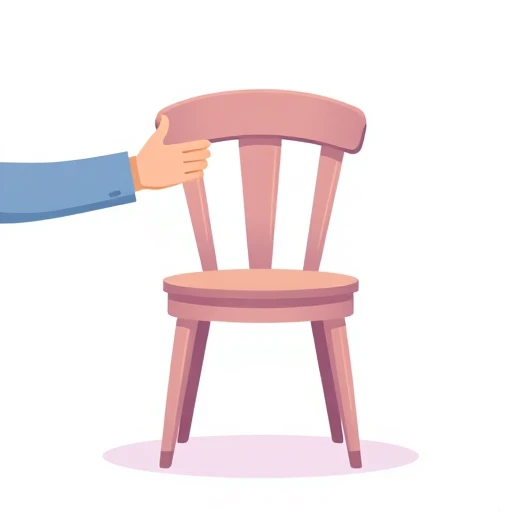
tas 30초 만에
- A slang abbreviation for 'take a seat' used in casual chats.
- Common in gaming and social media to welcome or settle someone.
- An informal interjection that works as a complete command.
- Best used with friends and in digital-first environments.
The term tas is a contemporary linguistic evolution, primarily functioning as a highly condensed interjection or imperative in the digital landscape. Originating as an acronym for the phrase 'take a seat,' it has transcended its initial functional utility to become a staple of casual interpersonal communication. In the fast-paced environment of instant messaging, gaming lobbies, and social media commentary, the need for brevity often dictates the formation of such terms. When a speaker uses 'tas,' they are not merely offering a physical chair; they are often signaling a transition in the social dynamic. It can be a welcoming gesture, inviting a newcomer to join a digital conversation or a physical space, or it can carry a more assertive, almost competitive undertone in gaming contexts, where telling someone to 'tas' might imply they have been defeated and should sit back and watch. The versatility of 'tas' lies in its phonetic simplicity and its ability to convey a complete command in just three letters. Historically, English has always moved toward economy of expression, and 'tas' is a prime example of how phrases are stripped down to their essential components. In a professional but casual office setting, a colleague might ping you with 'tas' as you walk into their cubicle, effectively removing the formal barriers of 'Please, would you like to sit down?' This creates an atmosphere of immediate intimacy and shared understanding. Furthermore, the use of 'tas' reflects a broader trend in Gen Z and Millennial linguistics where acronyms are spoken as words, though 'tas' remains predominantly a written phenomenon. Understanding 'tas' requires an appreciation for the context of the interaction. If the mood is light, it is a warm invitation. If the mood is tense, it might be a directive to stop talking or to settle down. The word acts as a social lubricant, smoothing the transition from standing/waiting to participating/sitting. It is essential to recognize that 'tas' is not a formal word and should never be used in academic writing or high-stakes professional correspondence. Its power is rooted in its informality, making it a badge of belonging for those who are 'in the know' regarding modern slang. As digital communication continues to influence spoken English, we may see 'tas' appear more frequently in verbal exchanges, but for now, its home is the screen.
- Etymological Root
- Derived from the initial letters of 'Take A Seat', following the pattern of common internet acronyms like 'brb' or 'lol'.
Hey, glad you could make it to the stream! tas and enjoy the show.
- Social Function
- Acts as a low-friction invitation to join a group or settle into a specific environment without the weight of formal etiquette.
Yo, tas, we are just about to start the match.
- Register
- Informal, Slang, Digital-first. Highly common in gaming and texting communities.
Just got to the cafe. tas, I'll be there in five.
You look tired, man. tas and let's talk.
Welcome to the discord! tas and check the rules channel.
Using tas effectively requires a keen sense of timing and an understanding of the relationship between the speaker and the listener. Because it is an abbreviation, it usually stands alone as a complete sentence or functions as a quick imperative at the beginning or end of a message. For instance, in a rapid-fire text exchange, simply typing 'tas' is enough to tell a friend who has just arrived at your house that they should make themselves comfortable. It eliminates the need for full grammatical structures, which can sometimes feel too stiff in a casual setting. However, the placement of 'tas' can alter its nuance. When placed at the beginning of a sentence, like 'Tas, I need to tell you something crazy,' it acts as a conversational hook, demanding the listener's full attention before a significant piece of news is shared. When placed at the end, as in 'I'll be right out, tas,' it serves as a polite but brief instruction to wait comfortably. It is also important to consider the medium. In a virtual reality space or a gaming lobby, 'tas' is often used to manage group dynamics. If a player is being disruptive, a group leader might say 'tas' as a way of telling them to calm down and stop moving around. In this sense, it functions similarly to 'settle down.' In written form, 'tas' is almost always lowercase, reflecting its informal nature. Capitalizing it as 'TAS' might lead some to believe it is a technical acronym (like Tool-Assisted Speedrun in gaming), so keeping it lowercase helps maintain the intended meaning of 'take a seat.' Furthermore, 'tas' can be paired with other slang terms to create a specific vibe. 'Tas, fam' or 'Tas, bestie' adds a layer of affection to the command. It is also useful in scenarios where you are multitasking; if you are on a phone call and someone enters the room, you can point to a chair and whisper 'tas' to them, using the word's brevity to minimize the interruption to your call. The word is a tool for efficiency, designed to convey a specific physical action with minimal effort. As you practice using 'tas,' observe how others in your social circle use it. It is a word that is caught rather than taught, and its meaning is often reinforced by the physical actions that follow it. If you use it and the person sits down, you have used it correctly. If they look confused, you might need to revert to the full phrase 'take a seat' until they become familiar with the slang. Over time, 'tas' becomes a natural part of your lexicon, representing a modern approach to hospitality and social management.
- Sentence Placement
- Usually functions as a standalone imperative or a prefix to a longer thought.
I'm making coffee. tas while you wait.
- Punctuation Usage
- Often followed by a comma or a period; rarely requires an exclamation point unless the command is urgent.
tas, we need to have a serious talk about the project.
The lobby is full, so tas and wait for the next round.
- Tone Variation
- Can range from extremely friendly to slightly dismissive depending on the preceding conversation.
You've been pacing for ten minutes. Just tas already!
Dinner is almost ready. tas at the table.
The natural habitat of tas is the digital realm, specifically within platforms that prioritize real-time interaction. You are most likely to encounter it on Discord, the primary communication hub for gamers and specialized interest groups. In these servers, 'tas' is used to manage voice channels and text threads. For example, if a new member joins a voice chat, an established member might type 'tas' in the associated text channel to welcome them. Similarly, on Twitch, streamers might use 'tas' in their chat overlays or when speaking to their audience, inviting viewers to settle in for a long broadcast. The word has also found a home on Twitter (now X) and TikTok, where character limits and fast scrolling encourage the use of three-letter slang. In these spaces, 'tas' often appears in the comments section of a controversial or highly anticipated post, where users are essentially saying, 'Sit down and get ready for the drama.' Beyond the internet, 'tas' is beginning to seep into the spoken language of urban centers and college campuses. You might hear it in a dorm room when a friend walks in, or at a casual house party. It is particularly prevalent among groups that spend a significant amount of time online, as their spoken vocabulary often mirrors their digital habits. In the workplace, 'tas' is reserved for 'flat' organizational structures—startups or creative agencies where the hierarchy is less rigid and the culture is intentionally youthful. You won't hear a CEO say 'tas' in a boardroom, but you might hear a lead developer say it to a junior designer during a quick stand-up meeting. Interestingly, 'tas' is also used in the 'stan' culture of social media. When a celebrity releases a new song or movie, fans might tell each other to 'tas' because they are about to be 'blown away' by the content. This usage links the physical act of sitting with the emotional act of being overwhelmed. Geographically, while it originated in English-speaking digital circles, its use is global among those who participate in international gaming and internet culture. It is a word of the 'global village,' transcending borders through fiber-optic cables. If you are traveling and meet people who are active on the same internet platforms as you, 'tas' serves as a linguistic bridge, a shared bit of code that signals you belong to the same digital subculture. It is a fascinating example of how a simple instruction can become a marker of identity and community in the modern world.
- Digital Platforms
- Discord, Twitch, WhatsApp, Telegram, and Reddit are the primary locations for 'tas'.
[Twitch Chat] User123: Just joined! Streamer: Welcome! tas, we're doing a giveaway soon.
- Social Contexts
- Gaming, casual meetups, 'stan' culture, and informal work environments.
[Discord] Admin: New rules posted. Everyone tas and read them carefully.
Yo, I'm at the table in the back. tas when you get here.
- Demographics
- Primarily Gen Z and Millennials who are active in online communities.
[Twitter] This thread is going to be long. tas and get your popcorn.
We've got a lot to cover in this meeting. tas and let's dive in.
Navigating the world of slang like tas can be a minefield for language learners, as the line between 'cool' and 'confused' is often very thin. The most frequent mistake is using 'tas' in an inappropriate register. Because it is an abbreviation of a command, using it with a superior—such as a boss, a professor, or an elder—can come across as incredibly disrespectful or flippant. It lacks the 'honorific' quality of full English sentences. Another common error is confusing 'tas' with other similar-looking acronyms. For instance, in the gaming world, 'TAS' often stands for 'Tool-Assisted Speedrun.' If you type 'tas' in a gaming chat without context, people might think you are talking about a bot playing a game rather than asking them to sit down. Context is the only thing that separates these two meanings. Additionally, some users confuse 'tas' with 'thx' (thanks) or 'tks' because of the visual similarity of the letters. This can lead to very confusing exchanges where someone thinks they are being thanked when they are actually being told to sit down. Pronunciation is another area where mistakes occur. While 'tas' is primarily a written term, if you do choose to say it out loud, it should be pronounced as a single syllable /tæs/ (rhyming with 'gas' or 'mass'). Some learners try to pronounce each letter individually (T-A-S), which is incorrect and immediately marks the speaker as unfamiliar with the slang. Furthermore, 'tas' should not be used in plural form as 'tases.' If you are addressing a group, 'tas' remains the same, as it is an abbreviation for the collective command. Using it as a verb (e.g., 'I tased him' to mean 'I made him sit down') is also incorrect and highly confusing, as 'tased' already has a very specific meaning related to stun guns. Finally, overusing the word can make your communication feel robotic or overly 'internet-coded.' Slang is like salt; a little enhances the flavor of the conversation, but too much makes it unpalatable. Use 'tas' sparingly and only when the situation truly calls for a quick, informal invitation. By avoiding these pitfalls, you can integrate 'tas' into your vocabulary in a way that feels natural and culturally aware.
- Register Mismatch
- Using 'tas' in formal emails or with authority figures is a major faux pas.
[Incorrect] Dear Professor, tas while I find my homework.
- Acronym Confusion
- Confusing 'tas' (take a seat) with 'TAS' (Tool-Assisted Speedrun) in gaming contexts.
[Confusing] That Mario run was a great tas. (Does the speaker mean the run was a 'take a seat' or a 'tool-assisted speedrun'?)
[Incorrect] I told them to tases down. (Slang abbreviations are usually not conjugated.)
- Phonetic Error
- Pronouncing it 'T-A-S' instead of /tæs/.
Just tas (pronounced like 'pass') and relax.
I'll be there in a sec, tas!
While tas is a unique and modern way to invite someone to sit, English is rich with alternatives that vary in formality and nuance. Understanding these alternatives will help you choose the right word for the right situation. The most direct alternative is, of course, the full phrase 'take a seat.' This is neutral and appropriate for almost any setting, from a doctor's office to a friend's living room. If you want to be slightly more formal, you might say 'please, be seated.' This is often heard in legal or ceremonial contexts. On the other end of the spectrum, very casual alternatives include 'park it' or 'take a load off.' 'Park it' is somewhat blunt and often used between close friends or in a playful, bossy way. 'Take a load off' is a warm, idiomatic expression that implies the person looks tired and deserves a rest. In the gaming and tech world, you might hear 'sit' used as a command, though this can sometimes be perceived as rude or dog-like. Another modern alternative is 'grab a chair,' which is common in social gatherings where seating might be limited or informal. If you are in a professional but relaxed environment, 'make yourself comfortable' is a great choice as it encompasses sitting down but also implies a general sense of ease. For those who prefer even shorter digital slang, 'sit' is sometimes used, but it lacks the specific 'invitational' vibe that 'tas' provides. Comparing 'tas' to 'sit' is like comparing a friendly wave to a pointed finger. 'Tas' feels like a suggestion, while 'sit' feels like an order. When choosing between these, consider the 'warmth' of the interaction. 'Tas' is inherently tied to internet culture, so using it outside of that context might feel out of place. If you are speaking to someone who isn't tech-savvy, 'take a seat' is always the safer bet. However, if you are in a Discord call with five other people, 'tas' is the most efficient and culturally appropriate choice. By mastering these synonyms, you can navigate the complex social landscape of English with confidence, knowing exactly when to be formal, when to be casual, and when to be 'internet-cool.'
- Comparison: tas vs. Park it
- 'tas' is digital and efficient; 'park it' is older, more physical, and slightly more aggressive.
Hey, park it over there by the window.
- Comparison: tas vs. Take a load off
- 'tas' is a quick instruction; 'take a load off' is an empathetic invitation to rest.
You've been working all day, take a load off.
Please, be seated, the ceremony is about to begin.
- Comparison: tas vs. Grab a chair
- 'tas' implies a seat is ready; 'grab a chair' implies the person needs to find their own place to sit.
We're all in the kitchen, grab a chair and join us!
Just tas for a second while I finish this email.
How Formal Is It?
재미있는 사실
While 'tas' means 'take a seat' in slang, in the gaming world, 'TAS' (capitalized) refers to a 'Tool-Assisted Speedrun,' which is a performance of a video game played by a computer program.
발음 가이드
- Pronouncing it as three separate letters (T-A-S).
- Confusing it with 'taze' (rhyming with 'maze').
- Adding an extra 'e' sound at the end (tass-ee).
- Pronouncing the 'a' like 'ah' (tahs).
- Using a long 'a' sound (tace).
난이도
Easy to read but requires context to understand the acronym.
Very short and simple to type.
Needs correct pronunciation to avoid sounding like a learner.
Can be hard to hear because it is so short and often spoken quickly.
다음에 무엇을 배울까
선수 학습
다음에 배울 것
고급
알아야 할 문법
Imperative Mood
Tas! (The subject 'you' is understood).
Acronym Formation
TAS = Take A Seat.
Zero Derivation
Using the acronym as a standalone interjection.
Ellipsis
Shortening 'Will you take a seat?' to just 'Tas?'
Social Deixis
Using 'tas' to establish an informal social relationship.
수준별 예문
Welcome to my room, tas.
Welcome to my room, take a seat.
Used as a standalone command.
Tas, the movie is starting.
Take a seat, the movie is starting.
Used at the beginning of a sentence.
Hi! Tas and wait for me.
Hi! Take a seat and wait for me.
Paired with another verb 'wait'.
You are here! Tas.
You are here! Take a seat.
Short, punchy interjection.
Tas, please.
Take a seat, please.
Adding 'please' makes it slightly more polite.
Is this your chair? Tas.
Is this your chair? Take a seat.
Used after a question.
Tas, I have a gift for you.
Take a seat, I have a gift for you.
Used to set the stage for an action.
Don't stand, tas.
Don't stand, take a seat.
Contrastive use with 'don't stand'.
Yo, tas, I'll be back in a minute.
Hey, take a seat, I'll be back in a minute.
Common in casual spoken English.
Just tas and relax for a bit.
Just take a seat and relax for a bit.
Used in a compound imperative.
Tas, let's play some games.
Take a seat, let's play some games.
Used to initiate an activity.
I found a spot, tas.
I found a spot, take a seat.
Used to indicate a found location.
Tas, the food is almost ready.
Take a seat, the food is almost ready.
Used in a domestic context.
You look exhausted, tas.
You look exhausted, take a seat.
Used as a sympathetic suggestion.
Tas, I need to show you this video.
Take a seat, I need to show you this video.
Used to focus attention.
Wait here and tas.
Wait here and take a seat.
Instructional use.
If you're joining the call, just tas and listen.
If you're joining the call, just take a seat and listen.
Digital context usage.
Tas, we've got a lot of ground to cover today.
Take a seat, we have a lot of topics to discuss today.
Informal professional context.
I'll grab the drinks, you tas.
I will get the drinks, you take a seat.
Dividing tasks between friends.
Tas, I want to hear all about your trip.
Take a seat, I want to hear everything about your trip.
Conversational opener.
Everyone tas, the presentation is starting.
Everyone take a seat, the presentation is starting.
Addressing a group.
You can tas over there by the window.
You can take a seat over there by the window.
Giving a specific direction.
Tas, don't be shy!
Take a seat, don't be shy!
Encouraging tone.
I'm just finishing this, so tas for a sec.
I am just finishing this, so take a seat for a second.
Asking for a brief wait.
Tas, because this story is going to take a while.
Take a seat, because this story is going to be long.
Setting up a long narrative.
Once you get into the lobby, tas and wait for the host.
Once you enter the lobby, take a seat and wait for the host.
Instructional gaming context.
He told me to tas, but there weren't any chairs left.
He told me to take a seat, but there were no chairs left.
Reported speech in a casual context.
Tas, and let's try to resolve this calmly.
Take a seat, and let's try to fix this calmly.
Used for conflict resolution.
I usually just tas and watch the chaos unfold in the chat.
I usually just take a seat and watch the drama in the chat.
Describing a habit.
Tas, I've got some news that might shock you.
Take a seat, I have some surprising news for you.
Preparing the listener for a shock.
The vibe was so chill, everyone just decided to tas on the floor.
The atmosphere was so relaxed, everyone sat on the floor.
Describing a social atmosphere.
Tas, and I'll show you how to fix that bug.
Take a seat, and I will show you how to fix that error.
Collaborative context.
In the digital age, 'tas' has become the ultimate low-effort invitation.
In the digital era, 'tas' is the most efficient way to invite someone to sit.
Discussing the word as a concept.
If you're going to act like that, you might as well tas and stay quiet.
If you are going to behave that way, you should just sit down and be quiet.
Using 'tas' with a dismissive nuance.
The streamer's catchphrase was a simple, inviting 'tas'.
The streamer's signature phrase was a simple, welcoming 'take a seat'.
Describing a linguistic trademark.
Tas, and let's dissect the implications of this new policy.
Take a seat, and let's analyze the effects of this new rule.
Transitioning to a complex topic.
I found myself instinctively saying 'tas' even in non-digital settings.
I started saying 'tas' naturally even when I wasn't online.
Reflecting on linguistic habits.
The brevity of 'tas' perfectly encapsulates modern social efficiency.
The shortness of 'tas' represents how we value speed in social interactions today.
Analytical observation.
Tas, and prepare to be enlightened by the guest speaker.
Take a seat, and get ready to learn from the guest speaker.
Formal-informal blend.
Despite the formality of the event, the host told us all to 'tas'.
Even though the event was formal, the host used very casual language.
Highlighting a contrast in register.
The linguistic compression from 'take a seat' to 'tas' is a fascinating study in phonetic economy.
The way the phrase shortened is a great example of how we save effort in speaking.
Academic analysis of the slang.
One might argue that 'tas' serves as a digital-era shibboleth for the technologically initiated.
Some say 'tas' is a secret word that shows you are good with technology.
Using high-level vocabulary to describe slang.
Tas, and let us embark upon a journey through the annals of history.
Take a seat, and let's start a journey through history.
Ironic juxtaposition of slang and formal prose.
The use of 'tas' in the screenplay was intended to ground the character in Gen Z reality.
The writer used 'tas' to make the character seem like a real young person.
Discussing characterization through dialogue.
To 'tas' is to acknowledge the shared digital space we currently occupy.
Saying 'tas' means recognizing that we are together in this online world.
Philosophical interpretation of the word.
Her 'tas' was less an invitation and more a command to cease all movement.
When she said 'tas', it felt like she was ordering everyone to stop moving.
Analyzing the pragmatic force of the interjection.
The subtle shift from 'take a seat' to 'tas' mirrors the broader acceleration of cultural exchange.
The change in the word shows how fast our culture is moving now.
Sociological observation.
Tas, for the revelation I am about to bestow upon you is of significant weight.
Take a seat, because what I am about to tell you is very important.
High-register context for low-register slang.
동의어
반의어
자주 쓰는 조합
자주 쓰는 구문
— Inviting someone to sit down and relax for a long time.
We have no plans today, so just tas and chill.
— Asking someone to sit while you finish a task.
Tas, I'm almost done with this email.
— A playful or slightly annoyed way to welcome someone who arrived late.
Finally! Tas, you're late.
— Asking someone to sit to see something on a screen or in a book.
Tas, look at this crazy photo I found.
— A standard welcoming phrase using the slang term.
Welcome to the new apartment, tas, make yourself at home.
— An enthusiastic way to start telling a story.
You won't believe what happened. Tas, it's story time.
자주 혼동되는 단어
A technical gaming term for computer-optimized gameplay.
A common abbreviation for the Australian state.
To hit someone with a stun gun; sounds similar but very different meaning.
관용어 및 표현
— Pay close attention because you are about to learn something.
The master is playing, so tas and take notes.
gaming/informal— A very blunt way of saying someone must either join in or leave.
We're working here, so tas or get out.
aggressive-slang— Sit down and watch something amazing happen.
I'm about to break the record, tas and witness.
gaming— Used when someone has been defeated and needs to sit back.
You lost the match, now tas and be humbled.
competitive-slang— Sit down and enjoy a drink or some 'tea' (gossip).
I have all the gossip, so tas and sip.
social-slang— Sit down and enjoy the atmosphere or music.
The DJ is great, just tas and vibe.
casual— A more friendly version of 'take notes'.
I'll show you the shortcut, tas and learn.
educational-informal— Used in gaming when a situation is very tense.
The boss is at 1% health, tas and pray.
gaming— Sit down and wait for a long time.
The servers are down, tas and hold.
technical-slang— Sit down and experience something exciting.
The new season starts now, tas and enjoy the ride.
enthusiastic혼동하기 쉬운
Visual similarity in quick typing (thx/tks/tas).
'Thanks' expresses gratitude; 'tas' is an invitation to sit.
Tas for the seat! (Wait, did they mean 'thanks' or 'take a seat'?)
Spelled almost the same.
A 'task' is a piece of work; 'tas' is a command to sit.
I have a tas for you. (Incorrect, should be 'task').
Phonetically similar.
'Tax' is money paid to the government; 'tas' is about sitting.
I need to pay my tas. (Incorrect, should be 'tax').
Phonetically identical.
'Tass' is an archaic word for a cup or bowl; 'tas' is modern slang.
He drank from the tass. (Very rare/old).
Phonetically similar.
'Tase' involves electricity; 'tas' involves chairs.
Don't tase me, bro! (Famous meme).
문장 패턴
Tas, [Name].
Tas, John.
Just tas and [Verb].
Just tas and wait.
I'll be there soon, so tas.
I'll be there soon, so tas.
Once you [Action], tas.
Once you arrive, tas.
Tas, and let's [Complex Action].
Tas, and let's analyze the data.
The host gestured for us to tas.
The host gestured for us to tas.
Tas.
Tas.
Everyone tas.
Everyone tas.
어휘 가족
관련
사용법
High in digital gaming/texting; Low in general spoken English.
-
Using 'tas' in a job interview.
→
Please, take a seat.
'Tas' is far too informal for a professional interview setting.
-
Pronouncing it 'T-A-S'.
→
/tæs/
Slang acronyms are often pronounced as words if they are phonetically simple.
-
Writing 'I will tas now'.
→
I will take a seat now.
'Tas' is almost exclusively used as a command to others, not to describe your own actions.
-
Confusing 'tas' with 'thanks'.
→
Thx for the help.
Ensure you use the correct abbreviation to avoid confusing your reader.
-
Pluralizing it as 'tases'.
→
Everyone tas.
The word 'tas' is an interjection and does not change form for plural subjects.
팁
Keep it Lowercase
When texting, use 'tas' in lowercase to ensure it is understood as slang and not a technical acronym.
Know Your Audience
Only use 'tas' with people who are likely to know internet slang, such as friends or fellow gamers.
Check for Chairs
Don't say 'tas' if there are no seats available, as it will make the interaction awkward!
Add an Emoji
Adding a chair emoji (🪑) after 'tas' can help clarify the meaning for those who might not know the slang.
Don't Spell It Out
If you say it out loud, say it as one word 'tass,' not the letters 'T-A-S'.
Gaming Context
In a game lobby, 'tas' is a great way to welcome a new player to your squad's voice channel.
Use for Speed
Use 'tas' when you are in a hurry and need to give a quick instruction without being rude.
Observe Others
Watch Twitch streamers to see the different ways they use 'tas' with their audience.
Mix it Up
Don't use 'tas' every single time; occasionally use 'grab a chair' or 'take a seat' to keep your English natural.
Clarify if Needed
If someone looks confused when you say 'tas,' quickly follow up with 'take a seat' to help them learn.
암기하기
기억법
Think of 'T-A-S' as 'The Awesome Seat.' When you say 'tas,' you are offering someone an awesome place to sit.
시각적 연상
Imagine a neon sign in a gaming cafe that says 'TAS' shaped like a comfortable chair.
Word Web
챌린지
Try using 'tas' in a text message to a friend today when you invite them over or meet them at a cafe.
어원
The word 'tas' emerged in the early 21st century alongside the rise of instant messaging and internet relay chat (IRC). It is a direct acronymic formation from the phrase 'Take A Seat.'
원래 의미: To physically occupy a chair or sitting space.
English (Modern Slang/Acronym)문화적 맥락
Avoid using with elderly people or in formal settings as it can seem dismissive of traditional manners.
Common in US, UK, and Australian digital circles, though 'Tas' is also a nickname for Tasmania in Australia.
실생활에서 연습하기
실제 사용 상황
Gaming
- tas and play
- tas and watch
- tas in the lobby
- tas and wait for the host
Texting
- tas, I'm coming
- just tas
- tas for a sec
- tas and read this
Social Media
- tas for the thread
- tas and enjoy the drama
- everyone tas
- tas and sip the tea
Casual Office
- tas, let's sync
- tas for the standup
- grab a spot and tas
- tas and let's look at the code
Home/Friends
- tas, dinner's ready
- tas and tell me everything
- tas, make yourself comfy
- tas, the show is on
대화 시작하기
"Hey, tas! How has your day been so far?"
"Tas, I've been meaning to ask you about that new game."
"Everyone tas, I have some really exciting news to share!"
"Tas for a second, I need your opinion on this photo."
"Glad you could join the chat, tas and let's catch up!"
일기 주제
Describe a time when someone invited you to 'tas' and how it made you feel welcome.
Write a short story about a futuristic world where everyone only speaks in three-letter acronyms like 'tas'.
How does the word 'tas' change the 'vibe' of a room compared to the phrase 'please be seated'?
Do you prefer formal or informal invitations like 'tas'? Explain why.
Create a dialogue between two friends using 'tas' and at least three other slang words.
자주 묻는 질문
10 질문It stands for 'Take A Seat.' It is a common internet abbreviation used to invite someone to sit down.
It is a slang word and an acronym. While you won't find it in a formal dictionary like the Oxford English Dictionary yet, it is widely used in informal digital communication.
Only if your workplace is very casual and you are speaking with close colleagues. Avoid using it with clients or senior management.
It is pronounced like 'pass' or 'gas' (/tæs/). It is usually one short syllable.
No. In gaming, 'TAS' usually means 'Tool-Assisted Speedrun.' You have to use context to know which one is being used.
It is friendly but very informal. It is not 'impolite' among friends, but it can be seen as rude in formal situations.
Yes, but it is much more common in text messages and online chats.
Generally, no. You wouldn't say 'I am tassing.' It is almost always used as a command or interjection.
The opposite would be 'stand up' or 'leave.' There is no slang abbreviation for 'stand up' that is as common as 'tas'.
It feels more modern and specifically implies the friendly phrase 'take a seat' rather than the blunt command 'sit'.
셀프 테스트 180 질문
Write a text message to a friend using 'tas' to invite them to your house.
Well written! Good try! Check the sample answer below.
Explain the difference between 'tas' and 'take a seat' in three sentences.
Well written! Good try! Check the sample answer below.
Write a dialogue between two gamers where one uses 'tas'.
Well written! Good try! Check the sample answer below.
Describe a situation where using 'tas' would be inappropriate.
Well written! Good try! Check the sample answer below.
Use 'tas' in a sentence that also includes the word 'coffee'.
Well written! Good try! Check the sample answer below.
Write a social media comment using 'tas' to react to a long thread.
Well written! Good try! Check the sample answer below.
How does 'tas' reflect modern digital culture? Write a short paragraph.
Well written! Good try! Check the sample answer below.
Create a sentence using 'tas' and 'fam'.
Well written! Good try! Check the sample answer below.
Write a short story (50 words) where 'tas' is the most important word.
Well written! Good try! Check the sample answer below.
Compare 'tas' to 'park it' in terms of tone and register.
Well written! Good try! Check the sample answer below.
Write an instruction for a new Discord member using 'tas'.
Well written! Good try! Check the sample answer below.
Use 'tas' in a sentence about watching a movie.
Well written! Good try! Check the sample answer below.
Explain why 'tas' might be confused with 'TAS' in gaming.
Well written! Good try! Check the sample answer below.
Write a sentence using 'tas' as a way to calm someone down.
Well written! Good try! Check the sample answer below.
What are the phonetic rules for pronouncing 'tas'? Write them out.
Well written! Good try! Check the sample answer below.
Write a sentence using 'tas' and 'wait'.
Well written! Good try! Check the sample answer below.
Create a scenario where 'tas' is used ironically.
Well written! Good try! Check the sample answer below.
Write a sentence using 'tas' and 'relax'.
Well written! Good try! Check the sample answer below.
How would you explain 'tas' to a non-native speaker who only knows formal English?
Well written! Good try! Check the sample answer below.
Write a sentence using 'tas' at the very end of the message.
Well written! Good try! Check the sample answer below.
Pronounce 'tas' correctly out loud.
Read this aloud:
당신의 답변:
Speech recognition is not supported in your browser. Try Chrome or Edge.
Record yourself saying: 'Hey, glad you're here, tas.'
Read this aloud:
당신의 답변:
Speech recognition is not supported in your browser. Try Chrome or Edge.
How would you say 'tas' to a group of friends? Practice the intonation.
Read this aloud:
당신의 답변:
Speech recognition is not supported in your browser. Try Chrome or Edge.
Explain the meaning of 'tas' to a partner in English.
Read this aloud:
당신의 답변:
Speech recognition is not supported in your browser. Try Chrome or Edge.
Practice saying 'tas' with a friendly tone and then a serious tone.
Read this aloud:
당신의 답변:
Speech recognition is not supported in your browser. Try Chrome or Edge.
Use 'tas' in a short role-play where you are a host at a party.
Read this aloud:
당신의 답변:
Speech recognition is not supported in your browser. Try Chrome or Edge.
Discuss with a partner: Is 'tas' a useful word? Why or why not?
Read this aloud:
당신의 답변:
Speech recognition is not supported in your browser. Try Chrome or Edge.
Pronounce 'tas' and 'pass' to see if they rhyme for you.
Read this aloud:
당신의 답변:
Speech recognition is not supported in your browser. Try Chrome or Edge.
Practice the sentence: 'Just tas for a sec, I'll be right back.'
Read this aloud:
당신의 답변:
Speech recognition is not supported in your browser. Try Chrome or Edge.
How would you explain 'tas' to your teacher? (Use formal English to explain the slang).
Read this aloud:
당신의 답변:
Speech recognition is not supported in your browser. Try Chrome or Edge.
Role-play a gaming scenario where you tell a new player to 'tas'.
Read this aloud:
당신의 답변:
Speech recognition is not supported in your browser. Try Chrome or Edge.
Practice saying 'tas' without sounding like you are spelling T-A-S.
Read this aloud:
당신의 답변:
Speech recognition is not supported in your browser. Try Chrome or Edge.
Describe the visual of a 'tas' sign in a cafe.
Read this aloud:
당신의 답변:
Speech recognition is not supported in your browser. Try Chrome or Edge.
Say 'tas' five times quickly. Does it feel natural?
Read this aloud:
당신의 답변:
Speech recognition is not supported in your browser. Try Chrome or Edge.
Give a 30-second presentation on the evolution of 'take a seat' to 'tas'.
Read this aloud:
당신의 답변:
Speech recognition is not supported in your browser. Try Chrome or Edge.
Practice the sentence: 'Tas, and let's get this show on the road!'
Read this aloud:
당신의 답변:
Speech recognition is not supported in your browser. Try Chrome or Edge.
How would you use 'tas' to humble a friend in a game? Practice the tone.
Read this aloud:
당신의 답변:
Speech recognition is not supported in your browser. Try Chrome or Edge.
Practice saying 'tas' while gesturing to an imaginary chair.
Read this aloud:
당신의 답변:
Speech recognition is not supported in your browser. Try Chrome or Edge.
Discuss: Do you think 'tas' will be used in 20 years?
Read this aloud:
당신의 답변:
Speech recognition is not supported in your browser. Try Chrome or Edge.
Practice: 'Tas, fam, make yourself at home.'
Read this aloud:
당신의 답변:
Speech recognition is not supported in your browser. Try Chrome or Edge.
Listen to a clip of a gamer. Did they say 'tas' or 'taze'?
Listen to the sentence: 'I'll be there in a minute, tas.' What is the instruction?
In a noisy cafe, can you distinguish 'tas' from 'task'?
Listen for 'tas' in a Twitch stream. How many times was it used in 5 minutes?
Listen to the tone: Is the 'tas' friendly or a command?
Listen to a conversation. Who used 'tas', the older or younger person?
Listen to: 'Everyone tas, the match is live.' What is happening?
Listen for the rhyme: Does 'tas' rhyme with 'gas' in this clip?
Listen to a fast-talking teenager. Did they say 'tas' or 'thanks'?
Listen to: 'Tas and listen up.' What is the speaker's mood?
Listen to a group call. How many people sat down after 'tas' was said?
Listen for 'tas' in a song lyric. What does it rhyme with?
Listen to: 'Just tas, I'm on the phone.' Why did they say 'tas'?
Listen to: 'Tas, the pizza is here!' Is the speaker excited?
Listen to a debate about slang. What is the argument against 'tas'?
/ 180 correct
Perfect score!
Summary
The word 'tas' is a modern, efficient way to say 'take a seat' in informal digital contexts. For example: 'Hey! Glad you made it to the stream, tas and enjoy!'
- A slang abbreviation for 'take a seat' used in casual chats.
- Common in gaming and social media to welcome or settle someone.
- An informal interjection that works as a complete command.
- Best used with friends and in digital-first environments.
Keep it Lowercase
When texting, use 'tas' in lowercase to ensure it is understood as slang and not a technical acronym.
Know Your Audience
Only use 'tas' with people who are likely to know internet slang, such as friends or fellow gamers.
Check for Chairs
Don't say 'tas' if there are no seats available, as it will make the interaction awkward!
Add an Emoji
Adding a chair emoji (🪑) after 'tas' can help clarify the meaning for those who might not know the slang.