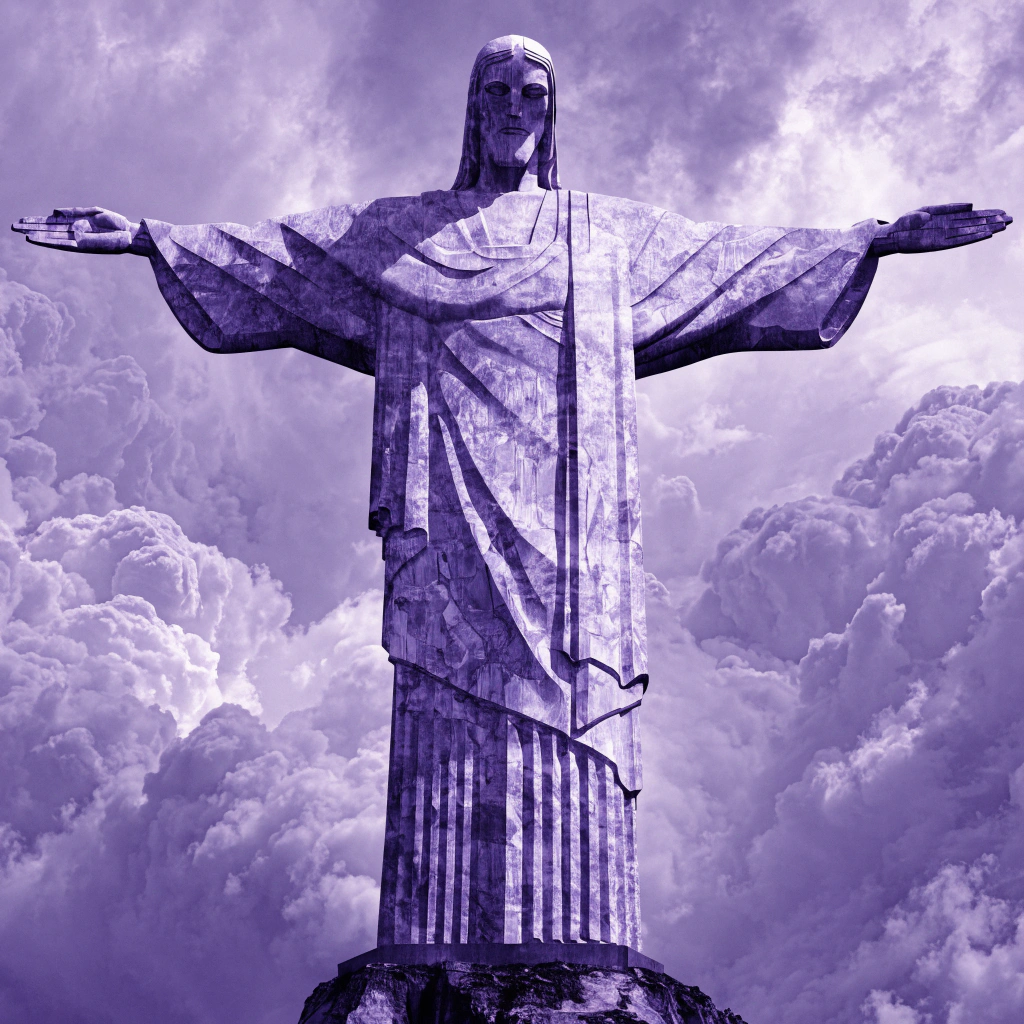
브라질의 유명한 동상: 구세주 그리스도
브라질에 아주 유명한 동상이 있습니다. 이름은 '구세주 그리스도'입니다. 이 동상은 리우데자네이루 도시에 있습니다. 높은 코르코바도 산 위에 서 있습니다. 산에서 도시를 볼 수 있습니다.
이 동상은 정말 큽니다. 높이는 30미터입니다. 팔은 28미터나 됩니다. 사람들은 1931년에 이 동상을 만들었습니다. 많은 사람이 이 동상을 보러 옵니다. 이것은 브라질의 중요한 상징입니다. 사람들은 이곳에서 평화와 희망을 생각합니다.
문법 스포트라이트
패턴: -ㅂ니다/습니다
"브라질에 아주 유명한 동상이 있습니다."
이 문법은 동사나 형용사 뒤에 붙어서 문장을 끝냅니다. 공손하고 격식 있는 상황에서 사용합니다.
패턴: -은/는 (주제 조사)
"이 동상은 리우데자네이루 도시에 있습니다."
이 조사는 문장에서 이야기하는 주제를 나타냅니다. 보통 처음 소개하는 것이나 중요한 것에 붙여서 사용합니다.
이해도를 테스트하세요
10 질문 · A1 초급 · 무료 미리보기 1회
이 기사에서 배운 내용을 테스트하세요. 모든 질문에 답하여 XP를 획득하세요!
구세주 그리스도 동상은 어느 도시에 있습니까?
문제별 결과
구세주 그리스도 동상은 어느 도시에 있습니까?
내 답변:
정답: 리우데자네이루
이 동상은 아주 작습니다.
내 답변:
정답: 거짓
'산'은 무슨 뜻입니까?
내 답변:
정답: 땅이 아주 높은 곳입니다
사람들은 이곳에서 _____와 희망을 생각합니다.
내 답변:
정답: 평화
A Famous Statue in Brazil
Christ the Redeemer is a very famous statue in Brazil. It stands on top of Corcovado Mountain in Rio de Janeiro. It is 30 meters tall, so it is bigger than many other statues in the world. Its arms are 28 meters wide and they look like a giant cross.
People started building the statue in 1922 and finished it in 1931. A French sculptor named Paul Landowski designed it. He used a style called Art Deco. The statue is made of concrete and soapstone because these materials are strong.
Today, millions of tourists visit the statue every year. They take a train or a van to the top of the mountain. From there, the view of the city is beautiful. You can see the ocean and the beach. It is one of the New Seven Wonders of the World because it is very special. People love to take photos with their arms open like the statue.
문법 스포트라이트
패턴: Comparative Adjectives
"It is bigger than many other statues in the world."
We use 'bigger than' to compare two things. For short adjectives, we add '-er' to the end and use the word 'than' after it.
패턴: Past Simple (Regular Verbs)
"People started building the statue in 1922 and finished it in 1931."
We use the past simple to talk about completed actions in the past. For regular verbs, we add '-ed' to the base form of the verb.
이해도를 테스트하세요
11 질문 · A2 초등급 · 무료 미리보기 1회
이 기사에서 배운 내용을 테스트하세요. 모든 질문에 답하여 XP를 획득하세요!
Where is the Christ the Redeemer statue located?
문제별 결과
Where is the Christ the Redeemer statue located?
내 답변:
정답: Rio de Janeiro
The statue is made of wood.
내 답변:
정답: 거짓
What does 'famous' mean?
내 답변:
정답: Known by many people
The statue stands on top of a _____.
내 답변:
정답: mountain
When was the statue finished?
내 답변:
정답: 1931
브라질의 상징, 리우 예수상: 세계를 포용하다
브라질의 리우데자네이루에는 세계적으로 유명한 거대한 예수상이 있습니다. 이 예수상은 '구세주 그리스도 상' 또는 '예수 그리스도 상'으로 불리며, 코르코바두 산 정상에 서 있습니다. 코르코바두 산은 해발 700미터가 넘는 높은 산으로, 예수상에서는 아름다운 리우 시내가 한눈에 내려다보여 방문객들에게 잊지 못할 경험을 제공합니다.
이 조각상은 1931년에 완성되었으며, 그 이후로 브라질을 대표하는 상징이 되어 왔습니다. 아르데코 양식으로 만들어진 이 동상은 높이가 받침대 8미터를 포함하여 총 38미터에 달하고, 양팔을 벌린 너비는 28미터나 됩니다. 마치 리우 시민들을 포용하듯이 팔을 활짝 벌리고 있는 모습은 보는 이들에게 깊은 감동을 줍니다. 이 동상은 콘크리트와 비누석으로 만들어져 오랜 시간 동안 그 자리를 지켜왔습니다.
이 예수상이 세워진 배경은 제1차 세계대전 이후로 거슬러 올라갑니다. 당시 리우의 가톨릭 신자들은 전쟁으로 지친 도시의 종교적 정신을 되살리기 위한 기념비를 만들기를 강력히 원했습니다. 그래서 이 거대한 조각상이 계획되었고, 많은 사람의 헌신적인 노력과 기부 덕분에 완성될 수 있었습니다. 이 동상은 단순한 예술 작품을 넘어, 희망과 평화의 메시지를 전달하는 역할을 해왔습니다.
구세주 그리스도 상은 단순한 조각상을 넘어, 브라질의 상징이자 리우데자네이루의 가장 중요한 랜드마크가 되었습니다. 매년 수백만 명의 관광객들이 이곳을 방문하며, 이 웅장한 모습을 직접 보기 위해 먼 길을 찾아옵니다. 2007년에는 '세계 7대 불가사의' 중 하나로 공식적으로 선정되기도 했습니다. 밤에는 특별한 조명이 밝혀져 더욱 아름다운 야경을 선사합니다. 이처럼 예수상은 리우의 역사와 문화, 그리고 신앙을 상징하는 중요한 건축물로 오랫동안 여겨져 왔습니다. 많은 사람들이 이 동상을 보며 위로와 영감을 받아왔습니다.
문법 스포트라이트
패턴: -아/어 오다
"그 이후로 브라질을 대표하는 상징이 되어 왔습니다."
어떤 행동이나 상태가 과거부터 지금까지 계속 이어져 왔음을 나타낼 때 사용합니다. 동사나 형용사 뒤에 붙습니다. 현재까지의 지속을 표현합니다.
패턴: -(으)로 불리다
"이 예수상은 '구세주 그리스도 상' 또는 '예수 그리스도 상'으로 불리며..."
어떤 대상이 다른 사람이나 사물에 의해 특정 이름으로 불리거나 칭해질 때 사용합니다. 동사 '부르다'의 피동형입니다. '무엇이라고 불린다'는 의미로 이해할 수 있습니다.
이해도를 테스트하세요
11 질문 · B1 중급 · 무료 미리보기 1회
이 기사에서 배운 내용을 테스트하세요. 모든 질문에 답하여 XP를 획득하세요!
리우데자네이루의 예수상은 주로 무엇이라고 불립니까?
문제별 결과
리우데자네이루의 예수상은 주로 무엇이라고 불립니까?
내 답변:
정답: 구세주 그리스도 상
예수상은 해발 700미터가 넘는 산 정상에 있습니다.
내 답변:
정답: 참
다음 중 '정상'의 의미는 무엇입니까?
내 답변:
정답: 산의 가장 높은 부분
이 예수상은 _____년에 완성되었습니다.
내 답변:
정답: 1931
이 예수상은 어떤 양식으로 만들어졌습니까?
내 답변:
정답: 아르데코 양식
Christ the Redeemer: An Architectural and Spiritual Icon
Standing majestically at the 700-meter summit of Mount Corcovado, Christ the Redeemer is far more than a mere landmark; it is a profound symbol of Brazilian identity. Completed in 1931, this colossal Art Deco statue towers 30 meters high, resting upon an 8-meter pedestal. Its outstretched arms, spanning 28 meters, seem to embrace the vibrant city of Rio de Janeiro below. The monument was originally conceived in the aftermath of World War I, a period when the Catholic Circle of Rio sought to reclaim the city’s religious spirit amidst a perceived increase in secularism. The project was funded almost entirely by the Brazilian Catholic community. During 'Monument Week' in 1921, citizens from across the nation contributed donations, demonstrating a collective desire to see the project come to fruition.
The design process was an international collaboration that blended artistic vision with structural innovation. While the Brazilian engineer Heitor da Silva Costa was responsible for the overall project, the French sculptor Paul Landowski was commissioned to create the statue's head and hands. To ensure the structure could withstand the harsh elements, reinforced concrete was selected as the primary material. However, for the outer shell, designers chose soapstone, which was favored for its durability and unique aesthetic qualities. This mosaic-like surface consists of thousands of small triangular tiles, which were meticulously applied by hand. The use of reinforced concrete was a bold choice for the time, as it was a relatively modern material for such a massive artistic endeavor.
The statue has faced numerous environmental challenges over the decades. Due to its prominent position, it is frequently struck by lightning, necessitating regular restoration work to maintain its structural integrity. Furthermore, the high-altitude winds and tropical humidity require constant vigilance from preservationists. Restoration efforts are not merely about aesthetics; they involve complex engineering to repair the internal framework and replace damaged soapstone tiles. These tiles are often sourced from the same quarry that provided the original materials in the 1920s to ensure consistency. Despite these obstacles, the monument’s resilience has only strengthened its status as a global landmark. In 2007, it was formally recognized as one of the New Seven Wonders of the World, reflecting its immense historical significance. Beyond its religious origins, Christ the Redeemer has evolved into an iconic symbol of peace and hospitality, remaining a testament to human ingenuity.
문법 스포트라이트
패턴: Passive Voice
"The project was funded almost entirely by the Brazilian Catholic community."
The passive voice is used to focus on the action or the object being acted upon rather than the person doing the action. It is formed using 'be' + past participle.
패턴: Present Perfect
"The statue has faced numerous environmental challenges over the decades."
The present perfect connects the past to the present. It is used here to describe a situation that started in the past and continues to be true or relevant today.
패턴: Non-defining Relative Clauses
"However, for the outer shell, designers chose soapstone, which was favored for its durability and unique aesthetic qualities."
This pattern provides extra information about a noun. It is separated by commas and uses 'which' or 'who', but never 'that'.
이해도를 테스트하세요
11 질문 · B2 중상급 · 무료 미리보기 1회
이 기사에서 배운 내용을 테스트하세요. 모든 질문에 답하여 XP를 획득하세요!
What was the primary reason for the statue's conception?
문제별 결과
What was the primary reason for the statue's conception?
내 답변:
정답: To reclaim the city's religious spirit
The statue was built using steel as the primary internal material.
내 답변:
정답: 거짓
What does 'aesthetic' mean?
내 답변:
정답: Relating to beauty
Christ the Redeemer has evolved into an _____ symbol of peace and hospitality.
내 답변:
정답: iconic
Who was responsible for sculpting the statue's head and hands?
내 답변:
정답: Paul Landowski
The Sentinel of Corcovado: A Critical Examination of Christ the Redeemer
Perched atop the 700-meter summit of Mount Corcovado, Christ the Redeemer (Cristo Redentor) serves as a sentinel over the sprawling metropolis of Rio de Janeiro. While many view it as a mere icon of tourism, its inception was rooted in a profound desire for spiritual reclamation. Seldom does a structure manage to encapsulate the complex intersections of faith, politics, and engineering as effectively as this Art Deco colossus. The manifestation of religious fervor in the early 20th century led to the statue's commission, intended to counteract the perceived secularization of the Brazilian Republic.
It was the Catholic Circle of Rio that spearheaded the movement for a landmark that would reaffirm the city’s Christian heritage. The design process was a collaborative effort, involving Brazilian engineer Heitor da Silva Costa and French-Polish sculptor Paul Landowski. Their choice of reinforced concrete was revolutionary, yet it was the decision to clad the exterior in soapstone that provided the statue with its resilience and shimmering quality. The juxtaposition of such rugged industrial materials with the grace of the Art Deco form creates an ethereal presence that commands attention from every corner of the city. The choice of soapstone was particularly inspired; the material was sourced from local quarries and cut into thousands of tiny triangles, which were then meticulously applied to the concrete core. This painstaking process not only enhanced the statue’s aesthetic appeal but also provided a protective layer against the corrosive effects of the salt-laden Atlantic air.
The construction itself was a feat of staggering complexity. Transporting massive components up the precipitous slopes of Corcovado required the use of a cog railway, a logistical triumph of the 1920s. Despite the inherent dangers, the project was completed in 1931 without a single loss of life—a fact often cited as a testament to the unwavering resolve of the workforce.
Beyond its physical presence, the statue has undergone a process of cultural nominalization. It is no longer just a representation of Christ; it has become a global signifier for Brazil and, more broadly, South America. However, this transformation has not been without controversy. Critical analysis of the site often highlights the tension between its sacred origins and its current status as a focal point for mass tourism. Does the incessant flash of cameras diminish the intended sanctity of the space?
Nevertheless, the enduring power of the monument lies in its ambiguity. To the devout, it remains a symbol of divine protection; to the historian, a relic of early 20th-century nationalism; and to the architect, a marvel of structural integrity. Not only does the statue oversee the geography of Rio, but it also bridges the gap between the mundane and the transcendental. The plurality of meanings ascribed to the monument ensures its relevance in a rapidly changing world. Ultimately, it is the inclusivity of those outstretched arms, spanning 28 meters, that continues to resonate most deeply with the millions who gaze upon it each year.
문법 스포트라이트
패턴: Negative Inversion
"Seldom does a structure manage to encapsulate the complex intersections of faith, politics, and engineering as effectively as this Art Deco colossus."
Inversion occurs here by placing the negative adverb 'Seldom' at the beginning of the sentence for emphasis. This requires the auxiliary verb 'does' to precede the subject 'a structure'.
패턴: Cleft Sentences
"It was the Catholic Circle of Rio that spearheaded the movement for a landmark that would reaffirm the city’s Christian heritage."
This 'It-cleft' sentence is used to focus on the specific group responsible for the project. It shifts the emphasis to 'the Catholic Circle of Rio' rather than the action itself.
패턴: Not Only... But Also (Inversion)
"Not only does the statue oversee the geography of Rio, but it also bridges the gap between the mundane and the transcendental."
When 'Not only' starts a sentence, the first clause undergoes inversion (auxiliary 'does' before subject 'the statue'). This is used to emphasize the dual function of the monument.
이해도를 테스트하세요
12 질문 · C1 고급 · 무료 미리보기 1회
이 기사에서 배운 내용을 테스트하세요. 모든 질문에 답하여 XP를 획득하세요!
What was the primary motivation for the statue's commission according to the text?
문제별 결과
What was the primary motivation for the statue's commission according to the text?
내 답변:
정답: To counteract the perceived secularization of society
The construction of the statue resulted in several fatalities due to the precipitous terrain.
내 답변:
정답: 거짓
Which word describes something extremely delicate and seemingly not of this world?
내 답변:
정답: Ethereal
The logistical triumph of the 1920s involved using a cog _____ to transport materials.
내 답변:
정답: railway
Why was soapstone chosen as the cladding material for the reinforced concrete?
내 답변:
정답: It provided durability and resistance to corrosive air
The text suggests that the statue's meaning is fixed and strictly religious.
내 답변:
정답: 거짓
The Ethereal Sentinel: An Analytical Deconstruction of Christ the Redeemer
Perched atop the granite monolith of Mount Corcovado, Christ the Redeemer serves as more than a mere landmark; it is a profound testament to the confluence of theological aspiration and architectural audacity. Completed in 1931, this colossal Art Deco manifestation was conceived in a period of significant social flux. Were one to traverse the lush expanses of the Tijuca Forest and ascend to the 700-meter summit, the sheer scale of the monument would likely evoke a sense of the sublime, a philosophical state where beauty and terror coexist in the face of the infinite. It was the Catholic Circle of Rio that spearheaded the project, driven by a desire to reclaim the city’s religious spirit amidst the encroaching tide of secularization following World War I. This endeavor was not merely a local pursuit but a global collaboration, blending the engineering prowess of Heitor da Silva Costa with the sculptural finesse of Paul Landowski.
The statue’s aesthetic provenance is inextricably linked to the Art Deco movement, characterized by streamlined forms and geometric precision. However, the choice of soapstone for the outer layers introduces a peculiar juxtaposition; while the internal structure is a rigid reinforced concrete frame, the exterior possesses a soft, almost translucent quality. This material choice was strategic, ensuring the monument could withstand the volatile meteorological conditions of the Atlantic coast while maintaining its ethereal glow. Not only does the statue command the horizon, but it also functions as a sovereign icon of Brazilian identity, transcending its liturgical origins to become a universal emblem of peace. Critics often argue that the statue’s open-armed posture—a gesture of both welcome and benediction—is what allows it to bridge the chasm between the sacred and the profane.
From a sociopolitical perspective, the monument’s existence is steeped in the complexities of early 20th-century Brazil. At the time, the young republic sought to consolidate its national identity, and the Church viewed the statue as a talismanic bulwark against the perceived moral decay of modernity. Yet, the monument has arguably outgrown its original sectarian mandate. Today, it stands as a vestige of a bygone era that continues to resonate in a contemporary, pluralistic society. One might posit that its enduring relevance lies in its ability to adapt its meaning to the observer; to some, it is a site of pilgrimage, while to others, it is a triumph of modernist engineering. Regardless of one’s ideological leanings, the statue remains an ephemeral bridge between the terrestrial and the divine, a silent observer of the vibrant, chaotic city below. The meticulous preservation efforts required to maintain the soapstone tiles underscore the fragile nature of such a monumental achievement, reminding us that even the most imposing structures are subject to the relentless passage of time.
문법 스포트라이트
패턴: Inverted Conditional (Subjunctive Mood)
"Were one to traverse the lush expanses of the Tijuca Forest and ascend to the 700-meter summit, the sheer scale of the monument would likely evoke a sense of the sublime."
This formal structure replaces 'If one were to...' by inverting the auxiliary verb 'were' and the subject. It is used to express a hypothetical situation with a high degree of formality and academic distance.
패턴: Negative Inversion
"Not only does the statue command the horizon, but it also functions as a sovereign icon of Brazilian identity."
When a sentence begins with a negative or restrictive adverbial like 'not only', the subject and the auxiliary verb are inverted. This is used for emphasis and to create a more sophisticated rhetorical rhythm.
패턴: Cleft Sentence for Emphasis
"It was the Catholic Circle of Rio that spearheaded the project, driven by a desire to reclaim the city’s religious spirit."
A cleft sentence focuses on a specific part of the information (the Catholic Circle) by starting with 'It is/was'. This structure helps to contrast the subject with other potential actors.
이해도를 테스트하세요
12 질문 · C2 마스터 · 무료 미리보기 1회
이 기사에서 배운 내용을 테스트하세요. 모든 질문에 답하여 XP를 획득하세요!
According to the text, what philosophical concept is evoked by the statue's immense scale?
문제별 결과
According to the text, what philosophical concept is evoked by the statue's immense scale?
내 답변:
정답: The sublime
The statue's exterior is made of reinforced concrete, providing a translucent quality.
내 답변:
정답: 거짓
Which word describes the statue as a protective charm against 'moral decay'?
내 답변:
정답: Talismanic
The statue is described as an _____ bridge between the terrestrial and the divine.
내 답변:
정답: ephemeral
What was the primary motivation of the Catholic Circle of Rio in commissioning the statue?
내 답변:
정답: To reclaim religious spirit against secularization
The author suggests the statue has evolved beyond its original religious purpose.
내 답변:
정답: 참

