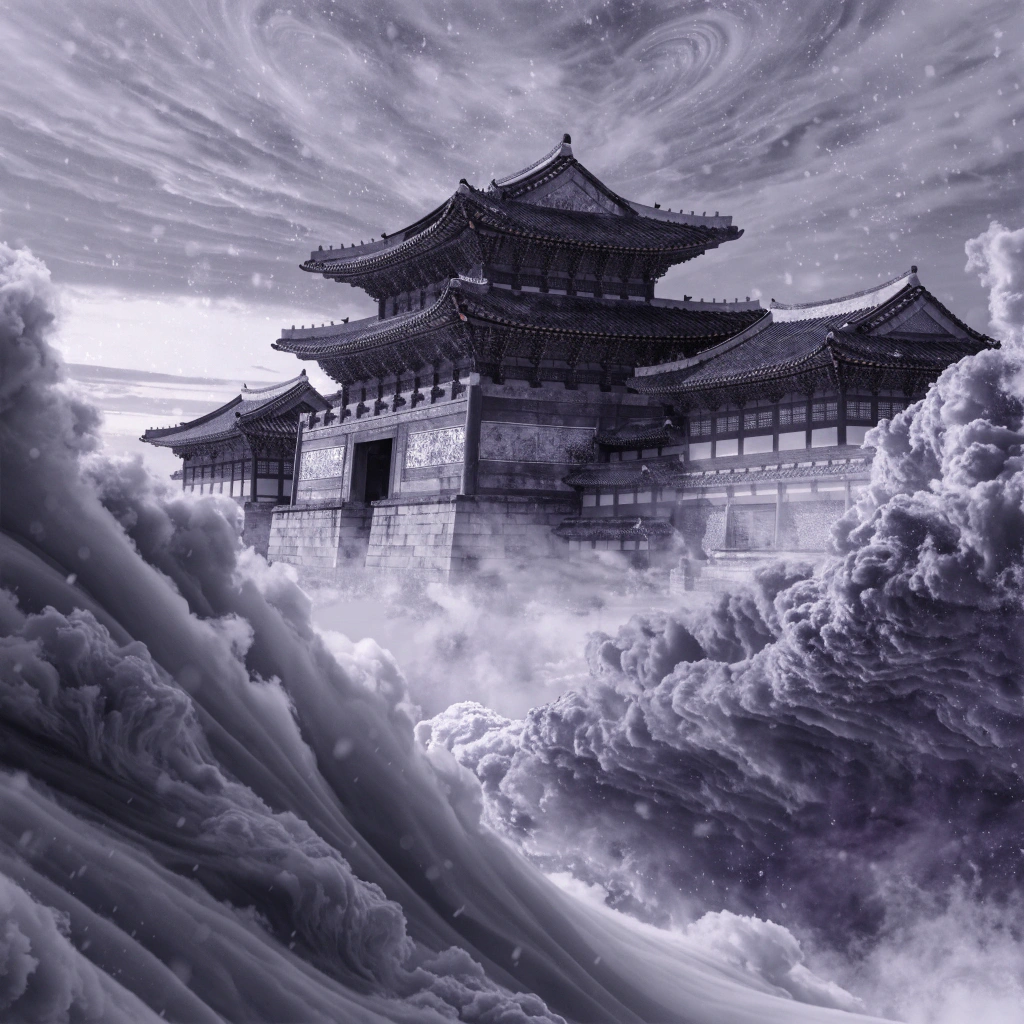
The Big Palace in Korea
Gyeongbokgung is a very big palace in Seoul, South Korea. It is a famous and old place. The palace started in 1395. In the past, many kings lived here with their families. It is the center of history in Korea.
The palace is beautiful. There are many tall mountains behind the buildings. There is also a river near the palace. Many people visit this place every day. They wear traditional Korean clothes called Hanbok. They take many photos near the big gates. Visitors like the beautiful gardens and the water. It is a great place to learn about Korea.
문법 스포트라이트
패턴: Present Simple of 'Be'
"Gyeongbokgung is a very big palace."
We use 'is' with singular subjects like 'Gyeongbokgung' to describe facts or states. It helps us give information about things.
패턴: Present Simple for Habits
"Many people visit this place every day."
We use the base form of the verb 'visit' for plural subjects like 'people'. This shows that the action happens regularly.
이해도를 테스트하세요
10 질문 · A1 초급 · 무료 미리보기 1회
이 기사에서 배운 내용을 테스트하세요. 모든 질문에 답하여 XP를 획득하세요!
Where is Gyeongbokgung palace?
문제별 결과
Where is Gyeongbokgung palace?
내 답변:
정답: South Korea
Many kings lived in the palace in the past.
내 답변:
정답: 참
What does 'traditional' mean?
내 답변:
정답: Following ways of the past
They take many _____ near the big gates.
내 답변:
정답: photos
한국의 멋진 궁궐: 경복궁
경복궁은 한국에서 가장 크고 유명한 궁궐입니다. 이 궁궐은 조선 시대에 1395년에 처음 지어졌습니다. 경복궁은 조선의 왕이 살았던 집이었고, 나라의 중요한 일들을 처리하던 중심지였습니다. 서울에 위치해 있으며, 뒤에는 아름다운 북악산이 있고, 앞에는 한강이 흐르는 좋은 자리에 만들어졌습니다.
경복궁은 한국의 오래된 건축 기술과 아름다움을 잘 보여줍니다. 옛날에는 전쟁 때문에 궁궐의 많은 부분이 파괴되기도 했습니다. 하지만 한국 사람들이 다시 열심히 복원해서 지금은 원래 모습을 많이 찾았습니다.
요즘에는 많은 한국 사람들과 외국인들이 경복궁을 방문합니다. 이곳에서 아름다운 한복을 입고 사진을 찍는 사람들도 많습니다. 경복궁은 한국의 역사와 문화를 직접 보고 배울 수 있는 아주 중요한 장소입니다. 여러분도 서울에 오면 경복궁에 꼭 가보세요. 정말 멋진 경험이 될 것입니다.
문법 스포트라이트
패턴: -았/었/했습니다 (Past Tense)
"이 궁궐은 조선 시대에 1395년에 처음 지어졌습니다."
이 문법은 과거에 일어난 일이나 상태를 말할 때 사용합니다. 동사나 형용사 뒤에 붙여서 '-(았/었/했)습니다' 형태로 씁니다. 예를 들어, '먹다'는 '먹었습니다'가 됩니다.
패턴: -고 (and, and then)
"뒤에는 아름다운 북악산이 있고, 앞에는 한강이 흐르는 좋은 자리에 만들어졌습니다."
이 문법은 두 개 이상의 행동이나 상태를 연결할 때 사용합니다. 동사나 형용사 뒤에 '-고'를 붙여서 앞 문장과 뒷 문장을 연결합니다. 시간 순서나 단순히 나열할 때 자주 씁니다.
이해도를 테스트하세요
11 질문 · A2 초등급 · 무료 미리보기 1회
이 기사에서 배운 내용을 테스트하세요. 모든 질문에 답하여 XP를 획득하세요!
경복궁은 언제 처음 지어졌습니까?
문제별 결과
경복궁은 언제 처음 지어졌습니까?
내 답변:
정답: 1395년에
경복궁은 왕이 살았던 집이었지만, 나라의 중요한 일들은 처리하지 않았습니다.
내 답변:
정답: 거짓
다음 중 '궁궐'의 뜻은 무엇입니까?
내 답변:
정답: 왕이 살았던 크고 아름다운 집
경복궁은 한국의 ____와 문화를 배울 수 있는 아주 중요한 장소입니다.
내 답변:
정답: 역사
옛날에 경복궁이 파괴된 주요 이유는 무엇입니까?
내 답변:
정답: 전쟁 때문에
경복궁: 조선의 가장 아름다운 궁궐
경복궁은 한국의 수도 서울에 있는 조선 왕조의 가장 중요한 궁궐이었습니다. 이 궁궐은 1395년에 지어졌으며, 조선 왕조가 시작된 지 3년 후에 완성되었습니다. 경복궁이라는 이름은 ‘하늘이 내린 큰 복’이라는 뜻을 가지고 있습니다. 이곳은 왕이 살았던 곳이자 나라의 정치를 결정하는 중요한 중심지였습니다.
경복궁의 위치는 특별한 원칙에 따라 정해졌습니다. 뒤로는 북악산이 있고, 앞으로는 한강이 흐르는 ‘풍수지리’ 원칙에 맞춰 세워졌습니다. 그래서 자연과 조화를 이루는 아름다운 모습을 가지고 있습니다. 많은 건물들이 있었지만, 역사적으로 여러 번 파괴되고 다시 지어졌습니다. 특히 임진왜란 때 불에 타서 오랫동안 폐허로 남아 있었고, 후에 다시 크게 복원되었습니다.
오늘날 경복궁은 한국의 중요한 문화유산으로 많은 사람들에게 사랑받고 있습니다. 아름다운 전통 건축 양식을 볼 수 있고, 한국의 역사를 배울 수 있는 좋은 장소입니다. 궁궐 안에는 근정전, 경회루와 같은 유명한 건물들이 있으며, 방문객들은 한복을 입고 옛날의 분위기를 체험할 수 있습니다. 경복궁은 과거와 현재가 만나는 특별한 공간입니다.
문법 스포트라이트
패턴: -(으)ㄴ/는/을 N (관형사형)
"경복궁은 한국의 수도 서울에 있는 조선 왕조의 가장 중요한 궁궐이었습니다."
이 문법은 동사나 형용사 뒤에 붙어, 뒤에 오는 명사를 설명해 줍니다. '있는'은 '있다' 동사에 '-는'이 붙어 '서울에 있는'이라는 의미로 '궁궐'을 꾸며줍니다. 과거형은 '-은', 현재형은 '-는', 미래형은 '-을'을 사용합니다.
패턴: -아/어지다 (수동태)
"이 궁궐은 1395년에 지어졌으며, 조선 왕조가 시작된 지 3년 후에 완성되었습니다."
이 문법은 어떤 행동이 주어에 의해 '당하다' 또는 '되다'는 의미를 나타내는 수동태입니다. '지어지다'는 '짓다(to build)'의 수동형으로 '만들어지다(to be built)'의 의미입니다. '완성되다'도 '완성하다(to complete)'의 수동형입니다.
이해도를 테스트하세요
11 질문 · B1 중급 · 무료 미리보기 1회
이 기사에서 배운 내용을 테스트하세요. 모든 질문에 답하여 XP를 획득하세요!
경복궁은 언제 건축되었습니까?
문제별 결과
경복궁은 언제 건축되었습니까?
내 답변:
정답: 1395년에
경복궁은 왕이 살았던 곳이자 나라의 정치를 결정하는 중심지였습니다.
내 답변:
정답: 참
다음 단어의 뜻은 무엇입니까? '문화유산'
내 답변:
정답: 역사적, 예술적 가치가 있는 것
경복궁의 위치는 뒤로는 북악산이 있고, 앞으로는 한강이 흐르는 ‘_______’ 원칙에 맞춰 세워졌습니다.
내 답변:
정답: 풍수지리
경복궁이 임진왜란 때 불에 타서 오랫동안 어떤 상태로 남아 있었습니까?
내 답변:
정답: 폐허
Gyeongbokgung: The Architectural Legacy of the Joseon Dynasty
Gyeongbokgung Palace, which stands as the most iconic symbol of Korea’s royal heritage, was first constructed in 1395. Its name, translating to 'Palace Greatly Blessed by Heaven,' reflects the high hopes of the Joseon Dynasty for a future of peace and prosperity. Situated in the heart of modern-day Seoul, the palace served as the primary residence for kings and the center of government for centuries. The location was chosen according to the principles of 'pungsu-jiri', or feng shui, ensuring that the structure was integrated into the natural landscape, with Bugaksan Mountain at its back and the Han River flowing in front.
While the palace is celebrated today for its beauty, its history has been marked by significant periods of destruction. During the Imjin War in 1592, the complex was almost entirely destroyed by fire. It remained in ruins for nearly 270 years until a massive restoration project was initiated in 1867. However, the palace faced further challenges during the Japanese occupation in the early 20th century, when many of its buildings were dismantled. Despite these hardships, the resilience of the Korean people has led to a continuous effort to rebuild and maintain the site, allowing it to remain a source of national pride.
Architecturally, Gyeongbokgung is a masterpiece of balance and symmetry. The Gyeonghoe-ru Pavilion, which appears to float on a peaceful lotus pond, was used for royal banquets and is considered one of the most beautiful structures in the complex. The Geonjeongjeon, or the Throne Hall, showcases the formal register of the Joseon court, where official ceremonies and state affairs were conducted. Visitors are often struck by the intricate colorful patterns, known as 'dancheong', which adorn the wooden eaves of the buildings.
In the modern era, Gyeongbokgung serves as more than just a museum. It is a living cultural site where the 'Changing of the Guard' ceremony is performed daily, offering a glimpse into the military traditions of the past. Furthermore, the preservation of the palace allows scholars to analyze the socio-political structure of the Joseon era. It might be argued that Gyeongbokgung is not merely a collection of buildings, but a testament to the enduring spirit of a nation that has successfully bridged the gap between its ancient traditions and its technological future.
문법 스포트라이트
패턴: Relative Clauses
"Gyeongbokgung Palace, which stands as the most iconic symbol of Korea’s royal heritage, was first constructed in 1395."
A non-defining relative clause is used here to provide extra information about the subject. It is separated by commas and uses 'which' for things.
패턴: Passive Voice
"The complex was almost entirely destroyed by fire."
The passive voice is used to focus on the action (destruction) rather than the agent. It is formed with 'be' + past participle.
패턴: Present Perfect Passive
"Its history has been marked by significant periods of destruction."
This structure (have/has + been + past participle) describes an action that started in the past and has an effect on the present, focusing on the palace's history.
이해도를 테스트하세요
11 질문 · B2 중상급 · 무료 미리보기 1회
이 기사에서 배운 내용을 테스트하세요. 모든 질문에 답하여 XP를 획득하세요!
What does the name 'Gyeongbokgung' mean in English?
문제별 결과
What does the name 'Gyeongbokgung' mean in English?
내 답변:
정답: Palace Greatly Blessed by Heaven
The palace was continuously occupied from 1395 until the modern era without interruption.
내 답변:
정답: 거짓
What does 'resilience' mean in the context of the article?
내 답변:
정답: The capacity to recover from difficulties
The palace was built according to the _____ of 'pungsu-jiri' to ensure harmony with nature.
내 답변:
정답: principles
Which building was specifically used for royal banquets?
내 답변:
정답: Gyeonghoe-ru Pavilion
The Resplendent Legacy of Gyeongbokgung: A Synthesis of Sovereign Power and Neo-Confucian Aesthetics
Seldom has a structure embodied the collective identity of a nation as profoundly as Gyeongbokgung Palace. Established in 1395, a mere three years after the Joseon Dynasty’s ascension, this 'Palace Greatly Blessed by Heaven' was not merely a royal residence but the epicenter of Neo-Confucian governance. Its topographical orientation was meticulously calculated according to the auspicious precepts of pungsu-jiri, ensuring a harmonious interplay between the built environment and the natural landscape. At its back stands the formidable Bugaksan Mountain, while the Han River flows gracefully to its south, a configuration intended to harness the vital energy of the earth.
It was the specific alignment with Bugaksan Mountain and the Han River that dictated the palace's spiritual potency. This adherence to traditional geomancy was not merely an aesthetic choice but a profound manifestation of the belief that a sovereign’s legitimacy was inextricably linked to cosmic order. Within the palace walls, the architectural layout mirrors a hierarchical society, with the Geunjeongjeon, or Throne Hall, serving as the resplendent focal point. Here, the king conducted formal affairs of state, framed by intricate dancheong—the traditional multicolored paintwork that symbolizes the five elements.
Furthermore, the Gyeonghoeru Pavilion, situated on a man-made pond, exemplifies the architectural sophistication of the era. It was here that the king hosted lavish banquets for foreign envoys, demonstrating the diplomatic prowess and cultural refinement of the Joseon court. The pavilion’s open structure allowed for a seamless integration with the surrounding water and flora, reinforcing the Neo-Confucian ideal of man living in accordance with nature. The structural integrity of these buildings, despite the passage of time and the scars of war, highlights the advanced engineering and artistic vision of the 14th-century craftsmen.
However, the history of Gyeongbokgung is far from a tranquil narrative of enduring majesty. The palace has faced near-total decimation on multiple occasions, most notably during the Imjin War in the late 16th century and again during the Japanese colonial occupation in the early 20th century. During these periods of upheaval, much of the complex was razed to the ground, yet the Korean people’s cultural fortitude ensured its eventual revival. The meticulous restoration of the palace complex serves as a testament to South Korea's commitment to cultural reclamation, transforming the ruins back into a symbol of national sovereignty.
In the contemporary era, Gyeongbokgung offers a striking juxtaposition against the glass-and-steel skyscrapers of modern Seoul. This visual contrast highlights the tension and harmony between Korea’s rapid modernization and its ancient roots. Visitors today do not merely witness a relic of the past; they engage with a living cultural heritage. The preservation of such a site requires more than just physical upkeep; it demands a critical appreciation of the Neo-Confucian ideals that originally shaped its corridors. Ultimately, Gyeongbokgung remains the quintessential emblem of Korean history, standing as a bridge between the Joseon legacy and the dynamic future of the peninsula.
문법 스포트라이트
패턴: Negative Inversion
"Seldom has a structure embodied the collective identity of a nation as profoundly as Gyeongbokgung Palace."
Inversion is used after negative or restrictive adverbs (like 'seldom') to add emphasis. The auxiliary verb comes before the subject, creating a formal and dramatic tone.
패턴: Cleft Sentence
"It was the specific alignment with Bugaksan Mountain and the Han River that dictated the palace's spiritual potency."
Cleft sentences (It + be + subject + relative clause) are used to focus on specific information. Here, it emphasizes the geographical alignment over other possible factors.
패턴: Nominalization
"The meticulous restoration of the palace complex serves as a testament to South Korea's commitment to cultural reclamation."
Nominalization involves turning verbs or adjectives into nouns (e.g., 'restoration', 'reclamation'). This makes the writing more concise, abstract, and academic in style.
이해도를 테스트하세요
12 질문 · C1 고급 · 무료 미리보기 1회
이 기사에서 배운 내용을 테스트하세요. 모든 질문에 답하여 XP를 획득하세요!
What was the primary philosophical influence behind the location and design of Gyeongbokgung?
문제별 결과
What was the primary philosophical influence behind the location and design of Gyeongbokgung?
내 답변:
정답: Neo-Confucianism and pungsu-jiri
Gyeongbokgung Palace has remained perfectly preserved since its construction in 1395.
내 답변:
정답: 거짓
Which word describes courage in the face of adversity?
내 답변:
정답: Fortitude
The palace faced near-total _____ during the Japanese colonial occupation.
내 답변:
정답: decimation
What does the 'dancheong' paintwork symbolize within the palace?
내 답변:
정답: The five elements
The Gyeonghoeru Pavilion was used for hosting foreign diplomats.
내 답변:
정답: 참
경복궁: 조선 왕조의 심장이자 민족 정신의 고고한 상징
경복궁은 단순한 건축물을 넘어, 조선 왕조 오백 년 역사의 숨결이 서린 살아있는 기록이자 민족의 정체성을 응축한 결정체라 할 수 있습니다. 1395년, 조선 건국 직후 창건된 이래 약 200여 년간 정궁(正宮)으로서 국정 운영의 핵심이자 왕실 생활의 구심점 역할을 수행해 왔습니다. 그 이름 ‘경복(景福)’은 ‘큰 복을 누리다’라는 의미를 담고 있으며, 이는 새로운 왕조가 백성과 더불어 태평성대를 구가하기를 염원하는 건국 세력의 궁극적 지향점을 명징하게 드러냅니다.
경복궁의 입지 선정은 당대 최고의 풍수지리 사상에 입각하여 이루어졌습니다. 북악산을 주산(主山)으로 삼아 든든히 등지고, 남산(南山)을 안산(案山)으로, 그리고 앞쪽으로는 한강의 지류가 흐르는 배산임수의 전형적인 길지(吉地)에 자리 잡음으로써, 왕조의 영속성과 번영을 기원하는 철학적, 미학적 고려가 심층적으로 반영되었음을 알 수 있습니다. 궁궐의 배치 또한 주례(周禮)의 ‘좌묘우사(左廟右社)’ 원칙에 따라 종묘와 사직단을 두어, 유교적 통치 이념이 건축 공간에 구현된 모범적인 사례로 평가받습니다.
그러나 경복궁의 역사는 순탄치만은 않았습니다. 임진왜란(1592-1598) 당시 왜군의 방화로 인해 모든 전각이 소실되는 비극을 겪게 됩니다. 이후 약 270여 년간 폐허로 방치되다, 흥선대원군의 주도로 고종 대에 이르러 대규모 중건이 단행됩니다. 이는 피폐해진 국력을 총동원하여 왕실의 권위와 민족의 자존심을 회복하고자 하는 강력한 의지의 발현이었으며, 오늘날 우리가 보는 웅장한 경복궁의 면모는 이때 재건된 것입니다. 그러나 일제강점기에는 또다시 조선총독부 건물 신축 등을 구실로 수많은 전각이 훼철되고 변형되는 수난을 겪게 됩니다. 이는 단순한 물리적 파괴를 넘어, 우리 민족의 정신적 뿌리를 말살하려는 식민 통치의 폭력성을 여실히 보여주는 대목입니다.
해방 이후, 특히 1990년대부터는 경복궁 복원 사업이 본격적으로 추진되어 현재까지도 진행 중입니다. 조선총독부 건물 철거를 시작으로, 광화문, 흥례문 등 주요 전각들이 제자리를 찾고 있으며, 옛 모습을 되찾아가는 과정은 훼손되었던 역사를 바로잡고 민족의 정통성을 회복하려는 범국민적 염원의 소산이라 할 수 있습니다. 이러한 복원 노력은 단지 건물을 다시 짓는 것을 넘어, 과거의 아픔을 치유하고 미래를 향한 희망을 다지는 의미를 내포합니다.
경복궁은 이제 과거의 왕궁을 넘어, 대한민국을 대표하는 역사 문화 유적이자 세계인의 발길이 끊이지 않는 관광 명소로 자리매김했습니다. 이곳을 거닐며 우리는 조선 왕조의 영욕(榮辱)을 되새기고, 선조들의 지혜와 미학을 엿볼 수 있습니다. 또한, 격동의 근현대사를 관통하며 민족이 겪었던 시련과 이를 극복해낸 불굴의 의지를 상기시키는 공간으로서, 경복궁은 우리에게 끊임없이 역사의 교훈과 자긍심을 선사합니다. 그 고고한 자태는 앞으로도 영원히 민족 정신의 등불로 빛날 것입니다.
문법 스포트라이트
패턴: A뿐더러 B
"이는 단순한 물리적 파괴를 넘어, 우리 민족의 정신적 뿌리를 말살하려는 식민 통치의 폭력성을 여실히 보여주는 대목입니다."
'A뿐더러 B'는 'A일 뿐만 아니라 B이기도 하다'라는 의미로, 앞 절의 내용에 더하여 뒤 절의 내용이 있음을 강조할 때 사용합니다. A와 B는 대개 병렬적인 관계를 가집니다.
패턴: ~(으)ㅁ으로써
"배산임수의 전형적인 길지(吉地)에 자리 잡음으로써, 왕조의 영속성과 번영을 기원하는 철학적, 미학적 고려가 심층적으로 반영되었음을 알 수 있습니다."
'~(으)ㅁ으로써'는 앞 절의 행위나 상태가 뒤 절의 결과나 목적을 이루는 수단이나 방법을 나타낼 때 사용합니다. 동사 어간에 붙어 명사형을 만들고, 그 명사형이 수단이 됨을 표현합니다.
패턴: ~(으)ㄹ 수밖에 없다
"경복궁은 조선 왕조 오백 년 역사의 숨결이 서린 살아있는 기록이자 민족의 정체성을 응축한 결정체라 할 수밖에 없습니다."
'~(으)ㄹ 수밖에 없다'는 어떤 상황이나 조건 때문에 다른 선택의 여지 없이 오직 한 가지 결과나 행동을 할 수밖에 없음을 나타내는 표현입니다. 강한 필연성이나 불가피성을 강조합니다.
이해도를 테스트하세요
12 질문 · C2 마스터 · 무료 미리보기 1회
이 기사에서 배운 내용을 테스트하세요. 모든 질문에 답하여 XP를 획득하세요!
경복궁의 이름 '경복(景福)'이 담고 있는 의미로 가장 적절한 것은 무엇입니까?
문제별 결과
경복궁의 이름 '경복(景福)'이 담고 있는 의미로 가장 적절한 것은 무엇입니까?
내 답변:
정답: 큰 복을 누리다
경복궁은 조선 건국과 동시에 창건되어 임진왜란 전까지 한 번도 소실된 적이 없었다.
내 답변:
정답: 거짓
다음 중 '훼철되다'의 의미로 가장 적절한 것은?
내 답변:
정답: 허물어지거나 부서져 없어지다
경복궁의 입지 선정은 북악산을 주산으로 삼고 한강의 지류가 흐르는 전형적인 ______에 자리 잡았습니다.
내 답변:
정답: 길지
흥선대원군이 경복궁을 대규모로 중건한 주된 목적은 무엇이었습니까?
내 답변:
정답: 왕실의 권위와 민족의 자존심을 회복하기 위함
경복궁 복원 사업은 현재 완료되어 더 이상 진행되지 않고 있다.
내 답변:
정답: 거짓

