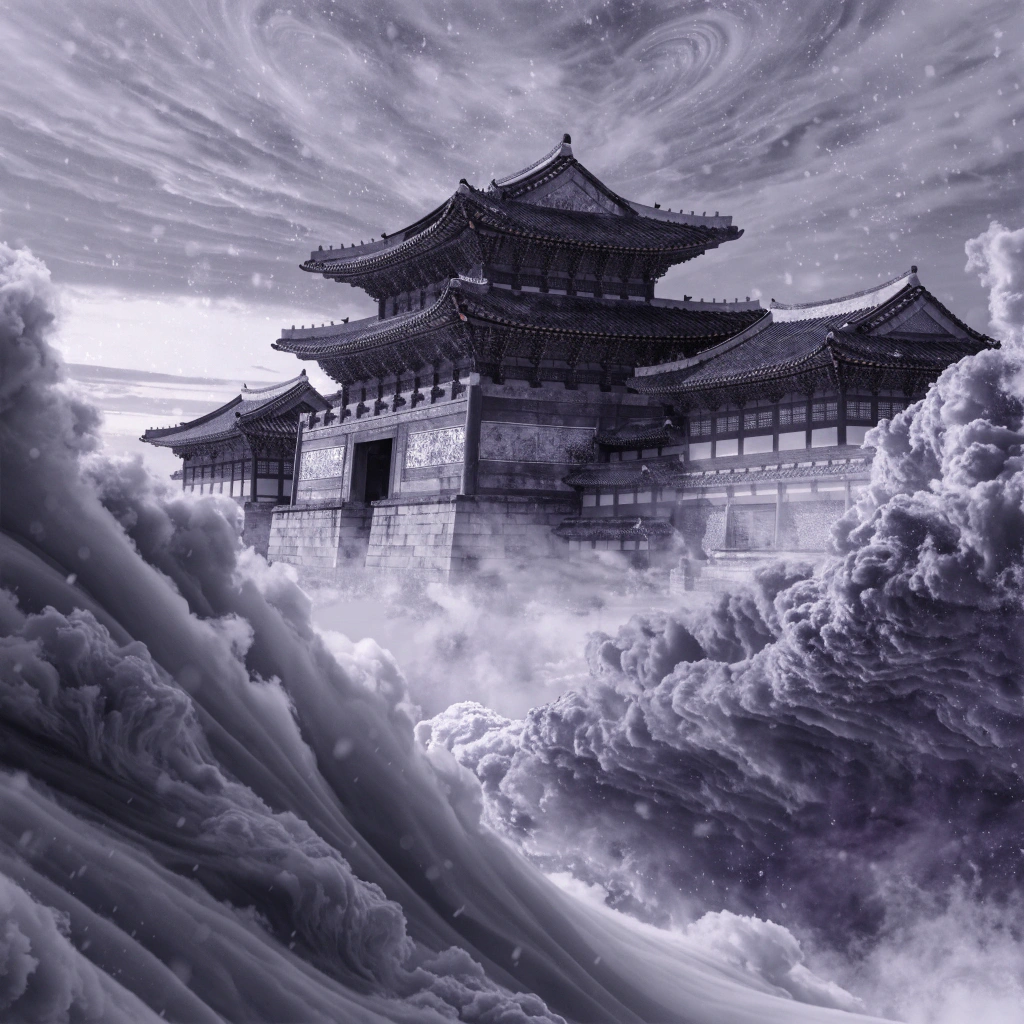
The Big Palace in Korea
Gyeongbokgung is a very big palace in Seoul, South Korea. It is a famous and old place. The palace started in 1395. In the past, many kings lived here with their families. It is the center of history in Korea.
The palace is beautiful. There are many tall mountains behind the buildings. There is also a river near the palace. Many people visit this place every day. They wear traditional Korean clothes called Hanbok. They take many photos near the big gates. Visitors like the beautiful gardens and the water. It is a great place to learn about Korea.
Grammar Spotlight
Pattern: Present Simple of 'Be'
"Gyeongbokgung is a very big palace."
We use 'is' with singular subjects like 'Gyeongbokgung' to describe facts or states. It helps us give information about things.
Pattern: Present Simple for Habits
"Many people visit this place every day."
We use the base form of the verb 'visit' for plural subjects like 'people'. This shows that the action happens regularly.
Test Your Understanding
10 questions · A1 Beginner · 1 free preview
Test what you learned from this article. Answer all questions to earn XP!
Where is Gyeongbokgung palace?
Want to finish the quiz?
9 more questions are waiting for you. Sign up free to unlock the full quiz and earn XP!
Sign Up FreeAlready have an account? Sign In
Question Breakdown
Where is Gyeongbokgung palace?
Your answer:
Correct answer: South Korea
Many kings lived in the palace in the past.
Your answer:
Correct answer: True
What does 'traditional' mean?
Your answer:
Correct answer: Following ways of the past
They take many _____ near the big gates.
Your answer:
Correct answer: photos
Gyeongbokgung: The Great Palace of Korea
Gyeongbokgung Palace is a famous place in Seoul, South Korea. It is the most beautiful palace in the city. Kings lived here many years ago. People built it in 1395, during the Joseon Dynasty. It was the center of the government and the main home for the royal family.
The palace is bigger than other palaces in Seoul because it was very important. It has many traditional buildings and beautiful gardens. There is a big mountain behind the palace and a river in front. The builders chose this location because they believed it was lucky.
Today, many tourists visit Gyeongbokgung every day. They like to take photos of the colorful gates and the changing of the guard ceremony. Some visitors wear traditional Korean clothes called Hanbok. If you wear Hanbok, you do not have to pay for a ticket. It is an interesting place to visit because you can learn about Korean history.
Grammar Spotlight
Pattern: Past Simple
"Kings lived here many years ago."
We use the past simple to talk about things that happened and finished in the past. For regular verbs like 'live', we add '-d' or '-ed' to the base form.
Pattern: Comparatives
"The palace is bigger than other palaces in Seoul."
We use comparatives to compare two things. For short adjectives like 'big', we double the last letter and add '-er' followed by 'than'.
Test Your Understanding
11 questions · A2 Elementary · 1 free preview
Test what you learned from this article. Answer all questions to earn XP!
Where is Gyeongbokgung Palace located?
Want to finish the quiz?
10 more questions are waiting for you. Sign up free to unlock the full quiz and earn XP!
Sign Up FreeAlready have an account? Sign In
Question Breakdown
Where is Gyeongbokgung Palace located?
Your answer:
Correct answer: Seoul
The palace was built in the year 1395.
Your answer:
Correct answer: True
What does 'royal' mean?
Your answer:
Correct answer: Related to kings and queens
The palace is _____ than other palaces in the city.
Your answer:
Correct answer: bigger
What is behind the palace?
Your answer:
Correct answer: A big mountain
Gyeongbokgung: The Heart of Korean History
Gyeongbokgung Palace, which is located in the heart of Seoul, is perhaps the most iconic symbol of South Korea’s royal history. It was built in 1395, shortly after the start of the Joseon Dynasty. The name of the palace translates to 'Palace Greatly Blessed by Heaven,' and it served as the main home for kings for many generations.
The location of the palace was carefully chosen according to ancient principles. It has a mountain behind it and a river in front, which was believed to bring good luck and protection to the royal family. The complex consists of many beautiful buildings, including the grand throne hall where official ceremonies were held.
Throughout history, the palace has faced many challenges. It was destroyed during several wars and remained empty for a long time. However, a major project was started to rebuild the structures. Today, many of the original buildings have been restored so that visitors can experience the traditional architecture. The wooden details and colorful paintings on the ceilings are particularly impressive.
Nowadays, Gyeongbokgung is a popular destination for both locals and tourists. Many visitors choose to wear Hanbok, which is traditional Korean clothing. If you wear Hanbok, you are allowed to enter the palace for free. This has become a popular trend, and you can see people taking photos near the stone statues and ponds.
Visiting the palace is a great way to understand Korean culture. It is a peaceful place where history has been preserved in the middle of a busy, modern city. Whether you are interested in history or just want to enjoy a walk in the gardens, Gyeongbokgung offers a unique experience that should not be missed.
Grammar Spotlight
Pattern: Relative Clauses
"Gyeongbokgung Palace, which is located in the heart of Seoul, is perhaps the most iconic symbol of South Korea’s royal history."
We use 'which' or 'who' after a noun to give more information about it. In this sentence, the relative clause describes the location of the palace.
Pattern: Passive Voice
"It was built in 1395, shortly after the start of the Joseon Dynasty."
The passive voice is formed using 'be' + past participle. It is used here because the action (building) is more important than who did it.
Test Your Understanding
11 questions · B1 Intermediate · 1 free preview
Test what you learned from this article. Answer all questions to earn XP!
When was Gyeongbokgung Palace first built?
Want to finish the quiz?
10 more questions are waiting for you. Sign up free to unlock the full quiz and earn XP!
Sign Up FreeAlready have an account? Sign In
Question Breakdown
When was Gyeongbokgung Palace first built?
Your answer:
Correct answer: 1395
The palace is located in a rural area far from the city of Seoul.
Your answer:
Correct answer: False
What does the word 'symbol' mean?
Your answer:
Correct answer: A sign that represents something
The name of the palace _____ to 'Palace Greatly Blessed by Heaven'.
Your answer:
Correct answer: translates
What benefit do visitors get for wearing Hanbok?
Your answer:
Correct answer: Free entry to the palace
Gyeongbokgung: The Architectural Legacy of the Joseon Dynasty
Gyeongbokgung Palace, which stands as the most iconic symbol of Korea’s royal heritage, was first constructed in 1395. Its name, translating to 'Palace Greatly Blessed by Heaven,' reflects the high hopes of the Joseon Dynasty for a future of peace and prosperity. Situated in the heart of modern-day Seoul, the palace served as the primary residence for kings and the center of government for centuries. The location was chosen according to the principles of 'pungsu-jiri', or feng shui, ensuring that the structure was integrated into the natural landscape, with Bugaksan Mountain at its back and the Han River flowing in front.
While the palace is celebrated today for its beauty, its history has been marked by significant periods of destruction. During the Imjin War in 1592, the complex was almost entirely destroyed by fire. It remained in ruins for nearly 270 years until a massive restoration project was initiated in 1867. However, the palace faced further challenges during the Japanese occupation in the early 20th century, when many of its buildings were dismantled. Despite these hardships, the resilience of the Korean people has led to a continuous effort to rebuild and maintain the site, allowing it to remain a source of national pride.
Architecturally, Gyeongbokgung is a masterpiece of balance and symmetry. The Gyeonghoe-ru Pavilion, which appears to float on a peaceful lotus pond, was used for royal banquets and is considered one of the most beautiful structures in the complex. The Geonjeongjeon, or the Throne Hall, showcases the formal register of the Joseon court, where official ceremonies and state affairs were conducted. Visitors are often struck by the intricate colorful patterns, known as 'dancheong', which adorn the wooden eaves of the buildings.
In the modern era, Gyeongbokgung serves as more than just a museum. It is a living cultural site where the 'Changing of the Guard' ceremony is performed daily, offering a glimpse into the military traditions of the past. Furthermore, the preservation of the palace allows scholars to analyze the socio-political structure of the Joseon era. It might be argued that Gyeongbokgung is not merely a collection of buildings, but a testament to the enduring spirit of a nation that has successfully bridged the gap between its ancient traditions and its technological future.
Grammar Spotlight
Pattern: Relative Clauses
"Gyeongbokgung Palace, which stands as the most iconic symbol of Korea’s royal heritage, was first constructed in 1395."
A non-defining relative clause is used here to provide extra information about the subject. It is separated by commas and uses 'which' for things.
Pattern: Passive Voice
"The complex was almost entirely destroyed by fire."
The passive voice is used to focus on the action (destruction) rather than the agent. It is formed with 'be' + past participle.
Pattern: Present Perfect Passive
"Its history has been marked by significant periods of destruction."
This structure (have/has + been + past participle) describes an action that started in the past and has an effect on the present, focusing on the palace's history.
Test Your Understanding
11 questions · B2 Upper Intermediate · 1 free preview
Test what you learned from this article. Answer all questions to earn XP!
What does the name 'Gyeongbokgung' mean in English?
Want to finish the quiz?
10 more questions are waiting for you. Sign up free to unlock the full quiz and earn XP!
Sign Up FreeAlready have an account? Sign In
Question Breakdown
What does the name 'Gyeongbokgung' mean in English?
Your answer:
Correct answer: Palace Greatly Blessed by Heaven
The palace was continuously occupied from 1395 until the modern era without interruption.
Your answer:
Correct answer: False
What does 'resilience' mean in the context of the article?
Your answer:
Correct answer: The capacity to recover from difficulties
The palace was built according to the _____ of 'pungsu-jiri' to ensure harmony with nature.
Your answer:
Correct answer: principles
Which building was specifically used for royal banquets?
Your answer:
Correct answer: Gyeonghoe-ru Pavilion
The Resplendent Legacy of Gyeongbokgung: A Synthesis of Sovereign Power and Neo-Confucian Aesthetics
Seldom has a structure embodied the collective identity of a nation as profoundly as Gyeongbokgung Palace. Established in 1395, a mere three years after the Joseon Dynasty’s ascension, this 'Palace Greatly Blessed by Heaven' was not merely a royal residence but the epicenter of Neo-Confucian governance. Its topographical orientation was meticulously calculated according to the auspicious precepts of pungsu-jiri, ensuring a harmonious interplay between the built environment and the natural landscape. At its back stands the formidable Bugaksan Mountain, while the Han River flows gracefully to its south, a configuration intended to harness the vital energy of the earth.
It was the specific alignment with Bugaksan Mountain and the Han River that dictated the palace's spiritual potency. This adherence to traditional geomancy was not merely an aesthetic choice but a profound manifestation of the belief that a sovereign’s legitimacy was inextricably linked to cosmic order. Within the palace walls, the architectural layout mirrors a hierarchical society, with the Geunjeongjeon, or Throne Hall, serving as the resplendent focal point. Here, the king conducted formal affairs of state, framed by intricate dancheong—the traditional multicolored paintwork that symbolizes the five elements.
Furthermore, the Gyeonghoeru Pavilion, situated on a man-made pond, exemplifies the architectural sophistication of the era. It was here that the king hosted lavish banquets for foreign envoys, demonstrating the diplomatic prowess and cultural refinement of the Joseon court. The pavilion’s open structure allowed for a seamless integration with the surrounding water and flora, reinforcing the Neo-Confucian ideal of man living in accordance with nature. The structural integrity of these buildings, despite the passage of time and the scars of war, highlights the advanced engineering and artistic vision of the 14th-century craftsmen.
However, the history of Gyeongbokgung is far from a tranquil narrative of enduring majesty. The palace has faced near-total decimation on multiple occasions, most notably during the Imjin War in the late 16th century and again during the Japanese colonial occupation in the early 20th century. During these periods of upheaval, much of the complex was razed to the ground, yet the Korean people’s cultural fortitude ensured its eventual revival. The meticulous restoration of the palace complex serves as a testament to South Korea's commitment to cultural reclamation, transforming the ruins back into a symbol of national sovereignty.
In the contemporary era, Gyeongbokgung offers a striking juxtaposition against the glass-and-steel skyscrapers of modern Seoul. This visual contrast highlights the tension and harmony between Korea’s rapid modernization and its ancient roots. Visitors today do not merely witness a relic of the past; they engage with a living cultural heritage. The preservation of such a site requires more than just physical upkeep; it demands a critical appreciation of the Neo-Confucian ideals that originally shaped its corridors. Ultimately, Gyeongbokgung remains the quintessential emblem of Korean history, standing as a bridge between the Joseon legacy and the dynamic future of the peninsula.
Grammar Spotlight
Pattern: Negative Inversion
"Seldom has a structure embodied the collective identity of a nation as profoundly as Gyeongbokgung Palace."
Inversion is used after negative or restrictive adverbs (like 'seldom') to add emphasis. The auxiliary verb comes before the subject, creating a formal and dramatic tone.
Pattern: Cleft Sentence
"It was the specific alignment with Bugaksan Mountain and the Han River that dictated the palace's spiritual potency."
Cleft sentences (It + be + subject + relative clause) are used to focus on specific information. Here, it emphasizes the geographical alignment over other possible factors.
Pattern: Nominalization
"The meticulous restoration of the palace complex serves as a testament to South Korea's commitment to cultural reclamation."
Nominalization involves turning verbs or adjectives into nouns (e.g., 'restoration', 'reclamation'). This makes the writing more concise, abstract, and academic in style.
Test Your Understanding
12 questions · C1 Advanced · 1 free preview
Test what you learned from this article. Answer all questions to earn XP!
What was the primary philosophical influence behind the location and design of Gyeongbokgung?
Want to finish the quiz?
11 more questions are waiting for you. Sign up free to unlock the full quiz and earn XP!
Sign Up FreeAlready have an account? Sign In
Question Breakdown
What was the primary philosophical influence behind the location and design of Gyeongbokgung?
Your answer:
Correct answer: Neo-Confucianism and pungsu-jiri
Gyeongbokgung Palace has remained perfectly preserved since its construction in 1395.
Your answer:
Correct answer: False
Which word describes courage in the face of adversity?
Your answer:
Correct answer: Fortitude
The palace faced near-total _____ during the Japanese colonial occupation.
Your answer:
Correct answer: decimation
What does the 'dancheong' paintwork symbolize within the palace?
Your answer:
Correct answer: The five elements
The Gyeonghoeru Pavilion was used for hosting foreign diplomats.
Your answer:
Correct answer: True
The Palimpsest of Sovereignty: A Philosophical Inquiry into Gyeongbokgung’s Architectural Vernacular
Gyeongbokgung Palace, or the 'Palace Greatly Blessed by Heaven,' constitutes far more than a mere vestige of a bygone era; it is a profound architectural manifestation of Neo-Confucian ideology and geomantic precision. Established in 1395, a mere triennium after the inception of the Joseon Dynasty, the complex was meticulously positioned according to the tenets of pungsu-jiri. This geomantic framework mandated a symbiotic relationship between the built environment and the topographical contours of the land, specifically the protective embrace of Bugaksan Mountain to the north and the life-giving flow of the Han River to the south. Such a configuration was not merely aesthetic but was believed to harness the 'gi' (vital energy) of the earth, thereby ensuring the longevity and rectitude of the sovereign’s rule.
Architecturally, Gyeongbokgung eschews the ostentatious ornamentation often associated with imperial Chinese structures, opting instead for a refined austerity that mirrors the Neo-Confucian emphasis on humility and moral discipline. The Dancheong—the intricate polychrome painting on wooden surfaces—serves a dual purpose: it provides a vibrant confluence of symbolic colors representing the five elements, while simultaneously protecting the timber from the ephemeral nature of the elements. Should one contemplate the juxtaposition of the Geunjeongjeon Hall against the jagged silhouette of Bugaksan, the intentionality of its placement becomes self-evident. It is an exercise in spatial harmony, where the human-made structure seeks not to dominate the landscape, but to integrate seamlessly within it.
However, the history of Gyeongbokgung is not one of uninterrupted tranquility. It has functioned as a historical palimpsest, with layers of destruction and restoration etched into its granite foundations. During the Japanese invasions of the late 16th century, the palace was razed to the ground, remaining in a state of desolation for nearly three centuries. It was not until the 1860s that the complex was reconstructed under the regency of Heungseon Daewongun, who sought to re-establish royal hegemony through monumental architecture. Yet, this revival was short-lived; the early 20th-century colonial occupation saw the systematic dismantling of the palace's structures to make way for the General Government Building, a deliberate attempt to obliterate the physical symbols of Korean identity.
Rarely has an edifice so poignantly encapsulated the resilient spirit of a nation. In the post-colonial era, a multi-decade restoration project has sought to reclaim the palace's original splendor, meticulously reconstructing pavilions and gates according to historical records. It might be argued that the current iteration of Gyeongbokgung is a simulacrum, yet for the Korean people, it represents a vital link to a heritage that refused to be extinguished. The palace stands today as a testament to the confluence of traditional wisdom and modern preservation, a site where the echoes of the Joseon kings resonate amidst the frenetic pace of contemporary Seoul. Lest the spiritual equilibrium be disturbed, the restoration continues with scholarly rigor, ensuring that the architectural vernacular of Gyeongbokgung remains an articulate voice in the global discourse on cultural heritage.
Grammar Spotlight
Pattern: Inversion for Emphasis
"Rarely has an edifice so poignantly encapsulated the resilient spirit of a nation."
When negative or restrictive adverbs like 'rarely' start a sentence, the auxiliary verb is placed before the subject. This structure is used in formal writing to create a more dramatic or emphatic tone.
Pattern: The Subjunctive Mood
"Should one contemplate the juxtaposition of the Geunjeongjeon Hall against the jagged silhouette of Bugaksan, the intentionality of its placement becomes self-evident."
The use of 'should' at the beginning of a sentence acts as a formal alternative to 'if' in a first conditional structure. It expresses a hypothetical situation with a high degree of formality.
Pattern: Academic Hedging
"It might be argued that the current iteration of Gyeongbokgung is a simulacrum."
Hedging is the use of cautious language to express a claim without total certainty. 'It might be argued that' allows the author to present a perspective while acknowledging other possible interpretations.
Test Your Understanding
12 questions · C2 Mastery · 1 free preview
Test what you learned from this article. Answer all questions to earn XP!
What was the primary philosophical driver behind the aesthetic of Gyeongbokgung?
Want to finish the quiz?
11 more questions are waiting for you. Sign up free to unlock the full quiz and earn XP!
Sign Up FreeAlready have an account? Sign In
Question Breakdown
What was the primary philosophical driver behind the aesthetic of Gyeongbokgung?
Your answer:
Correct answer: Neo-Confucian humility and moral discipline
The palace remained in continuous use from its founding in 1395 until the modern era.
Your answer:
Correct answer: False
What does 'palimpsest' refer to in the context of the article?
Your answer:
Correct answer: A structure that retains traces of its layered history
The geomantic framework of _____ mandated a symbiotic relationship between the palace and its surroundings.
Your answer:
Correct answer: pungsu-jiri
Why was the palace dismantled during the early 20th century?
Your answer:
Correct answer: To erase physical symbols of Korean identity
The Dancheong painting serves both an aesthetic and a practical purpose.
Your answer:
Correct answer: True
