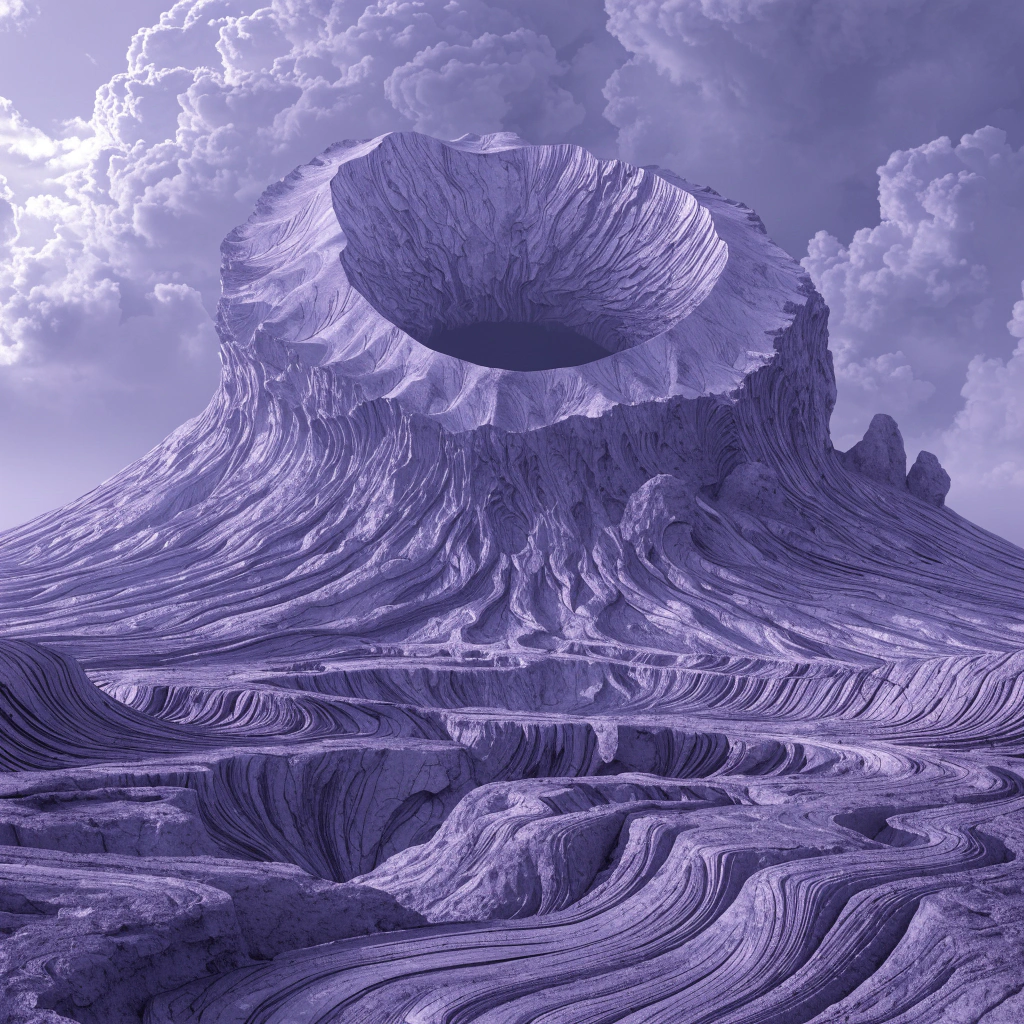
Sunrise Peak: A Beautiful Mountain
Seongsan Ilchulbong is a beautiful place in South Korea. It is on Jeju Island. People call it Sunrise Peak. It is a very big crater. It looks like a crown.
The mountain is very old. It is 5,000 years old. It is next to the blue sea. Many people visit this place. They walk up the stairs. It is a long walk, but it is good.
In the morning, the sun is very bright. People watch the sunrise here. It is a special place in the world. It is a UNESCO site. It is very quiet and pretty.
Grammar Spotlight
Pattern: Present Simple 'be'
"It is on Jeju Island."
We use 'is' with singular subjects like 'it' or 'the mountain' to describe facts or locations. This is the most common verb in English for descriptions.
Pattern: Present Simple (Action Verbs)
"Many people visit this place."
We use the base form of the verb for plural subjects like 'people'. It describes a regular activity or a general truth.
Test Your Understanding
10 questions · A1 Beginner · 1 free preview
Test what you learned from this article. Answer all questions to earn XP!
Where is Seongsan Ilchulbong?
Want to finish the quiz?
9 more questions are waiting for you. Sign up free to unlock the full quiz and earn XP!
Sign Up FreeAlready have an account? Sign In
Question Breakdown
Where is Seongsan Ilchulbong?
Your answer:
Correct answer: In South Korea
The mountain is 100 years old.
Your answer:
Correct answer: False
What does 'island' mean?
Your answer:
Correct answer: Land with water all around it
They _____ up the stairs.
Your answer:
Correct answer: walk
Sunrise Peak: A Special Place in Korea
Seongsan Ilchulbong is a famous mountain on Jeju Island in South Korea. People also call it 'Sunrise Peak' because the sun looks beautiful from the top. It is very old. It formed about 5,000 years ago. Hot magma met the cold seawater and created a large explosion. Now, it looks like a giant green crown in the ocean.
Many tourists visit this place every year. They walk up a long path to see the view. The walk is not easy, but it is shorter than other mountains. It takes about twenty minutes to reach the top. From there, you can see the blue sea and the green grass inside the crater.
In 2007, UNESCO said this place is very important for the world. It is one of the most beautiful natural sites in Korea. If you visit Jeju Island, you should wake up early and see the sunrise there. It is a memory you will never forget.
Grammar Spotlight
Pattern: Past Simple (Regular and Irregular)
"Hot magma met the cold seawater and created a large explosion."
We use the past simple to talk about finished actions in the past. 'Created' is a regular verb ending in -ed, while 'met' is the irregular past form of 'meet'.
Pattern: Comparatives
"The walk is not easy, but it is shorter than other mountains."
We use comparatives to compare two things. For short adjectives like 'short', we add -er to the end and use the word 'than'.
Test Your Understanding
11 questions · A2 Elementary · 1 free preview
Test what you learned from this article. Answer all questions to earn XP!
Where is Seongsan Ilchulbong located?
Want to finish the quiz?
10 more questions are waiting for you. Sign up free to unlock the full quiz and earn XP!
Sign Up FreeAlready have an account? Sign In
Question Breakdown
Where is Seongsan Ilchulbong located?
Your answer:
Correct answer: On Jeju Island
The mountain was formed 5,000 years ago.
Your answer:
Correct answer: True
What is an 'island'?
Your answer:
Correct answer: A piece of land with water all around it
Now, it looks like a giant green _____ in the ocean.
Your answer:
Correct answer: crown
How long does it take to walk to the top?
Your answer:
Correct answer: About twenty minutes
Sunrise Peak: A Natural Wonder on Jeju Island
Seongsan Ilchulbong, which is also known as 'Sunrise Peak,' has become one of the most famous tourist destinations in South Korea. It is located on the eastern side of Jeju Island, an area famous for its natural beauty. This massive volcanic crater has been visited by millions of people who want to see the beautiful scenery and take photographs of the landscape.
The mountain was formed about 5,000 years ago by volcanic eruptions under the sea. This process, which is called a hydrovolcanic eruption, created a unique shape that looks like a giant crown from above. The peak is surrounded by steep cliffs and the deep blue ocean, making it look like a fortress. Because of its incredible beauty and scientific importance, the site has been protected by UNESCO as a World Natural Heritage site since 2007.
For many travelers, the best part of the trip is hiking to the top. Although the path is quite steep, the walk only takes about twenty minutes if you are fit. From the summit, you can see a large green crater that is covered with grass and diverse plants. Many people wake up very early to watch the sun rise over the horizon. It is an experience that has been described as 'magical' by many visitors who come from all over the world.
Visitors should also look for the 'Haenyeo' or female divers who work near the base of the peak. These women have practiced traditional diving for centuries without using oxygen tanks. Seongsan Ilchulbong is not just a geological wonder; it is a place where nature and culture meet. It remains a symbol of the island’s spirit and history.
Grammar Spotlight
Pattern: Relative Clauses
"Seongsan Ilchulbong, which is also known as 'Sunrise Peak,' has become one of the most famous tourist destinations in South Korea."
Relative clauses use relative pronouns like 'which' or 'who' to give more information about a noun. In this sentence, the clause adds a second name for the mountain.
Pattern: Passive Voice
"The mountain was formed about 5,000 years ago by volcanic eruptions under the sea."
The passive voice is used when the focus is on the action or the object receiving the action. It is formed using the verb 'to be' plus the past participle.
Test Your Understanding
11 questions · B1 Intermediate · 1 free preview
Test what you learned from this article. Answer all questions to earn XP!
Where is Seongsan Ilchulbong located on Jeju Island?
Want to finish the quiz?
10 more questions are waiting for you. Sign up free to unlock the full quiz and earn XP!
Sign Up FreeAlready have an account? Sign In
Question Breakdown
Where is Seongsan Ilchulbong located on Jeju Island?
Your answer:
Correct answer: On the eastern side
The mountain was formed by volcanic eruptions that happened under the sea.
Your answer:
Correct answer: True
What does 'summit' mean?
Your answer:
Correct answer: The highest point of a mountain
The peak looks like a giant _____ from above.
Your answer:
Correct answer: crown
In what year did UNESCO protect the site as a World Natural Heritage site?
Your answer:
Correct answer: 2007
The Majestic Crown: Exploring the Volcanic Legacy of Seongsan Ilchulbong
Rising dramatically from the eastern shores of Jeju Island, Seongsan Ilchulbong, commonly referred to as 'Sunrise Peak,' stands as a testament to the dynamic volcanic history of the South Korean peninsula. This iconic tuff cone, which was formed approximately 5,000 years ago, represents a rare geological phenomenon known as a hydrovolcanic eruption. Unlike typical volcanic activity, this specific event occurred when hot magma interacted with cold seawater, resulting in violent explosions that shaped the landscape we see today. Consequently, the site features a massive, crown-like crater sitting atop a steep vertical cliff, creating a silhouette that is visible from miles away.
The significance of Seongsan Ilchulbong extends beyond its aesthetic appeal. In 2007, it was officially designated as a UNESCO World Natural Heritage site, a title reserved for locations of outstanding universal value. Geologists from around the world frequently visit the peak to study its unique structure, as it provides a clear record of the sedimentary processes involved in underwater volcanic eruptions. Furthermore, the preservation of this site is crucial for maintaining the ecological balance of Jeju Island, which is home to various endangered plant species that thrive within the crater’s protected environment.
For those who are willing to undertake the climb, the experience is nothing short of breathtaking. A well-maintained path leads visitors up the steep incline, offering panoramic views of the surrounding ocean and the lush greenery of the island. Upon reaching the summit, hikers are greeted by the sight of the expansive crater, which spans roughly 600 meters in diameter. If one were to visit at dawn, they would witness the sun rising directly over the horizon, an event so spectacular that it has become a symbol of hope and renewal for the local population.
In addition to its geological wonders, the area around Seongsan Ilchulbong is culturally significant. The nearby shores are famous for the 'Haenyeo,' or traditional female divers, who have harvested seafood for centuries without the use of oxygen tanks. Their presence serves as a reminder of the harmonious relationship between the people of Jeju and their natural surroundings. Ultimately, Seongsan Ilchulbong is not merely a tourist destination; it is a complex intersection of history, science, and culture that continues to inspire all who visit.
Grammar Spotlight
Pattern: Passive Voice
"This iconic tuff cone, which was formed approximately 5,000 years ago..."
The passive voice is used here to focus on the geological object rather than the person or force that created it. It is formed using the verb 'to be' plus the past participle.
Pattern: Relative Clauses with 'which'
"Unlike typical volcanic activity, this specific event occurred when hot magma interacted with cold seawater, resulting in violent explosions that shaped the landscape we see today."
Relative clauses provide essential or extra information about a noun. In this case, 'that' introduces a defining relative clause describing the explosions.
Pattern: Second Conditional (Hypothetical)
"If one were to visit at dawn, they would witness the sun rising directly over the horizon..."
The second conditional is used to describe an imaginary or hypothetical situation in the present or future. It uses 'if + past subjunctive' and 'would + base verb'.
Test Your Understanding
11 questions · B2 Upper Intermediate · 1 free preview
Test what you learned from this article. Answer all questions to earn XP!
How long ago was Seongsan Ilchulbong formed?
Want to finish the quiz?
10 more questions are waiting for you. Sign up free to unlock the full quiz and earn XP!
Sign Up FreeAlready have an account? Sign In
Question Breakdown
How long ago was Seongsan Ilchulbong formed?
Your answer:
Correct answer: 5,000 years ago
Seongsan Ilchulbong is officially recognized as a UNESCO World Natural Heritage site.
Your answer:
Correct answer: True
What does 'crater' mean in the context of the article?
Your answer:
Correct answer: A bowl-shaped cavity at the summit
The rare geological phenomenon known as a hydrovolcanic _____ occurred due to magma and seawater.
Your answer:
Correct answer: eruption
What created the violent explosions that shaped the peak?
Your answer:
Correct answer: Magma interacting with cold seawater
The Majesty and Fragility of Seongsan Ilchulbong: A Geological Masterpiece
Rising with a defiant grandeur from the azure depths of the East China Sea, Seongsan Ilchulbong stands as a testament to the raw, transformative power of the Earth’s inner heat. Often referred to as 'Sunrise Peak,' this monolithic tuff cone is not merely a scenic backdrop for tourists; rather, it represents a complex geological manifestation of hydrovolcanic activity. Formed approximately 5,000 years ago, the peak’s birth was a violent affair, catalyzed by the explosive interaction between rising magma and the frigid waters surrounding Jeju Island. This hydrovolcanic process, rare in its purity here, resulted in the dramatic verticality that defines the island’s eastern coastline.
Seldom does the natural world offer such a pristine example of volcanic stratification. The layers of ash and lapilli, meticulously deposited during its brief but intense formation, provide geologists with a chronological map of the eruption’s pulse. It is this unique structural integrity that earned the site its UNESCO World Natural Heritage designation. However, the juxtaposition of its ecological fragility against its popularity as a premier travel destination presents a modern quandary for conservationists. The sheer volume of foot traffic necessitates a constant reassessment of the island’s carrying capacity.
The meticulous preservation of the site has become a focal point of local environmental policy. As visitors ascend the steep, manicured paths to witness the sun’s first rays illuminating the crown-like crater, the anthropogenic impact on the surrounding biodiversity remains a constant concern. The trampling of indigenous flora and the subtle erosion of the tuff surface are the inevitable consequences of mass tourism. Notwithstanding these challenges, the local government has implemented stringent measures to mitigate damage, ensuring that the peak’s majesty is not an ephemeral spectacle but a legacy for future generations. It is through these regulations that the authorities hope to stabilize the delicate ecosystem.
Furthermore, the cultural significance of Seongsan Ilchulbong is inextricably linked to the 'Haenyeo'—the legendary female divers of Jeju. To observe these women harvesting abalone and sea urchins at the base of the towering cliffs is to witness a symbiotic relationship between humanity and the sea that has endured for centuries. This cultural heritage, coupled with the site’s geological rarity, creates a multifaceted narrative of resilience. The divers themselves serve as a living link to a pre-industrial past, their livelihoods dependent on the health of the marine environment surrounding the peak.
Ultimately, the discourse surrounding Seongsan Ilchulbong must go beyond mere aesthetics. It requires a critical analysis of how we balance the commodification of natural wonders with the ethical imperative of stewardship. It is the responsibility of the global community to ensure that such sites are not exploited for short-term economic gain. Only through such a nuanced approach can we hope to maintain the equilibrium of this volcanic masterpiece. The peak serves as a reminder that our interaction with the environment is not a one-sided affair, but a continuous dialogue between the forces of nature and the ambitions of mankind.
Grammar Spotlight
Pattern: Negative Inversion
"Seldom does the natural world offer such a pristine example of volcanic stratification."
When we start a sentence with a negative or limiting adverb like 'seldom' or 'never', the auxiliary verb comes before the subject. This is used in formal writing to add emphasis.
Pattern: Cleft Sentences
"It is this unique structural integrity that earned the site its UNESCO World Natural Heritage designation."
Cleft sentences use 'It is/was... that' to focus on a specific piece of information. Here, it emphasizes the structural integrity as the primary reason for the UNESCO status.
Pattern: Nominalisation
"The meticulous preservation of the site has become a focal point of local environmental policy."
Nominalisation involves turning verbs (preserve) into nouns (preservation). This makes the writing more abstract, formal, and concise, which is characteristic of C1 level academic prose.
Test Your Understanding
12 questions · C1 Advanced · 1 free preview
Test what you learned from this article. Answer all questions to earn XP!
What was the primary cause of the formation of Seongsan Ilchulbong?
Want to finish the quiz?
11 more questions are waiting for you. Sign up free to unlock the full quiz and earn XP!
Sign Up FreeAlready have an account? Sign In
Question Breakdown
What was the primary cause of the formation of Seongsan Ilchulbong?
Your answer:
Correct answer: Hydrovolcanic eruptions involving magma and seawater
The peak was formed approximately 50,000 years ago.
Your answer:
Correct answer: False
What does 'ephemeral' mean in the context of the article?
Your answer:
Correct answer: Lasting for a very short time
The explosive interaction between rising _____ and frigid water created the peak.
Your answer:
Correct answer: magma
What is the 'modern quandary' mentioned regarding the site?
Your answer:
Correct answer: The conflict between ecological fragility and mass tourism
The 'Haenyeo' divers represent a symbiotic relationship between humans and the sea.
Your answer:
Correct answer: True
The Sublimity of the Tuff Cone: A Geomorphological Appraisal of Seongsan Ilchulbong
Rising with a monolithic grandeur from the cerulean depths of the East China Sea, Seongsan Ilchulbong—colloquially termed 'Sunrise Peak'—stands as a testament to the volatile geological history of Jeju Island. This hydrovolcanic edifice, a classic example of a tuff cone, was forged through the violent cataclysms of phreatomagmatic eruptions approximately five millennia ago. At such a juncture, the ascent of scorching magma was met with the frigid resistance of seawater, precipitating a series of explosions that sculpted the landscape into its present, crown-like configuration. The resulting morphology—a steep-sided cone with a wide, flat-bottomed crater—is a textbook illustration of hydrovolcanic activity.
The stratigraphy of the cone offers an unparalleled window into the subaqueous and subaerial processes that define such formations. To the discerning geologist, the alternating layers of volcanic ash and lapilli reveal a narrative of episodic cooling and deposition. Rarely does a geological formation encapsulate the violent genesis of its own existence so vividly as Seongsan Ilchulbong. Indeed, the sheer verticality of its precipitous cliffs, carved over eons by the relentless erosive power of the Pacific, serves to underscore the site’s rugged resilience. Furthermore, the site serves as a crucial laboratory for understanding global sea-level changes. The height and composition of the tuff layers provide data points for researchers attempting to reconstruct the paleoclimate of the Holocene epoch.
Designated as a UNESCO World Natural Heritage site, the peak’s ecological and geological significance cannot be overstated. It is not merely a static relic of the past but a dynamic environment where the interplay of terrestrial and marine ecosystems persists. Were one to scrutinize the crater floor, which spans some 600 meters in diameter, one would find a lush verdancy that contrasts sharply with the jagged, basaltic perimeter. This juxtaposition of the fertile and the volcanic is a hallmark of Jeju’s unique geomorphology. To ignore the scientific weight of such a site would be to overlook the complex stratigraphy that narrates the Earth's climatic shifts.
The cultural resonance of the peak is equally profound. It has long been a site of spiritual pilgrimage, where the ephemeral beauty of the first sunrise is sought by those hoping for renewal. There is a certain sublimity to the experience; as the sun breaches the horizon, the tuff cone is bathed in a golden hue that masks the violent origins of its birth. Such a spectacle invites a philosophical contemplation of time, wherein the human lifespan is but a fleeting vestige compared to the lithic endurance of the peak. The aesthetic allure is often described through the lens of the 'sublime'—a philosophical concept where beauty and terror coexist in the face of nature's power.
However, the site’s popularity presents a concomitant challenge: the preservation of its geological integrity. It is imperative that the site be preserved from the deleterious effects of over-tourism, lest the very features that draw visitors be eroded by their presence. Scholars argue that the management of such sites requires a delicate balance between accessibility and conservation. Academic hedging suggests that while tourism provides economic impetus, it may simultaneously jeopardize the fragile stratigraphy of the cone if left unmitigated. In conclusion, Seongsan Ilchulbong is more than a mere topographical anomaly; it is a synthesis of hydrovolcanic violence, erosive artistry, and cultural symbolism. Should the observer venture to the summit at dawn, they would witness the interplay of light and basaltic rock that has defined the region's identity for centuries.
Grammar Spotlight
Pattern: Negative Inversion
"Rarely does a geological formation encapsulate the violent genesis of its own existence so vividly as Seongsan Ilchulbong."
Inversion is used after negative or restrictive adverbs like 'rarely' to add emphasis and formal tone. The auxiliary verb 'does' precedes the subject 'geological formation'.
Pattern: Inverted Conditionals (Should/Were)
"Should the observer venture to the summit at dawn, they would witness the interplay of light and basaltic rock."
This structure replaces 'If the observer should venture...' to create a more formal, academic tone typical of C2 writing. It expresses a hypothetical or literary condition.
Pattern: Mandative Subjunctive
"It is imperative that the site be preserved from the deleterious effects of over-tourism."
The subjunctive mood (be preserved) is used after adjectives of urgency or importance like 'imperative'. The base form of the verb is used regardless of the subject's person or number.
Test Your Understanding
12 questions · C2 Mastery · 1 free preview
Test what you learned from this article. Answer all questions to earn XP!
What primary mechanism was responsible for the formation of Seongsan Ilchulbong?
Want to finish the quiz?
11 more questions are waiting for you. Sign up free to unlock the full quiz and earn XP!
Sign Up FreeAlready have an account? Sign In
Question Breakdown
What primary mechanism was responsible for the formation of Seongsan Ilchulbong?
Your answer:
Correct answer: Phreatomagmatic explosions from magma-water interaction
The article suggests that the site's popularity poses no threat to its geological stratigraphy.
Your answer:
Correct answer: False
Which word describes something that is 'lasting for a very short time'?
Your answer:
Correct answer: Ephemeral
Seongsan Ilchulbong is designated as a UNESCO World _____ Heritage site.
Your answer:
Correct answer: Natural
How does the author characterize the 'sublime' in the context of the peak?
Your answer:
Correct answer: As a coexistence of beauty and terror in nature
The crater floor of Seongsan Ilchulbong is characterized by a lack of vegetation due to volcanic activity.
Your answer:
Correct answer: False
