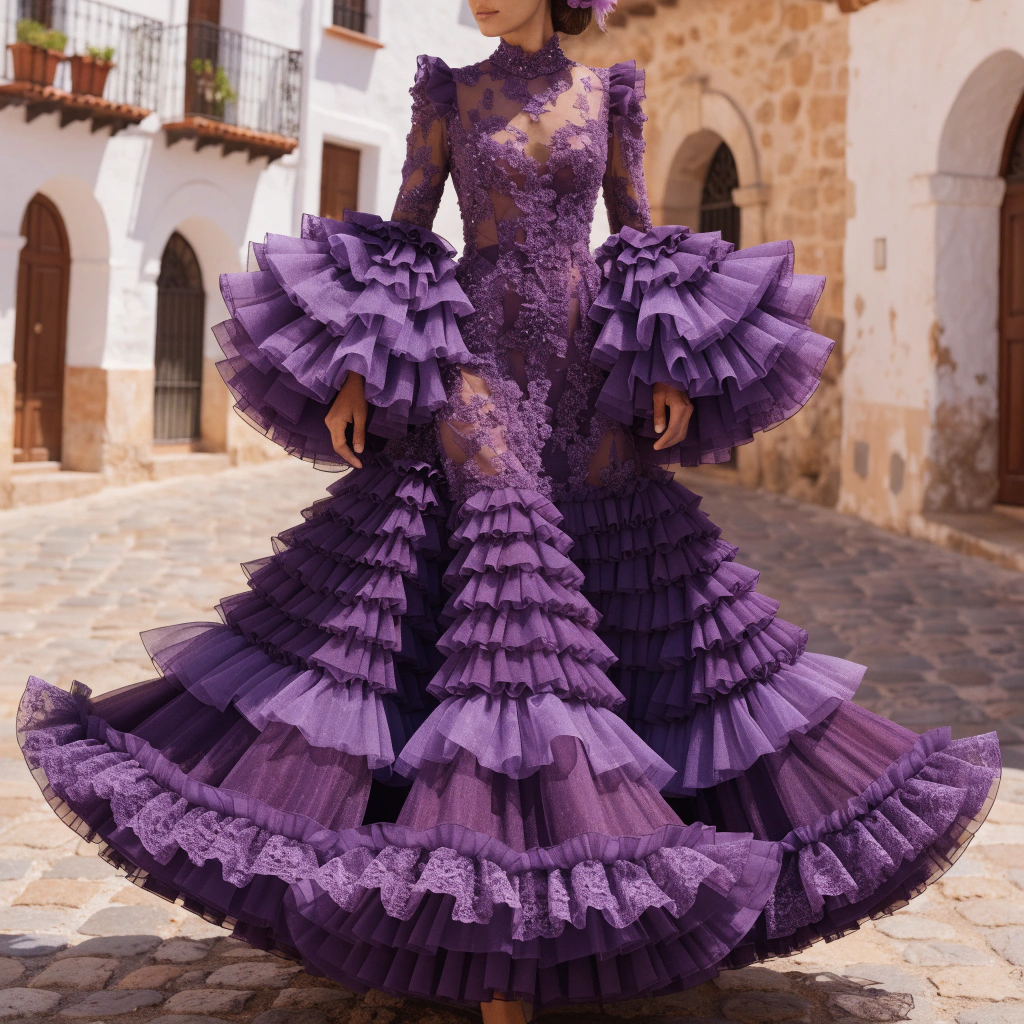
The Beautiful Flamenco Dress
Spain has a special dress. It is the flamenco dress. Women in Andalusia wear this dress. It is very beautiful and colorful.
The dress has many colors. It has red, black, and white colors. It also has many flowers and dots. Women wear the dress at big parties. These parties are in the spring.
The dress changes every year. It is like modern clothes. It follows new fashion. People love the flamenco dress. It is a famous symbol of Spain. Women also wear a flower in their hair. They look very happy.
문법 스포트라이트
패턴: Present Simple for Facts
"Spain has a special dress."
We use the present simple to talk about things that are always true. For singular subjects like 'Spain', we use 'has' or add '-s' to the verb.
패턴: Adjectives before Nouns
"It is a famous symbol of Spain."
In English, describing words (adjectives) usually come before the thing they describe (noun). Here, 'famous' comes before 'symbol'.
이해도를 테스트하세요
10 질문 · A1 초급 · 무료 미리보기 1회
이 기사에서 배운 내용을 테스트하세요. 모든 질문에 답하여 XP를 획득하세요!
Where do women wear the flamenco dress?
문제별 결과
Where do women wear the flamenco dress?
내 답변:
정답: In Andalusia
The flamenco dress is the same every year.
내 답변:
정답: 거짓
What does 'colorful' mean?
내 답변:
정답: Having many colors
The dress changes every _____.
내 답변:
정답: year
스페인의 아름다운 전통 옷: 플라멩코 드레스
스페인의 안달루시아 지방에는 아주 유명한 옷이 있습니다. 바로 '플라멩코 드레스'입니다. 이 옷은 플라멩코 춤을 출 때 입는 옷입니다. 사람들은 이 옷을 '히타나 드레스'라고도 부릅니다. 보통 다른 나라의 전통 옷은 디자인이 거의 바뀌지 않습니다. 하지만 플라멩코 드레스는 조금 다릅니다. 이 옷은 매년 유행에 따라 디자인이 바뀌어서 아주 특별합니다. 그래서 사람들은 매년 새로운 드레스를 기대합니다.
매년 봄이 되면 세비야에서는 큰 축제가 열립니다. 이때 많은 여성이 화려한 드레스를 입고 거리에 나옵니다. 드레스는 색깔이 아주 밝고 꽃무늬가 많습니다. 드레스의 밑부분에는 예쁜 주름이 많이 있습니다. 사람들은 축제에서 춤을 추고 친구들과 즐거운 시간을 보냅니다. 사람들은 이 옷을 입으면 아주 기분이 좋아집니다. 드레스와 함께 예쁜 꽃을 머리에 꽂고 귀걸이도 합니다. 플라멩코 드레스는 스페인의 문화를 아주 잘 보여줍니다. 이 옷은 단순한 옛날 옷이 아니라, 지금도 사랑받는 패션입니다.
문법 스포트라이트
패턴: -아/어서
"이 옷은 매년 유행에 따라 디자인이 바뀌어서 아주 특별합니다."
어떤 일의 이유를 말할 때 사용합니다. 형용사나 동사의 어간 뒤에 붙여서 앞 문장이 뒤 문장의 원인임을 나타냅니다.
패턴: -고
"사람들은 축제에서 춤을 추고 친구들과 즐거운 시간을 보냅니다."
두 가지 이상의 행동이나 상태를 대등하게 연결할 때 사용합니다. 동사나 형용사의 어간에 붙여서 사용합니다.
이해도를 테스트하세요
11 질문 · A2 초등급 · 무료 미리보기 1회
이 기사에서 배운 내용을 테스트하세요. 모든 질문에 답하여 XP를 획득하세요!
플라멩코 드레스는 어디에서 유명합니까?
문제별 결과
플라멩코 드레스는 어디에서 유명합니까?
내 답변:
정답: 스페인 안달루시아
플라멩코 드레스의 디자인은 매년 바뀝니다.
내 답변:
정답: 참
'축제'는 무슨 뜻입니까?
내 답변:
정답: 즐겁게 노는 행사
매년 _____이 되면 세비야에서 축제가 열립니다.
내 답변:
정답: 봄
드레스의 특징이 아닌 것은 무엇입니까?
내 답변:
정답: 매년 디자인이 똑같다
The Living Fashion of Andalusia: The Flamenca Dress
The 'traje de flamenca' is one of the most famous symbols of Spanish culture. While many traditional costumes in Europe are kept in museums, the flamenca dress is a 'living' garment. This means that it is still worn today and changes every year according to modern fashion trends. It is the only regional dress in the world that follows the latest styles.
The dress has evolved significantly since its humble origins. Originally, it was worn by women who worked in the countryside. However, over time, it has become a sophisticated fashion icon. Every spring, the streets of Seville are filled with color during the 'Feria de Abril.' Thousands of women wear these beautiful dresses, which are often decorated with ruffles and polka dots.
In recent years, many famous designers have created their own versions of the dress. These designs are presented at special fashion shows before the festival begins. The dresses are carefully made to highlight the dancer's movements, and they are usually accompanied by accessories like fans and flowers.
If you have ever visited Andalusia in April, you have probably seen how important this tradition is. People who love fashion and culture travel from all over the world to see these incredible outfits. Because the style is updated every season, there is always something new to see. The flamenca dress shows that tradition does not have to be old-fashioned; it can be modern and exciting too.
문법 스포트라이트
패턴: The Passive Voice
"These designs are presented at special fashion shows before the festival begins."
The passive voice is used when the action is more important than the person doing it. It is formed with the verb 'to be' followed by the past participle.
패턴: Relative Clauses
"Thousands of women wear these beautiful dresses, which are often decorated with ruffles and polka dots."
Relative clauses give extra information about a noun. We use 'which' for objects and 'who' for people to connect sentences.
이해도를 테스트하세요
11 질문 · B1 중급 · 무료 미리보기 1회
이 기사에서 배운 내용을 테스트하세요. 모든 질문에 답하여 XP를 획득하세요!
Why is the flamenca dress called a 'living' garment?
문제별 결과
Why is the flamenca dress called a 'living' garment?
내 답변:
정답: It changes every year with fashion trends.
The flamenca dress has remained exactly the same since it was first created.
내 답변:
정답: 거짓
What does 'garment' mean?
내 답변:
정답: An item of clothing
The dress is often decorated with _____ and polka dots.
내 답변:
정답: ruffles
Who originally wore the flamenca dress?
내 답변:
정답: Women working in the countryside
The Living Tradition: Evolution and Impact of the Flamenca Dress
While many traditional costumes across Europe have become static museum pieces, the flamenca dress remains a remarkably living garment. Originating in Andalusia, Spain, this attire is uniquely distinguished by its ability to evolve. It is widely considered the only regional dress in the world that changes annually according to contemporary fashion trends. Consequently, what was once a humble outfit for peasant women has transformed into a symbol of high fashion and cultural prestige.
Historically, the dress emerged from the functional clothing worn by female livestock vendors during the 19th century. These women adorned their simple robes with ruffles to enhance their appearance. However, the dress gained significant social status during the 1929 Ibero-American Exposition in Seville. During this event, the aesthetic was embraced by the upper classes, who recognized its elegance. Since then, the silhouette has been refined, yet it maintains its core identity: the hourglass shape, vibrant colors, and intricate ruffles.
The dynamic nature of the flamenca dress is best observed at SIMOF, the International Flamenco Fashion Show. Designers here showcase new collections that incorporate modern fabrics, daring necklines, and innovative patterns. Unlike other folk traditions that resist change, the flamenco fashion sector thrives on it. This constant reinvention ensures that the dress remains relevant to younger generations, who eagerly anticipate the latest styles for the annual Feria de Abril.
Furthermore, the production of these dresses represents a vital socio-economic sector in Andalusia. The level of craftsmanship involved is extraordinary, with many pieces being hand-stitched by skilled artisans. If the dress had remained unchanged, it might not have achieved such global prestige or sustained such a robust industry. It serves as a testament to how tradition can coexist with innovation. In conclusion, the traje de flamenca is more than just a costume; it is a profound expression of Andalusian identity. Seville, which hosts the famous Feria de Abril, becomes a vibrant stage for these designs every spring, proving that some traditions are best kept alive through change.
문법 스포트라이트
패턴: Passive Voice
"The aesthetic was embraced by the upper classes, who recognized its elegance."
The passive voice is used here to focus on the 'aesthetic' rather than the people who liked it. It is formed using the verb 'to be' (was) and the past participle (embraced).
패턴: Non-defining Relative Clause
"Seville, which hosts the famous Feria de Abril, becomes a vibrant stage for these designs every spring."
This clause provides extra information about Seville that is not essential to the sentence's meaning. It is separated by commas and uses the relative pronoun 'which'.
패턴: Third Conditional
"If the dress had remained unchanged, it might not have achieved such global prestige."
This structure is used to talk about a hypothetical situation in the past. It uses 'if + past perfect' followed by 'might/would + have + past participle'.
이해도를 테스트하세요
11 질문 · B2 중상급 · 무료 미리보기 1회
이 기사에서 배운 내용을 테스트하세요. 모든 질문에 답하여 XP를 획득하세요!
What makes the flamenca dress unique compared to other European traditional costumes?
문제별 결과
What makes the flamenca dress unique compared to other European traditional costumes?
내 답변:
정답: It changes every year based on modern fashion trends.
The flamenca dress was originally worn by wealthy noblewomen in the 1800s.
내 답변:
정답: 거짓
What does 'sector' mean in the context of the article?
내 답변:
정답: A distinct part of the economy or society.
The production of these dresses involves a high level of _____, often being hand-stitched.
내 답변:
정답: craftsmanship
Which event helped the flamenca dress gain social status among the upper classes?
내 답변:
정답: The 1929 Ibero-American Exposition.
The Living Loom: The Sociopolitical Metamorphosis of the Traje de Flamenca
Rarely has a regional costume managed to transcend its historical shackles to become a dynamic protagonist in the global fashion industry. The Traje de Flamenca, synonymous with the vibrant soul of Andalusia, defies the static preservation typically associated with traditional attire. Unlike the vestigial garments of other European cultures, which are often relegated to museum vitrines or performative folklore, the flamenca dress undergoes an annual metamorphosis. It is this perpetual evolution that cements its status as a living artifact, a garment that breathes in tandem with the contemporary world.
The genesis of the dress lies in the pragmatism of the 19th-century peasantry. Originally worn by the wives of livestock traders attending the Seville Fair, the ruffles (volantes) were born not of vanity but of functionality, designed to facilitate movement while maintaining an air of dignity amidst the dust of the cattle market. However, through a fascinating process of socio-cultural commodification, the aesthetic of the marginalized became the aspiration of the elite. By the early 20th century, the dress had been adopted by the upper classes, undergoing a paradigm shift from humble workwear to an ostentatious display of regional pride. It was during the Ibero-American Exposition of 1929 that the garment was officially canonized as the quintessential symbol of Spanish womanhood.
What truly distinguishes the Traje de Flamenca is its susceptibility to the ephemeral whims of contemporary trends. Every spring, the International Flamenco Fashion Show (SIMOF) in Seville dictates the silhouette, color palette, and fabric of the season. Never is the tension between tradition and modernity more palpable than during this event. While the core DNA of the dress—the figure-hugging bodice and the cascading ruffles—remains sacrosanct, the details are subject to constant reinterpretation. One year might favor minimalism and monochromatic tones, while the next embraces baroque exuberance and avant-garde materials. It is the intersection of heritage and innovation that allows the garment to remain relevant in an increasingly globalized world.
Furthermore, the dress serves as a silent interlocutor in the discourse of Andalusian identity. For many women, the act of donning the dress is not merely a sartorial choice but a profound reclamation of cultural agency. The juxtaposition of the dress’s rural origins with its current high-fashion status mirrors the broader economic and social transformation of the region. Despite the influx of mass-produced imitations, the enduring appeal of a bespoke flamenca dress remains a testament to the value placed on craftsmanship and local heritage. The dress functions as a bridge between generations, where the grandmother’s shawl meets the granddaughter’s neon-infused ruffles.
In conclusion, the Traje de Flamenca is far more than a mere costume. It is a sophisticated semiotic system that communicates class, history, and a uniquely Spanish brand of modernity. Its ability to adapt without losing its essence ensures that it will continue to flourish, proving that tradition need not be a stagnant pool, but can instead be a flowing river of creative expression.
문법 스포트라이트
패턴: Negative Inversion
"Rarely has a regional costume managed to transcend its historical shackles."
When a sentence begins with a negative or restrictive adverbial like 'rarely', the subject and auxiliary verb are inverted. This is used in formal writing to add emphasis and dramatic effect.
패턴: It-Cleft Sentences
"It is this perpetual evolution that cements its status as a living artifact."
Cleft sentences are used to focus on a specific piece of information. The structure 'It is + [focused item] + that/who' highlights the reason or agent responsible for an action.
패턴: Nominalization
"The genesis of the dress lies in the pragmatism of the 19th-century peasantry."
Nominalization involves turning verbs or adjectives into nouns (e.g., 'pragmatism' instead of 'being pragmatic'). This creates a more academic, abstract, and sophisticated tone.
이해도를 테스트하세요
12 질문 · C1 고급 · 무료 미리보기 1회
이 기사에서 배운 내용을 테스트하세요. 모든 질문에 답하여 XP를 획득하세요!
What primary feature distinguishes the Traje de Flamenca from other European traditional costumes?
문제별 결과
What primary feature distinguishes the Traje de Flamenca from other European traditional costumes?
내 답변:
정답: It changes annually according to fashion trends.
The ruffles on the original peasant dresses were designed primarily for aesthetic beauty.
내 답변:
정답: 거짓
Which word describes the process of turning something into a commercial product?
내 답변:
정답: Commodification
The flamenca dress undergoes an annual _____, changing its style every season.
내 답변:
정답: metamorphosis
When was the flamenca dress officially canonized as a symbol of Spanish womanhood?
내 답변:
정답: During the Ibero-American Exposition of 1929.
The core DNA of the dress, such as the figure-hugging bodice, is considered sacrosanct and rarely changes.
내 답변:
정답: 참
플라멩카 드레스: 전통과 현대의 조화, 안달루시아의 살아있는 상징
스페인의 안달루시아 지방을 대표하는 ‘플라멩카 드레스’는 전 세계적으로 스페인 문화의 가장 강력한 시각적 상징 중 하나로 자리매김하고 있습니다. 흔히 ‘집시 드레스’(traje de gitana)라고도 불리는 이 의상은 단순한 전통 의상을 넘어, 안달루시아의 정체성과 활력을 고스란히 담아내는 살아있는 예술 형태라 할 수 있습니다. 유럽의 수많은 전통 의상들이 박물관의 정적인 유물로 고착화되어 버린 것과는 달리, 플라멩카 드레스는 매년 당대의 패션 트렌드를 능동적으로 수용하며 끊임없이 변모하는 독특한 특성을 지닙니다.
회고하건대, 플라멩카 드레스의 기원은 19세기 초 안달루시아의 시골 지역에서 여성들이 입던 소박한 작업복에서 찾아볼 수 있습니다. 당시 농민이나 목축업자들의 아내들이 입던 주름 장식의 긴 스커트는 기능적인 목적을 지녔으나, 세비야 박람회와 같은 지역 축제에서 점차 그 심미적 가치가 인정받기 시작했습니다. 초기에는 단순한 천에 프릴을 덧댄 형태였으나, 시간이 흐르면서 점차 정교하고 화려한 디자인으로 발전하며 오늘날 우리가 아는 플라멩카 드레스의 원형을 형성하게 되었습니다. 이처럼 플라멩카 드레스는 민중의 일상복에서 출발하여 지역 축제의 중추적인 요소로 진화한, 그야말로 문화적 변혁의 산물이라 해도 과언이 아닐 것입니다.
특히 주목할 만한 점은 플라멩카 드레스가 매년 새로운 디자인으로 선보여진다는 사실입니다. 이는 전 세계 전통 의상 중 유일하게 현대 패션 트렌드에 발맞춰 진화하는 의상이라는 점에서 그 의의가 큽니다. 디자이너들은 매년 새로운 색상 조합, 소재, 프릴의 크기와 배치, 액세서리 등을 선보이며 플라멩카 드레스에 현대적인 감각을 불어넣습니다. 이러한 역동성은 단순한 유행 추구를 넘어, 안달루시아 패션 산업의 활성화와 지역 경제에도 상당한 파급 효과를 미칩니다. 세비야 봄 축제(Feria de Abril)를 앞두고 수많은 여성들이 새로운 플라멩카 드레스를 구매하거나 맞춤 제작하는 것은 이제 하나의 연례행사에 다름 아니며, 이는 곧 전통의 계승과 현대적 재해석이 공존하는 미학적 지향점을 명확히 보여주는 사례입니다.
플라멩카 드레스는 단순한 옷을 넘어 안달루시아인의 삶과 깊이 얽혀 있습니다. 축제 기간 동안 이 드레스를 입는 행위는 개인의 정체성을 표현하는 동시에 공동체 의식을 강화하는 중요한 문화적 의례입니다. 각 드레스는 착용자의 개성과 취향을 반영하며, 색상, 패턴, 프릴의 수와 형태, 그리고 플라멩코 춤 동작에 최적화된 실루엣 등 모든 요소가 조화를 이루어 하나의 예술 작품을 이룹니다. 이처럼 플라멩카 드레스는 안달루시아인들에게 자긍심과 소속감을 안겨주는 매개체로서, 그들의 삶과 기쁨, 그리고 슬픔이 응축된 문화적 상징으로 기능합니다.
물론 플라멩카 드레스의 상업화와 ‘집시’라는 명칭이 내포하는 미묘한 함의에 대한 비판적 시각도 존재합니다. 하지만 이러한 논의에도 불구하고, 이 드레스가 안달루시아의 문화적 명맥을 잇고 새로운 세대에게 전통을 전수하는 데 중추적인 역할을 한다는 점은 부인할 수 없을 것입니다. 플라멩카 드레스는 과거와 현재, 전통과 혁신, 그리고 개인과 공동체를 잇는 다리 역할을 수행하며, 안달루시아의 끊임없이 진화하는 정신을 상징하는 본질적인 요소로 남아있을 따름입니다. 그 독특한 아름다움과 역동성으로 인해 플라멩카 드레스는 앞으로도 오랫동안 전 세계인의 마음을 사로잡을 것임에 틀림없습니다.
문법 스포트라이트
패턴: -는 바이다
"이처럼 플라멩카 드레스는 민중의 일상복에서 출발하여 지역 축제의 중추적인 요소로 진화한, 그야말로 문화적 변혁의 산물이라 해도 과언이 아닐 것입니다."
이 문장에서 '-는 바이다'는 앞선 내용에 대한 결론이나 판단을 단정적으로 제시할 때 사용되는 격식적인 표현입니다. 주로 글에서 주장의 핵심을 강조하거나 공적인 의견을 피력할 때 쓰이며, '…라는 것이다', '…라고 볼 수 있다'와 유사한 의미를 지닙니다.
패턴: -에 다름 아니다
"세비야 봄 축제(Feria de Abril)를 앞두고 수많은 여성들이 새로운 플라멩카 드레스를 구매하거나 맞춤 제작하는 것은 이제 하나의 연례행사에 다름 아니며, 이는 곧 전통의 계승과 현대적 재해석이 공존하는 미학적 지향점을 명확히 보여주는 사례입니다."
'-에 다름 아니다'는 어떤 것이 다른 특정 대상과 본질적으로 같거나 다를 바 없음을 강조하는 표현입니다. 여기서는 '연례행사 그 자체이다' 또는 '연례행사나 마찬가지이다'라는 의미로 사용되어, 플라멩카 드레스 구매가 얼마나 중요한 연례 활동인지를 부각합니다.
패턴: -을 따름이다
"플라멩카 드레스는 과거와 현재, 전통과 혁신, 그리고 개인과 공동체를 잇는 다리 역할을 수행하며, 안달루시아의 끊임없이 진화하는 정신을 상징하는 본질적인 요소로 남아있을 따름입니다."
'-을 따름이다'는 어떤 행위나 상태가 그 이상도 이하도 아닌, 단지 그 자체임을 강조하며 한정하는 표현입니다. 이 문장에서는 플라멩카 드레스의 역할이 '본질적인 요소로 남아있는 것' 그 이상도 이하도 아님을 강조하여, 그 중요성을 역설하고 있습니다.
이해도를 테스트하세요
12 질문 · C2 마스터 · 무료 미리보기 1회
이 기사에서 배운 내용을 테스트하세요. 모든 질문에 답하여 XP를 획득하세요!
플라멩카 드레스가 다른 유럽 전통 의상과 구별되는 가장 큰 특징은 무엇입니까?
문제별 결과
플라멩카 드레스가 다른 유럽 전통 의상과 구별되는 가장 큰 특징은 무엇입니까?
내 답변:
정답: 매년 현대 패션 트렌드를 반영하여 디자인이 변한다.
플라멩카 드레스는 처음부터 화려하고 정교한 축제 의상으로 디자인되었습니다.
내 답변:
정답: 거짓
다음 중 '고착화되다'의 의미로 가장 적절한 것은 무엇입니까?
내 답변:
정답: 어떤 상태가 변하지 않고 단단히 굳어지다.
플라멩카 드레스는 안달루시아의 문화적 _____을 잇고 새로운 세대에게 전통을 전수하는 데 중추적인 역할을 합니다.
내 답변:
정답: 명맥
플라멩카 드레스의 '매년 변모하는 특성'이 안달루시아 지역에 미치는 영향은 무엇입니까?
내 답변:
정답: 지역 패션 산업 활성화와 경제적 파급 효과를 가져온다.
플라멩카 드레스는 개인의 정체성 표현뿐만 아니라 공동체 의식을 강화하는 데도 기여합니다.
내 답변:
정답: 참

