









androidify 30초 만에
- Androidify is a verb meaning to make something look like the Android mascot or to adapt software for the Android OS.
- It is commonly used in tech circles and social media to describe brand-specific customization and platform optimization.
- The word is a combination of 'Android' and the suffix '-ify', making it a modern tech neologism.
- It implies a deep level of adaptation rather than just a simple visual change or a quick software port.
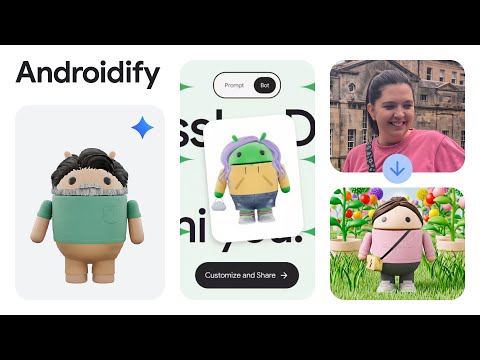
The term androidify is a modern, tech-centric verb that describes the process of transforming an object, a person, or a digital asset into a form that resembles the iconic Google Android mascot, often referred to as the 'Bugdroid.' This mascot is characterized by its green color, cylindrical body, antennae, and minimalist aesthetic. When you androidify something, you are essentially applying a specific brand of digital stylization that aligns with the visual identity of the Android operating system. This usage gained massive popularity through an official app released by Google that allowed users to create custom avatars. Beyond mere aesthetics, the term has evolved in technical circles to describe the act of adapting, porting, or optimizing a software application so that it functions seamlessly within the Android ecosystem. In this context, to androidify a piece of software means to rewrite parts of its code, adjust its user interface to follow Material Design guidelines, and ensure compatibility with the various hardware configurations that run the Android OS.
- Visual Transformation
- The most common use involves creating a digital character that looks like a robot. People use this during marketing campaigns or when customizing their social media profiles to show their affinity for the platform.
During the tech conference, the marketing team decided to androidify the company logo to appeal to mobile developers.
In the professional software development world, the term is used more practically. Developers might discuss the need to androidify a legacy iOS application. This involves more than just a skin-deep change; it requires a deep dive into the Android SDK (Software Development Kit), handling different screen densities, and integrating with Google Play Services. It is a word that bridges the gap between fun, consumer-facing activities and serious, back-end engineering tasks. You will hear it in design meetings where the focus is on 'brand consistency' across platforms. If a brand wants to look 'at home' on an Android device, they must androidify their visual assets. This ensures that the user experience feels native rather than like a forced port from another system like Apple's iOS.
- Software Adaptation
- This refers to the technical process of making an app work on Android. It involves changing the code architecture to support Java or Kotlin and ensuring the UI responds to the 'Back' button correctly.
The studio had to androidify their flagship game before the global launch on the Play Store.
Furthermore, the word carries a sense of 'community' and 'personalization.' In the early 2010s, the 'Androidify' app became a cultural phenomenon among tech enthusiasts. It allowed users to express their individuality through the lens of a shared technological platform. By choosing different clothes, accessories, and colors for their Bugdroid, users were participating in a collective branding exercise. Today, while the specific app might be less prominent, the verb remains a shorthand for making something 'Android-friendly.' It is often used in a lighthearted way, suggesting a playful transformation rather than a rigid, mechanical one. However, in a corporate setting, it can be a very expensive and time-consuming directive, implying a full-scale platform migration.
- Cultural Context
- It represents the 'open' and 'customizable' nature of the Android brand compared to its more 'closed' competitors.
I decided to androidify my workspace by adding green accents and robot figurines.
Can we androidify these icons so they don't look like they were designed for a desktop computer?
To androidify a brand is to embrace the diversity of the mobile world.
Using the word androidify correctly requires an understanding of its transitive nature; it always needs an object. You androidify *something*. Whether that something is a digital avatar, a piece of software, or a physical object, the verb implies a deliberate change. In formal technical writing, you might use it to describe the process of platform adaptation. For example, 'The development team was tasked to androidify the existing web interface.' Here, the word acts as a professional shorthand for a complex set of engineering tasks. It suggests that the interface must be made to feel 'native' to the Android operating system, adhering to its specific navigation patterns and aesthetic standards.
- Technical Implementation
- In software engineering, it often refers to the 'porting' process. Example: 'We need to androidify the notification system to support the latest API levels.'
If you want your app to succeed, you must androidify the user experience rather than just copying the iOS version.
In more casual or creative contexts, the word is used to describe visual customization. You might hear a graphic designer say, 'I'm going to androidify these illustrations for the blog post.' This means they will add elements like the antennae, the specific shade of green (Android Green), or the rounded, robotic shapes associated with the brand. It is a very specific type of 'theming.' Because the word is a neologism, it is most frequently used in the present tense or as an infinitive. However, past tense ('androidified') and present participle ('androidifying') are also common. For instance, 'The marketing campaign was successful because it focused on androidifying the brand's mascot for the mobile audience.'
- Creative Customization
- This involves making something look like the Android robot. Example: 'She used the app to androidify her family for the holiday card.'
The fans love to androidify their favorite movie characters and share them on Reddit.
When using the word in a sentence, consider the audience. If you are speaking to people who are not familiar with technology or mobile operating systems, the word might be confusing. In such cases, it is better to use more general terms like 'customize' or 'adapt for Android.' However, within the tech community, 'androidify' is a punchy and evocative word that immediately communicates a specific set of actions. It carries a connotation of modernization and mobile-first thinking. For example, 'The CEO wants to androidify our entire service offering by next quarter,' implies a massive shift toward mobile accessibility and a specific design philosophy. It is not just about making an app; it is about adopting the 'Android way' of doing things.
- Brand Integration
- Aligning a product's identity with the Android platform. Example: 'The startup's goal was to androidify the payment process for better integration with Google Pay.'
We spent the whole weekend androidifying the website's mobile view.
It is difficult to androidify a complex desktop application without losing some functionality.
Don't just port the code; you need to androidify the entire user journey.
You are most likely to encounter the word androidify in specific professional and enthusiast circles. The primary location is within the tech industry, particularly among mobile app developers, UI/UX designers, and product managers. In these environments, the word is used as a functional verb to describe the process of tailoring a product for the Android platform. For instance, during a 'sprint planning' session, a developer might say, 'We need to androidify the checkout flow to ensure it works with the system's back-button logic.' This is a very common scenario where the word saves time by encapsulating a complex set of platform-specific requirements. It is also frequently heard at tech conferences like Google I/O, where speakers might use it to encourage developers to embrace the platform's unique features.
- Professional Tech Circles
- Used during meetings, development cycles, and technical presentations to describe platform-specific adaptation.
The lead designer suggested we androidify the icons to match the Material You design language.
Another major hub for this word is social media and online communities like Reddit, Twitter (X), and tech blogs. Here, the word is often used in its more creative and playful sense. Fans of the Android operating system might share 'androidified' versions of celebrities, fictional characters, or even themselves. This usage is heavily tied to the 'Androidify' app that Google promoted for many years. On platforms like Instagram, you might see hashtags like #Androidify used on posts featuring custom avatars. In this context, the word is a badge of identity, signaling that the user is part of the Android community. It is a way of saying, 'I am making this thing part of my digital world.'
- Online Enthusiast Communities
- Used by fans and hobbyists to describe visual customizations and the creation of brand-aligned avatars.
I spent all night androidifying my favorite Marvel characters for my new home screen layout.
Finally, you might hear the word in marketing and advertising discussions. When a company is planning a launch on the Google Play Store, they might discuss how to 'androidify' their marketing materials. This means ensuring that the screenshots, promotional videos, and descriptions feel authentic to an Android user. It is about avoiding the 'lazy port' look. A marketing executive might say, 'We can't just use the same assets we used for the App Store; we need to androidify them to show we care about the platform.' In this sense, the word is about respect for the platform's conventions and its user base. It is a strategic term used to ensure that a product doesn't feel like an outsider in the Google ecosystem.
- Marketing and Branding
- Used to describe the process of making promotional content look native to the Android environment.
To attract more users, we need to androidify our trailer by showing the app running on a Pixel phone.
The brand's decision to androidify its digital presence led to a 20% increase in mobile engagement.
Is there a way to androidify this PDF so it's easier to read on a small screen?
One of the most frequent mistakes people make with the word androidify is using it too broadly to mean 'making something like a robot.' While the root 'android' does refer to a human-like robot, the specific verb 'androidify' is almost exclusively tied to the Google Android brand. If you use it to describe making a character look like a Terminator or a generic sci-fi robot, you are technically misusing the term in its modern context. For general robotic transformations, words like 'robotize,' 'mechanize,' or 'automate' are much more appropriate. Using 'androidify' outside of the Google context can lead to confusion, especially in professional settings where it has a very specific technical meaning.
- Generic Robotics vs. Brand Specificity
- Mistake: 'I want to androidify my car to make it drive itself.' (Use 'automate' instead). Correct: 'I want to androidify my car's dashboard by installing Android Auto.'
Incorrect: We need to androidify the factory to increase production speed. (Should be 'automate').
Another common error is confusing 'androidify' with 'porting.' While they are related, they are not identical. 'Porting' is the purely technical act of moving code from one platform to another so that it runs. 'Androidifying' implies a higher level of care and attention to detail. It suggests that the developer is not just making the code run, but is also adapting the user interface, the user experience, and the overall 'feel' of the app to match the Android platform's conventions. If you just 'port' an app, it might look like a foreign object on an Android phone. If you 'androidify' it, it feels like it was built for Android from the ground up. Using 'androidify' when you only mean 'make it work' can set unrealistic expectations for the quality of the final product.
- Porting vs. Androidifying
- Mistake: 'We androidified the app in two hours.' (Likely just a quick port). Correct: 'We spent weeks androidifying the UI to meet Material Design standards.'
Incorrect: I androidified my iPhone by putting a green sticker on it. (This is just decorating).
Finally, there is the mistake of using the word as a noun or an adjective without the proper suffixes. 'Androidify' is a verb. The noun form would be 'androidification' and the adjective would be 'androidified.' For example, saying 'This app has a lot of androidify' is grammatically incorrect. You should say, 'This app has undergone significant androidification.' Similarly, don't say 'That is an androidify character'; say 'That is an androidified character.' Because it is a relatively new and informal word, people often play fast and loose with its grammar, but maintaining the correct part of speech is essential for clear communication, especially in written reports or professional emails.
- Part of Speech Errors
- Mistake: 'The androidify of the project is complete.' Correct: 'The androidification of the project is complete.'
Incorrect: He is very androidify in his design style. (Should be 'androidified').
Incorrect: Can you give me an androidify? (Should be 'Can you androidify this for me?').
Incorrect: They are androidifying the robots. (Unless they are making them look like the Google mascot, use 'robotizing').
When looking for alternatives to androidify, it is important to distinguish between the visual/creative meaning and the technical/software meaning. If you are talking about making something look like a robot in a general sense, the word robotize is the most direct alternative. It implies giving something robotic characteristics or replacing human labor with robots. However, it lacks the specific brand connection to Google. Another option is mechanize, which focuses more on the mechanical and physical aspects of machinery. For a more futuristic or sci-fi feel, you might use cyberize or cyborgify, though these are even more niche and informal than 'androidify.'
- Robotize vs. Androidify
- 'Robotize' is general and often refers to automation. 'Androidify' is specific to the Google Android brand and visual style.
Instead of saying androidify, use 'automate' if you are talking about a factory process.
In a technical context, the most common alternative is port. As discussed earlier, porting refers to the process of adapting software to run on a different platform. If you want to be more specific about the design changes, you might use re-skin or re-theme. These words imply changing the visual appearance of an application without necessarily changing its underlying logic. If the goal is to make the app feel native to the platform, the term localize (in a platform sense) or native-optimize could be used. These terms are more formal and are widely accepted in professional software engineering documentation. They lack the playful 'branding' aspect of 'androidify' but are more precise for technical specifications.
- Port vs. Androidify
- 'Port' is the standard industry term for platform migration. 'Androidify' is a more colorful way to describe a port that includes deep UI/UX changes.
The company decided to 'port' the app to Android, but the lead designer insisted they androidify it properly.
For the creative side of things, specifically creating avatars, you could use avatarize or personalize. If you are specifically talking about making something look like a character from a certain brand, you might use the brand name as a verb, such as Disney-fy or Lego-ify. These follow the same linguistic pattern as 'androidify' and are used in similar enthusiast communities. They all describe the act of forcing an existing object into a specific, recognizable aesthetic mold. Choosing the right word depends on whether you want to emphasize the technical work, the visual style, or the brand identity involved in the transformation.
- Brand-Verbing Comparisons
- 'Androidify' (Google), 'Lego-ify' (Lego), 'Disney-fy' (Disney). All mean to apply a specific brand's aesthetic.
The artist was asked to androidify the logo, but they ended up 'Lego-ifying' it instead by mistake.
We need to androidify the interface, not just 're-skin' it with green colors.
Is it better to androidify the app or build a completely new native version?
How Formal Is It?
재미있는 사실
The Android mascot itself was designed by Irina Blok, who was inspired by the universal pictograms for restrooms.
발음 가이드
- Pronouncing it as three syllables: an-droid-fy (missing the 'i').
- Stressing the second syllable: an-DROID-ify.
- Pronouncing 'ify' as 'ee-fee' instead of 'ih-fye'.
- Confusing it with 'android-fly'.
- Mispronouncing 'android' as 'an-dred'.
난이도
The word is easy to read if you know 'Android' and '-ify'.
Requires correct spelling of the suffix and understanding of its transitive use.
Pronunciation is straightforward but has four syllables.
Easily recognized in tech contexts.
다음에 무엇을 배울까
선수 학습
다음에 배울 것
고급
알아야 할 문법
Suffix -ify
Android + ify = Androidify (to make into an Android).
Transitive Verbs
You must androidify *the app* (requires an object).
Regular Verb Conjugation
He androidified (past), she androidifies (present), they are androidifying (continuous).
Gerunds as Subjects
Androidifying an app is a complex process.
Passive Voice
The icons were androidified by the design team.
수준별 예문
I want to androidify my photo.
I want to make my photo look like the Android robot.
Simple present tense with 'want to'.
Can you androidify this robot?
Can you make this robot look like the Google mascot?
Question form with 'can'.
He likes to androidify his friends.
He likes making his friends look like the green robot.
Third person singular 'likes'.
It is fun to androidify things.
Making things look like the Android mascot is fun.
Infinitive phrase as a subject.
She androidified her cat.
She made her cat look like a green robot.
Past tense with '-ed'.
We are androidifying the logo.
We are changing the logo to look like the Android brand.
Present continuous tense.
Do you want to androidify your car?
Do you want to make your car look like the Android mascot?
Interrogative sentence.
Look at my androidified dog!
Look at my dog that looks like a robot.
Imperative sentence with an adjective.
The app helps you androidify your avatar.
The app helps you make your digital character look like the Android robot.
Subject-verb-object structure.
They androidified the company mascot for the event.
They changed the mascot to look like an Android for the party.
Regular past tense.
I am androidifying my home screen today.
I am changing my phone's screen to look like Android.
Present continuous for a current action.
You should androidify your profile picture.
It is a good idea to make your picture look like the robot.
Modal verb 'should' for advice.
Is it easy to androidify a game?
Is it simple to make a game work on Android?
Adjective 'easy' in a question.
She androidifies every character she draws.
She makes every character look like the green robot.
Present simple for a habit.
We need to androidify the website for mobile users.
We must make the website work well on Android phones.
Verb 'need' followed by an infinitive.
The designer androidified the icons last week.
The designer made the icons look like Android last week.
Past tense with a time expression.
The developer decided to androidify the interface to attract more users.
The developer chose to adapt the look for Android users.
Infinitive of purpose.
If we androidify the app, it will look much better on a Pixel phone.
If we adapt the app, it will look better on Google's phone.
First conditional sentence.
Have you ever tried to androidify your own brand?
Have you attempted to make your brand look like the Android style?
Present perfect tense.
The marketing team is busy androidifying the promotional materials.
The team is currently adapting the ads for the Android platform.
Present continuous with 'busy'.
Androidifying a complex application takes a lot of time and effort.
Adapting a big app for Android is a difficult task.
Gerund as a subject.
They have already androidified the most important features.
They have finished adapting the main parts of the app.
Present perfect with 'already'.
Why did the studio choose to androidify their mascot?
What was the reason for changing the mascot to the Android style?
Past simple question with 'why'.
I would androidify my laptop if I could.
I would make my laptop look like an Android if it were possible.
Second conditional for an imaginary situation.
To truly androidify the software, you must integrate it with Google Play Services.
To properly adapt the software, you need to connect it to Google's tools.
Infinitive of purpose at the start of the sentence.
The company spent months androidifying their legacy iOS app for the global market.
The company took a long time to adapt their old iPhone app for Android.
Verb 'spend' + time + gerund.
By androidifying the user experience, the startup saw a significant increase in retention.
By making the app feel native to Android, more people kept using it.
Preposition 'by' followed by a gerund.
The designers were asked to androidify the icons without losing the brand's identity.
The designers had to adapt the icons but keep the original brand look.
Passive voice 'were asked to'.
Androidifying a product involves more than just changing the color palette to green.
Adapting a product for Android is more complex than just changing colors.
Gerund phrase as a subject.
If they hadn't androidified the app, it would have failed on the Play Store.
If they didn't adapt the app, it would not have been successful.
Third conditional for a past regret.
The team is currently androidifying the notification system to support Android 14.
The team is updating the notifications for the latest Android version.
Present continuous for a current project.
Is it worth the cost to androidify a niche desktop tool?
Is the expense of adapting a small desktop program for Android justified?
Phrase 'is it worth' + noun/gerund.
The strategic decision to androidify the entire service suite was driven by market trends.
The plan to adapt all services for Android was based on what customers wanted.
Complex noun phrase as a subject.
Androidifying the codebase required a complete overhaul of the navigation logic.
Adapting the code meant they had to change how users move through the app.
Gerund subject with a technical object.
The developer's ability to androidify the UI seamlessly was highly praised by the client.
The client was happy with how well the developer adapted the interface.
Possessive noun + ability + infinitive.
Unless we androidify the application, we risk alienating a huge portion of our user base.
If we don't adapt the app, we might lose many of our customers.
Conditional with 'unless'.
The project involves androidifying various legacy systems to ensure cross-platform compatibility.
The goal is to adapt old systems so they work on all platforms, including Android.
Verb 'involve' + gerund.
Having androidified the core features, the team moved on to secondary optimizations.
After finishing the main Android adaptations, the team worked on smaller details.
Perfect participle phrase.
The nuances of androidifying an app for foldable devices are quite complex.
The small details of adapting an app for folding phones are hard to manage.
Subject-verb agreement with a complex subject.
It is imperative that we androidify our digital assets before the next marketing push.
It is very important that we adapt our digital files for Android soon.
Subjunctive mood with 'it is imperative that'.
The comprehensive endeavor to androidify the enterprise software culminated in a highly successful launch.
The big project to adapt the business software for Android ended in a great success.
Sophisticated vocabulary and complex sentence structure.
The meticulous process of androidifying the user interface ensured that the brand's ethos remained intact.
The careful way they adapted the interface kept the brand's spirit alive.
Gerund phrase with multiple modifiers.
By androidifying the platform, the corporation effectively democratized access to its services.
By making the platform work on Android, the company made its services available to everyone.
Adverbial phrase showing cause and effect.
The technical debt incurred by failing to androidify the app early on was substantial.
The problems caused by not adapting the app for Android sooner were very expensive.
Relative clause modifying 'technical debt'.
One must consider the multifaceted challenges inherent in androidifying a legacy monolithic architecture.
You have to think about the many problems of adapting an old, large system for Android.
Impersonal 'one' and complex adjectives.
The decision to androidify was not merely aesthetic but a fundamental shift in the company's mobile paradigm.
Choosing to adapt for Android was a big change in how the company thinks about mobile.
Correlative conjunction 'not merely... but'.
The developer's penchant for androidifying every project led to a very consistent portfolio.
The developer's habit of adapting everything for Android made their work look similar.
Noun 'penchant' followed by a prepositional phrase.
Should the company choose to androidify its ecosystem, the implications for the market would be profound.
If the company decides to adapt its system for Android, it will change the market a lot.
Inverted conditional with 'should'.
자주 쓰는 조합
자주 쓰는 구문
— An expression used when starting a transformation process.
It's time to androidify our marketing strategy.
— To undergo the process of becoming Android-like.
My whole family got androidified for the Christmas card.
— To create an Android-style avatar of oneself.
Go to the app and androidify yourself now!
— A hyperbolic phrase about spreading the Android brand.
Their mission is to androidify the world of mobile computing.
— Describing something that is simple to adapt.
This logo is very easy to androidify.
— Describing something that is difficult to adapt.
A desktop-only app is hard to androidify.
— A phrase used by enthusiasts to show their dedication.
He wants to androidify everything in his office.
— Being prepared for the adaptation process.
The assets are ready to androidify.
— To make a competitor's product look like Android.
They tried to androidify the rival app's design.
— The idea that adaptation leads to better results.
You must androidify for success in the Play Store.
자주 혼동되는 단어
Robotize is general; androidify is specific to the Google brand.
Porting is technical; androidifying includes design and UX adaptation.
Mechanize refers to physical machinery, not digital avatars or software.
관용어 및 표현
— To fill a space with Android-themed items.
He really androidified the room with all those green robots.
informal— To become deeply committed to the Android platform.
After working at Google, he truly androidified his soul.
slang— To bring up Android-related topics in a discussion.
She always manages to androidify the conversation during lunch.
informal— To envision a future dominated by Android technology.
The keynote speaker wanted to androidify the future of AI.
rhetorical— To apply Android aesthetics to historical items.
The artist decided to androidify the past by drawing 18th-century robots.
creative— To use technology or customization to distract from problems.
He tried to androidify the pain away by spending hours on his phone.
slang— To make a message more appealing to Android users.
We need to androidify the message for our mobile audience.
marketing— To turn a creative vision into an Android-compatible reality.
They worked hard to androidify the dream of a universal app.
professional— To filter information through an Android-centric lens.
He tends to androidify the noise of the tech world.
metaphorical— To add Android-themed elements to an activity.
Let's androidify the fun at the party with some green decorations.
informal혼동하기 쉬운
It is the root word.
Android is a noun (the system); androidify is a verb (the action of adapting to it).
I have an Android phone, and I want to androidify my app.
Both involve robots.
Automation is about making processes run by themselves; androidify is about visual or platform adaptation.
We used automation in the factory, but we androidified the control app.
Androidify is often used to make avatars.
An avatar is the result; androidify is the process.
My new avatar was created when I decided to androidify my photo.
It is the design language of Android.
Material Design is a set of rules; androidify is the act of applying those rules.
To androidify the app, we followed the Material Design guidelines.
Both relate to Google products.
Google-ify is broader (Search, Maps, etc.); androidify is specific to the mobile OS.
They Google-ified their office, but they only androidified their mobile tools.
문장 패턴
I want to [verb] my [noun].
I want to androidify my photo.
The [noun] helps you [verb] [noun].
The app helps you androidify your avatar.
If we [verb], it will [verb].
If we androidify the app, it will look better.
To [verb], you must [verb].
To androidify the software, you must integrate it.
The decision to [verb] was [adjective].
The decision to androidify the suite was strategic.
By [verb-ing], the [noun] [verb-ed] [noun].
By androidifying the platform, the company democratized access.
[Verb-ing] is [adjective].
Androidifying a game is difficult.
They spent [time] [verb-ing].
They spent months androidifying the app.
어휘 가족
명사
동사
형용사
관련
사용법
Common in tech and design niches; rare in general conversation.
-
Using it for iOS.
→
Use 'iOS-ify' or 'adapt for iOS'.
Androidify is brand-specific to Google.
-
Saying 'I want to androidify'.
→
I want to androidify my app.
It needs an object because it is a transitive verb.
-
Spelling it 'android-fly'.
→
androidify
There is no 'l' in the word; it comes from 'ify'.
-
Using it for factory automation.
→
automate
Androidify is about the brand, not general industrial robots.
-
Using it as a noun.
→
androidification
Androidify is the action; androidification is the process.
팁
Context Matters
Only use 'androidify' when referring to the Google Android brand. Using it for general robots sounds unprofessional.
Suffix Check
Remember the '-ify' suffix means 'to make.' So androidify literally means 'to make Android.'
Avoid Overuse
In a technical document, use it once to establish the concept, then use 'optimize' or 'adapt' to vary your language.
Beyond Color
When you androidify a UI, think about the 'Back' button and 'Material Design,' not just the color green.
Hashtag Use
Use #Androidify on social media to connect with other fans of the platform.
Code Porting
When androidifying code, ensure you are using the correct Android SDK libraries.
Avatar Creation
When androidifying a person, focus on their most recognizable features (like hair or glasses) and add them to the robot.
Client Meetings
Explain the term to clients if they aren't tech-savvy to ensure they understand the scope of work.
Word Family
Practice using 'androidification' as a noun to improve your grammatical flexibility.
Playful Branding
Use the word to make tech discussions more engaging and less dry.
암기하기
기억법
Think of the 'Android' robot and the word 'modify'. Combine them to get 'Androidify'—to modify something into an Android.
시각적 연상
Imagine a green paint bucket being poured over a generic grey robot, turning it into the friendly green Android mascot.
Word Web
챌린지
Try to describe three things in your room that you would like to androidify and explain why.
어원
The word is a blend of the proper noun 'Android' (the mobile operating system) and the suffix '-ify' (from Latin -ificare, meaning 'to make'). It was popularized by Google around 2011 with the launch of their 'Androidify' app.
원래 의미: To create a custom avatar based on the Android mascot.
English (Modern Neologism)문화적 맥락
The word is brand-specific. Avoid using it when referring to competitors like Apple or Microsoft unless making a direct comparison.
Commonly used in Silicon Valley and tech-heavy regions of the US and UK.
실생활에서 연습하기
실제 사용 상황
Software Development
- androidify the codebase
- androidify the UI
- androidify for compatibility
- fully androidified app
Graphic Design
- androidify the logo
- androidify the character
- androidify the color scheme
- androidified icons
Social Media
- androidify yourself
- androidify your profile
- get androidified
- androidify your friends
Marketing
- androidify the campaign
- androidify the assets
- androidify the message
- androidify for the Play Store
Personalization
- androidify my phone
- androidify my room
- androidify my life
- easy to androidify
대화 시작하기
"Have you ever used an app to androidify your own profile picture for social media?"
"Do you think it's better to androidify an existing app or build a new one from scratch?"
"What character from a movie would you most like to see someone androidify?"
"How long do you think it would take a professional team to androidify a complex iOS game?"
"In your opinion, what is the most important thing to change when you androidify a user interface?"
일기 주제
Describe a time you had to adapt something for a new platform. Did you 'androidify' it or just change the basics?
If you could androidify your entire physical workspace, what specific green and robotic features would you add?
Write about the pros and cons of using brand-specific words like 'androidify' in professional technical writing.
Imagine a world where everything is androidified. What does a typical day look like in this green, robotic society?
Reflect on why people enjoy creating avatars that look like corporate mascots. What does it say about digital identity?
자주 묻는 질문
10 질문Yes, it is a recognized neologism in the tech industry, though it may not be in older traditional dictionaries. It is widely used by Google and the developer community.
No, that would be incorrect. For Apple products, you might use 'iOS-ify' or simply 'adapt for iOS.' 'Androidify' is strictly for the Android platform.
It was an official app by Google that allowed users to create custom avatars based on the Android mascot. It helped popularize the verb.
The past tense is spelled 'androidified.' You change the 'y' to 'i' and add 'ed'.
It depends. For a mobile developer role, it shows you know the jargon. For a general corporate role, 'platform optimization' might be safer.
No, while green is the main color, it also involves adding antennae, robot shapes, and following Android's specific software design rules.
There isn't a single official opposite, but 'de-androidify' or 'standardize' are often used in technical contexts.
Yes, you can androidify a car, a room, or a toy by giving it the visual characteristics of the Android mascot.
It is a transitive verb, meaning it needs a direct object. You androidify *something*.
The term was popularized by Google's marketing team around the launch of the Androidify app in 2011.
셀프 테스트 200 질문
Write a sentence using 'androidify' to describe a change to a mobile app.
Well written! Good try! Check the sample answer below.
Explain the difference between 'porting' and 'androidifying' in two sentences.
Well written! Good try! Check the sample answer below.
Describe how you would 'androidify' your favorite movie character.
Well written! Good try! Check the sample answer below.
Write a short email to a design team asking them to 'androidify' a logo.
Well written! Good try! Check the sample answer below.
Use 'androidification' in a sentence about a long-term project.
Well written! Good try! Check the sample answer below.
Create a marketing slogan using the word 'androidify'.
Well written! Good try! Check the sample answer below.
Write a sentence using 'androidified' as an adjective.
Well written! Good try! Check the sample answer below.
Explain why a company might choose to 'androidify' its assets.
Well written! Good try! Check the sample answer below.
Write a sentence using 'androidify' in the future tense.
Well written! Good try! Check the sample answer below.
Describe the visual features of an 'androidified' object.
Well written! Good try! Check the sample answer below.
Write a sentence using 'androidify' to express a personal desire.
Well written! Good try! Check the sample answer below.
Use 'androidifying' in a sentence about a current task.
Well written! Good try! Check the sample answer below.
Write a sentence using 'androidify' in a question format.
Well written! Good try! Check the sample answer below.
Explain the origin of the word 'androidify'.
Well written! Good try! Check the sample answer below.
Write a sentence about 'androidifying' a workspace.
Well written! Good try! Check the sample answer below.
Use 'androidify' in a conditional sentence (if...).
Well written! Good try! Check the sample answer below.
Write a sentence using 'androidify' to describe a professional requirement.
Well written! Good try! Check the sample answer below.
Describe the 'Androidify' app's purpose in one sentence.
Well written! Good try! Check the sample answer below.
Write a sentence using 'androidify' in the past perfect tense.
Well written! Good try! Check the sample answer below.
Use 'androidify' in a sentence about a creative challenge.
Well written! Good try! Check the sample answer below.
Pronounce the word 'androidify' clearly. How many syllables does it have?
Read this aloud:
당신의 답변:
Speech recognition is not supported in your browser. Try Chrome or Edge.
Explain to a friend how to 'androidify' their profile picture.
Read this aloud:
당신의 답변:
Speech recognition is not supported in your browser. Try Chrome or Edge.
Discuss the benefits of 'androidifying' an app instead of just porting it.
Read this aloud:
당신의 답변:
Speech recognition is not supported in your browser. Try Chrome or Edge.
Describe a character you have 'androidified' or would like to.
Read this aloud:
당신의 답변:
Speech recognition is not supported in your browser. Try Chrome or Edge.
In a professional tone, explain the need to 'androidify' a codebase.
Read this aloud:
당신의 답변:
Speech recognition is not supported in your browser. Try Chrome or Edge.
What are the common visual elements used to 'androidify' something?
Read this aloud:
당신의 답변:
Speech recognition is not supported in your browser. Try Chrome or Edge.
How would you 'androidify' a marketing campaign for a new phone?
Read this aloud:
당신의 답변:
Speech recognition is not supported in your browser. Try Chrome or Edge.
Talk about the cultural significance of the 'Androidify' app.
Read this aloud:
당신의 답변:
Speech recognition is not supported in your browser. Try Chrome or Edge.
Give three examples of things you can 'androidify'.
Read this aloud:
당신의 답변:
Speech recognition is not supported in your browser. Try Chrome or Edge.
Why is 'androidify' considered a neologism?
Read this aloud:
당신의 답변:
Speech recognition is not supported in your browser. Try Chrome or Edge.
Practice saying: 'We need to androidify the interface by Monday.'
Read this aloud:
당신의 답변:
Speech recognition is not supported in your browser. Try Chrome or Edge.
What is the stress pattern of 'androidify'?
Read this aloud:
당신의 답변:
Speech recognition is not supported in your browser. Try Chrome or Edge.
Explain the difference between 'androidify' and 'robotize' to a child.
Read this aloud:
당신의 답변:
Speech recognition is not supported in your browser. Try Chrome or Edge.
How does 'androidifying' improve user retention?
Read this aloud:
당신의 답변:
Speech recognition is not supported in your browser. Try Chrome or Edge.
Discuss the challenges of 'androidifying' a legacy system.
Read this aloud:
당신의 답변:
Speech recognition is not supported in your browser. Try Chrome or Edge.
What does it mean to 'androidify the soul' in tech slang?
Read this aloud:
당신의 답변:
Speech recognition is not supported in your browser. Try Chrome or Edge.
Can you 'androidify' a website? How?
Read this aloud:
당신의 답변:
Speech recognition is not supported in your browser. Try Chrome or Edge.
Use 'androidified' in a sentence about a past event.
Read this aloud:
당신의 답변:
Speech recognition is not supported in your browser. Try Chrome or Edge.
What is the opposite of 'androidifying' an app?
Read this aloud:
당신의 답변:
Speech recognition is not supported in your browser. Try Chrome or Edge.
Is 'androidify' a formal word? Why or why not?
Read this aloud:
당신의 답변:
Speech recognition is not supported in your browser. Try Chrome or Edge.
Listen for the word: 'We need to androidify the icons.' What is the speaker talking about?
Listen for the word: 'The androidification process is complete.' Is the task finished?
Listen for the word: 'He androidified his car.' What did he do to his car?
Listen for the word: 'Stop androidifying everything!' Is the speaker happy or annoyed?
Listen for the word: 'It's hard to androidify this code.' What is the difficulty?
Listen for the word: 'I'm androidifying my avatar.' What is the person doing right now?
Listen for the word: 'The app was androidified last month.' When did it happen?
Listen for the word: 'Should we androidify the logo?' Is this a statement or a question?
Listen for the word: 'Androidifying for foldables is a niche skill.' What kind of skill is it?
Listen for the word: 'The CEO wants to androidify the whole company.' What is the scale of the change?
Listen for the word: 'I love my androidified dog.' What does the dog look like?
Listen for the word: 'We are androidifying the checkout flow.' What part of the app is being changed?
Listen for the word: 'The nuances of androidifying are many.' Are there many or few details?
Listen for the word: 'Don't androidify the iOS version.' What should be avoided?
Listen for the word: 'Androidification is a strategic move.' What kind of move is it?
/ 200 correct
Perfect score!
Summary
The word 'androidify' is essential for anyone working in mobile development or digital branding. It specifically refers to the Google Android ecosystem. For example: 'We need to androidify our app' means making it feel native to Android users.
- Androidify is a verb meaning to make something look like the Android mascot or to adapt software for the Android OS.
- It is commonly used in tech circles and social media to describe brand-specific customization and platform optimization.
- The word is a combination of 'Android' and the suffix '-ify', making it a modern tech neologism.
- It implies a deep level of adaptation rather than just a simple visual change or a quick software port.
Context Matters
Only use 'androidify' when referring to the Google Android brand. Using it for general robots sounds unprofessional.
Suffix Check
Remember the '-ify' suffix means 'to make.' So androidify literally means 'to make Android.'
Avoid Overuse
In a technical document, use it once to establish the concept, then use 'optimize' or 'adapt' to vary your language.
Beyond Color
When you androidify a UI, think about the 'Back' button and 'Material Design,' not just the color green.
예시
I used the app to androidify myself and my whole family for a fun wallpaper.
관련 콘텐츠


Technology 관련 단어
abautoal
C1다양한 데이터 구조 또는 언어 단위를 수동 개입 없이 자동으로 정렬하고 통합하여 동기화를 보장하는 체계적인 방법론 또는 기술 프레임워크입니다.
abautoence
C1자가 통제 메커니즘 또는 자율 루틴을 통해 프로세스를 체계적으로 자동화하거나 간소화하는 것. 효율성을 극대화하고 인지 부하를 줄이기 위해 수동 작업을 백그라운드 기술 또는 습관적 시스템에 위임하는 행위를 설명합니다.
ablogtion
C1ablogtion은 온라인 평판을 관리하기 위해 플랫폼에서 디지털 기록 및 연대순 로그 항목을 체계적으로 제거, 퍼지 또는 스크러빙하는 것을 의미합니다.
abmanless
C1완전한 자동화를 통해 시스템에서 수동적인 인간의 개입 필요성을 제거하는 것.
activation
B2활성화는 장치나 시스템을 작동 가능한 상태로 만드는 과정을 말합니다. 예를 들어, 소프트웨어 정품 인증이 이에 해당합니다.
actuator
B2액추에이터는 전기나 유압 등의 에너지를 물리적인 움직임으로 변환하는 장치입니다.
adpaterable
C1시스템이나 장치를 어댑터와 호환되도록 수정하거나 구성하는 것.
adpaterward
C1어댑터워드(adapterward)는 초기 조립 후 기술 시스템에 통합되는 보조 조정 또는 보충 구성 요소로, 최신 표준과의 호환성을 보장합니다. 이는 레거시 부분과 최신 부분 간의 후기 동기화를 용이하게 하는 물리적 또는 디지털 '브릿지'를 구체적으로 지칭합니다.
aerospace
B2지구 대기권 내부 또는 우주 공간을 비행하는 항공기와 우주선의 설계, 제조, 운용과 관련된 것.
algorithms
B2알고리즘은 어떤 문제를 해결하기 위해 정해진 일련의 절차나 방법을 의미합니다.

