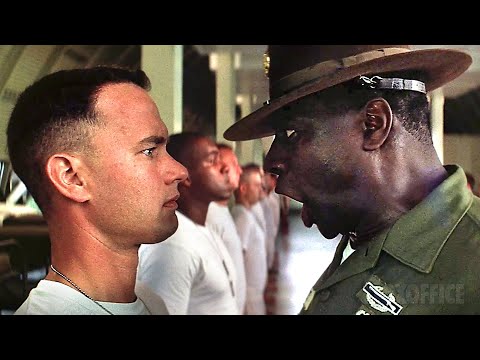
bubba 30초 만에
- An informal Southern US nickname for a brother or close male friend, derived from a child's attempt to say 'brother'.
- Commonly used as a friendly, casual term of address (vocative) among men, similar to 'buddy' or 'pal'.
- Carries significant regional cultural weight, sometimes acting as a stereotype for working-class Southern males.
- Almost exclusively masculine; used in families, sports, and rural social settings to establish immediate rapport.
The term bubba is a fascinating linguistic artifact primarily rooted in the Southern United States, though its reach has expanded through media and migration. At its most fundamental level, it is a nursery form of the word 'brother.' Just as 'sissy' often originates from a child's attempt to say 'sister,' 'bubba' emerges from the phonetic simplification of 'brother' by young children who find the 'th' and 'r' sounds difficult to articulate simultaneously. Over decades, this childhood nickname often sticks, becoming a lifelong moniker that replaces a person's legal name in almost all social contexts. However, the word carries significant cultural weight beyond a simple family nickname. It serves as a marker of regional identity, a term of endearment among close male friends, and occasionally, a stereotypical label for a specific type of Southern male. Understanding 'bubba' requires looking at it through three distinct lenses: the familial, the social, and the cultural-stereotypical.
- Familial Nickname
- In many Southern families, the firstborn son or the brother who is closest in age to a younger sibling is dubbed 'Bubba.' This is rarely meant as an insult; rather, it is a warm, intimate term that signifies a protective or close-knit relationship. It is not uncommon to find men in their seventies who are still addressed exclusively as 'Bubba' by their siblings, parents, and even childhood friends.
- Social Address
- Outside the family, 'bubba' functions similarly to 'buddy,' 'pal,' or 'mate.' It is used to establish an immediate, informal rapport. When a mechanic, a fisherman, or a diner cook calls you 'bubba,' they are signaling a lack of pretension and an invitation to a friendly, peer-to-peer interaction. It bypasses the formal 'sir' while maintaining a level of masculine camaraderie.
- Cultural Stereotype
- In a broader American context, 'bubba' is sometimes used as a shorthand for a 'good old boy'—a white, working-class Southern male who is often associated with rural life, pickup trucks, and traditional values. While this can be used affectionately within the community, it can also be used pejoratively by outsiders to imply a lack of education or sophistication. This duality is crucial for learners to understand; the intent behind the word depends entirely on the speaker's relationship with the listener.
'Hey bubba, could you hand me that wrench over there?' the mechanic asked with a friendly nod.
The word's usage is also heavily gendered. While women might use it to address their brothers or sons, it is almost exclusively a male-to-male term of address in social settings. You will rarely hear a man call a woman 'bubba.' Instead, the female equivalent in the Southern nursery-rhyme tradition would be 'Sissy' or 'Sis.' In modern digital culture, 'bubba' has also found a niche in 'pet-speak,' where owners frequently use it as a generic, affectionate name for male dogs or cats, emphasizing the word's inherent sense of warmth and simplicity.
'I've known him since we were in diapers, so he'll always be bubba to me, no matter how famous he gets,' she said.
In political and marketing circles, the 'Bubba Vote' or 'Bubba Factor' refers to the demographic of rural, working-class men. Politicians often try to appeal to 'bubba' by emphasizing their own rural roots or hobbies like hunting and fishing. This highlights how the word has transitioned from a private family term to a public sociological category. Despite this broader application, the heart of the word remains in the kitchen or the backyard, where it serves as a verbal hug between brothers.
'Don't worry about the mess, bubba; we'll get it cleaned up before mom gets home.'
- Regional Variation
- While most common in the South, you will hear 'bubba' in rural areas of the Midwest and even in parts of Australia (though often spelled 'bub' or used slightly differently). In the South, it is a badge of honor; in the North, it is often a caricature.
The old man at the bait shop tipped his hat and said, 'Good luck out there, bubba.'
'My big bubba taught me how to throw a football when I was only five years old.'
Using the word bubba correctly involves navigating the fine line between affection and informality. Because it is a noun that often functions as a vocative (a word used to address someone directly), its placement in a sentence is usually flexible, appearing at the beginning or end of a phrase. However, the grammatical context changes depending on whether you are using it as a substitute for a name or as a general descriptor of a person. In this section, we will explore the syntactic patterns and the pragmatic considerations of using 'bubba' in everyday English.
- As a Direct Address
- When used to get someone's attention, 'bubba' acts like 'man' or 'dude.' It is usually set off by commas. For example: 'Listen, bubba, I don't think that's a good idea.' In this context, it creates a sense of immediate intimacy or, depending on the tone, a slightly patronizing warning. It is most effective when the speaker wants to sound grounded and unpretentious.
- As a Proper Noun Substitute
- In families, 'Bubba' is often capitalized because it serves as the person's name. 'I'm going to Bubba's house' implies a specific individual. In this usage, it follows all the rules of proper nouns. It can take possessive forms ('Bubba's truck') and can be the subject or object of a sentence.
- As a Common Noun with Modifiers
- You can also use 'bubba' as a common noun, often preceded by an adjective like 'big' or 'little.' 'He's my big bubba' is a classic Southern way of saying 'He is my older brother.' Here, it functions just like the word 'brother' but adds a layer of Southern regional flavor and childhood nostalgia.
'Hey bubba, you want the last slice of pizza?'
One of the most important aspects of using 'bubba' is the 'Bubba + Name' construction. In many communities, a man might be called 'Bubba Joe' or 'Bubba Smith.' This is a common naming convention in the Southern US, where a nickname is combined with a middle or last name to distinguish between different family members. Grammatically, this compound functions as a single proper noun. If you are writing a story set in the South, using this construction can add a high degree of authenticity to your dialogue.
'I saw Bubba down at the hardware store earlier today.'
Tone is the most critical component of 'bubba' usage. Because it is so informal, using it in a professional email or a formal speech would be a major register error. However, in a creative writing context, it is a powerful tool for characterization. A character who uses 'bubba' frequently is immediately coded as informal, likely Southern, and potentially working-class. It suggests a person who values directness and community over formality and distance.
'Thanks for the help, bubba; I owe you one.'
- Negative Connotations
- In some contexts, 'bubba' can be used dismissively. 'Don't you 'bubba' me!' is a common retort when someone feels that the speaker is being overly familiar or condescending. This usually happens when there is a power imbalance or when the two people are not actually friends. It is a reminder that 'bubba' is a 'permission-based' word—you usually need to have a certain level of closeness to use it safely.
'My little bubba is finally graduating from college next week!'
'Watch out, bubba, that floor is still wet.'
The word bubba is deeply embedded in the soundscape of the American South, but its presence in global pop culture has given it a life far beyond the borders of Georgia or Alabama. If you are looking to hear this word in its 'natural habitat,' you should look toward specific cultural touchstones. From the silver screen to the sidelines of a football game, 'bubba' serves as a linguistic shorthand for a specific type of American experience.
- In Cinema and Television
- Perhaps the most famous 'Bubba' in history is Benjamin Buford 'Bubba' Blue from the film *Forrest Gump*. His character epitomizes the affectionate, loyal, and humble nature associated with the name. Through him, global audiences learned that 'Bubba' isn't just a name; it's a symbol of deep, uncomplicated friendship. You will also hear the term in shows like *The Dukes of Hazzard* or *King of the Hill*, where it is used to ground the characters in a specific Southern, working-class reality.
- In Sports and Racing
- The world of NASCAR (stock car racing) and professional golf is full of 'Bubbas.' Bubba Wallace, a prominent NASCAR driver, and Bubba Watson, a two-time Masters champion, are prime examples. In these contexts, the name is used with pride. It suggests a person who has stayed true to their roots despite achieving great success. Sports commentators often use the name to emphasize a player's 'everyman' appeal.
- In Southern Diners and Workshops
- If you walk into a small-town diner in Mississippi or South Carolina, you are almost guaranteed to hear the word. It is the language of the 'counter culture'—not the 1960s movement, but the culture of people sitting at a lunch counter. It is used by the waitress to the regular customer, or between two men discussing the weather. In these settings, it functions as a social lubricant, making the interaction feel more like a conversation between neighbors than a commercial transaction.
'Anyway, like I was sayin', shrimp is the fruit of the sea,' said Bubba in the movie Forrest Gump.
Interestingly, the word has also migrated into the world of pets. In many English-speaking households, 'Bubba' is a go-to nickname for a large, friendly male dog. It captures the 'big brother' energy that many people feel from their pets. This usage is devoid of any regional or class-based connotations; it is purely about the phonetic 'roundness' and warmth of the word, which seems to fit a lovable, slightly goofy animal.
'Come here, bubba! Who's a good boy?' the owner called to his Golden Retriever.
You might also encounter 'Bubba' in political commentary. During the 1990s, President Bill Clinton was often referred to as a 'Bubba' because of his Arkansas roots and his ability to connect with working-class voters. This gave rise to the term 'Bubba Democracy,' referring to a political style that is populist and folksy. Even today, when analysts talk about the 'Bubba vote,' they are referring to a specific, influential segment of the American electorate that values authenticity and traditional masculinity.
'The candidate is really trying to win over the bubba vote by visiting the local tractor pull.'
- In Music
- Country music is the primary genre where 'bubba' appears. Lyrics often use the word to describe a brotherly bond or a reliable friend. It reinforces the themes of family, loyalty, and rural pride that are central to the genre. However, you'll also find it in Southern Hip-Hop, where 'bubba' (or 'bub') is used as a term of respect among 'homeboys.'
'He's just a regular bubba who loves his country and his family.'
'Hey bubba, you got a light?' the stranger asked outside the concert hall.
While bubba seems like a simple, friendly word, it is actually a linguistic landmine for those unfamiliar with its nuances. Because it is so heavily tied to regional identity and social class, using it incorrectly can lead to social awkwardness or even offense. The most common mistakes involve misjudging the level of formality, failing to recognize the potential for stereotyping, and using the word with the wrong gender. By understanding these pitfalls, you can use 'bubba'—or choose not to use it—with confidence.
- Mistake 1: Using it in Formal Settings
- This is the most frequent error. 'Bubba' is the antithesis of formal English. You should never use it in a job interview, a business meeting, or when addressing a superior unless they have explicitly asked you to use that nickname. Calling your boss 'bubba' is likely to be seen as a sign of disrespect or a lack of professional boundaries. It is a word for the porch, the garage, or the diner, not the boardroom.
- Mistake 2: Unintentional Stereotyping
- If you are not from the South, using 'bubba' to address a Southern person you don't know well can be perceived as mocking. It can sound like you are putting on a fake accent or making fun of their heritage. This is especially true if the word is used in a context that implies the person is uneducated. For example, saying 'Alright, bubba, let's see if you can figure this out' to a Southerner is highly offensive because it leans into the 'ignorant redneck' stereotype.
- Mistake 3: Gender Misapplication
- As mentioned before, 'bubba' is a masculine term. Calling a woman 'bubba' is grammatically and culturally incorrect. While some very young girls might be called 'bubba' by their parents as a quirky nickname, in 99% of cases, it is reserved for males. If you want a similar affectionate term for a woman, 'sister,' 'sis,' or 'honey' (in specific Southern contexts) would be more appropriate.
Incorrect: 'Dear Mr. CEO, thanks for the meeting, bubba.'
Another mistake is overusing the word. In the South, 'bubba' is often used sparingly to emphasize a point or to warm up a conversation. If you use it in every sentence, it becomes repetitive and loses its friendly charm. It can start to sound like a caricature of Southern speech rather than a natural part of it. Think of it like salt: a little bit enhances the flavor of the conversation, but too much makes it unpalatable.
'I accidentally called my professor bubba and the whole class went silent.'
Finally, be careful with the plural form. While you can say 'Hey, bubbas' to a group of close friends, it is much less common than 'Hey, guys' or 'Hey, y'all.' The word is primarily a singular term of address. Using it in the plural can sometimes sound like you are referring to a group of people in a derogatory way (e.g., 'A bunch of bubbas were hanging out by the truck').
'Don't use that tone with me, bubba; I'm still your older brother.'
- Spelling Confusion
- In Australia and the UK, you might see 'bub' or 'bubs' used for a baby. While related, 'bubba' in the US has a much more specific masculine, Southern connotation. Don't confuse the two if you are writing for an international audience.
'He thought calling the police officer bubba would get him out of a ticket, but it only made things worse.'
'Is bubba a real name? No, it's usually just a nickname for a brother.'
If you find that bubba doesn't quite fit the situation, or if you want to expand your vocabulary of informal address, there are several alternatives. Each of these words carries its own specific 'flavor' and level of formality. Choosing the right one depends on where you are, who you are talking to, and what kind of relationship you have with them. In this section, we compare 'bubba' with its closest linguistic cousins.
- Bubba vs. Buddy
- 'Buddy' is the most direct alternative. It is used across the entire United States and is generally safer than 'bubba' because it lacks the regional and class-based baggage. While 'bubba' implies a deep, often lifelong Southern connection, 'buddy' can be used for a new acquaintance or even a child. However, 'buddy' can sometimes sound slightly patronizing if used with an adult stranger, whereas 'bubba' (in the South) is usually seen as more genuinely warm.
- Bubba vs. Bro / Brother
- 'Bro' is the modern, urban equivalent. It is widely used by younger generations and is associated with 'bro culture' (sports, fraternities, gym life). 'Bubba' is more 'old school' and rural. While both words are derived from 'brother,' 'bubba' feels more like a family heirloom, while 'bro' feels like a modern tool. 'Brother' (spoken in full) is often used in religious or highly respectful contexts, whereas 'bubba' is strictly informal.
- Bubba vs. Hoss
- 'Hoss' is another Southern term of address, often used for a large or dependable man. While 'bubba' is affectionate and familial, 'hoss' is more about respect for a man's physical presence or reliability. You might call a big guy 'hoss' even if you aren't close friends, but you'd usually only call him 'bubba' if there's a level of personal warmth.
'I'll see you later, buddy; thanks for the ride!'
Other regional alternatives include 'pal' (common in the Northeast and UK), 'mate' (UK and Australia), and 'chief' (often used by people in positions of authority or in a slightly aggressive way). In the Southern US, you might also hear 'Son' or 'Sonny' used by older men to address younger men. This carries a similar 'family-style' energy to 'bubba' but establishes a clear age hierarchy.
'Hey bro, did you see the game last night?'
When writing, choosing between these words is a great way to show, rather than tell, where a character is from. A character who says 'bubba' is from the South; a character who says 'mate' is likely from the UK or Australia; a character who says 'dude' is likely from the West Coast or is part of a younger demographic. These small word choices build a much larger picture of a character's identity and history.
'Take it easy, hoss; there's no need to get upset.'
- The 'Bub' Variation
- 'Bub' is a shortened version of 'bubba' and is often used in the Northern US (like Chicago or New York). However, 'bub' can often sound more aggressive or confrontational than 'bubba.' Think of Wolverine from X-Men—his use of 'bub' is often a warning, whereas a Southern 'bubba' is usually a greeting.
'Listen, bub, I'm not looking for any trouble.'
'My bubba always says that family comes first, no matter what.'
How Formal Is It?
재미있는 사실
The name 'Bubba' is so common in the South that some people actually have it listed as their legal first name on birth certificates, rather than it just being a nickname.
발음 가이드
- Pronouncing the 'u' like 'oo' (Boob-ba).
- Over-emphasizing the final 'a' so it sounds like 'ah'.
- Using a hard 'r' at the end (Bubber), which is a different, less common regionalism.
- Speaking it too quickly; it usually has a relaxed pace.
- Confusing it with 'papa' or 'baba'.
난이도
Easy to recognize in context, but requires cultural knowledge.
Hard to use correctly without sounding like a caricature.
Pronunciation is easy, but social timing is difficult.
Common in Southern dialects and movies.
다음에 무엇을 배울까
선수 학습
다음에 배울 것
고급
알아야 할 문법
Vocative Comma
Hey, bubba, how are you?
Capitalization of Nicknames
I saw Bubba at the store.
Possessive Nouns
That is Bubba's house.
Hypocorism (Pet names)
Bubba is a hypocorism of brother.
Noun Adjuncts
The bubba vote (bubba acts as an adjective).
수준별 예문
My bubba is my best friend.
My brother/friend is my best friend.
Subject of the sentence.
Hi, bubba!
Hello, friend!
Direct address (vocative).
Bubba has a big dog.
The boy named Bubba has a big dog.
Proper noun (name).
I love my bubba.
I love my brother.
Object of the verb 'love'.
Is he your bubba?
Is he your brother?
Question form.
Bubba is at home.
Bubba is in the house.
Used with the verb 'to be'.
Look at bubba go!
Look at him move!
Informal exclamation.
Give it to bubba.
Give it to the brother.
Indirect object.
My little bubba is only three years old.
My small brother is three.
Modified by the adjective 'little'.
We call him Bubba because he is the oldest.
We use the nickname Bubba for the oldest son.
Explaining a nickname.
Hey bubba, can you help me with this?
Friend, can you assist me?
Informal request.
Bubba's truck is very loud.
The truck belonging to Bubba is noisy.
Possessive form.
He is a real Southern bubba.
He is a typical man from the South.
Used as a descriptive noun.
I saw Bubba at the football game.
I met him at the stadium.
Specific person reference.
My bubba and I went fishing yesterday.
My brother and I went to catch fish.
Compound subject.
Don't cry, bubba, it's okay.
Don't be sad, little one.
Affectionate address.
In the South, 'bubba' is a common term of endearment.
It is a friendly name used in that region.
Noun as a linguistic subject.
The mechanic called me 'bubba' while he fixed my car.
The worker used a friendly, informal name.
Reported speech/address.
He's been my bubba since we were in elementary school.
He has been my close friend for a long time.
Present perfect tense.
You might hear the name Bubba in many country songs.
It is frequent in country music lyrics.
Modal verb 'might'.
Is 'bubba' considered a formal name in America?
Is it used in official situations?
Passive voice question.
My bubba always knows how to make me laugh.
My brother/friend is very funny.
Frequency adverb 'always'.
We're going to Bubba Joe's BBQ for dinner.
We are eating at a restaurant named after a person.
Compound nickname.
He acts like a typical bubba, but he's actually a rocket scientist.
He seems like a simple Southern man, but he is very smart.
Contrastive conjunction 'but'.
The 'Bubba' stereotype often portrays Southern men as unrefined.
The common image of a 'bubba' is someone simple.
Noun used as a modifier/stereotype.
Politicians often try to appeal to the 'bubba vote' during elections.
They try to get votes from working-class Southern men.
Political jargon.
Using the term 'bubba' with a stranger can be risky if you aren't from the South.
It might be offensive if you don't share the culture.
Gerund phrase as subject.
The word 'bubba' is a phonetic simplification of 'brother.'
It comes from how children try to say the word.
Technical explanation.
He embraced the 'bubba' label as a badge of his rural heritage.
He was proud to be called a bubba.
Metaphorical usage.
Despite his wealth, he remained a bubba at heart.
He stayed a simple, friendly man despite being rich.
Prepositional phrase 'at heart'.
The film used the character of Bubba to provide emotional depth.
The character made the movie more moving.
Infinitive of purpose.
Don't assume every man in Alabama wants to be called 'bubba.'
Not everyone likes the nickname.
Imperative with 'don't'.
The term 'bubba' serves as a potent sociolinguistic marker of regional identity.
The word shows where a person is from and their social group.
Academic register.
The transition of 'bubba' from a nursery term to a political demographic is fascinating.
How the word changed from a baby word to a voter group.
Noun phrase complexity.
His use of 'bubba' was a calculated attempt to establish rapport with the local workers.
He used the word on purpose to make them like him.
Adjective 'calculated' modifying 'attempt'.
The 'Bubba' archetype in American literature often represents a lost innocence.
This type of character stands for a simpler time.
Literary analysis.
Critics argue that the 'bubba' trope can be reductionist and harmful.
Some say the stereotype is too simple and bad.
Subordinate clause with 'that'.
In certain contexts, 'bubba' functions as a diminutive that softens a command.
The word makes an order sound less harsh.
Linguistic function description.
The etymology of 'bubba' highlights the role of child-directed speech in language change.
The word's history shows how babies change language.
Subject-verb agreement with complex subject.
He navigated the social nuances of the word 'bubba' with the skill of a native speaker.
He knew exactly how to use the word correctly.
Simile usage.
The semantic field of 'bubba' encompasses everything from fraternal intimacy to pejorative stereotyping.
The word's meaning covers many different areas.
Advanced vocabulary (semantic field, pejorative).
One must account for the regional semiotics of 'bubba' when translating Southern literature.
You have to think about what the word means in that culture when you translate it.
Formal 'one' as subject.
The 'Bubba' phenomenon reflects the broader American tension between rural tradition and urban modernity.
The word shows the conflict between old country ways and new city ways.
Abstract noun usage.
To label someone a 'bubba' is to invoke a complex web of cultural assumptions.
Calling someone that brings up many cultural ideas.
Infinitive as subject.
The word's resilience in the Southern lexicon suggests a deep-seated pride in regional vernacular.
The fact that people still use it shows they are proud of their local speech.
Complex evidence-based statement.
Subverting the 'bubba' stereotype has become a common theme in contemporary Southern art.
Modern artists are changing how people think about the 'bubba' image.
Gerund phrase as subject.
The prosodic features of 'bubba'—its drawled vowels and soft consonants—mirror the Southern landscape.
The way the word sounds is like the place it comes from.
Appositive phrase.
The lexical choice of 'bubba' over 'friend' immediately shifts the register to one of extreme informality and shared heritage.
Choosing this word changes the whole tone of the conversation.
Comparative lexical analysis.
자주 쓰는 조합
자주 쓰는 구문
— A very common, friendly greeting for a male friend or brother.
Hey, bubba! Long time no see!
— A man who is simple, friendly, and unpretentious.
He's not a fancy guy, just a regular bubba.
— A common Southern naming pattern combining the nickname with a middle name.
Go ask Bubba Joe if he wants some tea.
— A phrase used when someone is offended by the informality or feels patronized.
Don't 'bubba' me; I'm your supervisor.
— Referring to working-class Southern men as a group.
This product really appeals to the bubba demographic.
— Doing something in a simple, rustic, or informal way.
We're having a Bubba-style cookout this weekend.
— Acting in a way that is typical of the Southern male stereotype.
He was laughing like a bubba at the joke.
— A term of endearment for a younger brother or a small male child.
Come here, my little bubba.
자주 혼동되는 단어
Often means 'father' or 'grandmother' in other languages, not 'brother'.
A shorter version, but often more aggressive or used for children in the North.
A romantic term of endearment, very different from the fraternal 'bubba'.
관용어 및 표현
— Something so simple or sturdy that even a 'bubba' (implying a simple person) can't break it.
This new phone case is virtually bubba-proof.
slang— The influence of working-class Southern values on a situation.
The Bubba Factor decided the election in this county.
political— A style of politics that focuses on folksy, populist appeals.
He won by practicing a bit of Bubba Democracy.
political— A reliable, traditional Southern man.
He's a good old bubba you can always count on.
informal— Modified to be more rustic, Southern, or informal.
They took that fancy car and bubba-fied it with huge tires.
slang— A humorous or slightly derogatory term for the rural Southern US.
He's heading back to Bubba-land for the summer.
slang— Southern dialect or informal, folksy speech.
I can't understand all that bubba-talk he's using.
informal— A humorous reference to common sense or 'street smarts' in the South.
According to Bubba's law, if it's broken, use duct tape.
humorous— Sometimes used to refer to a large, intimidating man, especially in a prison context (though this is a specific stereotype).
You don't want to mess with Big Bubba.
slang— Something that would be appreciated by a typical Southern man.
That's a bubba-worthy steak right there.
informal혼동하기 쉬운
Similar sound and origin.
'Bub' is shorter and can be more confrontational; 'bubba' is usually warmer and more Southern.
Listen, bub, move your car. vs. Hey bubba, how's it going?
Same meaning (friend).
'Buddy' is universal; 'bubba' is regional and more intimate.
He's my buddy. vs. He's my bubba.
It is the root word.
'Brother' is formal/literal; 'bubba' is a nickname.
This is my brother, John. vs. This is my bubba.
Both are nursery terms.
'Papa' is for a father; 'bubba' is for a brother.
Go ask your papa. vs. Go ask your bubba.
Both are common Southern nicknames.
'Junior' means the son has the same name as the father; 'bubba' just means brother.
He's Junior, named after his dad. vs. He's Bubba, the oldest brother.
문장 패턴
I have a [noun].
I have a bubba.
My [noun] is [adjective].
My bubba is tall.
Hey [noun], can you [verb]?
Hey bubba, can you help?
He is called [noun].
He is called Bubba.
He acts like a [noun].
He acts like a typical bubba.
The [noun] [noun] is important.
The bubba vote is important.
The use of [noun] signifies [abstract noun].
The use of bubba signifies regional pride.
By invoking the [noun] archetype, the author [verb].
By invoking the bubba archetype, the author humanizes the character.
어휘 가족
명사
동사
형용사
관련
사용법
High in Southern US, Low elsewhere.
-
Calling a woman 'bubba'.
→
Calling a woman 'Sissy' or 'Sis'.
Bubba is strictly a masculine term.
-
Using 'bubba' in a job interview.
→
Using 'Sir' or the person's name.
Bubba is far too informal for professional settings.
-
Using 'bubba' to mock a Southern accent.
→
Using the person's actual name.
This is offensive and perpetuates negative stereotypes.
-
Pronouncing it 'Boob-ba'.
→
Pronouncing it 'Bub-ba' (rhymes with hubba).
The 'u' is a short vowel sound.
-
Assuming 'bubba' means 'father'.
→
Knowing it means 'brother'.
Learners often confuse it with 'baba' or 'papa'.
팁
Read the Room
Only use 'bubba' if the other person is using informal language first.
Respect the Region
Understand that 'bubba' is a point of pride for many Southerners.
Capitalize Names
Always capitalize 'Bubba' if you are using it as a person's proper name.
Character Cues
Use 'bubba' in dialogue to quickly show a character is from the South.
Check Your Tone
Make sure your voice sounds friendly, not mocking, when using this word.
Identify Relationships
If you hear someone called 'bubba,' they are likely family or very close friends.
Know the Root
Remembering it comes from 'brother' helps you remember the meaning.
Avoid Stereotypes
Don't use 'bubba' to describe someone you think is 'low-class'.
Pet Nicknames
'Bubba' is a great, easy-to-shout name for a friendly dog.
Travel Tip
If you travel to Alabama or Mississippi, expect to hear this word daily!
암기하기
기억법
Think of a 'Big Brother' who is 'Bubbly' and 'Friendly' = Bubba.
시각적 연상
Imagine a large, friendly man in a pickup truck waving at his brother. That is a Bubba.
Word Web
챌린지
Try to use 'bubba' in a sentence describing a scene in a Southern diner. For example: 'The waiter brought Bubba his coffee and a slice of pie.'
어원
The word originated in the United States, specifically in the South, during the 19th century. It is a 'nursery word,' meaning it comes from how children speak.
원래 의미: It was a child's phonetic simplification of the word 'brother.'
English (Germanic root for 'brother').문화적 맥락
Be careful not to use it in a way that mocks Southern accents or implies a lack of intelligence, as this can be offensive.
Primarily a US Southern term; less common in the UK, Canada, or Australia, though 'bub' is used globally for babies.
실생활에서 연습하기
실제 사용 상황
Family Gathering
- Is Bubba coming?
- How's your bubba?
- Tell bubba I said hi.
- My big bubba.
Southern Diner
- Morning, bubba.
- What'll it be, bubba?
- Thanks, bubba.
- Hey bubba, pass the salt.
Sports Event
- Go Bubba!
- That's my bubba!
- Bubba's in the lead.
- A real bubba play.
Auto Shop
- Hey bubba, check the oil.
- Listen bubba, it's gonna cost ya.
- Bubba, hand me that wrench.
- Fixed it bubba-style.
Creative Writing
- The man they called Bubba.
- A classic Southern bubba.
- He spoke like a bubba.
- Bubba's old pickup truck.
대화 시작하기
"Do you have a nickname like 'Bubba' in your family or culture?"
"Have you ever heard the word 'Bubba' in an American movie or song?"
"In your country, what is the most common informal name for a brother?"
"Why do you think some people use 'Bubba' as a professional name in sports?"
"If someone called you 'Bubba' in a friendly way, how would you feel?"
일기 주제
Write about a time you used a nickname for a family member. Was it similar to 'Bubba'?
Describe a character who might be called 'Bubba.' What does he look like and what does he do?
Compare the word 'Bubba' with a similar informal term from your native language.
Do you think it's okay for people to use nicknames like 'Bubba' in professional sports? Why or why not?
Imagine you are visiting the Southern US. Write a dialogue between you and a local man named Bubba.
자주 묻는 질문
10 질문It depends on the context. Within the South, it is usually affectionate. However, if used by an outsider to imply someone is uneducated, it can be an insult.
Generally, no. It is a masculine term. The female equivalent is usually 'Sissy' or 'Sis'.
Yes, for many people in the Southern US, it is their legal name or the only name they use publicly.
It comes from a child's attempt to pronounce the word 'brother.'
Not really. In the UK, people use 'mate' or 'bruv.' 'Bubba' is very American.
Only if you have a very close, informal relationship and you are in the Southern US. Otherwise, it is too informal.
It is a political term for working-class, rural Southern male voters.
They have similar meanings, but 'bro' is modern and urban, while 'bubba' is traditional and rural.
Yes, it is still very common in the Southern United States today.
Yes, it is a very popular nickname for male dogs and cats.
셀프 테스트 180 질문
Write a sentence using 'bubba' as a nickname for a brother.
Well written! Good try! Check the sample answer below.
Write a dialogue between two friends using 'bubba'.
Well written! Good try! Check the sample answer below.
Explain why you shouldn't use 'bubba' in a formal meeting.
Well written! Good try! Check the sample answer below.
Describe a character named Bubba.
Well written! Good try! Check the sample answer below.
Write a sentence using 'bubba' to address a pet.
Well written! Good try! Check the sample answer below.
Write a sentence using the phrase 'bubba vote'.
Well written! Good try! Check the sample answer below.
Compare 'bubba' and 'buddy' in two sentences.
Well written! Good try! Check the sample answer below.
Write a sentence using 'Bubba' as a proper name.
Well written! Good try! Check the sample answer below.
Use 'bubba' in a sentence about fishing.
Well written! Good try! Check the sample answer below.
Write a short story (3 sentences) about a boy and his bubba.
Well written! Good try! Check the sample answer below.
Explain the origin of the word 'bubba'.
Well written! Good try! Check the sample answer below.
Write a sentence using 'bubba-proof'.
Well written! Good try! Check the sample answer below.
Use 'bubba' in a sentence that shows it is a stereotype.
Well written! Good try! Check the sample answer below.
Write a sentence using 'little bubba'.
Well written! Good try! Check the sample answer below.
Write a sentence using 'thanks bubba'.
Well written! Good try! Check the sample answer below.
Use 'bubba' in a sentence about a truck.
Well written! Good try! Check the sample answer below.
Write a sentence using 'Bubba Joe'.
Well written! Good try! Check the sample answer below.
Write a sentence about the 'bubba factor' in marketing.
Well written! Good try! Check the sample answer below.
Use 'bubba' in a sentence about a sports fan.
Well written! Good try! Check the sample answer below.
Write a sentence using 'bubba' to show affection.
Well written! Good try! Check the sample answer below.
Pronounce 'bubba' correctly.
Read this aloud:
당신의 답변:
Speech recognition is not supported in your browser. Try Chrome or Edge.
Use 'bubba' in a friendly greeting.
Read this aloud:
당신의 답변:
Speech recognition is not supported in your browser. Try Chrome or Edge.
Explain the difference between 'bubba' and 'bro' out loud.
Read this aloud:
당신의 답변:
Speech recognition is not supported in your browser. Try Chrome or Edge.
Tell a short story about a man named Bubba.
Read this aloud:
당신의 답변:
Speech recognition is not supported in your browser. Try Chrome or Edge.
Roleplay: You are a mechanic named Bubba talking to a customer.
Read this aloud:
당신의 답변:
Speech recognition is not supported in your browser. Try Chrome or Edge.
Describe a 'bubba' character from a movie.
Read this aloud:
당신의 답변:
Speech recognition is not supported in your browser. Try Chrome or Edge.
Explain why 'bubba' is a regional word.
Read this aloud:
당신의 답변:
Speech recognition is not supported in your browser. Try Chrome or Edge.
Give three synonyms for 'bubba'.
Read this aloud:
당신의 답변:
Speech recognition is not supported in your browser. Try Chrome or Edge.
Use 'bubba' in a sentence about a family member.
Read this aloud:
당신의 답변:
Speech recognition is not supported in your browser. Try Chrome or Edge.
Explain the 'bubba vote' to a friend.
Read this aloud:
당신의 답변:
Speech recognition is not supported in your browser. Try Chrome or Edge.
Listen to the sentence: 'Hey bubba, you want some sweet tea?' What is the person offering?
Listen: 'My bubba is the best mechanic in town.' What is the bubba's job?
Listen: 'The candidate is really playing to the bubba factor.' What is the candidate doing?
Listen: 'Don't bubba me!' Is the speaker happy?
Listen: 'Bubba Ray is coming over.' Who is coming over?
Listen: 'He's a real bubba.' What does this describe?
Listen: 'Thanks, bubba.' What is the tone?
Listen: 'Is your bubba older than you?' What is being asked?
Listen: 'The bubba demographic is changing.' What is changing?
Listen: 'He's my little bubba.' How old is the bubba likely to be?
/ 180 correct
Perfect score!
Summary
The word 'bubba' is a quintessential Southern Americanism that bridges the gap between a family nickname and a social identity. Example: 'Hey bubba, pass me that soda,' shows its use as a friendly, low-pressure way to address a peer.
- An informal Southern US nickname for a brother or close male friend, derived from a child's attempt to say 'brother'.
- Commonly used as a friendly, casual term of address (vocative) among men, similar to 'buddy' or 'pal'.
- Carries significant regional cultural weight, sometimes acting as a stereotype for working-class Southern males.
- Almost exclusively masculine; used in families, sports, and rural social settings to establish immediate rapport.
Read the Room
Only use 'bubba' if the other person is using informal language first.
Respect the Region
Understand that 'bubba' is a point of pride for many Southerners.
Capitalize Names
Always capitalize 'Bubba' if you are using it as a person's proper name.
Character Cues
Use 'bubba' in dialogue to quickly show a character is from the South.