realistic 30초 만에
- Realistic describes things that look real or plans that are actually possible to achieve in the real world.
- It is often used in business to describe budgets and timelines that are sensible and based on facts.
- In art and media, it refers to a style that mimics reality closely, such as high-quality CGI or lifelike paintings.
- Being realistic means avoiding wishful thinking and acknowledging limitations, making it a key trait for effective planning.
The word realistic is a versatile adjective that serves two primary functions in the English language: describing the quality of representation and evaluating the feasibility of expectations. At its core, being realistic means acknowledging the world as it exists, stripped of embellishment, fantasy, or overly optimistic bias. When we speak of a realistic painting or a realistic video game, we are commenting on its verisimilitude—how closely it mimics the textures, lighting, and physics of the physical world. However, in daily conversation, the word more frequently appears as a tool for grounding discussions in practicality. It is the linguistic anchor that prevents plans from drifting into the realm of the impossible. People use this word when they want to emphasize common sense, data-driven forecasting, and the acceptance of limitations. It is a word of the 'here and now,' often contrasted with 'idealistic' or 'utopian.' In professional settings, being realistic is often equated with being professional; it suggests that an individual has the experience to foresee potential obstacles and the maturity to plan for them rather than ignoring them.
- Artistic Representation
- In the context of aesthetics, realistic refers to a style that attempts to represent subject matter truthfully, without artificiality and avoiding speculative fiction and supernatural elements. It is about capturing the mundane and the grit of life.
The special effects in the new movie were so realistic that I actually felt like I was in space.
Furthermore, the term is heavily utilized in psychology and self-development. A 'realistic self-image' is one where an individual understands their strengths and weaknesses without the distortion of ego or low self-esteem. In this sense, 'realistic' is a synonym for 'honest.' When a therapist asks a patient to set realistic goals, they are encouraging a path toward success by ensuring the steps are achievable within the patient's current circumstances. This prevents the cycle of failure and self-criticism that comes from setting 'unrealistic' bars. In the world of finance and project management, a realistic budget or timeline is the difference between a successful launch and a catastrophic failure. It involves accounting for 'known unknowns' and 'unknown unknowns,' ensuring that the plan survives contact with reality. The word carries a weight of authority; when a leader says, 'Let's be realistic,' they are often calling for a pivot from brainstorming to execution, demanding that the team focus on what can actually be delivered with the resources at hand.
- Practical Expectation
- This usage focuses on the probability of an outcome. If a goal is realistic, it is within the bounds of possibility given the time, money, and skills available. It is the opposite of wishful thinking.
We need to have a realistic discussion about our chances of winning the contract given our current staff size.
The nuance of 'realistic' also extends to social and political commentary. A realistic policy is one that acknowledges the complexities of human behavior and the constraints of the law, rather than one based on ideological purity. It is often used as a defense against criticism; if a plan is criticized for not being ambitious enough, the proponent might argue that it is simply being realistic. This highlights a potential tension: 'realistic' can sometimes be used to mask a lack of imagination or a reluctance to take risks. However, in most contexts, it remains a hallmark of wisdom. To be realistic is to respect the laws of physics, the limitations of the human body, and the scarcity of resources. It is the bridge between a dream and a finished product. Without a realistic approach, even the best ideas remain nothing more than ideas. In literature, a realistic character is one who has flaws and contradictions, making them relatable to the reader because they mirror the complexity of real human beings.
- Cognitive Realism
- In cognitive behavioral therapy, 'realistic thinking' is the practice of looking at all aspects of a situation (positive, negative, and neutral) to reach a balanced conclusion, rather than jumping to the worst-case scenario.
Is it realistic to expect the project to be finished by Friday if we haven't even started the research phase?
The novelist is known for her realistic dialogue that perfectly captures how teenagers actually speak today.
I tried to be realistic about the repair costs, but the final bill still surprised me.
Using the word realistic correctly involves understanding its grammatical patterns and the nouns it typically modifies. As an adjective, it most frequently appears before a noun (attributive use) or after a linking verb like 'be,' 'seem,' or 'look' (predicative use). When used attributively, it often pairs with abstract nouns related to planning and perception, such as expectations, goals, targets, timelines, and assessments. For example, 'We need a realistic timeline' suggests that the current timeline is likely too short. When used predicatively, it often takes an infinitive phrase as a complement: 'It is realistic to expect...' or 'It isn't realistic to think...'. This structure is very common in persuasive speaking where the speaker is trying to manage someone else's hopes or demands. It acts as a polite way to say 'no' or 'not yet' by appealing to the shared reality of the situation.
- Common Pattern: It + be + realistic + to-infinitive
- Example: 'It is not realistic to expect a promotion after only two weeks on the job.' This pattern evaluates the logic of a belief or action.
The manager asked us to provide a realistic estimate for the completion of the software update.
Another important aspect of using 'realistic' is its degree. Because realism is often a matter of perspective, we frequently use adverbs of degree to modify it. Common pairings include perfectly realistic, broadly realistic, fairly realistic, and hardly realistic. In more formal or academic writing, you might see economically realistic or politically realistic, which narrows the scope of the realism to a specific field. When describing visual media, 'realistic' can be intensified to emphasize the quality of the craft: 'The CGI was stunningly realistic.' In this context, it is often used in the comparative or superlative form: 'This is the most realistic simulation I have ever seen.' However, in the context of planning, we rarely say 'more realistic'; we usually say 'more achievable' or 'more practical,' though 'a more realistic goal' is perfectly acceptable and common.
- Adverbial Modification
- Using adverbs like 'very,' 'quite,' or 'entirely' helps specify how close a plan or image is to reality. 'Entirely realistic' suggests total feasibility.
Given the current market conditions, a 20% increase in sales is simply not realistic.
In negative constructions, 'realistic' is a powerful tool for critique. Phrases like 'not realistic,' 'unrealistic,' or 'far from realistic' are used to dismiss ideas that are seen as foolish or naive. Interestingly, 'unrealistic' is the direct antonym and is used just as frequently. When you want to challenge someone's perspective, asking 'Do you think that's realistic?' is a common rhetorical strategy. It forces the other person to defend their position with facts rather than feelings. In creative writing, 'realistic' can also describe the tone of a piece. A 'realistic portrayal' of war, for instance, would include the boredom, fear, and confusion, rather than just the heroics. This usage often implies a certain level of darkness or 'grit,' as reality is often less pleasant than fantasy. When using 'realistic' to describe people, it usually refers to their outlook: 'She has a realistic attitude toward her career,' meaning she knows it will take hard work and time.
- Realistic vs. Real
- 'Real' means it actually exists (a real diamond). 'Realistic' means it looks or acts like it is real, or it is sensible (a realistic fake diamond, a realistic plan).
Is it realistic to believe that we can eliminate all poverty within a single decade?
The actor's performance was so realistic that many viewers forgot they were watching a fictional character.
We need to be realistic about the fact that our resources are limited.
The word realistic is a staple of modern English across various domains, from the high-stakes environment of a corporate boardroom to the casual setting of a dinner table. In the professional world, you will hear it most often during the 'planning' and 'review' phases of a project. Project managers are obsessed with 'realistic deadlines.' If a developer says a feature will take two days, a seasoned manager might say, 'Let's be realistic and call it four,' accounting for bugs and meetings. This usage is about risk management. You'll also hear it in performance reviews. A boss might tell an employee, 'Your goal to become CEO in two years is great, but let's set some more realistic short-term targets.' Here, 'realistic' acts as a gentle corrective, steering ambition toward a path that won't lead to immediate burnout or disappointment. It is a word that signals maturity and experience in the workplace.
- The Boardroom
- Used to temper over-enthusiasm and ensure that financial projections and expansion plans are based on market data rather than optimism.
'I love the vision, but we need a realistic budget before the board will approve this,' the CFO noted.
In the world of entertainment and media, 'realistic' is a key term for critics and fans alike. When a new video game is released, the first thing people often discuss is how 'realistic' the graphics or the physics are. Does the water ripple correctly? Does the character move like a real person? Similarly, in film and television, 'realistic' is used to praise acting and writing. A 'realistic portrayal of grief' is one that doesn't feel like a Hollywood cliché but feels raw and authentic. Conversely, if a plot has too many coincidences, a critic might complain that the story isn't 'realistic.' In the news, political analysts often talk about 'realistic solutions' to complex problems like climate change or inflation. They use the word to distinguish between 'pie-in-the-sky' promises made by politicians and the difficult, incremental changes that are actually possible within a legislative framework. In this context, 'realistic' can sometimes feel cynical, but it is intended to be seen as pragmatic.
- Entertainment Reviews
- Used to evaluate the immersion of a medium. High realism often equates to high quality in technical categories like sound design and visual effects.
The documentary was praised for its realistic look at the daily lives of deep-sea fishermen.
In social and personal life, 'realistic' is often heard during advice-giving. Friends might tell each other, 'You need to be realistic about him; he's not going to change.' Here, the word is used to encourage someone to stop living in a fantasy and accept a painful truth. It’s also common in parenting. Parents often have to set 'realistic expectations' for their children’s behavior, especially in public. If a toddler is tired and hungry, it isn't realistic to expect them to sit quietly through a three-hour wedding ceremony. In the fitness world, trainers emphasize 'realistic weight loss goals' to prevent clients from getting discouraged by slow progress. They might say, 'Losing 10 pounds in a week isn't realistic or healthy.' In all these cases, 'realistic' serves as a reality check, a way of aligning internal desires with external constraints. It is a word that brings us back to earth, often for our own good, even if it feels a bit disappointing in the moment.
- Personal Advice
- Used to provide a 'reality check' to friends or family who may be ignoring obvious facts or pursuing impossible dreams.
'Let's be realistic,' she said, 'we can't afford a house in this neighborhood on our current salaries.'
The flight simulator provides a realistic experience of what it's like to land a Boeing 747.
It's important to maintain a realistic outlook when starting a new business; most fail in the first year.
One of the most frequent errors learners make with the word realistic is confusing it with the adjective 'real.' While they are related, they are not interchangeable. 'Real' refers to the existence of something—it is not fake or imaginary. 'Realistic' refers to the quality of something—it looks like or acts like it is real, or it is sensible. For example, you would say 'This is a real diamond' (it came from the earth), but 'This is a realistic fake diamond' (it was made in a lab but looks very convincing). Another common mistake is using 'realistic' when 'practical' or 'pragmatic' might be more precise. While 'realistic' is about the possibility of an outcome, 'pragmatic' is about the method used to get there. If you choose a solution because it is easy to do, even if it's not perfect, you are being pragmatic. If you choose a goal because it is actually possible to achieve, you are being realistic.
- Mistake: Realistic vs. Real
- Incorrect: 'I need a realistic reason for your absence.'
Correct: 'I need a real reason for your absence.' (You want the actual truth, not a sensible-sounding one.)
Don't confuse a realistic painting (which looks like a photo) with a real painting (which is an actual physical object).
Another area of confusion involves the word 'realist.' 'Realist' is a noun referring to a person who views things as they are. Learners sometimes say 'He is a realistic person' when they mean 'He is a realist.' While 'realistic person' is grammatically correct, 'realist' is the more common and idiomatic way to describe someone's personality or philosophical stance. Additionally, there is the mistake of overusing 'realistic' as a synonym for 'good' or 'accurate.' In art, a painting can be 'realistic' but still be 'bad' if the composition is poor. In planning, a goal can be 'realistic' but still 'unambitious.' It is important to remember that 'realistic' is a neutral descriptor of feasibility and appearance, not necessarily a value judgment on quality or merit. Using it too broadly can dilute your meaning.
- Mistake: Confusing with 'Realism'
- Incorrect: 'We need to add some realistic to our plans.'
Correct: 'We need to add some realism to our plans.' (Use the noun form for the concept.)
It is realistic to assume there will be traffic, so we should leave early.
Finally, watch out for the negative prefix. While 'unrealistic' is the standard opposite, some learners try to use 'non-realistic' or 'inrealistic.' 'Non-realistic' is occasionally used in technical art contexts (e.g., non-realistic rendering), but in 99% of everyday English, 'unrealistic' is the word you want. There is also a subtle mistake in using 'realistic' to describe emotions. You wouldn't usually say 'I have realistic feelings for her.' Instead, you might say 'I have a realistic view of our relationship.' Emotions themselves aren't usually described as realistic; rather, our understanding or expectations of those emotions are. Keeping these distinctions in mind will help you use the word with the precision of a native speaker, ensuring that your descriptions of both art and life are as accurate as possible.
- Mistake: Using 'Realistic' for 'True'
- Incorrect: 'Is that a realistic story?' (meaning: did it actually happen?)
Correct: 'Is that a true story?' or 'Is that a realistic story?' (meaning: does it feel like something that could happen?)
Many people have unrealistic expectations of what they can achieve in a single day.
The simulation was so realistic that I forgot I was wearing a VR headset.
We need to be realistic about the time it takes to learn a new language fluently.
While realistic is a powerful and common word, English offers several synonyms that can provide more specific nuances depending on the context. Understanding these alternatives allows you to be more precise in your communication. For instance, if you are talking about a plan that is likely to work, feasible or viable might be better choices. 'Feasible' focuses on the technical possibility of doing something ('Is it feasible to build a bridge here?'), while 'viable' often refers to whether something can survive or succeed in the long term, especially in business ('Is this a viable business model?'). If you are describing a person who focuses on facts and practical results rather than ideas or emotions, pragmatic is the perfect word. It suggests a certain level of shrewdness and a focus on 'what works' rather than 'what is right' in an ideal sense.
- Realistic vs. Feasible
- 'Realistic' is about the general possibility and common sense. 'Feasible' is more technical, often used in engineering or logistics to mean 'capable of being done.'
While the plan is realistic in theory, we need to check if it's technically feasible with our current equipment.
In the context of art and media, synonyms like lifelike, authentic, and naturalistic are frequently used. 'Lifelike' is almost exclusively used for visual things—a statue, a doll, or a digital character that looks like a living being. 'Authentic' implies that something is the 'real deal' or feels true to its origins; a movie might have 'authentic costumes' from the 1920s. 'Naturalistic' is a more academic term often used in literature and theater to describe a style that depicts life exactly as it is, often focusing on the influence of environment and heredity on human character. If you want to describe a person who is sensible and not prone to wild dreams, down-to-earth or level-headed are excellent idiomatic choices. These words carry a warmer, more personal connotation than the somewhat clinical 'realistic.'
- Realistic vs. Pragmatic
- A 'realistic' person sees things as they are. A 'pragmatic' person acts based on what is most effective in the current situation, even if it requires compromising on ideals.
The wax figure was so lifelike that it startled the museum visitors.
On the opposite end of the spectrum, we have antonyms like unrealistic, idealistic, impractical, and fanciful. 'Idealistic' is often the most interesting contrast; while 'realistic' focuses on what is, 'idealistic' focuses on what should be. An idealistic person might pursue a goal that others call unrealistic because they believe in the power of their values. 'Impractical' is used for ideas that might be nice in theory but are too difficult, expensive, or complicated to put into practice. 'Fanciful' is a lighter word, often used for things that are imaginative but clearly not real, like a story about dragons. By choosing between these various synonyms and antonyms, you can fine-tune your message, whether you are critiquing a business proposal, praising a work of art, or describing a friend's personality. Mastery of these nuances is what separates an intermediate learner from an advanced speaker.
- Realistic vs. Authentic
- 'Realistic' is about the appearance or feasibility. 'Authentic' is about the truthfulness or origin. A realistic fake is not authentic.
He has an idealistic view of politics, whereas his sister is much more realistic.
Is it viable to continue this project if we don't see a profit by next year?
She gave a pragmatic assessment of the situation, ignoring the emotional drama.
How Formal Is It?
재미있는 사실
The term 'realism' in art was popularized by Gustave Courbet in the 1850s as a reaction against the emotionalism of Romanticism. He wanted to paint only what he could see.
발음 가이드
- Stressing the first syllable (RE-al-is-tic).
- Pronouncing the 'a' as a long 'ay' sound.
- Missing the 'l' sound in the middle.
- Confusing the ending with '-ity' (saying reality instead).
- Not making the 'i' in 'lis' short enough.
난이도
Common in news and fiction. Easy to recognize but has subtle meanings.
Requires knowledge of collocations like 'expectations' and 'budgets'.
Used frequently in advice and planning. Pronunciation can be tricky.
Usually clear in context, especially in business or art discussions.
다음에 무엇을 배울까
선수 학습
다음에 배울 것
고급
알아야 할 문법
Adjectives ending in -istic
Realistic, artistic, optimistic, pessimistic.
Using 'It is' + adjective + infinitive
It is realistic to expect some delays.
Adverb + Adjective modification
The plan is economically realistic.
Comparative and Superlative forms
This is a more realistic approach than the last one.
Negative prefix 'un-'
His demands were completely unrealistic.
수준별 예문
The toy dog looks very realistic.
Le chien jouet a l'air très réaliste.
Adjective after 'looks'.
Is it realistic to walk to the park in five minutes?
Est-il réaliste d'aller au parc à pied en cinq minutes ?
It is + adjective + to-infinitive.
I have a realistic goal to learn one new word.
J'ai un objectif réaliste d'apprendre un nouveau mot.
Adjective before a noun.
The drawing of the apple is very realistic.
Le dessin de la pomme est très réaliste.
Adjective after 'is'.
That is not a realistic price for a car.
Ce n'est pas un prix réaliste pour une voiture.
Negative adjective before a noun.
The video game has realistic grass.
Le jeu vidéo a de l'herbe réaliste.
Adjective describing a noun.
Please be realistic about your time.
S'il vous plaît, soyez réaliste quant à votre temps.
Imperative 'be' + adjective.
The movie's sound effects are realistic.
Les effets sonores du film sont réalistes.
Plural subject with 'are' + adjective.
It is not realistic to expect an A without studying.
Il n'est pas réaliste de s'attendre à un A sans étudier.
Negative 'it is' structure.
The actor gave a very realistic performance.
L'acteur a donné une performance très réaliste.
Adjective modified by 'very'.
We need to set a realistic budget for our holiday.
Nous devons fixer un budget réaliste pour nos vacances.
Adjective modifying 'budget'.
The flowers in the vase are fake, but they look realistic.
Les fleurs dans le vase sont fausses, mais elles ont l'air réalistes.
Contrast between 'fake' and 'realistic'.
Is it realistic to finish the project by tomorrow?
Est-il réaliste de terminer le projet d'ici demain ?
Question form.
He has a realistic attitude toward his job.
Il a une attitude réaliste envers son travail.
Adjective modifying 'attitude'.
The dinosaur in the museum looked so realistic.
Le dinosaure du musée avait l'air si réaliste.
Past tense 'looked'.
You should be more realistic about your chances of winning.
Tu devrais être plus réaliste quant à tes chances de gagner.
Comparative 'more realistic'.
We must be realistic about the time required for the move.
Nous devons être réalistes quant au temps nécessaire pour le déménagement.
Modal 'must' + 'be' + adjective.
The novel provides a realistic look at life in the 19th century.
Le roman offre un regard réaliste sur la vie au XIXe siècle.
Adjective modifying 'look'.
It’s important to have realistic expectations when starting a business.
Il est important d'avoir des attentes réalistes lors du démarrage d'une entreprise.
Adjective modifying 'expectations'.
The special effects were realistic, but the story was weak.
Les effets spéciaux étaient réalistes, mais l'histoire était faible.
Contrast using 'but'.
She tried to be realistic and didn't buy the expensive dress.
Elle a essayé d'être réaliste et n'a pas acheté la robe chère.
Infinitive 'to be realistic'.
The coach gave the team a realistic assessment of their opponents.
L'entraîneur a donné à l'équipe une évaluation réaliste de leurs adversaires.
Adjective modifying 'assessment'.
Is it realistic to think we can solve this today?
Est-il réaliste de penser que nous pouvons résoudre cela aujourd'hui ?
Question with 'think' + clause.
The painting was so realistic it looked like a photograph.
La peinture était si réaliste qu'elle ressemblait à une photographie.
So + adjective + that clause.
The government needs to adopt a more realistic policy on immigration.
Le gouvernement doit adopter une politique plus réaliste en matière d'immigration.
Comparative adjective before noun.
His portrayal of the detective was gritty and realistic.
Son portrait du détective était brut et réaliste.
Paired adjectives.
Is it economically realistic to lower taxes right now?
Est-il économiquement réaliste de baisser les impôts en ce moment ?
Adverb 'economically' modifying 'realistic'.
We need a realistic appraisal of the company's current value.
Nous avons besoin d'une évaluation réaliste de la valeur actuelle de l'entreprise.
Adjective modifying 'appraisal'.
The film was criticized for its unrealistic ending.
Le film a été critiqué pour sa fin irréaliste.
Antonym 'unrealistic'.
She has a realistic understanding of the challenges ahead.
Elle a une compréhension réaliste des défis à venir.
Adjective modifying 'understanding'.
The simulation provides a realistic environment for pilot training.
La simulation offre un environnement réaliste pour la formation des pilotes.
Adjective modifying 'environment'.
It is hardly realistic to expect everyone to agree on this.
Il n'est guère réaliste de s'attendre à ce que tout le monde soit d'accord là-dessus.
Adverb 'hardly' modifying 'realistic'.
The author eschews sentimentality in favor of a more realistic narrative.
L'auteur évite la sentimentalité au profit d'un récit plus réaliste.
Formal vocabulary (eschews).
We must maintain a realistic perspective on the limitations of the data.
Nous devons maintenir une perspective réaliste sur les limites des données.
Adjective modifying 'perspective'.
The plan was dismissed as being politically unrealistic.
Le plan a été rejeté comme étant politiquement irréaliste.
Adverbial modification in a passive structure.
The CGI was so realistic that it blurred the line between fiction and reality.
L'image de synthèse était si réaliste qu'elle a brouillé la frontière entre fiction et réalité.
Complex result clause.
A realistic assessment of the situation reveals several systemic flaws.
Une évaluation réaliste de la situation révèle plusieurs failles systémiques.
Subject of the sentence.
It is crucial to remain realistic about the pace of social change.
Il est crucial de rester réaliste quant au rythme du changement social.
Adjective after 'remain'.
The play’s strength lies in its realistic dialogue and complex characters.
La force de la pièce réside dans ses dialogues réalistes et ses personnages complexes.
Possessive + adjective + noun.
He argued that a realistic foreign policy must prioritize national interest.
Il a soutenu qu'une politique étrangère réaliste doit donner la priorité à l'intérêt national.
Adjective in a subordinate clause.
The philosophical debate centered on whether a realistic ontology is sustainable.
Le débat philosophique portait sur la question de savoir si une ontologie réaliste est durable.
Highly academic context.
The director’s commitment to a realistic aesthetic often led to grueling shoots.
L'engagement du réalisateur envers une esthétique réaliste a souvent conduit à des tournages épuisants.
Noun phrase as subject.
One must be realistic about the inherent biases within the algorithm.
Il faut être réaliste quant aux biais inhérents à l'algorithme.
Formal 'one' subject.
The treaty represents a realistic compromise between competing global powers.
Le traité représente un compromis réaliste entre des puissances mondiales concurrentes.
Adjective modifying 'compromise'.
The novel's realistic texture is achieved through meticulous attention to detail.
La texture réaliste du roman est obtenue grâce à une attention méticuleuse aux détails.
Passive voice.
It is arguably the most realistic depiction of urban decay in modern cinema.
C'est sans doute la représentation la plus réaliste du déclin urbain dans le cinéma moderne.
Superlative with adverbial hedge (arguably).
The economic model, while elegant, is not realistic in its assumptions.
Le modèle économique, bien qu'élégant, n'est pas réaliste dans ses hypothèses.
Parenthetical 'while' clause.
We need to foster a realistic dialogue about the ethics of artificial intelligence.
Nous devons favoriser un dialogue réaliste sur l'éthique de l'intelligence artificielle.
Infinitive purpose clause.
동의어
반의어
자주 쓰는 조합
자주 쓰는 구문
— A call to stop dreaming and focus on what is actually possible. It is used to ground a conversation.
Let's be realistic; we can't finish this in one hour.
— An honest and balanced understanding of a situation. It implies seeing both the good and the bad.
He has a realistic view of his own abilities.
— Used to point out that a hope or demand is likely to be disappointed. It manages expectations.
It's not realistic to expect perfection on the first try.
— A description or performance that feels true to life. Often used in reviews.
The book offers a realistic portrayal of life in a small town.
— Emphasizes that something is completely achievable or believable. It adds confidence to a statement.
Your request for a raise is perfectly realistic given your performance.
— A polite way of saying something is very unlikely or foolish. It expresses doubt.
It is hardly realistic to think the car will last another ten years.
— Stressing the importance of acknowledging the truth. It is about honesty.
We need to be realistic about the facts of the case.
— The act of creating goals that can actually be met. Common in business and fitness.
The company needs to set realistic targets for the next quarter.
— A different option that is actually possible to choose. It focuses on choice.
Is there a realistic alternative to surgery?
— Means that something is mostly correct or achievable, even if some details are off.
The estimate is broadly realistic, though the labor costs might be higher.
자주 혼동되는 단어
Real means it exists. Realistic means it looks real or is sensible. A realistic painting of a dragon is not a real dragon.
Pragmatic is about the method of doing things effectively. Realistic is about the possibility of the outcome.
Feasible is often technical (can we build it?). Realistic is more general (does it make sense?).
관용어 및 표현
— To be honest and authentic, especially about one's background or feelings. It is often used in informal contexts.
You've got to keep it real with your fans if you want them to trust you.
Informal/Slang— An occasion that causes you to consider the facts of a situation, especially when you have been too optimistic.
Losing the first game was a major reality check for the team.
Neutral— To accept the truth of a situation, even if it is unpleasant. It is a call to action.
He needs to face reality and realize that his business is failing.
Neutral— Used to tell someone that they are being unreasonable or unrealistic. It is often used as an exclamation.
Get real! There's no way you can finish that by tonight.
Informal— To make someone stop having unrealistic ideas or to make them realize the practical truth.
The high cost of living in the city quickly brought him down to earth.
Idiomatic— An experience that makes someone realize the truth about a situation. Often used for something slightly unpleasant.
A week of rain gave the tourists a dose of reality about the local climate.
Neutral— The actual life that people lead, as opposed to school, fantasy, or an idealized version of life.
In the real world, you have to pay for your own mistakes.
Neutral— To have a realistic and unbiased perspective on a situation. It implies wisdom.
A good leader must be able to see things as they are, not as they wish they were.
Formal— To be sensible and practical about life. It describes a person's character.
She's a very successful actress, but she still has her feet on the ground.
Idiomatic— To try to do something that is too difficult or takes too much time (the opposite of being realistic).
By taking on three jobs, he definitely bit off more than he could chew.
Idiomatic혼동하기 쉬운
Both relate to reality.
Realist is a noun (the person). Realistic is an adjective (the quality). You are a realist if you have realistic views.
As a realist, I try to set realistic goals.
They share the same root.
Reality is the noun for the state of being real. Realistic is the adjective describing how something relates to that state.
The reality is that we have no money, so our plan isn't realistic.
Both mean 'real' in some sense.
Actual means 'existing in fact.' Realistic means 'representing things as they are.'
The actual cost was higher than our realistic estimate.
In art, they are similar.
Natural means from nature. Realistic means looking like the real thing (which could be a machine).
The robot's movements were very realistic, but not natural.
Both imply truth.
True means factually correct. Realistic means it feels like it could be true.
The story isn't true, but the characters are very realistic.
문장 패턴
The [noun] is realistic.
The toy is realistic.
It is realistic to [verb].
It is realistic to wait.
A realistic [noun] for [something].
A realistic budget for the trip.
[Adverb] realistic.
The goal is perfectly realistic.
A realistic portrayal of [complex noun].
A realistic portrayal of social inequality.
Realistic in its [noun] of [something].
Realistic in its depiction of human suffering.
Be realistic about [noun].
Be realistic about the cost.
Not a realistic solution to [noun].
Not a realistic solution to the crisis.
어휘 가족
명사
동사
형용사
관련
사용법
Very common in both spoken and written English, especially in professional and critical contexts.
-
I need a realistic reason.
→
I need a real reason.
You want the actual truth (real), not just a reason that sounds possible (realistic).
-
He is a very realistic.
→
He is very realistic. / He is a realist.
'Realistic' is an adjective, so it doesn't need 'a' unless there is a noun after it.
-
The plan is non-realistic.
→
The plan is unrealistic.
'Unrealistic' is the standard opposite of 'realistic' in almost all contexts.
-
It's realistic that he wins.
→
It's realistic to expect him to win.
'Realistic' usually takes a 'to-infinitive' or 'about' rather than a 'that' clause.
-
This is a realistic diamond.
→
This is a real diamond.
If it is a genuine diamond, use 'real.' If it's glass that looks like a diamond, use 'realistic.'
팁
Set Small Goals
When learning English, set realistic goals. Instead of saying 'I will be fluent in a week,' say 'I will learn 10 new words today.' This is much more realistic and will keep you motivated.
Pair with Adverbs
To sound more advanced, use adverbs like 'economically,' 'politically,' or 'technically' before 'realistic.' This shows exactly why something is or isn't possible.
The 'Reality Check'
If a friend is making a plan that seems impossible, you can say, 'Can I give you a quick reality check?' before explaining why their plan might not be realistic. It's a polite way to help.
Real vs. Realistic
Always remember: a 'real' thing exists. A 'realistic' thing looks like it exists. A realistic mask is still a fake mask, but it looks real.
Describe the Detail
When you call a work of art realistic, mention the details. 'The realistic lighting' or 'the realistic skin tones' makes your description much stronger.
Manage Expectations
In a job interview, if they ask about your goals, give a realistic answer. It shows you understand the industry and your own current level.
Realistic Thinking
Psychologists suggest 'realistic thinking' to reduce anxiety. Instead of worrying about the worst thing, ask 'Is it realistic to think this will happen?'
The -istic Suffix
The suffix '-istic' often turns a noun into an adjective meaning 'related to' or 'in the style of.' Real -> Realism -> Realistic.
Don't be a Dream-Killer
While being realistic is good, sometimes people just want to dream. Read the room before you tell someone their dream isn't realistic.
Context is King
Always look at the context. In a movie review, 'realistic' is about the eyes. In a bank, 'realistic' is about the money.
암기하기
기억법
Think of 'REAL-LIST-IC'. A REAL LIST is a realistic way to plan your day. If it's on the list and it's real, it's realistic.
시각적 연상
Imagine a person standing on the ground (realistic) looking up at a person floating in a bubble (unrealistic). The person on the ground has their feet firmly planted.
Word Web
챌린지
Write down three goals for tomorrow. One must be realistic, and one must be unrealistic. Ask a friend to guess which is which.
어원
The word 'realistic' comes from the noun 'realism,' which emerged in the early 19th century. It is derived from the Late Latin 'realis' meaning 'actual' or 'real,' which itself comes from the Latin 'res' meaning 'thing.'
원래 의미: Originally, it was used in philosophical contexts to describe the belief that objects exist independently of our minds. Later, it was adopted by art and literature to describe a style that avoids fantasy.
Indo-European (Latin branch).문화적 맥락
Be careful not to use 'realistic' to shut down someone's creativity or hope, as it can sound dismissive.
In the UK and US, 'Let's be realistic' is a common way to start a difficult conversation about money or time.
실생활에서 연습하기
실제 사용 상황
Business Planning
- Realistic budget
- Realistic timeline
- Realistic targets
- Realistic appraisal
Art and Media
- Realistic graphics
- Realistic portrayal
- Realistic dialogue
- Realistic special effects
Personal Advice
- Be realistic about...
- Realistic expectations
- A dose of reality
- Face the realistic facts
Education
- Realistic goals
- Realistic study plan
- Realistic assessment
- Realistic feedback
Politics and Society
- Realistic solution
- Realistic policy
- Realistic compromise
- Realistic view of the world
대화 시작하기
"Do you think it's realistic to expect people to stop using plastic entirely?"
"What is the most realistic video game you have ever played?"
"How do you make sure your New Year's resolutions are realistic?"
"Is it better to be realistic or idealistic when you are young?"
"Do you think movies should be realistic, or is it okay for them to be pure fantasy?"
일기 주제
Write about a time you had an unrealistic expectation that led to disappointment.
Describe a realistic goal you have for the next six months and how you will achieve it.
Think of a movie or book. Was the ending realistic? Why or why not?
How do you balance being realistic with having big dreams?
What does a 'realistic day' look like for you compared to an 'ideal day'?
자주 묻는 질문
10 질문Usually, yes, because it implies being sensible. However, it can be negative if used to discourage big dreams or ambition. For example, 'You're being too realistic' might mean you lack imagination.
Realistic focuses on whether an outcome is possible. Pragmatic focuses on the most practical way to achieve an outcome, even if it's not perfect. A realistic person sees the wall; a pragmatic person finds a way around it.
Yes, it is very common to compare how realistic two things are. For example, 'This movie is more realistic than the last one' or 'We need a more realistic plan.'
It is a painting that looks very much like a photograph or the real object. It uses correct colors, lighting, and proportions to trick the eye into seeing depth and texture.
Use it to manage expectations. Say things like, 'To be realistic, we need more time' or 'Is this a realistic budget for the project?' It shows you are thinking about the facts.
It is the most common. You can also use 'idealistic' (focusing on ideals) or 'impractical' (not easy to do). 'Fanciful' is used for things that are clearly imaginary.
Yes. A realistic person is someone who understands the world as it is and doesn't get carried away by impossible dreams. They are often called 'realists.'
It means the characters talk like real people do, including slang, interruptions, and natural rhythms, rather than sounding like they are reading from a formal script.
Yes, scientists talk about 'realistic models' or 'realistic simulations' that try to copy the behavior of the natural world as accurately as possible.
The stress is on the third syllable: re-al-IS-tic. Make sure the 'lis' part is the loudest and highest in pitch.
셀프 테스트 190 질문
Write a sentence using 'realistic' to describe a goal.
Well written! Good try! Check the sample answer below.
Describe a movie you saw that had realistic special effects.
Well written! Good try! Check the sample answer below.
Explain why it is important to have a realistic budget.
Well written! Good try! Check the sample answer below.
Write a short dialogue where someone says 'Let's be realistic.'
Well written! Good try! Check the sample answer below.
Compare 'realistic' and 'idealistic' in two sentences.
Well written! Good try! Check the sample answer below.
Describe a realistic character from a book you read.
Well written! Good try! Check the sample answer below.
Write a sentence using 'hardly realistic'.
Well written! Good try! Check the sample answer below.
Give an example of an unrealistic expectation.
Well written! Good try! Check the sample answer below.
How would you describe a realistic painting to a friend?
Well written! Good try! Check the sample answer below.
Write a formal sentence using 'realistic assessment'.
Well written! Good try! Check the sample answer below.
What is a realistic study plan for an exam?
Well written! Good try! Check the sample answer below.
Use 'realistic' in a sentence about a video game.
Well written! Good try! Check the sample answer below.
Write a sentence about a realistic portrayal of a city.
Well written! Good try! Check the sample answer below.
Why is 'realistic' a good trait for a leader?
Well written! Good try! Check the sample answer below.
Write a sentence using 'perfectly realistic'.
Well written! Good try! Check the sample answer below.
Describe a time someone gave you a 'reality check'.
Well written! Good try! Check the sample answer below.
Write a sentence about a realistic sound effect.
Well written! Good try! Check the sample answer below.
Use 'realistic' to describe a piece of advice.
Well written! Good try! Check the sample answer below.
Write a sentence using 'unrealistic' and 'realistic' together.
Well written! Good try! Check the sample answer below.
What makes a movie ending realistic?
Well written! Good try! Check the sample answer below.
Pronounce the word 'realistic' and record yourself.
Read this aloud:
당신의 답변:
Speech recognition is not supported in your browser. Try Chrome or Edge.
Tell a partner about a realistic goal you have for this week.
Read this aloud:
당신의 답변:
Speech recognition is not supported in your browser. Try Chrome or Edge.
Explain why a movie you like is realistic or unrealistic.
Read this aloud:
당신의 답변:
Speech recognition is not supported in your browser. Try Chrome or Edge.
Use the phrase 'Let's be realistic' in a short sentence.
Read this aloud:
당신의 답변:
Speech recognition is not supported in your browser. Try Chrome or Edge.
Discuss with a friend: Is it better to be a realist or an optimist?
Read this aloud:
당신의 답변:
Speech recognition is not supported in your browser. Try Chrome or Edge.
Describe a realistic painting you have seen.
Read this aloud:
당신의 답변:
Speech recognition is not supported in your browser. Try Chrome or Edge.
Give a 'reality check' to someone who wants to be a pro athlete in one day.
Read this aloud:
당신의 답변:
Speech recognition is not supported in your browser. Try Chrome or Edge.
How do you set realistic expectations for yourself?
Read this aloud:
당신의 답변:
Speech recognition is not supported in your browser. Try Chrome or Edge.
What are the benefits of a realistic budget?
Read this aloud:
당신의 답변:
Speech recognition is not supported in your browser. Try Chrome or Edge.
Is it realistic to think we can stop climate change?
Read this aloud:
당신의 답변:
Speech recognition is not supported in your browser. Try Chrome or Edge.
Describe a realistic sound effect from a video game.
Read this aloud:
당신의 답변:
Speech recognition is not supported in your browser. Try Chrome or Edge.
What is a 'realistic portrayal' of a teacher?
Read this aloud:
당신의 답변:
Speech recognition is not supported in your browser. Try Chrome or Edge.
How do you say 'realistic' in your native language?
Read this aloud:
당신의 답변:
Speech recognition is not supported in your browser. Try Chrome or Edge.
Why do people like realistic graphics in games?
Read this aloud:
당신의 답변:
Speech recognition is not supported in your browser. Try Chrome or Edge.
Is it realistic to expect a perfect life?
Read this aloud:
당신의 답변:
Speech recognition is not supported in your browser. Try Chrome or Edge.
What is a 'realistic alternative' to driving a car?
Read this aloud:
당신의 답변:
Speech recognition is not supported in your browser. Try Chrome or Edge.
How can you tell if a plan is realistic?
Read this aloud:
당신의 답변:
Speech recognition is not supported in your browser. Try Chrome or Edge.
Give an example of a 'realistic assessment'.
Read this aloud:
당신의 답변:
Speech recognition is not supported in your browser. Try Chrome or Edge.
Why is 'realistic' a common word in business?
Read this aloud:
당신의 답변:
Speech recognition is not supported in your browser. Try Chrome or Edge.
What is the most realistic thing you have ever seen?
Read this aloud:
당신의 답변:
Speech recognition is not supported in your browser. Try Chrome or Edge.
Listen to the sentence: 'We need a realistic timeline.' What does the speaker want?
The speaker says 'It's hardly realistic.' Is the speaker being positive or negative?
Listen for the stress: re-al-IS-tic. Which syllable is the strongest?
A person says 'Get real!' What is their tone?
Listen to a movie review: 'The CGI was realistic, but the acting was wooden.' What was good?
The boss says: 'Be realistic about the budget.' Does she want you to spend more or be careful?
A friend says: 'That's a realistic goal.' Is she encouraging you?
Listen to the word: 'Unrealistic'. What prefix was added?
A news anchor mentions 'realistic solutions'. What kind of solutions are they?
The speaker says 'It's perfectly realistic.' How confident are they?
A child says: 'The toy looks realistic.' What does the child mean?
Listen to the sentence: 'She has a realistic view of the situation.' Does she understand the truth?
The speaker says 'realistic portrayal'. What are they describing?
A man says: 'Let's be realistic about the traffic.' What is he suggesting?
Listen to the word: 'Realistically'. What part of speech is it?
/ 190 correct
Perfect score!
Summary
To be realistic is to align your thoughts, plans, and representations with the actual state of the world. For example: 'Setting a realistic goal of losing one pound a week is better than an unrealistic goal of ten.'
- Realistic describes things that look real or plans that are actually possible to achieve in the real world.
- It is often used in business to describe budgets and timelines that are sensible and based on facts.
- In art and media, it refers to a style that mimics reality closely, such as high-quality CGI or lifelike paintings.
- Being realistic means avoiding wishful thinking and acknowledging limitations, making it a key trait for effective planning.
Set Small Goals
When learning English, set realistic goals. Instead of saying 'I will be fluent in a week,' say 'I will learn 10 new words today.' This is much more realistic and will keep you motivated.
Pair with Adverbs
To sound more advanced, use adverbs like 'economically,' 'politically,' or 'technically' before 'realistic.' This shows exactly why something is or isn't possible.
The 'Reality Check'
If a friend is making a plan that seems impossible, you can say, 'Can I give you a quick reality check?' before explaining why their plan might not be realistic. It's a polite way to help.
Real vs. Realistic
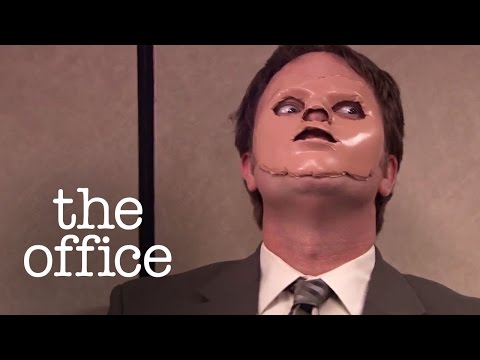
Always remember: a 'real' thing exists. A 'realistic' thing looks like it exists. A realistic mask is still a fake mask, but it looks real.