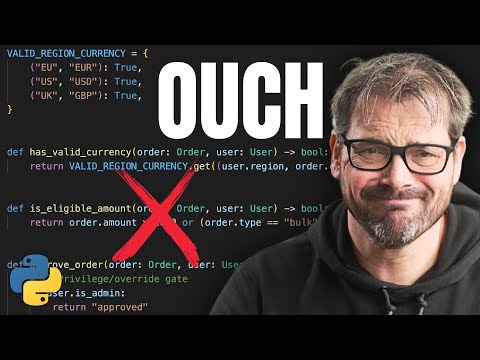
refactor
설명: refactor 당신의 레벨에서:
Refactor is a big word for programmers. It means to change how code is written to make it better. Imagine you have a messy box of toys. You put the cars in one box and the dolls in another. You did not buy new toys, you just organized them. That is refactoring.
When you refactor, you are changing the structure of your work. In computer programming, people use this word when they rewrite code. They want the code to be cleaner and easier to read. They do not change what the program does; they only change how it is written.
Refactoring is a common practice in software development. It refers to the act of improving the internal design of code without changing its external behavior. It is important because it makes software easier to maintain and prevents future errors. Developers often refactor code when it becomes too long or confusing.
In the tech industry, refactoring is considered a best practice. It is the process of restructuring existing code to improve its readability and reduce complexity. Because the external behavior remains unchanged, users of the software will not notice any difference. However, for the development team, refactoring is essential for keeping the codebase healthy and scalable.
Refactoring represents a disciplined approach to technical debt management. By systematically improving the internal architecture of a software system, developers ensure that the code remains adaptable to future requirements. It is a delicate process, as it requires rigorous testing to ensure that the refactoring does not introduce unintended regressions or alter the system's functional output.
The concept of refactoring transcends mere code maintenance; it is an architectural philosophy that prioritizes the long-term sustainability of digital systems. By continuously refactoring, engineers mitigate the entropy that naturally accumulates in complex systems over time. It is a testament to the idea that code is a living document, requiring constant refinement, linguistic clarity, and structural integrity to remain performant within an ever-evolving technological landscape.
refactor 30초 만에
- Refactoring improves code structure.
- External behavior stays the same.
- It helps maintainability.
- Essential for professional developers.
When we talk about refactoring, we are talking about a very specific kind of housekeeping for programmers. Imagine you wrote a long, messy essay. You go back through it to fix the grammar, make the sentences flow better, and organize your paragraphs, but the story you are telling stays exactly the same. That is exactly what refactoring is for code.
The goal is to make the code easier for humans to read and easier for machines to run efficiently. We aren't adding new features or changing what the app does for the user; we are just polishing the 'under the hood' mechanics. This makes it much easier to fix bugs or add new features later on without breaking everything.
The term refactor is a relatively modern addition to the English language, emerging specifically from the world of computer science in the early 1990s. It combines the prefix re- (meaning again) with the mathematical term factor.
In mathematics, 'factoring' means breaking a number down into its component parts. In programming, 'refactoring' means breaking code down into smaller, more manageable pieces or 'factors' to improve its structure. It gained massive popularity thanks to authors like Martin Fowler, who wrote the definitive book on the subject. Before this, programmers often just called it 'cleaning up code,' but the term refactor gave the industry a professional, precise word to describe this vital maintenance work.
You will mostly hear refactor in professional software development environments. It is a verb that is almost always used in the context of technical work. You might hear a developer say, 'I need to refactor this module because it's getting too complex.'
Common collocations include refactor code, refactor a function, or refactor the architecture. While you might hear it used metaphorically in business contexts—like 'we need to refactor our team structure'—it is still very much rooted in its technical origins. It is a formal, precise term that signals you understand the nuances of software quality.
While refactor is a technical term, it relates to many common idioms about improvement. 1. Tidy up: To organize or clean. 2. Back to the drawing board: Starting over when things go wrong. 3. Fine-tune: Making small adjustments for better performance. 4. Clean house: Removing unnecessary things. 5. Smooth out the wrinkles: Fixing small problems in a plan or process.
Refactor is a regular verb. Its forms are refactors (present), refactoring (present participle), and refactored (past/past participle). It is usually a transitive verb, meaning it needs an object, like 'I refactored the database connection.'
The pronunciation is /riːˈfæktər/. The stress is on the second syllable: re-FAC-tor. It rhymes with words like tractor, actor, and factor. It is a very rhythmic word that sounds professional and precise when spoken in a meeting.
재미있는 사실
The term was popularized in the 90s by software engineering books.
발음 가이드
Sounds like 'ree-FACT-uh'
Sounds like 'ree-FACT-er'
자주 하는 실수
- Misplacing the stress on the first syllable
- Pronouncing 'fact' like 'fakt'
- Forgetting the 'r' at the end
라임이 맞는 단어
난이도
Technical but clear
Standard verb
Easy to pronounce
Clear sounds
다음에 무엇을 배울까
다음에 배울 것
고급
알아야 할 문법
Refactoring is fun.
Transitive Verbs
I refactored the code.
The code was refactored.
수준별 예문
I will refactor my code.
I will change my code to be better.
Future tense.
Refactoring is good.
Making things better is good.
Gerund as subject.
He refactored the file.
He fixed the file structure.
Past tense.
We need to refactor.
We must improve the structure.
Verb pattern.
Do you refactor code?
Do you clean your code?
Question form.
She likes refactoring.
She enjoys cleaning up code.
Gerund.
They refactor daily.
They do it every day.
Adverb usage.
It is a refactored app.
The app was improved.
Adjective usage.
I am refactoring the login page today.
The team decided to refactor the main module.
Refactoring makes the code much easier to read.
Have you ever refactored a large project?
The software was refactored last month.
We refactor to avoid bugs in the future.
Is it time to refactor this script?
Refactoring is a key part of our workflow.
We need to refactor the database query to improve performance.
The developers spent all week refactoring the legacy code.
Refactoring allows us to add new features more quickly.
It is often better to refactor than to rewrite from scratch.
The project manager approved time for refactoring.
After refactoring, the code was much cleaner.
Refactoring can be risky if you don't have good tests.
I find refactoring to be a very satisfying task.
By refactoring the core logic, we reduced the complexity of the entire system.
Refactoring is not just about cleaning code; it's about improving design.
The team adopted a policy of continuous refactoring to manage technical debt.
If you don't refactor regularly, your code will become impossible to maintain.
I spent the afternoon refactoring the API endpoints.
Refactoring is essential for long-term project success.
We should refactor this class before adding the new functionality.
The refactoring process revealed several hidden bugs.
The codebase was so convoluted that a complete refactoring was the only viable option.
Strategic refactoring can significantly enhance the maintainability of complex software systems.
While refactoring, we must ensure that the unit tests still pass.
The refactoring effort was aimed at decoupling the tightly coupled modules.
Refactoring is a hallmark of professional software engineering.
We performed a major refactoring to prepare for the new architecture.
The benefits of refactoring often outweigh the initial time investment.
Refactoring is an ongoing commitment to code quality.
The systematic refactoring of the legacy system was a monumental task that required months of planning.
Refactoring serves as a critical mechanism for mitigating the inevitable accumulation of technical debt.
True mastery of refactoring involves knowing when to stop and when to leave well enough alone.
The team's dedication to refactoring ensured the platform remained agile despite its age.
Refactoring is an exercise in structural clarity and intellectual honesty.
The refactoring of the engine was a masterclass in clean code principles.
We approached the refactoring with surgical precision to minimize downtime.
The architectural refactoring fundamentally changed how the components interact.
자주 쓰는 조합
관용어 및 표현
"Clean house"
To remove unwanted things
It is time to clean house in this project.
casual"Back to the drawing board"
Starting over
The design failed, back to the drawing board.
casual"Smooth out the edges"
Fixing small problems
We need to smooth out the edges of the UI.
neutral"Fine-tune"
Small adjustments
We are fine-tuning the system.
neutral"Get your ducks in a row"
Organize
Get your ducks in a row before you start.
casual"Tidy up"
Make neat
Tidy up your code before submitting.
neutral혼동하기 쉬운
Both change code
Rewrite changes behavior; refactor does not
I refactored the code; I rewrote the app.
Both involve code
Debug fixes errors; refactor improves structure
I debugged the error; I refactored the function.
Both improve code
Optimize focuses on speed; refactor on structure
I optimized the loop; I refactored the class.
Both keep code alive
Maintain is broad; refactor is specific
I maintain the site; I refactor the code.
문장 패턴
Subject + refactor + object
We refactored the code.
Subject + need to + refactor + object
I need to refactor this.
Subject + refactor + object + for + purpose
They refactored it for speed.
It is time to + refactor + object
It is time to refactor this module.
Subject + should have + refactored + object
We should have refactored that.
어휘 가족
명사
동사
형용사
관련
사용법
7
격식 수준
팁
Memory Palace
Native Usage
Tech Culture
Grammar Shortcut
Say It Right
Don't Break Things
Did You Know?
Study Smart
Career Tip
Best Practice
암기하기
기억법
RE-FACTOR: FACTORing the code RE-gularly.
시각적 연상
A person taking apart a puzzle and putting it back together more neatly.
Word Web
챌린지
Go to an old project and rename one variable to be clearer.
어원
English
원래 의미: To factor again
문화적 맥락
None
Used heavily in Silicon Valley and tech hubs globally.
실생활에서 연습하기
실제 사용 상황
At work
- Let's refactor this.
- Is this refactored?
- Time to refactor.
Code review
- This needs refactoring.
- Could you refactor this?
- Nice refactoring.
Learning
- How do I refactor?
- Refactoring is hard.
- I am learning to refactor.
Planning
- We need a refactoring sprint.
- Add refactoring to the plan.
대화 시작하기
"Do you think refactoring is important?"
"When was the last time you refactored code?"
"What is the hardest part of refactoring?"
"Do you enjoy refactoring?"
"How do you explain refactoring to a non-coder?"
일기 주제
Write about a time you had to clean up a mess.
Describe a project that needed refactoring.
Why is code quality important?
How does refactoring save time?
자주 묻는 질문
8 질문셀프 테스트
I need to ___ my code.
Refactor is the correct verb for code.
What does refactor mean?
It means to improve structure.
Refactoring changes the program's behavior.
It keeps behavior the same.
Word
뜻
These are related concepts.
Correct SVO structure.
The ___ process was very long.
Need a noun/adjective form.
Which is an antonym?
Clutter makes things worse.
Refactoring is only for new code.
It is for existing code.
Word
뜻
Advanced synonyms/collocations.
Correct adverb placement.
점수: /10
Summary
Refactoring is the art of making your code cleaner without changing what it does.
- Refactoring improves code structure.
- External behavior stays the same.
- It helps maintainability.
- Essential for professional developers.