









route 30초 만에
- A route is a planned path or course used to travel between two locations, often involving a specific sequence of roads or steps to follow.
- The word can be used physically for travel and navigation or metaphorically to describe a method or process for achieving a specific life or business goal.
- Commonly heard in GPS navigation, public transport (bus routes), and logistics, 'route' implies a structured and often optimized way of getting somewhere or doing something.
- It is important to distinguish 'route' from 'root' (plant part) and 'rout' (defeat), as they sound similar but have very different meanings and spellings.
- Physical Navigation
- In the context of travel, a route refers to the specific roads, highways, or trails used. For example, a 'scenic route' suggests a path chosen for its beauty rather than its speed. Public transportation relies heavily on this concept, where bus routes and train routes are fixed paths that vehicles follow repeatedly to serve the public.
The mountain climbers mapped out a dangerous route to the summit, avoiding the areas prone to avalanches.
- Logistics and Supply Chain
- Companies like Amazon or FedEx spend millions of dollars optimizing their delivery routes. This involves complex algorithms that calculate the most fuel-efficient and time-sensitive ways to move goods from warehouses to customers' doorsteps.
Our delivery driver had to change his route due to the sudden road closure on the main highway.
- Career and Life Paths
- When discussing careers, 'route' often replaces 'path' to sound more professional. For instance, 'the academic route' refers to pursuing degrees and research, while 'the vocational route' refers to learning a trade or skill through practical experience.
She decided to take the entrepreneurial route instead of working for a large corporation.
- Common Verb Pairings
- Verbs like 'recalculate' (often heard from GPS devices) and 'obstruct' are also frequent partners. For example: 'The GPS is recalculating the route to avoid a traffic jam,' or 'The fallen tree obstructed our usual route to the cabin.'
We decided to take the coastal route even though it added an hour to our total travel time.
- Prepositional Usage
- 'En route' is a common French loan-phrase used in English meaning 'on the way.' For example: 'The package is en route to your home.' Note that 'en route' is usually treated as an adverbial phrase.
The CEO suggested that the most efficient route to expansion was through a series of strategic mergers.
- Contextual Variations
- In sports, a 'route' can refer to the specific path a wide receiver runs in American football. In climbing, it refers to the specific sequence of holds used to ascend a rock face. Each context maintains the core meaning of a 'planned path.'
After years of study, he finally found a route into the competitive world of high finance.
- Travel and Transportation
- Airports and train stations are hubs for 'route' mentions. Flight attendants might mention the 'flight route' to explain why the plane is experiencing turbulence over a specific mountain range. Bus stops often feature maps showing 'Route 42' or 'Route 101,' where the word identifies the specific line of service.
The airline announced a new non-stop route between New York and Tokyo, significantly reducing travel time.
- Education and Career Counseling
- Guidance counselors and career coaches use the word to describe life choices. You might hear, 'There are many routes into the medical profession,' or 'Have you considered the vocational route?' In this context, it implies a strategy for reaching a career goal.
The most common route to becoming a lawyer involves three years of law school after finishing an undergraduate degree.
- News and Current Events
- Journalists use 'route' when reporting on parades, protest marches, or motorcades. 'The parade route will take the marchers through the heart of the downtown district.' It provides the public with the spatial information needed to attend or avoid the event.
The police changed the motorcade route at the last minute for security reasons.
- Pronunciation Confusion
- The most common issue is the split in pronunciation. In the US, it is often pronounced like 'rowt' (rhymes with 'out') or 'root' (rhymes with 'boot'). In the UK, it is almost exclusively 'root.' However, the word 'rout' (meaning a chaotic retreat or defeat) is always pronounced 'rowt.' Confusing 'route' with 'rout' can lead to significant misunderstandings in both speech and writing.
Incorrect: The army was in a route after the battle. (Should be 'rout'). Correct: We planned our hiking route carefully.
- Misuse of 'En Route'
- The French phrase 'en route' is often misspelled as 'on route.' While 'on the route' is grammatically correct in some contexts, 'en route' is a set phrase meaning 'while traveling.' For example, 'I am en route to the office' is correct, whereas 'I am on route to the office' is non-standard.
Correct: We stopped for lunch en route to the mountains. Avoid: We stopped for lunch on route.
- Overusing 'Route'
- Sometimes people use 'route' when 'way' or 'path' would be more natural. 'Route' sounds slightly more formal or technical. If you are just telling someone how to get to your house, 'This is the way to my house' is usually better than 'This is the route to my house.'
He took a very long route to explain a very simple concept. (Here, 'route' is used metaphorically for a lengthy explanation).
- Path vs. Route
- A 'path' often suggests a smaller, more natural, or less formal way, like a hiking path or a garden path. It is also the most common word for metaphorical journeys ('the path to enlightenment'). 'Route' sounds more engineered or official.
While the main route was blocked, we found a narrow dirt path through the forest.
- Itinerary
- An 'itinerary' is more than just a route; it is a detailed plan for a journey, including the route, the schedule, and the activities. If 'route' is the line on the map, 'itinerary' is the whole travel document.
The travel agent provided a full itinerary, which included our flight route and hotel bookings.
- Direction vs. Route
- 'Direction' tells you which way to face or move (North, South, Left, Right). 'Route' tells you the specific sequence of roads or turns to take to get to a destination. You can go in the right direction but take the wrong route.
We were heading in the right direction, but we took a circuitous route that wasted time.
- Avenue
- 'Avenue' is often used metaphorically to mean a possibility or a way of approaching a problem. 'We have explored every avenue' means we have tried every possible method or route to a solution.
The government is looking for a route—or at least an avenue—for peaceful negotiations.
How Formal Is It?
재미있는 사실
The word 'rupture' (a break) and 'route' share the same Latin ancestor, 'rumpere.' This shows how ancient road-building was seen as 'breaking' the land.
발음 가이드
- Pronouncing it as 'rout' (/raʊt/) when you mean a defeat.
- Confusing the spelling with 'root' in writing.
- Over-emphasizing the final 'e', which is silent.
- Using the 'rowt' pronunciation in the UK, where it is less common.
- Confusing 'en route' with 'on route' in speech.
난이도
Common in many texts, but abstract meanings can be slightly harder to grasp.
Spelling confusion with 'root' and 'rout' is common.
Pronunciation varies by region but is generally understood.
Easy to hear, but context is needed to distinguish from 'root'.
다음에 무엇을 배울까
선수 학습
다음에 배울 것
고급
알아야 할 문법
Nouns as Adjectives
In 'bus route,' the noun 'bus' acts as an adjective to describe the 'route'.
Prepositional Phrases
'Route to [Destination]' uses the preposition 'to' to show direction.
Loan Phrases
'En route' is a French phrase used as an adverbial or adjectival phrase in English.
Compound Nouns
'Trade route' and 'escape route' are common compound nouns.
Articles with Specificity
Use 'the' when there is only one logical route, e.g., 'The route to the summit.'
수준별 예문
The bus route is very long.
Le trajet du bus est très long.
Simple subject-verb-adjective structure.
This is my route to school.
C'est mon chemin pour aller à l'école.
Possessive 'my' with 'route'.
Look at the route on the map.
Regarde l'itinéraire sur la carte.
Imperative 'Look at'.
We take a fast route.
Nous prenons un chemin rapide.
Adjective 'fast' modifying 'route'.
Is this the right route?
Est-ce le bon chemin ?
Question form using 'Is this'.
The route goes through the park.
Le chemin passe par le parc.
Verb 'goes through' indicating direction.
I like the scenic route.
J'aime la route panoramique.
Adjective 'scenic' is common with 'route'.
He knows the route well.
Il connaît bien le chemin.
Adverb 'well' modifying the verb 'knows'.
The GPS found a shorter route.
Le GPS a trouvé un itinéraire plus court.
Comparative adjective 'shorter'.
We are en route to the airport.
Nous sommes en route pour l'aéroport.
Use of the French loan-phrase 'en route'.
There are two routes to the city.
Il y a deux chemins pour aller en ville.
Plural form 'routes'.
The delivery route is very busy today.
La tournée de livraison est très chargée aujourd'hui.
Compound noun 'delivery route'.
Please follow the blue route.
Veuillez suivre l'itinéraire bleu.
Polite imperative 'Please follow'.
The hiking route was very difficult.
Le sentier de randonnée était très difficile.
Past tense 'was'.
I need to plan my route.
Je dois planifier mon itinéraire.
Infinitive 'to plan'.
The bus route changed last week.
Le trajet du bus a changé la semaine dernière.
Simple past 'changed'.
We took the scenic route to enjoy the views.
Nous avons pris la route panoramique pour profiter de la vue.
Infinitive of purpose 'to enjoy'.
What is the most direct route to the station?
Quel est le chemin le plus direct pour aller à la gare ?
Superlative 'most direct'.
The flight route avoids the storm.
L'itinéraire de vol évite la tempête.
Third person singular 'avoids'.
He is looking for a route into the industry.
Il cherche un moyen d'entrer dans l'industrie.
Metaphorical use of 'route'.
The escape route was blocked by snow.
L'issue de secours était bloquée par la neige.
Passive voice 'was blocked'.
She decided on the academic route for her career.
Elle a opté pour la voie académique pour sa carrière.
Preposition 'on' after 'decided'.
The trade route has been used for centuries.
La route commerciale est utilisée depuis des siècles.
Present perfect passive 'has been used'.
They mapped out a route for the parade.
Ils ont tracé un itinéraire pour le défilé.
Phrasal verb 'mapped out'.
The company is optimizing its delivery routes to save fuel.
L'entreprise optimise ses tournées de livraison pour économiser du carburant.
Present continuous 'is optimizing'.
There is no easy route to success in this field.
Il n'y a pas de chemin facile vers le succès dans ce domaine.
Existential 'There is' with a negative.
The climbers established a new route up the north face.
Les grimpeurs ont ouvert une nouvelle voie sur la face nord.
Collocation 'established a route'.
The document takes a complex route through the legal department.
Le document suit un circuit complexe au sein du service juridique.
Metaphorical use for administrative process.
Heavy traffic forced us to take a circuitous route.
La circulation dense nous a obligés à faire un détour.
Verb 'forced' followed by object and infinitive.
The airline is expanding its international routes next year.
La compagnie aérienne étend ses lignes internationales l'année prochaine.
Present continuous for future plans.
A vocational route can be more practical for some students.
Une voie professionnelle peut être plus pratique pour certains étudiants.
Modal 'can' expressing possibility.
The cyclist followed the designated route carefully.
Le cycliste a suivi l'itinéraire balisé avec attention.
Adverb 'carefully' modifying 'followed'.
Strategic mergers were seen as the most viable route to expansion.
Les fusions stratégiques étaient considérées comme la voie la plus viable vers l'expansion.
Passive voice 'were seen as'.
The project followed a circuitous route to final approval.
Le projet a suivi un chemin tortueux avant d'être finalement approuvé.
Adjective 'circuitous' implying complexity.
Digital routing algorithms determine how information travels online.
Les algorithmes de routage numérique déterminent comment l'information circule en ligne.
Technical use of 'routing'.
The author explores the route to self-discovery in her latest novel.
L'auteur explore le chemin de la découverte de soi dans son dernier roman.
Metaphorical use in literature.
Historical trade routes played a crucial role in cultural exchange.
Les routes commerciales historiques ont joué un rôle crucial dans les échanges culturels.
Past tense 'played'.
The government is seeking a diplomatic route to resolve the crisis.
Le gouvernement cherche une voie diplomatique pour résoudre la crise.
Adjective 'diplomatic' modifying 'route'.
The drug's route of administration can affect its efficacy.
La voie d'administration du médicament peut affecter son efficacité.
Technical medical term 'route of administration'.
The debate took an unexpected route when new evidence surfaced.
Le débat a pris une tournure inattendue lorsque de nouvelles preuves sont apparues.
Metaphorical use for the direction of a discussion.
The labyrinthine route of the bureaucracy stifled innovation.
Le parcours labyrinthique de la bureaucratie a étouffé l'innovation.
Adjective 'labyrinthine' for extreme complexity.
Philosophers have long debated the route to ultimate truth.
Les philosophes débattent depuis longtemps du chemin vers la vérité ultime.
Present perfect 'have long debated'.
The migration route of the monarch butterfly is a marvel of nature.
La route migratoire du papillon monarque est une merveille de la nature.
Scientific use of 'migration route'.
He took a circuitous route to avoid addressing the central issue.
Il a emprunté un chemin détourné pour éviter d'aborder le problème central.
Metaphorical use for evasive behavior.
The supply route was compromised by the sudden onset of hostilities.
La route de ravitaillement a été compromise par le déclenchement soudain des hostilités.
Formal passive 'was compromised'.
The neural routes in the brain are reshaped by learning and experience.
Les voies neuronales du cerveau sont remodelées par l'apprentissage et l'expérience.
Scientific/Biological use.
The legislation took a precarious route through the divided parliament.
La législation a suivi un chemin précaire à travers un parlement divisé.
Metaphorical use for political processes.
Every avenue and route to a peaceful resolution had been exhausted.
Toutes les pistes et toutes les voies menant à une résolution pacifique avaient été épuisées.
Past perfect passive 'had been exhausted'.
자주 쓰는 조합
자주 쓰는 구문
— The job of delivering newspapers to a specific set of houses.
I had a paper route when I was a teenager.
— A regular journey with many short stops, originally for delivering milk.
The local bus is basically a milk route; it stops at every corner.
— A common misquotation/pun of 'root of all evil,' often used humorously.
This confusing highway system is the route of all evil.
— To choose a more difficult but rewarding path, or to act morally.
In the debate, she decided to take the high route and not attack her opponent personally.
— A plan or guide for achieving something in the future.
The government published a route map for economic recovery.
— The usual or most common way of doing or getting somewhere.
The standard route to becoming a pilot is quite expensive.
— The path taken by a mail carrier.
The dog barked every time the mailman finished his postal route.
— A famous historic highway in the United States, often used as a cultural reference.
We spent our summer driving along Route 66.
자주 혼동되는 단어
A root is the part of a plant. They sound the same but 'route' is a path.
A rout is a messy defeat. It is always pronounced 'rowt,' whereas 'route' can be 'root'.
A road is a physical surface. A route is the choice of roads you take.
관용어 및 표현
— The only way to achieve a certain result.
Education is the only route to a better life for many children.
Neutral— To plan a course of action in detail.
We need to map out a route for our business expansion.
Professional— To choose a specific method or style of doing something.
We decided to go the organic route with our garden.
Informal— An opportunity or method to enter a particular group or profession.
Internships are a great route into the fashion world.
Neutral— To change the planned path or course of action.
The scandal forced the politician to divert his route to the presidency.
Formal— A method that achieves results more quickly than usual.
There is no fast route to learning a new language perfectly.
Informal— The conventional way of doing something.
He didn't take the traditional route of going to college right after high school.
Neutral— The process of getting healthy or financially stable again.
The patient is finally on the route to recovery after the surgery.
Neutral— A path that ends where it started; also used for arguments that don't go anywhere.
His explanation followed a circular route that confused everyone.
Neutral— The most straightforward way to a goal.
Honesty is the most direct route to gaining someone's trust.
Neutral혼동하기 쉬운
Homophones in many dialects.
Root refers to the base of something (plant, tooth, problem). Route refers to a path or way to get somewhere.
The tree's root was deep, but the route to the tree was easy.
Similar spelling and one shared pronunciation in the US.
Rout means a total defeat or a chaotic retreat. Route means a planned path. A rout is usually a bad thing; a route is just a fact.
The battle ended in a rout, but the soldiers found a secret route to escape.
Both relate to travel.
A road is a physical thing made of asphalt or dirt. A route is a conceptual path that might use many roads.
This road is part of the scenic route.
Synonyms.
Way is very general. Route implies a specific, often pre-planned or official path.
I know the way, but let's check the official route.
Synonyms.
Path often implies a smaller or more natural walkway. Route is used for vehicles or complex plans.
The walking path follows the bus route for a mile.
문장 패턴
This is the [adjective] route.
This is the long route.
We are en route to [place].
We are en route to the beach.
What is the best route to [goal]?
What is the best route to success?
The [noun] route is more [adjective] than the [noun] route.
The vocational route is more practical than the academic route.
[Gerund] is seen as a viable route to [noun].
Investing is seen as a viable route to wealth.
The [noun] followed a circuitous route to [noun].
The bill followed a circuitous route to becoming law.
Every avenue and route to [noun] was [verb past participle].
Every avenue and route to peace was exhausted.
The [adjective] route of the [noun] [verb].
The labyrinthine route of the bureaucracy frustrated the developers.
어휘 가족
명사
동사
형용사
관련
사용법
Very high in travel, logistics, and metaphorical advice.
-
Writing 'the root to success'
→
The route to success
Roots belong to plants; routes are paths to goals.
-
Saying 'I'm on route'
→
I'm en route
The standard phrase is the French 'en route.'
-
Using 'route' when you mean 'road'
→
The road is bumpy.
A route is a plan; a road is the physical thing. You don't usually say 'The route is bumpy' unless the whole journey is difficult.
-
Confusing 'route' with 'rout' in writing
→
The army suffered a rout.
A 'rout' is a defeat. A 'route' is a path. They are spelled differently.
-
Pronouncing 'route' as 'rout' in the UK
→
Pronounce it like 'root'.
While 'rowt' is okay in the US, it is rare and sometimes considered incorrect in the UK.
팁
Choosing the Right Word
Use 'route' when you want to sound more precise or professional. Use 'way' for casual, everyday talk.
The Silent E
Always remember the 'e' at the end of 'route.' Without it, you might be writing 'rout,' which means a total defeat.
Regional Choice
If you are in the UK, always use 'root.' If you are in the US, you can choose, but 'root' is safer for beginners.
En Route Usage
Never use 'en route' with 'is.' Say 'The package is en route,' not 'The package is in en route.'
Scenic vs. Direct
Learn the pair 'scenic route' and 'direct route.' They are the most common ways to describe travel choices.
Life Paths
When talking about your future, 'route' sounds more determined and planned than 'path.'
Delivery Terms
If you work in business, 'delivery route' is a key term for how products reach customers.
Emergency Routes
Always look for the 'escape route' in new buildings. It is a vital safety term.
Historical Context
Use 'trade route' when discussing history or global economics to sound more knowledgeable.
Digital Routing
Remember that your Wi-Fi 'router' is named after the word 'route' because it directs data.
암기하기
기억법
Think of the 'e' at the end of routE as the 'End' of your journey. You follow the routE to reach the End.
시각적 연상
Imagine a bright red line drawn across a map connecting two cities. That line is the route.
Word Web
챌린지
Try to describe your three favorite 'routes'—one for a walk, one for a drive, and one for your future career.
어원
Derived from the Old French word 'route,' which meant a road, way, or path. This Old French term came from the Latin 'rupta,' which is the feminine past participle of 'rumpere,' meaning 'to break.'
원래 의미: The literal Latin meaning was 'a broken way,' referring to a path that had been forcibly cleared or 'broken' through a forest or wilderness.
Indo-European > Italic > Latin > Romance > French > English.문화적 맥락
No specific sensitivities, but be aware that in some contexts, 'routing' can refer to the displacement of people, which is a sensitive topic.
In the US, 'Route' is a common part of highway names (e.g., Route 1). In the UK, roads are more often labeled as 'A' or 'B' roads, though 'route' is still used for the journey itself.
실생활에서 연습하기
실제 사용 상황
Driving and Navigation
- Fastest route
- Avoid tolls on this route
- Scenic route
- Recalculating route
Public Transportation
- Bus route map
- Check the route schedule
- End of the route
- Change routes at the station
Career and Education
- Traditional career route
- Vocational route
- Route to promotion
- Alternative educational route
Business and Logistics
- Supply chain route
- Optimize delivery routes
- Shipping route safety
- Distribution route
Sports and Fitness
- Climbing route
- Running route
- Pass route (Football)
- Cycling route
대화 시작하기
"What's your favorite scenic route to take when you're driving?"
"Do you usually follow the GPS route exactly, or do you take shortcuts?"
"What do you think is the best route to learning a new language quickly?"
"If you could travel any ancient trade route, which one would it be?"
"Do you think the academic route is still the best way to get a good job?"
일기 주제
Describe the route you take on your most common daily journey. What do you see along the way?
Reflect on your career or educational route so far. Has it been direct or circuitous?
Write about a time you took a 'scenic route' in life. What did you learn from the slower pace?
Imagine you are planning a route across a new continent. What factors would you consider?
How has technology (like GPS) changed the way you think about routes and navigation?
자주 묻는 질문
10 질문In British English, it is almost always 'root.' In American English, both 'root' and 'rowt' are correct, though 'root' is more common in formal speech and 'rowt' is often heard in military or logistics contexts.
A road is the physical street you drive on. A route is the plan or the sequence of roads you use to get from one place to another. For example, 'Route 66' is a specific series of roads.
Yes, 'route' can be a verb meaning to send something along a specific path. For example, 'The mail is routed through Chicago.' The related noun 'router' comes from this verb.
It is a French phrase that means 'on the way.' For example, 'The ambulance is en route' means it is currently traveling to the scene.
A scenic route is a path chosen because it is beautiful or has nice views, even if it takes longer than the most direct path.
Yes, it refers to the job of delivering newspapers. While less common than in the past, the term is still widely understood in English-speaking countries.
You can use it to describe a way to achieve a goal. For example, 'Hard work is the route to success.' Here, 'success' is the destination and 'hard work' is the path.
A trade route is a historical or modern network of paths used for the commercial transport of goods between different regions or countries.
While 'on the route' is correct when talking about a specific path, 'en route' is the standard idiomatic phrase for 'on the way.' 'On route' without 'the' is usually considered a mistake.
Routing is the process of selecting paths in a network along which to send network traffic. It is what a 'router' does to make the internet work.
셀프 테스트 180 질문
Write a sentence using 'scenic route'.
Well written! Good try! Check the sample answer below.
Describe your route to work or school.
Well written! Good try! Check the sample answer below.
Explain why a company might change its delivery route.
Well written! Good try! Check the sample answer below.
Use 'en route' in a sentence about a vacation.
Well written! Good try! Check the sample answer below.
Compare an academic route with a vocational route.
Well written! Good try! Check the sample answer below.
Write a short story about someone getting lost on a new route.
Well written! Good try! Check the sample answer below.
Discuss the 'route to success' in your favorite hobby.
Well written! Good try! Check the sample answer below.
Describe a historical trade route and its importance.
Well written! Good try! Check the sample answer below.
Use 'labyrinthine route' in a sentence about government.
Well written! Good try! Check the sample answer below.
Explain the concept of 'routing' in a computer network.
Well written! Good try! Check the sample answer below.
Write a dialogue between two people choosing a route on a map.
Well written! Good try! Check the sample answer below.
How would you tell someone that a route is blocked?
Well written! Good try! Check the sample answer below.
Write a formal email about a change in a shipping route.
Well written! Good try! Check the sample answer below.
Use 'alternative route' in a sentence about traffic.
Well written! Good try! Check the sample answer below.
Describe a 'route to recovery' for someone who is sick.
Well written! Good try! Check the sample answer below.
What is the 'best route' to learning English? Give your opinion.
Well written! Good try! Check the sample answer below.
Write a poem about a long and winding route.
Well written! Good try! Check the sample answer below.
Describe the 'neural routes' involved in a habit.
Well written! Good try! Check the sample answer below.
Write a sentence using 'direct route' and 'scenic route' together.
Well written! Good try! Check the sample answer below.
Explain the importance of an 'escape route' in a fire.
Well written! Good try! Check the sample answer below.
Tell me about your favorite route for a walk.
Read this aloud:
당신의 답변:
Speech recognition is not supported in your browser. Try Chrome or Edge.
Do you prefer the fastest route or the scenic route?
Read this aloud:
당신의 답변:
Speech recognition is not supported in your browser. Try Chrome or Edge.
How do you use a map to plan a route?
Read this aloud:
당신의 답변:
Speech recognition is not supported in your browser. Try Chrome or Edge.
Describe the most difficult route you have ever traveled.
Read this aloud:
당신의 답변:
Speech recognition is not supported in your browser. Try Chrome or Edge.
What is the best route to success in your opinion?
Read this aloud:
당신의 답변:
Speech recognition is not supported in your browser. Try Chrome or Edge.
Discuss the pros and cons of taking a vocational route after school.
Read this aloud:
당신의 답변:
Speech recognition is not supported in your browser. Try Chrome or Edge.
Explain the importance of trade routes in history.
Read this aloud:
당신의 답변:
Speech recognition is not supported in your browser. Try Chrome or Edge.
Pronounce 'route' in two different ways.
Read this aloud:
당신의 답변:
Speech recognition is not supported in your browser. Try Chrome or Edge.
Tell a story about someone who got lost on a detour.
Read this aloud:
당신의 답변:
Speech recognition is not supported in your browser. Try Chrome or Edge.
Describe the 'route' of a bill becoming a law in your country.
Read this aloud:
당신의 답변:
Speech recognition is not supported in your browser. Try Chrome or Edge.
Give directions using the word 'route'.
Read this aloud:
당신의 답변:
Speech recognition is not supported in your browser. Try Chrome or Edge.
What bus route do you take to the city?
Read this aloud:
당신의 답변:
Speech recognition is not supported in your browser. Try Chrome or Edge.
How does a GPS help you find a route?
Read this aloud:
당신의 답변:
Speech recognition is not supported in your browser. Try Chrome or Edge.
Why is an 'escape route' important in a hotel?
Read this aloud:
당신의 답변:
Speech recognition is not supported in your browser. Try Chrome or Edge.
Talk about a 'scenic route' you took recently.
Read this aloud:
당신의 답변:
Speech recognition is not supported in your browser. Try Chrome or Edge.
What is the 'route to recovery' for the economy?
Read this aloud:
당신의 답변:
Speech recognition is not supported in your browser. Try Chrome or Edge.
Describe the 'route' of a river from its source to the sea.
Read this aloud:
당신의 답변:
Speech recognition is not supported in your browser. Try Chrome or Edge.
Discuss the 'neural routes' of learning.
Read this aloud:
당신의 답변:
Speech recognition is not supported in your browser. Try Chrome or Edge.
What is the 'direct route' to a promotion at work?
Read this aloud:
당신의 답변:
Speech recognition is not supported in your browser. Try Chrome or Edge.
Explain the phrase 'en route' to a beginner.
Read this aloud:
당신의 답변:
Speech recognition is not supported in your browser. Try Chrome or Edge.
Listen for the word 'route' in a weather report about road closures.
Listen to a GPS voice and identify the word 'route'.
Identify the pronunciation of 'route' used by the speaker (root or rowt).
Listen to a news story about a shipping route and summarize it.
Listen to a career coach talk about the 'route to becoming a doctor'.
Listen for 'en route' in a conversation between two travelers.
Listen to a lecture on the Silk Road and note the different routes mentioned.
Listen to an IT professional explain 'routing' and take notes.
Listen for the difference between 'route' and 'root' in a podcast.
Listen to a bus driver announce the route number.
Listen to a pilot describe the flight route.
Listen for 'alternative route' in a traffic update.
Listen to a sports commentator describe a 'pass route'.
Listen for the 'route to success' in an interview with a celebrity.
Listen to a safety briefing about 'escape routes'.
/ 180 correct
Perfect score!
Summary
The word 'route' is essential for describing how we move through space and progress toward goals. Whether you are following a 'scenic route' on vacation or choosing an 'academic route' for your career, the term always implies a planned path to a destination. Example: 'The GPS recalculated our route to avoid the heavy traffic downtown.'
- A route is a planned path or course used to travel between two locations, often involving a specific sequence of roads or steps to follow.
- The word can be used physically for travel and navigation or metaphorically to describe a method or process for achieving a specific life or business goal.
- Commonly heard in GPS navigation, public transport (bus routes), and logistics, 'route' implies a structured and often optimized way of getting somewhere or doing something.
- It is important to distinguish 'route' from 'root' (plant part) and 'rout' (defeat), as they sound similar but have very different meanings and spellings.
Choosing the Right Word
Use 'route' when you want to sound more precise or professional. Use 'way' for casual, everyday talk.
The Silent E
Always remember the 'e' at the end of 'route.' Without it, you might be writing 'rout,' which means a total defeat.
Regional Choice
If you are in the UK, always use 'root.' If you are in the US, you can choose, but 'root' is safer for beginners.
En Route Usage
Never use 'en route' with 'is.' Say 'The package is en route,' not 'The package is in en route.'
예시
I usually take the scenic route home to avoid the heavy traffic on the highway.
관련 콘텐츠
영상에서 보기
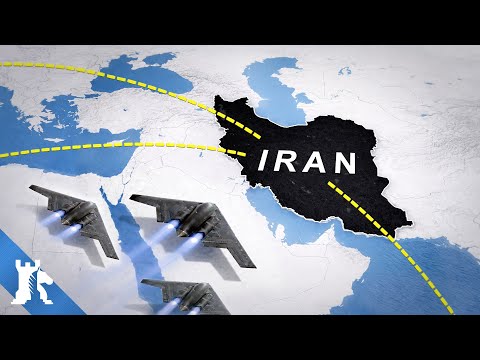 17:00
17:00
Three ways Trump could strike Iran
"I usually take the scenic route home to avoid the heavy traffic on the highway."
 3:26
3:26
Inception En Route/Boarding Scene
"I usually take the scenic route home to avoid the heavy traffic on the highway."
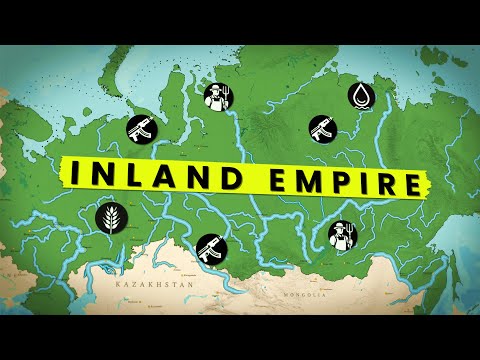 14:47
14:47
How Russia plans to rule Eurasia by river
"I usually take the scenic route home to avoid the heavy traffic on the highway."
맥락에서 배우기
이 단어를 다른 언어로
관련 표현
Transport 관련 단어
interstate
B1주간 고속도로는 주와 주를 연결하는 주요 도로입니다.
helicopter
B1헬리콥터는 회전하는 날개를 이용하여 수직으로 이착륙할 수 있는 항공기입니다.
hackney
C2보통의 승마나 마차용으로 쓰이는 중간 크기의 말, 또는 대여용 마차.
platforms
B1플랫폼은 기차역처럼 사람들이 서 있는 높은 표면을 말합니다.
vehicles
A2탈것은 운송에 사용되는 기계입니다.
bimini
C1비미니는 보트 조종석을 위한 캔버스 소재의 차양막입니다.
cars
A1자동차는 운송에 사용되는 동력 차량입니다.
vehicle
B2탈것은 사람이나 물건을 운반하는 기계입니다.
plane
B1비행기 (운송 수단) 또는 평면 (기하학의 평평한 표면). '비행기가 활주로에 착륙했습니다.'
car
A1자동차는 바퀴가 네 개 달린 도로용 차량입니다. 사람들은 출퇴근이나 여행을 위해 자동차를 이용합니다.

