









wasp 30초 만에
- A wasp is a stinging insect with a slender waist, often yellow and black, known for being a predatory hunter in the natural world.
- Unlike bees, wasps are smooth-bodied and can sting multiple times without dying, making them more formidable when they feel threatened or defensive.
- Wasps live in social colonies or as solitary individuals, building intricate nests from chewed wood pulp that resembles grey or brown paper material.
- The word 'wasp' also has metaphorical uses, describing an irritable person (waspish) or a specific social demographic (WASP) in certain cultural contexts.
The term 'wasp' refers to a diverse group of insects within the order Hymenoptera, specifically those that are neither bees nor ants. In common parlance, when people mention a wasp, they are usually referring to the social varieties like yellowjackets or hornets, which are known for their striking yellow and black patterns and their defensive behavior. However, the biological reality of the wasp is far more complex, encompassing thousands of species that range from tiny parasitic wasps to large, predatory hornets. Understanding the word 'wasp' requires recognizing its dual role in human consciousness: as a feared pest at summer picnics and as a vital ecological contributor that controls pest populations and aids in pollination. The word is used most frequently in late summer and early autumn when social colonies reach their peak size and the insects become more active in their search for sugary foods. In a linguistic sense, 'wasp' is a noun that carries a sharp, buzzing phonetic quality, mirroring the insect's own nature. It is often used to describe anything that is irritable or sharp-tongued, leading to the adjective 'waspish'. When you hear someone shout 'wasp!', it is usually a warning of immediate physical presence, but in a scientific context, it describes a fascinating predator with a highly evolved social structure. The physical characteristics of a wasp are distinct; they possess a 'wasp waist,' a narrow petiole that connects the thorax to the abdomen, allowing for great flexibility during stinging or egg-laying. Unlike bees, which are often hairy and robust, wasps are generally smooth, shiny, and appear more streamlined. This physical distinction is a key part of how the word is used to differentiate between the 'friendly' pollinator (the bee) and the 'aggressive' hunter (the wasp).
- Biological Classification
- Wasps belong to the suborder Apocrita, characterized by a narrow waist. They are predatory or parasitic, which distinguishes them from the largely pollen-collecting bees.
The children ran away from the picnic table when a large wasp began hovering over their glasses of lemonade.
In everyday conversation, the word is often associated with the sensation of a sting. Because wasps can sting multiple times without dying—unlike honeybees—the word carries a connotation of persistent threat. People use the word in gardening contexts to discuss natural pest control, as many gardeners welcome solitary wasps that hunt caterpillars and aphids. In literature and media, the wasp is frequently used as a metaphor for hidden danger or a sharp, stinging wit. The architectural prowess of the wasp is also a common topic, with the word 'wasp' often appearing alongside 'nest' to describe the intricate paper structures they build from chewed wood fibers. This constructive aspect of the wasp's life is often overshadowed by its defensive reputation, but it remains a significant part of the word's semantic field. When discussing the environment, the word 'wasp' is increasingly used to highlight biodiversity, as many species are specialized to pollinate specific plants or control specific invasive insects. Thus, the word moves between a cry of alarm and a term of scientific appreciation depending on the speaker's environment and intent.
- Social vs. Solitary
- While social wasps live in large colonies with a queen, the majority of wasp species are actually solitary, living alone and rarely interacting with humans in a negative way.
The scientist carefully observed the parasitic wasp as it searched for a host in the dense undergrowth of the forest.
Furthermore, the word 'wasp' has entered the realm of cultural identity through the acronym WASP, standing for White Anglo-Saxon Protestant. While this is a distinct usage, the sharp, elite, and sometimes 'stinging' social connotations of the acronym often play on the imagery of the insect. In the natural world, the wasp is a symbol of industry and defense. The word is also used in technical fields, such as aviation or engineering, to name projects or vehicles that are fast, agile, and possess a 'sting' or high-impact capability. The phonetic structure of the word, ending in a sharp 'p', gives it a definitive and punchy sound that matches the insect's quick movements. Whether used by a terrified camper or an entomologist, the word 'wasp' immediately evokes a specific image of a sleek, winged creature with a potent capability for both construction and destruction. It is a word that bridges the gap between the mundane annoyances of a backyard barbecue and the complex beauty of the natural evolutionary process.
- Etymological Root
- The word derives from the Old English 'wæps', which shares a common Proto-Indo-European root meaning 'to weave', referring to the insect's nest-building skills.
A solitary wasp was seen dragging a paralyzed spider back to its burrow to feed its developing larvae.
The pest control expert identified the nest as belonging to a common wasp, noting its distinctive grey, papery texture.
Even though I am afraid of being stung, I can admire the sleek design and vibrant colors of the wasp from a safe distance.
Using the word 'wasp' correctly involves understanding its role as a countable noun and its various metaphorical extensions. In its most literal sense, 'wasp' is used to describe the physical insect. You might say, 'There is a wasp in the kitchen,' or 'The wasps are building a nest under the eaves.' Because wasps are often seen in groups, the plural 'wasps' is very common. When describing the action of the insect, verbs like 'buzz', 'hover', 'sting', and 'swarm' are frequently paired with 'wasp'. For example, 'A wasp buzzed angrily around the fallen fruit.' This paints a vivid picture of the insect's movement and sound. In more descriptive writing, you can use adjectives to specify the type of wasp or its temperament, such as 'a predatory wasp', 'a social wasp', or 'an agitated wasp'. The word also functions well in prepositional phrases, such as 'stung by a wasp' or 'a nest of wasps'. These phrases are standard in both casual and formal English. When you want to emphasize the fear or annoyance they cause, you might use 'wasp' as the subject of a sentence that describes a disruptive action: 'The sudden appearance of a wasp sent the guests scattering from the patio.'
- Verb Pairings
- Common verbs used with wasp include: sting, buzz, fly, hover, build, hunt, and swarm. Example: 'The wasp stung him on the arm.'
I watched a wasp land on the rim of my soda can, drawn by the sweet scent of the sugar.
Beyond the literal insect, the word 'wasp' can be used metaphorically. The adjective 'waspish' is a direct derivative used to describe a person's behavior or comments. If someone is 'waspish', they are irritable, snappish, or prone to making sharp, stinging remarks. For instance, 'She gave a waspish reply to his innocent question.' This usage captures the essence of the wasp's sting in a social context. Another common metaphorical use is the phrase 'to stir up a wasp's nest' (or more commonly, a hornet's nest), which means to provoke a large amount of trouble or to cause a situation to become angry and complicated. While 'hornet' is more common in this idiom, 'wasp' is sometimes substituted. In academic or technical writing, 'wasp' is used with precision to denote specific families like Vespidae. Here, the sentence structure might be more complex: 'The life cycle of the parasitic wasp involves laying eggs inside a host larva, which eventually sustains the developing wasp offspring.' This shows the word's utility in scientific discourse. Whether you are writing a nature guide, a personal anecdote, or a piece of fiction, 'wasp' serves as a powerful noun that evokes immediate sensory details.
- Adjective Form
- The word 'waspish' describes someone who is easily irritated or who makes sharp, unkind remarks. Example: 'His waspish sense of humor often offended people.'
The old wooden shed was home to several wasp colonies that had built their nests in the rafters over the summer.
In children's literature, 'wasp' is often personified as a grumpy or aggressive character, which influences how the word is used in storytelling. 'The grumpy wasp refused to share the nectar with the butterfly.' This personification helps children learn the word while also teaching them about the insect's perceived personality. In contrast, in environmental reporting, the word is used to discuss ecological balance: 'The decline of the native wasp population has led to an increase in garden pests.' This demonstrates the word's versatility across different registers of English. When using the word in a compound form, such as 'wasp-waisted', it describes a very narrow waist, often in fashion or biology. This shows how the physical form of the insect has influenced English vocabulary beyond the realm of entomology. Overall, 'wasp' is a flexible noun that can be used to describe biological facts, evoke emotional responses, or create vivid metaphors for human behavior and physical appearance.
- Compound Words
- Common compounds include: wasp-waisted, wasp-like, and wasp-nest. Example: 'The Victorian corset was designed to create a wasp-waisted silhouette.'
Because the wasp can sting repeatedly, it is often considered more dangerous than a honeybee by those with allergies.
The photographer used a macro lens to capture the intricate details of the wasp's compound eyes and powerful mandibles.
During the hike, we had to be careful not to step on a ground-dwelling wasp that had made its home in the trail.
The word 'wasp' is a staple of outdoor conversation, particularly during the warmer months. You will hear it most frequently in settings like parks, gardens, outdoor restaurants, and campsites. In these contexts, the word is often an exclamation or a warning. A parent might say to a child, 'Watch out, there's a wasp on your apple juice!' or a group of friends might discuss the presence of a 'wasp's nest' near their tent. This immediate, practical usage is the most common way people encounter the word in spoken English. It is also a frequent topic in local news reports during the summer, where experts might give advice on how to handle 'wasp infestations' or discuss the seasonal 'wasp activity' levels. In these reports, the word is used in a slightly more formal, advisory capacity, often paired with terms like 'pest control' or 'allergic reaction'. Hearing the word in this context reinforces its status as a significant, if often unwelcome, part of the summer environment.
- Casual Conversation
- In casual settings, 'wasp' is often used to express annoyance or fear. Example: 'I can't enjoy my lunch with that wasp flying around!'
'Is that a bee or a wasp?' she asked, squinting at the insect hovering near the flowerbed.
In educational settings, such as biology classes or nature documentaries, the word 'wasp' is heard in a much more analytical and appreciative tone. Documentaries narrated by figures like David Attenborough often feature 'wasps' to illustrate complex ecological relationships, such as the life of the fig wasp or the hunting strategies of the tarantula hawk. In these instances, the word is used to describe a marvel of nature rather than a nuisance. You will hear terms like 'wasp larvae', 'wasp colony', and 'wasp species' used to explain the diversity and importance of these insects. This contrast between the 'scary' wasp of the picnic and the 'essential' wasp of the ecosystem is a key part of how the word is understood in different spheres of life. Furthermore, in the world of sports and branding, 'wasp' is a popular name for teams or products, such as the 'Wasps' rugby team in the UK. Here, the word is chosen to evoke speed, agility, and a 'sting' in the tail, showing how the insect's traits are admired in a competitive context.
- Nature Documentaries
- In science media, 'wasp' is used to describe complex behaviors. Example: 'The emerald jewel wasp has a fascinating way of controlling its prey.'
The teacher explained that the wasp plays a crucial role in the ecosystem by keeping the caterpillar population in check.
In literature and film, the word 'wasp' is often used to set a scene or create a specific atmosphere. A writer might describe the 'drowsy buzz of a wasp' to evoke a hot, lazy summer afternoon, or use the 'sharp sting of a wasp' as a metaphor for a sudden, painful realization. In the Marvel Cinematic Universe, 'The Wasp' is a prominent superhero, which has brought the word into the mainstream of pop culture for a new generation. In this context, the word is associated with heroism, technology, and the ability to shrink in size while maintaining great power. This modern usage adds a layer of 'coolness' to the word that balances out its more traditional associations with fear and pain. Whether it's in a superhero movie, a scientific journal, or a casual conversation at a BBQ, the word 'wasp' is a high-frequency noun that carries a lot of weight and immediate imagery. It is a word that everyone knows, but that means different things depending on whether you are looking at a textbook, a movie screen, or a buzzing insect near your ear.
- Pop Culture
- The word is now widely recognized as the name of a superhero. Example: 'Ant-Man and The Wasp are a famous duo in the Marvel movies.'
The buzzing of a wasp trapped against the windowpane was the only sound in the quiet room.
'Don't swat at the wasp,' he warned, 'it will only make it more likely to sting you.'
The gardener found a small wasp nest attached to the underside of a large leaf in the greenhouse.
One of the most frequent mistakes people make with the word 'wasp' is confusing it with 'bee'. While they are related, they are distinct insects with different behaviors and physical traits. Calling a wasp a bee (or vice versa) can lead to confusion, especially when discussing safety or ecological roles. Bees are generally fuzzy and focused on pollen, while wasps are smooth and often predatory. Another common error is in the pronunciation of the plural form 'wasps'. The 's-p-s' cluster at the end can be difficult for non-native speakers, often leading to pronunciations like 'was-piz' or 'wosses'. The correct pronunciation requires a quick transition from the 's' to the 'p' and back to the 's'. Practicing this cluster is essential for clear communication. Additionally, people sometimes use the word 'wasp' when they specifically mean a 'hornet' or a 'yellowjacket'. While all hornets are wasps, not all wasps are hornets. Using the general term 'wasp' is usually fine, but being specific can be more helpful in certain situations, such as when calling for pest control.
- Wasp vs. Bee
- Mistake: Calling a wasp a bee. Correction: Wasps are smooth and predatory; bees are fuzzy and collect pollen.
He mistakenly called the yellowjacket a bee, but his friend pointed out it was actually a wasp.
Another mistake involves the metaphorical use of the word. Some learners might use 'waspish' to mean 'fast' or 'small' because of the insect's traits, but 'waspish' specifically refers to a sharp, irritable personality. Using it to describe anything other than a person's temperament or a remark can be confusing. For example, saying 'He has a waspish car' would be incorrect; instead, you might say 'He has a wasp-like car' if you mean it is sleek and fast. There is also the confusion between the insect 'wasp' and the acronym 'WASP'. In written English, the acronym should always be capitalized (WASP), while the insect should be lowercase (wasp) unless it starts a sentence. Confusing these in writing can change the meaning of a sentence entirely. For instance, 'The WASP was at the club' refers to a person, while 'The wasp was at the club' refers to an insect. Paying attention to capitalization is crucial here. Finally, people often assume all wasps are aggressive. In reality, most of the thousands of wasp species are solitary and completely uninterested in humans. Using the word 'wasp' as a synonym for 'aggressive pest' is a common generalization that overlooks the vast majority of the species.
- Plural Pronunciation
- Mistake: Pronouncing 'wasps' as 'wosses'. Correction: Ensure you pronounce the 'p' between the two 's' sounds: /wɒsps/.
The plural of wasp is 'wasps', which can be a bit of a tongue-twister for some people.
In terms of grammar, 'wasp' is a regular countable noun, but some people forget to use the correct articles. You should say 'a wasp' or 'the wasp', not just 'wasp' when referring to a specific one. For example, 'I saw wasp' is incorrect; it should be 'I saw a wasp.' Also, when describing a group, 'a swarm of wasps' is the collective noun, though 'a nest of wasps' is also common. Using 'a pack of wasps' or 'a herd of wasps' would be incorrect. Understanding these collective nouns helps you sound more like a native speaker. Another subtle mistake is using 'wasp' as a verb. While you can 'sting like a wasp', you cannot 'wasp someone'. If you want to describe the action of being irritable, you must use the adjective 'waspish' with a verb like 'to be' or 'to act'. By avoiding these common pitfalls—confusing them with bees, mispronouncing the plural, misusing the acronym, and over-generalizing their behavior—you can use the word 'wasp' with confidence and accuracy in any situation.
- Collective Nouns
- Mistake: 'A pack of wasps'. Correction: Use 'a swarm of wasps' or 'a colony of wasps'.
She was careful to write 'WASP' in all caps when referring to the social group in her sociology essay to avoid confusion with the wasp insect.
It is a common mistake to think that every wasp you see is looking for a reason to sting you.
The student struggled with the word 'wasps', but after practicing the 'sps' sound, they could say it clearly.
When you want to describe a wasp or something similar, there are several words you can use depending on the level of specificity you need. The most common alternative is 'hornet'. A hornet is actually a type of large wasp, but in everyday English, people often use the two words interchangeably or use 'hornet' to describe a particularly large or aggressive-looking wasp. Another related word is 'yellowjacket', which is a specific type of social wasp common in North America, known for its bright yellow and black markings. If you are looking for a more general term, 'insect' or 'bug' works, though they are much less specific. For scientific contexts, 'hymenopteran' is the technical term for the order that includes wasps, bees, and ants. If you are describing the action of the wasp, you might use 'predator' or 'hunter', as many wasps are known for their ability to hunt other insects. These alternatives help to provide variety in your writing and can help you be more precise about what kind of creature you are discussing.
- Hornet
- A larger, often more aggressive type of wasp. While all hornets are wasps, not all wasps are hornets.
- Yellowjacket
- A specific North American term for social wasps with bright yellow markings, often found at picnics.
While some people use the word 'hornet' for any large insect, it is technically a specific kind of wasp.
In a metaphorical sense, if you want to replace 'waspish', you could use words like 'irritable', 'snappish', 'petulant', or 'testy'. These words all capture the idea of someone who is easily annoyed and likely to give a sharp response. 'Caustic' or 'acerbic' are also good alternatives if you want to emphasize the 'stinging' or 'biting' nature of someone's remarks. If you are describing a 'wasp-waisted' person, you might use 'slender', 'willowy', or 'svelte', though these don't carry the same specific imagery of the narrow middle section. When discussing the nest, you might use 'hive' (though this is more common for bees) or 'colony'. Using these synonyms and related terms allows you to tailor your language to the specific nuance you want to convey. For example, 'The hornet's nest' sounds more threatening than 'the wasp's nest', even though they are biologically similar. This shows how choosing the right word can influence the tone of your sentence.
- Waspish Alternatives
- Words like 'irritable', 'snappish', and 'testy' can be used instead of 'waspish' to describe a person's mood.
The critic's review was quite acerbic, possessing a wasp-like sting that the author found difficult to ignore.
Finally, it's worth considering the word 'bee' as a contrast rather than a synonym. In many contexts, 'wasp' and 'bee' are used together to cover the range of stinging insects. If you are writing a safety guide, you might say 'stinging insects such as wasps and bees'. This is more accurate than using one word to cover both. In creative writing, you might contrast the 'industrious bee' with the 'predatory wasp' to create a symbolic conflict. Other less common but useful words include 'vespid', which is the adjective form relating to the family Vespidae, and 'mud dauber', which refers to a specific type of solitary wasp that builds nests out of mud. By expanding your vocabulary to include these similar words and alternatives, you can describe the natural world with much greater detail and emotional resonance. Whether you are talking about the insect itself or using it as a metaphor, having a range of words at your disposal will make your English more expressive and precise.
- Vespid
- A technical term for wasps in the family Vespidae, which includes most of the social wasps we encounter.
The mud dauber is a fascinating type of solitary wasp that creates unique tube-like structures for its young.
Instead of just saying 'bug', the biologist identified the specimen as a parasitic wasp from the Braconidae family.
The child learned to distinguish between the fuzzy bumblebee and the sleek, shiny wasp in the garden.
How Formal Is It?
재미있는 사실
The word 'wasp' is an example of metathesis, where sounds in a word switch places over time. In Old English, it was often 'wæps', but eventually the 'p' and 's' swapped to become 'wasp'.
발음 가이드
- Pronouncing the plural 'wasps' as 'wosses' (dropping the 'p').
- Adding an extra vowel sound in the plural, like 'was-piz'.
- Pronouncing the 'a' in 'wasp' like the 'a' in 'cat' (it should be more like 'o' or 'ah').
- Failing to pronounce the final 'p' clearly.
- Confusing the pronunciation with 'was' (the past tense of 'be').
난이도
The word itself is short and easy to recognize in text.
The plural 'wasps' can be tricky to spell and use correctly in complex sentences.
The 'sps' cluster at the end of 'wasps' is a significant challenge for many learners.
The sharp 's' and 'p' sounds make it relatively easy to hear in conversation.
다음에 무엇을 배울까
선수 학습
다음에 배울 것
고급
알아야 할 문법
Pluralization of nouns ending in -sp
One wasp, two wasps. The 's' is added directly to the end.
Using 'by' for agents in passive voice
He was stung by a wasp. The wasp is the one performing the action.
Compound adjectives with hyphens
A wasp-waisted dress. The hyphen connects the two words to modify the noun.
Articles with specific vs. general nouns
A wasp (any wasp) vs. The wasp (the one we are looking at).
Collective nouns for insects
A swarm of wasps. 'Swarm' is the specific group word for flying insects.
수준별 예문
The wasp is yellow and black.
L'abeille est jaune et noire.
Simple subject-verb-adjective structure.
I see a wasp in the garden.
Je vois une guêpe dans le jardin.
Use of the indefinite article 'a'.
A wasp can sting.
Une guêpe peut piquer.
Modal verb 'can' for ability.
Do not touch the wasp.
Ne touche pas la guêpe.
Imperative form for a warning.
The wasp is small.
La guêpe est petite.
Basic descriptive sentence.
Wasps have wings.
Les guêpes ont des ailes.
Plural noun with the verb 'have'.
Is that a wasp?
Est-ce une guêpe ?
Interrogative sentence structure.
The wasp flies fast.
La guêpe vole vite.
Subject-verb-adverb structure.
The wasp built a nest under the roof.
La guêpe a construit un nid sous le toit.
Past tense of the verb 'build'.
I am afraid of being stung by a wasp.
J'ai peur d'être piqué par une guêpe.
Passive gerund phrase 'being stung'.
Wasps like to eat sweet fruit.
Les guêpes aiment manger des fruits sucrés.
Infinitive phrase 'to eat'.
There are many wasps near the trash can.
Il y a beaucoup de guêpes près de la poubelle.
Use of 'there are' for plural existence.
A wasp is different from a bee.
Une guêpe est différente d'une abeille.
Prepositional phrase 'different from'.
The wasp buzzed around my head.
La guêpe a bourdonné autour de ma tête.
Prepositional phrase 'around my head'.
We saw a large wasp in the park today.
Nous avons vu une grande guêpe dans le parc aujourd'hui.
Simple past tense with a time expression.
Don't leave your soda open, or a wasp might fly in.
Ne laisse pas ton soda ouvert, sinon une guêpe pourrait entrer.
Conditional 'or' with modal 'might'.
The wasp's narrow waist is its most distinctive feature.
La taille étroite de la guêpe est sa caractéristique la plus distinctive.
Possessive noun 'wasp's'.
Some wasps are solitary and do not live in colonies.
Certaines guêpes sont solitaires et ne vivent pas en colonies.
Contrast between 'solitary' and 'colonies'.
He made a waspish comment about her new haircut.
Il a fait un commentaire hargneux sur sa nouvelle coupe de cheveux.
Adjective 'waspish' used metaphorically.
If you get stung by a wasp, you should apply cold water.
Si vous vous faites piquer par une guêpe, vous devriez appliquer de l'eau froide.
First conditional structure.
The wasp is a predator that hunts other insects.
La guêpe est un prédateur qui chasse d'autres insectes.
Relative clause 'that hunts other insects'.
We had to call an expert to remove the wasp nest safely.
Nous avons dû appeler un expert pour enlever le nid de guêpes en toute sécurité.
Infinitive of purpose 'to remove'.
The buzzing of the wasp was very distracting during the exam.
Le bourdonnement de la guêpe était très distrayant pendant l'examen.
Gerund 'buzzing' used as a noun.
Wasps are often more active during the late summer months.
Les guêpes sont souvent plus actives pendant les derniers mois de l'été.
Comparative adjective 'more active'.
The social structure of a wasp colony is highly organized.
La structure sociale d'une colonie de guêpes est hautement organisée.
Complex noun phrase as subject.
Parasitic wasps play a vital role in controlling agricultural pests.
Les guêpes parasites jouent un rôle vital dans la lutte contre les ravageurs agricoles.
Adjective 'parasitic' modifying 'wasps'.
Her waspish wit made her both feared and admired in the office.
Son esprit mordant la faisait à la fois craindre et admirer au bureau.
Correlative conjunctions 'both... and'.
The wasp's ability to sting repeatedly makes it a formidable opponent.
La capacité de la guêpe à piquer à plusieurs reprises en fait un adversaire redoutable.
Complex subject with an infinitive phrase.
Many people confuse the common wasp with the more aggressive hornet.
Beaucoup de gens confondent la guêpe commune avec le frelon plus agressif.
Verb 'confuse' with 'with'.
The Victorian era was famous for the 'wasp-waisted' silhouette in women's fashion.
L'époque victorienne était célèbre pour la silhouette 'taille de guêpe' dans la mode féminine.
Compound adjective 'wasp-waisted'.
The wasp uses its mandibles to chew wood into a paper-like pulp.
La guêpe utilise ses mandibules pour broyer le bois en une pulpe semblable à du papier.
Verb 'chew' with 'into'.
Environmental changes have significantly impacted the local wasp populations.
Les changements environnementaux ont considérablement affecté les populations locales de guêpes.
Present perfect tense with an adverb.
The intricate architecture of a wasp's nest is a marvel of natural engineering.
L'architecture complexe d'un nid de guêpes est une merveille d'ingénierie naturelle.
Metaphorical use of 'engineering'.
He delivered a waspish critique that left the young artist in tears.
Il a livré une critique acerbe qui a laissé le jeune artiste en larmes.
Relative clause 'that left...'.
The term WASP is often used in sociological studies to describe a specific elite group.
Le terme WASP est souvent utilisé dans les études sociologiques pour décrire un groupe d'élite spécifique.
Acronym usage in academic context.
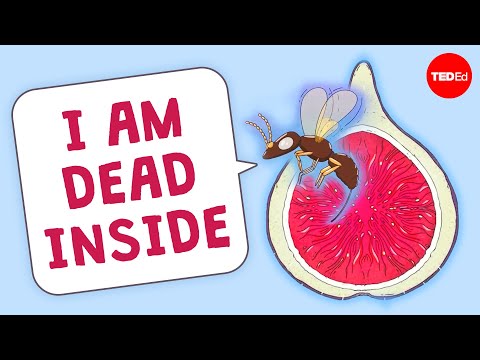
The fig wasp and the fig tree have a symbiotic relationship that is essential for both.
La guêpe du figuier et le figuier ont une relation symbiotique qui est essentielle pour les deux.
Scientific terminology 'symbiotic relationship'.
The wasp's venom contains a complex cocktail of proteins and enzymes.
Le venin de la guêpe contient un cocktail complexe de protéines et d'enzymes.
Technical noun 'cocktail' used for a mixture.
Stirring up a wasp's nest in the boardroom was not his intention, but it happened anyway.
Provoquer un tollé dans la salle de réunion n'était pas son intention, mais c'est arrivé quand même.
Idiomatic expression used as a gerund subject.
The wasp's predatory nature is a key component of its ecological niche.
La nature prédatrice de la guêpe est une composante clé de sa niche écologique.
Academic term 'ecological niche'.
Despite their fearsome reputation, most wasps are actually quite beneficial to humans.
Malgré leur réputation redoutable, la plupart des guêpes sont en réalité assez bénéfiques pour les humains.
Concessive phrase 'Despite their fearsome reputation'.
The author's waspish prose is characterized by its sharp, stinging observations of social mores.
La prose acerbe de l'auteur se caractérise par ses observations tranchantes et mordantes des mœurs sociales.
Sophisticated literary description.
The ethology of the social wasp reveals a level of collective intelligence that rivals that of ants.
L'éthologie de la guêpe sociale révèle un niveau d'intelligence collective qui rivalise avec celui des fourmis.
Comparison using 'that of'.
The decline of native wasp species could have unforeseen cascading effects on the entire ecosystem.
Le déclin des espèces de guêpes indigènes pourrait avoir des effets en cascade imprévus sur l'ensemble de l'écosystème.
Conditional 'could have' with complex adjectives.
In his latest essay, he deconstructs the historical influence of the WASP establishment on American politics.
Dans son dernier essai, il déconstruit l'influence historique de l'establishment WASP sur la politique américaine.
High-level academic verb 'deconstructs'.
The wasp's ovipositor has been evolutionarily adapted into a potent weapon for defense and predation.
L'ovipositeur de la guêpe a été adapté par l'évolution en une arme puissante pour la défense et la prédation.
Passive voice with an evolutionary context.
Her waspish retort effectively silenced the room, leaving her opponents momentarily speechless.
Sa réplique cinglante a effectivement fait taire la salle, laissant ses adversaires momentanément sans voix.
Participle phrase 'leaving her opponents...'.
The sheer diversity of the wasp family, from the microscopic to the gargantuan, is a testament to its evolutionary resilience.
La diversité pure de la famille des guêpes, du microscopique au gargantuesque, est un témoignage de sa résilience évolutive.
Appositive phrase 'from the microscopic to the gargantuan'.
One must tread carefully when addressing such a sensitive topic, lest one stir up a wasp's nest of controversy.
Il faut agir avec prudence lorsqu'on aborde un sujet aussi sensible, de peur de s'attirer une nuée de controverses.
Archaic/formal conjunction 'lest' with the subjunctive.
자주 쓰는 조합
자주 쓰는 구문
— To be extremely irritated or furious. It compares a person's anger to the defensive behavior of a wasp.
After the meeting was cancelled, he was as angry as a wasp.
— A fashion term describing a garment that creates an extremely narrow waist. It mimics the insect's body.
The 1950s dress featured a classic wasp-waisted silhouette.
— A literal nest, or metaphorically, a group of people who are hostile or dangerous. It suggests hidden trouble.
Walking into that meeting felt like walking into a nest of wasps.
— A sharp, biting, or unkind comment. It describes the 'sting' of someone's words.
She regretted her waspish remark as soon as she saw his hurt expression.
— A substance used to keep wasps away. Commonly used during outdoor events.
Don't forget to spray some wasp repellent around the patio.
— A device designed to catch and kill wasps. Often filled with sugary liquid.
We hung a wasp trap in the tree to keep them away from the table.
— A large and problematic number of wasps in a specific area. Requires professional help.
The school had to close for a day due to a major wasp infestation.
— The young, developing stage of a wasp. They are usually fed by the adults.
The worker wasps were busy bringing food to the hungry wasp larvae.
— The group of wasps living together in a nest. It includes the queen and workers.
A single wasp colony can contain thousands of individual insects.
— A specific type of wasp. There are over 100,000 known wasp species in the world.
The biologist discovered a new wasp species in the Amazon rainforest.
자주 혼동되는 단어
Bees are fuzzy and usually less aggressive; wasps are smooth and predatory.
Hornets are a specific, larger type of wasp. All hornets are wasps, but not all wasps are hornets.
Refers to White Anglo-Saxon Protestants, a social group, not the insect.
관용어 및 표현
— To cause a lot of trouble or to provoke a group of people into an angry reaction. It is similar to 'stirring up a hornet's nest'.
By bringing up the budget cuts, he really stirred up a wasp's nest.
Informal— To have a habit of making sharp, unkind, or critical comments. It refers to the stinging nature of the insect.
The critic was known for his waspish tongue and brutal reviews.
Literary— A type of humor that is clever but also sharp and potentially hurtful. It 'stings' the subject of the joke.
Her waspish wit made her the life of the party, but also made her many enemies.
Literary— A variation of 'a bee in one's bonnet', meaning to be obsessed with an idea or to be very agitated about something.
She's had a wasp in her bonnet about the new parking rules all week.
Informal/Regional— Describing someone with a very narrow waist. It is often used in fashion contexts.
The model's wasp-waisted figure was the talk of the runway.
Neutral— To be very restless, irritable, or trapped in a frustrating situation. It evokes the image of a buzzing, angry insect.
He's been like a wasp in a bottle ever since he lost his keys.
Informal— To do something with great accuracy and speed, often with a sharp or definitive result.
The fighter jet moved with wasp-like precision through the canyon.
Neutral— An unexpected and unpleasant end to something that seemed positive. While often used for scorpions, it is also applied to wasps.
The movie was great, but the ending had a real sting in the tail.
Informal— A personality that is easily angered and prone to making sharp, stinging remarks.
His waspish temper made it difficult for him to keep friends for long.
Neutral— Metaphorically, to be cheated or to suffer a sudden, painful loss or insult. It draws on the physical pain of a wasp sting.
I really felt stung when they didn't invite me to the wedding.
Informal혼동하기 쉬운
Both are yellow and black stinging insects.
Bees are hairy and collect pollen; wasps are smooth and hunt other insects. Bees die after stinging once; wasps can sting multiple times.
The bee was busy on the flower, but the wasp was hunting a fly.
They look very similar and are closely related.
Hornets are generally much larger and have a wider head. They are a sub-group of wasps.
That wasn't just a wasp; it was a giant hornet!
They mimic the yellow and black colors of wasps for protection.
Hoverflies are actually flies; they have only two wings (wasps have four) and they cannot sting.
Don't worry, that's just a harmless hoverfly pretending to be a wasp.
In North America, this is the most common type of wasp people see.
Yellowjacket is a specific name for certain social wasps, while 'wasp' is the general category.
The yellowjacket is a type of wasp that is very common at summer barbecues.
It is a very large insect that looks like a giant wasp.
It is a specific type of solitary wasp that hunts cicadas and is generally not aggressive toward humans.
The cicada killer looks scary because of its size, but it's just a solitary wasp.
문장 패턴
The [noun] is [adjective].
The wasp is yellow.
There is a [noun] in the [place].
There is a wasp in the kitchen.
I am [adjective] of [verb-ing].
I am afraid of being stung.
The [noun] is known for its [feature].
The wasp is known for its slender waist.
Despite [noun phrase], [clause].
Despite their reputation, wasps are beneficial.
Lest [subject] [subjunctive verb], [clause].
Lest you stir up a wasp's nest, speak carefully.
[Subject] made a [adjective] remark.
She made a waspish remark.
[Noun] uses [part] to [verb].
The wasp uses its stinger to defend itself.
어휘 가족
명사
형용사
관련
사용법
Common, especially in summer and in nature-related discussions.
-
Calling every yellow and black insect a 'bee'.
→
Use 'wasp' for smooth, thin-waisted insects and 'bee' for fuzzy ones.
This is a very common error. Bees and wasps have different roles in nature and different levels of aggression.
-
Pronouncing 'wasps' as 'woss-iz'.
→
Pronounce it as 'wɒsps', keeping the 'p' sound clear.
The 'sps' cluster is hard, but adding an extra syllable ('iz') is incorrect in standard English.
-
Using 'waspish' to describe a fast car or a small object.
→
Use 'waspish' only for people's moods or remarks.
The adjective 'waspish' has a very specific metaphorical meaning related to personality, not physical speed or size.
-
Thinking all wasps live in big paper nests.
→
Recognize that many wasps are solitary and live in the ground or in wood.
Most people only know about social wasps, but they are actually a minority of the wasp world.
-
Writing 'wasp' in all caps when you mean the insect.
→
Use 'wasp' for the insect and 'WASP' for the social group.
Capitalization changes the meaning from a biological creature to a sociological demographic.
팁
Stay Calm
If a wasp lands on you, don't panic. Gently blow on it or wait for it to fly off. Sudden movements are what usually cause stings.
Welcome Solitary Wasps
Don't destroy every nest you see. Solitary wasps are great for your garden because they eat the bugs that eat your vegetables.
Use 'Waspish' for Wit
If you want to describe a character in a story who is clever but a bit mean, 'waspish wit' is a perfect and sophisticated phrase to use.
Master the Plural
Practice saying 'wasps' by making sure you hit the 'p' sound before the final 's'. It should sound like 'woss-ps', not 'wosses'.
Cover Your Drinks
Wasps love sweet drinks and can crawl inside cans. Always use a lid or a straw when drinking outside to avoid a nasty surprise.
Look for the Waist
If you aren't sure if it's a bee or a wasp, look at the middle. A very thin, thread-like waist is a classic sign of a wasp.
Think of Weaving
Remember that the word 'wasp' comes from a root meaning 'to weave'. This helps you remember their amazing nest-building skills.
Be Specific
Instead of just writing 'insect', use 'wasp' to create a more vivid and potentially tense atmosphere in your writing.
Know the Signs
Learn the difference between a normal sting reaction (redness and pain) and an allergic one (difficulty breathing). It could save a life!
Capitalize the Acronym
When writing about the social group, always use all caps (WASP). When writing about the insect, use lowercase (wasp). This avoids confusion.
암기하기
기억법
Think of a **W**inged **A**ngry **S**tinging **P**redator. The first letters spell WASP, which perfectly describes what it is and what it does.
시각적 연상
Imagine a tiny, yellow and black jet plane with a very narrow middle. The 'wasp waist' is the key visual feature that separates it from the fuzzy bee.
Word Web
챌린지
Try to say the word 'wasps' five times fast without losing the 'p' sound. This will help you master the difficult consonant cluster at the end of the word.
어원
The word 'wasp' comes from the Old English 'wæps' or 'wæsp'. It shares a common Germanic origin with the Dutch 'wesp' and the German 'Wespe'. These all descend from the Proto-Germanic '*wapsō'.
원래 의미: The Proto-Indo-European root is believed to be '*webh-', which means 'to weave'. This is a reference to the way wasps 'weave' their nests from wood fibers.
Indo-European > Germanic > West Germanic > English.문화적 맥락
Be aware that some people have severe, life-threatening allergies to wasp stings, so the topic can be stressful for them.
In the UK and US, wasps are a common topic of small talk during summer heatwaves, usually centered around how 'annoying' they are at outdoor events.
실생활에서 연습하기
실제 사용 상황
At a Picnic
- Is that a wasp?
- Don't swat at it!
- It's after the fruit.
- Watch your drink.
In the Garden
- There's a wasp nest here.
- They are good for the plants.
- I got stung by a wasp.
- Look at that paper nest.
At School (Biology)
- The wasp is a predator.
- Note the narrow waist.
- They belong to Hymenoptera.
- Wasps help with pest control.
In a Hospital (Allergy)
- I'm allergic to wasps.
- The sting is swelling up.
- Do you have an EpiPen?
- It was a wasp, not a bee.
Discussing Personality
- She has a waspish wit.
- Don't be so waspish.
- A stinging remark.
- He's in a waspish mood.
대화 시작하기
"Have you ever been stung by a wasp? It's much more painful than a bee sting!"
"I found a huge wasp nest in my shed yesterday. Do you think I should call a professional?"
"Did you know that wasps are actually really helpful for gardens because they eat pests?"
"Why do you think wasps are so much more aggressive than bees during the summer?"
"I saw a documentary about parasitic wasps that was both fascinating and a little bit scary."
일기 주제
Describe a time you encountered a wasp. How did you react, and what was the outcome of the situation?
Compare and contrast the public perception of bees and wasps. Why do you think one is loved and the other is feared?
Write a short story from the perspective of a wasp building its nest. What challenges does it face in the human world?
Reflect on the metaphorical meaning of 'waspish'. Have you ever felt this way, or known someone who fits this description?
Research the ecological importance of wasps and write a summary of why we should protect them despite their sting.
자주 묻는 질문
10 질문Yes, unlike honeybees, wasps have a smooth stinger that does not get stuck in your skin. This allows them to sting multiple times in a row if they feel threatened. It is one of the reasons people are more cautious around them.
The main differences are physical and behavioral. Wasps have a very narrow waist, smooth bodies, and are often predatory. Bees are usually rounder, fuzzier, and focus on collecting pollen and nectar. Also, most bees can only sting once, while wasps can sting repeatedly.
Absolutely! Wasps are vital for the environment. They are natural pest controllers, hunting many of the insects that damage crops and garden plants, such as caterpillars and aphids. Some species are also important pollinators for specific plants.
The best thing to do is to stay calm and move slowly away. Swatting at a wasp can make it feel threatened and more likely to sting. If you remain still, the wasp will usually realize you aren't food or a threat and fly away on its own.
Adult wasps mainly eat sugar for energy. In nature, they get this from nectar or fallen fruit. However, they are easily attracted to human foods like soda, jam, and ice cream, especially in late summer when their natural food sources become scarce.
Wasps are master builders. They chew up wood fibers from trees, fences, or logs and mix them with their saliva. This creates a soft pulp that they shape into hexagonal cells. When the pulp dries, it turns into a tough, paper-like material.
When you call someone 'waspish', you are saying they are irritable and prone to making sharp, stinging, or unkind remarks. It's a metaphorical way of saying their personality has a 'sting' like a wasp's tail.
A solitary wasp is a species where each female lives and breeds alone, rather than in a colony with a queen. Most wasp species are actually solitary. They often build small nests in the ground or in wood and are generally not aggressive toward humans.
No, while the yellow and black pattern is very common, wasps come in many colors. Some are completely black, others are metallic blue or green, and some have red or orange markings. The color often depends on the species and its environment.
In a social context, WASP stands for White Anglo-Saxon Protestant. It is a term used, primarily in the United States, to describe a high-status social group that has historically held a lot of political and economic power.
셀프 테스트 180 질문
Write a simple sentence about a wasp's color.
Well written! Good try! Check the sample answer below.
Write a sentence about what a wasp can do.
Well written! Good try! Check the sample answer below.
Describe where a wasp might build its nest.
Well written! Good try! Check the sample answer below.
Explain why you should be careful around wasps.
Well written! Good try! Check the sample answer below.
Write a sentence using the adjective 'waspish' to describe a person.
Well written! Good try! Check the sample answer below.
Describe the physical differences between a wasp and a bee.
Well written! Good try! Check the sample answer below.
Discuss the ecological benefits of having wasps in a garden.
Well written! Good try! Check the sample answer below.
Write a short paragraph about the life cycle of a social wasp.
Well written! Good try! Check the sample answer below.
Analyze the cultural significance of the acronym WASP in American society.
Well written! Good try! Check the sample answer below.
Explain the concept of a symbiotic relationship using the fig wasp as an example.
Well written! Good try! Check the sample answer below.
Write a sentence about a wasp in a garden.
Well written! Good try! Check the sample answer below.
What do wasps like to eat? Write two sentences.
Well written! Good try! Check the sample answer below.
Write a warning message about a wasp nest.
Well written! Good try! Check the sample answer below.
Describe the process of how a wasp makes paper for its nest.
Well written! Good try! Check the sample answer below.
Use the idiom 'stir up a wasp's nest' in a business context.
Well written! Good try! Check the sample answer below.
Do you like wasps? Why or why not?
Well written! Good try! Check the sample answer below.
Write a sentence about a wasp and a soda can.
Well written! Good try! Check the sample answer below.
How do you feel when you hear a wasp buzzing?
Well written! Good try! Check the sample answer below.
Compare a solitary wasp to a social wasp.
Well written! Good try! Check the sample answer below.
Discuss the evolution of the wasp's stinger.
Well written! Good try! Check the sample answer below.
Say: 'The wasp is yellow and black.'
Read this aloud:
당신의 답변:
Speech recognition is not supported in your browser. Try Chrome or Edge.
Say: 'A wasp can sting.'
Read this aloud:
당신의 답변:
Speech recognition is not supported in your browser. Try Chrome or Edge.
Say: 'There is a wasp nest in the tree.'
Read this aloud:
당신의 답변:
Speech recognition is not supported in your browser. Try Chrome or Edge.
Say: 'I am careful around wasps.'
Read this aloud:
당신의 답변:
Speech recognition is not supported in your browser. Try Chrome or Edge.
Say: 'The wasp buzzed around my head.'
Read this aloud:
당신의 답변:
Speech recognition is not supported in your browser. Try Chrome or Edge.
Say: 'She has a very waspish personality.'
Read this aloud:
당신의 답변:
Speech recognition is not supported in your browser. Try Chrome or Edge.
Say: 'Wasps are important predators in the garden.'
Read this aloud:
당신의 답변:
Speech recognition is not supported in your browser. Try Chrome or Edge.
Say: 'The Victorian dress had a wasp-waisted look.'
Read this aloud:
당신의 답변:
Speech recognition is not supported in your browser. Try Chrome or Edge.
Say: 'Stirring up a wasp's nest of controversy is risky.'
Read this aloud:
당신의 답변:
Speech recognition is not supported in your browser. Try Chrome or Edge.
Say: 'The fig wasp's role in pollination is fascinating.'
Read this aloud:
당신의 답변:
Speech recognition is not supported in your browser. Try Chrome or Edge.
Say: 'I see a wasp.'
Read this aloud:
당신의 답변:
Speech recognition is not supported in your browser. Try Chrome or Edge.
Say: 'Wasps like sweet juice.'
Read this aloud:
당신의 답변:
Speech recognition is not supported in your browser. Try Chrome or Edge.
Say: 'I was stung by a wasp last year.'
Read this aloud:
당신의 답변:
Speech recognition is not supported in your browser. Try Chrome or Edge.
Say: 'The wasp's nest is made of paper pulp.'
Read this aloud:
당신의 답변:
Speech recognition is not supported in your browser. Try Chrome or Edge.
Say: 'Her waspish remarks were quite unnecessary.'
Read this aloud:
당신의 답변:
Speech recognition is not supported in your browser. Try Chrome or Edge.
Say: 'Wasps have wings.'
Read this aloud:
당신의 답변:
Speech recognition is not supported in your browser. Try Chrome or Edge.
Say: 'Don't swat at the wasp.'
Read this aloud:
당신의 답변:
Speech recognition is not supported in your browser. Try Chrome or Edge.
Say: 'The plural of wasp is wasps.'
Read this aloud:
당신의 답변:
Speech recognition is not supported in your browser. Try Chrome or Edge.
Say: 'Parasitic wasps help farmers.'
Read this aloud:
당신의 답변:
Speech recognition is not supported in your browser. Try Chrome or Edge.
Say: 'The wasp is a member of the Vespidae family.'
Read this aloud:
당신의 답변:
Speech recognition is not supported in your browser. Try Chrome or Edge.
Listen and write the word: 'Wasp'.
Listen and write: 'The wasp flies.'
Listen and write: 'A wasp nest is in the shed.'
Listen and write: 'Wasps can sting you.'
Listen and write: 'The wasp has a narrow waist.'
Listen and write: 'He made a waspish comment.'
Listen and write: 'Wasps hunt other insects for food.'
Listen and write: 'The wasp colony is very large.'
Listen and write: 'The acronym WASP is used in sociology.'
Listen and write: 'The fig wasp is essential for pollination.'
Listen and write: 'I see two wasps.'
Listen and write: 'The wasp is yellow and black.'
Listen and write: 'A hornet is a type of wasp.'
Listen and write: 'The wasp's stinger is very sharp.'
Listen and write: 'Her waspish wit was quite sharp.'
/ 180 correct
Perfect score!
Summary
The word 'wasp' primarily refers to a sleek, predatory stinging insect. It is essential to distinguish it from a bee, as wasps are generally smoother and can sting repeatedly. Example: 'The wasp buzzed around the fruit, looking for a meal.'
- A wasp is a stinging insect with a slender waist, often yellow and black, known for being a predatory hunter in the natural world.
- Unlike bees, wasps are smooth-bodied and can sting multiple times without dying, making them more formidable when they feel threatened or defensive.
- Wasps live in social colonies or as solitary individuals, building intricate nests from chewed wood pulp that resembles grey or brown paper material.
- The word 'wasp' also has metaphorical uses, describing an irritable person (waspish) or a specific social demographic (WASP) in certain cultural contexts.
Stay Calm
If a wasp lands on you, don't panic. Gently blow on it or wait for it to fly off. Sudden movements are what usually cause stings.
Welcome Solitary Wasps
Don't destroy every nest you see. Solitary wasps are great for your garden because they eat the bugs that eat your vegetables.
Use 'Waspish' for Wit
If you want to describe a character in a story who is clever but a bit mean, 'waspish wit' is a perfect and sophisticated phrase to use.
Master the Plural
Practice saying 'wasps' by making sure you hit the 'p' sound before the final 's'. It should sound like 'woss-ps', not 'wosses'.
예시
A wasp buzzed loudly around the table as we tried to eat our lunch.
관련 콘텐츠
Animals 관련 단어
albatross
B2거대한 바닷새; 비유적으로, 무거운 짐이나 장애물.
animal
A1동물은 움직일 수 있고 다른 유기물을 섭취하여 에너지를 얻는 생물입니다.
animals
A1동물은 유기물을 섭취하며 스스로 움직일 수 있는 다세포 생물입니다.
ant
A1개미는 군집 생활을 하는 아주 작은 사회적 곤충입니다.
antelope
C1영양은 사슴과 비슷하게 생긴 날랜 포유류로, 갈라지지 않는 영구적인 뿔이 특징입니다. 주로 아프리카와 아시아의 초원에 삽니다.
antiarchal
C1데본기 동안 살았던 멸종된 판피어류인 동갑목(Antiarchi)에 관한 것.
antler
C2사슴의 뿔은 매년 떨어지고 다시 자라는 나뭇가지 모양의 골질 구조물입니다. 이것은 주로 짝짓기 시즌에 서열 다툼을 위해 사용됩니다.
ants
A1개미는 고도로 조직된 군집 생활을 하는 작은 사회적 곤충입니다.
ape
B2누군가나 무언가를 어설프게 또는 생각 없이 흉내 내다.
arboreal
B2수목성 동물은 대부분의 시간을 나무 위에서 보냅니다.

