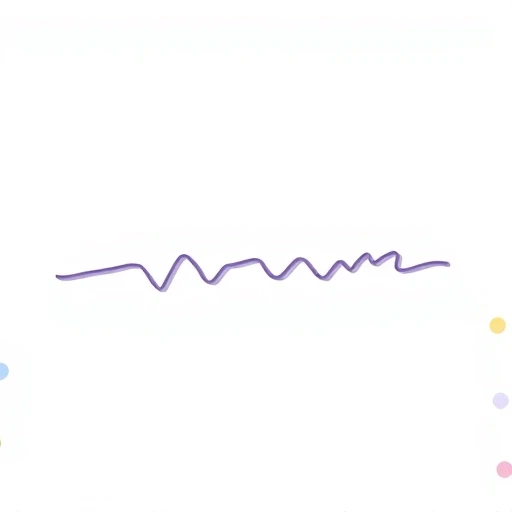
揺れたり震えたりした線で 30초 만에
- Describes lines that are shaky, swaying, and unstable, often reflecting the creator's emotional or physical state.
- Combines 'yureru' (sway) and 'furueru' (tremble) using ~tari grammar to create a vivid, dynamic image.
- Commonly used in literature, art criticism, and medical contexts to describe handwriting or sketches.
- Functions as an adverbial phrase (with 'de') to modify verbs like draw, write, or trace.
The phrase 揺れたり震えたりした線で (yuretari furuetari shita sen de) is a descriptive adverbial expression that translates to "with lines that sway and tremble." This expression is not just a literal description of a physical line; it is a nuanced way to convey instability, emotional turbulence, or a specific artistic intent. In Japanese, the combination of the verbs yureru (to sway or swing) and furueru (to tremble or shiver) creates a vivid image of a line that lacks a fixed path. It is often used in literature, art criticism, and psychological descriptions to suggest that the creator of the line—whether a child, an elderly person, or a character in a story—was experiencing a state of physical or mental unrest.
- Physical Instability
- This refers to lines drawn by a hand that cannot remain steady. This could be due to age, illness, or the physical environment, such as drawing on a moving train.
彼は揺れたり震えたりした線で、自分の名前をゆっくりと書いた。
In the context of visual arts, this phrase describes a technique where the artist intentionally avoids clean, straight lines to evoke a sense of vulnerability or raw emotion. Think of the sketches of Egon Schiele or the frantic lines in a manga panel that represent a character's terror. The use of ~tari ~tari grammar indicates that the lines are not uniform; some parts might be swaying broadly while others are shivering minutely, adding to the complexity of the visual texture.
- Psychological Resonance
- The phrase is frequently used metaphorically to describe a person's inner state reflected in their output. A shaky line is a window into a shaky heart.
Furthermore, the phrase captures the essence of imperfection. In a culture that often values precision (like in traditional calligraphy), the presence of yuretari furuetari shita sen can signify a departure from the norm, highlighting a moment of human frailty or intense focus under pressure. It is a phrase that invites the reader or listener to look closer at the texture of the work and the state of the person behind it.
その地図は、揺れたり震えたりした線で描かれており、作者の焦りが伝わってきた。
- Artistic Style
- Artists use this specific phrasing to describe 'gestural' or 'expressive' lines that prioritize feeling over anatomical or geometric accuracy.
When you use this phrase, you are painting a picture of movement within stillness. A line is a static object, but by describing it as 'swaying' and 'trembling,' you imbue it with the life of the moment it was created. This is a hallmark of B1-level Japanese—moving beyond simple adjectives like 'shaky' (furueru) to more complex, descriptive structures that capture a multifaceted reality.
To use 揺れたり震えたりした線で effectively, you must understand its grammatical components. It functions as a modifier for the action that follows. The core structure is [Description] + [Particle で] + [Verb]. This tells the listener that the action (like drawing, writing, or tracing) was performed using these specific types of lines.
- Grammar Breakdown
- 1. 揺れたり (Yuretari): The 'tari' form of yureru (to sway).
2. 震えたり (Furuetari): The 'tari' form of furueru (to tremble).
3. した (Shita): The past tense of suru, used here to turn the preceding verbs into a compound adjective modifying 'sen'.
4. 線 (Sen): Line.
5. で (De): Particle indicating means or method.
子供は揺れたり震えたりした線で、家族の絵を描いた。
This phrase is particularly useful when you want to emphasize the process or the state of the person acting. If you just said 'shaky lines' (furueru sen), it might sound like a simple physical property. But by using yuretari furuetari shita, you suggest a more dynamic, perhaps even chaotic, motion. It implies that the line wasn't just shaky in one way, but in multiple, alternating ways.
In more formal or literary contexts, you can replace the final 'de' with other particles depending on the sentence structure. For example, ...sen ga tsuzuite iru (the lines continue...) would describe the visual state rather than the method of drawing. However, the 'de' version remains the most common for describing the act of creation.
おじいさんは、揺れたり震えたりした線で手紙を綴った。
- Common Verb Pairings
- 描く (kaku - to draw), 書く (kaku - to write), 綴る (tsuzuru - to compose/spell out), 引く (hiku - to pull/draw a line).
When using this in conversation, it adds a layer of descriptive sophistication. Instead of saying the writing was 'bad' (heta) or 'messy' (kitanai), you are providing a neutral but vivid description of the physical form of the writing. This shows empathy and observation skills, which are highly valued in Japanese communication.
You are likely to encounter 揺れたり震えたりした線で in environments where visual details and emotional subtext are important. It is a staple of Japanese literature, particularly in the 'I-novel' (Shishosetsu) genre or psychological thrillers, where the physical appearance of handwriting can reveal a character's secret fear or failing health.
- In Literature
- Authors use this phrase to set a mood. A note left behind with such lines immediately creates tension. It tells the reader that the writer was not in a normal state of mind.
小説の中で、主人公は揺れたり震えたりした線で書かれた日記を見つけた。
In the world of Manga and Anime, this phrase might appear in the dialogue of an art teacher critiquing a student, or in the narration describing a character's attempt to draw while crying. It is also used in documentaries or news reports when describing historical documents written under duress, such as letters from soldiers or survivors of natural disasters.
Medical and caregiving contexts also utilize this expression. A doctor might describe a patient's declining motor skills by noting that they can only draw with yuretari furuetari shita sen. Here, the phrase serves as a compassionate way to describe a clinical symptom, focusing on the visual output rather than just the medical cause.
リハビリの成果を確認するため、患者に揺れたり震えたりした線ではなく、まっすぐな線を引いてもらった。
- Digital Design
- Interestingly, in modern UI/UX design discussions, this phrase might be used to describe 'organic' or 'hand-drawn' filters that make digital elements look more natural and less robotic.
Finally, you might hear this in everyday conversation when someone is being self-deprecating about their own handwriting, especially if they were writing in a hurry or while standing up. It’s a way to apologize for the lack of neatness by describing the physical reality of the lines themselves.
One of the most common mistakes learners make with 揺れたり震えたりした線で is confusing the nuances of yureru and furueru. While both involve movement, they are not interchangeable. Yureru typically refers to a larger, swaying motion (like a building in an earthquake or a swing), whereas furueru refers to a smaller, rapid vibration (like hands shaking from cold or fear). Using only one of them might not capture the full 'unstable' quality intended by the full phrase.
- Mistake 1: Incorrect Verb Choice
- Saying 'yureta sen' when you mean a tiny tremor. 'Yureta' implies the whole line is waving, while 'furueta' implies the stroke itself is jagged.
❌ 寒さで線が揺れた。
✅ 寒さで線が震えた。
Another mistake is the placement of the particle de. Some learners might try to use no to make it a simple noun phrase (yuretari furuetari shita sen no...), but this changes the meaning to 'the shaky line's [something]'. If you want to describe the *manner* of an action, de is essential. Without it, the sentence often feels incomplete or grammatically 'hanging'.
A third common error is using this phrase to describe something that is simply 'curvy' or 'wavy' in a decorative sense. Yuretari furuetari carries a connotation of lack of control or instability. If you are describing a beautiful, intentional wave, use nami-utsu (wave-like) or kyokusen-teki (curvilinear) instead. Using the 'shaky' phrase for a decorative wave might make it sound like the artist made a mistake.
- Mistake 2: Misinterpreting Intent
- Using this phrase for a deliberate zigzag pattern. Zigzags are 'giza-giza', which implies a sharp, intentional rhythm, unlike the unstable nature of 'yuretari furuetari'.
Lastly, ensure you don't over-rely on this long phrase when a simpler word will do. In casual conversation, just saying furueta sen is often enough. The full phrase is more descriptive and literary, so using it while ordering a coffee or doing basic tasks might sound overly dramatic or poetic.
While 揺れたり震えたりした線で is highly descriptive, there are several other ways to express similar ideas depending on the specific texture or cause of the shakiness. Understanding these alternatives will help you choose the most precise word for the situation.
- 波打つ (Nami-utsu)
- Meaning 'to undulate' or 'to wave'. This is used for smoother, more rhythmic lines. It lacks the 'trembling' (fear/weakness) nuance of our main phrase.
- ギザギザの (Giza-giza no)
- Meaning 'jagged' or 'serrated'. This describes sharp, rhythmic points like a saw blade. It is more about the shape than the movement that created it.
比較:
1. 揺れたり震えたりした線 (Unstable, weak)
2. ギザギザの線 (Sharp, intentional)
3. おぼつかない線 (Uncertain, faltering)
Another excellent alternative is obotsukanai (uncertain/faltering). This is often used to describe the lines drawn by someone who is learning or someone who is very frail. It focuses more on the *lack of skill or strength* rather than the physical 'swaying' motion itself.
In technical drawing or geometry, you might use fukisoku na (irregular). This is a cold, objective term. If a machine produces a shaky line, you wouldn't say it's 'trembling' (which implies life); you would say the line is 'irregular' or has 'noise' (noizu).
- ヨレヨレの (Yore-yore no)
- Meaning 'worn out' or 'shabby'. While usually used for clothes, it can describe lines that look weak and exhausted, often used in a more casual or disparaging way.
By mastering these distinctions, you can move from basic communication to true expression. 揺れたり震えたりした線で remains the most evocative choice for storytelling, as it combines two distinct types of motion to create a rich, sensory experience for the reader.
How Formal Is It?
재미있는 사실
In Japanese calligraphy (Shodo), a 'shaky' line is sometimes called 'un-pitsu' (moving the brush) and can be seen as a sign of high-level skill if it mimics the natural flow of energy (Ki), rather than just being a mistake.
발음 가이드
- Pronouncing 'r' like an English 'r' (keep it as a flap).
- Stressing syllables (keep them even).
- Merging 'tari' and 'shita' too quickly (keep the rhythm).
- Mispronouncing 'sen' as 'sun'.
- Over-emphasizing the 'u' in 'furuetari' (it's subtle).
난이도
Requires knowledge of the ~tari grammar and specific verbs for movement.
Constructing the full phrase correctly with the 'shita' and 'de' particles is tricky for B1 learners.
The phrase is long but rhythmic, making it relatively easy to pronounce once memorized.
The verbs 'yureru' and 'furueru' are common, so the meaning is usually clear in context.
다음에 무엇을 배울까
선수 학습
다음에 배울 것
고급
알아야 할 문법
~tari ~tari suru
本を読んだり、音楽を聴いたりします。
Particle 'de' for manner/means
ペンで書きます。
Relative clauses with 'shita'
昨日買った本。
Compound verbs
揺れ動く。
Adverbial use of nouns
笑顔で話す。
수준별 예문
これは揺れたり震えたりした線です。
This is a swaying and trembling line.
Simple 'A is B' structure using the phrase as a noun modifier.
揺れたり震えたりした線で、丸を書きました。
I drew a circle with shaky, trembling lines.
Using 'de' to show the tool/manner of drawing.
その線は揺れたり震えたりしています。
That line is swaying and trembling.
Present continuous form of the action.
揺れたり震えたりした線は、きれいです。
The shaky, trembling lines are beautiful.
Using the phrase as the subject of the sentence.
おじいさんは揺れたり震えたりした線で書きます。
The old man writes with shaky, trembling lines.
Describing a habitual action.
揺れたり震えたりした線で、名前を教えてください。
Please tell me your name (written) with shaky lines.
Imperative/Request form.
この線は揺れたり震えたりした線ではありません。
This line is not a swaying and trembling line.
Negative form of the description.
揺れたり震えたりした線で、絵を描きましょう。
Let's draw a picture with shaky, trembling lines.
Volitional form 'mashou'.
寒いので、揺れたり震えたりした線になりました。
Because it's cold, the lines became shaky and trembling.
Using 'node' for reason and 'ni naru' for change of state.
揺れたり震えたりした線で書くと、読みにくいです。
If you write with shaky lines, it's hard to read.
Conditional 'to' and the 'nikui' (hard to) suffix.
彼は揺れたり震えたりした線で、地図を完成させた。
He completed the map with swaying and trembling lines.
Using the phrase to describe the completion of a task.
揺れたり震えたりした線で描かれた絵は、悲しそうに見える。
The picture drawn with shaky lines looks sad.
Passive form 'kakareta' and 'sou ni mieru' (looks like).
もっと揺れたり震えたりした線で描いてみてください。
Please try drawing with more swaying and trembling lines.
Using 'te mite kudasai' (please try doing).
揺れたり震えたりした線で、メッセージを残した。
I left a message with shaky, trembling lines.
Describing a past completed action.
どうして揺れたり震えたりした線で書いたのですか?
Why did you write with shaky, trembling lines?
Asking for a reason using 'no desu ka'.
揺れたり震えたりした線で、星を描きました。
I drew a star with shaky, trembling lines.
Simple past description of an artistic act.
緊張のあまり、揺れたり震えたりした線でしか書けなかった。
Due to nervousness, I could only write with shaky, trembling lines.
Using 'amari' (too much) and 'shika ... nai' (only).
揺れたり震えたりした線で綴られた手紙には、彼の本音が隠れていた。
In the letter composed with shaky lines, his true feelings were hidden.
Relative clause modifying 'tegami'.
揺れたり震えたりした線で描くことで、不安な気持ちを表現した。
By drawing with shaky, trembling lines, I expressed my feelings of anxiety.
Using 'koto de' to show the means of expression.
その古い日記は、揺れたり震えたりした線で埋め尽くされていた。
That old diary was completely filled with shaky, trembling lines.
Passive 'ume-tsukusarete ita' (was filled up).
揺れたり震えたりした線で引かれた境界線は、どこか頼りない。
The boundary line drawn with shaky lines feels somewhat unreliable.
Using 'doko ka' (somewhat) and 'tayorinai' (unreliable).
揺れたり震えたりした線で書かれたサインは、偽物のように見えた。
The signature written with shaky lines looked like a forgery.
Comparing using 'no you ni mieta'.
彼はわざと揺れたり震えたりした線で、不気味な絵を描いた。
He intentionally drew an eerie picture with shaky, trembling lines.
Using 'wazato' (on purpose) to show intent.
揺れたり震えたりした線で、自分の限界を記した。
With shaky, trembling lines, I recorded my own limits.
Describing a deep, personal action.
揺れたり震えたりした線で描く手法は、この画家の最大の特徴である。
The technique of drawing with shaky, trembling lines is this painter's greatest characteristic.
Formal sentence structure identifying a 'shuhou' (technique).
揺れたり震えたりした線で構成された背景が、作品に緊張感を与えている。
The background composed of shaky, trembling lines gives the work a sense of tension.
Using 'kousei sareta' (composed of) and 'kinjou-kan' (tension).
揺れたり震えたりした線で書かれた遺言書が、法廷で証拠として提出された。
A will written with shaky, trembling lines was submitted as evidence in court.
Describing a formal legal context.
揺れたり震えたりした線でしか表現できない、人間の脆さがある。
There is a human fragility that can only be expressed with shaky, trembling lines.
Philosophical statement using 'shika ... nai' and 'morosa' (fragility).
揺れたり震えたりした線で描かれた輪郭が、対象の生命力を強調している。
The outlines drawn with shaky lines emphasize the subject's vitality.
Artistic analysis using 'rinkaku' (outline) and 'kyouchou' (emphasis).
揺れたり震えたりした線で綴られた言葉は、時に饒舌な演説よりも心に響く。
Words composed with shaky lines sometimes resonate more than a loquacious speech.
Comparative structure with 'yori mo' and 'kokoro ni hibiku' (resonate).
揺れたり震えたりした線で描くことで、デジタル特有の冷たさを排除した。
By drawing with shaky lines, the coldness typical of digital art was eliminated.
Using 'tokyuu no' (typical of) and 'haiju' (eliminate).
揺れたり震えたりした線で描かれた地図を頼りに、彼らは暗闇を進んだ。
Relying on a map drawn with shaky lines, they moved through the darkness.
Using 'tayori ni' (relying on) to show dependence.
揺れたり震えたりした線で描かれたそのスケッチは、作者の死の直前の葛藤を如実に物語っている。
The sketch, drawn with shaky and trembling lines, vividly tells the story of the author's struggle just before death.
Advanced vocabulary like 'kattou' (struggle) and 'nyojitsu ni' (vividly).
揺れたり震えたりした線で構成される美学は、完璧主義への静かな抵抗とも取れる。
The aesthetic composed of shaky lines can be interpreted as a quiet resistance to perfectionism.
Using 'tomo toreru' (can be taken as) for interpretation.
揺れたり震えたりした線で記された航海日誌には、極限状態での恐怖が刻まれていた。
In the logbook recorded with shaky lines, the terror of an extreme situation was engraved.
Using 'kyokugen joutai' (extreme state) and 'kizamarete ita' (was engraved).
揺れたり震えたりした線で描かれた肖像画は、モデルの内面的な動揺を鋭く捉えている。
The portrait drawn with shaky lines sharply captures the model's inner agitation.
Using 'naimenteki na douyou' (inner agitation).
揺れたり震えたりした線でしか到達し得ない、芸術の真髄がそこにはあった。
There lay the essence of art that can only be reached through shaky, trembling lines.
Using 'toutatsu shi-enai' (cannot reach) and 'shinzui' (essence).
揺れたり震えたりした線で描かれた建築パースは、未完成ゆえの無限の可能性を示唆している。
The architectural perspective drawn with shaky lines suggests infinite possibilities due to its incompleteness.
Using 'yue no' (because of) and 'shisa shite iru' (suggesting).
揺れたり震えたりした線で綴られた詩集は、読者に言葉の重みを再認識させる。
The poetry collection composed with shaky lines makes the reader re-recognize the weight of words.
Causative form 'sa-seru' for making someone feel something.
揺れたり震えたりした線で描かれたその一本の道は、人生の不確実性を象徴しているかのようだ。
That single path drawn with shaky lines seems to symbolize the uncertainty of life.
Using 'shouchou shite iru' (symbolizing) and 'ka no you da' (as if).
揺れたり震えたりした線で描画されるその繊細なテクスチャは、観る者の深層心理に直接訴えかける力を持っている。
The delicate texture rendered with shaky and trembling lines possesses the power to appeal directly to the viewer's subconscious.
Using 'shinsou shinri' (subconscious) and 'uttae-kakeru' (appeal to).
揺れたり震えたりした線で紡がれる物語の断片は、歴史の荒波に翻弄された個人の記録である。
The fragments of the story spun with shaky lines are the records of an individual tossed about by the stormy seas of history.
Metaphorical use of 'tsumugareru' (spun) and 'honrou sareta' (tossed about).
揺れたり震えたりした線で描写された静物画は、静寂の中に潜む動的なエネルギーを孕んでいる。
The still life depicted with shaky lines harbors a dynamic energy lurking within the silence.
Using 'hisomu' (lurk) and 'harande iru' (harbor/be pregnant with).
揺れたり震えたりした線で構成されたその空間は、既存の幾何学的秩序に対する根源的な問いを投げかけている。
The space composed of shaky lines poses a fundamental question to the existing geometric order.
Using 'kikagakuteki chitsujo' (geometric order) and 'nage-kakete iru' (posing/throwing).
揺れたり震えたりした線で記された暗号は、解読者の主観によってその意味を万華鏡のように変化させる。
The code recorded with shaky lines changes its meaning like a kaleidoscope depending on the decoder's subjectivity.
Using 'shukan' (subjectivity) and 'mangekyou' (kaleidoscope).
揺れたり震えたりした線で描かれた肖像の眼差しは、時代を超えて我々の良心に問いかけてくる。
The gaze of the portrait drawn with shaky lines questions our conscience across eras.
Using 'jidai wo koete' (across eras) and 'ryoushin' (conscience).
揺れたり震えたりした線で綴られたこの論文の草稿には、天才の苦悩と歓喜が混在している。
In the draft of this thesis written with shaky lines, the agony and ecstasy of a genius are mixed.
Using 'soukou' (draft) and 'konzai' (mixture).
揺れたり震えたりした線で描かれたその一筋の光は、絶望の淵にある者にとっての唯一の希望であった。
That single ray of light drawn with shaky lines was the only hope for those on the brink of despair.
Using 'zetsubou no fuchi' (brink of despair) and 'yuiitsu' (only).
동의어
반의어
자주 쓰는 조합
자주 쓰는 구문
— A past described through shaky lines, implying a difficult or unstable history.
彼の人生は、揺れたり震えたりした線で描かれた過去の集積だ。
— A habit of writing with shaky lines.
彼女には、緊張すると揺れたり震えたりした線で書く癖がある。
— To connect things with a shaky line, often used metaphorically.
二つの事件を、揺れたり震えたりした線で結んでみた。
— To express something using shaky lines.
心の痛みを、揺れたり震えたりした線で表現した。
— To be filled with shaky lines.
ノートが揺れたり震えたりした線で埋まっている。
— To trace something with a shaky line.
古い地図を、揺れたり震えたりした線で辿った。
— To indicate something with shaky lines.
出口を、揺れたり震えたりした線で示した。
— To leave something behind (like a note) in shaky lines.
彼は揺れたり震えたりした線で遺言を残した。
— To decorate or color with shaky lines.
絵の余白を、揺れたり震えたりした線で彩った。
— To cut out or frame something with shaky lines.
風景を、揺れたり震えたりした線で切り取った。
자주 혼동되는 단어
This just means a 'curved' or 'bent' line. It doesn't imply the 'shaking' or 'trembling' motion.
A 'wavy line' or 'tilde'. This is a specific geometric shape, not a description of a shaky hand.
A 'dotted line'. Totally different structure.
관용어 및 표현
— To be delicate or lack stamina (often used for people). While not the same, it shares the 'sen' (line) theme.
彼は才能があるが、少し線が細い。
Common— To draw a line; to distinguish oneself clearly from others.
彼の作品は他の作家とは一線を画している。
Formal— To be wavering in one's mind; to be indecisive.
進路について心が揺れている。
Common— To tremble with fear, cold, or excitement.
その美しさに身が震えた。
Literary— To set a limit or boundary.
仕事とプライベートには線を引くべきだ。
Common— To write with great spirit or energy (opposite of shaky lines).
彼の筆が踊るように、物語が進んでいく。
Literary— To be in breathless suspense (often leads to shaky lines).
手に汗握る展開に、ペンを持つ手が震えた。
Common— One's foundation is shaken.
スキャンダルで彼の政治的地位の地盤が揺れた。
Formal— Cannot stop trembling (extreme state).
あまりの恐怖に、震えが止まらない。
Common— To fail to reach an agreement (lines that never meet).
議論は平行線を辿ったままだ。
Formal혼동하기 쉬운
Both involve movement.
Yureru is for larger, swaying motions (like a pendulum).
ブランコが揺れる (The swing sways).
Both involve movement.
Furueru is for small, rapid vibrations (like shivering).
寒さで震える (Shiver with cold).
Means to tremble.
Much more literary and specifically about extreme fear.
恐怖にわななく。
Rhythmic movement.
Means 'to pulsate' like a heartbeat.
希望が脈打つ。
Wavy movement.
Describes slow, heavy waves or a winding road.
蛇がうねる。
문장 패턴
[Noun] wa yuretari furuetari shita sen desu.
Kore wa yuretari furuetari shita sen desu.
Yuretari furuetari shita sen de [Verb].
Yuretari furuetari shita sen de kaku.
[Person] wa yuretari furuetari shita sen de [Noun] wo kaku.
Kare wa yuretari furuetari shita sen de namae wo kaku.
Yuretari furuetari shita sen de [Verb-passive].
Yuretari furuetari shita sen de kakareta tegami.
Yuretari furuetari shita sen de [Verb-potential].
Yuretari furuetari shita sen de shika kakenai.
Yuretari furuetari shita sen de [Verb-causative].
Yuretari furuetari shita sen de kanashimi wo kanjisaseru.
Yuretari furuetari shita sen no [Noun].
Yuretari furuetari shita sen no utsukushisa.
Yuretari furuetari shita sen ni [Verb].
Yuretari furuetari shita sen ni omoi wo takusu.
어휘 가족
명사
동사
형용사
관련
사용법
Medium. It is a specific descriptive phrase used more in writing and art than in daily chores.
-
揺れたり震えたりした線を (yuretari furuetari shita sen wo)
→
揺れたり震えたりした線で (yuretari furuetari shita sen de)
Using 'wo' makes the line the object of the verb. 'De' is needed to show the *manner* in which you are writing.
-
揺れると震える線 (yureru to furueru sen)
→
揺れたり震えたりした線 (yuretari furuetari shita sen)
Using 'to' sounds like two separate lines. '~tari ~tari' shows that the *same* line has both qualities.
-
揺れたり震えたりした線に書く (yuretari furuetari shita sen ni kaku)
→
揺れたり震えたりした線で書く (yuretari furuetari shita sen de kaku)
'Ni' would mean you are writing *onto* a line that already exists. 'De' means you are *using* those lines to write.
-
揺れたり震えたりする線で (yuretari furuetari suru sen de)
→
揺れたり震えたりした線で (yuretari furuetari shita sen de)
While 'suru' is grammatically okay, 'shita' (past/perfective) is much more common when describing the *result* of the drawing.
-
揺れたり震えたりした線でまっすぐ描く (yuretari furuetari shita sen de massugu kaku)
→
揺れたり震えたりした線で描く (yuretari furuetari shita sen de kaku)
This is a contradiction! You can't draw 'straight' (massugu) with 'shaky' (yuretari furuetari) lines.
팁
The Power of Tari-Tari
Use the ~tari ~tari pattern to show that something isn't just one way. It's swaying *and* trembling, which makes the description much richer than just using one adjective.
Artistic Nuance
In art, these lines are often called 'gestural'. They show the movement of the artist's hand. Use this phrase when you want to talk about the 'feeling' of a drawing.
Handwriting Matters
Japanese people pay a lot of attention to handwriting. Describing a line as 'yuretari furuetari' is a way to talk about someone's soul or health without being too blunt.
Setting the Scene
In a story, use this phrase to create mystery. A note found at a crime scene with these lines immediately tells the reader something is wrong.
Rhythm is Key
The phrase has a 4-4-2-1 rhythm (yu-re-ta-ri, fu-ru-e-ta-ri, shi-ta, sen). Practicing this rhythm will make you sound much more natural.
Identify the Emotion
When you hear this, ask yourself: Is the person cold? Scared? Old? Or is it art? The context will tell you which one it is.
Yureru vs Furueru
Remember: Yureru = big (like a boat). Furueru = small (like a phone vibrating). Together, they cover all kinds of instability.
Beyond Lines
You can swap 'sen' (line) for other words like 'koe' (voice) or 'ashidori' (footsteps) to describe other shaky things!
The Shaky Snake
Imagine a snake (sen) that is dizzy (yureru) and cold (furueru). That's your 'yuretari furuetari shita sen'.
Check the Particle
Always check if you need 'de' (manner), 'ga' (subject), or 'no' (possession) after 'sen'. 'De' is the most common for this specific phrase.
암기하기
기억법
Think of a 'Yure' (Swaying) tree and a 'Furue' (Trembling) leaf. When you draw a 'Sen' (Line) with both, it's 'Yuretari Furuetari'.
시각적 연상
Imagine a person trying to draw a line on a boat (swaying) during a cold winter (trembling). The resulting line is the visual of this phrase.
Word Web
챌린지
Try drawing a picture of a cat using only 'yuretari furuetari shita sen de' and then describe it in Japanese to a friend.
어원
The phrase is built from two ancient Japanese verbs: 'yureru' (to sway) and 'furueru' (to tremble). 'Yureru' has roots in the Old Japanese 'yuru', describing the motion of plants or waves. 'Furueru' comes from 'furu', meaning to shake or brandish. The '~tari ~tari' grammar developed in the Muromachi period to express multiple, non-sequential actions.
원래 의미: The original meaning combines the broad swaying of a pendulum with the fine vibration of a leaf, applied to the physical act of drawing a line.
Japonic문화적 맥락
Be careful when using this to describe an elderly person's writing; it can be seen as overly clinical or insensitive if not used with empathy.
In English, we might just say 'shaky lines' or 'trembling script'. The Japanese phrase is more specific about the *types* of movement (swaying vs. vibrating).
실생활에서 연습하기
실제 사용 상황
Art Class
- もっと自由に描いて
- 線の表情を大切に
- わざと揺らしてみて
- 震えるようなタッチで
Medical Checkup
- 手が震えますか?
- まっすぐ書けますか?
- 力が入らない
- 線が曲がってしまう
Reading a Mystery Novel
- ダイイングメッセージ
- 犯人の筆跡
- 震える手で書かれた
- 隠された意味
Describing Old Documents
- 歴史的な価値
- 文字が掠れている
- 当時の苦労がわかる
- 保存状態が良い
Expressing Nervousness
- 緊張して手が震える
- うまく書けない
- 心臓がバクバクする
- 深呼吸して
대화 시작하기
"この絵の揺れたり震えたりした線、どう思う? (What do you think of the shaky lines in this picture?)"
"緊張して、揺れたり震えたりした線しか書けないんだ。 (I'm so nervous I can only write with shaky lines.)"
"おじいちゃんの手紙、揺れたり震えたりした線だけど温かいね。 (Grandpa's letter has shaky lines, but it's warm, isn't it?)"
"わざと揺れたり震えたりした線で描くのって難しい? (Is it hard to intentionally draw with shaky lines?)"
"この地図、揺れたり震えたりした線で描かれてて面白いね。 (This map is interesting, drawn with all these shaky lines.)"
일기 주제
今日、揺れたり震えたりした線で何かを描いた時の気持ちを書いてください。 (Write about how you felt when you drew something with shaky lines today.)
揺れたり震えたりした線で書かれた手紙をもらったら、どう返事しますか? (How would you reply if you received a letter written with shaky lines?)
あなたの人生を一本の線で表すなら、それは揺れたり震えたりした線ですか? (If you represented your life with a single line, would it be a shaky, trembling one?)
「完璧な直線」と「揺れたり震えたりした線」、どちらが好きですか? (Which do you prefer, a perfect straight line or a shaky, trembling one?)
揺れたり震えたりした線が美しいと感じる瞬間について書いてください。 (Write about a moment when you felt shaky lines were beautiful.)
자주 묻는 질문
10 질문It's a bit long for casual talk. Usually, people just say 'furueta sen' (shaky line). However, you'll see it often in books, manga, or when someone is describing art in detail. It adds a poetic touch to your Japanese.
Yes, if the line is designed to *look* shaky or unstable. However, if it's just a glitch, you might say 'noizu ga haitta sen' (a line with noise). 'Yuretari furuetari' usually implies a human or organic quality.
'Shita sen' (past tense) describes the line as it exists now—it *has been* made shaky. 'Suru sen' would mean a line that *is currently* doing the shaking, which is less common when describing a static drawing.
Absolutely! You could say 'magattari nejiretari shita sen' (lines that are bent and twisted). The pattern is very flexible for adding descriptive detail.
Not always. 'De' is used when the phrase is an adverbial (describing how you do something). If you want to say 'The shaky line is...', you would use 'wa' or 'ga' (e.g., 'Yuretari furuetari shita sen ga kirei desu').
Yes, but be careful. In calligraphy, 'shaky' lines can be a specific technique called 'katsu-pitsu' (dry brush). Using 'yuretari furuetari' might sound like you think the calligrapher's hand was just weak.
That is 'chokusen' (直線) or 'massugu na sen' (まっすぐな線). These are the direct opposites of our phrase.
Not directly, because it uses the word 'sen' (line). For a voice, you would say 'yuretari furuetari shita koe de' (with a swaying and trembling voice). It's a very common and beautiful way to describe someone about to cry.
Usually, yes. It's best to have at least two actions/states to use the ~tari ~tari pattern. If you only have one, just use the plain past tense (e.g., 'furueta sen').
It's considered B1. While the individual words are simple, the grammar and the nuanced, descriptive nature of the phrase are typical of intermediate learners who are starting to express more complex ideas.
셀프 테스트 180 질문
Write a sentence using '揺れたり震えたりした線で' to describe an old man's letter.
Well written! Good try! Check the sample answer below.
Describe a child's drawing using the phrase.
Well written! Good try! Check the sample answer below.
Translate: 'I wrote a note with shaky, trembling lines.'
Well written! Good try! Check the sample answer below.
Use 'wazato' and the phrase in a sentence about art.
Well written! Good try! Check the sample answer below.
Explain why the lines are shaky (e.g., cold).
Well written! Good try! Check the sample answer below.
Write a sentence about a shaky signature.
Well written! Good try! Check the sample answer below.
Translate: 'The map was drawn with shaky lines.'
Well written! Good try! Check the sample answer below.
Describe a shaky circle.
Well written! Good try! Check the sample answer below.
Use the phrase to describe a character's nervousness.
Well written! Good try! Check the sample answer below.
Translate: 'A letter written with shaky lines.'
Well written! Good try! Check the sample answer below.
Write a sentence about a shaky boundary line.
Well written! Good try! Check the sample answer below.
Describe a shaky star.
Well written! Good try! Check the sample answer below.
Translate: 'I recorded my limits with shaky lines.'
Well written! Good try! Check the sample answer below.
Use 'yomi-nikui' with the phrase.
Well written! Good try! Check the sample answer below.
Describe an eerie picture using the phrase.
Well written! Good try! Check the sample answer below.
Translate: 'The diary was filled with shaky lines.'
Well written! Good try! Check the sample answer below.
Write a sentence about a shaky ray of light.
Well written! Good try! Check the sample answer below.
Use 'shouchou' (symbolize) with the phrase.
Well written! Good try! Check the sample answer below.
Describe a shaky outline.
Well written! Good try! Check the sample answer below.
Translate: 'I traced the old map with shaky lines.'
Well written! Good try! Check the sample answer below.
Pronounce: '揺れたり震えたりした線で'
Read this aloud:
당신의 답변:
Speech recognition is not supported in your browser. Try Chrome or Edge.
Say: 'I drew a circle with shaky lines.'
Read this aloud:
당신의 답변:
Speech recognition is not supported in your browser. Try Chrome or Edge.
Explain why your handwriting is shaky.
Read this aloud:
당신의 답변:
Speech recognition is not supported in your browser. Try Chrome or Edge.
Ask someone to draw with shaky lines.
Read this aloud:
당신의 답변:
Speech recognition is not supported in your browser. Try Chrome or Edge.
Say: 'This is a shaky line.'
Read this aloud:
당신의 답변:
Speech recognition is not supported in your browser. Try Chrome or Edge.
Describe an old man writing.
Read this aloud:
당신의 답변:
Speech recognition is not supported in your browser. Try Chrome or Edge.
Say: 'It's hard to read because of the shaky lines.'
Read this aloud:
당신의 답변:
Speech recognition is not supported in your browser. Try Chrome or Edge.
Say: 'I intentionally used shaky lines.'
Read this aloud:
당신의 답변:
Speech recognition is not supported in your browser. Try Chrome or Edge.
Say: 'The lines are swaying and trembling.'
Read this aloud:
당신의 답변:
Speech recognition is not supported in your browser. Try Chrome or Edge.
Say: 'Draw a star with shaky lines.'
Read this aloud:
당신의 답변:
Speech recognition is not supported in your browser. Try Chrome or Edge.
Say: 'I left a note with shaky lines.'
Read this aloud:
당신의 답변:
Speech recognition is not supported in your browser. Try Chrome or Edge.
Say: 'The map has shaky lines.'
Read this aloud:
당신의 답변:
Speech recognition is not supported in your browser. Try Chrome or Edge.
Say: 'His feelings are in the shaky lines.'
Read this aloud:
당신의 답변:
Speech recognition is not supported in your browser. Try Chrome or Edge.
Say: 'I can't draw straight lines.'
Read this aloud:
당신의 답변:
Speech recognition is not supported in your browser. Try Chrome or Edge.
Say: 'Let's draw together with shaky lines.'
Read this aloud:
당신의 답변:
Speech recognition is not supported in your browser. Try Chrome or Edge.
Say: 'The signature is shaky.'
Read this aloud:
당신의 답변:
Speech recognition is not supported in your browser. Try Chrome or Edge.
Say: 'The boundary is a shaky line.'
Read this aloud:
당신의 답변:
Speech recognition is not supported in your browser. Try Chrome or Edge.
Say: 'I recorded it with shaky lines.'
Read this aloud:
당신의 답변:
Speech recognition is not supported in your browser. Try Chrome or Edge.
Say: 'The art is beautiful.'
Read this aloud:
당신의 답변:
Speech recognition is not supported in your browser. Try Chrome or Edge.
Say: 'It's a human line.'
Read this aloud:
당신의 답변:
Speech recognition is not supported in your browser. Try Chrome or Edge.
Listen and identify the phrase: '揺れたり震えたりした線で描く。'
What is being drawn? '揺れたり震えたりした線で丸を描いた。'
Why are the lines shaky? '緊張して、揺れたり震えたりした線になった。'
Is the action intentional? 'わざと揺れたり震えたりした線で描いた。'
What is the tool? '揺れたり震えたりした線で書いた。'
What is the object? '揺れたり震えたりした線で地図を描いた。'
Who is writing? 'おじいさんは揺れたり震えたりした線で書く。'
What is the result? '揺れたり震えたりした線で読みにくい。'
What is the feeling? '揺れたり震えたりした線に不安を感じる。'
Is it a straight line? '揺れたり震えたりした線ではない。'
What is being traced? '古い地図を揺れたり震えたりした線で辿る。'
What is being recorded? '限界を揺れたり震えたりした線で記す。'
What is the style? '揺れたり震えたりした線で構成される美学。'
What is the texture? '揺れたり震えたりした線で描画されるテクスチャ。'
What is the message? '揺れたり震えたりした線で残された言葉。'
/ 180 correct
Perfect score!
Summary
The phrase '揺れたり震えたりした線で' is a powerful descriptive tool that goes beyond simple adjectives. It captures the 'how' of an action, linking physical output (shaky lines) to internal states (fear, age, or intent). Example: 彼は揺れたり震えたりした線で、最後の手紙を書いた (He wrote his final letter with shaky, trembling lines).
- Describes lines that are shaky, swaying, and unstable, often reflecting the creator's emotional or physical state.
- Combines 'yureru' (sway) and 'furueru' (tremble) using ~tari grammar to create a vivid, dynamic image.
- Commonly used in literature, art criticism, and medical contexts to describe handwriting or sketches.
- Functions as an adverbial phrase (with 'de') to modify verbs like draw, write, or trace.
The Power of Tari-Tari
Use the ~tari ~tari pattern to show that something isn't just one way. It's swaying *and* trembling, which makes the description much richer than just using one adjective.
Artistic Nuance
In art, these lines are often called 'gestural'. They show the movement of the artist's hand. Use this phrase when you want to talk about the 'feeling' of a drawing.
Handwriting Matters
Japanese people pay a lot of attention to handwriting. Describing a line as 'yuretari furuetari' is a way to talk about someone's soul or health without being too blunt.
Setting the Scene
In a story, use this phrase to create mystery. A note found at a crime scene with these lines immediately tells the reader something is wrong.