









antigone in 30 Seconds
- Antigone is a Greek mythological heroine who famously defied King Creon to bury her brother, symbolizing the triumph of personal conscience over state law.
- The name is used archetypally to describe individuals who engage in principled civil disobedience, often facing tragic consequences for their moral stance.
- In literature and philosophy, Antigone represents the fundamental conflict between 'natural law' (divine/moral) and 'positive law' (human-made statutes).
- She is a central figure in Western tragedy, often interpreted through feminist, political, and psychoanalytic lenses to explore power and duty.
The term Antigone refers primarily to the protagonist of Sophocles' eponymous Greek tragedy, but in a broader linguistic and cultural context, it has evolved into a powerful archetype. When people invoke the name Antigone, they are usually referring to an individual—often a woman—who stands in resolute opposition to the laws of the state in favor of a higher moral or divine law. This is not mere rebellion for the sake of chaos; it is a principled, often sacrificial, stance rooted in personal conscience and familial duty. In the original myth, Antigone is the daughter of Oedipus and Jocasta. Her brothers, Eteocles and Polyneices, kill each other in a civil war for the throne of Thebes. The new king, Creon, decrees that Eteocles shall be buried with honors, while Polyneices, viewed as a traitor, must be left unburied to rot. Antigone defies this edict, burying her brother despite the threat of death, thereby sparking a philosophical debate that has lasted over two millennia.
- The Archetypal Rebel
- Antigone represents the 'private' sphere of family and religion clashing with the 'public' sphere of political authority. She is the ultimate symbol of civil disobedience.
The activist was described as a modern-day Antigone, choosing prison over the betrayal of her core ethical beliefs.
In academic and literary circles, the word is used to discuss the 'Antigone complex' or the 'Antigone problem,' which involves the tragic necessity of choosing between two 'rights' that are mutually exclusive: the right of the state to maintain order and the right of the individual to follow their conscience. This tension is what makes the word so enduring in political science, law, and ethics. When a journalist calls a whistleblower an 'Antigone figure,' they are highlighting the loneliness and the perceived moral purity of the act. The word carries a weight of tragedy; to be an Antigone is rarely to have a happy ending, but rather to achieve a moral victory through physical or social sacrifice. It is used in discussions of feminist theory to highlight female agency against patriarchal structures, as Creon’s anger is fueled not just by Antigone’s disobedience, but by the fact that a woman dared to challenge him.
The play explores the Antigone motif of the individual standing alone against the crushing weight of institutional power.
- Divine Law vs. Human Law
- This is the central dichotomy. Antigone appeals to the 'unwritten and unfailing laws of the gods,' which she believes supersede any temporary royal decree.
Furthermore, the use of 'Antigone' often implies a certain stubbornness or 'unyielding' nature. In Sophocles' play, the Chorus remarks on her 'raw spirit' inherited from her father. Thus, calling someone an Antigone can be a double-edged sword; it acknowledges their bravery but also hints at a tragic rigidity that might lead to their downfall. In contemporary discourse, the name is frequently invoked in the context of human rights, particularly regarding the right to mourn and bury the dead, a theme that resonates in post-conflict societies where 'the disappeared' remain unburied. The 'Antigone' figure is the one who refuses to let the state dictate who is worthy of being remembered. This deep emotional and spiritual resonance is why the name remains a staple of the C2 vocabulary, representing a complex intersection of myth, law, and human psychology.
Her refusal to comply with the gag order was a purely Antigone-esque gesture of defiance.
- Feminist Interpretation
- Modern scholars often view Antigone as a proto-feminist icon who challenges the male-dominated political order of the polis.
The director reimagined Antigone as a student leader in a modern authoritarian state.
To understand the ethics of whistleblowing, one must first understand the spirit of Antigone.
Using the word Antigone correctly requires an understanding of its function as both a specific reference to a literary character and a symbolic descriptor for a certain type of person or situation. In formal writing, you might use it to draw a parallel between a historical figure and the mythological heroine. For example, 'Rosa Parks acted as a modern Antigone when she refused to move to the back of the bus, appealing to a sense of justice that transcended the segregationist laws of the time.' Here, the word serves as a shorthand for 'principled rebel against unjust laws.' It is crucial to ensure that the context involves a moral or ethical struggle, rather than just a simple act of breaking the law for personal gain.
- As a Literary Reference
- 'The professor analyzed the scene where Antigone confronts Creon, noting the sharp contrast in their rhetorical styles.'
The play Antigone remains the quintessential study of the individual versus the state.
When using it as an adjective or in a comparative sense, you might see 'Antigone-like' or 'in the vein of Antigone.' This describes a person who is unyielding, focused on a singular moral duty, and prepared to face the consequences. For instance, 'Her Antigone-like devotion to her brother's memory led her to challenge the corporate cover-up.' Notice how the sentence links the name to 'devotion' and 'challenge,' which are key thematic elements of the original story. It is also common in legal philosophy to speak of 'the Antigone problem'—the dilemma of how a state should handle a citizen whose conscience forbids them from obeying a law. This is a highly sophisticated use of the term, suitable for academic essays or high-level journalism.
She possessed an Antigone-esque resolve that both inspired and terrified her colleagues.
- In Political Discourse
- 'The senator’s vote against the party line was described by critics as a moment of Antigone-like defiance.'
Another nuanced way to use the word is to discuss the 'Antigone' of a specific culture or era. For example, 'Jean Anouilh’s Antigone was written during the Nazi occupation of France, transforming the character into a symbol of the French Resistance.' This usage acknowledges that the figure is a template that can be adapted to different political climates. In this context, the word functions as a 'type' or a 'role' that people step into. You might also encounter it in psychological discussions, though this is rarer than the literary or political usage. The 'Antigone complex' sometimes refers to a daughter's over-identification with her father's fate or a sacrificial devotion to male family members.
Every generation finds its own Antigone to challenge the status quo.
- Describing Conflict
- 'The legal battle over the burial rights of the fallen soldiers became a modern staging of the Antigone myth.'
In the face of tyranny, the spirit of Antigone is often the only thing that remains unbroken.
The protagonist’s journey mirrors that of Antigone, as she navigates the treacherous waters of duty and law.
While Antigone is not a word you will hear in a casual conversation at a grocery store, it is a frequent guest in the hallowed halls of academia, the pages of high-brow literary journals, and the scripts of political dramas. In a university setting, specifically in departments of Classics, Comparative Literature, or Philosophy, 'Antigone' is a foundational text. You will hear professors lecturing on the 'Hegelian interpretation of Antigone,' where the conflict is seen as a collision between two equally valid ethical systems. Students might debate whether Antigone is a hero or a fanatic. This environment is where the word is most 'alive,' functioning as a common reference point for complex ideas about justice and gender.
- In the Theater
- Theater directors and actors often discuss 'playing the Antigone role,' which implies a performance of intense emotional conviction and moral rigidity.
The director wanted to highlight the Antigone element in the lead character's refusal to compromise.
In the world of political activism and human rights, the word is often used to describe real-world situations. You might hear a human rights lawyer refer to a client as an 'Antigone' when they are fighting for the right to bury a relative killed by a regime. During the Truth and Reconciliation commissions in South Africa or similar processes in Latin America, the 'Antigone' motif was frequently cited by journalists and poets to describe the mothers and sisters of the 'disappeared.' In these contexts, the word moves beyond the stage and into the streets, representing a very real and painful human experience. It is a word that carries the weight of history and the echo of ancient grief, making it a powerful tool for those who want to give a name to the struggle against state-sponsored oblivion.
The documentary focused on the 'Modern Antigones'—women seeking justice for their brothers in war-torn regions.
- In Legal Theory
- Legal scholars use 'Antigone' to discuss the limits of positive law (laws made by humans) versus natural law (inherent moral truths).
Furthermore, you will find the word in literary criticism and book reviews. When a new novel features a female protagonist who defies a corrupt system for the sake of her family, reviewers will almost inevitably use the word 'Antigone' to describe her. It is a form of literary shorthand that immediately communicates a specific set of character traits and plot dynamics to the reader. Even in pop culture, though less common, the name might appear in high-end television dramas or films that deal with ethical dilemmas. For example, a character in a show like 'Succession' or 'The West Wing' might be compared to Antigone to highlight their tragic isolation. The word is a marker of intellectual depth, used by those who want to connect contemporary stories to the long arc of human civilization.
The critic praised the actress for capturing the 'quiet, terrifying fire' of a true Antigone.
- In Art History
- Art historians use the name when discussing neoclassical paintings that depict scenes from the play, focusing on the visual representation of defiance.
The museum's new exhibit features several 19th-century depictions of Antigone at the tomb of Polyneices.
To hear the name Antigone in a courtroom is to hear an appeal to the very foundations of human justice.
The most frequent mistake people make with Antigone is mispronunciation. Because it looks like 'anti' and 'gone,' many English speakers instinctively say /ˌæntiˈɡɒn/ (an-tee-GONE). However, the correct classical and standard English pronunciation is /ænˈtɪɡəni/ (an-TIG-uh-nee). This four-syllable pronunciation is essential for anyone wishing to sound knowledgeable in academic or theatrical contexts. Another common error is confusing Antigone with other tragic heroines from Greek mythology, such as Electra or Medea. While all three are powerful and tragic, their motivations differ wildly: Electra is driven by revenge for her father, Medea by vengeful jealousy against her husband, and Antigone by a sense of moral and religious duty to her brother.
- Misunderstanding the Conflict
- A mistake is to see Antigone as 'pure good' and Creon as 'pure evil.' In the Greek context, both characters have valid points of view, which is what makes it a tragedy.
Many students mistakenly label Antigone as a simple anarchist, ignoring her deep commitment to divine law.
There is also the mistake of using the term too lightly. Calling a teenager who refuses to clean their room an 'Antigone' is a misuse of the word’s gravity. The term should be reserved for situations involving significant moral stakes and the potential for serious consequences. Furthermore, some writers fail to capitalize the word. Since it is a proper noun derived from a specific name, it must always be capitalized, even when used as a metaphor. In literary analysis, a common mistake is to overlook the role of the Chorus and other characters like Ismene (Antigone’s sister). Ismene represents the 'average' person who wants to do the right thing but is too afraid of the law. Contrast is key; without Ismene, Antigone’s radicalism is less apparent.
The essay suffered from a lack of nuance, treating Antigone as a modern liberal rather than a 5th-century BCE Greek.
- Historical Anachronism
- Don't assume Antigone is fighting for 'individual rights' in the modern sense; she is fighting for the rights of the dead and the gods.
Finally, a subtle mistake is to ignore the 'Antigone' in the context of her family history. She is the daughter of Oedipus, and much of her character is defined by the 'curse' of her lineage. To treat her as a standalone figure without acknowledging the 'Oedipal' background is to miss a large part of why she acts the way she does. She is a character who feels she has nothing left to lose because her family has already been destroyed. When using the word in a modern context, remember that it often carries this sense of 'the last of a line' or 'the final defender of a doomed cause.' Misusing the word as a generic term for 'female rebel' strips it of its rich, tragic, and specifically Greek heritage.
The journalist's comparison was flawed because the subject lacked the tragic weight associated with Antigone.
- Grammar Check
- Remember that 'Antigone' is a singular noun. 'The Antigones of the world' is acceptable, but 'Antigone are' is always wrong.
It is a common mistake to think Antigone hated her city; she simply loved her brother more.
Don't confuse the character Antigone with the play itself, though they share the same name.
If you find that Antigone is too specific or perhaps too 'academic' for your current writing, there are several alternatives that capture different facets of her character. The most direct synonym for her role is 'dissident' or 'conscientious objector.' A 'dissident' is someone who opposes official policy, especially that of an authoritarian state. While 'Antigone' implies a tragic and often religious motivation, 'dissident' is more modern and political. 'Conscientious objector' is specifically used for those who refuse to perform military service or follow a law based on moral or religious grounds. This is perhaps the closest functional equivalent in a modern legal sense, though it lacks the literary and tragic flair of the Greek name.
- Antigone vs. Martyr
- A martyr dies for a cause, often a religious one. Antigone is a martyr, but specifically one whose death is caused by a conflict between two types of law.
While she wasn't an Antigone in the literal sense, her martyrdom served the same symbolic purpose.
Another alternative is 'nonconformist,' though this is much weaker. A nonconformist simply refuses to follow standard customs or rules. Antigone’s defiance is much more radical and dangerous. You might also consider 'insurgent' or 'rebel,' but these often imply a desire to overthrow the government and take power, which Antigone does not want. She simply wants to bury her brother. In a literary context, you might use the term 'tragic hero.' According to Aristotle, a tragic hero is a person of high status who falls due to a 'hamartia' (a tragic flaw or mistake). Antigone fits this perfectly. If you want to emphasize her role as a defender of family, 'filial' or 'devoted' might work, but they don't capture the element of defiance.
The protagonist's Antigone-like stance was more than just simple nonconformity.
- Antigone vs. Joan of Arc
- Joan of Arc is a historical 'Antigone figure.' Both claimed divine inspiration to defy male authority, though Joan led armies while Antigone acted alone.
For a more descriptive approach, you can use phrases like 'principled dissenter' or 'moral absolutist.' A moral absolutist believes that certain actions are right or wrong regardless of the circumstances or the law. This accurately describes Antigone’s refusal to compromise with Creon. In feminist discourse, you might hear the term 'female agency' or 'subversive womanhood.' These terms analyze the *effect* of Antigone’s actions rather than her character. Finally, if you are looking for a word that describes the *situation* rather than the person, 'tragic impasse' or 'unresolvable ethical conflict' are excellent choices. These capture the 'Antigone problem' without needing to reference the myth directly, though they are less evocative.
The standoff between the protesters and the police created a modern Antigone dilemma.
- Comparison Table
-
- Antigone: Mythological, tragic, conscience vs. law.
- Dissident: Political, modern, opposition to state.
- Martyr: Religious/Ideological, focus on death/sacrifice.
- Iconoclast: Attacking established beliefs/institutions.
She was an iconoclast, but her actions in the courtroom were purely those of an Antigone.
The film explores the Antigone theme through the lens of a whistleblower in a tech giant.
How Formal Is It?
Fun Fact
The name can be interpreted as 'opposed to motherhood' or 'in place of a mother,' which some scholars link to her role as a caretaker for her father Oedipus or her choice of death over marriage and children.
Pronunciation Guide
- Pronouncing it like 'anti-gone' (two or three syllables).
- Stressing the first syllable (AN-ti-gone).
- Stressing the last syllable (an-ti-GONE).
- Making the 'g' soft like a 'j' (an-TI-jo-ne).
- Dropping the final 'e' sound.
Difficulty Rating
Requires knowledge of Greek mythology and high-level vocabulary to understand in context.
Using it correctly as a metaphor requires a deep understanding of its tragic and philosophical nuances.
The pronunciation is the main hurdle for speakers.
Can be easily missed or misunderstood if the listener doesn't know the reference.
What to Learn Next
Prerequisites
Learn Next
Advanced
Grammar to Know
Proper Nouns as Adjectives
Using 'Antigone' as an adjective (Antigone-like) requires a hyphen and capitalization.
Appositives
Antigone, the daughter of Oedipus, is a tragic figure. (Using the name in an appositive phrase).
Subjunctive Mood in Moral Dilemmas
If she were to obey the law, she would betray her brother. (Common in discussing Antigone's choices).
Parallelism in Contrasts
She chose divine law over human law, and personal duty over public safety.
Relative Clauses for Characterization
Antigone is a character who refuses to yield. (Using 'who' for personification).
Examples by Level
Antigone was a very brave girl in a story.
Antigone était une fille très courageuse dans une histoire.
Proper noun, always capitalized.
She loved her brother very much.
Elle aimait beaucoup son frère.
Past tense 'loved'.
The king said 'No,' but Antigone said 'Yes.'
Le roi a dit 'Non', mais Antigone a dit 'Oui'.
Simple contrast with 'but'.
Antigone buried her brother in the ground.
Antigone a enterré son frère dans le sol.
Verb 'buried' is the past of 'bury'.
It is a very old story from Greece.
C'est une très vieille histoire de Grèce.
Adjective 'old' describes 'story'.
Is Antigone a hero?
Antigone est-elle un héros ?
Question form with 'is'.
She did what was right.
Elle a fait ce qui était juste.
Relative clause 'what was right'.
Many people read about Antigone today.
Beaucoup de gens lisent sur Antigone aujourd'hui.
Present simple for a general fact.
Antigone followed her heart, not the king's law.
Antigone a suivi son cœur, pas la loi du roi.
Possessive 'king's'.
The play Antigone is about a big family problem.
La pièce Antigone parle d'un grand problème familial.
Appositive 'The play Antigone'.
She chose to be a rebel for her family.
Elle a choisi d'être une rebelle pour sa famille.
Infinitive 'to be'.
Creon was the king who punished Antigone.
Créon était le roi qui a puni Antigone.
Relative pronoun 'who'.
Do you think Antigone was right to break the law?
Pensez-vous qu'Antigone avait raison de transgresser la loi ?
Infinitive 'to break' following 'right'.
Antigone's story is very sad and tragic.
L'histoire d'Antigone est très triste et tragique.
Adjectives 'sad' and 'tragic'.
She wanted to give her brother a proper funeral.
Elle voulait donner à son frère des funérailles convenables.
Adjective 'proper' modifying 'funeral'.
We call her a symbol of courage.
Nous l'appelons un symbole de courage.
Object complement 'a symbol of courage'.
Antigone represents the struggle between conscience and authority.
Antigone représente la lutte entre la conscience et l'autorité.
Present simple for symbolic meaning.
The character of Antigone has inspired many modern activists.
Le personnage d'Antigone a inspiré de nombreux militants modernes.
Present perfect 'has inspired'.
In the play, Antigone refuses to compromise her values.
Dans la pièce, Antigone refuse de compromettre ses valeurs.
Infinitive 'to compromise'.
Her sister, Ismene, was too afraid to help Antigone.
Sa sœur, Ismène, avait trop peur pour aider Antigone.
Adverb 'too' with adjective 'afraid'.
Sophocles wrote the most famous version of Antigone's story.
Sophocle a écrit la version la plus célèbre de l'histoire d'Antigone.
Superlative 'the most famous'.
Antigone believed that the gods' laws were more important than Creon's.
Antigone croyait que les lois des dieux étaient plus importantes que celles de Créon.
Comparative 'more important than'.
The conflict in Antigone is still relevant today.
Le conflit dans Antigone est toujours d'actualité aujourd'hui.
Adjective 'relevant'.
She was willing to die for her principles.
Elle était prête à mourir pour ses principes.
Adjective phrase 'willing to die'.
Antigone's defiance of the state edict is a classic example of civil disobedience.
Le défi d'Antigone à l'édit de l'État est un exemple classique de désobéissance civile.
Noun 'defiance' followed by 'of'.
The tragedy of Antigone lies in the clash of two opposing duties.
La tragédie d'Antigone réside dans le choc de deux devoirs opposés.
Verb 'lies in' meaning 'consists of'.
Scholars often analyze Antigone through a feminist lens.
Les chercheurs analysent souvent Antigone à travers un prisme féministe.
Prepositional phrase 'through a feminist lens'.
She is portrayed as a figure of unyielding moral rectitude.
Elle est dépeinte comme une figure d'une droiture morale inébranlable.
Passive voice 'is portrayed'.
The play explores the consequences of King Creon's hubris and Antigone's stubbornness.
La pièce explore les conséquences de l'orgueil démesuré du roi Créon et de l'entêtement d'Antigone.
Parallel possessive structures.
Antigone's actions force the audience to question the nature of justice.
Les actions d'Antigone forcent le public à s'interroger sur la nature de la justice.
Causative verb 'force' + object + infinitive.
Many modern adaptations of Antigone set the story in a contemporary political context.
De nombreuses adaptations modernes d'Antigone situent l'histoire dans un contexte politique contemporain.
Verb 'set' meaning 'to place'.
Her commitment to her family's honor ultimately led to her downfall.
Son engagement envers l'honneur de sa famille a finalement conduit à sa perte.
Adverb 'ultimately'.
The Antigone archetype continues to resonate in literature as a symbol of the individual's moral autonomy.
L'archétype d'Antigone continue de résonner dans la littérature comme un symbole de l'autonomie morale de l'individu.
Verb 'resonate' used metaphorically.
Antigone's appeal to 'unwritten laws' challenges the absolute sovereignty of the state.
L'appel d'Antigone aux 'lois non écrites' conteste la souveraineté absolue de l'État.
Abstract noun 'sovereignty'.
The dialectic between Antigone and Creon illustrates the fundamental tension in political philosophy.
La dialectique entre Antigone et Créon illustre la tension fondamentale en philosophie politique.
Noun 'dialectic'.
Her tragic isolation is a direct result of her refusal to adhere to societal norms.
Son isolement tragique est le résultat direct de son refus d'adhérer aux normes sociétales.
Infinitive 'to adhere to'.
The play serves as a poignant critique of patriarchal power structures.
La pièce sert de critique poignante des structures de pouvoir patriarcales.
Adjective 'poignant'.
Antigone's martyrdom is not merely a personal choice but a political statement.
Le martyre d'Antigone n'est pas seulement un choix personnel mais une déclaration politique.
Correlative conjunction 'not merely... but'.
The nuanced characterization of Antigone prevents her from being a simple caricature of virtue.
La caractérisation nuancée d'Antigone l'empêche d'être une simple caricature de la vertu.
Verb 'prevents' + object + from + -ing.
Critics often debate whether Antigone's actions are driven by piety or by a pathological death wish.
Les critiques débattent souvent de la question de savoir si les actions d'Antigone sont dictées par la piété ou par une pulsion de mort pathologique.
Conjunction 'whether'.
Hegel famously interpreted Antigone as the collision between the ethical life of the family and the legal life of the state.
Hegel a notoirement interprété Antigone comme la collision entre la vie éthique de la famille et la vie juridique de l'État.
Adverb 'famously' modifying 'interpreted'.
Antigone's 'no' is an act of radical subjectivity that disrupts the symbolic order of Thebes.
Le 'non' d'Antigone est un acte de subjectivité radicale qui perturbe l'ordre symbolique de Thèbes.
Noun 'subjectivity' in a philosophical sense.
The play deconstructs the binary opposition between the private sphere and the public polis through Antigone's sacrifice.
La pièce déconstruit l'opposition binaire entre la sphère privée et la polis publique à travers le sacrifice d'Antigone.
Verb 'deconstructs'.
Judith Butler's analysis of Antigone explores the limits of kinship and the state's role in defining 'grievable' lives.
L'analyse d'Antigone par Judith Butler explore les limites de la parenté et le rôle de l'État dans la définition des vies 'pleurables'.
Gerund-derived adjective 'grievable'.
Antigone embodies the sublime object of tragedy, existing in the 'between-two-deaths'—the symbolic and the physical.
Antigone incarne l'objet sublime de la tragédie, existant dans l' 'entre-deux-morts' — le symbolique et le physique.
Appositive phrase 'the sublime object of tragedy'.
Her refusal to yield to Creon's pragmatic reasoning highlights the ontological necessity of her ethical stance.
Son refus de céder au raisonnement pragmatique de Créon souligne la nécessité ontologique de sa position éthique.
Adjective 'ontological'.
The 'Antigone complex' in psychoanalysis refers to the daughter's sacrificial devotion to the paternal law or its transgression.
Le 'complexe d'Antigone' en psychanalyse fait référence au dévouement sacrificiel de la fille à la loi paternelle ou à sa transgression.
Noun phrase 'sacrificial devotion'.
To perform Antigone is to engage with the very limits of the human voice against the silence of institutional power.
Jouer Antigone, c'est s'engager avec les limites mêmes de la voix humaine contre le silence du pouvoir institutionnel.
Infinitive as subject 'To perform Antigone'.
Synonyms
Antonyms
Common Collocations
Common Phrases
— To act as a martyr or a principled rebel in a situation.
Stop playing the Antigone; we just need to finish this project on time.
— A person who represents the classic struggle of conscience in a modern setting.
The documentary presents Greta Thunberg as an Antigone for our times.
— A situation where one must choose between two equally compelling moral or legal duties.
The doctor faced the Antigone dilemma of patient privacy versus public safety.
— The lingering influence of a past act of defiance or a tragic sacrifice.
The town was still haunted by Antigone's ghost after the strike failed.
— Living or acting under the influence of a powerful moral example or a tragic family history.
The young lawyer worked in the shadow of Antigone, always seeking the higher justice.
— A firm, unshakeable determination to do what one believes is right.
With Antigone's resolve, she entered the lion's den.
— A slight quality of defiance or moral stubbornness in someone's character.
There was a touch of Antigone in her refusal to apologize.
— A position of total opposition to an authority based on principle.
The union took the Antigone stance against the new regulations.
— Resembling or characteristic of Antigone.
Her Antigone-esque speech moved the entire assembly to tears.
— Going further than simple defiance into a new form of ethical action.
The philosopher argued that we must move beyond Antigone to find a collective solution.
Often Confused With
Electra wants revenge for her father; Antigone wants a proper burial for her brother. Both are tragic daughters, but their goals differ.
Medea is a figure of vengeance and rage; Antigone is a figure of duty and conscience.
Ismene is Antigone's sister who represents the 'safe' path of obedience, whereas Antigone represents the 'dangerous' path of defiance.
Idioms & Expressions
— Metaphorically performing a duty that is forbidden by law but required by conscience.
By leaking the documents, he was essentially burying the brother.
Literary— Facing a powerful authority figure who has the power to punish you.
When she walked into the CEO's office, she felt like she was standing before Creon.
Academic— Moral or divine principles that are felt to be more binding than written statutes.
She appealed to the unwritten law of human decency.
Formal— A choice between two tragic outcomes, often associated with Antigone.
The general faced a Sophoclean choice: retreat and lose the war, or stay and lose his men.
Academic— To be completely isolated or silenced by society for one's beliefs (referencing Antigone's punishment).
The whistleblower felt he was being walled up alive by the corporate legal team.
Literary— A small act of defiance that has massive symbolic consequences.
Her single tweet was the dust of Polyneices that started the revolution.
Poetic— The mistake of thinking that power and law are more important than human emotion and divine justice.
The government's refusal to listen was a classic case of Creon's folly.
Formal— Someone who agrees with a cause but is too afraid to act (referencing Ismene).
Don't be an Antigone's sister; stand up for what you believe in!
Informal— Inevitability of tragedy due to past family actions.
The political dynasty couldn't escape the curse of the house.
Literary— Appealing to a higher power or a future generation when the current one won't listen.
In her final protest, she felt she was speaking to the stones, just like Antigone.
PoeticEasily Confused
Similar sound and both relate to conflict.
An antagonist is an opponent in a story; Antigone is a specific name of a protagonist.
Creon is the antagonist in the play Antigone.
Similar prefix 'anti-'.
An antigen is a medical term for a substance that triggers an immune response.
The vaccine introduces an antigen to the body.
Similar prefix 'anti-'.
Antipathy is a strong feeling of dislike.
Creon felt a great antipathy toward Polyneices.
Similar ending sound.
Androgyny refers to having both male and female characteristics.
The fashion show explored themes of androgyny.
Similar sound and syllables.
Antimony is a chemical element (Sb).
Antimony is used in some types of solder.
Sentence Patterns
Antigone is a symbol of [Noun].
Antigone is a symbol of courage.
Like Antigone, [Subject] refused to [Verb].
Like Antigone, the journalist refused to reveal her sources.
The [Noun] echoes the Antigone-Creon conflict.
The current debate echoes the Antigone-Creon conflict.
To invoke Antigone is to [Verb].
To invoke Antigone is to acknowledge the tragic necessity of defiance.
[Subject] was described as a modern Antigone.
The activist was described as a modern Antigone.
Her [Adjective] resolve was purely Antigone-like.
Her unyielding resolve was purely Antigone-like.
The [Noun] represents an Antigone-esque impasse.
The legal battle represents an Antigone-esque impasse.
In the play Antigone, [Subject] [Verb].
In the play Antigone, she buries her brother.
Word Family
Nouns
Adjectives
Related
How to Use It
Low in daily speech, High in humanities and political discourse.
-
an-ti-GONE
→
an-TIG-uh-nee
The word has four syllables, not three. The stress is on the second syllable.
-
antigone (lowercase)
→
Antigone
It is a proper noun and must always be capitalized.
-
Using it for any rebel.
→
Using it for a *principled* rebel.
Antigone's rebellion is based on a higher moral law, not just personal desire.
-
Confusing her with Medea.
→
Antigone is about duty; Medea is about revenge.
Medea kills her children; Antigone sacrifices herself for her brother. Very different!
-
Thinking she hated the law.
→
She respected a *higher* law.
Antigone doesn't hate rules; she just thinks the gods' rules are more important than the king's.
Tips
Context Matters
Only use 'Antigone' when describing a conflict that has a moral or tragic weight. Don't use it for minor rebellions.
The Final E
Never forget to pronounce the 'e' at the end. It's not 'gone' like 'the wind is gone.'
Mention Sophocles
In essays, linking the name to Sophocles shows you understand the literary origin of the archetype.
Adjective Form
Use 'Antigone-esque' for a more sophisticated way to describe a character's behavior.
Global Reach
Remember that Antigone is a global symbol; she has been used in protests from South Africa to Northern Ireland.
Capitalization
Always capitalize Antigone, as it is a proper name.
Creon vs. Antigone
When discussing the 'Antigone problem,' try to see both sides. Creon wants order; Antigone wants justice.
Related Terms
Learn 'civil disobedience' alongside Antigone, as they are often used together.
Look for the Motif
In modern novels, look for the 'burial motif' as a sign that the author is referencing Antigone.
The Sister Connection
Associate her with the word 'sisterly duty' to remember why she did what she did.
Memorize It
Mnemonic
Think of 'Anti-Government-Knee'. Antigone took a 'knee' (a stand) 'Anti' (against) the 'Government' (Creon).
Visual Association
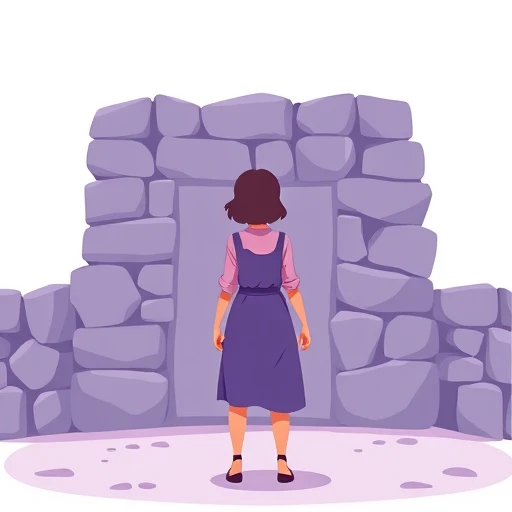
Imagine a young woman standing alone in front of a massive stone wall, holding a small handful of dirt. The wall is the law; the dirt is her duty.
Word Web
Challenge
Try to use 'Antigone' in a sentence describing a modern news event. Does the person you are describing fit the 'principled rebel' archetype?
Word Origin
From the Ancient Greek name Ἀντιγόνη (Antigónē). It is a compound name consisting of two parts.
Original meaning: 'Anti' (ἀντί) meaning 'against' or 'instead of' and 'gonē' (γονή) meaning 'birth', 'offspring', or 'generation'.
Indo-European (Greek branch).Cultural Context
Be careful not to use the name to glorify all forms of law-breaking; it specifically refers to *principled* and *moral* defiance.
In English literature, Antigone is often compared to characters like Cordelia in King Lear—women who are destroyed by their honesty and duty.
Practice in Real Life
Real-World Contexts
Literary Analysis
- The protagonist embodies Antigone
- Sophoclean tragedy
- The conflict of duties
- Tragic flaw
Political Science
- Civil disobedience
- State authority vs. individual conscience
- The Antigone problem
- Unjust laws
Legal Philosophy
- Natural law
- Positive law
- Divine justice
- The right to burial
Feminist Theory
- Challenging patriarchy
- Female agency
- Private vs. public sphere
- Gendered resistance
Theater/Drama
- Playing the lead
- The role of the Chorus
- Staging the myth
- Dramatic tension
Conversation Starters
"Have you ever seen a modern adaptation of Antigone that really moved you?"
"Do you think Antigone was right to break the law, or was Creon just trying to keep the peace?"
"Who would you consider a 'modern Antigone' in today's political world?"
"In the conflict between family duty and state law, which one do you think should come first?"
"Why do you think the story of Antigone has remained so popular for over 2,000 years?"
Journal Prompts
Describe a time when you felt like an Antigone, standing up for a principle against an authority figure. What were the consequences?
If you were King Creon, how would you have handled Antigone's defiance without destroying your city or your family?
Write a short scene where a modern-day Antigone confronts a powerful corporate executive or politician.
Reflect on the idea of 'unwritten laws.' What are some moral rules you follow that are not written in any legal book?
Compare and contrast Antigone with another rebel from history or literature. How are their motivations similar or different?
Frequently Asked Questions
10 questionsNo, Antigone is a character from Greek mythology and most famously from the plays of Sophocles. However, she represents very real human struggles that occur throughout history.
It is pronounced an-TIG-uh-nee. The stress is on the second syllable, and the final 'e' is sounded like 'ee'.
In psychoanalysis, it refers to a daughter's extreme loyalty to her father or her family's honor, often at the expense of her own life or happiness.
She believed that the laws of the gods and the duties of family required her to bury him, regardless of whether the king considered him a traitor.
She was sentenced to be buried alive in a cave. She committed suicide before she could be rescued, leading to further tragedies for Creon's family.
Many modern readers see her as one because she defies a male ruler and asserts her own moral authority in a society that gave women very little power.
The main theme is the conflict between the individual's conscience (divine law) and the laws of the state (human law).
The most famous version was written by the Greek playwright Sophocles in the 5th century BCE.
Antigone is bold and willing to die for her principles, while Ismene is more cautious and believes that women should not fight against men in power.
Usually, it's a proper noun. However, you can say 'She is an Antigone' to mean 'She is a person like Antigone.'
Test Yourself 200 questions
Explain why Antigone is considered a symbol of civil disobedience. (50-100 words)
Well written! Good try! Check the sample answer below.
Compare Antigone and Ismene. How do they represent different ways of dealing with power? (100-150 words)
Well written! Good try! Check the sample answer below.
Describe a modern situation where someone might be called an 'Antigone'. (50-100 words)
Well written! Good try! Check the sample answer below.
What is the 'Antigone problem' in legal philosophy? (100-150 words)
Well written! Good try! Check the sample answer below.
Write a short dialogue between a modern Antigone and a Creon-like figure. (150-200 words)
Well written! Good try! Check the sample answer below.
How does the role of the Chorus affect our understanding of Antigone? (100-150 words)
Well written! Good try! Check the sample answer below.
Is Antigone's death a victory or a defeat? Argue your position. (150-200 words)
Well written! Good try! Check the sample answer below.
Discuss the significance of burial rights in the play Antigone. (100-150 words)
Well written! Good try! Check the sample answer below.
How does Sophocles use the character of Antigone to challenge 5th-century Greek norms? (150-200 words)
Well written! Good try! Check the sample answer below.
Summarize the plot of the play Antigone for a beginner. (50-70 words)
Well written! Good try! Check the sample answer below.
Write a poem or a short creative piece from Antigone's perspective in the cave. (100-150 words)
Well written! Good try! Check the sample answer below.
Explain the etymology of the name Antigone and its symbolic meaning. (50-100 words)
Well written! Good try! Check the sample answer below.
Why is the conflict between Antigone and Creon often described as a 'collision of two rights'? (100-150 words)
Well written! Good try! Check the sample answer below.
How has the character of Antigone been used in modern political movements? (150-200 words)
Well written! Good try! Check the sample answer below.
Discuss the role of fate versus free will in Antigone's actions. (100-150 words)
Well written! Good try! Check the sample answer below.
What would you have done if you were in Antigone's position? (50-100 words)
Well written! Good try! Check the sample answer below.
Analyze the 'Antigone complex' from a psychological viewpoint. (150-200 words)
Well written! Good try! Check the sample answer below.
How does the setting of Thebes contribute to the tragedy? (100-150 words)
Well written! Good try! Check the sample answer below.
Write a review of a fictional modern adaptation of Antigone. (150-200 words)
Well written! Good try! Check the sample answer below.
Explain the importance of the 'unwritten laws' in the play. (100-150 words)
Well written! Good try! Check the sample answer below.
Pronounce the word 'Antigone' correctly three times.
Read this aloud:
You said:
Speech recognition is not supported in your browser. Try Chrome or Edge.
Summarize the main conflict of the play in 30 seconds.
Read this aloud:
You said:
Speech recognition is not supported in your browser. Try Chrome or Edge.
Explain the difference between 'natural law' and 'positive law' using Antigone as an example.
Read this aloud:
You said:
Speech recognition is not supported in your browser. Try Chrome or Edge.
Do you think Antigone was a hero or a fanatic? Give two reasons for your answer.
Read this aloud:
You said:
Speech recognition is not supported in your browser. Try Chrome or Edge.
Describe a modern-day 'Antigone' you have heard about in the news.
Read this aloud:
You said:
Speech recognition is not supported in your browser. Try Chrome or Edge.
How would you explain the story of Antigone to a child?
Read this aloud:
You said:
Speech recognition is not supported in your browser. Try Chrome or Edge.
Debate: Was Creon's decree necessary for the stability of Thebes?
Read this aloud:
You said:
Speech recognition is not supported in your browser. Try Chrome or Edge.
What is the 'Antigone complex' and how does it relate to family loyalty?
Read this aloud:
You said:
Speech recognition is not supported in your browser. Try Chrome or Edge.
How does the character of Ismene contrast with Antigone?
Read this aloud:
You said:
Speech recognition is not supported in your browser. Try Chrome or Edge.
Why is Antigone often considered a feminist icon?
Read this aloud:
You said:
Speech recognition is not supported in your browser. Try Chrome or Edge.
If you were directing a modern version of the play, where would you set it and why?
Read this aloud:
You said:
Speech recognition is not supported in your browser. Try Chrome or Edge.
Discuss the role of the blind prophet Teiresias in the story.
Read this aloud:
You said:
Speech recognition is not supported in your browser. Try Chrome or Edge.
How does the ending of the play affect the audience's view of Creon?
Read this aloud:
You said:
Speech recognition is not supported in your browser. Try Chrome or Edge.
Explain the etymology of the name 'Antigone'.
Read this aloud:
You said:
Speech recognition is not supported in your browser. Try Chrome or Edge.
What are 'unwritten laws' and do they still exist today?
Read this aloud:
You said:
Speech recognition is not supported in your browser. Try Chrome or Edge.
How does the play Antigone explore the theme of 'hubris'?
Read this aloud:
You said:
Speech recognition is not supported in your browser. Try Chrome or Edge.
Compare Antigone to another tragic figure like Hamlet or Macbeth.
Read this aloud:
You said:
Speech recognition is not supported in your browser. Try Chrome or Edge.
Why is the play called a 'tragedy'?
Read this aloud:
You said:
Speech recognition is not supported in your browser. Try Chrome or Edge.
How does Antigone's gender influence the way Creon treats her?
Read this aloud:
You said:
Speech recognition is not supported in your browser. Try Chrome or Edge.
What is the 'Antigone problem' in modern law?
Read this aloud:
You said:
Speech recognition is not supported in your browser. Try Chrome or Edge.
Listen to a description of the play and identify the three main characters mentioned.
Listen to a lecture snippet about Hegel's view on Antigone. What are the 'two rights' he mentions?
Listen to a theater review. Does the critic like the modern adaptation of Antigone? Why or why not?
Listen to the pronunciation of 'Antigone' and 'Antagonist'. Which one has four syllables?
Listen to a poem about Antigone. What imagery does the poet use for her defiance?
Listen to a summary of the 'Antigone complex'. Who is the focus of this psychological term?
Listen to a discussion about civil disobedience. How is Antigone used as an example?
Listen to a short biography of Sophocles. How many plays did he write about the family of Oedipus?
Listen to a news report about a whistleblower. Why does the reporter call her a 'modern Antigone'?
Listen to a debate about the play. What is the main argument for Creon's side?
Listen to a description of the 'Theban Cycle'. Which play comes first in the story's timeline?
Listen to a character analysis of Ismene. What is her main character trait?
Listen to a discussion of 'natural law'. How does the speaker define it?
Listen to a clip from a performance of the play. What is the tone of Antigone's voice?
Listen to a podcast about Greek mythology. What was the fate of Antigone's brothers?
/ 200 correct
Perfect score!
Summary
Antigone is the ultimate symbol of moral defiance. To use this word is to evoke a high-stakes conflict where an individual chooses a 'higher' ethical law over the official rules of society, typically leading to a tragic but noble outcome. Example: 'In her refusal to testify against her family, she acted as a modern Antigone.'
- Antigone is a Greek mythological heroine who famously defied King Creon to bury her brother, symbolizing the triumph of personal conscience over state law.
- The name is used archetypally to describe individuals who engage in principled civil disobedience, often facing tragic consequences for their moral stance.
- In literature and philosophy, Antigone represents the fundamental conflict between 'natural law' (divine/moral) and 'positive law' (human-made statutes).
- She is a central figure in Western tragedy, often interpreted through feminist, political, and psychoanalytic lenses to explore power and duty.
Context Matters
Only use 'Antigone' when describing a conflict that has a moral or tragic weight. Don't use it for minor rebellions.
The Final E
Never forget to pronounce the 'e' at the end. It's not 'gone' like 'the wind is gone.'
Mention Sophocles
In essays, linking the name to Sophocles shows you understand the literary origin of the archetype.
Adjective Form
Use 'Antigone-esque' for a more sophisticated way to describe a character's behavior.
Example
The professor assigned Sophocles' Antigone for the seminar on ancient tragedy.
Related Content
See it in Videos
More Culture words
creon
C2A figure in Greek mythology, the ruler of Thebes who plays a central role in the tragic legends of Oedipus and his family, particularly in the plays of Sophocles.
ethnic
B2As a noun, an ethnic refers to a member of a specific ethnic group, typically a minority group that retains distinct cultural, religious, or linguistic traditions. In modern usage, it is often used to describe individuals who belong to a population that shares a common national or cultural heritage.
wukong’s
B1The possessive form of 'Wukong', referring to things belonging to or associated with Sun Wukong, the Monkey King from Chinese mythology. It is used to denote ownership or a specific relationship to this legendary character in literature and modern media.
germanic
B2Relating to the language family that includes English, German, and Dutch, or to the ancient peoples of northern Europe. It describes the common linguistic, historical, and cultural roots shared by these groups.
hercules
C1In Roman mythology, Hercules was a hero celebrated for his superhuman strength and for completing twelve famously difficult tasks. The name is now commonly used to refer to any person who possesses extraordinary physical power or to describe an effort that requires immense strength.
moroccan
A2Relating to the country of Morocco in North Africa, its people, or its culture. As a noun, it refers to a person who is a citizen or inhabitant of Morocco.
daedalus
B2A legendary Greek architect and inventor who designed the Labyrinth for King Minos of Crete. He is most famous for creating wings of wax and feathers to escape his imprisonment, a story that serves as a classic symbol of human ingenuity and its potential dangers.
oedipus’
C1The possessive form of Oedipus, referring to the mythical Greek king of Thebes who tragically fulfilled a prophecy by killing his father and marrying his mother. It is most commonly used in psychological and literary contexts, particularly when discussing Sigmund Freud's concept of the Oedipus complex.
turkish
A1Relating to Turkey, its people, or their language; the language spoken in Turkey.
imp
B2A small, mischievous devil or sprite in folklore; also used playfully to describe a mischievous child.

