









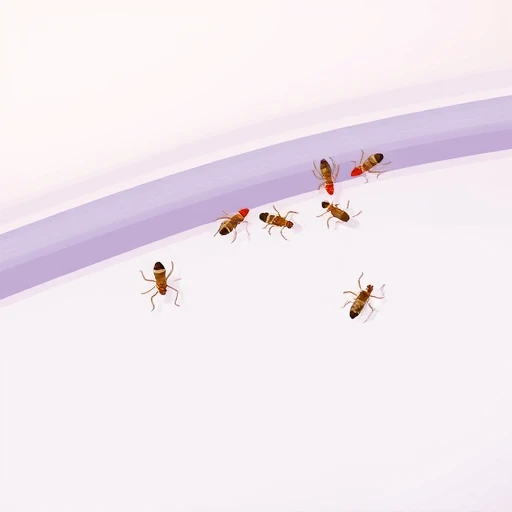
bedbugs in 30 Seconds
- Bedbugs are small, reddish-brown parasitic insects that feed on human blood, primarily at night.
- They are expert hitchhikers, spreading through luggage, clothing, and used furniture rather than flying or jumping.
- Infestations are difficult to treat and often require professional pest control using heat or specialized chemicals.
- While they do not transmit diseases, their bites cause itchy welts and significant psychological stress for victims.
The term bedbugs refers to a specific group of parasitic insects, primarily Cimex lectularius, that have co-evolved with humans for thousands of years. These insects are small, oval-shaped, and brownish in color, often described as resembling an apple seed in both size and shape. Their primary biological drive is to consume the blood of warm-blooded hosts, with humans being their preferred target. Unlike many other pests, bedbugs do not fly or jump; instead, they are master hitchhikers, crawling into luggage, clothing, and used furniture to move from one location to another. This mobility is why they are frequently discussed in the context of global travel and urban living. When people use this word, they are often expressing a sense of alarm, frustration, or concern regarding hygiene and domestic comfort, although it is important to note that bedbug infestations are not necessarily a reflection of poor cleanliness.
- Biological Classification
- Bedbugs belong to the family Cimicidae. They are hemipterans, meaning they have piercing-sucking mouthparts designed to penetrate skin and reach blood vessels.
After returning from his backpacking trip across Europe, Mark was horrified to discover that he had accidentally brought back bedbugs in the seams of his rucksack.
The life cycle of these creatures is a significant point of discussion in entomology and pest control. A single female can lay hundreds of eggs over her lifetime, each about the size of a speck of dust. These eggs hatch into nymphs, which must feed on blood before shedding their skin (molting) and progressing to the next of five growth stages. This rapid reproduction rate means that a small introduction of a few insects can quickly escalate into a full-blown infestation. People use the word in professional contexts, such as hospitality management and public health, to describe a serious operational risk. In casual conversation, it is often used to describe a nightmare scenario of home maintenance.
- Physical Appearance
- Adults are 4–5 mm long. They are flat before feeding but become swollen and reddish after a blood meal, which can last up to ten minutes.
The hotel manager assured the guests that they follow a strict protocol to prevent bedbugs from entering the premises.
Historically, bedbugs were nearly eradicated in developed nations during the mid-20th century due to the widespread use of potent pesticides like DDT. However, they have made a dramatic resurgence in the last two decades. This comeback is attributed to increased international travel, the banning of certain chemicals, and the insects developing resistance to modern pyrethroid insecticides. Consequently, the word is now a common fixture in urban news, tenant rights discussions, and travel advice columns. It carries a heavy social stigma, though experts emphasize that these pests are found in five-star hotels and humble apartments alike.
- Feeding Habits
- They use a specialized proboscis to inject an anesthetic so the host doesn't feel the bite, and an anticoagulant to keep the blood flowing freely.
It is a common myth that bedbugs only live in dirty environments; they are actually attracted to carbon dioxide and body heat.
The city council launched a public awareness campaign to help residents identify and report bedbugs in public housing.
Because bedbugs can survive for months without a meal, they are incredibly difficult to starve out of a building.
Using the word bedbugs correctly involves understanding its role as a plural noun and the specific verbs and adjectives that typically accompany it. Because it refers to a collective group of pests, it is almost always used in the plural form. You will rarely hear someone talk about a single 'bedbug' unless they have literally caught one specimen for identification. In most contexts, you are dealing with an 'infestation' or a 'problem.' When constructing sentences, it is helpful to use verbs that describe their movement or the human reaction to them. For example, bedbugs 'infest' a room, 'hide' in crevices, 'hitchhike' on luggage, and 'bite' unsuspecting victims. Conversely, humans 'detect,' 'treat,' 'exterminate,' or 'eliminate' them.
- Describing Infestations
- When a space is overrun, we say it is 'infested with bedbugs.' This implies a widespread and established population that requires professional intervention.
The old dormitory was so heavily infested with bedbugs that the university had to close the entire wing for heat treatment.
In more formal or scientific writing, the focus shifts to the impact on public health or the economy. Here, the word might appear in phrases like 'bedbug resurgence,' 'pesticide-resistant bedbugs,' or 'bedbug-related litigation.' It is also common to see it used as a modifier for other nouns, such as 'bedbug bites,' 'bedbug covers,' or 'bedbug sniffing dogs.' These dogs are specially trained to detect the unique pheromones emitted by the insects, providing a high-tech solution to a primitive problem. When discussing the physical symptoms, sentences often focus on the skin's reaction, which can range from small red dots to large, itchy welts.
- Action-Oriented Sentences
- Verbs like 'eradicate' and 'mitigate' are common in professional reports. 'The property manager took immediate steps to eradicate the bedbugs.'
She spent the entire weekend washing her clothes in hot water to ensure no bedbugs survived the move.
The word is also used metaphorically in some niche contexts, though this is rare. More often, it is used in cautionary tales. For instance, 'The fear of bedbugs kept her from buying second-hand furniture.' This highlights the psychological impact the word carries. In legal contexts, the presence of bedbugs can be a 'breach of the warranty of habitability,' a phrase used in landlord-tenant disputes. When writing about them, it is crucial to maintain a tone that reflects the seriousness of the topic, as an infestation can cause significant financial loss and emotional distress.
- Prevention and Control
- Sentences often revolve around 'prevention strategies.' For example: 'Using mattress encasements is a proven method to trap bedbugs and prevent them from nesting.'
Travelers are advised to check the seams of hotel mattresses for signs of bedbugs before unpacking their bags.
The landlord was legally required to pay for the extermination of the bedbugs because the tenant reported them within the first month of the lease.
Many people suffer from insomnia after discovering bedbugs in their home due to the constant fear of being bitten while asleep.
In the modern world, you are likely to encounter the word bedbugs in several distinct environments. One of the most common is the travel industry. Whether you are reading reviews on TripAdvisor, browsing travel blogs, or listening to a podcast about 'travel nightmares,' the mention of bedbugs serves as a major red flag. Hotels and hostels are particularly sensitive to this word because a single negative review mentioning an infestation can devastate their reputation and lead to significant financial losses. You might hear a traveler say, 'I checked the Bedbug Registry before booking my stay in New York,' referring to online databases where people report sightings.
- In the News
- News outlets often run sensational stories about 'bedbug invasions' in major cities like Paris or London, especially during high-traffic events like Fashion Week or the Olympics.
The evening news featured a segment on how bedbugs were found on the seats of several public buses in the city center.
Another frequent setting for this word is in the realm of real estate and property management. Tenants often discuss bedbugs with their landlords or in community forums. In many jurisdictions, laws have been passed requiring landlords to disclose a history of bedbug infestations to potential renters. You might hear a lawyer or a housing advocate discuss 'bedbug disclosure laws' or 'habitability standards.' In these conversations, the word is treated as a legal and financial liability rather than just a biological nuisance. Pest control companies also use the word extensively in their marketing, offering 'bedbug inspections' and 'guaranteed bedbug removal' services.
- In Healthcare
- Doctors and dermatologists use the word when diagnosing skin rashes. They look for the 'breakfast, lunch, and dinner' pattern of bites characteristic of bedbugs.
The dermatologist confirmed that the itchy welts on my arm were indeed caused by bedbugs and not a spider bite.
Social media and online forums like Reddit have entire communities dedicated to bedbug identification and support. In these spaces, the word is used with a mix of anxiety and technical precision. Users share photos of bugs they've found, asking 'Is this a bedbug?' and others provide advice on 'DIY bedbug treatments.' These digital spaces highlight the communal nature of the problem and the shared trauma that often accompanies an infestation. Finally, the word appears in literature and film, often as a symbol of poverty, neglect, or the hidden horrors of domestic life, reinforcing its status as one of the most dreaded household pests.
- In Pop Culture
- The phrase 'Goodnight, sleep tight, don't let the bedbugs bite' is a nursery rhyme staple that has existed for centuries.
In the movie, the protagonist's descent into madness was mirrored by his growing obsession with imaginary bedbugs.
The museum had to hire a specialized team to ensure that bedbugs didn't damage the antique textile collection.
During the city-wide strike, garbage piled up, leading to fears of an increase in rats and bedbugs in residential areas.
One of the most frequent mistakes people make regarding bedbugs is confusing them with other common household pests. Because they are small and cause itchy bites, they are often misidentified as fleas, ticks, or even dust mites. However, the biological and behavioral differences are significant. Fleas are jumpers and usually live on pets; ticks are arachnids that latch onto the skin for days; and dust mites are microscopic organisms that do not bite but cause allergies. Misidentifying bedbugs can lead to ineffective treatments, such as using flea foggers which may actually cause bedbugs to scatter deeper into the walls, making the problem worse.
- Bedbugs vs. Dust Mites
- A common error is thinking that 'dust mites' and 'bedbugs' are the same. Dust mites are invisible to the naked eye and eat dead skin cells, whereas bedbugs are visible and drink blood.
Many people mistakenly buy allergy sprays for dust mites when they actually have an infestation of bedbugs.
Another common misconception is the belief that bedbugs are a sign of a dirty home. This 'stigma mistake' often prevents people from seeking help or notifying neighbors and landlords. Bedbugs are attracted to warmth and carbon dioxide, not filth. They can be found in the cleanest luxury suites. Failing to realize this leads to the mistake of over-cleaning (vacuuming and scrubbing) without using targeted heat or chemical treatments, which rarely solves the problem. Additionally, people often make the mistake of throwing away all their furniture. While it feels intuitive to get rid of an 'infested' bed, bedbugs live in baseboards, electrical outlets, and behind wallpaper, so a new bed will likely be infested within days.
- The 'Infection' Error
- People often say they have a 'bedbug infection.' This is linguistically incorrect; bedbugs cause an 'infestation.' Bacteria and viruses cause infections.
It is a mistake to describe the presence of bedbugs as an infection; they are external parasites that infest a physical space.
Grammatically, the word is sometimes treated as a singular noun (e.g., 'The bedbugs is a problem'), which is incorrect. It is a plural count noun and requires plural verb agreement: 'The bedbugs are a problem.' Furthermore, some learners confuse 'bedbugs' with 'ladybugs' or 'beetles.' While all are insects, their impact on human life is vastly different. Ladybugs are often considered lucky or beneficial for gardens, whereas bedbugs are strictly pests. Finally, a significant mistake is the 'DIY' error—trying to kill bedbugs with essential oils or rubbing alcohol. While alcohol kills them on contact, it has no residual effect and is highly flammable, leading to many house fires every year.
- Confusion with Carpet Beetles
- Carpet beetle larvae have hairs that can cause a rash similar to bedbug bites, leading to many false alarms.
The tenant made the mistake of blaming bedbugs for a rash that was actually caused by a new laundry detergent.
Using the term 'bedbug' to describe a cockroach is a common mistake among children who are just learning the names of different insects.
A major mistake in pest management is failing to treat the adjacent rooms when bedbugs are found in one bedroom.
While bedbugs is the most common and direct term, several alternatives and related words are used depending on the register and context. In scientific or medical settings, the term Cimex lectularius is used to be precise about the species. In more general terms, bedbugs are often categorized as 'ectoparasites,' a word that describes any parasite that lives on the outside of its host. Other general terms include 'pests,' 'vermin,' or 'infestations.' If you want to avoid the specific word due to its social stigma, you might hear euphemisms like 'unwanted guests' or 'hitchhikers,' especially in the hospitality industry where discretion is paramount.
- Comparison: Bedbugs vs. Fleas
- Fleas are much smaller, can jump great distances, and usually prefer animals. Bedbugs are larger, crawl slowly, and prefer humans.
The exterminator explained that while both are blood-feeders, bedbugs require a completely different treatment plan than fleas.
In the context of travel and luggage, the word 'hitchhikers' is a very common alternative. This emphasizes the way the insects move from place to place. In technical pest control manuals, you might see the term 'crevice-dwelling insects,' which describes their preferred habitat. When discussing the psychological impact, terms like 'formication' (the sensation of insects crawling on the skin) or 'delusory parasitosis' (the mistaken belief that one is infested) are often linked to bedbug experiences. These words provide a more clinical way to discuss the trauma associated with the pests.
- Comparison: Bedbugs vs. Ticks
- Ticks are usually found outdoors in tall grass and attach to the host for a long time. Bedbugs live indoors in furniture and feed quickly before hiding.
Unlike ticks, bedbugs are not known to transmit diseases like Lyme disease to humans.
Another related term is 'blood-suckers,' though this is more informal and can also refer to mosquitoes or leeches. In the UK, you might occasionally hear 'bugs' used as a general term, but 'bedbugs' is specific. In the US, 'critters' is sometimes used informally. When talking about the physical evidence they leave behind, 'fecal spotting' and 'cast skins' are the technical terms for what most people just call 'bedbug signs.' Understanding these alternatives helps in navigating different types of literature, from medical journals to informal travel forums, and allows for more precise communication depending on the audience.
- Comparison: Bedbugs vs. Lice
- Lice live directly on the human body (hair or clothes), while bedbugs live in the environment and only visit the body to feed.
The school nurse had to distinguish between head lice and potential bedbugs after a student reported itchy spots.
The tenant's union referred to the bedbugs as a 'public health nuisance' to gain the attention of the city officials.
While they are often called 'vampire insects' in sensationalist media, bedbugs are simply biological organisms fulfilling their niche.
How Formal Is It?
Fun Fact
Before the 17th century, they were often called 'wall-lice' in English. The term 'bed-bug' didn't become standard until the late 1600s.
Pronunciation Guide
- Pronouncing it as 'bad-bugs'.
- Stressing the second syllable: bed-BUGS.
- Forgetting the 's' at the end when referring to the species.
- Confusing the 'u' sound with an 'oo' sound.
- Silent 'd' in 'bed'.
Difficulty Rating
The word itself is simple, but the context can be technical.
Easy to spell and use in basic sentences.
Pronunciation is straightforward for most learners.
Can be confused with other 'bug' words in fast speech.
What to Learn Next
Prerequisites
Learn Next
Advanced
Grammar to Know
Plural Noun Agreement
The bedbugs ARE (not is) hiding.
Compound Nouns
Bedbug bites (noun + noun).
Prepositions of Place
Bedbugs IN the mattress.
Passive Voice for Treatments
The room WAS TREATED for bedbugs.
Zero Article for Generalizations
Bedbugs are difficult to kill.
Examples by Level
There are bedbugs in the bed.
Ada kutu busuk di tempat tidur.
Plural noun.
Bedbugs are small and brown.
Kutu busuk itu kecil dan cokelat.
Subject-verb agreement (are).
Do bedbugs bite?
Apakah kutu busuk menggigit?
Question form.
I see bedbugs.
Saya melihat kutu busuk.
Simple present tense.
The bedbugs are bad.
Kutu busuk itu buruk.
Adjective usage.
My room has bedbugs.
Kamar saya ada kutu busuk.
Possessive usage.
No bedbugs, please!
Jangan ada kutu busuk, tolong!
Exclamation.
Bedbugs live in beds.
Kutu busuk tinggal di tempat tidur.
Prepositional phrase.
We found bedbugs in the hotel.
Kami menemukan kutu busuk di hotel.
Past tense 'found'.
Bedbugs hide during the day.
Kutu busuk bersembunyi di siang hari.
Adverbial phrase of time.
You should check for bedbugs.
Anda harus memeriksa kutu busuk.
Modal verb 'should'.
Bedbugs make me itchy.
Kutu busuk membuat saya gatal.
Causative structure.
Are there bedbugs in this house?
Apakah ada kutu busuk di rumah ini?
Existential 'there are'.
I hate bedbugs because they bite.
Saya benci kutu busuk karena mereka menggigit.
Conjunction 'because'.
Wash your clothes to kill bedbugs.
Cuci pakaian Anda untuk membunuh kutu busuk.
Infinitive of purpose.
The bedbugs are very small.
Kutu busuk itu sangat kecil.
Adverb 'very'.
The apartment had a serious infestation of bedbugs.
Apartemen itu mengalami serangan kutu busuk yang serius.
Noun 'infestation'.
Bedbugs can travel on your luggage.
Kutu busuk bisa ikut bepergian di bagasi Anda.
Preposition 'on'.
He woke up with bedbug bites on his legs.
Dia bangun dengan gigitan kutu busuk di kakinya.
Compound noun 'bedbug bites'.
It is difficult to get rid of bedbugs.
Sulit untuk menyingkirkan kutu busuk.
Phrasal verb 'get rid of'.
Bedbugs are more active at night.
Kutu busuk lebih aktif di malam hari.
Comparative 'more active'.
The hotel manager apologized for the bedbugs.
Manajer hotel meminta maaf atas kutu busuk tersebut.
Reporting verb 'apologized'.
You can use heat to kill bedbugs.
Anda bisa menggunakan panas untuk membunuh kutu busuk.
Modal 'can' for possibility.
Bedbugs do not spread diseases.
Kutu busuk tidak menyebarkan penyakit.
Negative present simple.
The resurgence of bedbugs is linked to global travel.
Kembalinya kutu busuk dikaitkan dengan perjalanan global.
Passive voice 'is linked to'.
Bedbugs have developed resistance to many pesticides.
Kutu busuk telah mengembangkan resistensi terhadap banyak pestisida.
Present perfect tense.
A professional exterminator is needed for bedbugs.
Pembasmi profesional diperlukan untuk kutu busuk.
Passive voice.
The presence of bedbugs caused a lot of anxiety.
Kehadiran kutu busuk menyebabkan banyak kecemasan.
Abstract noun 'anxiety'.
Bedbugs are often found in the seams of mattresses.
Kutu busuk sering ditemukan di lipatan kasur.
Frequency adverb 'often'.
They had to discard their sofa due to bedbugs.
Mereka harus membuang sofa mereka karena kutu busuk.
Prepositional phrase 'due to'.
Bedbugs can survive for months without feeding.
Kutu busuk dapat bertahan hidup selama berbulan-bulan tanpa makan.
Preposition 'without'.
The tenant sued the landlord over the bedbugs.
Penyewa menggugat pemilik tanah atas kutu busuk tersebut.
Past simple 'sued'.
The psychological toll of bedbugs is often underestimated.
Beban psikologis dari kutu busuk sering kali diremehkan.
Complex subject phrase.
Bedbugs are experts at concealing themselves in tiny cracks.
Kutu busuk adalah ahli dalam menyembunyikan diri di celah-celah kecil.
Gerund 'concealing'.
The hotel implemented a rigorous bedbug prevention protocol.
Hotel tersebut menerapkan protokol pencegahan kutu busuk yang ketat.
Sophisticated adjective 'rigorous'.
Bedbugs feed by piercing the skin with a specialized proboscis.
Kutu busuk makan dengan menusuk kulit dengan belalai khusus.
Prepositional phrase 'by piercing'.
Public health officials are monitoring the bedbug outbreak.
Pejabat kesehatan masyarakat sedang memantau wabah kutu busuk.
Present continuous.
The social stigma of bedbugs remains a barrier to reporting.
Stigma sosial kutu busuk tetap menjadi penghalang untuk melapor.
Noun phrase 'social stigma'.
Bedbugs exhibit a traumatic insemination reproductive strategy.
Kutu busuk menunjukkan strategi reproduksi inseminasi traumatis.
Technical terminology.
The economic impact of bedbugs on the city is substantial.
Dampak ekonomi kutu busuk terhadap kota ini sangat besar.
Adjective 'substantial'.
The pervasive nature of bedbugs challenges urban hygiene standards.
Sifat kutu busuk yang meresap menantang standar kebersihan perkotaan.
Adjective 'pervasive'.
Bedbugs have become a focal point of contemporary litigation.
Kutu busuk telah menjadi titik fokus litigasi kontemporer.
Noun phrase 'focal point'.
The resurgence of bedbugs is a byproduct of increased globalization.
Kembalinya kutu busuk adalah produk sampingan dari peningkatan globalisasi.
Noun 'byproduct'.
Bedbugs possess a remarkable ability to withstand starvation.
Kutu busuk memiliki kemampuan luar biasa untuk menahan kelaparan.
Infinitive 'to withstand'.
The intricate biology of bedbugs allows them to thrive in human habitats.
Biologi kutu busuk yang rumit memungkinkan mereka berkembang biak di habitat manusia.
Adjective 'intricate'.
Bedbugs are often the catalyst for comprehensive legislative reform.
Kutu busuk sering kali menjadi katalisator bagi reformasi legislatif yang komprehensif.
Noun 'catalyst'.
The nocturnal habits of bedbugs ensure their survival in hostile environments.
Kebiasaan nokturnal kutu busuk memastikan kelangsungan hidup mereka di lingkungan yang tidak bersahabat.
Possessive 'their'.
Bedbugs represent a significant hurdle for the hospitality sector.
Kutu busuk merupakan hambatan signifikan bagi sektor perhotelan.
Noun 'hurdle'.
Synonyms
Antonyms
Common Collocations
Common Phrases
— A traditional, playful way to say goodnight to someone.
Goodnight, sleep tight, and don't let the bedbugs bite!
— Completely without any bedbugs present.
The hotel guarantees a bedbug-free environment.
— The extensive cleaning and packing required before a treatment.
Bedbug prep is the hardest part of the extermination process.
— Bedbugs that have moved from one place to another via luggage.
Hitchhiking bedbugs are the primary cause of new infestations.
— Canines trained to find bedbugs by scent.
The company hired bedbug sniffing dogs to inspect the office.
— A special cover designed to trap bedbugs inside or keep them out.
A good mattress encasement is essential for prevention.
— A method of killing bedbugs by raising the temperature of a room.
Heat treatment is often more effective than chemicals for bedbugs.
— Small dark stains left by bedbugs on sheets.
Fecal spotting on the pillow is a clear sign of bedbugs.
— The empty shells left behind by bedbugs as they grow.
Finding cast skins means the bedbugs are actively breeding.
— A pattern of three bites in a row typical of bedbugs.
The doctor noted the 'breakfast, lunch, and dinner' pattern on his arm.
Often Confused With
Dust mites are microscopic and don't bite; bedbugs are visible and do bite.
Fleas jump and usually live on pets; bedbugs crawl and live in furniture.
Ticks attach to the skin for days; bedbugs bite and then hide.
Idioms & Expressions
— Used as a friendly farewell at bedtime, though its origin is literal.
Sleep well, and don't let the bedbugs bite!
Informal— Feeling very comfortable and cozy, though not exclusively about bedbugs.
With the new heater, she was snug as a bug in a rug.
Informal— To have errors or problems, often used in computing but derived from insects.
The new software still has some bedbugs to work out.
Technical/Slang— To look with great surprise or fear, similar to the bulging eyes of an insect.
He went bug-eyed when he saw the bill for the exterminator.
Informal— To annoy or pester someone, much like a bedbug does.
Stop bugging me about the bedbugs; I've already called the landlord.
Informal— To get sick, though often confused with literal insects.
I think I caught a stomach bug, not bedbugs.
Informal— To give someone a hint or a secret warning.
I'll put a bug in his ear about the potential for bedbugs in that building.
Informal— To become very enthusiastic about something.
He was bitten by the travel bug, but he's afraid of bedbugs.
Informal— An old-fashioned American idiom meaning completely insane.
After three nights without sleep, he felt crazy as a bedbug.
Old-fashioned— To fix small problems in a plan or system.
We need to iron out the bugs in our bedbug prevention strategy.
ProfessionalEasily Confused
Both end in 'bugs'.
Ladybugs are beneficial garden insects; bedbugs are indoor parasites.
I like ladybugs, but I hate bedbugs.
Both are common household pests.
Cockroaches eat food scraps; bedbugs drink blood.
The kitchen has cockroaches, but the bedroom has bedbugs.
Both are human parasites.
Lice live on the body; bedbugs live in the environment.
He has head lice, but his bed has bedbugs.
Both can cause itchy bites.
Spiders are predators with eight legs; bedbugs are insects with six legs.
That bite was from a spider, not bedbugs.
Some beetles look like bedbugs.
Most beetles have hard wing covers and don't bite humans.
That is just a carpet beetle, not a bedbug.
Sentence Patterns
There are [noun].
There are bedbugs.
I found [noun] in [place].
I found bedbugs in the hotel.
[Noun] are [adjective] to [verb].
Bedbugs are difficult to eliminate.
Due to [noun], we had to [verb].
Due to bedbugs, we had to call an exterminator.
The [noun] of [noun] is [adjective].
The resurgence of bedbugs is concerning.
Notwithstanding the [noun], the [noun] [verb].
Notwithstanding the treatment, the bedbugs persisted.
If I see [noun], I will [verb].
If I see bedbugs, I will leave immediately.
It is widely believed that [noun] [verb].
It is widely believed that bedbugs only live in dirty places.
Word Family
Nouns
Verbs
Adjectives
Related
How to Use It
Common in travel and urban contexts.
-
Thinking they only live in beds.
→
They live in walls, outlets, and furniture.
Bedbugs hide in any dark crevice near their host, not just the mattress.
-
Using 'bug bombs'.
→
Use targeted treatments or heat.
Foggers or 'bombs' don't reach the cracks where bedbugs hide and can spread them further.
-
Throwing away all furniture.
→
Treat the furniture or use encasements.
Replacing furniture is expensive and often unnecessary if the whole room is being treated.
-
Assuming no bites means no bugs.
→
Check for physical signs like spots.
Many people do not react to bedbug bites, so they may not know they have an infestation.
-
Thinking they are microscopic.
→
They are visible to the eye.
Adults are 4-5mm long; if you look closely, you can definitely see them.
Tips
Inspect Hotels
Always check the mattress seams and headboard of a hotel room before you unpack your bags.
Keep Bags Elevated
Store your luggage on a suitcase rack or in the bathroom rather than on the bed or carpet.
Second-hand Warning
Be extremely cautious when buying used furniture, especially mattresses or sofas; inspect them thoroughly.
High Heat
If you suspect exposure, put all your clothes in the dryer on high heat for at least 30 minutes.
Look for Spots
Small black dots on your sheets are a major warning sign of a bedbug presence.
Don't Panic
An infestation is stressful but treatable. Stay calm and follow professional advice.
Know Your Rights
In many cities, landlords are legally responsible for the cost of bedbug extermination.
Anti-itch Cream
Use hydrocortisone or antihistamines to manage the itching from bites and prevent scratching.
Vacuum Regularly
Frequent vacuuming can help reduce the number of bugs, but it won't eliminate an infestation alone.
Call a Pro
DIY treatments often fail and can make the problem worse; hiring a professional is usually necessary.
Memorize It
Mnemonic
Think of 'BED' where you sleep and 'BUGS' that bother you. B-E-D-B-U-G-S: Blood-Eating Dwellers Biting Us Greatly Soon.
Visual Association
Imagine a tiny brown apple seed crawling on a white pillow. The contrast between the clean bed and the dark bug is a strong visual cue.
Word Web
Challenge
Try to explain to a friend how to check a hotel room for bedbugs using at least five related words.
Word Origin
The word is a compound of 'bed' and 'bug'. 'Bed' comes from the Old English 'bedd', and 'bug' likely comes from the Middle English 'bugge', meaning a scarecrow or hobgoblin, later applied to insects.
Original meaning: An insect that lives in beds.
Germanic (English)Cultural Context
Be careful when discussing bedbugs with someone who has an infestation; it is a very sensitive and stressful topic.
The phrase 'Don't let the bedbugs bite' is ubiquitous in the US and UK as a bedtime saying.
Practice in Real Life
Real-World Contexts
Travel
- Is this hotel bedbug-free?
- Check the mattress for bedbugs.
- I found bedbugs in my suitcase.
- Bedbug registry.
Home Maintenance
- Call the exterminator for bedbugs.
- We need to treat for bedbugs.
- Bedbug-proof covers.
- How to kill bedbugs?
Health
- Are these bedbug bites?
- Itchy welts from bedbugs.
- Bedbugs don't carry disease.
- Allergic reaction to bedbugs.
Legal/Housing
- Landlord's duty regarding bedbugs.
- Bedbug disclosure law.
- Tenant rights and bedbugs.
- Rent reduction for bedbugs.
News/Media
- City-wide bedbug outbreak.
- Bedbug panic in the subway.
- New bedbug treatment discovered.
- Bedbug resistance.
Conversation Starters
"Have you ever had to deal with bedbugs while traveling?"
"What is the best way to prevent bedbugs from entering your home?"
"Did you hear about the recent bedbug outbreak in the news?"
"Do you think hotels should be legally required to disclose bedbug history?"
"What would you do if you found bedbugs in your apartment?"
Journal Prompts
Describe a time you felt uncomfortable in a hotel room. Was it because of bedbugs or something else?
Write a letter of complaint to a hotel manager regarding a bedbug infestation you discovered.
Research the history of bedbugs and summarize why they have returned in recent years.
Discuss the psychological impact of having pests like bedbugs in your personal living space.
Imagine you are an inventor. Design a new tool to detect or eliminate bedbugs efficiently.
Frequently Asked Questions
10 questionsYes, adult bedbugs are about the size of an apple seed and are visible to the naked eye, though they are good at hiding.
No, bedbugs do not have wings and cannot fly or jump. They move by crawling or being carried on items.
They are usually brought into a home on luggage, clothing, or used furniture from an infested location.
Currently, there is no evidence that bedbugs transmit diseases to humans, though their bites can cause infections if scratched.
No, unlike lice, bedbugs do not like to live on the human body; they prefer to hide in nearby furniture.
Yes, washing and drying clothes on high heat is an effective way to kill all life stages of bedbugs.
Bedbugs can survive for several months, and sometimes up to a year, without a blood meal in cool conditions.
No, bedbugs can be found anywhere there is a human host, including very clean homes and luxury hotels.
They usually appear as small, red, itchy bumps, often in a straight line or cluster of three.
It usually requires professional help, including heat treatments, vacuuming, and specific insecticides.
Test Yourself 200 questions
Write a short paragraph describing what a bedbug looks like.
Well written! Good try! Check the sample answer below.
Write three tips for travelers to avoid bringing bedbugs home.
Well written! Good try! Check the sample answer below.
Write a formal email to a hotel manager complaining about bedbugs in your room.
Well written! Good try! Check the sample answer below.
Explain the difference between bedbugs and dust mites.
Well written! Good try! Check the sample answer below.
Describe the psychological impact of a bedbug infestation on a family.
Well written! Good try! Check the sample answer below.
Write a short story about a traveler who discovers bedbugs in their suitcase.
Well written! Good try! Check the sample answer below.
Argue for or against the mandatory disclosure of bedbug history in real estate.
Well written! Good try! Check the sample answer below.
Write a set of instructions for preparing an apartment for bedbug treatment.
Well written! Good try! Check the sample answer below.
Summarize the reasons for the global resurgence of bedbugs in the 21st century.
Well written! Good try! Check the sample answer below.
Write a dialogue between a tenant and a landlord discussing a bedbug problem.
Well written! Good try! Check the sample answer below.
Create a public awareness poster text about bedbugs for a local community center.
Well written! Good try! Check the sample answer below.
Discuss the pros and cons of using heat treatment versus chemical treatment for bedbugs.
Well written! Good try! Check the sample answer below.
Describe the life cycle of a bedbug from egg to adult.
Well written! Good try! Check the sample answer below.
Write a review of a mattress encasement product you 'purchased'.
Well written! Good try! Check the sample answer below.
Analyze the social stigma associated with bedbugs and how it affects reporting.
Well written! Good try! Check the sample answer below.
Write a poem or a short rhyme about bedbugs.
Well written! Good try! Check the sample answer below.
Explain how bedbug sniffing dogs are trained and why they are effective.
Well written! Good try! Check the sample answer below.
Discuss the ethical responsibilities of hotels when they discover bedbugs.
Well written! Good try! Check the sample answer below.
Write a blog post about 'Travel Nightmares: Dealing with Bedbugs'.
Well written! Good try! Check the sample answer below.
Compare the impact of bedbugs on the hospitality industry versus the residential sector.
Well written! Good try! Check the sample answer below.
Explain to a partner how to identify a bedbug.
Read this aloud:
You said:
Speech recognition is not supported in your browser. Try Chrome or Edge.
Role-play a conversation with a hotel receptionist about finding a bug in your bed.
Read this aloud:
You said:
Speech recognition is not supported in your browser. Try Chrome or Edge.
Give a 2-minute presentation on the history of bedbugs.
Read this aloud:
You said:
Speech recognition is not supported in your browser. Try Chrome or Edge.
Discuss with a group: Why do people feel ashamed of having bedbugs?
Read this aloud:
You said:
Speech recognition is not supported in your browser. Try Chrome or Edge.
Debate the topic: Should bedbug treatments be free for everyone?
Read this aloud:
You said:
Speech recognition is not supported in your browser. Try Chrome or Edge.
Describe your reaction if you found a bedbug in your luggage after a trip.
Read this aloud:
You said:
Speech recognition is not supported in your browser. Try Chrome or Edge.
Explain the process of heat treatment for bedbugs to a 'client'.
Read this aloud:
You said:
Speech recognition is not supported in your browser. Try Chrome or Edge.
Tell a story about a 'friend' who had bedbugs and how they fixed the problem.
Read this aloud:
You said:
Speech recognition is not supported in your browser. Try Chrome or Edge.
Discuss the role of international travel in the spread of pests.
Read this aloud:
You said:
Speech recognition is not supported in your browser. Try Chrome or Edge.
Practice saying the phrase 'Don't let the bedbugs bite' with different emotions.
Read this aloud:
You said:
Speech recognition is not supported in your browser. Try Chrome or Edge.
Describe the physical symptoms of a bedbug bite.
Read this aloud:
You said:
Speech recognition is not supported in your browser. Try Chrome or Edge.
Explain why bedbugs are harder to kill than other insects.
Read this aloud:
You said:
Speech recognition is not supported in your browser. Try Chrome or Edge.
Role-play a doctor diagnosing a patient with bedbug bites.
Read this aloud:
You said:
Speech recognition is not supported in your browser. Try Chrome or Edge.
Discuss the impact of social media on bedbug panics.
Read this aloud:
You said:
Speech recognition is not supported in your browser. Try Chrome or Edge.
Give advice to a friend who is moving into an old apartment building.
Read this aloud:
You said:
Speech recognition is not supported in your browser. Try Chrome or Edge.
Explain the concept of 'hitchhiking' in the context of pests.
Read this aloud:
You said:
Speech recognition is not supported in your browser. Try Chrome or Edge.
Discuss the environmental impact of using strong pesticides for bedbugs.
Read this aloud:
You said:
Speech recognition is not supported in your browser. Try Chrome or Edge.
Describe the appearance of a bedbug-infested room.
Read this aloud:
You said:
Speech recognition is not supported in your browser. Try Chrome or Edge.
Talk about the importance of mattress encasements.
Read this aloud:
You said:
Speech recognition is not supported in your browser. Try Chrome or Edge.
Summarize a news story you heard about bedbugs.
Read this aloud:
You said:
Speech recognition is not supported in your browser. Try Chrome or Edge.
Listen to a description of three bugs and identify which one is the bedbug.
Listen to a hotel review and count how many times the word 'bedbug' is mentioned.
Listen to an interview with an exterminator and list the tools they use.
Listen to a news report about Paris and identify the main concern of the public.
Listen to a bedtime story and identify the nursery rhyme at the end.
Listen to a podcast about urban pests and summarize the section on bedbugs.
Listen to a landlord explaining the lease and identify the bedbug clause.
Listen to a doctor's advice and list the recommended treatments for bites.
Listen to a scientific lecture on Cimicidae and identify the host species mentioned.
Listen to a traveler's story and identify where they think they got bedbugs.
Listen to a commercial for a pest control company and identify their 'guarantee'.
Listen to a conversation between two neighbors and identify the problem they are discussing.
Listen to a guide on how to pack for a trip to avoid pests.
Listen to a debate about pesticide use and identify the speaker's stance on DDT.
Listen to a series of instructions for heat treatment and identify the first step.
/ 200 correct
Perfect score!
Summary
Bedbugs are a global urban pest that thrives in human sleeping areas. They are not a sign of poor hygiene but are a major challenge for travelers and homeowners due to their resilience and ability to hide in tiny crevices. Example: 'Always inspect hotel mattresses for bedbugs to avoid bringing them home.'
- Bedbugs are small, reddish-brown parasitic insects that feed on human blood, primarily at night.
- They are expert hitchhikers, spreading through luggage, clothing, and used furniture rather than flying or jumping.
- Infestations are difficult to treat and often require professional pest control using heat or specialized chemicals.
- While they do not transmit diseases, their bites cause itchy welts and significant psychological stress for victims.
Inspect Hotels
Always check the mattress seams and headboard of a hotel room before you unpack your bags.
Keep Bags Elevated
Store your luggage on a suitcase rack or in the bathroom rather than on the bed or carpet.
Second-hand Warning
Be extremely cautious when buying used furniture, especially mattresses or sofas; inspect them thoroughly.
High Heat
If you suspect exposure, put all your clothes in the dryer on high heat for at least 30 minutes.
Example
The hotel offered us a full refund after we found bedbugs in the mattress.
Related Content
See it in Videos
More Animals words
lice
B1Lice are tiny, wingless, parasitic insects that live on the skin of humans and animals and feed on their blood. They are the plural form of 'louse' and are most commonly known for infesting human hair.
mice
B1Mice are small rodents characterized by a pointed snout, large rounded ears, and a long, usually hairless tail. It is the irregular plural form of the word 'mouse'.
penguins
B1Penguins are flightless aquatic birds that live almost exclusively in the Southern Hemisphere, particularly in Antarctica. They are well-known for their black and white tuxedo-like appearance and their ability to swim expertly in cold ocean waters.
bedbug
B1A bedbug is a small, reddish-brown, nocturnal insect that feeds on the blood of humans and other warm-blooded animals, typically found in mattresses, furniture, or cracks in walls. These parasitic creatures are a common nuisance, especially in hotels, apartments, and dormitories, causing itchy bites and significant discomfort to their hosts. The term often carries a strong negative connotation, evoking feelings of disgust, infestation, and a lack of cleanliness, even though their presence doesn't necessarily indicate poor hygiene.
goose
B1A large water bird with a long neck, short legs, webbed feet, and a broad bill, typically larger than a duck and smaller than a swan. It can also refer to the meat of this bird or, informally, a foolish or silly person.
dogs
A1The plural form of dog. 'Dogs' refers to domesticated carnivorous mammals that are commonly kept as pets, used for work, or for hunting. They are known for their loyalty, companionship, and diverse breeds.
octopus
B1An octopus is a sea animal with a soft oval body and eight long arms called tentacles. It is known for its high intelligence, ability to change color for camouflage, and releasing ink when threatened.
breeding
B2Breeding refers to the process of producing offspring, especially in a controlled or systematic way for animals or plants. It can also describe the upbringing or education of a person that results in refined social manners.
den
B1A wild animal's hidden home, such as a cave or a hole in the ground; also, a small, comfortable room in a house used for relaxation, hobbies, or private work.
asp
B1A small, highly venomous snake found in North Africa and Europe. It is historically famous for its association with the death of the Egyptian Queen Cleopatra.

